Slide 1 of 12
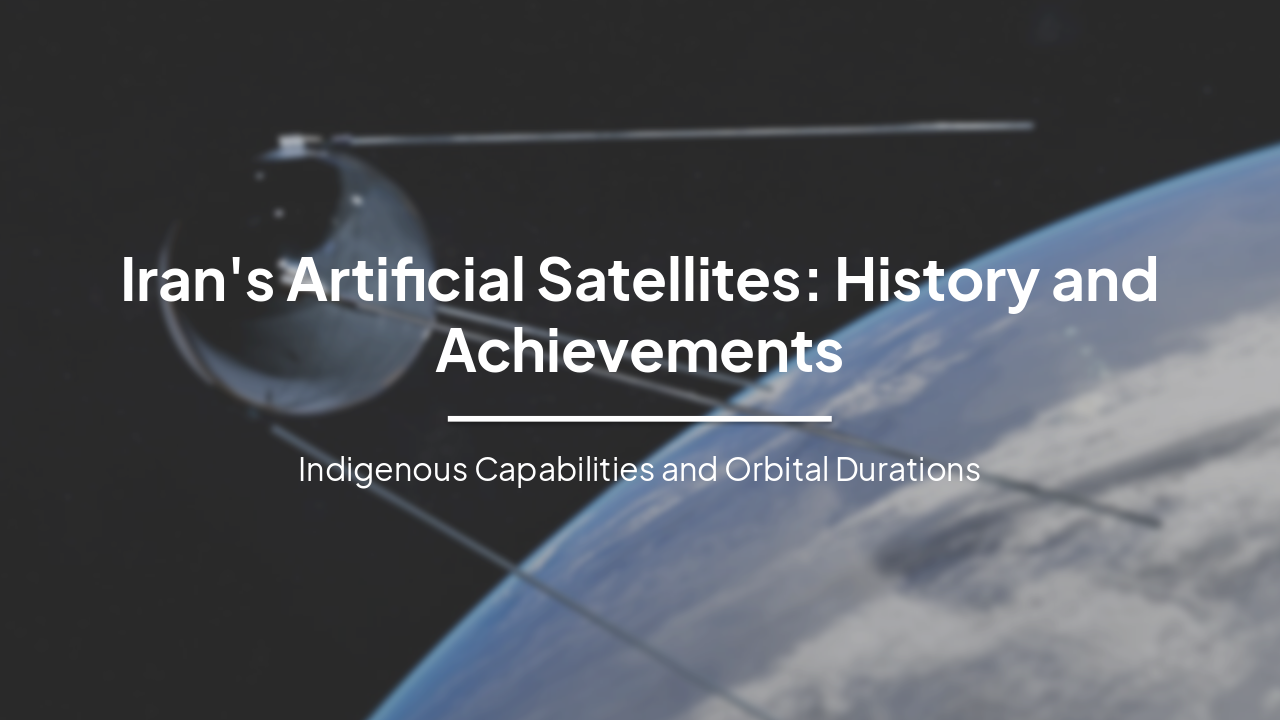
Slide 1 - Artificial Satellites: History and Iran's Space Achievements
Iranian Satellites History, Production & Launches
Indigenous Capabilities and Orbital Durations
Generated from prompt:
یک ارائه درباره ی ماهواره ها میخام در چ تاریخی توسط چ کشی ساخته شده و در ایران و چگونه پرتاب شده و بعل چمدت در مدار قرار گرفته است و بطور کانل توضیح بدید و کامل باشه برای استاد
This presentation introduces artificial satellites, their uses, types, and orbits, then provides a detailed overview of Iran's indigenous space program. It highlights key milestones from Sina-1 (2005) to Noor-2 (2022), launch details using Safir andQ
Iranian Satellites History, Production & Launches
Indigenous Capabilities and Orbital Durations
1
Definition, Uses, and Types
---
Photo by Jakub Dziubak on Unsplash

Source: Wikipedia: Satellite
3
Indigenous Satellites and Launches
Source: Wikipedia: List of first satellites by country
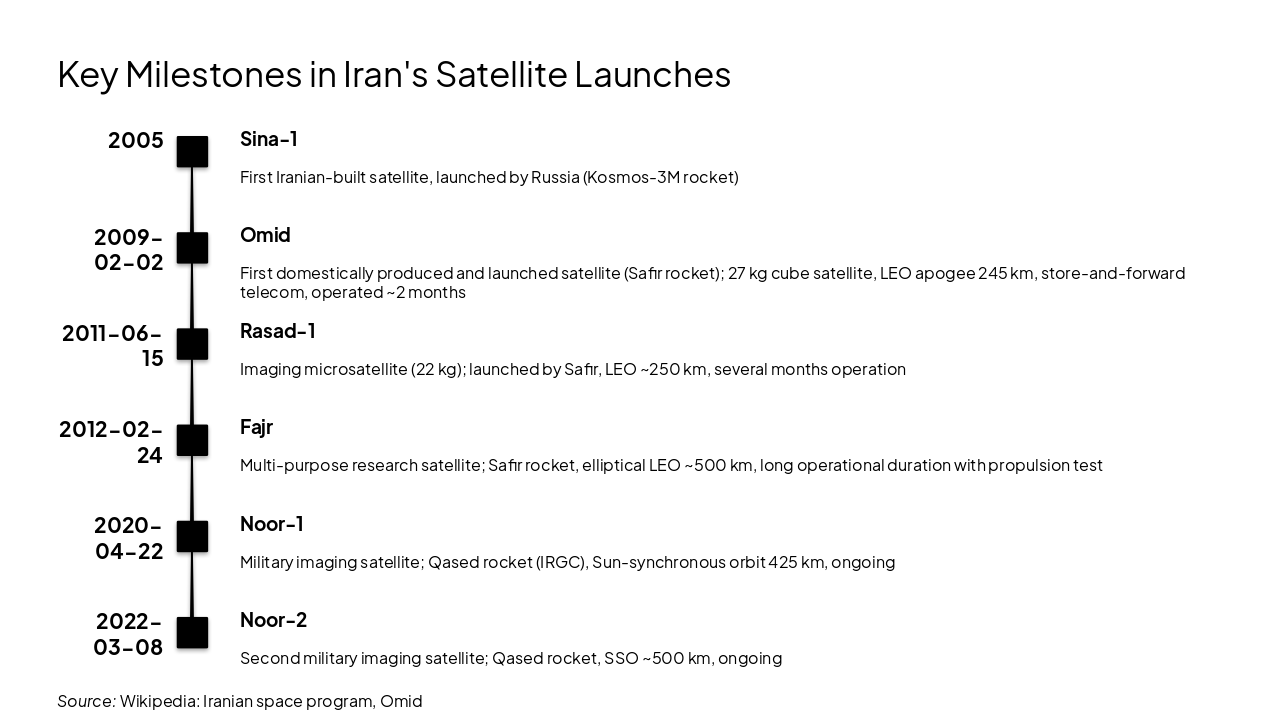
2005: Sina-1 First Iranian-built satellite, launched by Russia (Kosmos-3M rocket) 2009-02-02: Omid First domestically produced and launched satellite (Safir rocket); 27 kg cube satellite, LEO apogee 245 km, store-and-forward telecom, operated ~2 months 2011-06-15: Rasad-1 Imaging microsatellite (22 kg); launched by Safir, LEO ~250 km, several months operation 2012-02-24: Fajr Multi-purpose research satellite; Safir rocket, elliptical LEO ~500 km, long operational duration with propulsion test 2020-04-22: Noor-1 Military imaging satellite; Qased rocket (IRGC), Sun-synchronous orbit 425 km, ongoing 2022-03-08: Noor-2 Second military imaging satellite; Qased rocket, SSO ~500 km, ongoing
Source: Wikipedia: Iranian space program, Omid
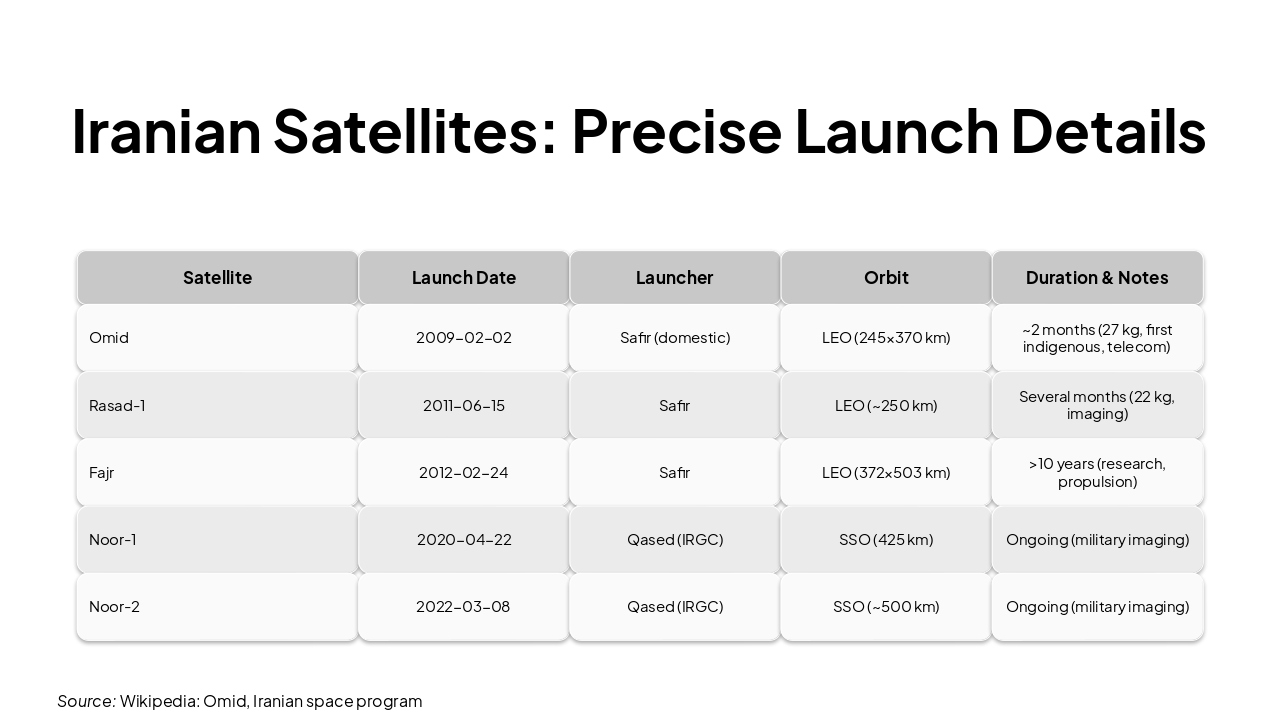
| Satellite | Launch Date | Launcher | Orbit | Duration & Notes |
|---|---|---|---|---|
| Omid | 2009-02-02 | Safir (domestic) | LEO (245×370 km) | ~2 months (27 kg, first indigenous, telecom) |
| Rasad-1 | 2011-06-15 | Safir | LEO (~250 km) | Several months (22 kg, imaging) |
| Fajr | 2012-02-24 | Safir | LEO (372×503 km) | >10 years (research, propulsion) |
| Noor-1 | 2020-04-22 | Qased (IRGC) | SSO (425 km) | Ongoing (military imaging) |
| Noor-2 | 2022-03-08 | Qased (IRGC) | SSO (~500 km) | Ongoing (military imaging) |
Source: Wikipedia: Omid, Iranian space program
---
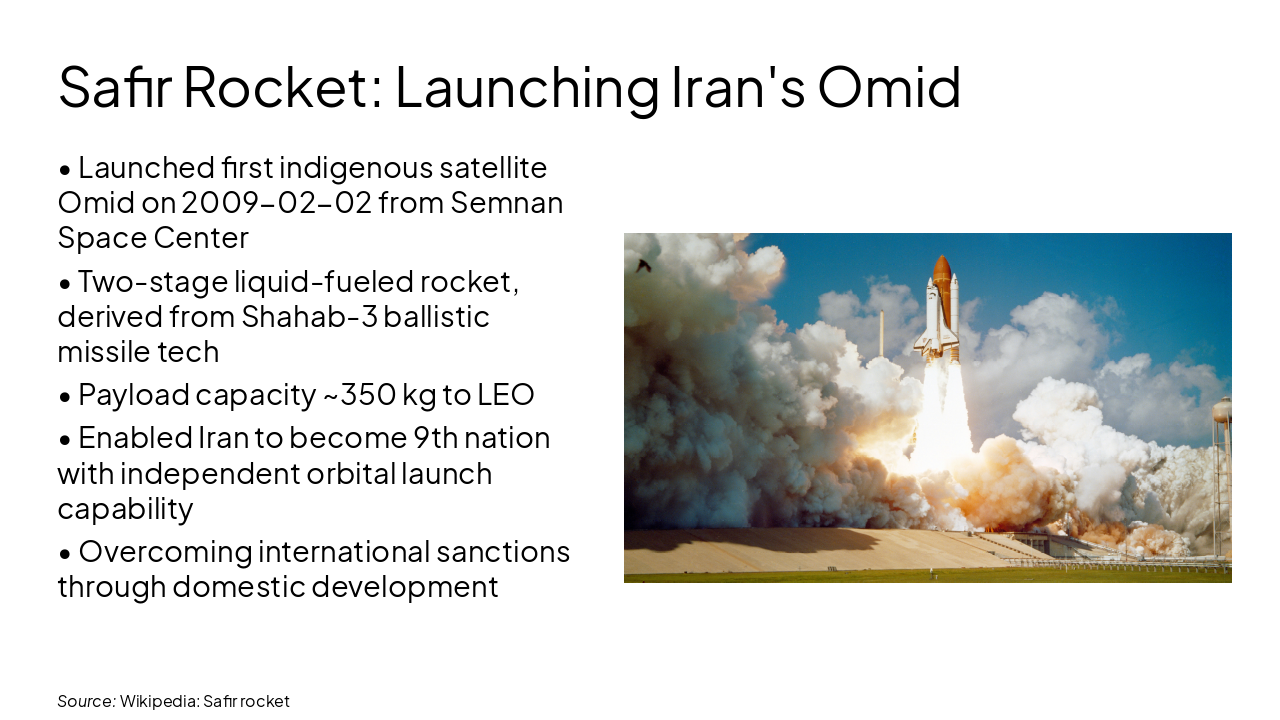
Photo by NASA on Unsplash
Source: Wikipedia: Safir rocket
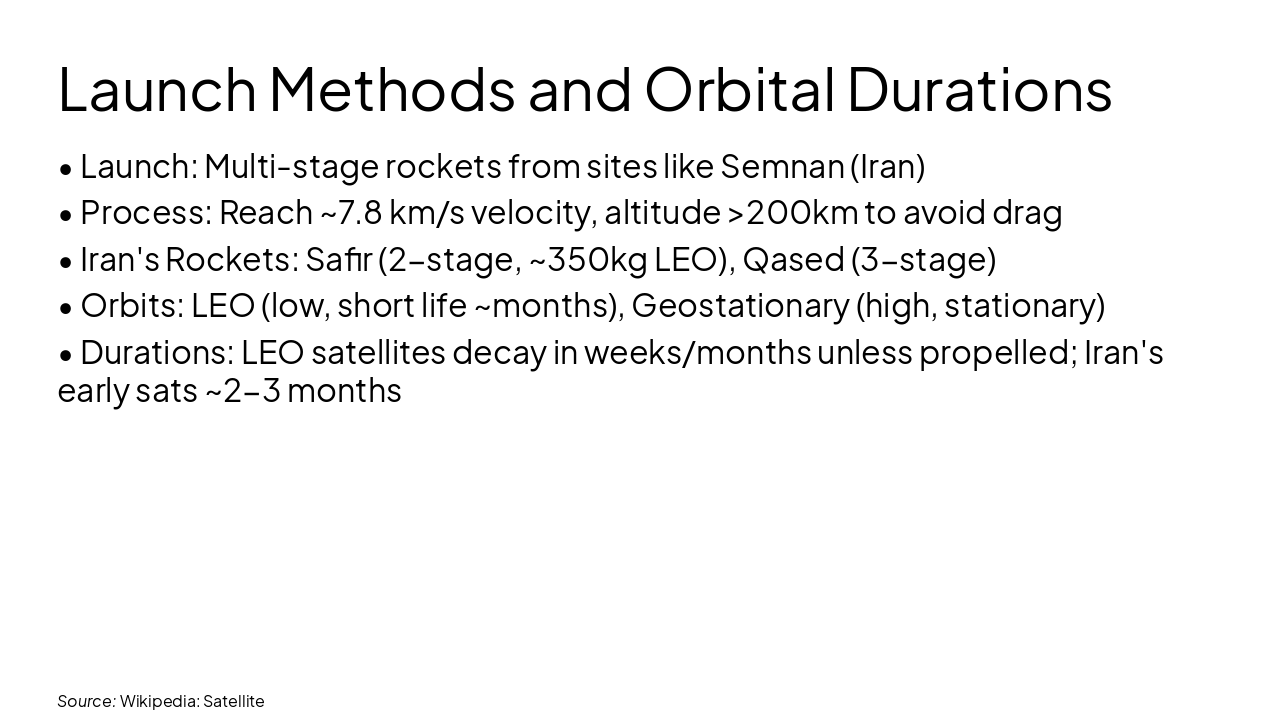
Source: Wikipedia: Satellite
Iran has successfully produced and launched multiple artificial satellites using indigenous rockets like Safir and Qased. Key satellites from Omid (2009, ~2 months) to Noor-2 (2022, ongoing) demonstrate advanced capabilities in research, imaging, and military applications despite sanctions.
Thank you! Questions?
4
LEO, GEO, and More
---
Photo by NASA on Unsplash

> Satellites have transformed our world, enabling global connectivity and observation.
— Wikipedia on Satellites
Explore thousands of AI-generated presentations for inspiration
Generate professional presentations in seconds with Karaf's AI. Customize this presentation or start from scratch.