Streamlining MarTech: Intake, Release & Renewal Processes

Generated from prompt:

Create a modern redesigned presentation titled 'Standard MarTech Intake, Release & Contract Renewal Process'. Simplify content, reduce text, and structure into clear slides with icons and visual sections. Slides: 1) Title slide. 2) Problem: Current MarTech intake chaos (multiple channels, delays, unclear priority). 3) Objective: Single standardized intake and release process. 4) Future State: One funnel, triage, prioritization, release trains, metrics. 5) MarTech Service Portal – examples of enhancement vs incident. 6) Intake Channels – allowed vs shutdown channels. 7) Prioritization Model – Impact, Urgency, Alignment, Effort with ROI formula. 8) Governance – Daily triage, Weekly prioritization board, Monthly steering committee. 9) Release Trains – Campaign Execution, Web & Analytics, Data & Integrations with operating rules. 10) Metrics – demand flow, delivery quality, stakeholder sentiment. 11) 30-60-90 day rollout plan. 12) MarTech Contract Renewal Management overview. 13) Pre‑Renewal Intelligence – business outcomes, contracts, technical fit. 14) Strategic evaluation – renew, change, enhance, exit with 120-day cadence. 15) Vendor vs Internal build decision framework. 16) Portfolio scaling and governance. Use modern minimal design, consistent color palette, icons for processes, governance, metrics, contracts, and decision frameworks.

This presentation outlines a standardized framework for MarTech intake, release management, and contract renewals. It tackles intake chaos with unified channels, prioritization models, governance structures, release trains, performance metrics, and a

March 15, 202616 slides
Slide 1 of 16

Slide 1 - Standard MarTech Intake, Release & Contract Renewal Process

Standard MarTech Intake, Release & Contract Renewal Process

Optimizing Intake, Release, and Contract Governance for Scalable MarTech Success

---

Photo by Tom Parkes on Unsplash
Slide 1 - Standard MarTech Intake, Release & Contract Renewal Process
Slide 2 of 16

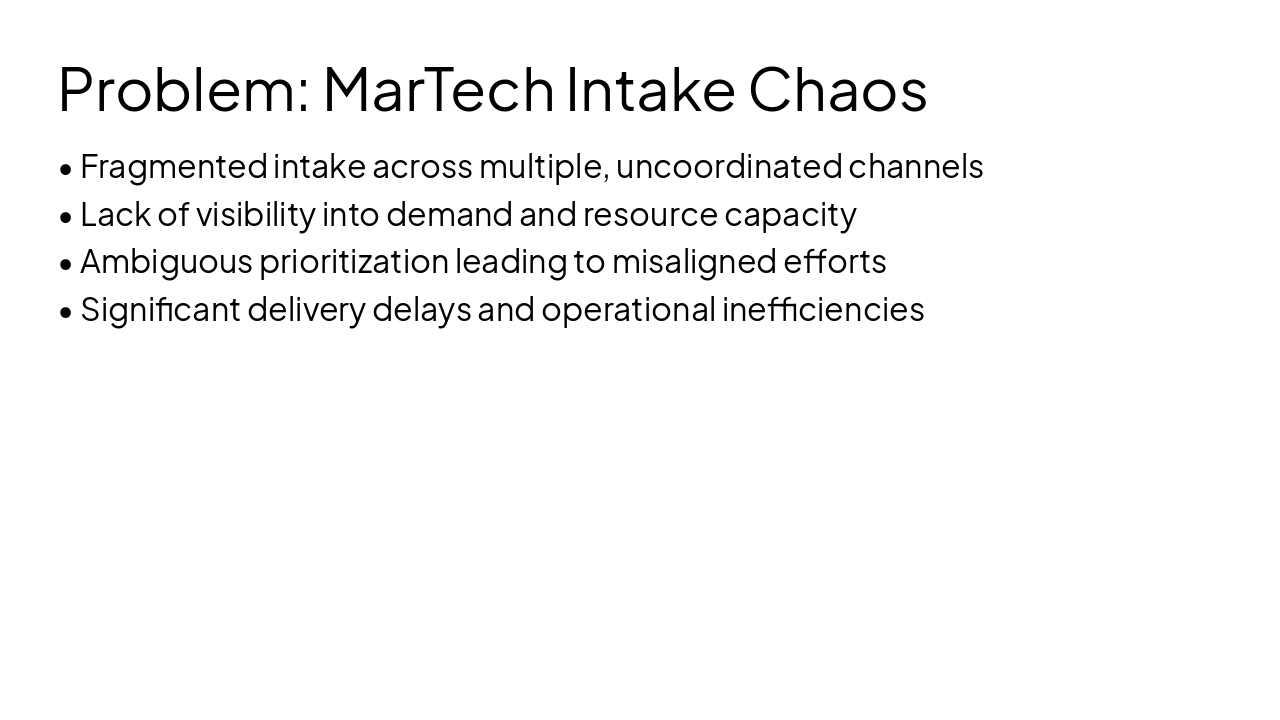
Slide 2 - Problem: MarTech Intake Chaos

  • Fragmented intake across multiple, uncoordinated channels
  • Lack of visibility into demand and resource capacity
  • Ambiguous prioritization leading to misaligned efforts
  • Significant delivery delays and operational inefficiencies
Slide 2 - Problem: MarTech Intake Chaos
Slide 3 of 16

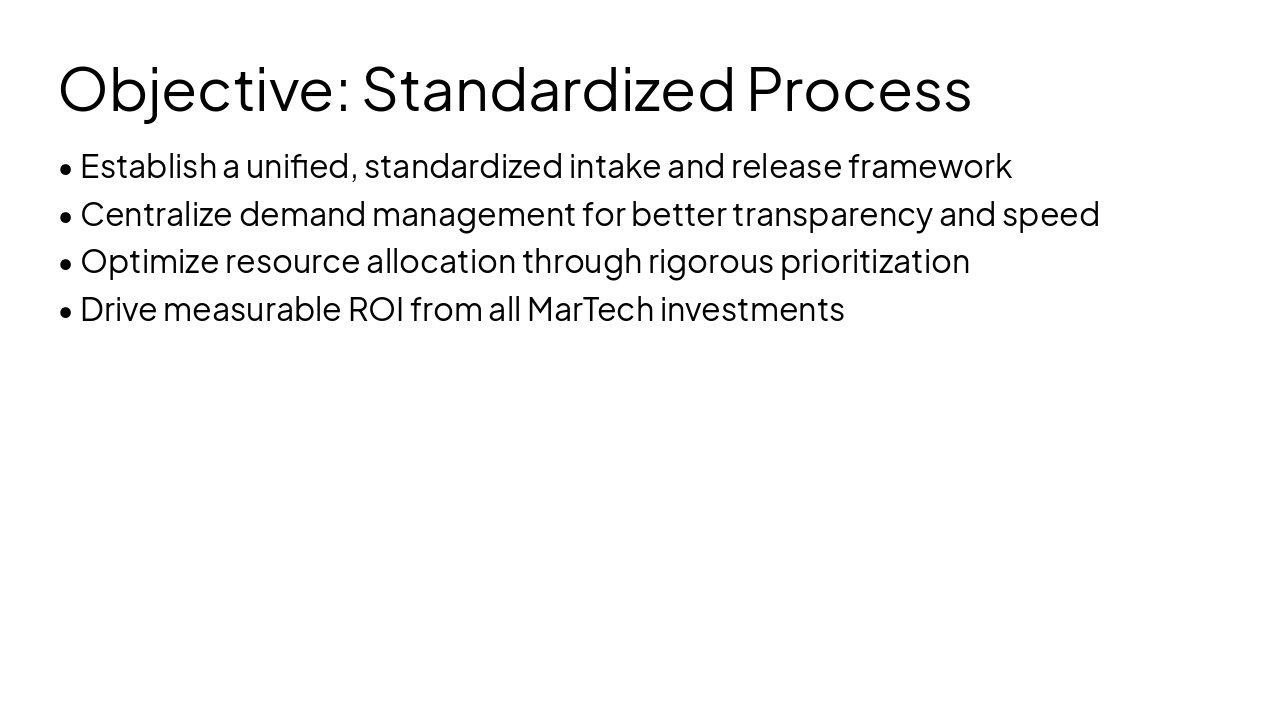
Slide 3 - Objective: Standardized Process

  • Establish a unified, standardized intake and release framework
  • Centralize demand management for better transparency and speed
  • Optimize resource allocation through rigorous prioritization
  • Drive measurable ROI from all MarTech investments
Slide 3 - Objective: Standardized Process
Slide 4 of 16

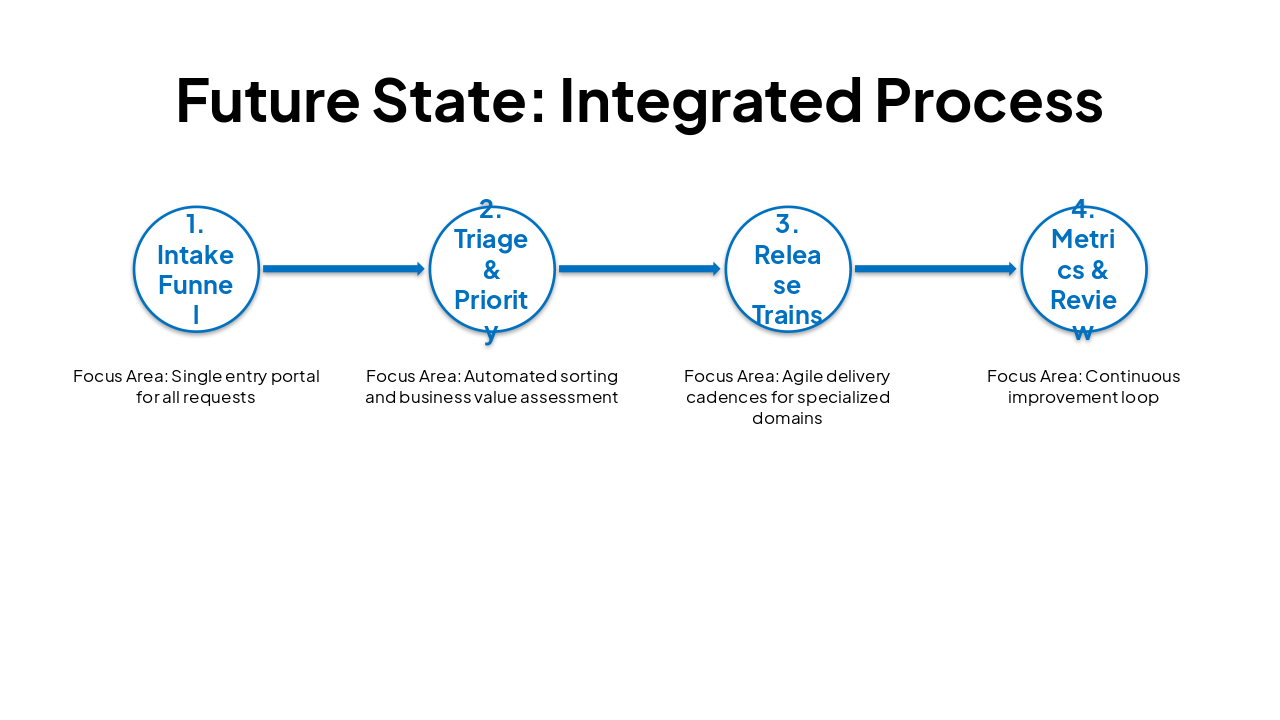
Slide 4 - Future State: Integrated Process

StepFocus Area
1. Intake FunnelSingle entry portal for all requests
2. Triage & PriorityAutomated sorting and business value assessment
3. Release TrainsAgile delivery cadences for specialized domains
4. Metrics & ReviewContinuous improvement loop
Slide 4 - Future State: Integrated Process
Slide 5 of 16

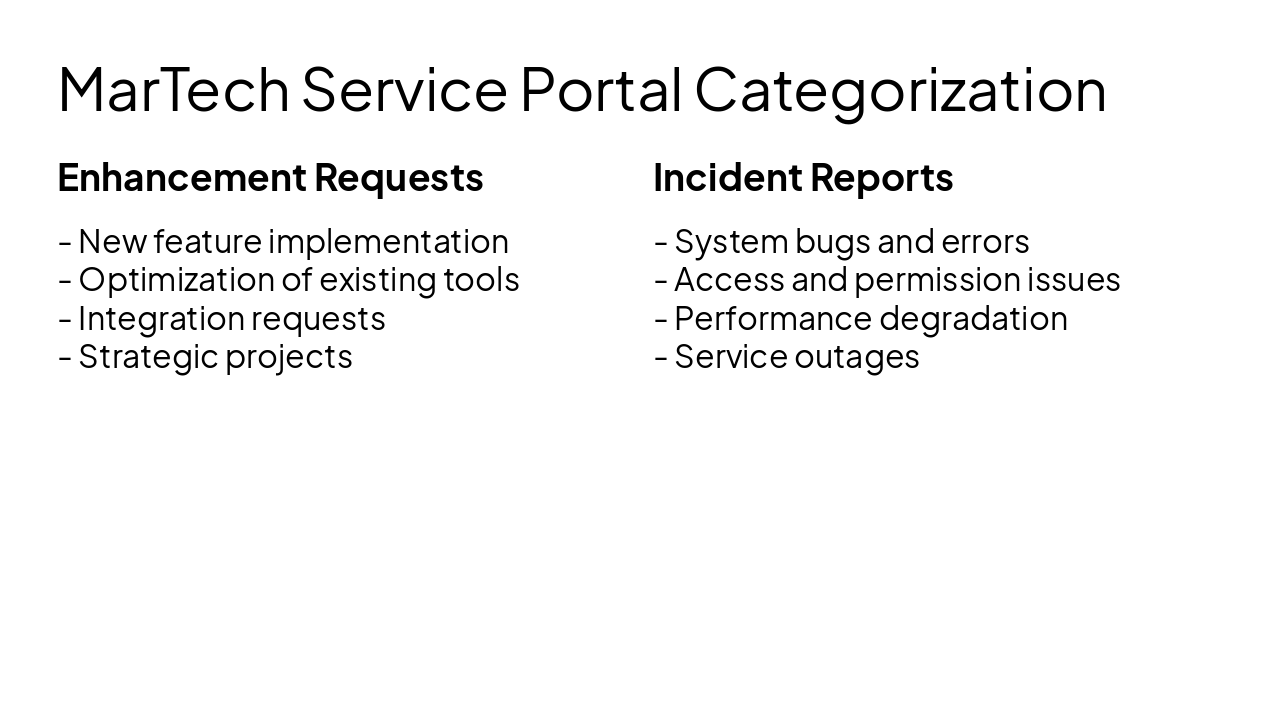
Slide 5 - MarTech Service Portal Categorization

Enhancement Requests

  • New feature implementation
  • Optimization of existing tools
  • Integration requests
  • Strategic projects

Incident Reports

  • System bugs and errors
  • Access and permission issues
  • Performance degradation
  • Service outages
Slide 5 - MarTech Service Portal Categorization
Slide 6 of 16

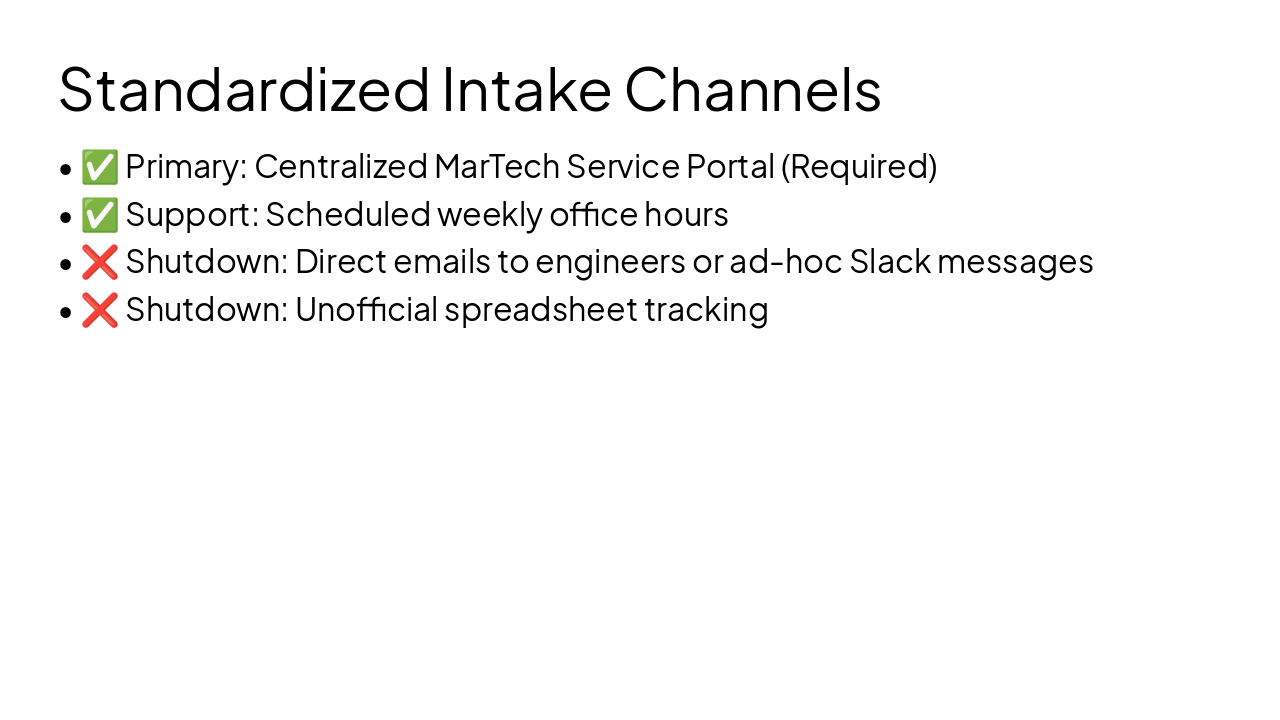
Slide 6 - Standardized Intake Channels

  • ✅ Primary: Centralized MarTech Service Portal (Required)
  • ✅ Support: Scheduled weekly office hours
  • ❌ Shutdown: Direct emails to engineers or ad-hoc Slack messages
  • ❌ Shutdown: Unofficial spreadsheet tracking
Slide 6 - Standardized Intake Channels
Slide 7 of 16

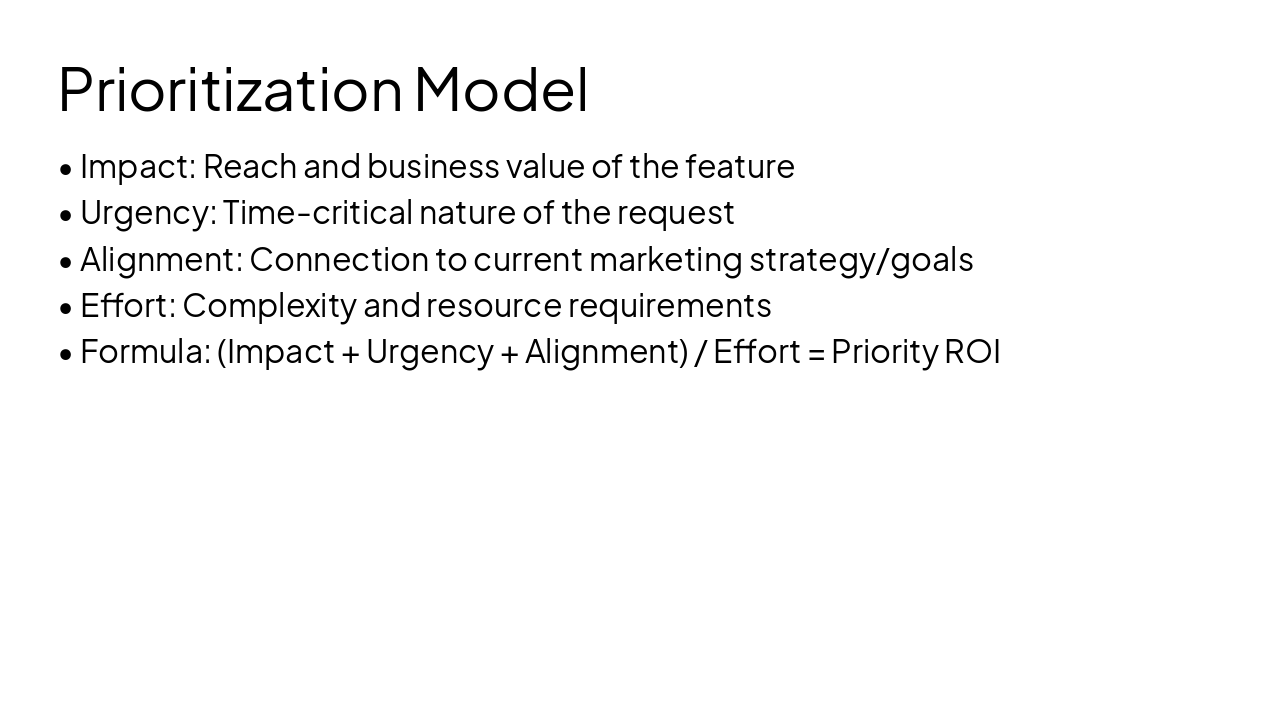
Slide 7 - Prioritization Model

  • Impact: Reach and business value of the feature
  • Urgency: Time-critical nature of the request
  • Alignment: Connection to current marketing strategy/goals
  • Effort: Complexity and resource requirements
  • Formula: (Impact + Urgency + Alignment) / Effort = Priority ROI
Slide 7 - Prioritization Model
Slide 8 of 16

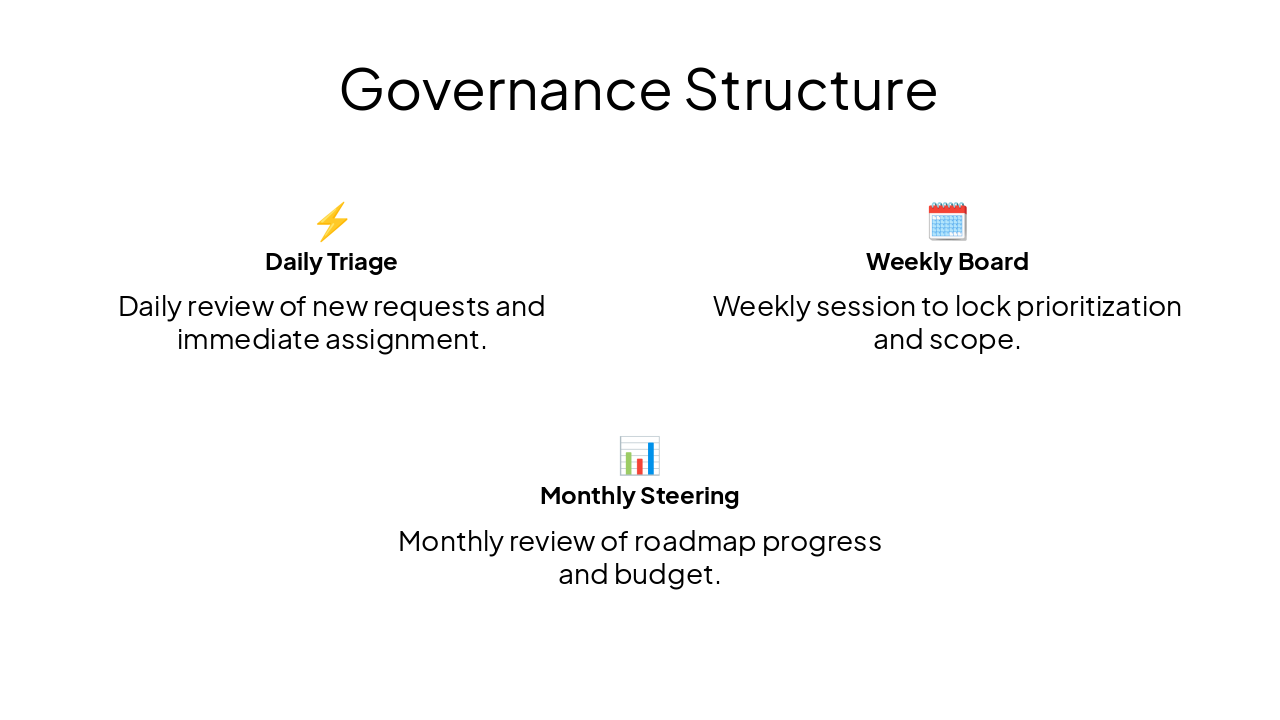
Slide 8 - Governance Structure

Daily Triage Daily review of new requests and immediate assignment.

🗓️ Weekly Board Weekly session to lock prioritization and scope.

📊 Monthly Steering Monthly review of roadmap progress and budget.

Slide 8 - Governance Structure
Slide 9 of 16

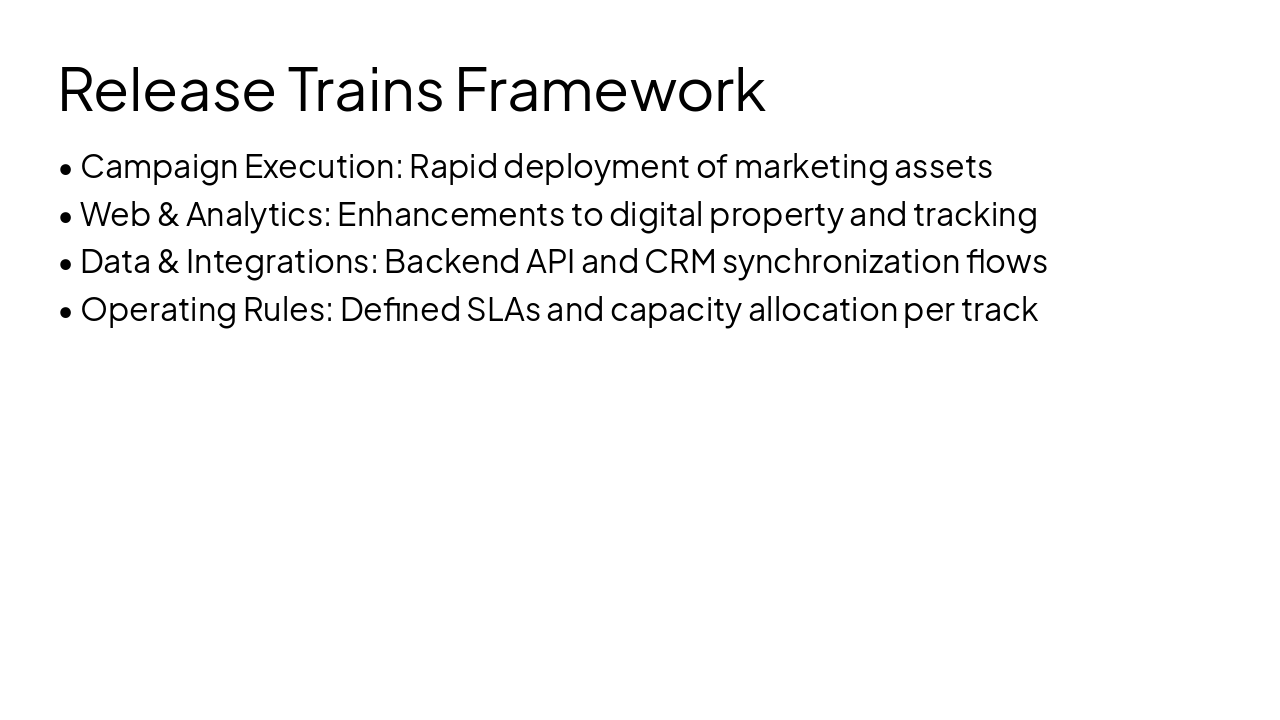
Slide 9 - Release Trains Framework

  • Campaign Execution: Rapid deployment of marketing assets
  • Web & Analytics: Enhancements to digital property and tracking
  • Data & Integrations: Backend API and CRM synchronization flows
  • Operating Rules: Defined SLAs and capacity allocation per track
Slide 9 - Release Trains Framework
Slide 10 of 16

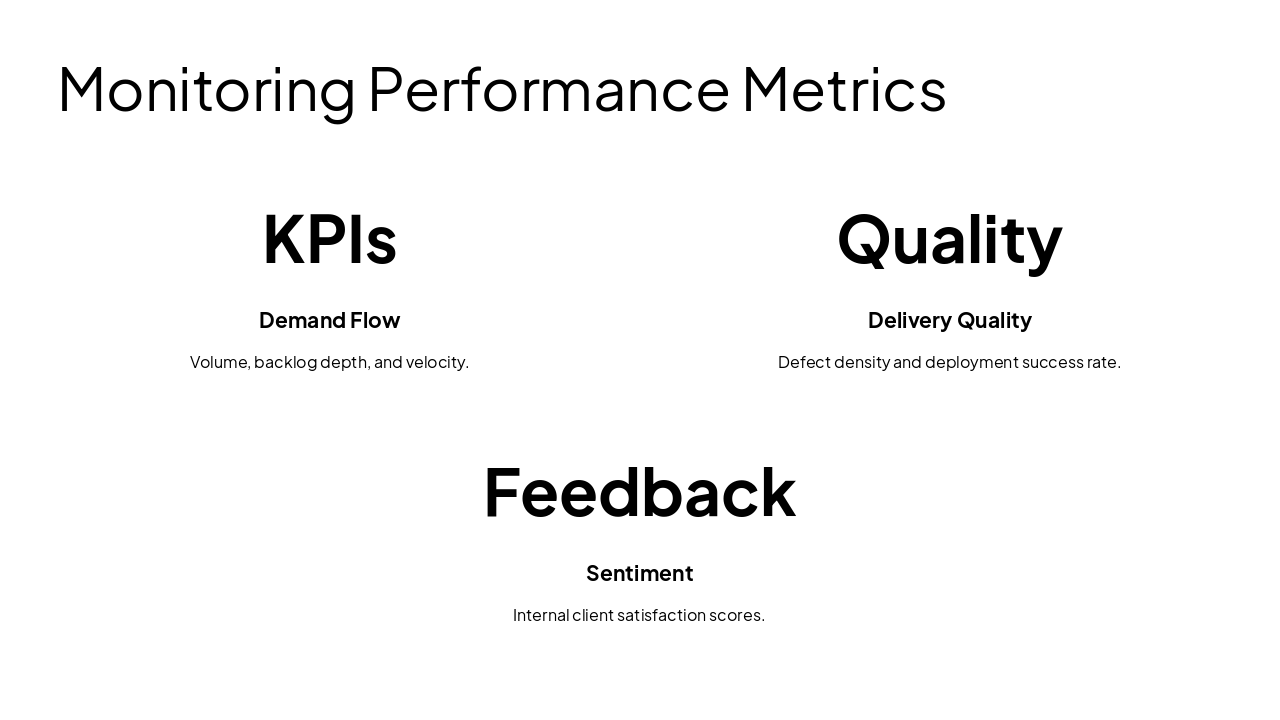
Slide 10 - Monitoring Performance Metrics

  • KPIs: Demand Flow
  • Quality: Delivery Quality
  • Feedback: Sentiment
Slide 10 - Monitoring Performance Metrics
Slide 11 of 16

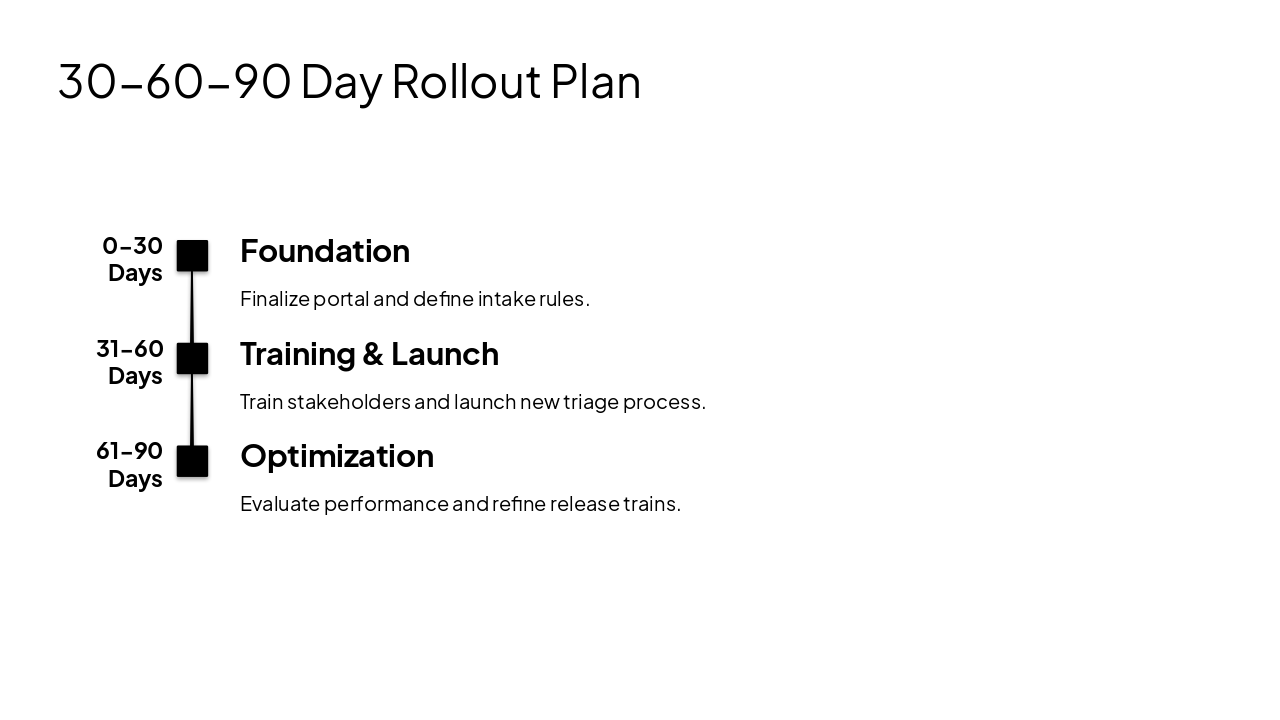
Slide 11 - 30-60-90 Day Rollout Plan

0-30 Days: Foundation Finalize portal and define intake rules. 31-60 Days: Training & Launch Train stakeholders and launch new triage process. 61-90 Days: Optimization Evaluate performance and refine release trains.

Slide 11 - 30-60-90 Day Rollout Plan
Slide 12 of 16

Slide 12 - Contract Renewal Management

Contract Renewal Management

Ensuring vendor value and alignment with business outcomes

---

Photo by Nastuh Abootalebi on Unsplash

Slide 12 - Contract Renewal Management
Slide 13 of 16

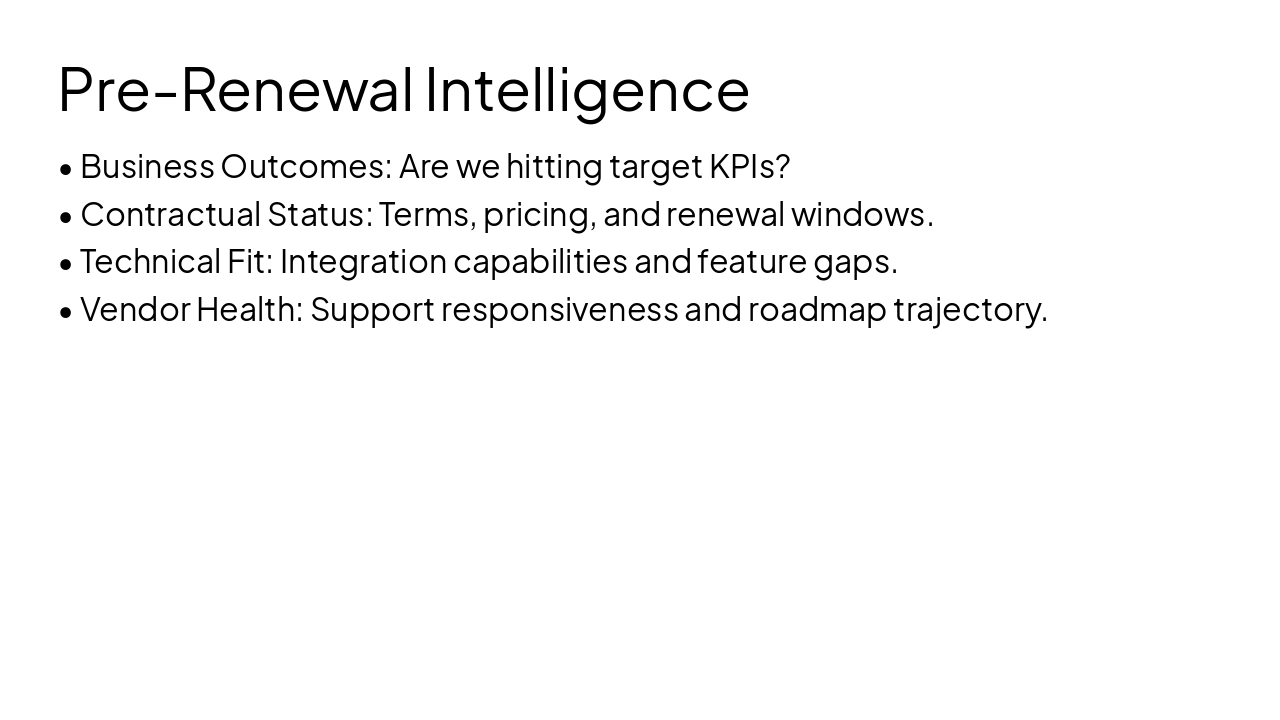
Slide 13 - Pre-Renewal Intelligence

  • Business Outcomes: Are we hitting target KPIs?
  • Contractual Status: Terms, pricing, and renewal windows.
  • Technical Fit: Integration capabilities and feature gaps.
  • Vendor Health: Support responsiveness and roadmap trajectory.
Slide 13 - Pre-Renewal Intelligence
Slide 14 of 16

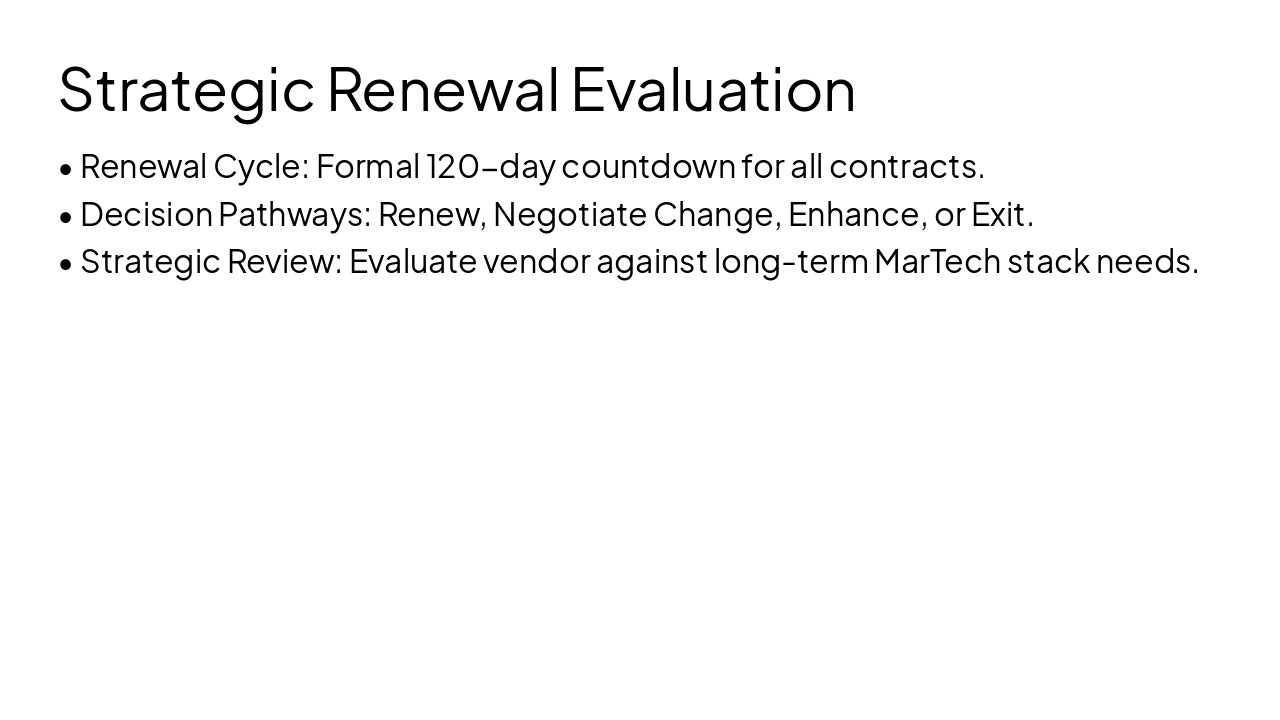
Slide 14 - Strategic Renewal Evaluation

  • Renewal Cycle: Formal 120-day countdown for all contracts.
  • Decision Pathways: Renew, Negotiate Change, Enhance, or Exit.
  • Strategic Review: Evaluate vendor against long-term MarTech stack needs.
Slide 14 - Strategic Renewal Evaluation
Slide 15 of 16

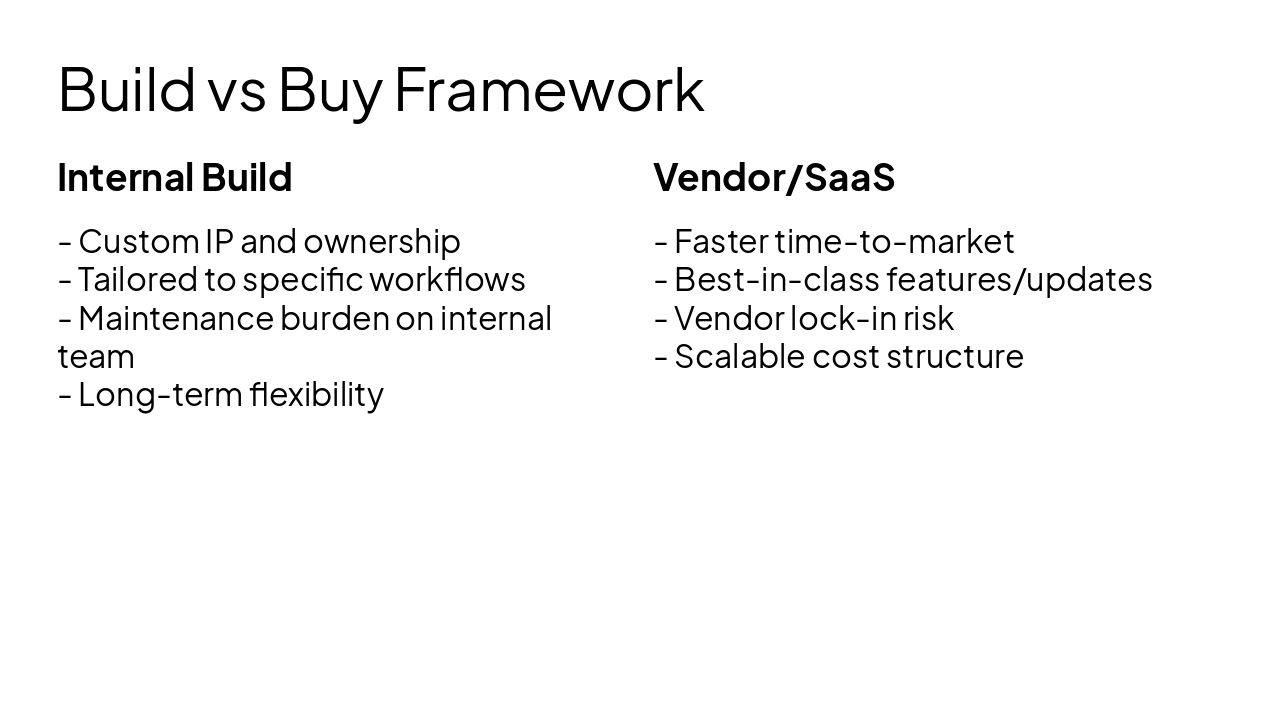
Slide 15 - Build vs Buy Framework

Internal Build

  • Custom IP and ownership
  • Tailored to specific workflows
  • Maintenance burden on internal team
  • Long-term flexibility

Vendor/SaaS

  • Faster time-to-market
  • Best-in-class features/updates
  • Vendor lock-in risk
  • Scalable cost structure
Slide 15 - Build vs Buy Framework
Slide 16 of 16

Slide 16 - Portfolio Scaling & Governance

Questions & Next Steps?

Consistent processes drive innovation and scalability.

---

Photo by Nastuh Abootalebi on Unsplash

Slide 16 - Portfolio Scaling & Governance

Discover More Presentations

Explore thousands of AI-generated presentations for inspiration

Browse Presentations
Powered by AI

Create Your Own Presentation

Generate professional presentations in seconds with Karaf's AI. Customize this presentation or start from scratch.

Create New Presentation

Powered by Karaf.ai — AI-Powered Presentation Generator