Nature: Essence of Our World

Generated from prompt:

nature

This presentation explores the definition, beauty, and evolution of nature, highlighting its balance, human impacts, fascinating facts, and the urgent need to embrace and protect it for future generat

November 18, 202510 slides
Slide 1 of 10

Slide 1 - Nature: The Essence of Our World

The title slide is titled "Nature: The Essence of Our World," presenting it as a title slide. Its subtitle describes the focus on exploring the character, laws, elements, and phenomena of our world.

Nature: The Essence of Our World

Exploring the character, laws, elements, and phenomena of our world.

Source: nature

--- Speaker Notes: Exploring the inherent character, laws, elements, and phenomena of the physical world, including life and the ecosphere.
Slide 1
Slide 2 of 10

Slide 2 - Presentation Outline

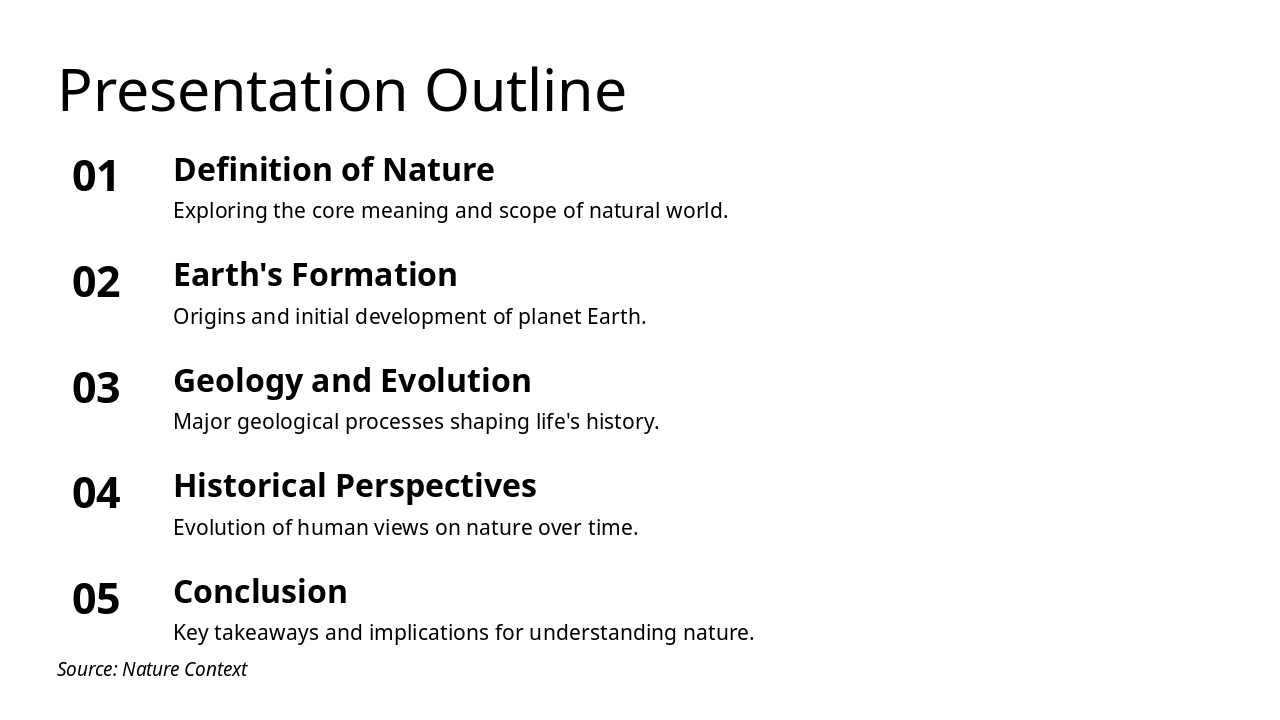
The agenda slide outlines a presentation on nature, beginning with its core definition and the origins of Earth's formation. It then covers geology and evolution, historical human perspectives on nature, and concludes with key takeaways.

Presentation Outline

  1. Definition of Nature

Exploring the core meaning and scope of natural world.

  1. Earth's Formation

Origins and initial development of planet Earth.

  1. Geology and Evolution

Major geological processes shaping life's history.

  1. Historical Perspectives

Evolution of human views on nature over time.

  1. Conclusion

Key takeaways and implications for understanding nature.

Source: Nature Context

Slide 2
Slide 3 of 10

Slide 3 - What is Nature?

This section header slide, titled "What is Nature?", introduces the fundamental concept of nature. The subtitle emphasizes exploring its core meaning and etymological origins.

What is Nature?

What is Nature?

Understanding the core concept and etymology of nature.

Source: nature

Slide 3
Slide 4 of 10

Slide 4 - Definition and Key Aspects

Nature is defined as the inherent character of the ecosphere and universe, encompassing physical laws, elements, natural phenomena, and all life forms. While humans are an integral part of nature, they frequently perceive themselves as separate or superior to it.

Definition and Key Aspects

  • Nature embodies the inherent character of the ecosphere and universe.
  • Encompasses physical laws, elements, phenomena, and life forms.
  • Humans integrate into nature yet often view themselves as separate or superior.
Slide 4
Slide 5 of 10

Slide 5 - The Beauty of Earth's Nature

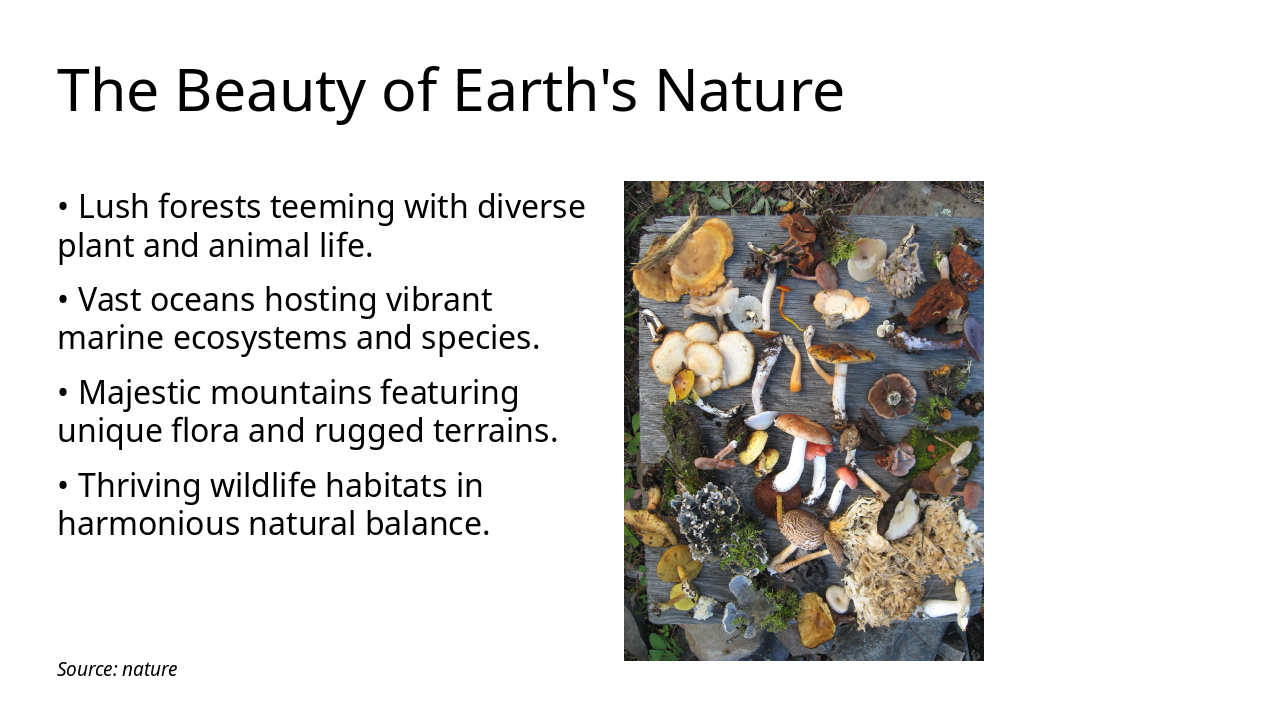
The slide "The Beauty of Earth's Nature" showcases an image highlighting the planet's diverse ecosystems, including lush forests teeming with plant and animal life, vast oceans with vibrant marine species, majestic mountains with unique flora and rugged terrains, and thriving wildlife habitats in harmonious balance. It emphasizes the awe-inspiring variety and interconnectedness of natural environments on Earth.

The Beauty of Earth's Nature

!Image

  • Lush forests teeming with diverse plant and animal life.
  • Vast oceans hosting vibrant marine ecosystems and species.
  • Majestic mountains featuring unique flora and rugged terrains.
  • Thriving wildlife habitats in harmonious natural balance.

Source: nature

Slide 5
Slide 6 of 10

Slide 6 - Inspiration from Nature

The slide, titled "Inspiration from Nature," features a quote by ancient Chinese philosopher Lao Tzu: "Nature does not hurry, yet everything is accomplished." It explains this wisdom as a reflection of nature's balanced phenomena, offering lessons in patience, harmony, and effortless achievement.

Inspiration from Nature

> Nature does not hurry, yet everything is accomplished. This timeless wisdom reflects the balanced phenomena of nature, teaching us the profound lessons of patience, harmony, and effortless achievement.

— Lao Tzu, ancient Chinese philosopher

Source: Context: nature

--- Speaker Notes: Reflecting on nature's balanced phenomena.

Slide 6
Slide 7 of 10

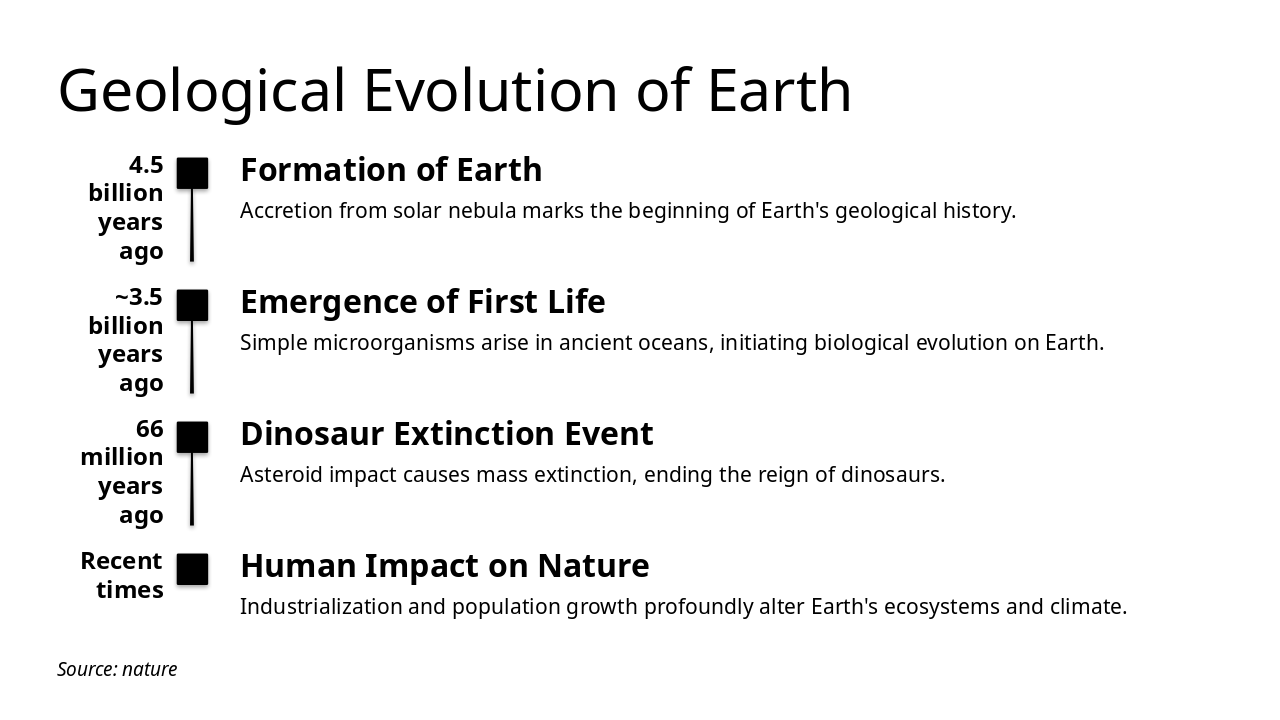
Slide 7 - Geological Evolution of Earth

The timeline slide on the Geological Evolution of Earth begins with the planet's formation 4.5 billion years ago through accretion from the solar nebula, followed by the emergence of simple microorganisms in ancient oceans around 3.5 billion years ago. It continues to the asteroid impact 66 million years ago that caused the mass extinction of dinosaurs and concludes with recent human impacts from industrialization and population growth altering ecosystems and climate.

Geological Evolution of Earth

4.5 billion years ago: Formation of Earth Accretion from solar nebula marks the beginning of Earth's geological history. ~3.5 billion years ago: Emergence of First Life Simple microorganisms arise in ancient oceans, initiating biological evolution on Earth. 66 million years ago: Dinosaur Extinction Event Asteroid impact causes mass extinction, ending the reign of dinosaurs. Recent times: Human Impact on Nature Industrialization and population growth profoundly alter Earth's ecosystems and climate.

Source: nature

Slide 7
Slide 8 of 10

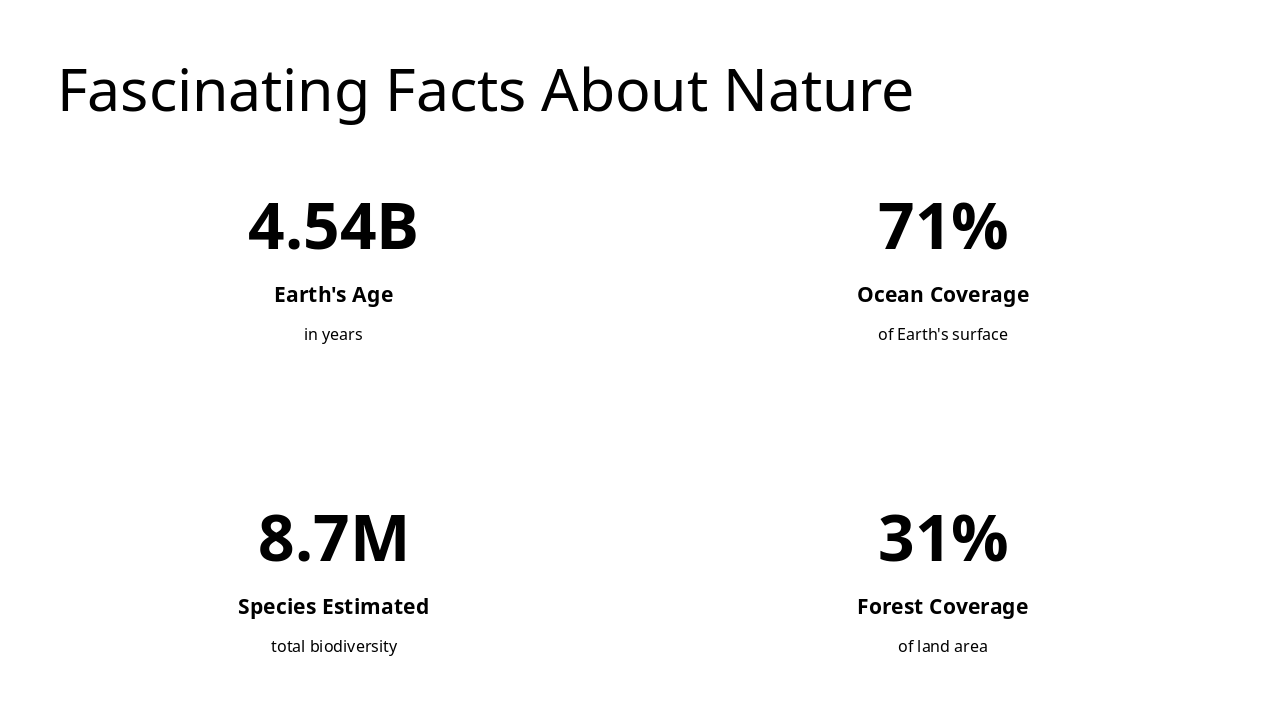
Slide 8 - Fascinating Facts About Nature

Earth is approximately 4.54 billion years old and covered by oceans on 71% of its surface. It hosts an estimated 8.7 million species, with forests spanning 31% of its land area.

Fascinating Facts About Nature

  • 4.54B: Earth's Age

in years

  • 71%: Ocean Coverage

of Earth's surface

  • 8.7M: Species Estimated

total biodiversity

  • 31%: Forest Coverage

of land area

Slide 8
Slide 9 of 10

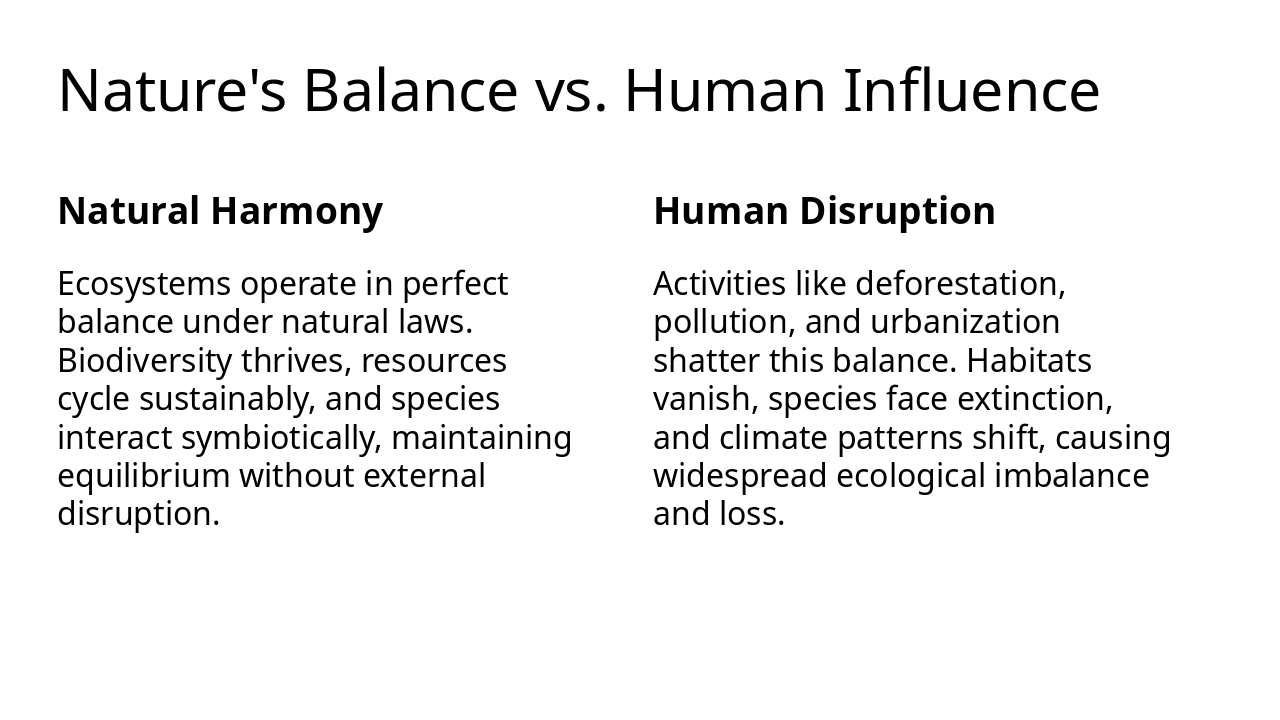
Slide 9 - Nature's Balance vs. Human Influence

The slide contrasts "Natural Harmony," where ecosystems maintain perfect balance through thriving biodiversity, sustainable resource cycles, and symbiotic species interactions without external interference. In "Human Disruption," activities such as deforestation, pollution, and urbanization destroy this equilibrium by eliminating habitats, driving species to extinction, and altering climate patterns, leading to widespread ecological loss.

Nature's Balance vs. Human Influence

Natural HarmonyHuman Disruption
Ecosystems operate in perfect balance under natural laws. Biodiversity thrives, resources cycle sustainably, and species interact symbiotically, maintaining equilibrium without external disruption.Activities like deforestation, pollution, and urbanization shatter this balance. Habitats vanish, species face extinction, and climate patterns shift, causing widespread ecological imbalance and loss.
Slide 9
Slide 10 of 10

Slide 10 - Embracing and Protecting Nature

The conclusion slide, titled "Embracing and Protecting Nature," urges viewers to preserve nature for future generations. Its subtitle calls for joining efforts to protect the planet today.

Embracing and Protecting Nature

Preserve Nature for Future Generations

Join efforts to protect our planet today.

Source: nature

--- Speaker Notes: Nature is the foundation of life; Historical views remind us of our connection; Let's preserve it for future generations.

Slide 10
Powered by AI

Create Your Own Presentation

Generate professional presentations in seconds with Karaf's AI. Customize this presentation or start from scratch.

Create New Presentation

Powered by Karaf.ai — AI-Powered Presentation Generator