How to Risk Assess a Task: Implementing Control Measures Effectively

Generated from prompt:

How to risk assess a task and put the control measures in place

This presentation provides a step-by-step guide to conducting risk assessments for tasks. It covers defining risk assessment, identifying hazards through inspections and checklists, evaluating risks using a matrix, selecting controls via the hierarchy (elimination, substitution, engineering, administrative, PPE), implementing measures with training and documentation, and monitoring for continuous improvement. Includes benefits like incident prevention, compliance with ISO 31000, OSHA, and HSE, key takeaways, and best practices for safer workplaces.

May 11, 202614 slides
Slide 1 of 14

Slide 1 - How to Risk Assess a Task

How to Risk Assess a Task

Implementing Control Measures Effectively

---

Photo by Scott Blake on Unsplash
Slide 1 - How to Risk Assess a Task
Slide 2 of 14

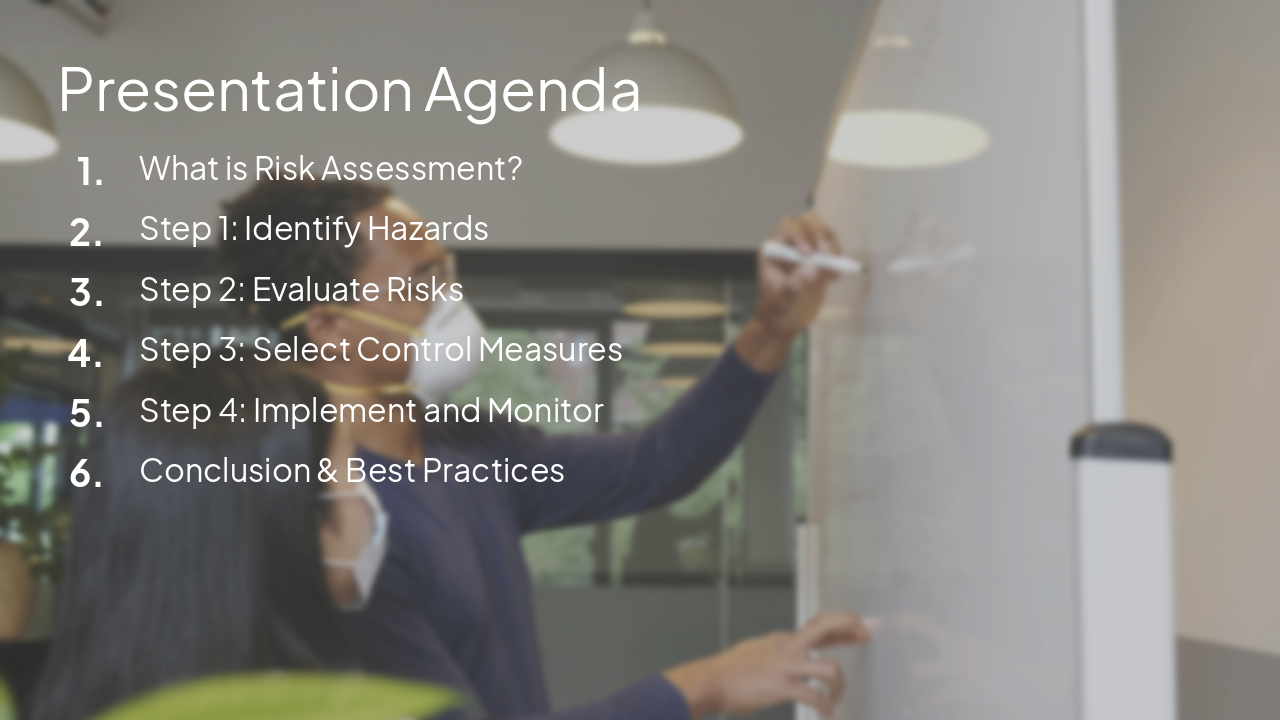
Slide 2 - Presentation Agenda

  • What is Risk Assessment?
  • Step 1: Identify Hazards
  • Step 2: Evaluate Risks
  • Step 3: Select Control Measures
  • Step 4: Implement and Monitor
  • Conclusion & Best Practices

---

Photo by airfocus on Unsplash

Slide 2 - Presentation Agenda
Slide 3 of 14

Slide 3 - What is Risk Assessment?

  • Systematic process to identify potential hazards
  • Evaluate risks and decide on precautions
  • Implement controls to minimize harm
  • Ongoing review to ensure effectiveness
  • Compliant with ISO 31000, OSHA, and HSE guidelines
Slide 3 - What is Risk Assessment?
Slide 4 of 14

Slide 4 - Step 1: Identify Hazards

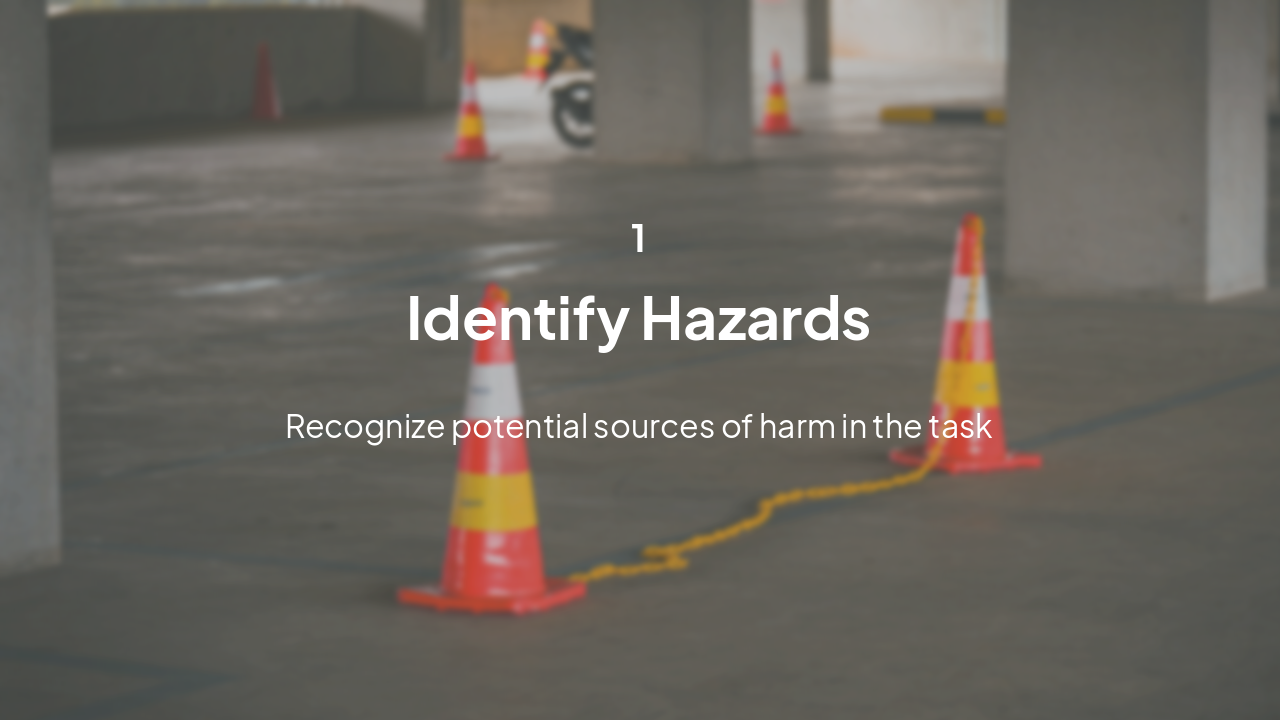
1

Identify Hazards

Recognize potential sources of harm in the task

---

Photo by Kevin kevin on Unsplash

Slide 4 - Step 1: Identify Hazards
Slide 5 of 14

Slide 5 - How to Identify Hazards

  • Break down the task into key steps
  • Inspect the workplace and equipment
  • Talk to workers who perform the task
  • Review accident records and near-misses
  • Use hazard checklists and JSA (Job Safety Analysis)
  • Consider environmental, chemical, and ergonomic hazards
Slide 5 - How to Identify Hazards
Slide 6 of 14

Slide 6 - Step 2: Evaluate Risks

2

Evaluate Risks

Determine likelihood and potential impact

---

Photo by Ana Garnica on Unsplash
Slide 6 - Step 2: Evaluate Risks
Slide 7 of 14

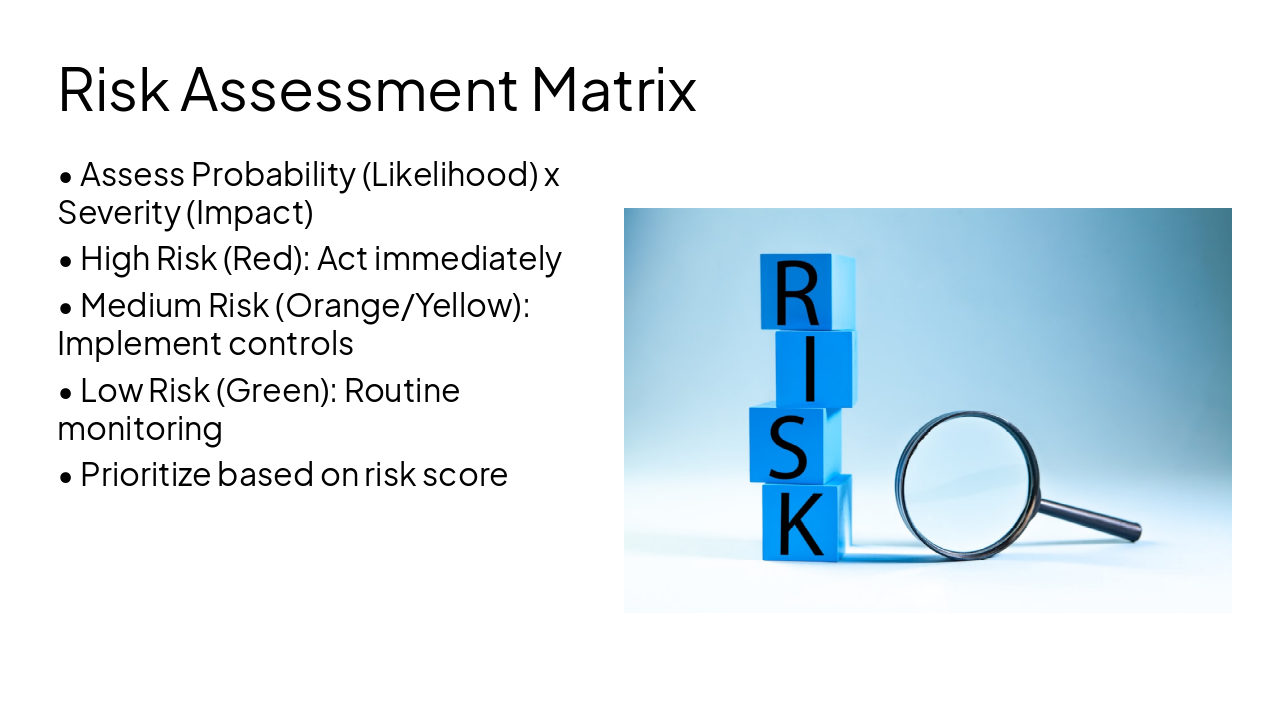
Slide 7 - Risk Assessment Matrix

  • Assess Probability (Likelihood) x Severity (Impact)
  • High Risk (Red): Act immediately
  • Medium Risk (Orange/Yellow): Implement controls
  • Low Risk (Green): Routine monitoring
  • Prioritize based on risk score

---

Photo by Sasun Bughdaryan on Unsplash
Slide 7 - Risk Assessment Matrix
Slide 8 of 14

Slide 8 - Step 3: Control Measures

3

Control Measures

Hierarchy to eliminate or minimize risks

---

Photo by Jan Huber on Unsplash

Slide 8 - Step 3: Control Measures
Slide 9 of 14

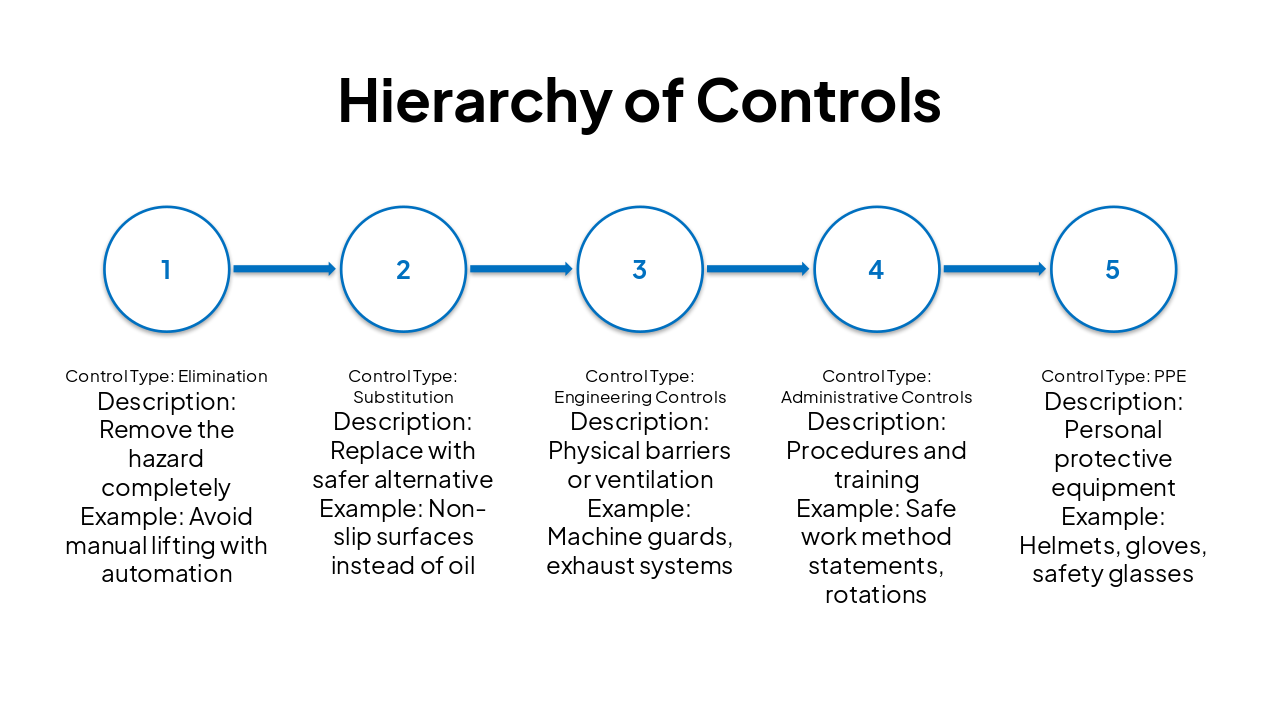
Slide 9 - Hierarchy of Controls

PriorityControl TypeDescriptionExample
1EliminationRemove the hazard completelyAvoid manual lifting with automation
2SubstitutionReplace with safer alternativeNon-slip surfaces instead of oil
3Engineering ControlsPhysical barriers or ventilationMachine guards, exhaust systems
4Administrative ControlsProcedures and trainingSafe work method statements, rotations
5PPEPersonal protective equipmentHelmets, gloves, safety glasses
Slide 9 - Hierarchy of Controls
Slide 11 of 14

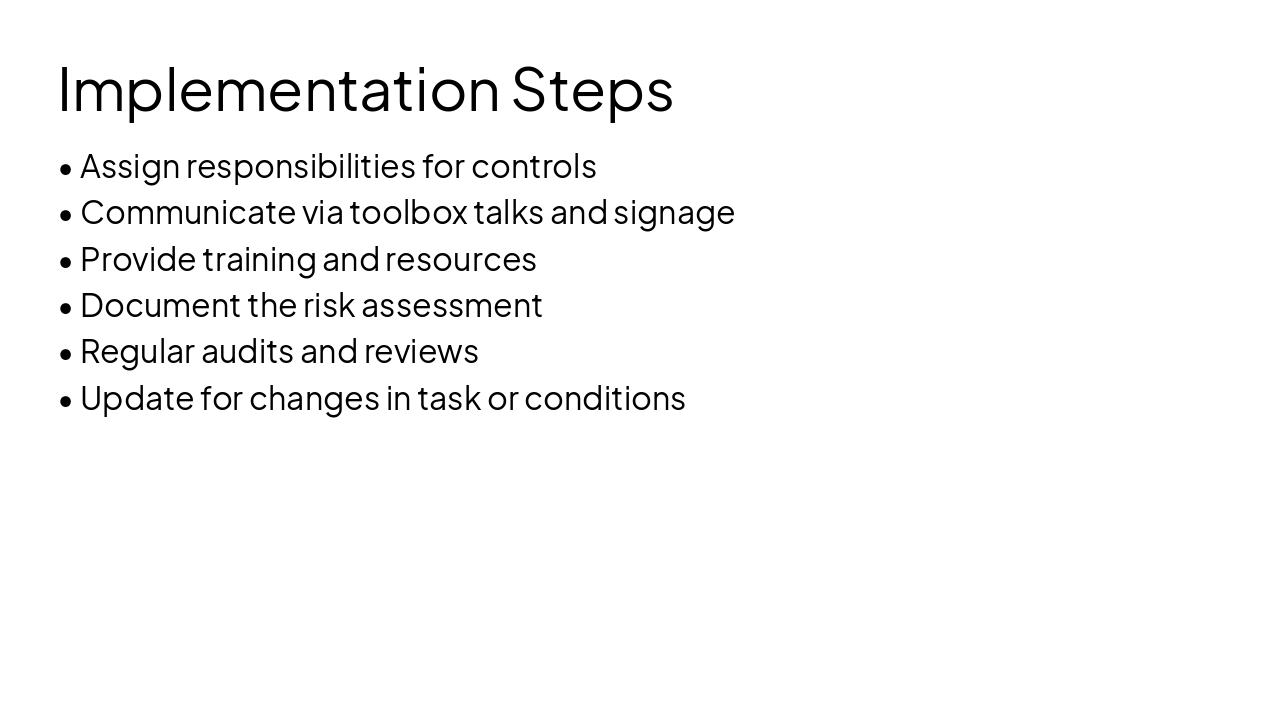
Slide 11 - Implementation Steps

  • Assign responsibilities for controls
  • Communicate via toolbox talks and signage
  • Provide training and resources
  • Document the risk assessment
  • Regular audits and reviews
  • Update for changes in task or conditions
Slide 11 - Implementation Steps
Slide 12 of 14

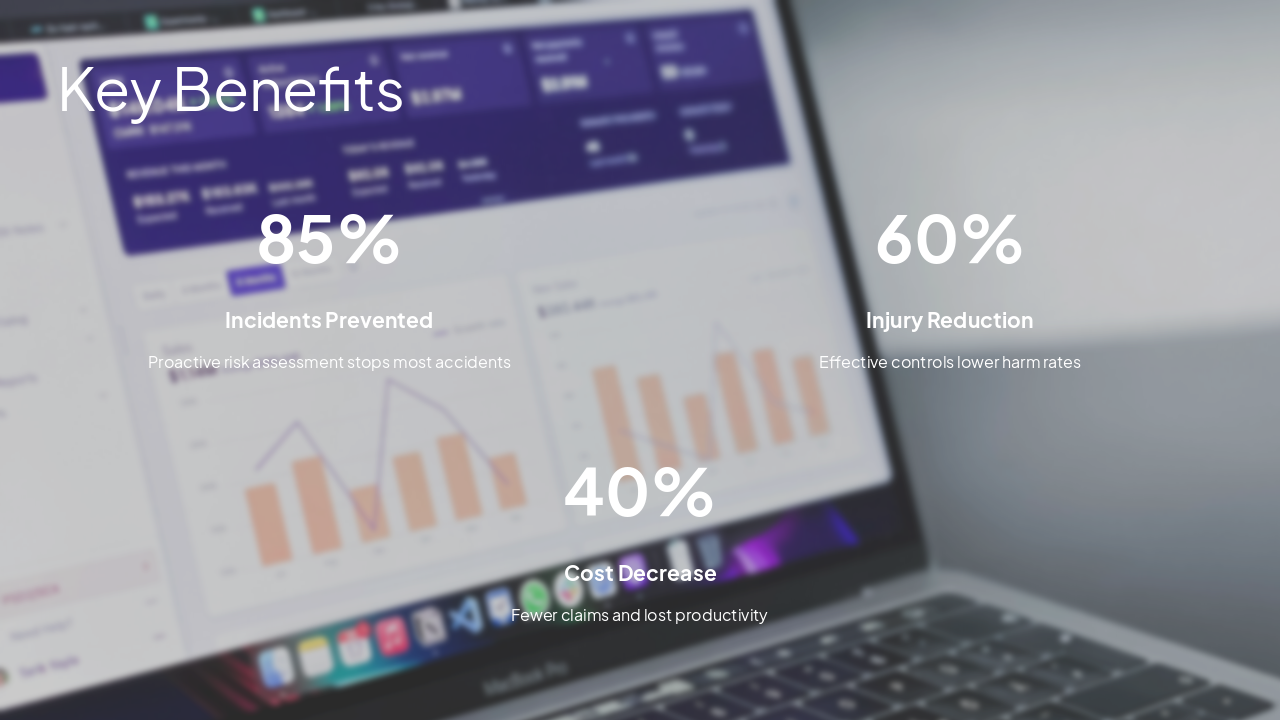
Slide 12 - Key Benefits

  • 85%: Incidents Prevented
  • 60%: Injury Reduction
  • 40%: Cost Decrease

---

Photo by path digital on Unsplash

Slide 12 - Key Benefits
Slide 13 of 14

Slide 13 - A Safety Perspective

> 'Risk assessment is not a paperwork exercise. It is about getting the right controls in place to prevent harm.'

— HSE (Health and Safety Executive)

---

Photo by LSE Library on Unsplash
Slide 13 - A Safety Perspective
Slide 14 of 14

Slide 14 - Key Takeaways

Identify hazards early Use risk matrix to prioritize Apply hierarchy of controls Implement, train, and review regularly Achieve safer workplaces

Thank you! Questions?

---

Photo by Fiqih Alfarish on Unsplash
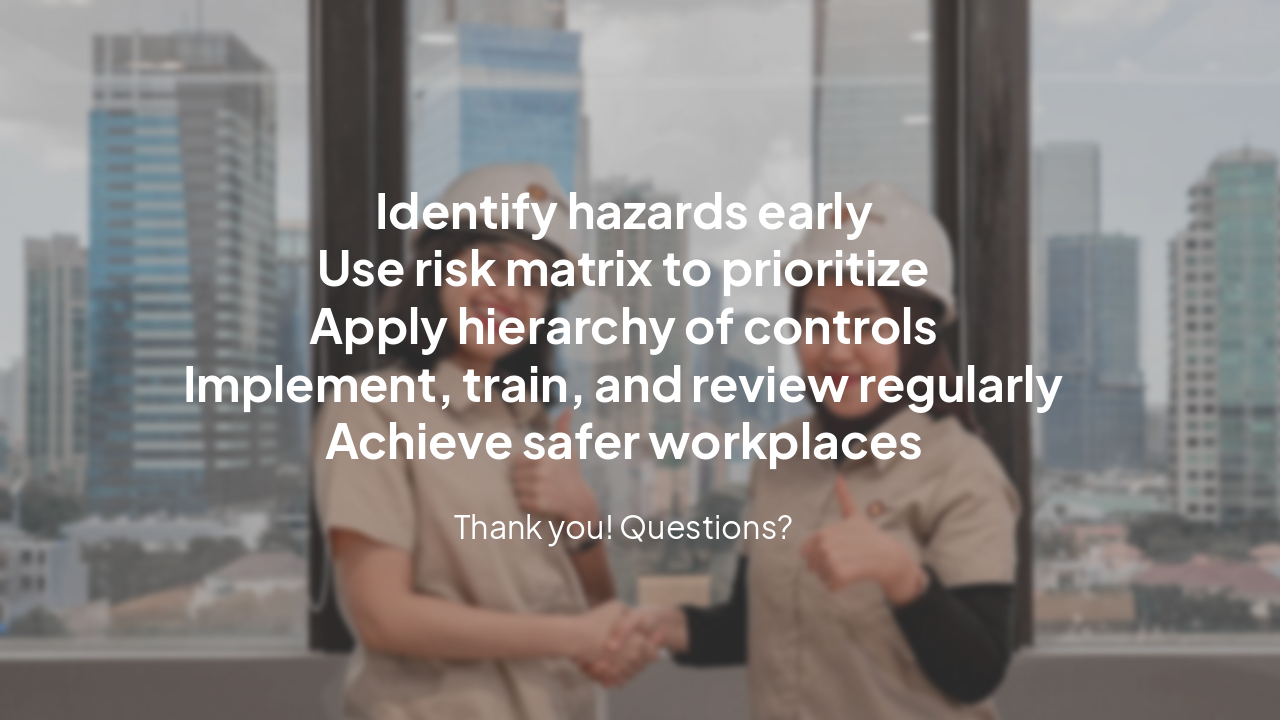
Slide 14 - Key Takeaways

Discover More Presentations

Explore thousands of AI-generated presentations for inspiration

Browse Presentations
Powered by AI

Create Your Own Presentation

Generate professional presentations in seconds with Karaf's AI. Customize this presentation or start from scratch.

Create New Presentation

Powered by Karaf.ai — AI-Powered Presentation Generator