SMA: Empowering Small Biz Decisions (35 chars)

Generated from prompt:

Create a PowerPoint presentation titled 'Use of Social Media Analytics for Business Intelligence and Decision-Making in Small Businesses' with 12 slides as follows: Slide 1 — Title Slide Use of Social Media Analytics for Business Intelligence and Decision-Making in Small Businesses Research by: Yadnesh Purushottam Patil Guide: Dr. Shubhi Lall Agarwal MCA, St. Wilfred’s College Academic Year: 2024–2026 Slide 2 — Introduction Social media is a major marketing tool for SMEs. Owners rely on Instagram, WhatsApp, Facebook, YouTube. Most post content without deeper analytics understanding. SMA converts engagement data into insights. Problem: SMEs use social media but NOT analytics effectively. Slide 3 — Research Problem SMEs depend on intuition rather than data. Struggle to interpret dashboards. Lack analytics skills and training. Leads to poor decisions and low ROI. Slide 4 — Objectives Measure SMA usage among small businesses. Examine awareness of analytics tools. Evaluate impact on business decisions. Identify challenges and barriers. Recommend improvements for data-driven decisions. Slide 5 — Methodology Design: Descriptive + analytical. Primary data: Survey of SME owners. Secondary data: Research papers, reports. Sampling: Purposive — only active social media users. Analysis: Percentages, charts, thematic analysis. Slide 6 — Findings: Social Media Usage Instagram → 90% WhatsApp Business → 75% Facebook → 40% YouTube → 20% Posting Frequency: Weekly (60%), several times/week (25%), daily (8–10%). Analytics knowledge low → mostly basic metrics. Slide 7 — Findings: Analytics Usage Levels Checking insights: Daily (5%), Weekly (20%), Monthly (30%), Rarely/Never (45%). Metrics used: Mostly descriptive (likes, reach) → 85%. Diagnostic analytics → 25%. Predictive → 3–5%. Prescriptive → 0%. Slide 8 — Impact on Decision-Making Helps with: Best-performing content (65%), timing (55%), audience interests (60%). Weak impact on: Segmentation (10%), pricing (5%), forecasting (3%). SMEs use analytics tactically, not strategically. Slide 9 — Challenges Lack of analytics knowledge → 75%. No formal training → 70%. Limited time → 60%. Difficulty reading dashboards → 55%. Budget issues for paid tools → 40%. Biggest blockers: skills + training, not tools. Slide 10 — Case Studies Case 1: Home-Based Bakery Changed posting time using Instagram Insights. Reach ↑ 35%, inquiries ↑ 20%. Case 2: Retail Fashion Store Adjusted content based on engagement data. Profile visits ↑ 18%, engagement ↑ 15%. Slide 11 — Recommendations Train SMEs in analytics (70% want training). Use free tools (Meta Insights) to reduce cost barriers. Weekly review system to replace intuition. Expected improvements: Reach ↑ 30–40%, engagement ↑ 20–25%, ROI clarity ↑ 50%. Slide 12 — Conclusion & Future Scope 90% use social media but <15% use analytics effectively. 65% rely on intuition; 70% want training. SMA adoption expected to rise 25–35% in India. Future scope: AI-driven analytics, sector-specific dashboards, and training programs to improve SME decision-making.

Examines SMEs' heavy social media use (90% on Instagram/WhatsApp) but low analytics adoption (<15% effective). Highlights skill gaps, tactical impacts, case studies (+35% reach), and recommendations f

December 8, 202512 slides
Slide 1 of 12

Slide 1 - Social Media Analytics for Small Businesses

This title slide, "Social Media Analytics for Small Businesses," explores the use of social media analytics for business intelligence and decision-making in small businesses. It credits the research to Yadnesh Purushottam Patil, guided by Dr. Shubhi Lall Agarwal, from MCA at St. Wilfred’s College (2024–2026).

Use of Social Media Analytics for Business Intelligence and Decision-Making in Small Businesses

Research by: Yadnesh Purushottam Patil Guide: Dr. Shubhi Lall Agarwal MCA, St. Wilfred’s College Academic Year: 2024–2026

Source: Yadnesh Purushottam Patil

Slide 1 - Social Media Analytics for Small Businesses
Slide 2 of 12

Slide 2 - Introduction

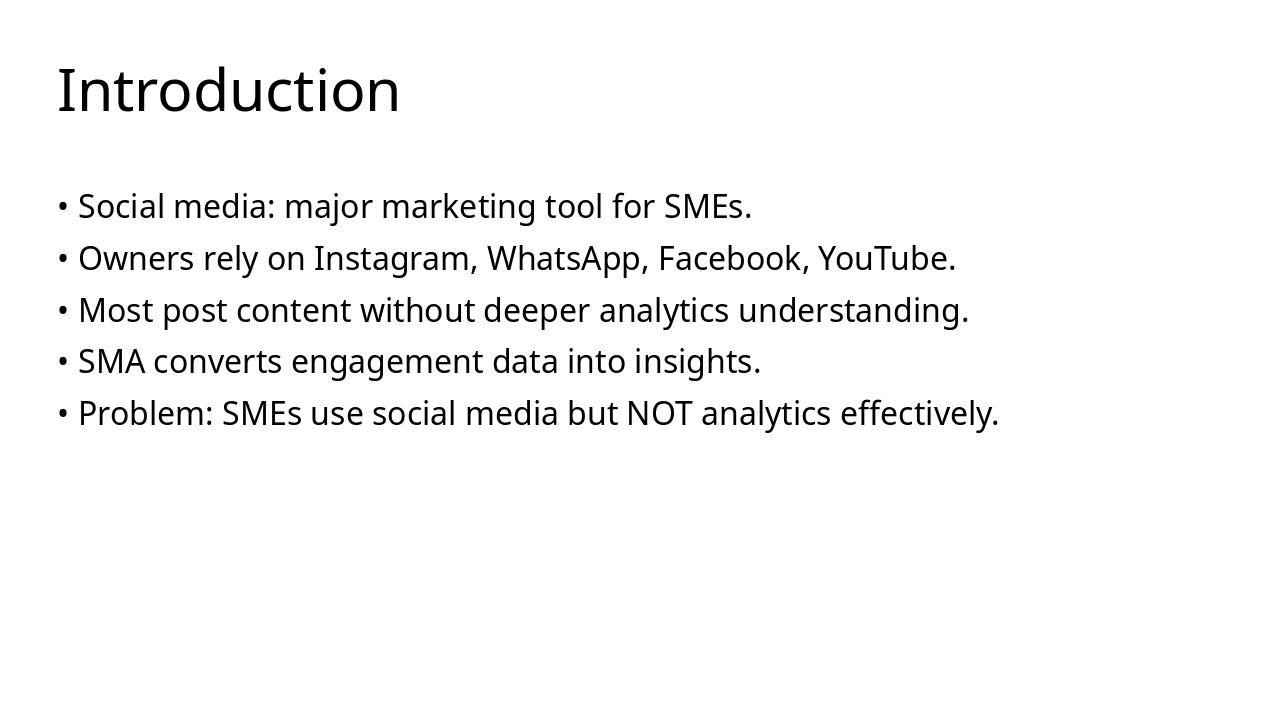
Social media platforms like Instagram, WhatsApp, Facebook, and YouTube serve as major marketing tools for SMEs, though owners typically post content without deep analytics understanding. SMA converts engagement data into actionable insights, addressing the key problem of ineffective analytics use.

Introduction

  • Social media: major marketing tool for SMEs.
  • Owners rely on Instagram, WhatsApp, Facebook, YouTube.
  • Most post content without deeper analytics understanding.
  • SMA converts engagement data into insights.
  • Problem: SMEs use social media but NOT analytics effectively.
Slide 2 - Introduction
Slide 3 of 12

Slide 3 - Research Problem

Decision-makers rely on intuition over data, struggle to interpret dashboards, and lack analytics skills and training. This results in poor decisions and low ROI.

Research Problem

  • Depend on intuition rather than data
  • Struggle to interpret dashboards
  • Lack analytics skills and training
  • Leads to poor decisions and low ROI
Slide 3 - Research Problem
Slide 4 of 12

Slide 4 - Agenda

The agenda slide outlines a presentation on social media use in SMEs, structured into four key sections. It covers the introduction and problem statement, objectives and methodology, key findings on usage and challenges, and recommendations with conclusions.

Agenda

  1. Introduction and Problem Statement
  2. Overview of social media use in SMEs and key issues.

  3. Objectives and Methodology
  4. Research goals, methods, and data collection.

  5. Key Findings
  6. SMA usage, impact, challenges, and case examples.

  7. Recommendations and Conclusion

Improvements, training needs, and future outlook. Source: Use of Social Media Analytics for Business Intelligence and Decision-Making in Small Businesses

Slide 4 - Agenda
Slide 5 of 12

Slide 5 - Methodology

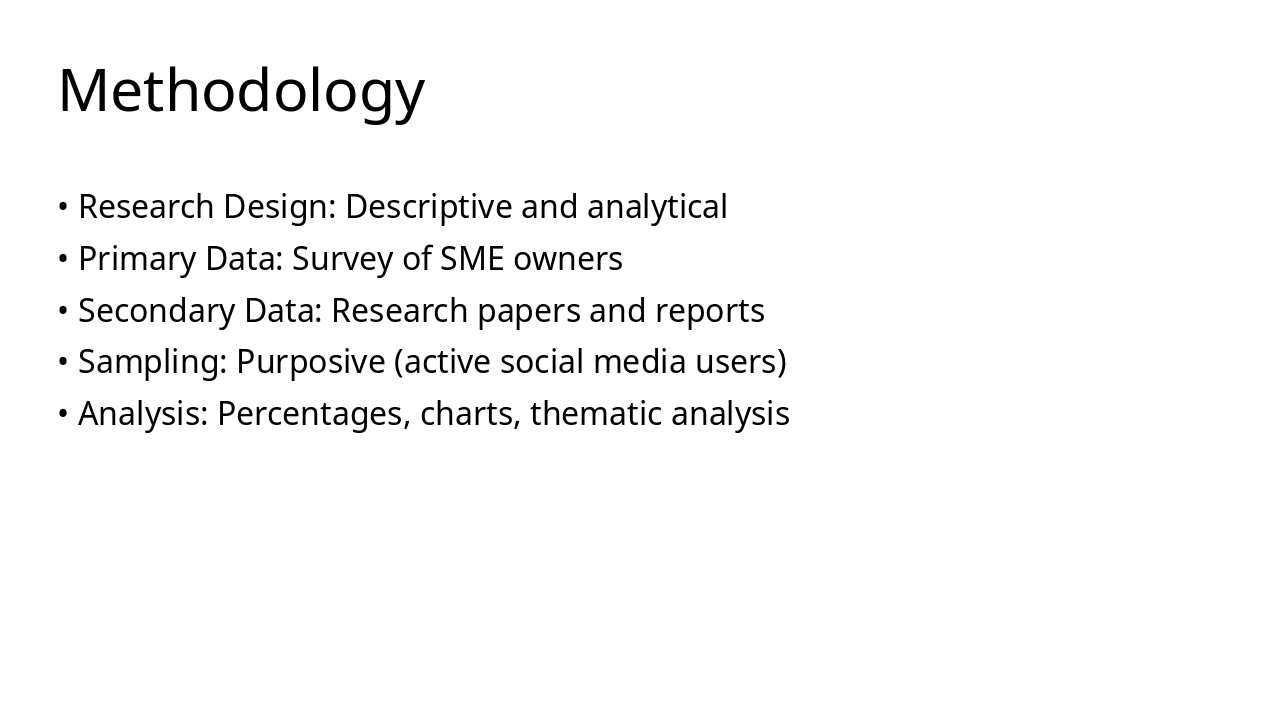
The methodology uses a descriptive and analytical research design, drawing on primary data from surveys of SME owners and secondary data from research papers and reports. It employs purposive sampling of active social media users, with analysis via percentages, charts, and thematic methods.

Methodology

  • Research Design: Descriptive and analytical
  • Primary Data: Survey of SME owners
  • Secondary Data: Research papers and reports
  • Sampling: Purposive (active social media users)
  • Analysis: Percentages, charts, thematic analysis
Slide 5 - Methodology
Slide 6 of 12

Slide 6 - Findings: Social Media Usage

Instagram leads social media usage at 90%, followed by WhatsApp Business at 75% for business, Facebook at 40%, and YouTube at 20%. Weekly posting is the most common frequency, at 60%.

Findings: Social Media Usage

  • 90%: Instagram Usage
  • Most popular platform

  • 75%: WhatsApp Business
  • Widely used for business

  • 40%: Facebook Usage
  • 20%: YouTube Usage
  • 60%: Weekly Posting
  • Most common frequency

Slide 6 - Findings: Social Media Usage
Slide 7 of 12

Slide 7 - Findings: Analytics Usage Levels

45% of users rarely or never check analytics insights. While 85% use descriptive metrics like likes and reach, only 25% apply diagnostic analytics and 0% use prescriptive analytics.

Findings: Analytics Usage Levels

  • 45%: Rarely/Never Check
  • Insights frequency

  • 85%: Descriptive Metrics
  • Likes, reach used

  • 25%: Diagnostic Analytics
  • 0%: Prescriptive Analytics
Slide 7 - Findings: Analytics Usage Levels
Slide 8 of 12

Slide 8 - Impact on Decision-Making

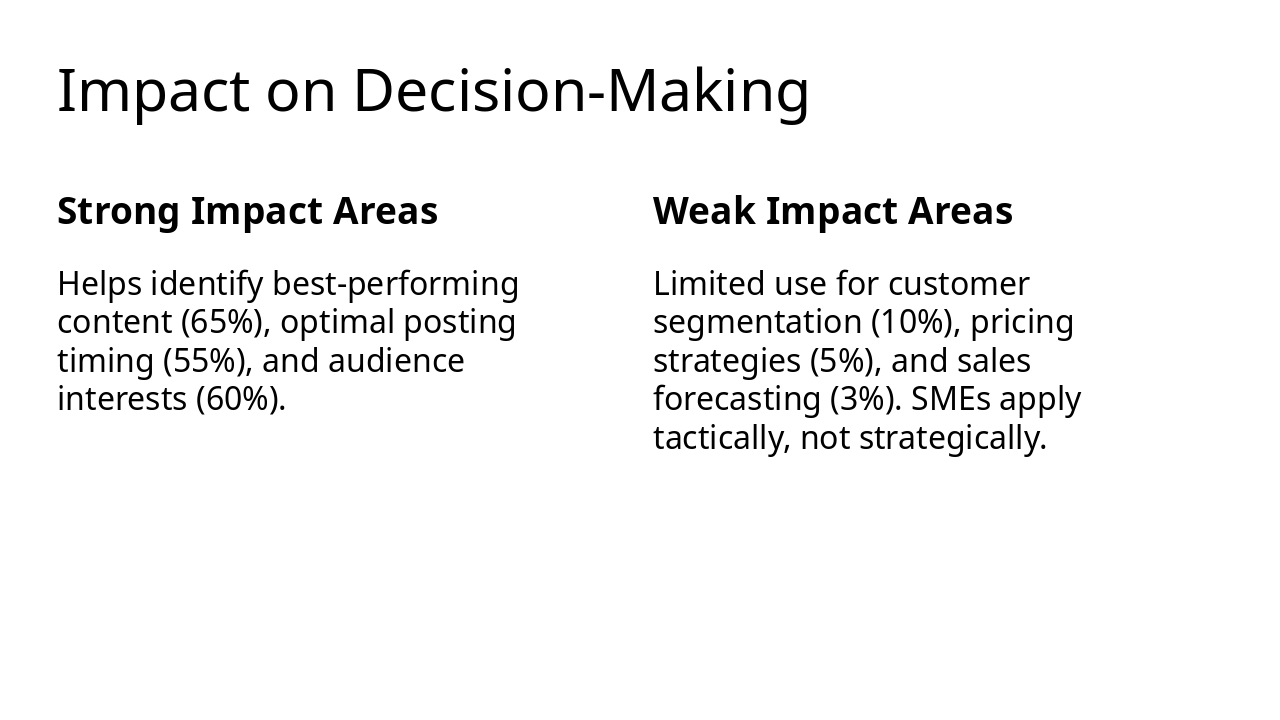
The slide "Impact on Decision-Making" shows strong impacts from analytics in identifying best-performing content (65%), optimal posting timing (55%), and audience interests (60%). It contrasts this with weak impacts on customer segmentation (10%), pricing strategies (5%), and sales forecasting (3%), noting SMEs' tactical rather than strategic application.

Impact on Decision-Making

Strong Impact AreasWeak Impact Areas
Helps identify best-performing content (65%), optimal posting timing (55%), and audience interests (60%).Limited use for customer segmentation (10%), pricing strategies (5%), and sales forecasting (3%). SMEs apply tactically, not strategically.
Slide 8 - Impact on Decision-Making
Slide 9 of 12

Slide 9 - Challenges

The slide "Challenges" lists top barriers to analytics adoption, with lack of knowledge (75%), no formal training (70%), limited time (60%), dashboard reading difficulties (55%), and budget issues (40%). It highlights skills and training as the biggest blockers.

Challenges

  • Lack of analytics knowledge: 75%
  • No formal training: 70%
  • Limited time: 60%
  • Difficulty reading dashboards: 55%
  • Budget issues for paid tools: 40%
  • Biggest blockers: skills and training
Slide 9 - Challenges
Slide 10 of 12

Slide 10 - Case Studies

The "Case Studies" slide features two Instagram success stories in a two-column layout. A home-based bakery boosted reach 35% and inquiries 20% by optimizing posting times via Insights, while a retail fashion store increased profile visits 18% and engagement 15% through data-driven content adjustments.

Case Studies

Case 1: Home-Based BakeryCase 2: Retail Fashion Store
Changed posting time using Instagram Insights. Reach ↑ 35%, inquiries ↑ 20%.Adjusted content based on engagement data. Profile visits ↑ 18%, engagement ↑ 15%.
Slide 10 - Case Studies
Slide 11 of 12

Slide 11 - Recommendations

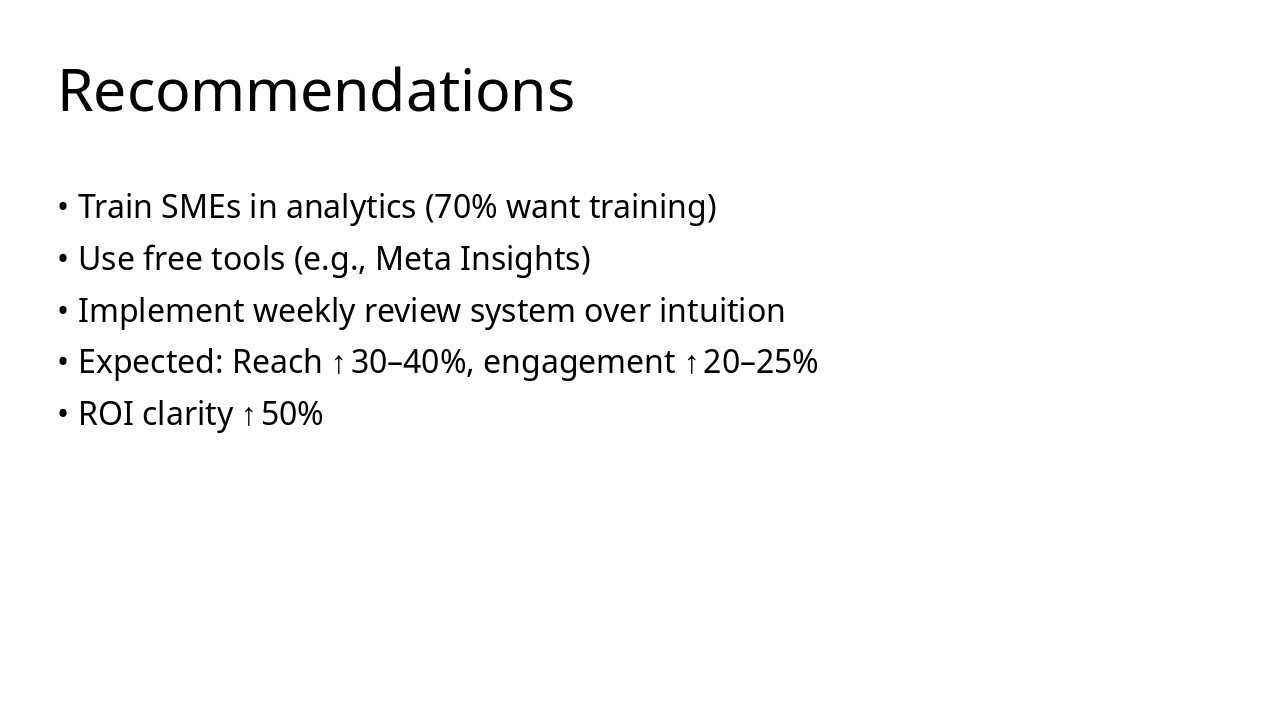
The slide recommends training SMEs in analytics (desired by 70%), using free tools like Meta Insights, and implementing weekly reviews over intuition. Expected outcomes include 30–40% reach increase, 20–25% engagement boost, and 50% ROI clarity improvement.

Recommendations

  • Train SMEs in analytics (70% want training)
  • Use free tools (e.g., Meta Insights)
  • Implement weekly review system over intuition
  • Expected: Reach ↑30–40%, engagement ↑20–25%
  • ROI clarity ↑50%
Slide 11 - Recommendations
Slide 12 of 12

Slide 12 - Conclusion & Future Scope

The slide highlights that 90% of users leverage social media but under 15% use analytics effectively, with 65% relying on intuition and 70% seeking training, alongside a projected 25–35% rise in SMA adoption in India. It outlines future opportunities in AI-driven analytics, sector dashboards, and training programs, closing with the call that data empowers decisions—start with free tools today.

Conclusion & Future Scope

• 90% use social media, <15% analytics effectively

  • 65% rely on intuition; 70% want training
  • SMA adoption to rise 25–35% in India
  • Future: AI-driven analytics, sector dashboards, training programs

Closing: Data empowers decisions!

Start with free tools today.

Source: Research by Yadnesh Purushottam Patil

Speaker Notes
Key takeaways: Highlight stats on usage gaps, intuition reliance, training demand, growth projections. Future: AI, dashboards, programs. Closing: 'Data empowers decisions.' CTA: 'Start with free analytics tools now.'
Slide 12 - Conclusion & Future Scope

Discover More Presentations

Explore thousands of AI-generated presentations for inspiration

Browse Presentations
Powered by AI

Create Your Own Presentation

Generate professional presentations in seconds with Karaf's AI. Customize this presentation or start from scratch.

Create New Presentation

Powered by Karaf.ai — AI-Powered Presentation Generator