Cybersecurity Training: Threats, Defenses & Best Practices

Generated from prompt:

generate a training module on cybersecurity

This comprehensive training module covers cybersecurity fundamentals, common threats like phishing and vishing, multi-layered defense strategies, the role of organizations like CISA, and key best practices for protection in the digital age.

March 3, 202612 slides
Slide 1 of 12

Slide 1 - Cybersecurity Training Module

Cybersecurity Training Module

Understanding Threats, Protection, and Best Practices in the Digital Age

---

Photo by Peter Conrad on Unsplash
Slide 1 - Cybersecurity Training Module
Slide 2 of 12

Slide 2 - Training Agenda

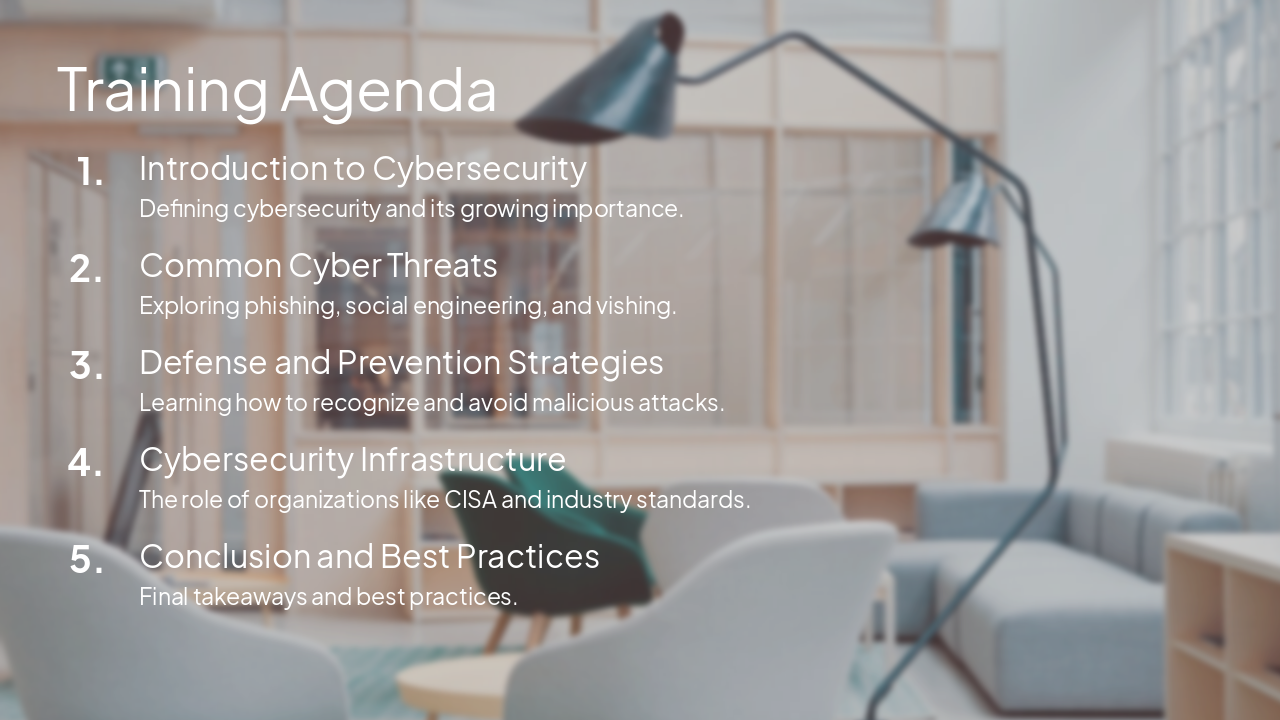
  • Introduction to Cybersecurity: Defining cybersecurity and its growing importance.
  • Common Cyber Threats: Exploring phishing, social engineering, and vishing.
  • Defense and Prevention Strategies: Learning how to recognize and avoid malicious attacks.
  • Cybersecurity Infrastructure: The role of organizations like CISA and industry standards.
  • Conclusion and Best Practices: Final takeaways and best practices.

---

Photo by Toa Heftiba on Unsplash

Slide 2 - Training Agenda
Slide 3 of 12

Slide 3 - Section 1: Introduction

1

Understanding Cybersecurity

Defining the scope and importance of protecting our digital world.

---

Photo by Conny Schneider on Unsplash
Slide 3 - Section 1: Introduction
Slide 4 of 12

Slide 4 - What is Cybersecurity?

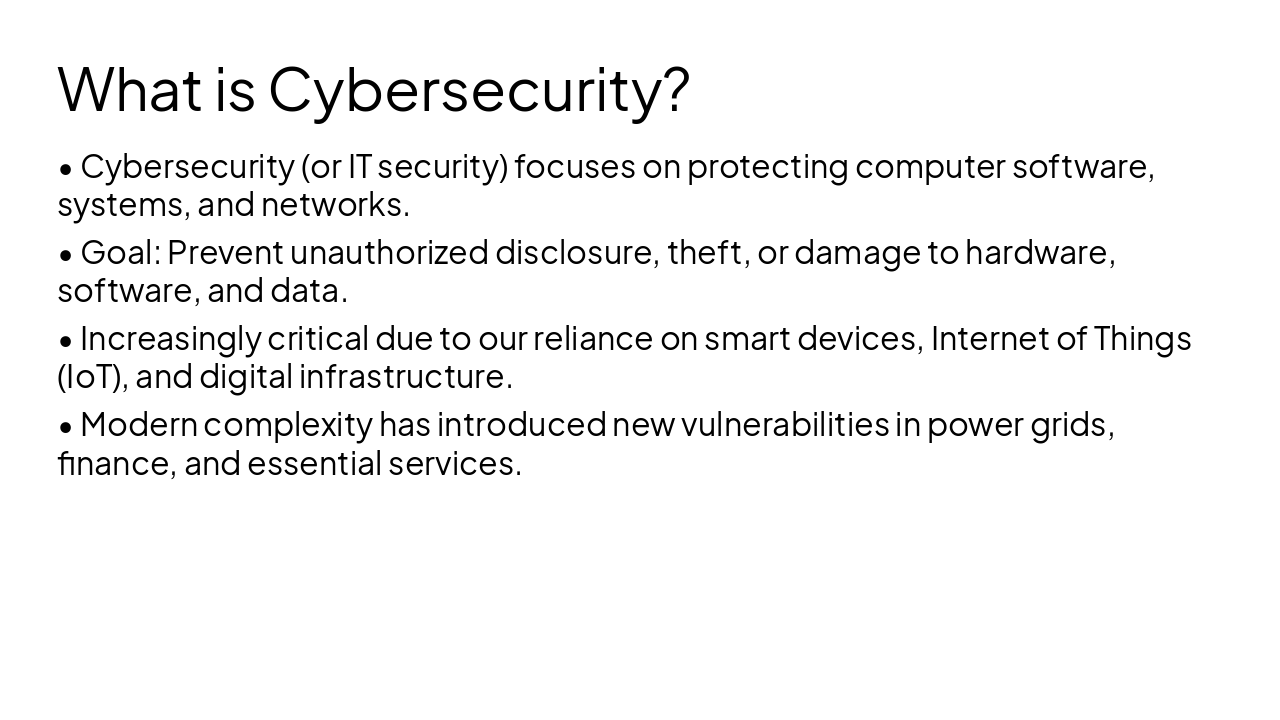
  • Cybersecurity (or IT security) focuses on protecting computer software, systems, and networks.
  • Goal: Prevent unauthorized disclosure, theft, or damage to hardware, software, and data.
  • Increasingly critical due to our reliance on smart devices, Internet of Things (IoT), and digital infrastructure.
  • Modern complexity has introduced new vulnerabilities in power grids, finance, and essential services.
Slide 4 - What is Cybersecurity?
Slide 5 of 12

Slide 5 - Section 2: Cyber Threats

2

Common Cyber Threats

Recognizing the tactics used by attackers to compromise security.

---

Photo by Philipp Katzenberger on Unsplash
Slide 5 - Section 2: Cyber Threats
Slide 6 of 12

Slide 6 - The Phishing Epidemic

  • Phishing: A form of social engineering where attackers deceive victims into revealing sensitive information or installing malware.
  • As of 2020, it is the most common type of cybercrime (FBI IC3 data).
  • Business-related phishing attacks rose from 72% in 2017 to 94% in 2023.
  • Techniques include: Email spam, vishing (voice), smishing (SMS), quishing (QR codes), and spear/whaling phishing.
Slide 6 - The Phishing Epidemic
Slide 7 of 12

Slide 7 - Sophisticated Phishing Tactics

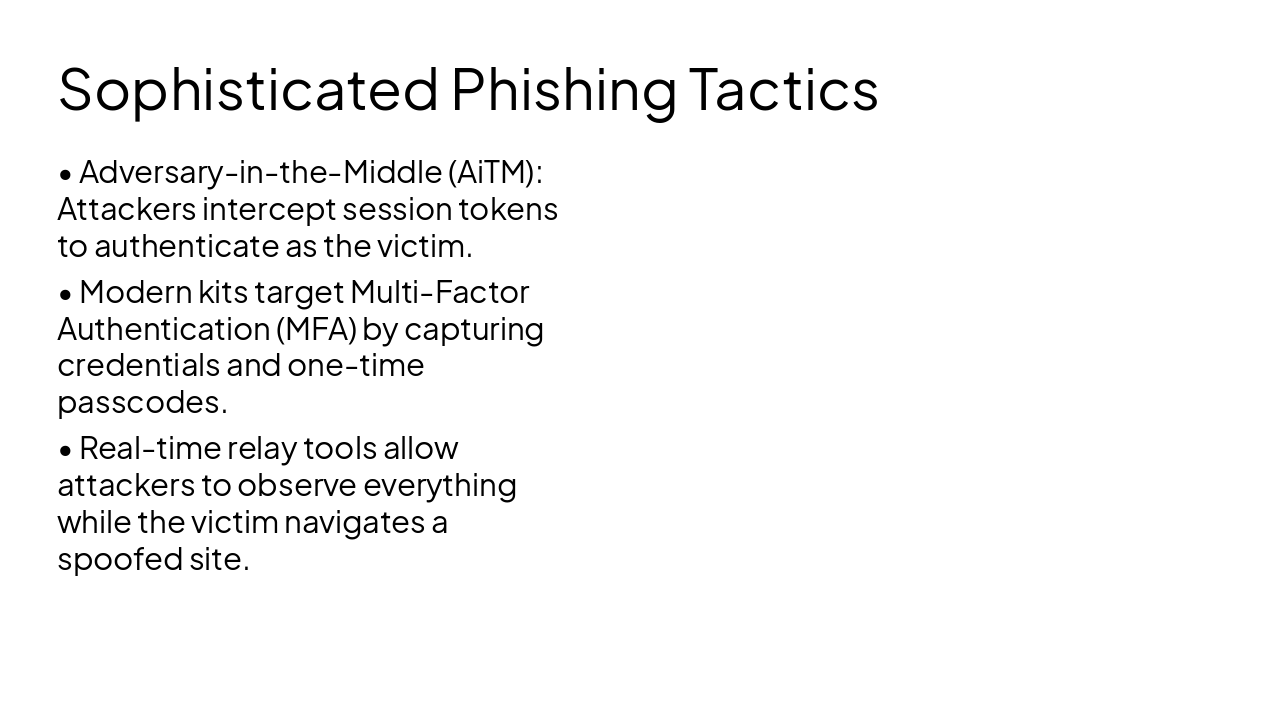
  • Adversary-in-the-Middle (AiTM): Attackers intercept session tokens to authenticate as the victim.
  • Modern kits target Multi-Factor Authentication (MFA) by capturing credentials and one-time passcodes.
  • Real-time relay tools allow attackers to observe everything while the victim navigates a spoofed site.
Slide 7 - Sophisticated Phishing Tactics
Slide 8 of 12

Slide 8 - Voice Phishing (Vishing)

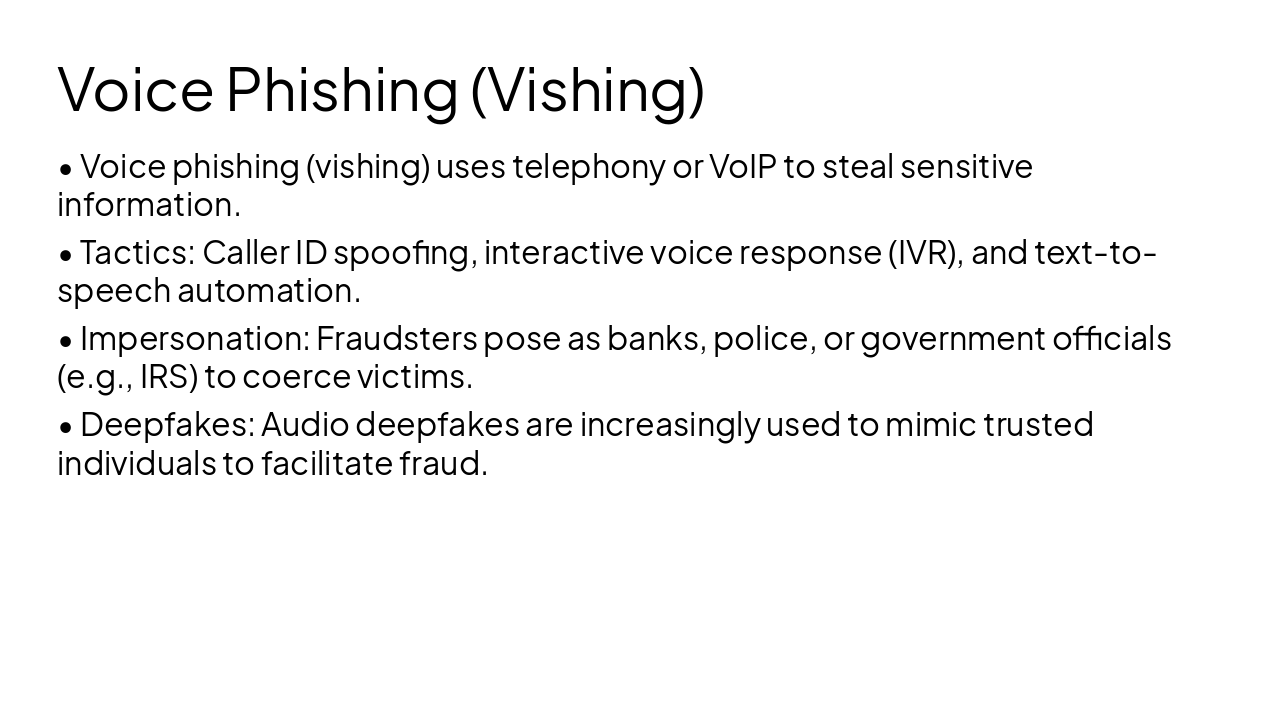
  • Voice phishing (vishing) uses telephony or VoIP to steal sensitive information.
  • Tactics: Caller ID spoofing, interactive voice response (IVR), and text-to-speech automation.
  • Impersonation: Fraudsters pose as banks, police, or government officials (e.g., IRS) to coerce victims.
  • Deepfakes: Audio deepfakes are increasingly used to mimic trusted individuals to facilitate fraud.
Slide 8 - Voice Phishing (Vishing)
Slide 9 of 12

Slide 9 - Section 3: Defense & Infrastructure

3

Defense and Infrastructure

Building resilience and understanding the protective landscape.

---

Photo by Peter Conrad on Unsplash

Slide 9 - Section 3: Defense & Infrastructure
Slide 10 of 12

Slide 10 - Multi-Layered Security

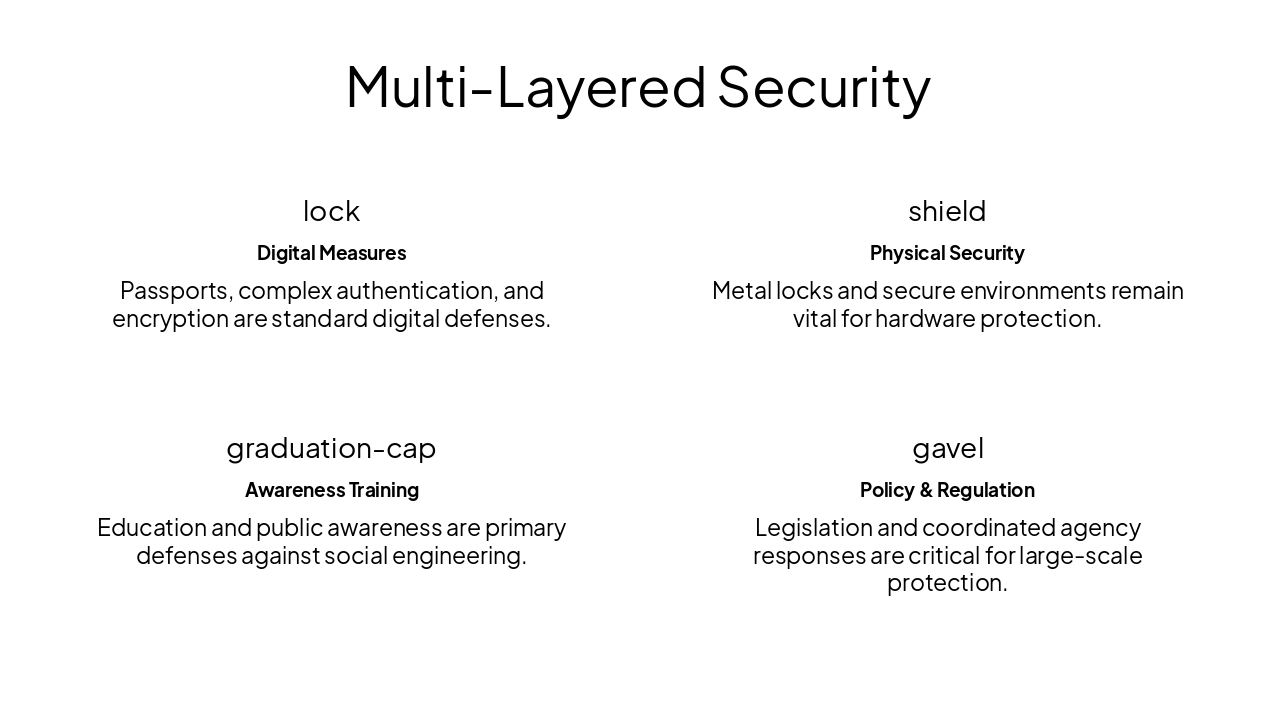
lock Digital Measures Passports, complex authentication, and encryption are standard digital defenses.

shield Physical Security Metal locks and secure environments remain vital for hardware protection.

graduation-cap Awareness Training Education and public awareness are primary defenses against social engineering.

gavel Policy & Regulation Legislation and coordinated agency responses are critical for large-scale protection.

Slide 10 - Multi-Layered Security
Slide 11 of 12

Slide 11 - The Role of CISA

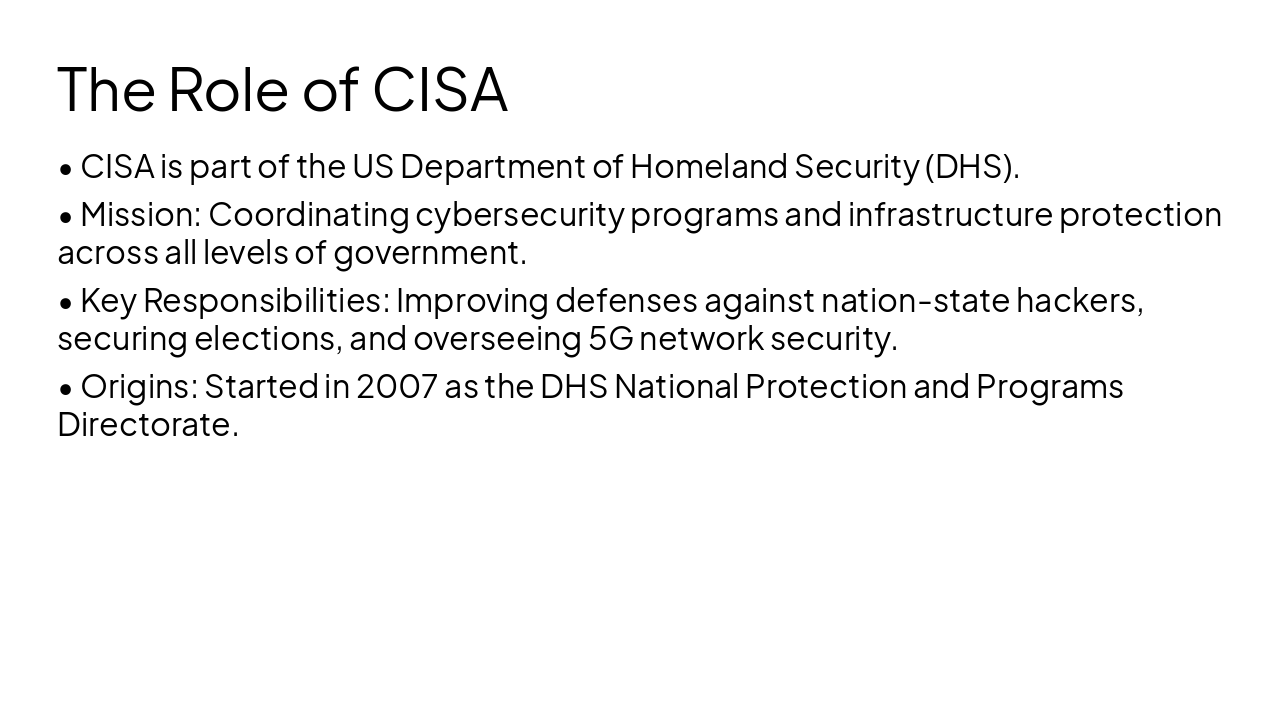
  • CISA is part of the US Department of Homeland Security (DHS).
  • Mission: Coordinating cybersecurity programs and infrastructure protection across all levels of government.
  • Key Responsibilities: Improving defenses against nation-state hackers, securing elections, and overseeing 5G network security.
  • Origins: Started in 2007 as the DHS National Protection and Programs Directorate.
Slide 11 - The Role of CISA
Slide 12 of 12

Slide 12 - Conclusion

Stay Secure: Proactive Awareness is Our Best Defense

Stay vigilant, keep systems updated, and verify all requests for sensitive information.

---

Photo by Philipp Katzenberger on Unsplash
Slide 12 - Conclusion

Discover More Presentations

Explore thousands of AI-generated presentations for inspiration

Browse Presentations
Powered by AI

Create Your Own Presentation

Generate professional presentations in seconds with Karaf's AI. Customize this presentation or start from scratch.

Create New Presentation

Powered by Karaf.ai — AI-Powered Presentation Generator