Slide 1 of 7
Slide 1 - Title Slide
How Antidepressants Work
A guide to the biological mechanisms and clinical impact of antidepressant treatments
---
Photo by Sergei Gussev on Unsplash

Generated from prompt:
how antidepressants work
This presentation provides a comprehensive guide to the biological mechanisms of antidepressants, covering brain chemistry, key neurotransmitters, major drug classes, synaptic actions, therapeutic timelines, and clinical effects for better mentalwell
How Antidepressants Work
A guide to the biological mechanisms and clinical impact of antidepressant treatments
---
Photo by Sergei Gussev on Unsplash
---
Photo by Conny Schneider on Unsplash
---
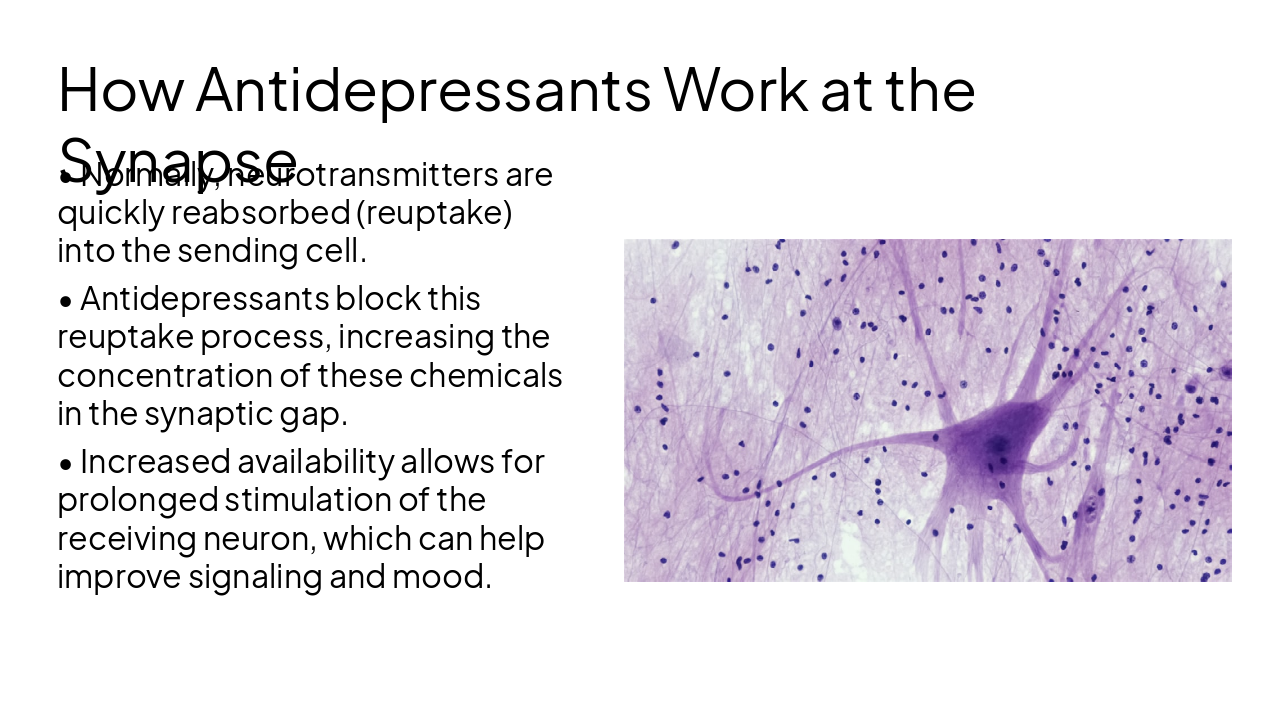
Photo by Bioscience Image Library by Fayette Reynolds on Unsplash
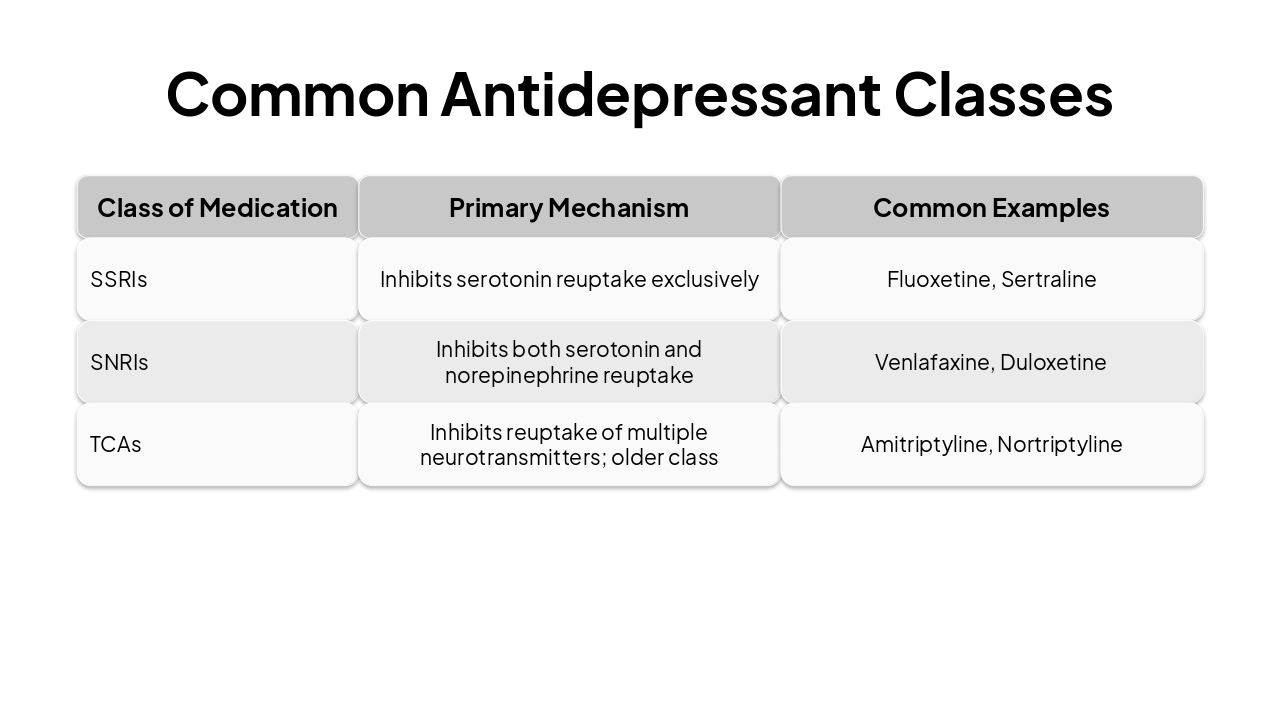
| Class of Medication | Primary Mechanism | Common Examples |
|---|---|---|
| SSRIs | Inhibits serotonin reuptake exclusively | Fluoxetine, Sertraline |
| SNRIs | Inhibits both serotonin and norepinephrine reuptake | Venlafaxine, Duloxetine |
| TCAs | Inhibits reuptake of multiple neurotransmitters; older class | Amitriptyline, Nortriptyline |
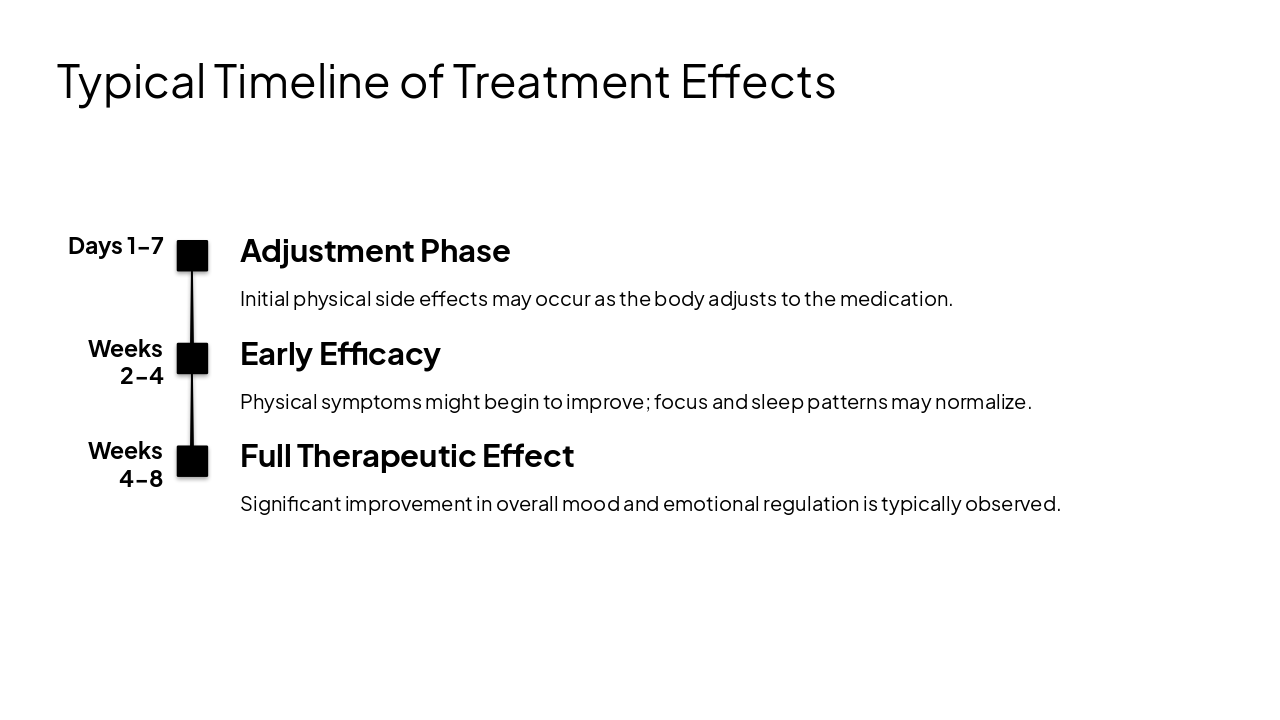
Days 1-7: Adjustment Phase Initial physical side effects may occur as the body adjusts to the medication. Weeks 2-4: Early Efficacy Physical symptoms might begin to improve; focus and sleep patterns may normalize. Weeks 4-8: Full Therapeutic Effect Significant improvement in overall mood and emotional regulation is typically observed.
Antidepressants work by adjusting the levels of key neurotransmitters, ultimately supporting improved communication in the brain and long-term mood stability. Always consult a healthcare professional for personalized guidance.
Understanding how these medications help rebalance neurochemistry can empower patients.
---
Photo by frank mckenna on Unsplash
Explore thousands of AI-generated presentations for inspiration
Generate professional presentations in seconds with Karaf's AI. Customize this presentation or start from scratch.