Structural Transformation in Sudan: Challenges and Conflicts

Generated from prompt:

Design a professional, visually engaging university-level presentation titled "Structural Transformation in Sudan" based on the uploaded content. Include clear section slides: 1) Introduction & Recap (Lewis Model, Rostow Model, Deindustrialization), 2) Colonial Legacy, 3) Post-Independence Planning, 4) Crisis & Stagnation, 5) IMF Reforms, 6) GDP Trends (with chart), 7) Sectoral Composition (2009 vs 2024 comparison charts), 8) Oil Era & 2011 Secession Impact (with infographic), 9) Has Sudan Deindustrialized?, 10) Sudan & Rostow Model Analysis, 11) Sudan & Lewis Model Analysis, 12) Current War Impact (with projected GDP decline chart), 13) Conclusion – Failure of Structural Transformation. Use modern academic theme, data visualizations, charts, clean layouts, minimal text per slide, strong headings, and economic graphs where relevant.

This presentation examines Sudan's failed economic structural transformation, recapping Lewis and Rostow models, colonial legacies, post-independence planning, crises, IMF reforms, GDP trends, sectoral shifts, oil dependency, deindustrialization, and

February 24, 202626 slides
Slide 1 of 26

Slide 1 - Structural Transformation in Sudan

Structural Transformation in Sudan

Economic Models, Historical Challenges, and the Impact of Conflict

---

Photo by Towfiqu barbhuiya on Unsplash
Slide 1 - Structural Transformation in Sudan
Slide 2 of 26

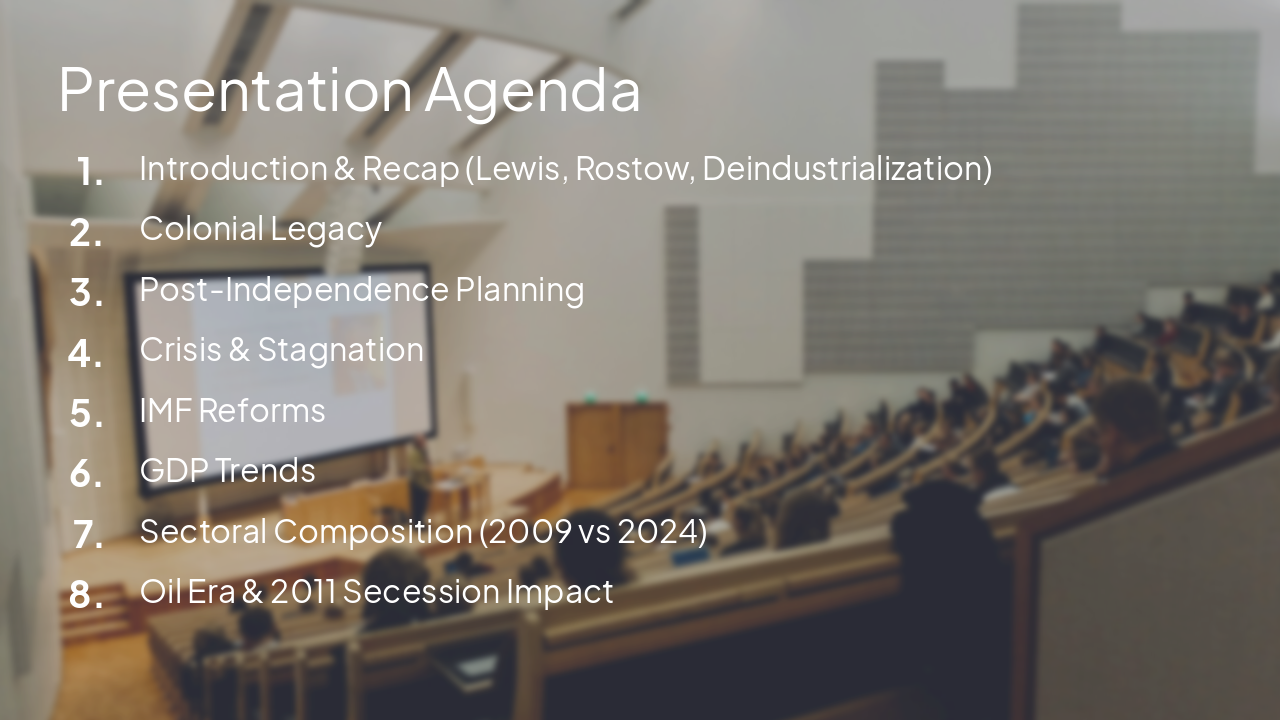
Slide 2 - Presentation Agenda

  • Introduction & Recap (Lewis, Rostow, Deindustrialization)
  • Colonial Legacy
  • Post-Independence Planning
  • Crisis & Stagnation
  • IMF Reforms
  • GDP Trends
  • Sectoral Composition (2009 vs 2024)
  • Oil Era & 2011 Secession Impact

---

Photo by Dom Fou on Unsplash

Slide 2 - Presentation Agenda
Slide 3 of 26

Slide 3 - Section 1

1

Introduction & Recap

Lewis Model, Rostow Model, Deindustrialization

---

Photo by Logan Voss on Unsplash
Slide 3 - Section 1
Slide 4 of 26

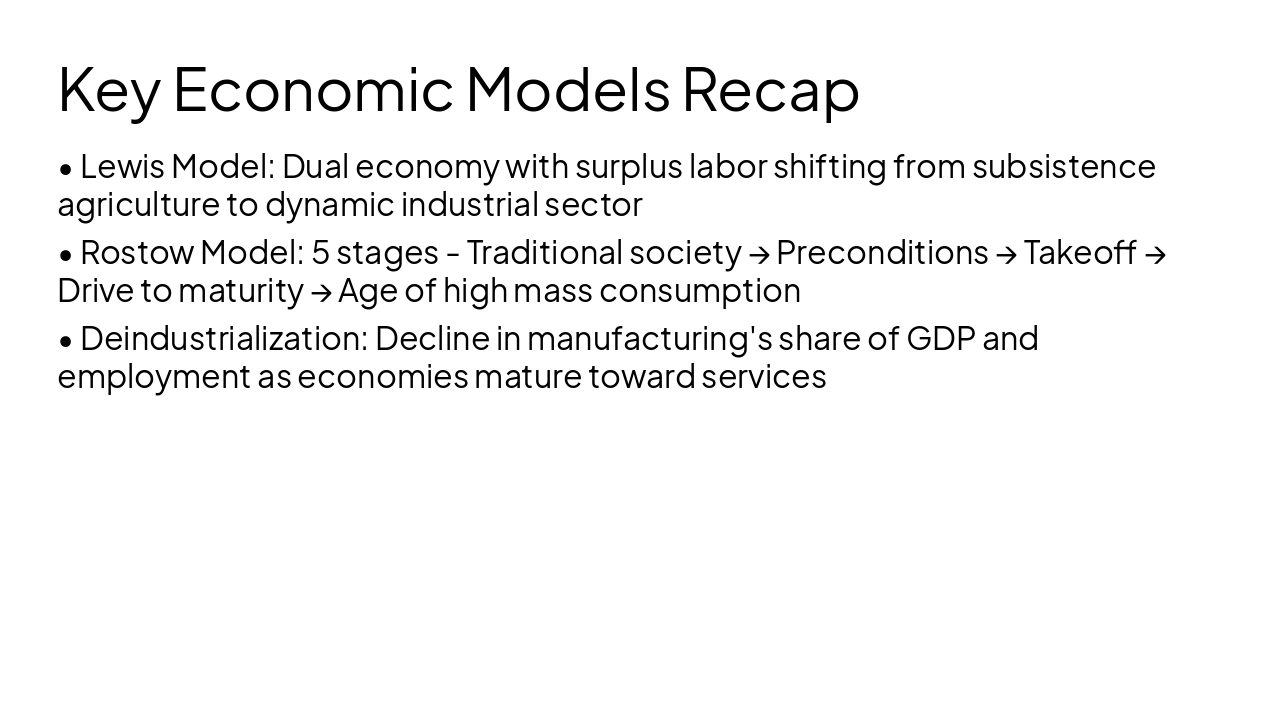
Slide 4 - Key Economic Models Recap

  • Lewis Model: Dual economy with surplus labor shifting from subsistence agriculture to dynamic industrial sector
  • Rostow Model: 5 stages - Traditional society → Preconditions → Takeoff → Drive to maturity → Age of high mass consumption
  • Deindustrialization: Decline in manufacturing's share of GDP and employment as economies mature toward services
Slide 4 - Key Economic Models Recap
Slide 5 of 26

Slide 5 - Section 2

2

Colonial Legacy

Impact of British Rule on Sudan's Economic Structure

---

Photo by Dorian Labbe on Unsplash
Slide 5 - Section 2
Slide 6 of 26

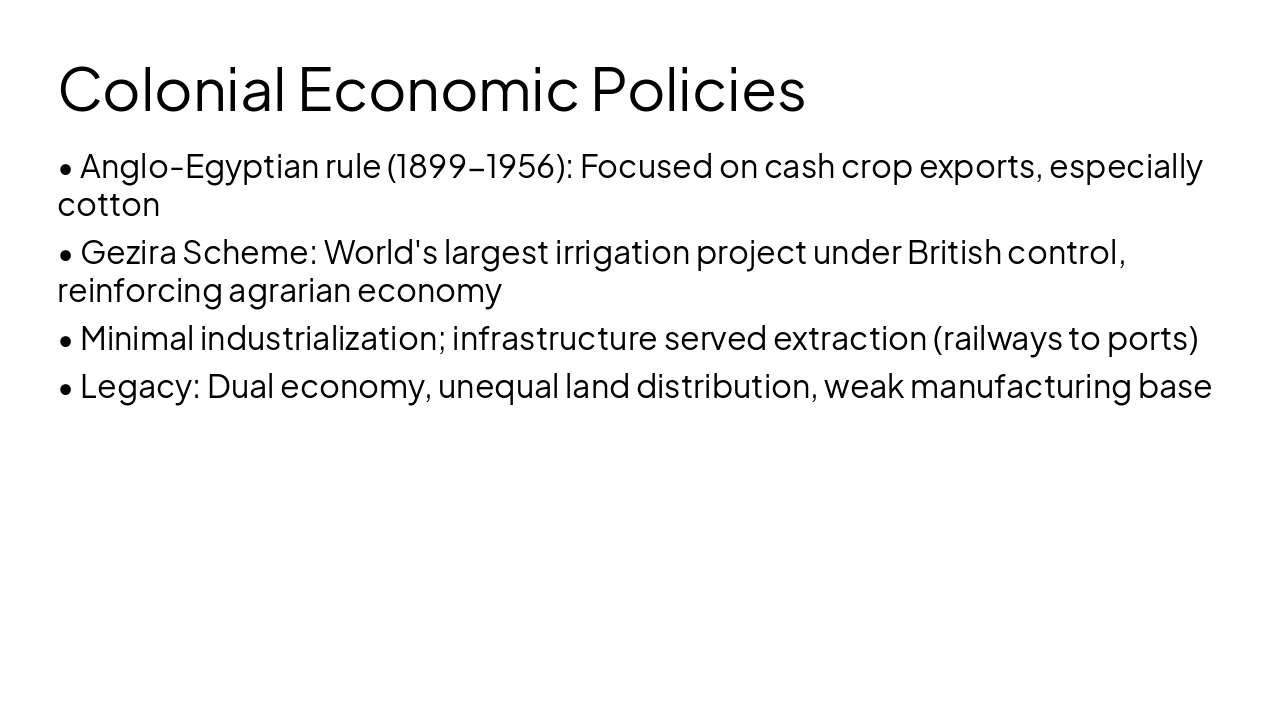
Slide 6 - Colonial Economic Policies

  • Anglo-Egyptian rule (1899-1956): Focused on cash crop exports, especially cotton
  • Gezira Scheme: World's largest irrigation project under British control, reinforcing agrarian economy
  • Minimal industrialization; infrastructure served extraction (railways to ports)
  • Legacy: Dual economy, unequal land distribution, weak manufacturing base
Slide 6 - Colonial Economic Policies
Slide 7 of 26

Slide 7 - Section 3

3

Post-Independence Planning

State-Led Industrialization and Agricultural Focus
Slide 7 - Section 3
Slide 8 of 26

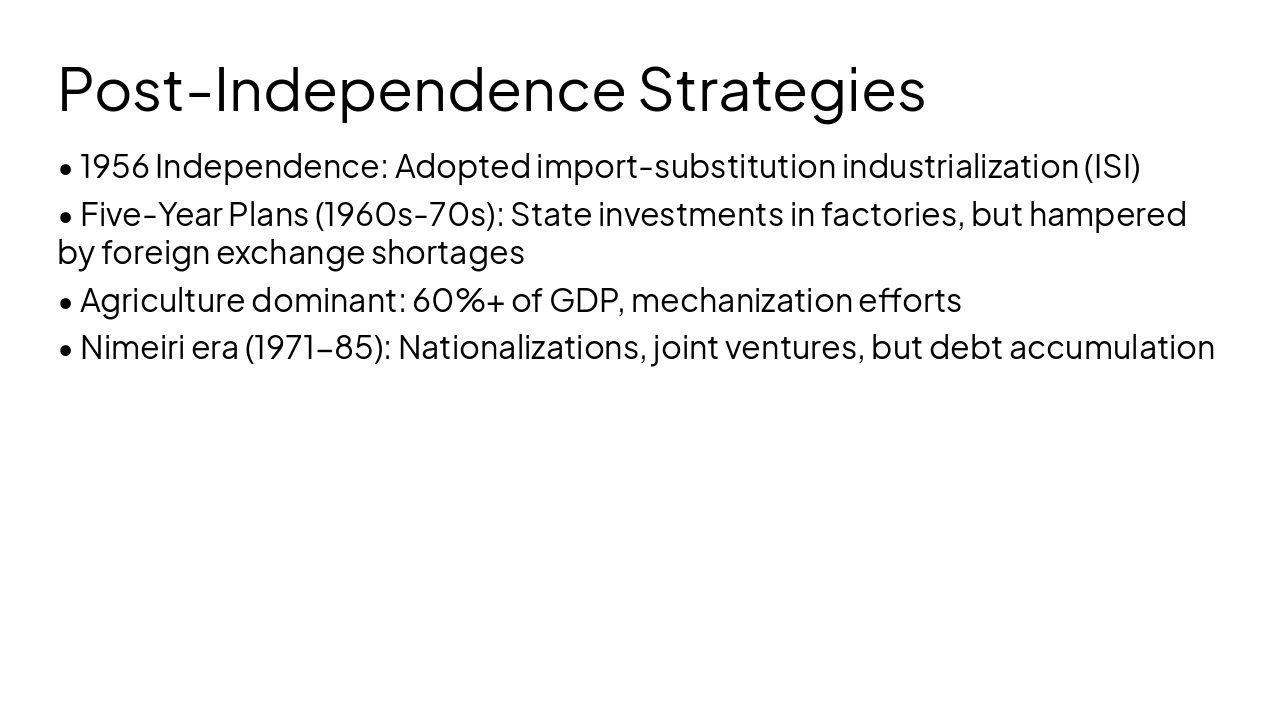
Slide 8 - Post-Independence Strategies

  • 1956 Independence: Adopted import-substitution industrialization (ISI)
  • Five-Year Plans (1960s-70s): State investments in factories, but hampered by foreign exchange shortages
  • Agriculture dominant: 60%+ of GDP, mechanization efforts
  • Nimeiri era (1971-85): Nationalizations, joint ventures, but debt accumulation
Slide 8 - Post-Independence Strategies
Slide 9 of 26

Slide 9 - Section 4

4

Crisis & Stagnation

Debt, Droughts, and Civil Conflict

---

Photo by Arturo Añez on Unsplash

Slide 9 - Section 4
Slide 10 of 26

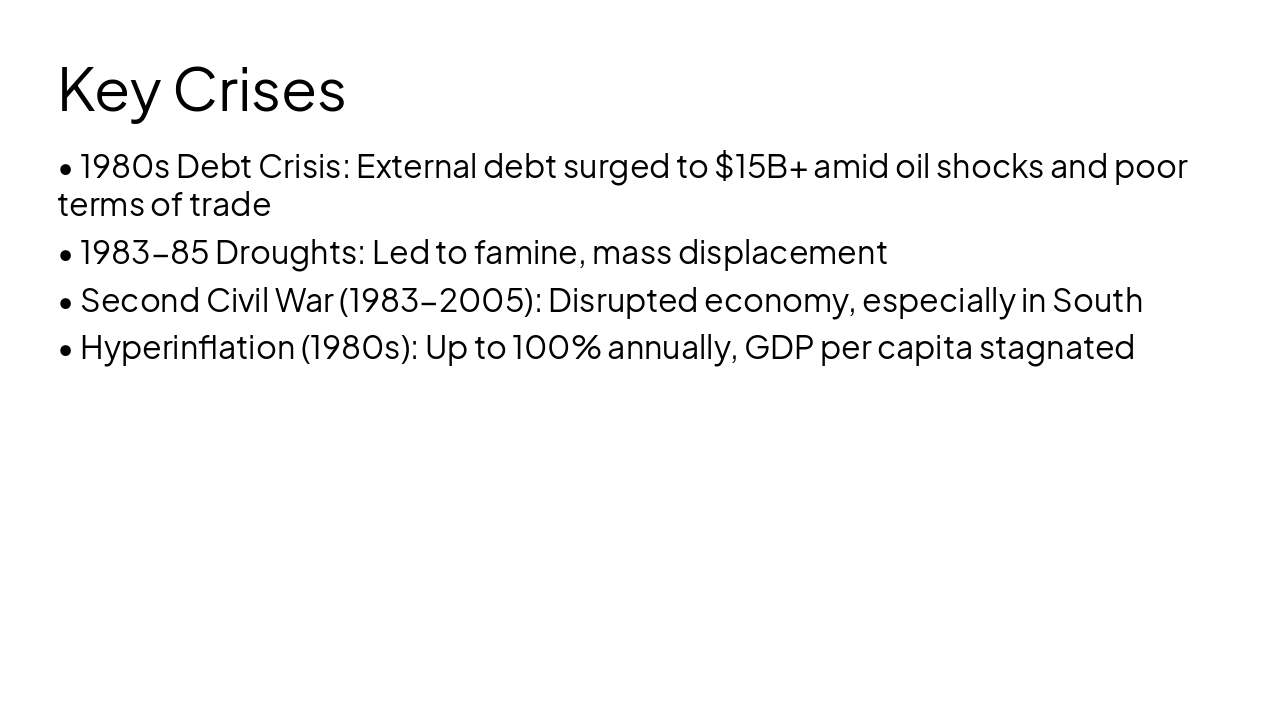
Slide 10 - Key Crises

  • 1980s Debt Crisis: External debt surged to $15B+ amid oil shocks and poor terms of trade
  • 1983-85 Droughts: Led to famine, mass displacement
  • Second Civil War (1983-2005): Disrupted economy, especially in South
  • Hyperinflation (1980s): Up to 100% annually, GDP per capita stagnated
Slide 10 - Key Crises
Slide 11 of 26

Slide 11 - Section 5

5

IMF Reforms

SAPs and Market Liberalization (1990s)

---

Photo by Arturo Añez on Unsplash
Slide 11 - Section 5
Slide 12 of 26

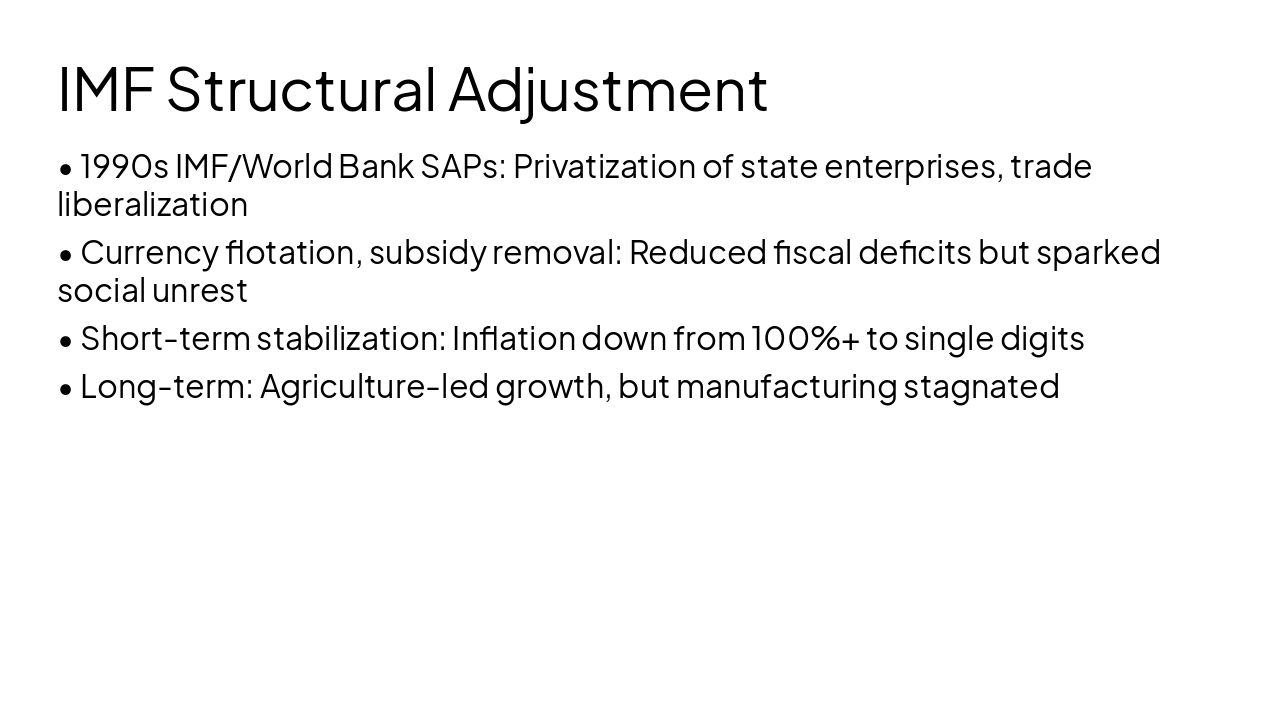
Slide 12 - IMF Structural Adjustment

  • 1990s IMF/World Bank SAPs: Privatization of state enterprises, trade liberalization
  • Currency flotation, subsidy removal: Reduced fiscal deficits but sparked social unrest
  • Short-term stabilization: Inflation down from 100%+ to single digits
  • Long-term: Agriculture-led growth, but manufacturing stagnated
Slide 12 - IMF Structural Adjustment
Slide 13 of 26

Slide 13 - Section 6

6

GDP Trends

Historical Growth and Volatility

Slide 13 - Section 6
Slide 14 of 26

Slide 14 - Sudan GDP Per Capita Trends (1960-2024)

  • Average annual growth ~3% (1960-2010)
  • 1980s crisis: -1.5% avg
  • Oil boom 2000s: +7% peaks
  • Post-2011 secession: Contraction
  • 2023 war: -12% projected

---

Photo by Pixel Shot on Unsplash

Slide 14 - Sudan GDP Per Capita Trends (1960-2024)
Slide 15 of 26

Slide 15 - Section 7

7

Sectoral Composition

2009 vs 2024 GDP Shares

---

Photo by Niko Nieminen on Unsplash
Slide 15 - Section 7
Slide 16 of 26

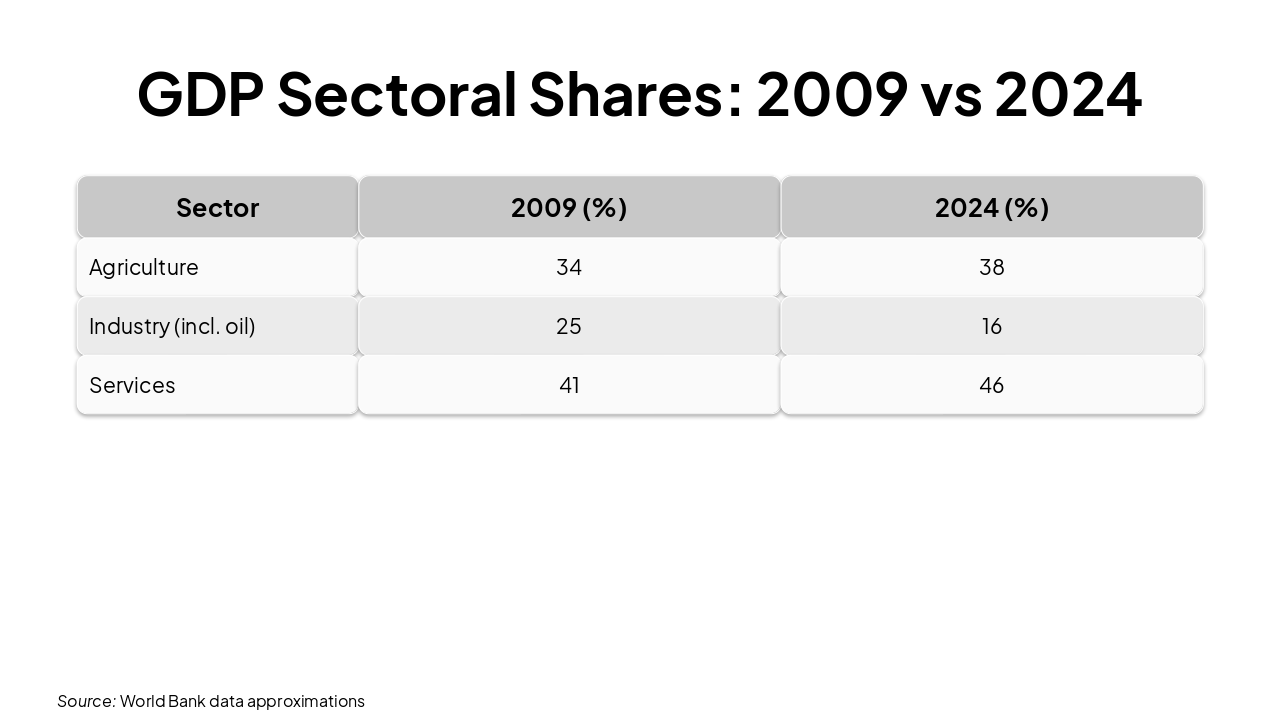
Slide 16 - GDP Sectoral Shares: 2009 vs 2024

Sector2009 (%)2024 (%)
Agriculture3438
Industry (incl. oil)2516
Services4146

Source: World Bank data approximations
Slide 16 - GDP Sectoral Shares: 2009 vs 2024
Slide 17 of 26

Slide 17 - Section 8

8

Oil Era & 2011 Secession Impact

Resource Curse and Revenue Shock

---

Photo by hayleigh b (https://unsplash.com/@hayleighb?utmsource=karaf&utmmedium=referral) on Unsplash (https://unsplash.com/?utmsource=karaf&utm_medium=referral)
Slide 17 - Section 8
Slide 18 of 26

Slide 18 - Oil Production & GDP Impact

  • Oil ~50% exports pre-2011
  • South Sudan secession: Loss of 75% oil fields
  • Immediate GDP drop: -5.4% in 2011, -10.9% 2012
  • Hyperinflation resurgence

---

Photo by Youssef on Unsplash

Slide 18 - Oil Production & GDP Impact
Slide 19 of 26

Slide 19 - Section 9

9

Has Sudan Deindustrialized?

Declining Manufacturing Share

---

Photo by Michał Franczak on Unsplash

Slide 19 - Section 9
Slide 20 of 26

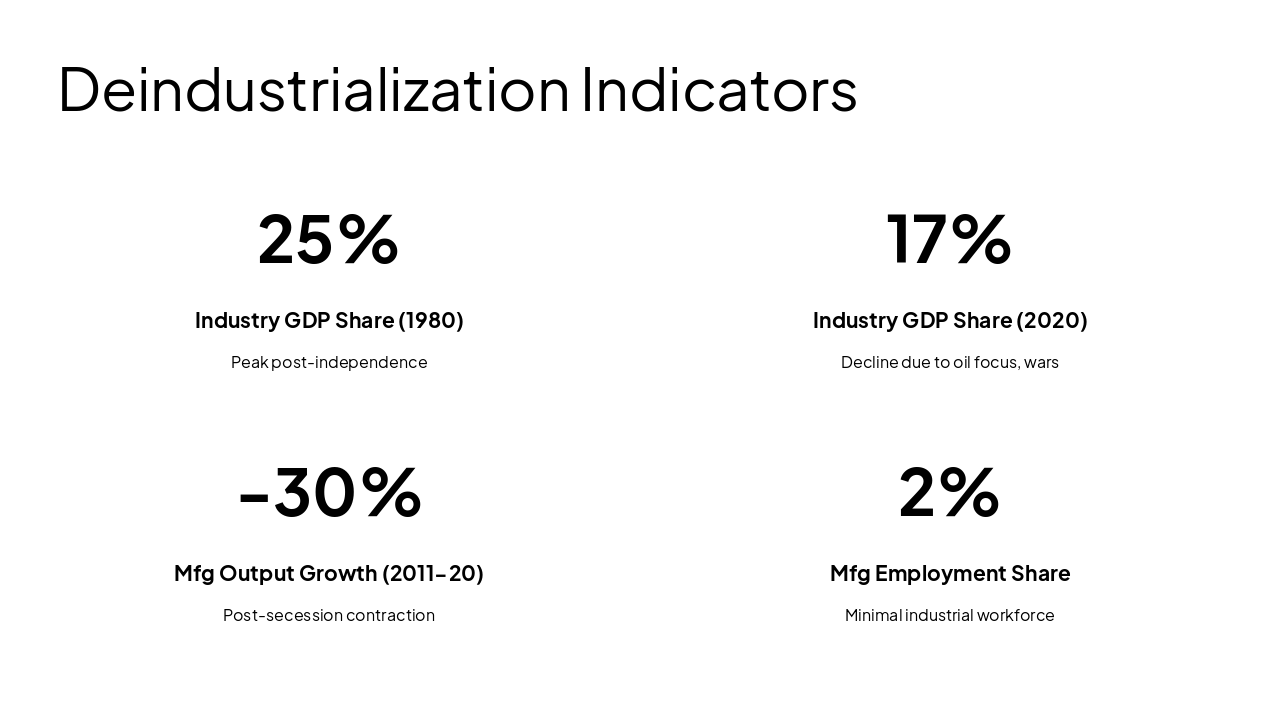
Slide 20 - Deindustrialization Indicators

  • 25%: Industry GDP Share (1980)
  • 17%: Industry GDP Share (2020)
  • -30%: Mfg Output Growth (2011-20)
  • 2%: Mfg Employment Share
Slide 20 - Deindustrialization Indicators
Slide 21 of 26

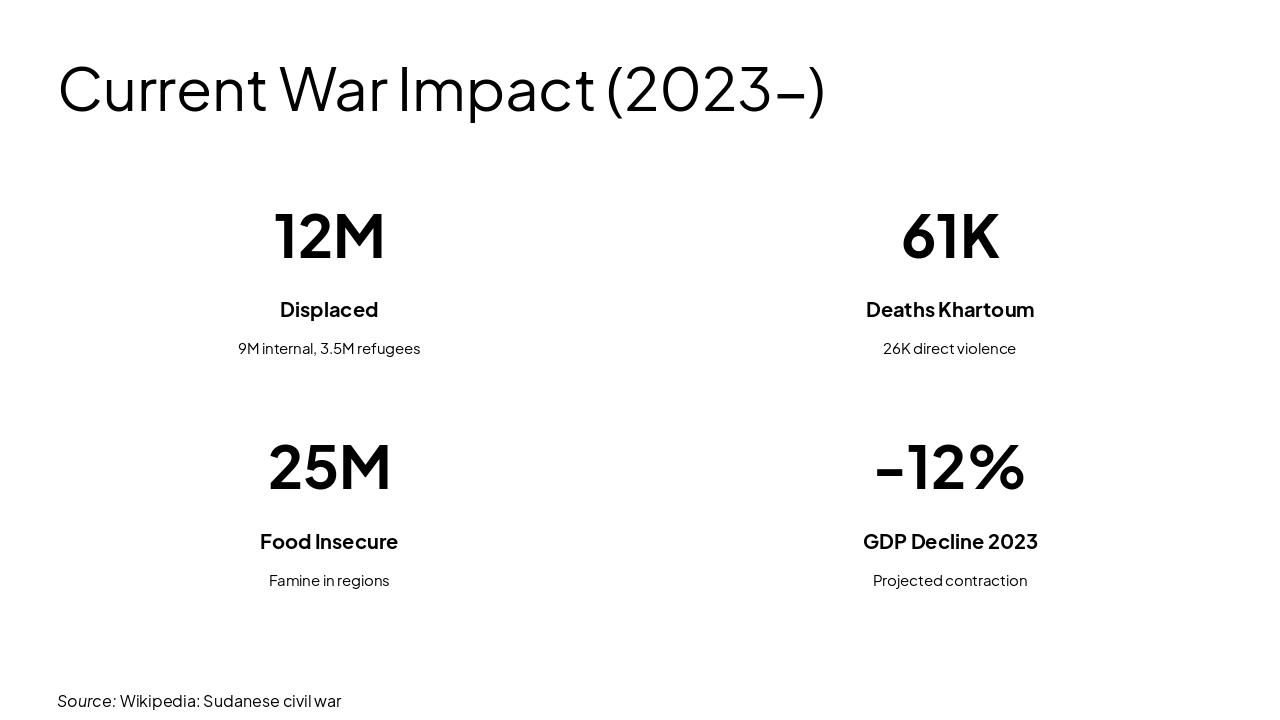
Slide 21 - Current War Impact (2023-)

  • 12M: Displaced
  • 61K: Deaths Khartoum
  • 25M: Food Insecure
  • -12%: GDP Decline 2023

Source: Wikipedia: Sudanese civil war
Slide 21 - Current War Impact (2023-)
Slide 22 of 26

Slide 22 - Sudan & Growth Models

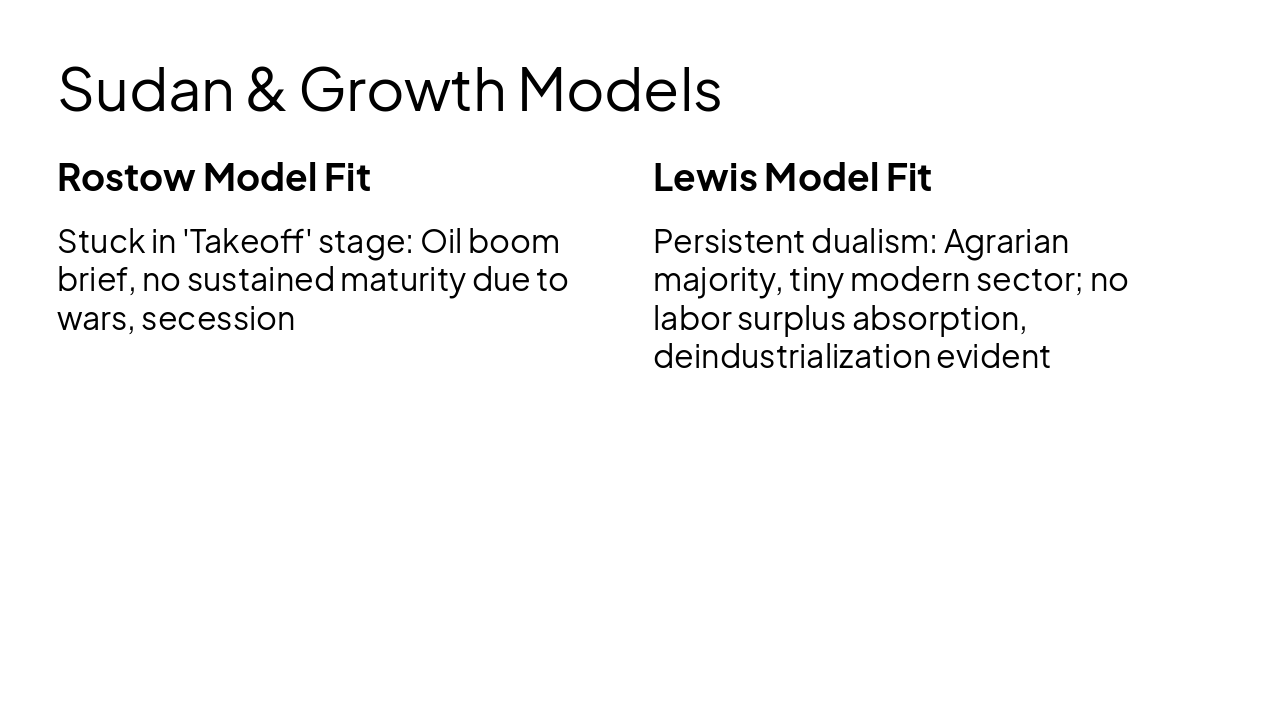
Rostow Model Fit Stuck in 'Takeoff' stage: Oil boom brief, no sustained maturity due to wars, secession

Lewis Model Fit Persistent dualism: Agrarian majority, tiny modern sector; no labor surplus absorption, deindustrialization evident
Slide 22 - Sudan & Growth Models
Slide 23 of 26

Slide 23 - Final Section

13

Conclusion

Failure of Structural Transformation

Slide 23 - Final Section
Slide 24 of 26

Slide 24 - Key Takeaways

Sudan failed structural transformation due to colonial legacy, civil wars, oil dependency, secession, and ongoing conflict. No progress beyond takeoff; persistent dualism and deindustrialization.

Peace and diversification essential for future growth

---

Photo by Rodeo Project Management Software on Unsplash
Slide 24 - Key Takeaways
Slide 25 of 26

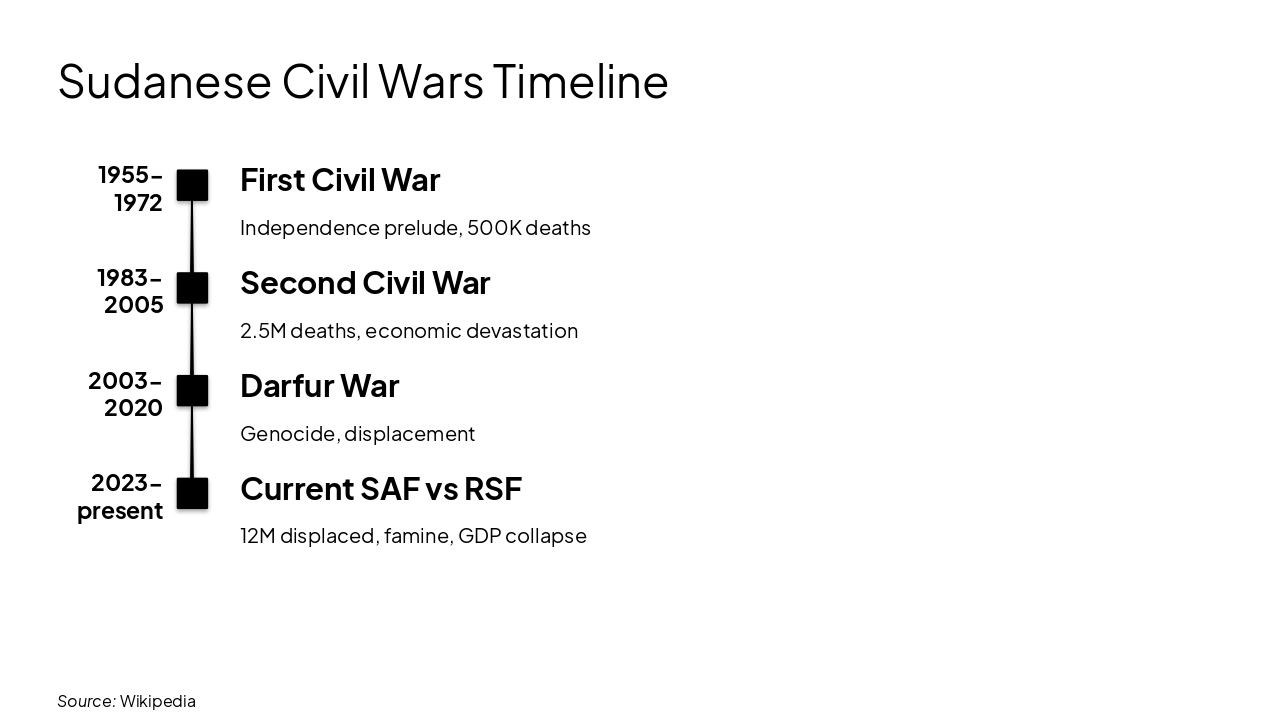
Slide 25 - Sudanese Civil Wars Timeline

1955-1972: First Civil War Independence prelude, 500K deaths 1983-2005: Second Civil War 2.5M deaths, economic devastation 2003-2020: Darfur War Genocide, displacement 2023-present: Current SAF vs RSF 12M displaced, famine, GDP collapse

Source: Wikipedia
Slide 25 - Sudanese Civil Wars Timeline
Slide 26 of 26

Slide 26 - Expert View on Sudan

> Sudan has endured chronic instability marked by 20 coup attempts, prolonged military rule, two civil wars and the Darfur genocide.

— Sudanese Civil War Overview

Source: Wikipedia
Slide 26 - Expert View on Sudan

Discover More Presentations

Explore thousands of AI-generated presentations for inspiration

Browse Presentations
Powered by AI

Create Your Own Presentation

Generate professional presentations in seconds with Karaf's AI. Customize this presentation or start from scratch.

Create New Presentation

Powered by Karaf.ai — AI-Powered Presentation Generator