Indigenous Knowledge Systems and Sustainable Development in Ethiopia

Generated from prompt:

Give a ppt for my presentation i need Ethiopian based pictures each slide and i need best note

This presentation introduces Indigenous Knowledge Systems (IKS) as cumulative knowledge, practices, and beliefs from Ethiopian communities, transmitted orally and adapted to local environments. It compares IKS to Western scientific knowledge, highlights Ethiopian case studies in agriculture, ethnomedicine, conflict resolution via Shimagile, and indigenous calendars. The deck examines threats like globalization, formal education, environmental changes, and cultural homogenization, then outlines preservation strategies including documentation, intellectual property respect, and integration into,

May 14, 202615 slides
Slide 1 of 15

Slide 1 - Indigenous Knowledge Systems and Sustainable Development

Indigenous Knowledge Systems and Sustainable Development

Local Wisdom for Ethiopia's Future

---

Photo by Daniele Levis Pelusi on Unsplash
Slide 1 - Indigenous Knowledge Systems
and Sustainable Development
Slide 2 of 15

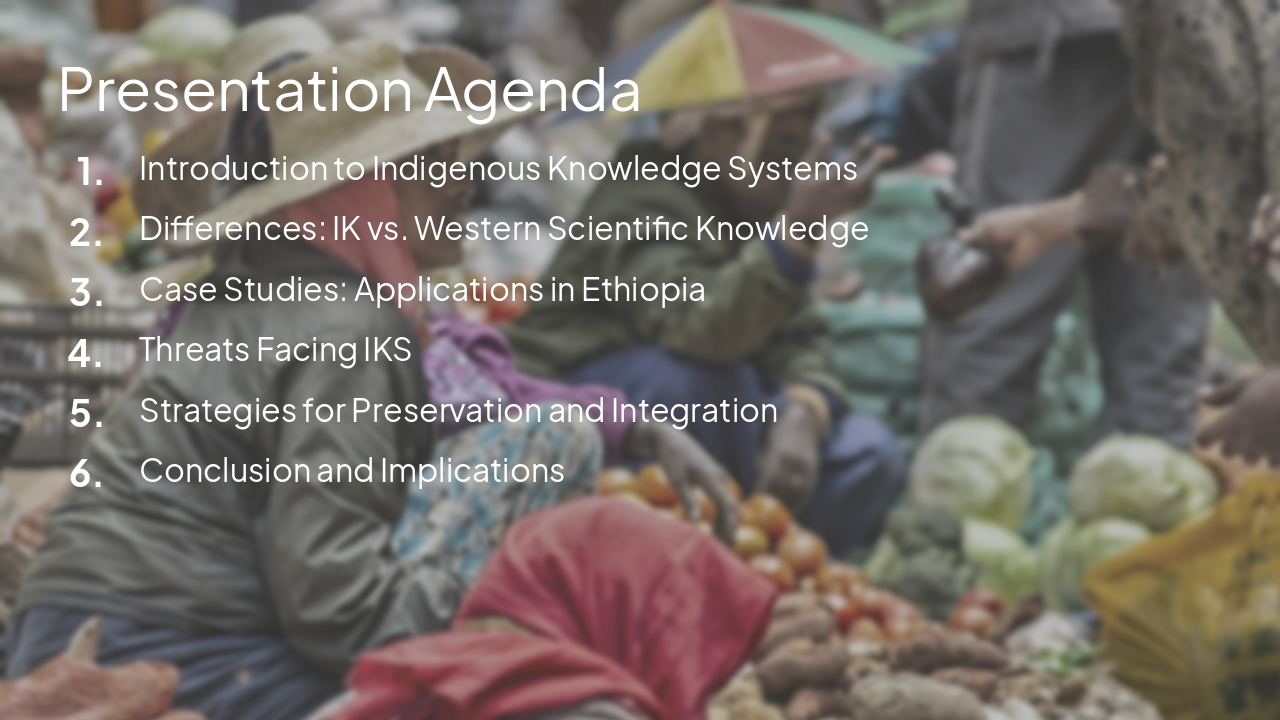
Slide 2 - Presentation Agenda

  • Introduction to Indigenous Knowledge Systems
  • Differences: IK vs. Western Scientific Knowledge
  • Case Studies: Applications in Ethiopia
  • Threats Facing IKS
  • Strategies for Preservation and Integration
  • Conclusion and Implications

---

Photo by Erik Hathaway on Unsplash
Slide 2 - Presentation Agenda
Slide 4 of 15

Slide 4 - Defining Indigenous Knowledge Systems (IKS)

  • Cumulative body of knowledge, practices, and beliefs from local communities
  • Developed through long-term interaction with natural/social environments
  • Transmitted orally via stories, proverbs, songs, demonstrations
  • Context-specific, adaptive, embedded in cultural traditions
  • Theme: “Local Wisdom, Global Challenges, and the Future of Knowledge”

---

Photo by Nathan Cima on Unsplash
Slide 4 - Defining Indigenous Knowledge Systems (IKS)
Slide 5 of 15

Slide 5 - IK vs. Western Scientific Knowledge

Indigenous Knowledge Transmission: Oral via stories, proverbs, songs; from elders/community; observation/participation. Validation: Long-term use, community practice. Application: Local environments, culture-linked, sustainability (e.g., traditional farming, herbal medicine).

Western Scientific Knowledge Transmission: Written books/journals; formal schools/universities. Validation: Experiments, peer review, objectivity. Application: Global/universal, innovation/tech (e.g., modern medicine, industrial agriculture).

---

Photo by Logan Gutierrez on Unsplash
Slide 5 - IK vs. Western Scientific Knowledge
Slide 6 of 15

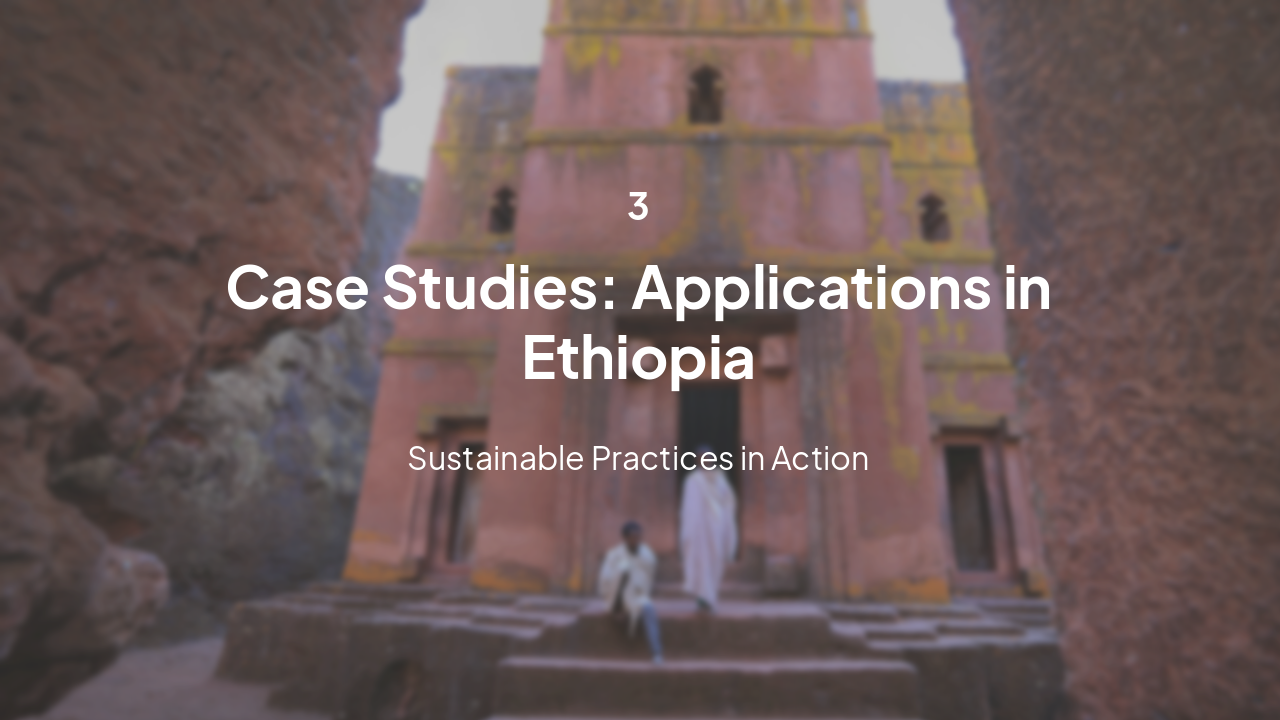
Slide 6 - Section 3: Ethiopian Case Studies

3

Case Studies: Applications in Ethiopia

Sustainable Practices in Action

---

Photo by mulugeta wolde on Unsplash
Slide 6 - Section 3: Ethiopian Case Studies
Slide 7 of 15

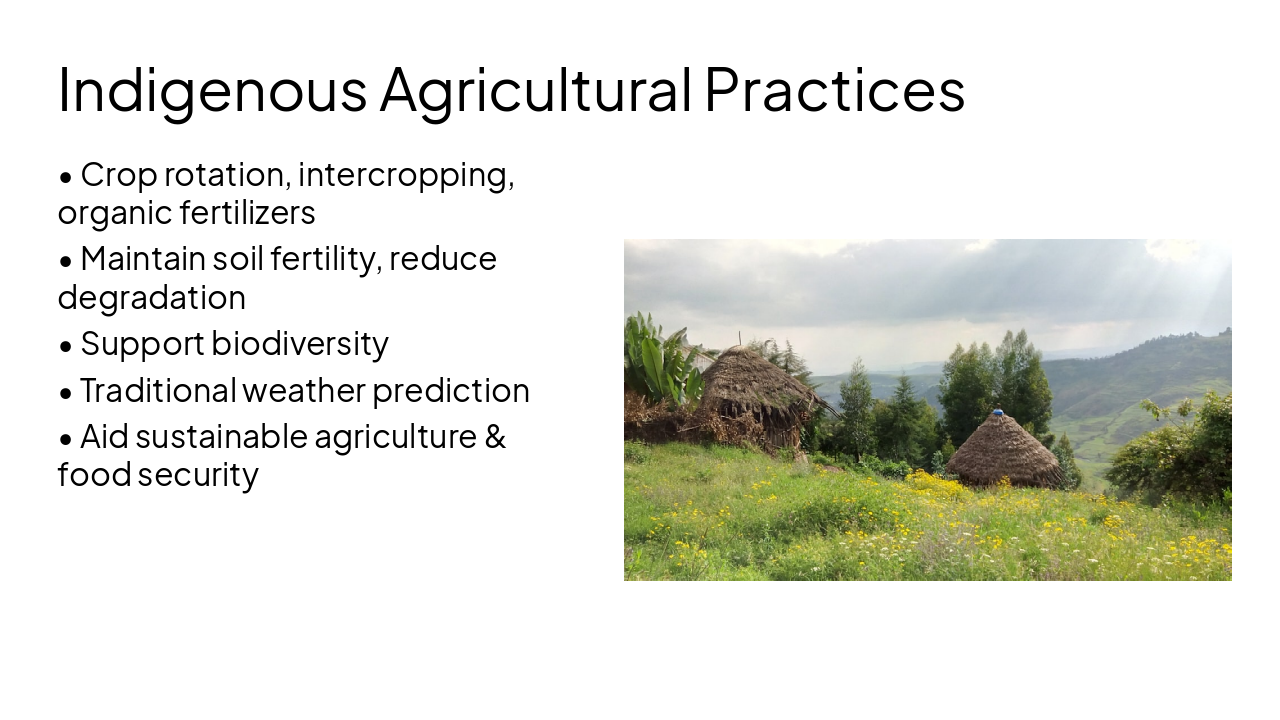
Slide 7 - Indigenous Agricultural Practices

  • Crop rotation, intercropping, organic fertilizers
  • Maintain soil fertility, reduce degradation
  • Support biodiversity
  • Traditional weather prediction
  • Aid sustainable agriculture & food security

---

Photo by Temesgen Negussie on Unsplash
Slide 7 - Indigenous Agricultural Practices
Slide 8 of 15

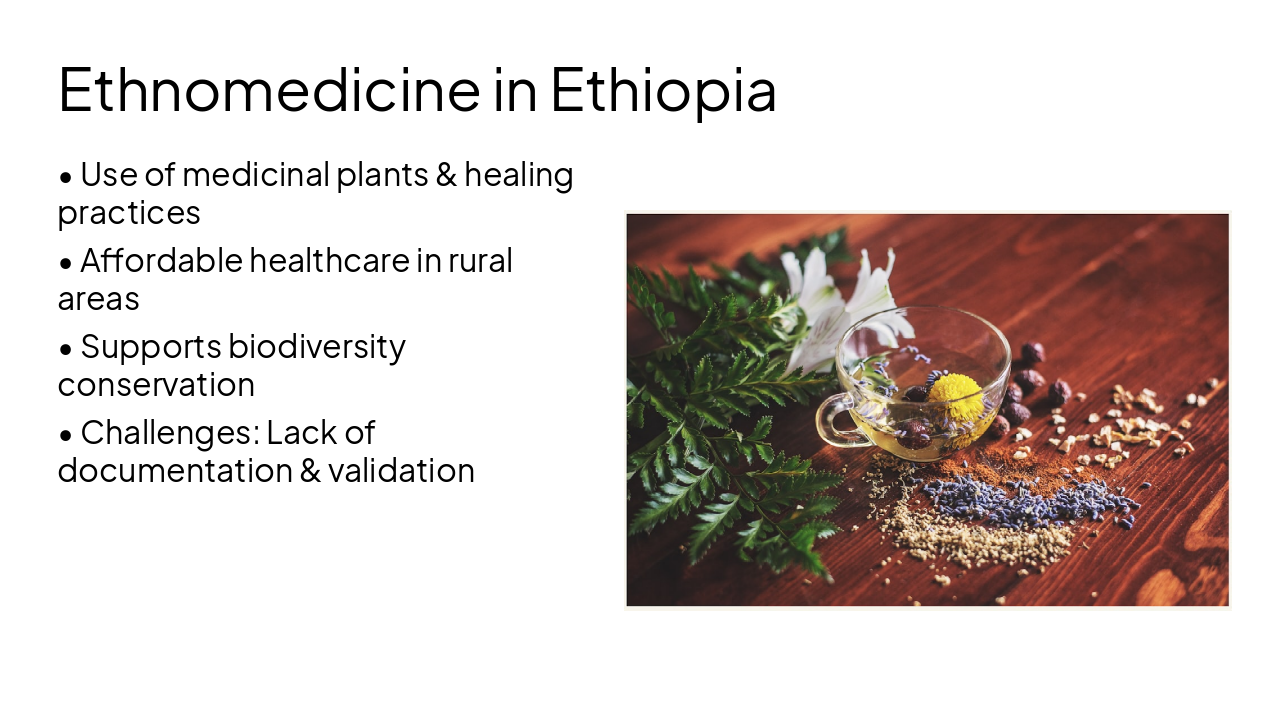
Slide 8 - Ethnomedicine in Ethiopia

  • Use of medicinal plants & healing practices
  • Affordable healthcare in rural areas
  • Supports biodiversity conservation
  • Challenges: Lack of documentation & validation

---

Photo by Lisa Hobbs on Unsplash

Slide 8 - Ethnomedicine in Ethiopia
Slide 9 of 15

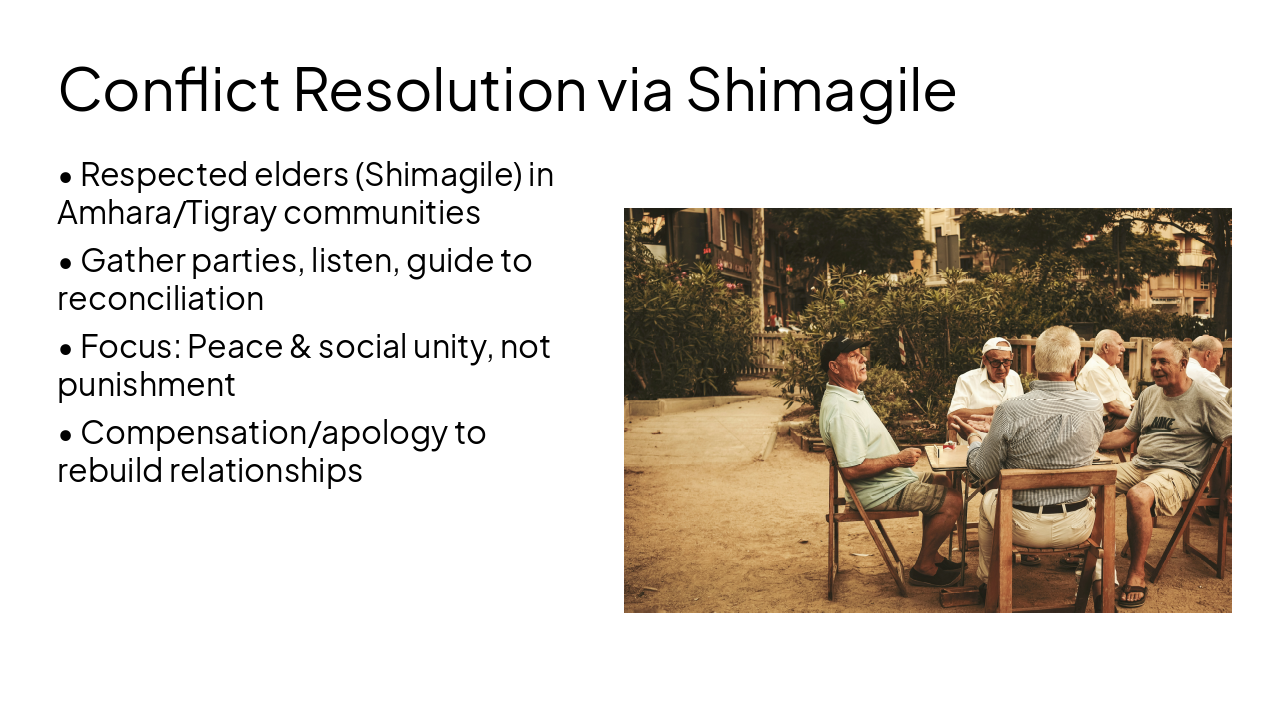
Slide 9 - Conflict Resolution via Shimagile

  • Respected elders (Shimagile) in Amhara/Tigray communities
  • Gather parties, listen, guide to reconciliation
  • Focus: Peace & social unity, not punishment
  • Compensation/apology to rebuild relationships

---

Photo by Cristina Gottardi on Unsplash
Slide 9 - Conflict Resolution via Shimagile
Slide 10 of 15

Slide 10 - Indigenous Calendar Systems

  • Organize time based on natural/seasonal changes
  • Guide agricultural activities & cultural events
  • Support climate adaptation & sustainability
  • Threatened by modernization & environmental changes

---

Photo by Toa Heftiba on Unsplash

Slide 10 - Indigenous Calendar Systems
Slide 11 of 15

Slide 11 - Section 4: Threats

4

Threats to Indigenous Knowledge Systems

Modern Challenges in Ethiopia

---

Photo by Tobias Arweiler on Unsplash
Slide 11 - Section 4: Threats
Slide 12 of 15

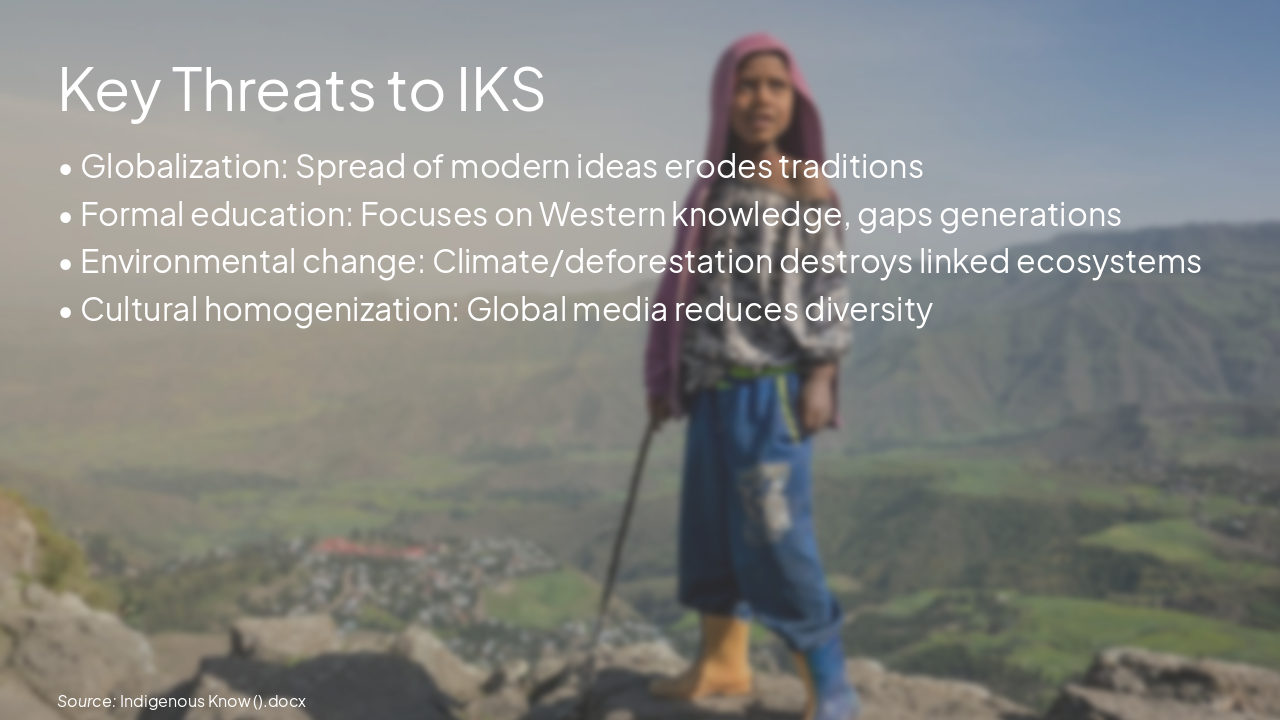
Slide 12 - Key Threats to IKS

  • Globalization: Spread of modern ideas erodes traditions
  • Formal education: Focuses on Western knowledge, gaps generations
  • Environmental change: Climate/deforestation destroys linked ecosystems
  • Cultural homogenization: Global media reduces diversity

---

Photo by Gerald Schömbs on Unsplash

Source: Indigenous Know ().docx
Slide 12 - Key Threats to IKS
Slide 13 of 15

Slide 13 - Section 5: Preservation Strategies

5

Strategies for Preservation and Integration

Document, Protect, Integrate

---

Photo by Tim Mossholder on Unsplash
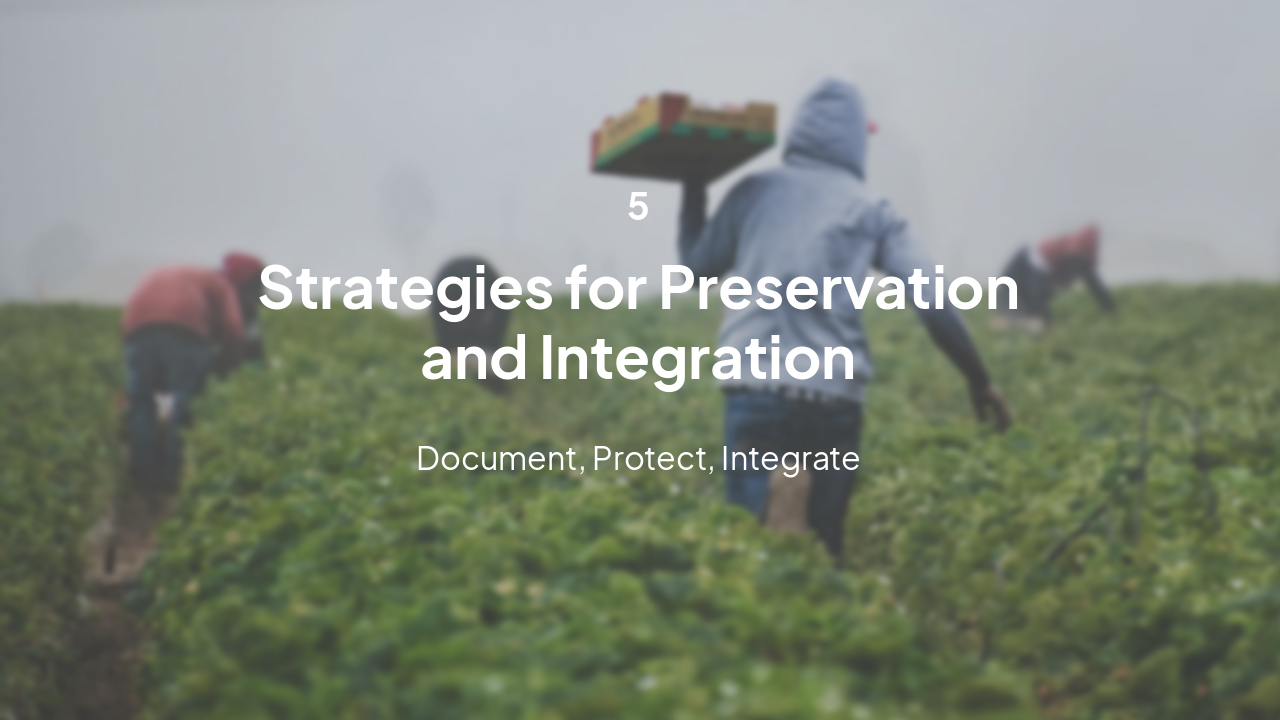
Slide 13 - Section 5: Preservation Strategies
Slide 14 of 15

Slide 14 - Preservation Workflow

StepStrategy
1Interview elders; document via audio/video/written records
2Respect intellectual property; community ownership/consent
3Integrate into education & local development planning

---

Photo by Richard Nyoni on Unsplash
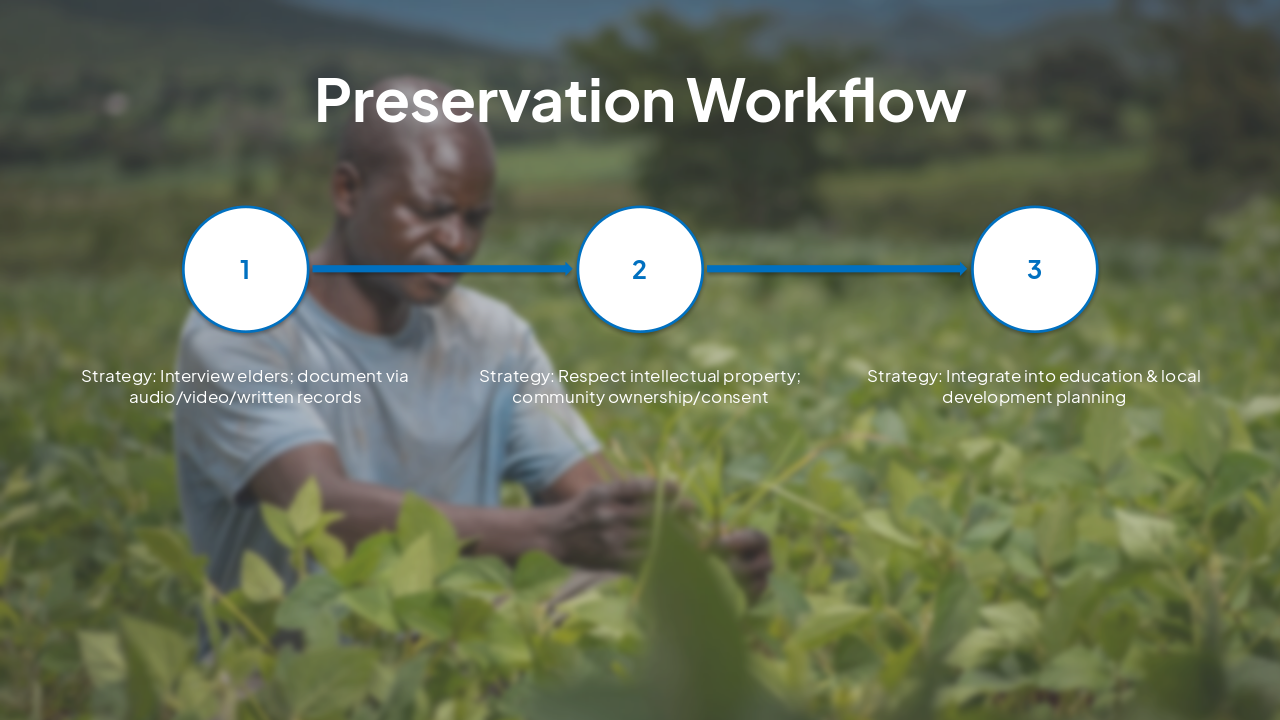
Slide 14 - Preservation Workflow
Slide 15 of 15

Slide 15 - Key Takeaways

Indigenous Knowledge Systems are essential for sustainable development in Ethiopia Provide practical, local solutions Face threats but can be preserved through documentation and integration

Integrate IKS with modern science to protect culture and ensure future resilience
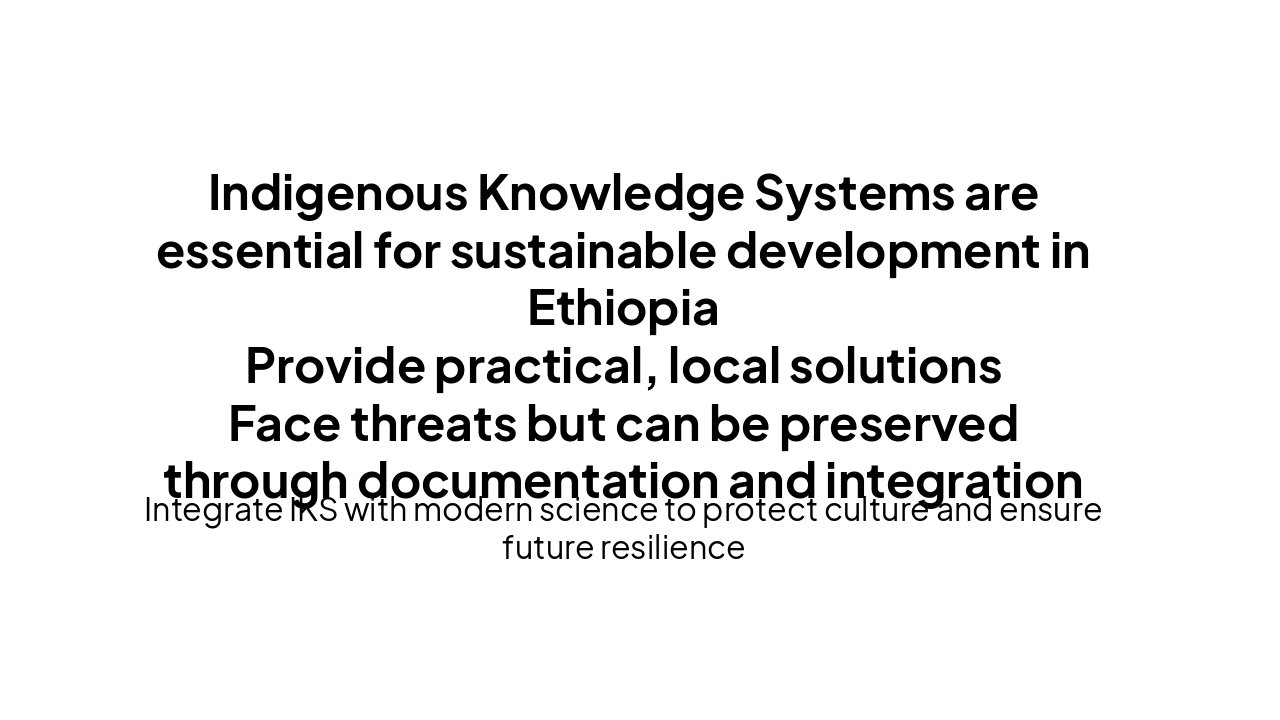
Slide 15 - Key Takeaways

Discover More Presentations

Explore thousands of AI-generated presentations for inspiration

Browse Presentations
Powered by AI

Create Your Own Presentation

Generate professional presentations in seconds with Karaf's AI. Customize this presentation or start from scratch.

Create New Presentation

Powered by Karaf.ai — AI-Powered Presentation Generator