Bleeding & Paediatric Emergencies Quiz

Generated from prompt:

Create a PowerPoint presentation with 8 slides, 1 question per slide, no answers shown. Topic: Bleeding and Paediatric Emergencies. Slide 1: Question 103 - Which sign indicates severe bleeding? Options: A. Small bruise B. Slow oozing C. Spurting or pooling blood D. Itchy skin Slide 2: Question 104 - What is the correct action when bleeding soaks through a bandage? Options: A. Remove the bandage B. Add more pressure on top C. Use cold water D. Ignore it Slide 3: Question 105 - Why is bleeding from the thigh particularly dangerous? Options: A. It is only a surface injury B. Major blood vessels run through the thigh C. It heals instantly D. It is always minor Slide 4: Question 106 - Which symptom suggests a possible pelvic fracture? Options: A. Pain only when walking B. Severe hip pain after high-energy impact C. Mild indigestion D. Tingling fingers Slide 5: Question 107 - Why are children at higher risk of dehydration? Options: A. They drink too much B. Their bodies lose water faster C. They dislike water D. They sleep too much Slide 6: Question 108 - A child has a fever and a rash that does not fade when pressed. What should be suspected? Options: A. Sunburn B. Minor infection C. Serious infection (possible meningitis) D. Tooth eruption Slide 7: Question 109 - A baby is unusually quiet, floppy, and not responding well. What does this indicate? Options: A. Sleep B. Normal behaviour C. Medical emergency D. Hunger only Slide 8: Question 110 - Why is breathing difficulty in a child especially serious? Options: A. They are always dramatic B. Their airways are smaller and can obstruct more easily C. They breathe too loudly D. They exaggerate symptoms Design: professional medical training theme, clean layout, white background with red and blue accents, readable fonts.

An 8-slide PowerPoint quiz on severe bleeding signs, management, and paediatric risks like dehydration, meningitis, and airway issues. Features multiple-choice questions for medical training, with a c

November 27, 20258 slides
Slide 1 of 8

Slide 1 - Question 103

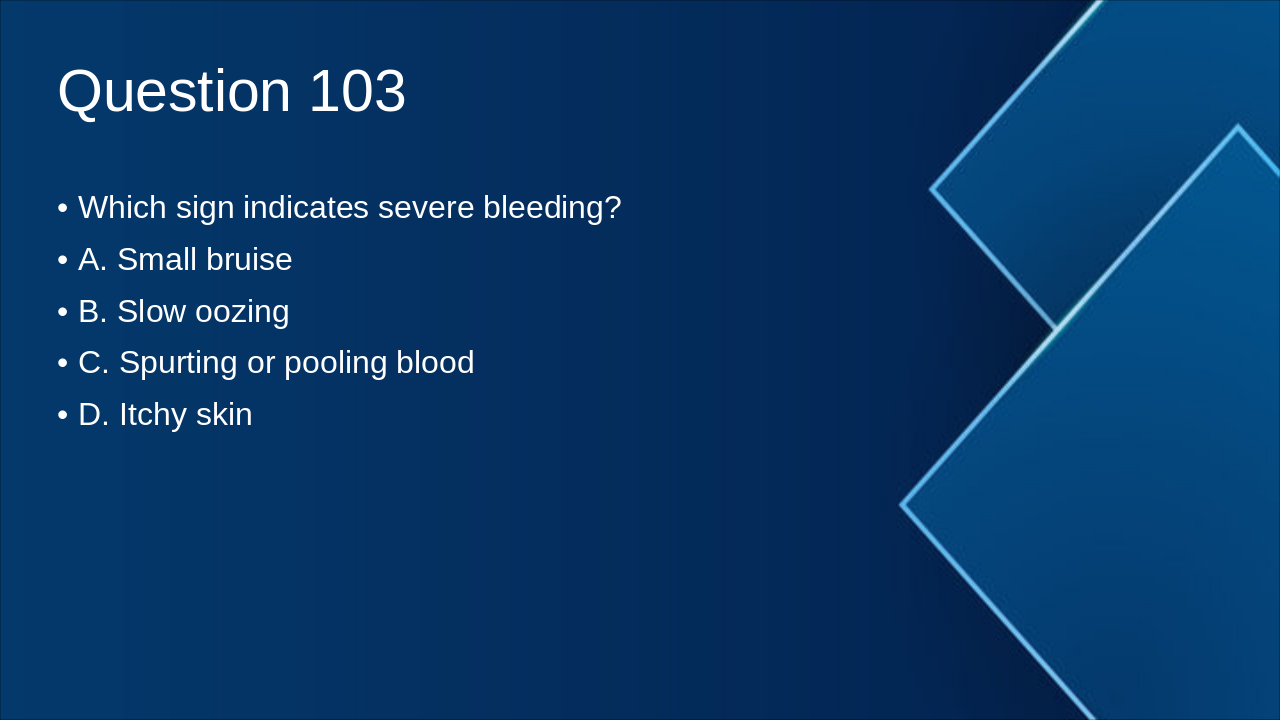
The slide titled "Question 103" presents a multiple-choice quiz asking which sign indicates severe bleeding. The options are A. Small bruise, B. Slow oozing, C. Spurting or pooling blood, and D. Itchy skin.

Question 103

  • Which sign indicates severe bleeding?
  • A. Small bruise
  • B. Slow oozing
  • C. Spurting or pooling blood
  • D. Itchy skin
Slide 1 - Question 103
Slide 2 of 8

Slide 2 - Question 104

Question 104 on the slide asks: "What is the correct action when bleeding soaks through a bandage?" The multiple-choice options are A. Remove the bandage, B. Add more pressure on top, C. Use cold water, and D. Ignore it.

Question 104

  • What is the correct action when bleeding soaks through a bandage?
  • A. Remove the bandage
  • B. Add more pressure on top
  • C. Use cold water
  • D. Ignore it

Source: Bleeding and Paediatric Emergencies

Slide 2 - Question 104
Slide 3 of 8

Slide 3 - Question 105

This slide presents Question 105 from a quiz or test, asking why bleeding from the thigh is particularly dangerous. The multiple-choice options include A (It is only a surface injury), B (Major blood vessels run through the thigh), C (It heals instantly), and D (It is always minor).

Question 105

  • Why is bleeding from the thigh particularly dangerous?
  • A. It is only a surface injury
  • B. Major blood vessels run through the thigh
  • C. It heals instantly
  • D. It is always minor

Source: Bleeding and Paediatric Emergencies

Speaker Notes
Present the question and options without revealing the answer. Encourage discussion on why thigh bleeding is dangerous.
Slide 3 - Question 105
Slide 4 of 8

Slide 4 - Question 106

Question 106 on the slide asks which symptom indicates a possible pelvic fracture. The multiple-choice options include pain only when walking, severe hip pain after high-energy impact, mild indigestion, and tingling fingers.

Question 106

  • Which symptom suggests a possible pelvic fracture?
  • A. Pain only when walking
  • B. Severe hip pain after high-energy impact
  • C. Mild indigestion
  • D. Tingling fingers
Slide 4 - Question 106
Slide 5 of 8

Slide 5 - Question 107

The slide presents Question 107 from a quiz or educational material, asking why children are at higher risk of dehydration. It lists four multiple-choice options: A. They drink too much, B. Their bodies lose water faster, C. They dislike water, and D. They sleep too much.

Question 107

  • Why are children at higher risk of dehydration?
  • A. They drink too much
  • B. Their bodies lose water faster
  • C. They dislike water
  • D. They sleep too much
Slide 5 - Question 107
Slide 6 of 8

Slide 6 - Question 108

Question 108 on the slide presents a scenario where a child has a fever and a non-fading rash when pressed, prompting the question of what should be suspected. The multiple-choice options include A. Sunburn, B. Minor infection, C. Serious infection (possible meningitis), and D. Tooth eruption.

Question 108

  • A child has a fever and a rash that does not fade when pressed.
  • What should be suspected?
  • A. Sunburn
  • B. Minor infection
  • C. Serious infection (possible meningitis)
  • D. Tooth eruption
Slide 6 - Question 108
Slide 7 of 8

Slide 7 - Question 109

The slide presents Question 109, describing a baby who is unusually quiet, floppy, and not responding well, and asks what this indicates. The multiple-choice options are A. Sleep, B. Normal behaviour, C. Medical emergency, and D. Hunger only.

Question 109

  • A baby is unusually quiet, floppy, and not responding well.
  • What does this indicate?
  • A. Sleep
  • B. Normal behaviour
  • C. Medical emergency
  • D. Hunger only
Slide 7 - Question 109
Slide 8 of 8

Slide 8 - Question 110: Why is breathing difficulty in a child especially serious?

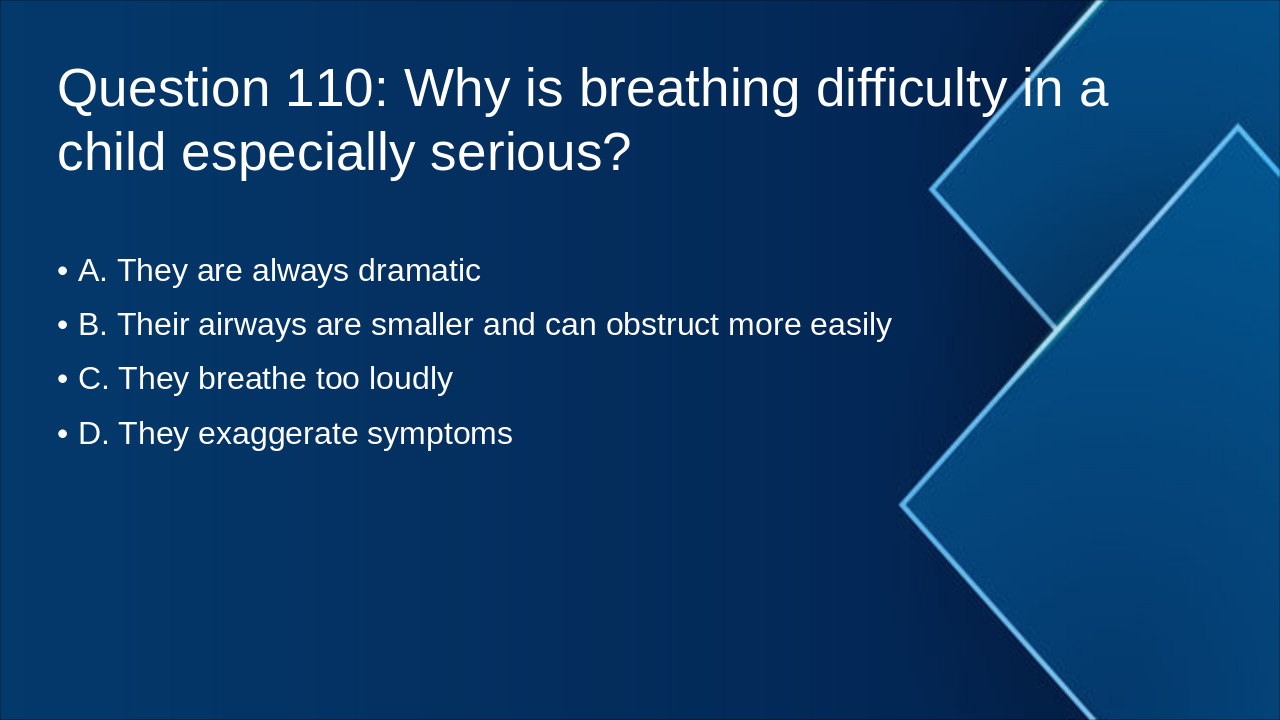
The slide presents a multiple-choice question titled "Question 110: Why is breathing difficulty in a child especially serious?" with options including A. They are always dramatic, B. Their airways are smaller and can obstruct more easily, C. They breathe too loudly, and D. They exaggerate symptoms. The correct answer highlights that children's smaller airways make obstruction more likely and thus more dangerous during breathing difficulties.

Question 110: Why is breathing difficulty in a child especially serious?

  • A. They are always dramatic
  • B. Their airways are smaller and can obstruct more easily
  • C. They breathe too loudly
  • D. They exaggerate symptoms
Slide 8 - Question 110: Why is breathing difficulty in a child especially serious?

Discover More Presentations

Explore thousands of AI-generated presentations for inspiration

Browse Presentations
Powered by AI

Create Your Own Presentation

Generate professional presentations in seconds with Karaf's AI. Customize this presentation or start from scratch.

Create New Presentation

Powered by Karaf.ai — AI-Powered Presentation Generator