Thesis Presentation Strategy: Research Structure & Rhetoric

Generated from prompt:

Create a presentation about my thesis

This deck provides strategies for effective thesis presentations, covering research modeling (OMT), technical frameworks (BSP), rhetorical appeals (ethos, pathos, logos, kairos), audience awareness, and best practices for academic delivery.

April 20, 202610 slides
Slide 1 of 10

Slide 1 - Thesis Presentation Strategy

Thesis Presentation Strategy

Structuring Research and Mastering Rhetorical Delivery
Slide 1 - Thesis Presentation Strategy
Slide 2 of 10

Slide 2 - Agenda

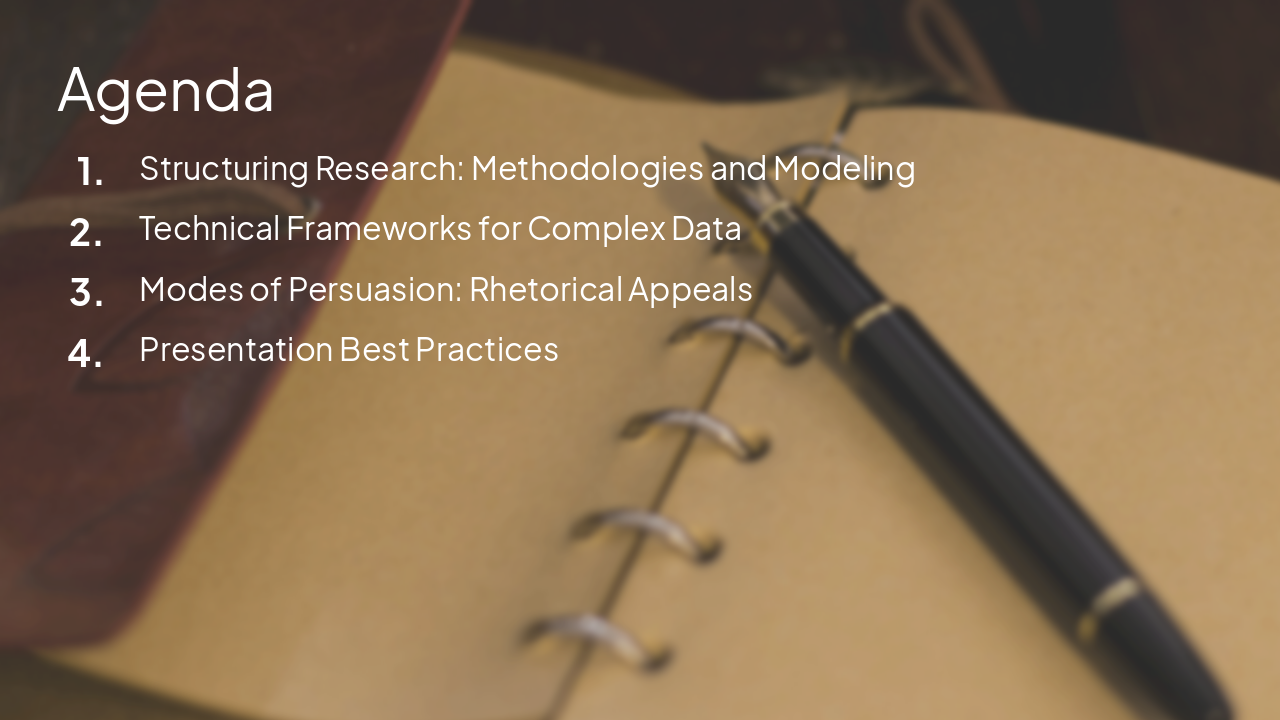
  • Structuring Research: Methodologies and Modeling
  • Technical Frameworks for Complex Data
  • Modes of Persuasion: Rhetorical Appeals
  • Presentation Best Practices

---

Photo by Niko Nieminen on Unsplash
Slide 2 - Agenda
Slide 3 of 10

Slide 3 - Research Modeling & Methodology

1

Research Modeling & Methodology

Foundations for robust academic work

---

Photo by Conny Schneider on Unsplash
Slide 3 - Research Modeling & Methodology
Slide 4 of 10

Slide 4 - The Object-Modeling Technique (OMT)

  • OMT (Object-modeling technique) supports complex systems design.
  • Main purpose: simulation, customer communication, visualization, and reduction of complexity.
  • Three types of models: Object (static), Dynamic (state/transition), Functional (process/data flow).
  • OMT acts as a foundation for UML.
Slide 4 - The Object-Modeling Technique (OMT)
Slide 5 of 10

Slide 5 - Technical Modeling Frameworks

2

Technical Modeling Frameworks

Handling complex spatial scenes and data structures

---

Photo by Logan Voss on Unsplash
Slide 5 - Technical Modeling Frameworks
Slide 6 of 10

Slide 6 - Binary Space Partitioning (BSP)

  • Binary Space Partitioning (BSP) recursively subdivides Euclidean space into convex sets.
  • Generates a tree data structure (BSP tree) for efficient spatial indexing.
  • Crucial for 3D graphics, collision detection, and virtual environment simulation.
Slide 6 - Binary Space Partitioning (BSP)
Slide 7 of 10

Slide 7 - Modes of Persuasion

3

Modes of Persuasion

The art of convincing your academic audience

---

Photo by Divya Agrawal on Unsplash
Slide 7 - Modes of Persuasion
Slide 8 of 10

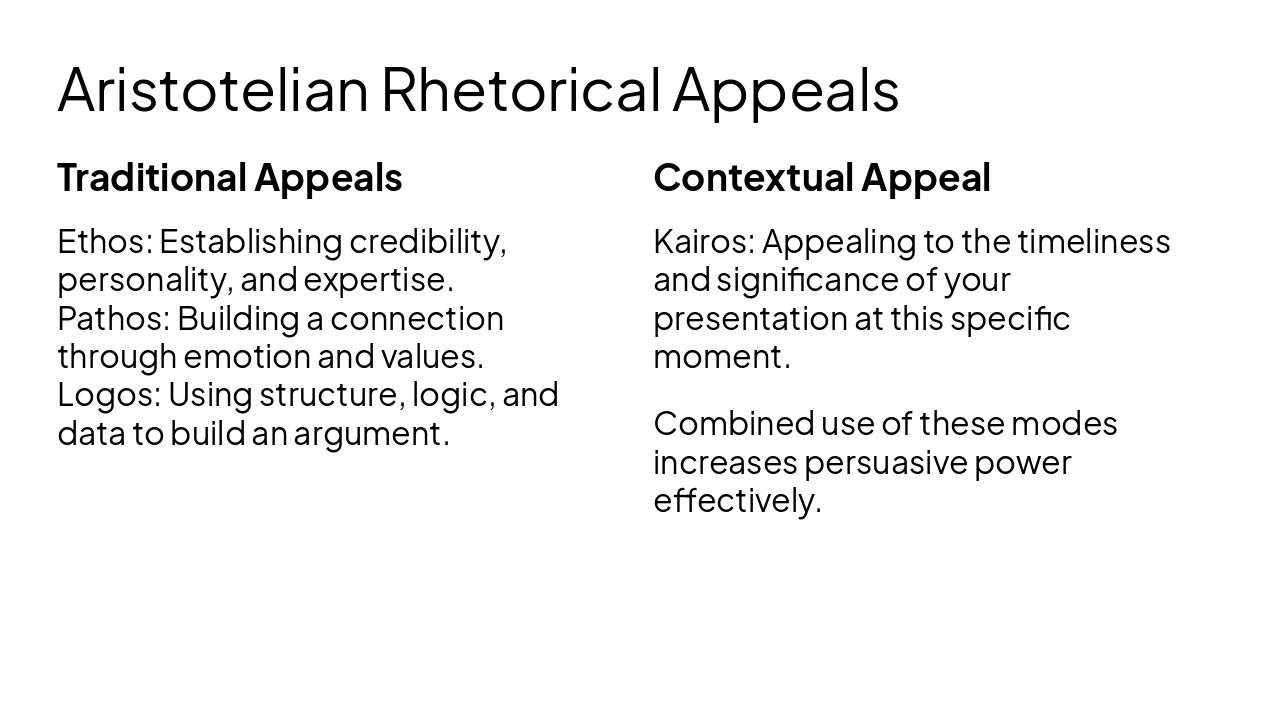
Slide 8 - Aristotelian Rhetorical Appeals

Traditional Appeals Ethos: Establishing credibility, personality, and expertise. Pathos: Building a connection through emotion and values. Logos: Using structure, logic, and data to build an argument.

Contextual Appeal Kairos: Appealing to the timeliness and significance of your presentation at this specific moment.

Combined use of these modes increases persuasive power effectively.
Slide 8 - Aristotelian Rhetorical Appeals
Slide 9 of 10

Slide 9 - Audience Awareness

> Knowing the values, beliefs, and expectations of an audience helps writers and speakers identify the best approaches.

— William Keith and Christian Lundberg

---

Photo by Pixelbuddha Studio on Unsplash
Slide 9 - Audience Awareness
Slide 10 of 10

Slide 10 - Conclusion

Clear methodology, rigorous technical framework, and persuasive communication define a successful thesis.

Thesis Defense and Beyond

---

Photo by Dawid Zawiła on Unsplash
Slide 10 - Conclusion

Discover More Presentations

Explore thousands of AI-generated presentations for inspiration

Browse Presentations
Powered by AI

Create Your Own Presentation

Generate professional presentations in seconds with Karaf's AI. Customize this presentation or start from scratch.

Create New Presentation

Powered by Karaf.ai — AI-Powered Presentation Generator