Slide 1 of 12
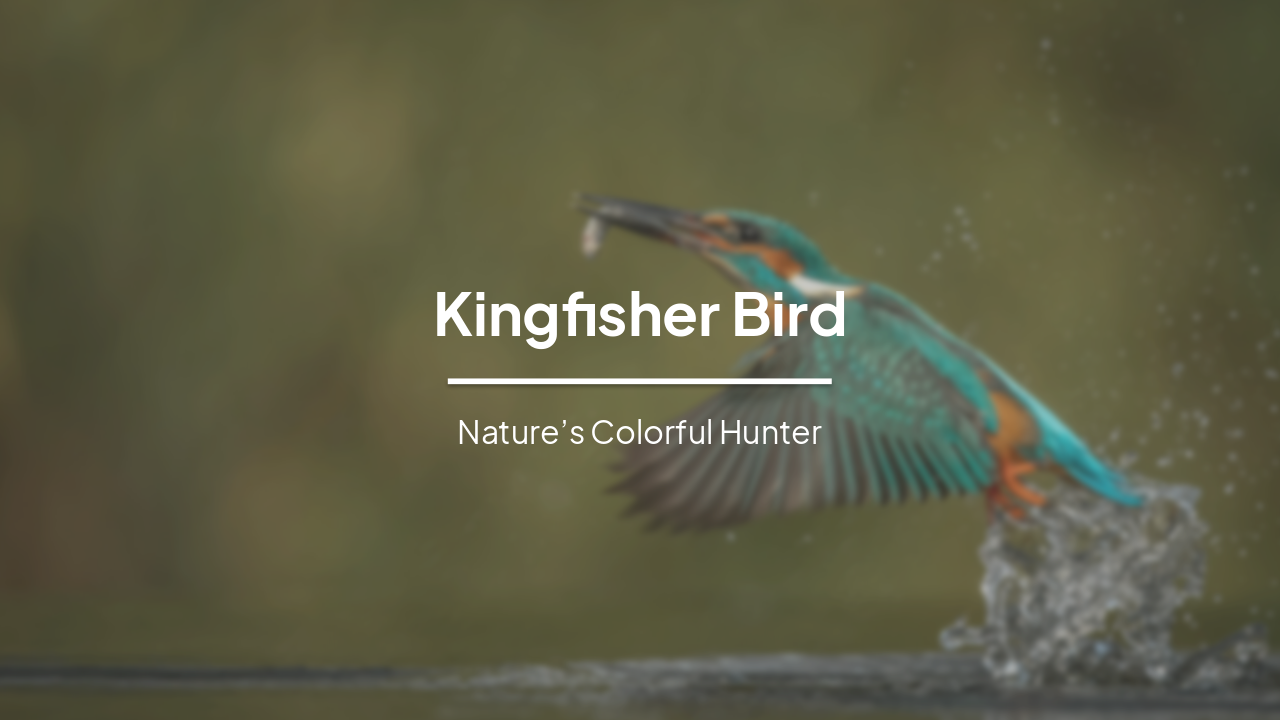
Slide 1 - Kingfisher Bird
Generated from prompt:
Create a visually engaging PowerPoint presentation about the Kingfisher bird. Include: Slide 1: Title slide (Kingfisher Bird – Nature’s Colorful Hunter) Slide 2: Introduction (overview of kingfishers, where they are found) Slide 3: Physical Characteristics (colors, beak, size) Slide 4: Habitat (rivers, lakes, forests, global distribution) Slide 5: Diet and Hunting (fish, insects, hunting techniques) Slide 6: Behavior (perching, diving, territorial nature) Slide 7: Species Variety (examples like Common Kingfisher, Belted Kingfisher) Slide 8: Reproduction (nesting, eggs, parenting) Slide 9: Importance in Ecosystem Slide 10: Fun Facts Slide 11: Conservation Status Slide 12: Conclusion Use clean layouts, nature-themed colors, and include image placeholders on each slide.
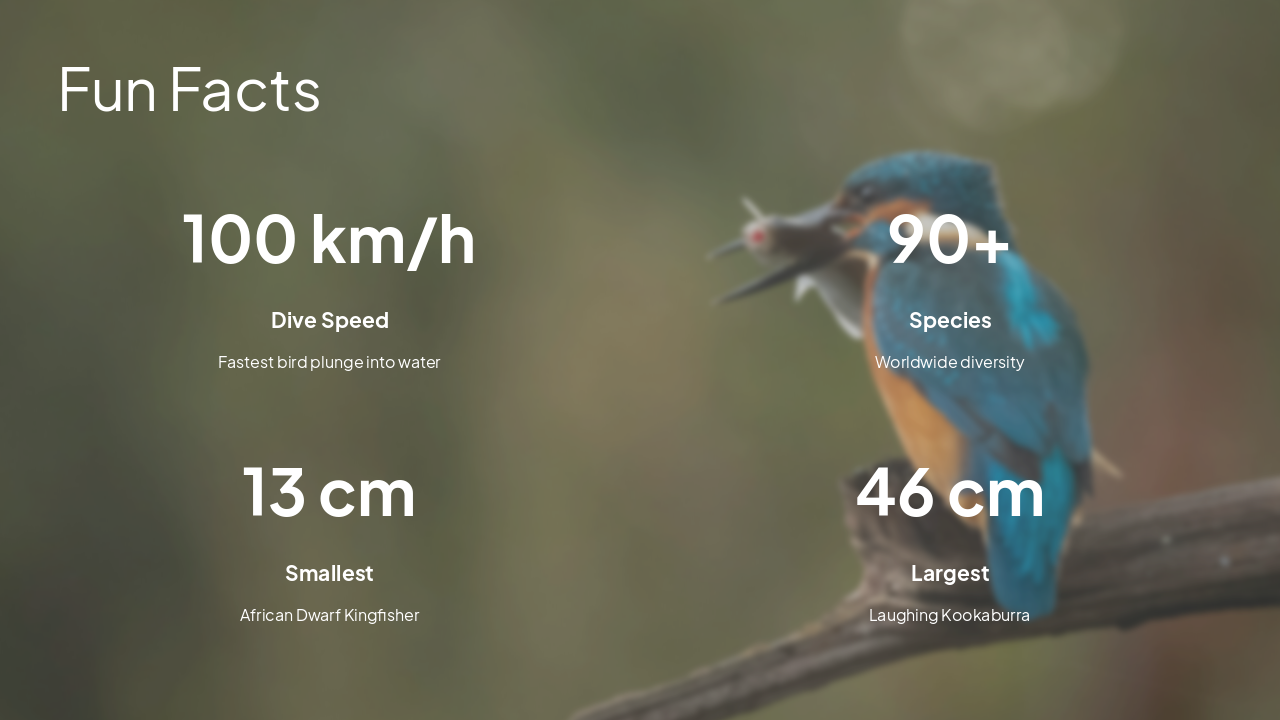
This presentation provides a comprehensive overview of kingfisher birds, from the family Alcedinidae. It covers their introduction and global distribution, physical characteristics like vibrant colors and sharp beaks, preferred habitats near rivers and lakes, diet primarily of fish caught through lightning-fast dives, unique behaviors, species variety including the Common Kingfisher and Laughing Kookaburra, reproduction cycle with burrow nesting, ecological importance as indicators of healthy waterways, fun facts such as dive speeds up to 100 km/h, and conservation challenges like habitat loss
---
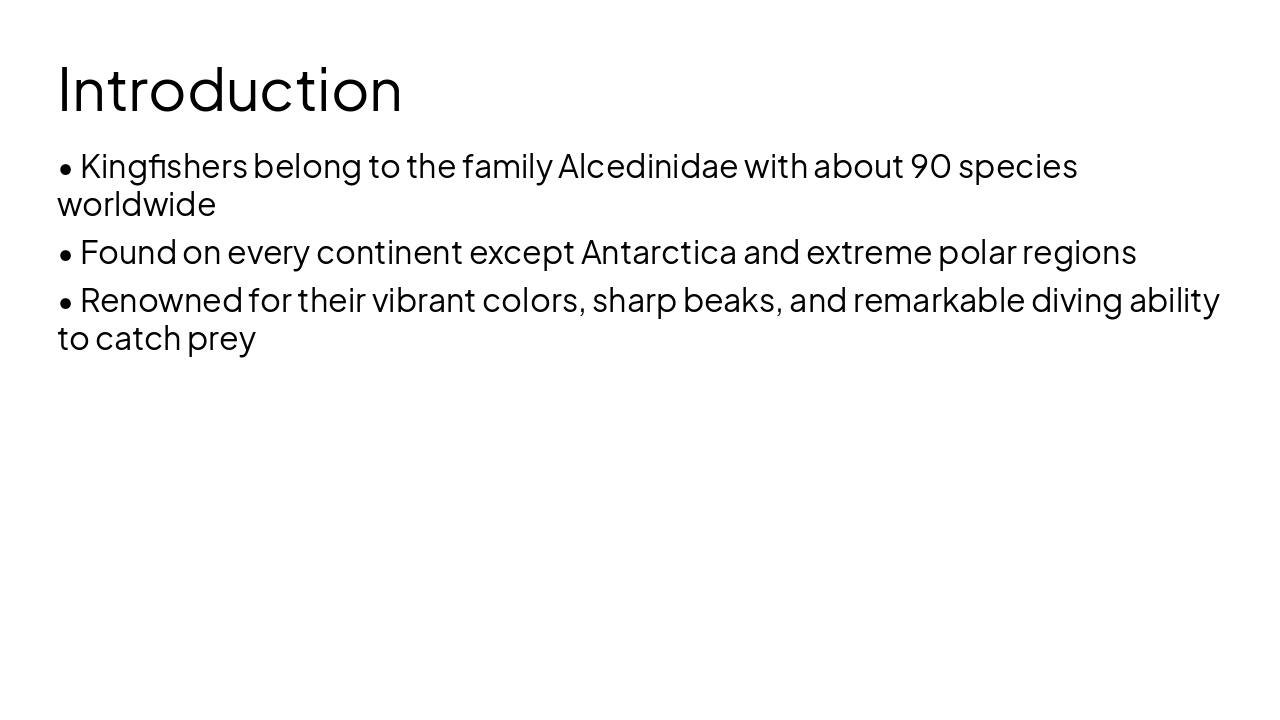
Photo by Vincent van Zalinge on Unsplash
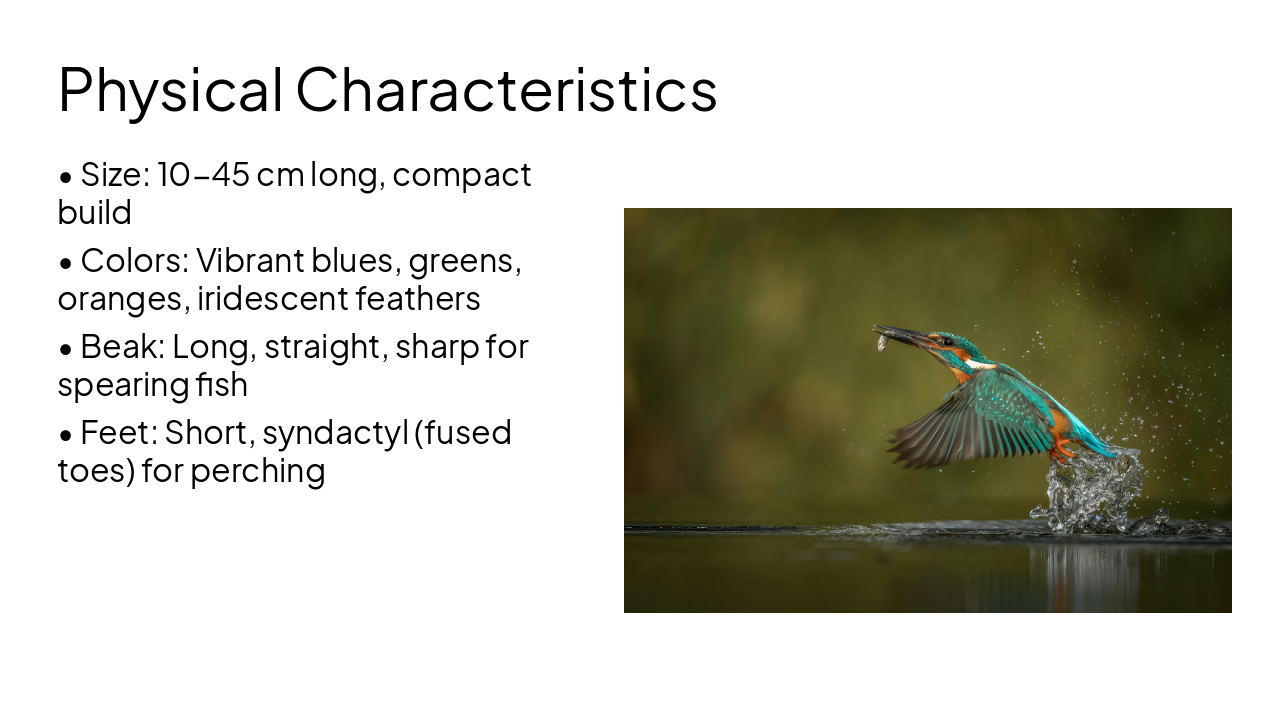
Preferred Environments Rivers, streams, lakes, mangroves Some species in arid woodlands or forests
Global Distribution Tropical regions: Africa, Asia, Australia Temperate: Europe, North America Absent from high Arctic and polar South America
---
Photo by Christian Bass on Unsplash
---
Photo by Srinivasan Venkataraman on Unsplash

🐦 Common Kingfisher (Alcedo atthis) Europe/Asia, 16cm, bright blue/orange, rivers
🐦 Belted Kingfisher (Megaceryle alcyon) North America, 30-35cm, blue/gray, lakes/rivers
🐦 Malachite Kingfisher Africa, tiny 13cm, green/blue, streams
🐦 Laughing Kookaburra Australia, 46cm, largest, terrestrial hunter
Spring: Courtship Pairs form, males display with fish gifts Summer: Nesting Tunnel burrows in steep riverbanks, 1m deep **: Eggs 4-7 white eggs, incubated 19-22 days by both **: Fledging Chicks fed fish, leave nest after 3 weeks
---
Photo by Gennady Zakharin on Unsplash

---
Photo by Vincent van Zalinge on Unsplash
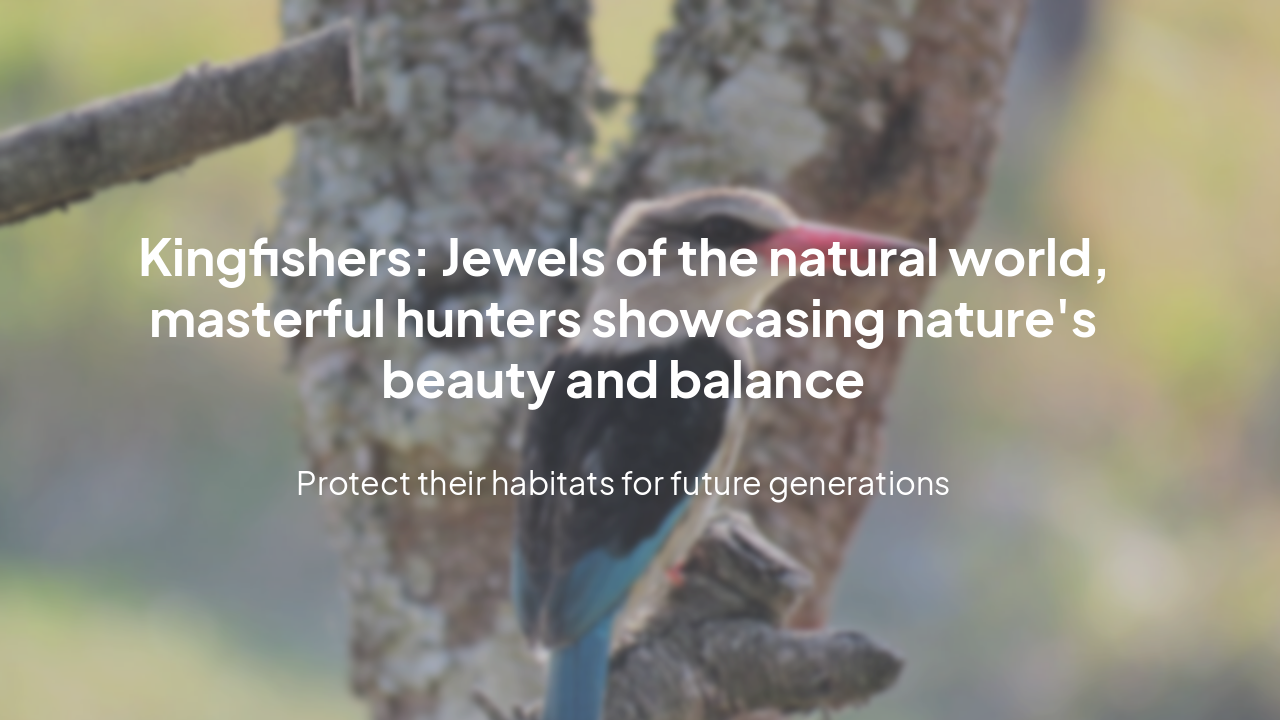
Kingfishers: Jewels of the natural world, masterful hunters showcasing nature's beauty and balance
Protect their habitats for future generations
---
Photo by Joshua Gaunt on Unsplash
Explore thousands of AI-generated presentations for inspiration
Generate professional presentations in seconds with Karaf's AI. Customize this presentation or start from scratch.