Renewables & TES: Sustainable Future

Generated from prompt:

Create a comprehensive 5-slide presentation about renewable energy

This presentation explores renewable energy sources like solar and wind, their benefits and challenges, main types, and innovations in thermal energy storage (TES) for balancing supply and demand, con

November 19, 202510 slides
Slide 1 of 10

Slide 1 - Renewable Energy Overview

The slide, titled "Renewable Energy Overview," serves as a title slide introducing the topic. Its subtitle highlights renewable energy sources and their critical role in addressing climate change.

Renewable Energy Overview

Introduction to renewable energy sources and their importance in combating climate change.

--- Speaker Notes: Welcome slide with key visuals of wind, solar, and hydro.
Slide 1
Slide 2 of 10

Slide 2 - Renewable Energy Overview

The slide, titled "Renewable Energy Overview," serves as an introductory title slide. Its subtitle highlights the exploration of renewable energy sources and their essential role in promoting sustainable development and mitigating global environmental impacts.

Renewable Energy Overview

Exploring renewable sources and their pivotal role in sustainable development and global environmental impact.

Slide 2
Slide 3 of 10

Slide 3 - Key Renewable Energy Sources

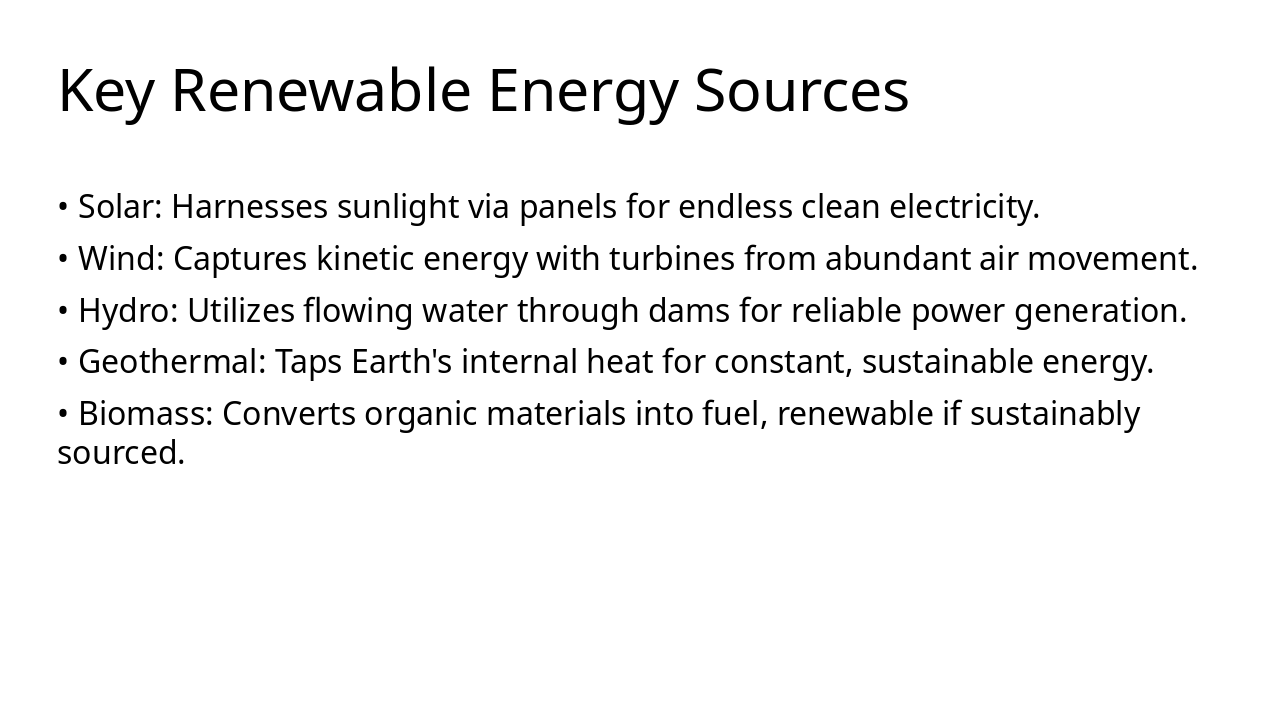
The slide outlines key renewable energy sources, including solar, which harnesses sunlight via panels for endless clean electricity; wind, capturing kinetic energy from air movement with turbines; and hydro, utilizing flowing water through dams for reliable power. It also covers geothermal, tapping Earth's internal heat for constant sustainable energy, and biomass, converting organic materials into fuel when sustainably sourced.

Key Renewable Energy Sources

  • Solar: Harnesses sunlight via panels for endless clean electricity.
  • Wind: Captures kinetic energy with turbines from abundant air movement.
  • Hydro: Utilizes flowing water through dams for reliable power generation.
  • Geothermal: Taps Earth's internal heat for constant, sustainable energy.
  • Biomass: Converts organic materials into fuel, renewable if sustainably sourced.
Slide 3
Slide 4 of 10

Slide 4 - What is Renewable Energy?

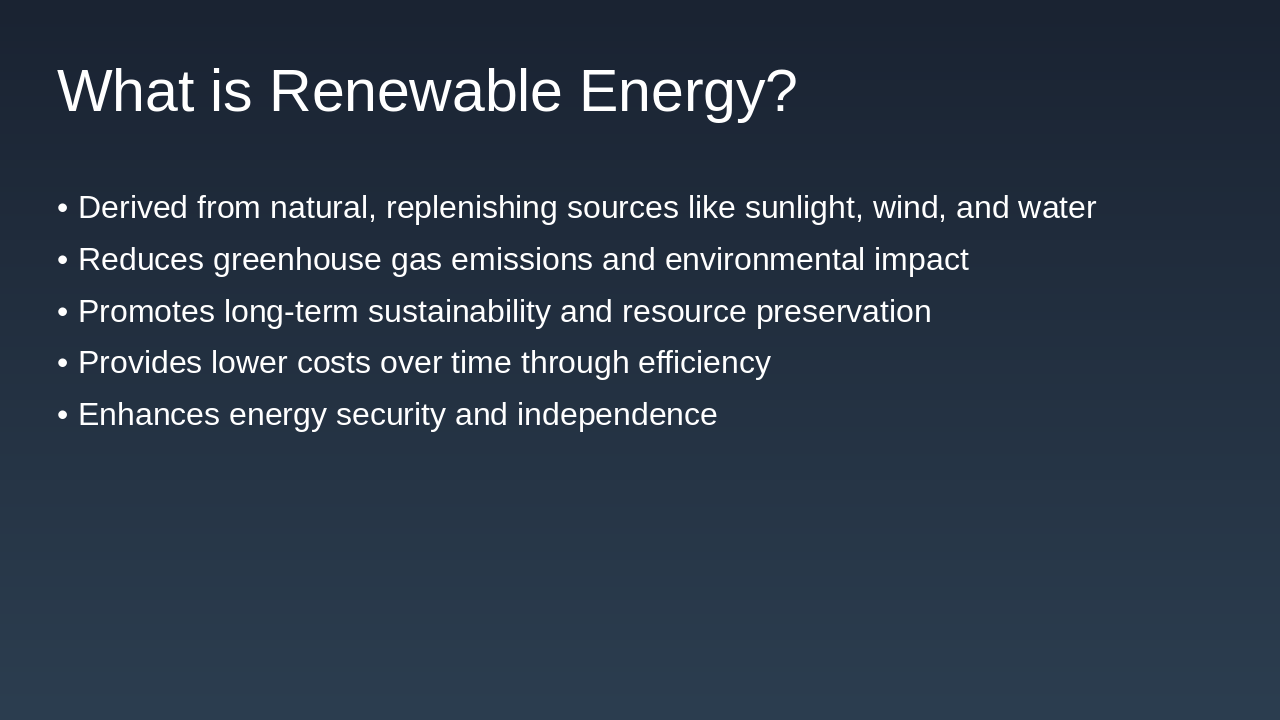
Renewable energy is derived from natural, replenishing sources such as sunlight, wind, and water, helping to reduce greenhouse gas emissions and minimize environmental impact. It promotes long-term sustainability, resource preservation, lower long-term costs through efficiency, and greater energy security and independence.

What is Renewable Energy?

  • Derived from natural, replenishing sources like sunlight, wind, and water
  • Reduces greenhouse gas emissions and environmental impact
  • Promotes long-term sustainability and resource preservation
  • Provides lower costs over time through efficiency
  • Enhances energy security and independence

--- Speaker Notes: Renewable energy comes from natural sources like sunlight, wind, and water that replenish naturally. It reduces greenhouse gas emissions and promotes sustainability. Key benefits: lower costs long-term and energy security.

Slide 4
Slide 5 of 10

Slide 5 - Benefits and Challenges

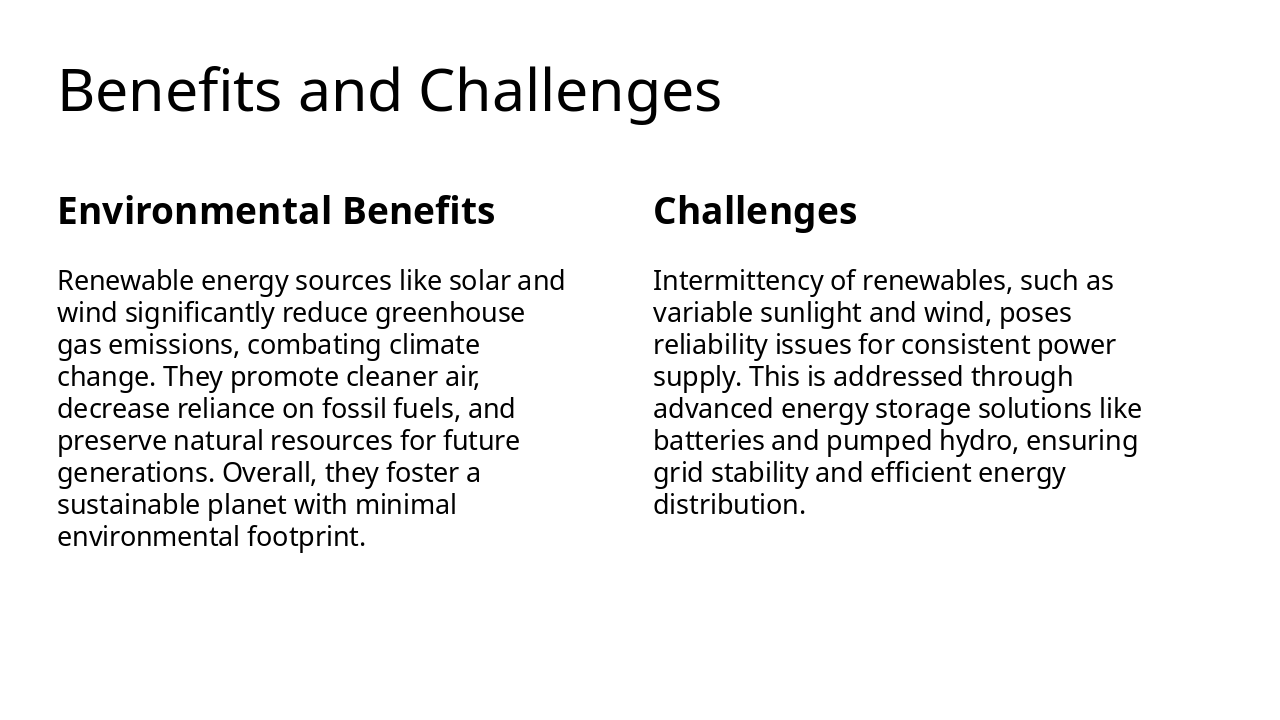
Renewable energy sources like solar and wind offer key environmental benefits by reducing greenhouse gas emissions, improving air quality, decreasing fossil fuel dependence, and preserving resources for a sustainable future. However, they face challenges from intermittency in sunlight and wind, which affect power reliability but can be mitigated with energy storage solutions like batteries and pumped hydro to maintain grid stability.

Benefits and Challenges

Environmental BenefitsChallenges
Renewable energy sources like solar and wind significantly reduce greenhouse gas emissions, combating climate change. They promote cleaner air, decrease reliance on fossil fuels, and preserve natural resources for future generations. Overall, they foster a sustainable planet with minimal environmental footprint.Intermittency of renewables, such as variable sunlight and wind, poses reliability issues for consistent power supply. This is addressed through advanced energy storage solutions like batteries and pumped hydro, ensuring grid stability and efficient energy distribution.
Slide 5
Slide 6 of 10

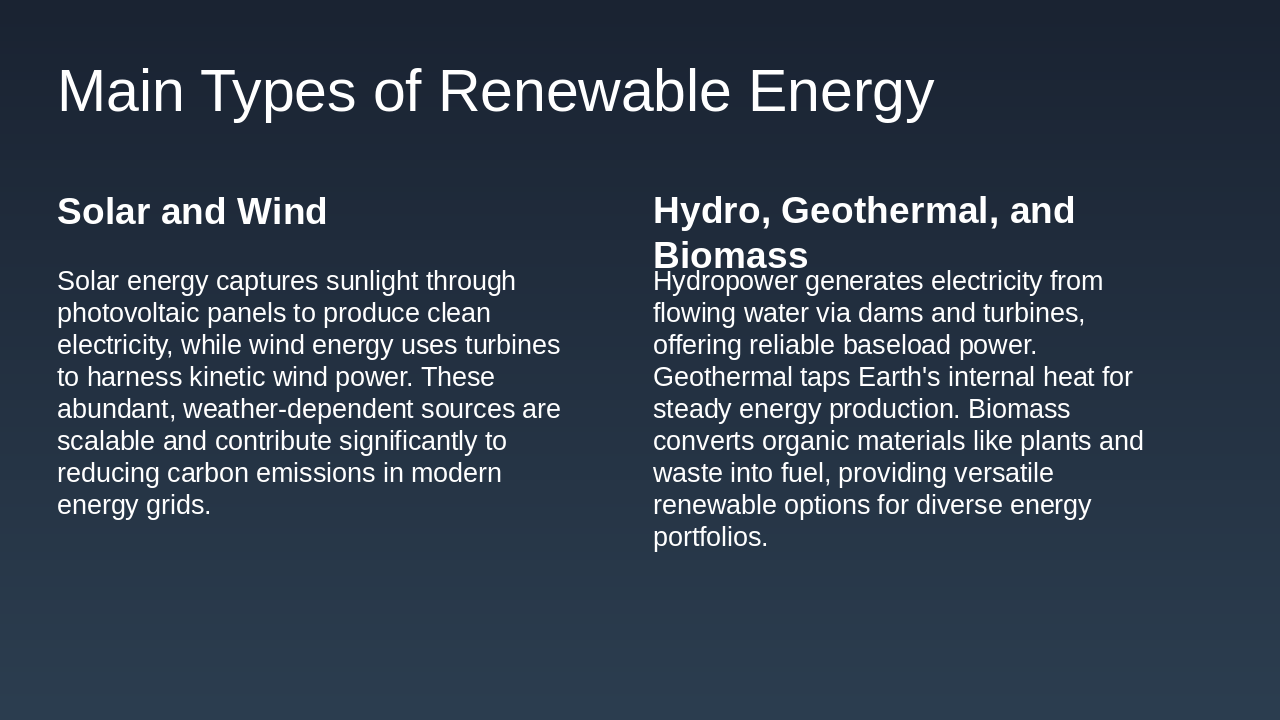
Slide 6 - Main Types of Renewable Energy

The slide outlines the main types of renewable energy in two columns. The left column covers solar energy, which uses photovoltaic panels to convert sunlight into electricity, and wind energy, which harnesses wind via turbines, both being abundant, scalable sources that cut carbon emissions but depend on weather. The right column describes hydropower from flowing water for reliable baseload power, geothermal energy from Earth's heat for steady production, and biomass from organic materials for versatile fuel options.

Main Types of Renewable Energy

Solar and WindHydro, Geothermal, and Biomass
Solar energy captures sunlight through photovoltaic panels to produce clean electricity, while wind energy uses turbines to harness kinetic wind power. These abundant, weather-dependent sources are scalable and contribute significantly to reducing carbon emissions in modern energy grids.Hydropower generates electricity from flowing water via dams and turbines, offering reliable baseload power. Geothermal taps Earth's internal heat for steady energy production. Biomass converts organic materials like plants and waste into fuel, providing versatile renewable options for diverse energy portfolios.
Slide 6
Slide 7 of 10

Slide 7 - Thermal Energy Storage Innovation

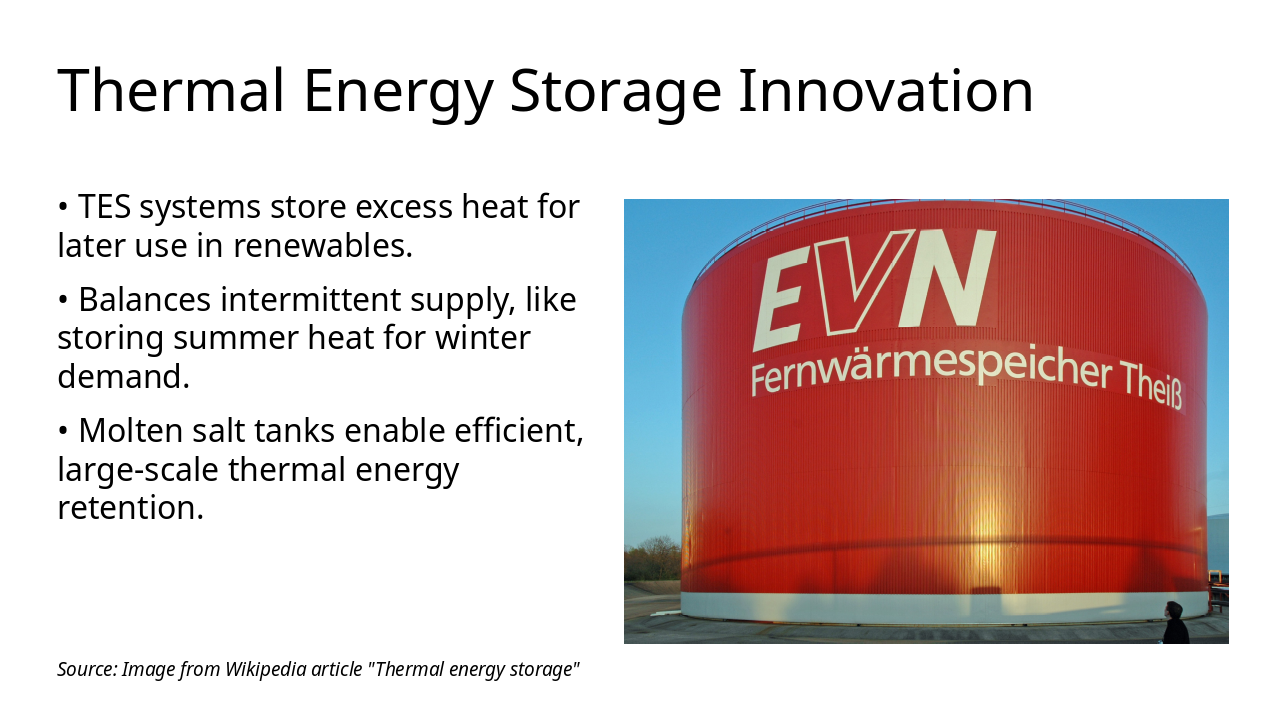
Thermal Energy Storage (TES) systems innovate by capturing excess heat from renewable sources for later use, effectively balancing intermittent energy supplies such as storing summer heat to meet winter demands. These systems often rely on efficient, large-scale solutions like molten salt tanks to retain thermal energy.

Thermal Energy Storage Innovation

!Image

  • TES systems store excess heat for later use in renewables.
  • Balances intermittent supply, like storing summer heat for winter demand.
  • Molten salt tanks enable efficient, large-scale thermal energy retention.

Source: Image from Wikipedia article "Thermal energy storage"

Slide 7
Slide 8 of 10

Slide 8 - Thermal Energy Storage (TES) Innovation

Thermal Energy Storage (TES) innovation captures and stores thermal energy for later use, effectively balancing energy demand and addressing seasonal variations, such as using summer heat in winter. It utilizes methods like sensible heat in tanks or ponds, molten salts, and phase-change materials to enable efficient integration of renewable energy sources.

Thermal Energy Storage (TES) Innovation

  • Stores thermal energy for later use to balance demand
  • Balances seasonal needs, like summer heat for winter
  • Uses sensible heat in tanks or ponds
  • Employs molten salts and phase-change materials
  • Enables efficient renewable energy integration
Slide 8
Slide 9 of 10

Slide 9 - Future of Renewables

The slide titled "Future of Renewables" concludes that integrating renewables with Thermal Energy Storage (TES) ensures reliable clean energy production. It urges a transition to sustainable practices for a greener planet, with the subtitle "Embrace a sustainable future today."

Future of Renewables

Renewables with TES enable reliable clean energy.

Transition to sustainable practices for a greener planet.

Embrace a sustainable future today.

Slide 9
Slide 10 of 10

Slide 10 - The Future of Renewables

The slide, titled "The Future of Renewables," concludes by emphasizing the importance of pioneering renewable energy sources to achieve a sustainable future. It features a subtitle calling for supportive policies and innovations to foster a greener planet.

The Future of Renewables

Pioneering Renewables for a Sustainable Future

Support policies and innovations for a greener planet

Source: Renewable Energy Presentation

--- Speaker Notes: Renewables like TES are key to a clean energy transition. Challenges include intermittency, but solutions via storage advance progress. Encourage support for policies and innovations.

Slide 10
Powered by AI

Create Your Own Presentation

Generate professional presentations in seconds with Karaf's AI. Customize this presentation or start from scratch.

Create New Presentation

Powered by Karaf.ai — AI-Powered Presentation Generator