Slide 1 of 11
Slide 1 - Title Slide
Modern Advances in CT Pulmonary Angiography (CTPA)
Optimizing Imaging Protocols, Diagnostics, and Future Directions for CME Excellence
Generated from prompt:
Redesign the provided PPT into a visually stunning, modern presentation WITHOUT changing ANY text content or images. Improve layout, typography, spacing, color palette (professional medical theme), icons, slide hierarchy, and visual emphasis. Keep all wording exactly the same. Add subtle animations and consistent master slides. Sections: Title, Agenda, PE Overview, What is CTPA, Request Adequacy (Wells Score), Image Quality (Protocol, Timing, Artefacts, Checklist), Pathology (PE signs, RV strain), Incidentals, Alternate Modalities (V/Q, SPECT/CT), Photon-counting CT, AI in CTPA, Key Takeaways. Use clean grids, highlight boxes for stats, and visual callouts. Maintain clinical professionalism suitable for CME. Include slide numbers and footer branding.
This CME-focused presentation covers PE fundamentals, CTPA protocols for image quality, diagnostic signs of pathology and RV strain, incidental findings, alternative modalities like V/Q and SPECT/CT, and emerging technologies such as photon-counting
Modern Advances in CT Pulmonary Angiography (CTPA)
Optimizing Imaging Protocols, Diagnostics, and Future Directions for CME Excellence
---
Photo by Trnava University on Unsplash
1
Understanding the clinical context and the standard of care in imaging.
---
Photo by Logan Voss on Unsplash
2
Clinical decision-making tools and optimizing scanning parameters.
---
Photo by Luba Ertel on Unsplash

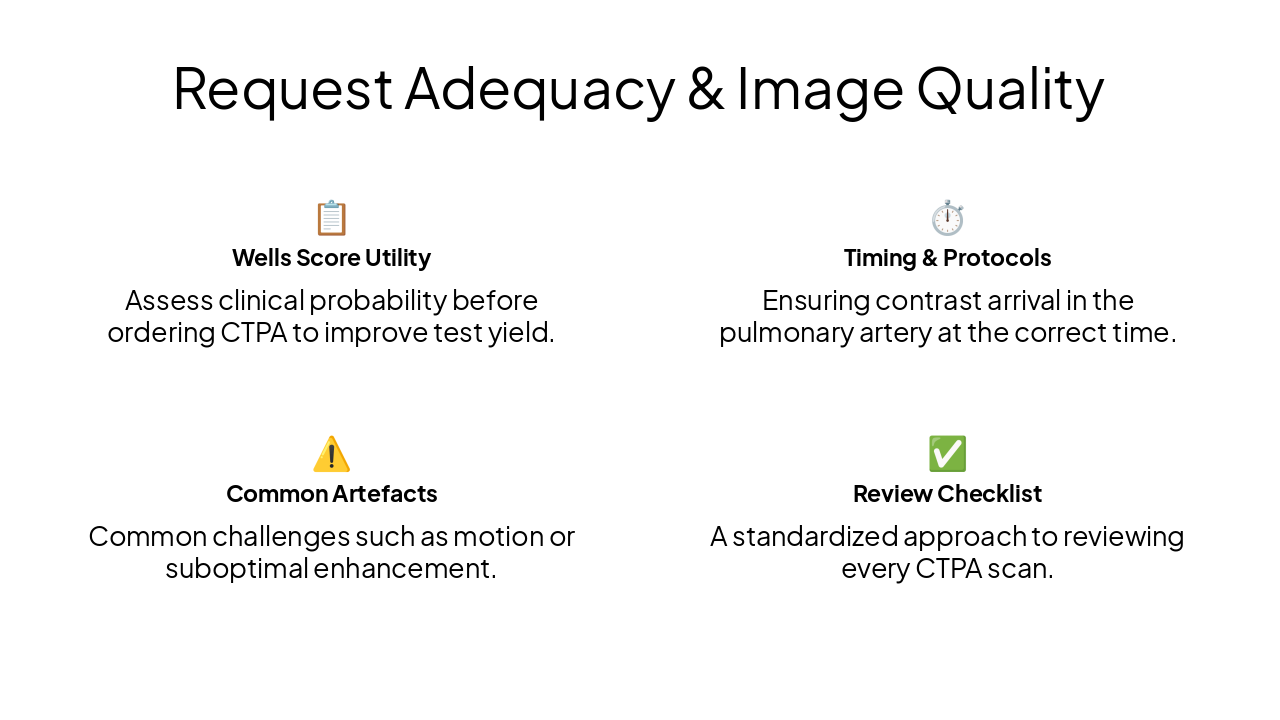
📋 Wells Score Utility Assess clinical probability before ordering CTPA to improve test yield.
⏱️ Timing & Protocols Ensuring contrast arrival in the pulmonary artery at the correct time.
⚠️ Common Artefacts Common challenges such as motion or suboptimal enhancement.
✅ Review Checklist A standardized approach to reviewing every CTPA scan.
3
Interpreting findings beyond the primary diagnosis.
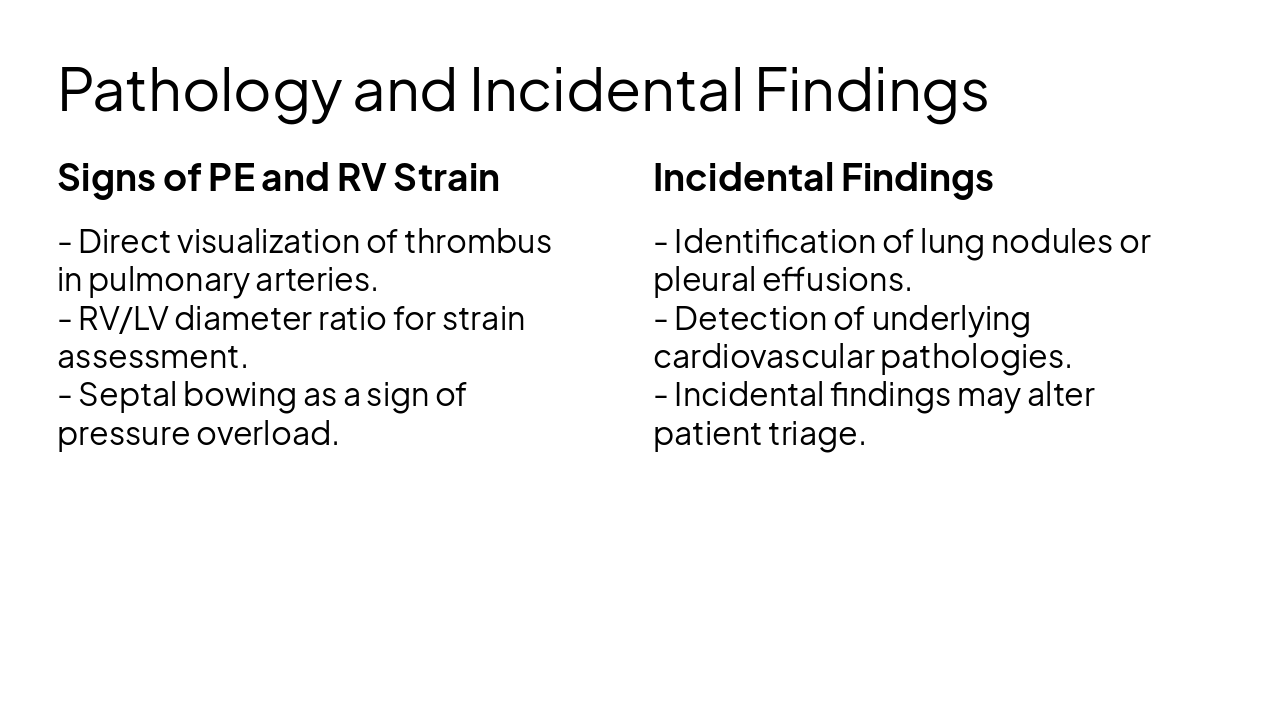
Signs of PE and RV Strain
Incidental Findings
4
Emerging techniques defining the next era of lung imaging.
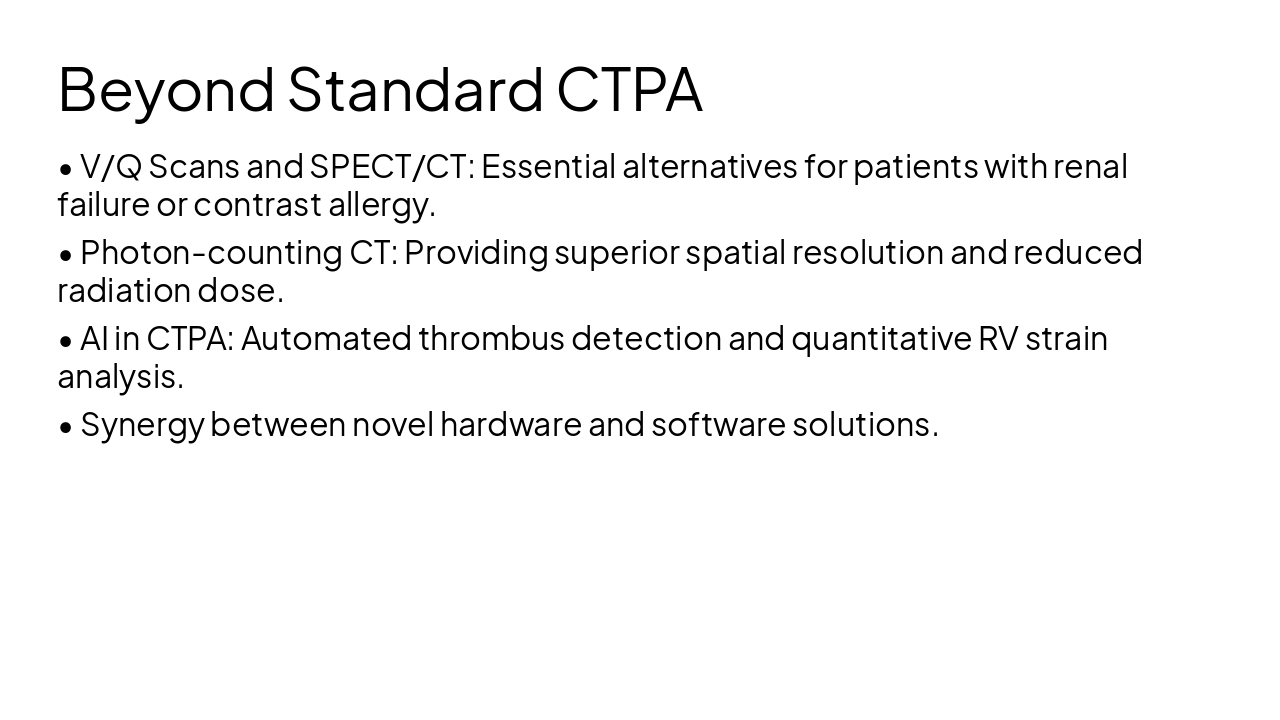
Key Takeaways: Precision in Protocol, Diligence in Interpretation, Embracing Future Innovation.
Thank you for your attention to improving diagnostic standards.
---
Photo by Yousef Espanioly on Unsplash
Explore thousands of AI-generated presentations for inspiration
Generate professional presentations in seconds with Karaf's AI. Customize this presentation or start from scratch.