Unlocking Renewable Energy Potential

Generated from prompt:

Create a comprehensive 5-slide presentation about renewable energy

This 5-slide presentation explores renewable energy basics, key types like solar and wind, their benefits with stats, thermal storage innovations, and a call to action for a sustainable future.

November 19, 202510 slides
Slide 1 of 10

Slide 1 - Renewable Energy Overview

The slide, titled "Renewable Energy Overview," serves as a title slide introducing the topic. Its subtitle describes renewable energy as clean, sustainable sources that utilize natural resources to lower carbon emissions and address climate change.

Renewable Energy Overview

Introduction to clean, sustainable energy sources that harness natural resources to reduce carbon emissions and combat climate change.
Slide 1
Slide 2 of 10

Slide 2 - Renewable Energy Overview

The slide is titled "Renewable Energy Overview" and serves as a title slide. Its subtitle emphasizes "Harnessing Natural Processes for Sustainable Clean Power," highlighting the focus on eco-friendly energy sources.

Renewable Energy Overview

Harnessing Natural Processes for Sustainable Clean Power

--- Speaker Notes: Welcome to a dive into renewable energy sources that harness natural processes for clean power, reducing reliance on fossil fuels. Includes key tech like thermal energy storage.

Slide 2
Slide 3 of 10

Slide 3 - Presentation Agenda

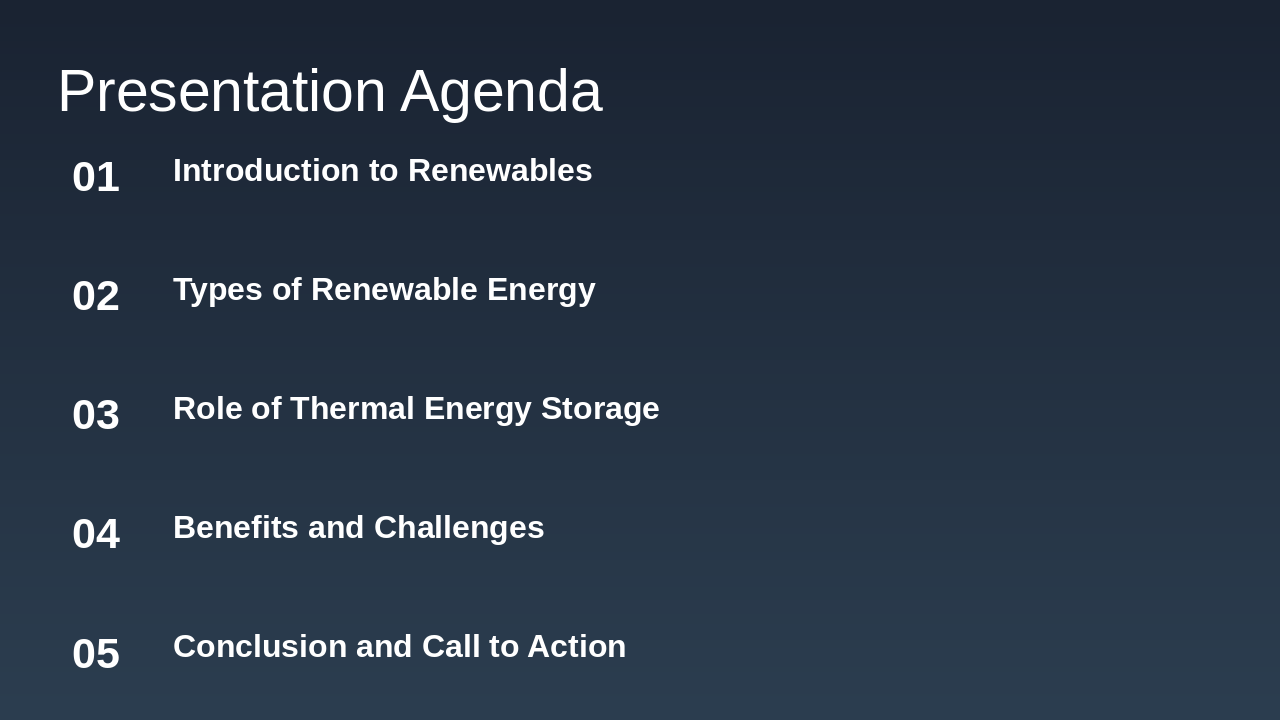
The agenda slide outlines a presentation on renewable energy, beginning with an introduction to renewables and an overview of various types of renewable energy sources. It then covers the role of thermal energy storage, discusses benefits and challenges, and ends with a conclusion and call to action.

Presentation Agenda

  1. Introduction to Renewables
  1. Types of Renewable Energy
  1. Role of Thermal Energy Storage
  1. Benefits and Challenges
  1. Conclusion and Call to Action
Slide 3
Slide 4 of 10

Slide 4 - Key Types of Renewable Energy

The slide outlines key types of renewable energy sources, including solar, which captures sunlight via photovoltaic panels for clean electricity; wind, which uses turbines to harness moving air for sustainable power; and hydro, which generates energy from flowing water through dams and turbines. It also covers geothermal, extracting Earth's internal heat for reliable production, and biomass, converting organic waste and plants into renewable fuels.

Key Types of Renewable Energy

  • Solar: Captures sunlight using photovoltaic panels for clean electricity.
  • Wind: Harnesses wind with turbines to generate sustainable power.
  • Hydro: Produces energy from flowing water via dams and turbines.
  • Geothermal: Extracts Earth's internal heat for reliable energy production.
  • Biomass: Converts organic waste and plants into renewable fuel sources.
Slide 4
Slide 5 of 10

Slide 5 - Visualizing Renewable Sources

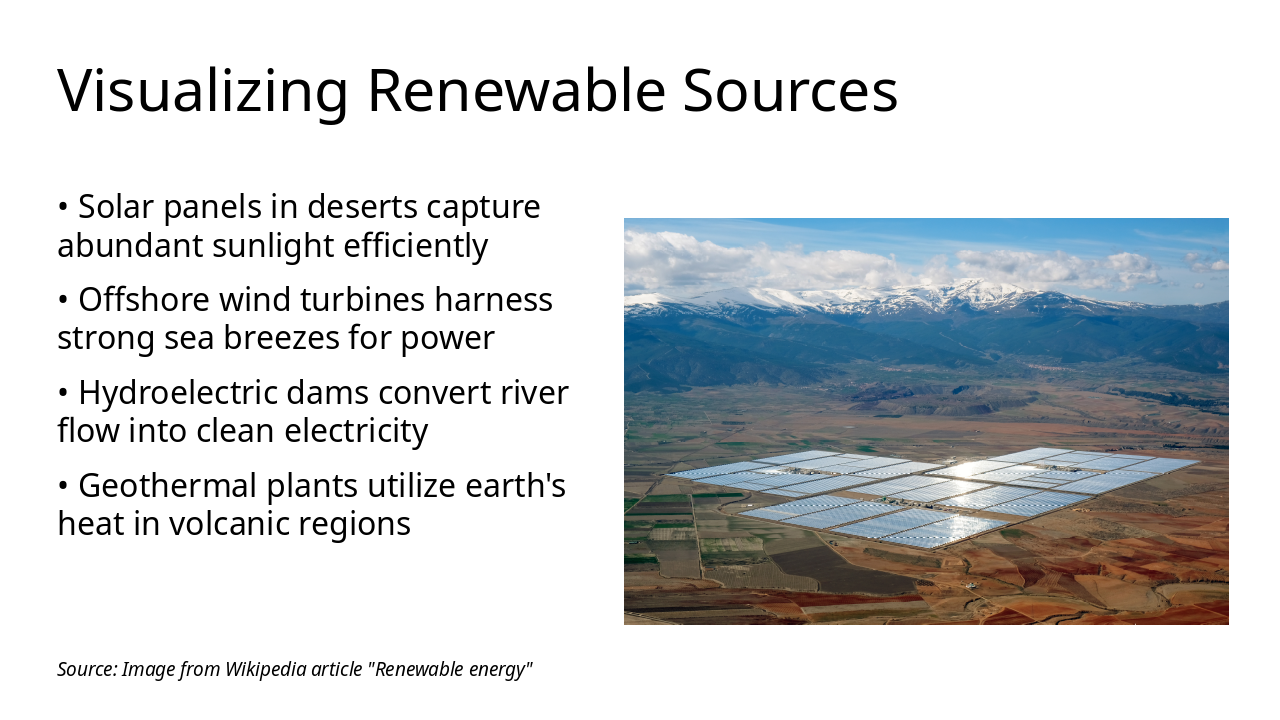
The slide titled "Visualizing Renewable Sources" features an image illustrating various clean energy technologies. It highlights solar panels capturing sunlight in deserts, offshore wind turbines harnessing sea breezes, hydroelectric dams converting river flow into electricity, and geothermal plants tapping Earth's heat in volcanic areas.

Visualizing Renewable Sources

!Image

  • Solar panels in deserts capture abundant sunlight efficiently
  • Offshore wind turbines harness strong sea breezes for power
  • Hydroelectric dams convert river flow into clean electricity
  • Geothermal plants utilize earth's heat in volcanic regions

Source: Image from Wikipedia article "Renewable energy"

Slide 5
Slide 6 of 10

Slide 6 - Types of Renewable Energy

Renewable energy sources include solar, which uses photovoltaic panels to capture sunlight and generate electricity. Other types encompass wind energy from turbines converting motion into power, hydroelectric from dams harnessing flowing water, geothermal extracting Earth's internal heat, and biomass processing organic materials into fuels.

Types of Renewable Energy

  • Solar energy captures sunlight using photovoltaic panels to generate electricity.
  • Wind energy harnesses turbines that convert kinetic wind motion into electrical power.
  • Hydroelectric energy utilizes dams to transform flowing water into electricity.
  • Geothermal energy extracts heat from the Earth's interior for power generation.
  • Biomass energy processes organic materials like plants into renewable fuel sources.
Slide 6
Slide 7 of 10

Slide 7 - Benefits and Impact

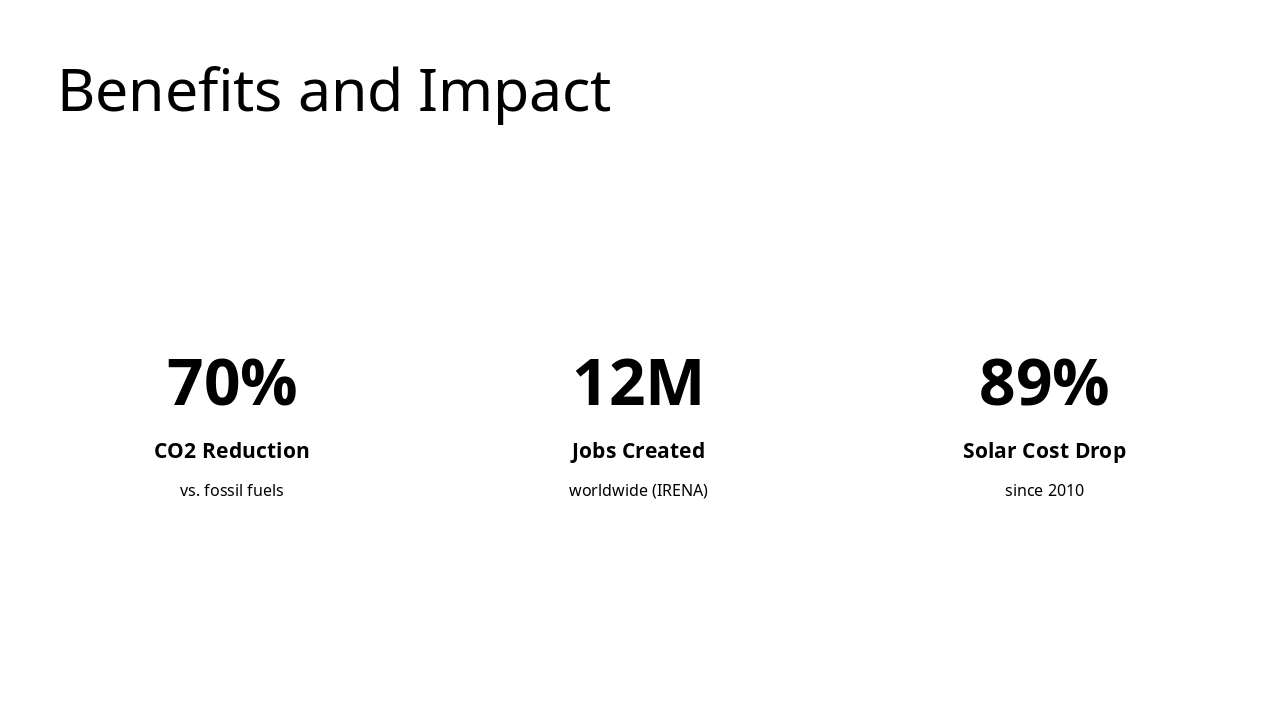
The slide highlights key benefits of renewable energy, including a 70% reduction in CO2 emissions compared to fossil fuels. It also notes the creation of 12 million jobs worldwide according to IRENA and an 89% drop in solar costs since 2010.

Benefits and Impact

  • 70%: CO2 Reduction

vs. fossil fuels

  • 12M: Jobs Created

worldwide (IRENA)

  • 89%: Solar Cost Drop

since 2010

Slide 7
Slide 8 of 10

Slide 8 - Thermal Energy Storage (TES) in Renewables

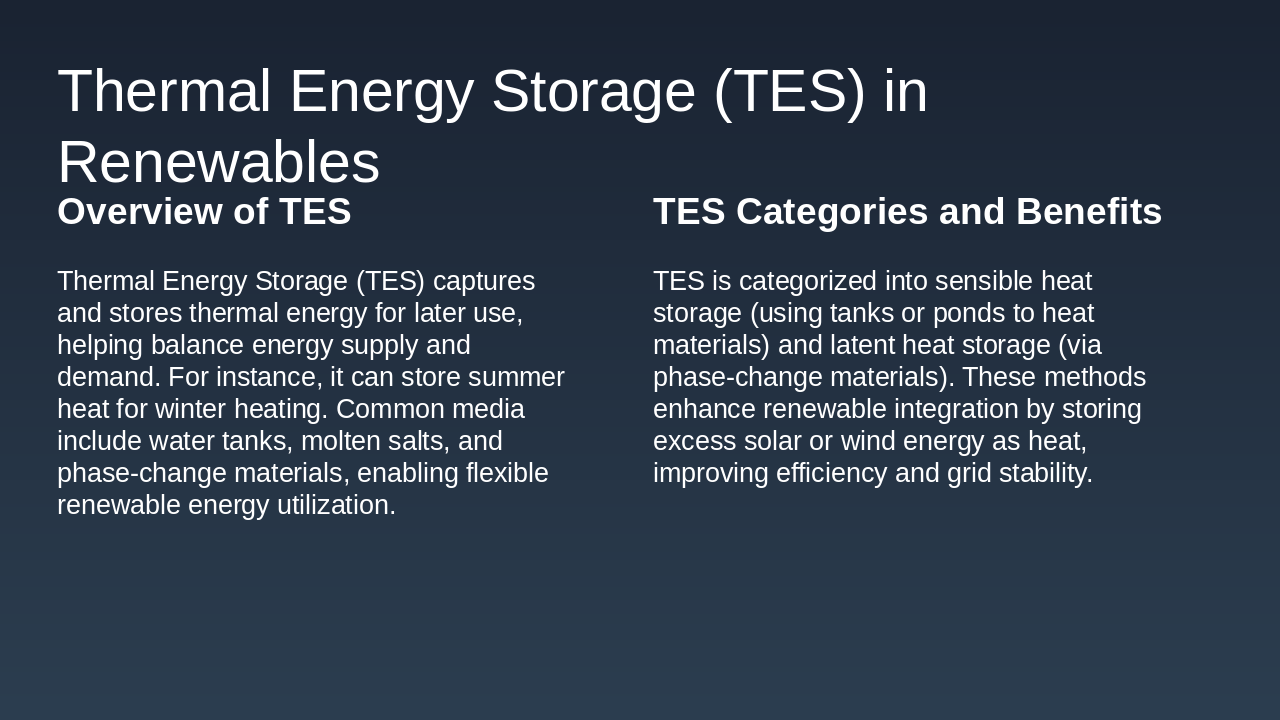
Thermal Energy Storage (TES) captures and stores thermal energy for later use to balance supply and demand in renewables, using media like water tanks, molten salts, and phase-change materialsβ€”for example, saving summer heat for winter. TES falls into sensible heat storage (heating materials in tanks or ponds) and latent heat storage (via phase-change materials), offering benefits like storing excess solar or wind energy as heat to boost efficiency and grid stability.

Thermal Energy Storage (TES) in Renewables

Overview of TESTES Categories and Benefits
Thermal Energy Storage (TES) captures and stores thermal energy for later use, helping balance energy supply and demand. For instance, it can store summer heat for winter heating. Common media include water tanks, molten salts, and phase-change materials, enabling flexible renewable energy utilization.TES is categorized into sensible heat storage (using tanks or ponds to heat materials) and latent heat storage (via phase-change materials). These methods enhance renewable integration by storing excess solar or wind energy as heat, improving efficiency and grid stability.
Slide 8
Slide 9 of 10

Slide 9 - Future of Renewable Energy

Renewable energy sources provide sustainable and clean power solutions, enhanced by advancements in thermal energy storage (TES) that enable effective storage of excess electricity. The slide's closing message, "Powering a Greener Tomorrow," urges viewers to advocate for renewable energy adoption today to embrace a sustainable future.

Future of Renewable Energy

Renewables offer sustainable, clean energy solutions. With TES advancements, we can store excess power effectively.

Closing Message: Powering a Greener Tomorrow

Call-to-Action: Advocate for renewable energy adoption today! 🌍

Embrace Renewables for a Sustainable Future

--- Speaker Notes: Renewables offer sustainable, clean energy solutions. With TES advancements, we can store excess power effectively. Embrace renewables for a greener planet! 🌍

Slide 9
Slide 10 of 10

Slide 10 - Towards a Greener Tomorrow

The conclusion slide, titled "Towards a Greener Tomorrow," urges immediate action to build a sustainable planet. Its subtitle emphasizes embracing renewable energy sources today to ensure a secure energy future.

Towards a Greener Tomorrow

Act Now for a Sustainable Planet!

Embrace renewables today to secure our energy future.

Source: Embrace renewables for energy security and environmental health. With advancements like thermal energy storage (TES) using water, molten salts, and phase-change materials, we can store heat/cold for seasonal use. Act now for a sustainable planet!

--- Speaker Notes: Context: Comprehensive 5-slide presentation about renewable energy

Slide 10
Powered by AI

Create Your Own Presentation

Generate professional presentations in seconds with Karaf's AI. Customize this presentation or start from scratch.

Create New Presentation

Powered by Karaf.ai β€” AI-Powered Presentation Generator