Slide 1 of 17
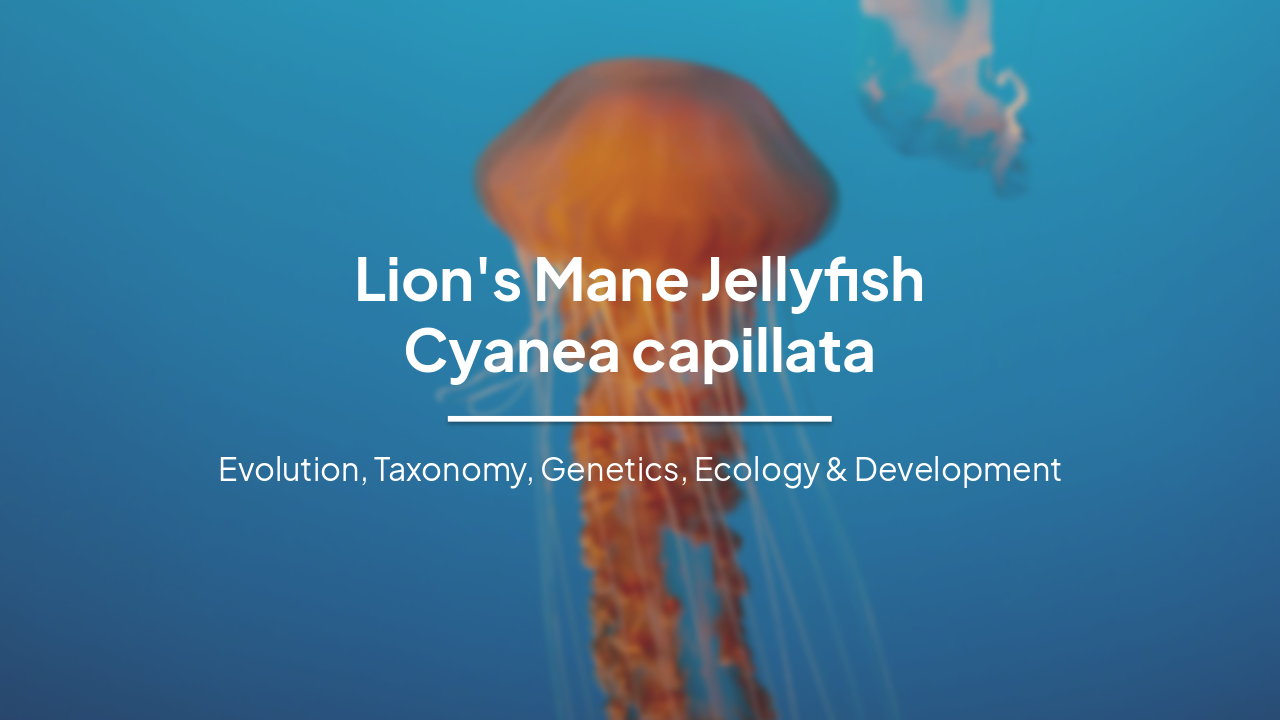
Slide 1 - Lion's Mane Jellyfish Cyanea capillata
Lion's Mane Jellyfish Cyanea capillata
Evolution, Taxonomy, Genetics, Ecology & Development
---
Photo by Manny Peralta on Unsplash
Generated from prompt:
Make a presentation about Chincive he dial of this pa. Pot probin gage readers an diger sage alei resentine at n animal from 4 different phyla. Directions: PART ONE: Introduce your organism and connection to evolution and taxonomy a. Select one organism that is NOT DOMESTICATED and state its taxonomy (domain, kingdom, phylum, class, order, family, genus, species). You CAN use wikipedia for this! b. What does the Phylum name mean? What are some other organisms in the same phylum? c. Describe several of its adaptations. PART TWO: Connection to genetics d. How many chromosomes does your organism have? (If scientists have not determined this for the species you chose then find a range of chromosomes for this group of organisms, ask me if you need help with this) e. How does your organism reproduce? Sexually, asexually or both? If your organism has males and females, how do the chromosomes differ in the two sexes? (If this is not known by scientists just say it is not known) PART THREE: Connection to ecology Review/familiarize yourself with several key ecology terms including heterotroph, food web, habitat, niche. symbiotic relationship, ecosystem services, and resilience. Use that knowledge and some independent research to answer these questions: f. What niche does your organism fit into in its environment? Your answer to this question can focus on your organism's role within a food web. g. Describe one symbiotic relationship of which your organism is part. h. What is one way that humans have impacted this organism? i. Identify where in the world it is found, and briefly describe its habitat. Part FOUR: Development j. Describe the life cycle of your organism. k. What type of symmetry does your organism exhibit?
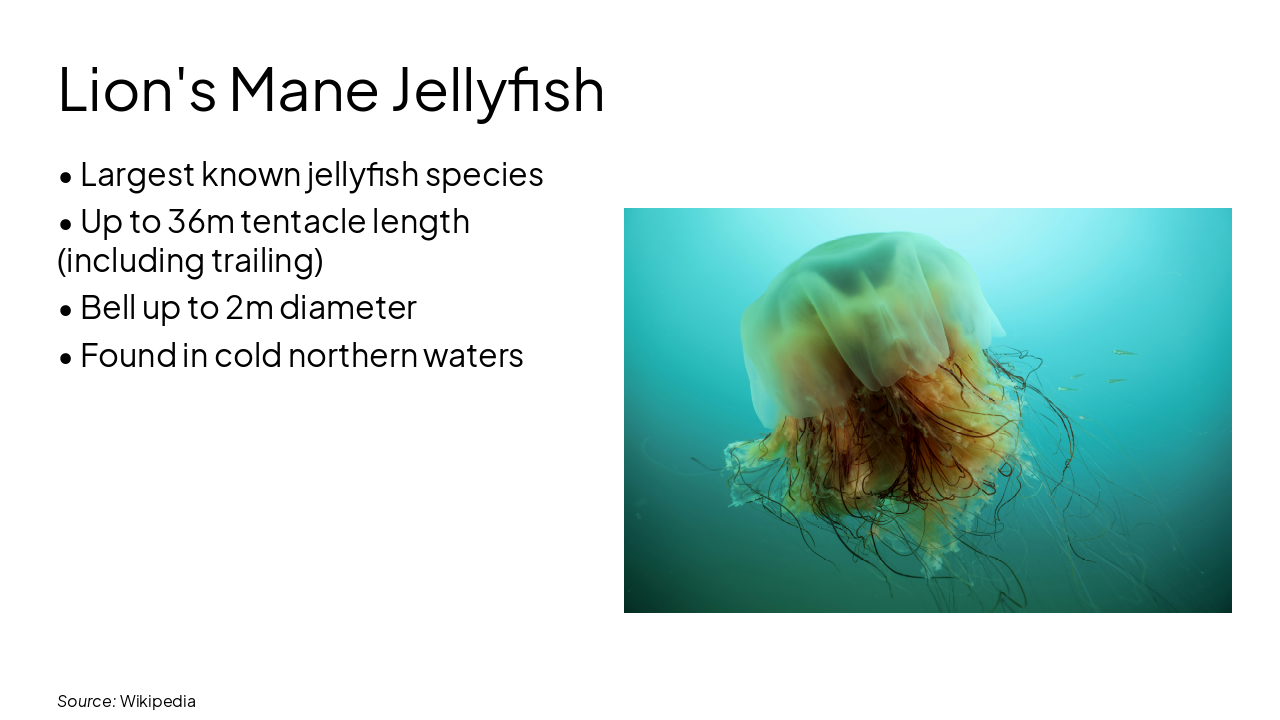
This presentation provides a comprehensive overview of the Lion's Mane Jellyfish (Cyanea capillata), the largest known jellyfish species. It covers introduction and taxonomy within Phylum Cnidaria, key adaptations like nematocysts and radial symmetry, genetics and reproduction (sexual and asexual), ecological niche as a planktonic predator, symbiosis with fish, human impacts such as ocean acidification, global habitat in cold northern waters, and detailed life cycle from planula to adult medusa.
Lion's Mane Jellyfish Cyanea capillata
Evolution, Taxonomy, Genetics, Ecology & Development
---
Photo by Manny Peralta on Unsplash
---
Photo by qui nguyen on Unsplash
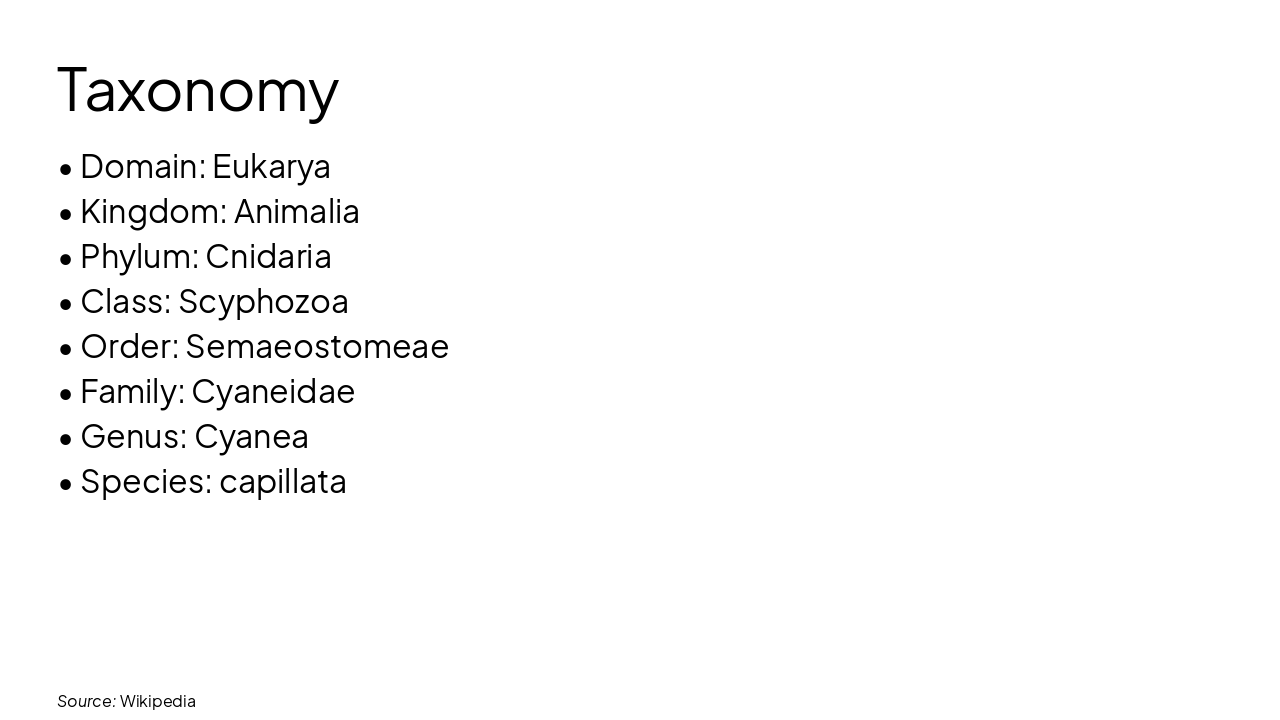
Source: Wikipedia
---
Photo by Ekaterina Zlotnikova on Unsplash
Source: Wikipedia
Source: Wikipedia
Source: Wikipedia
2
Chromosomes and Reproduction
---
Photo by digitale.de on Unsplash
Source: Wikipedia & scientific literature
Source: Wikipedia
Human Impact Ocean acidification and warming disrupt life cycle Overfishing reduces prey availability Plastic pollution entangled in tentacles
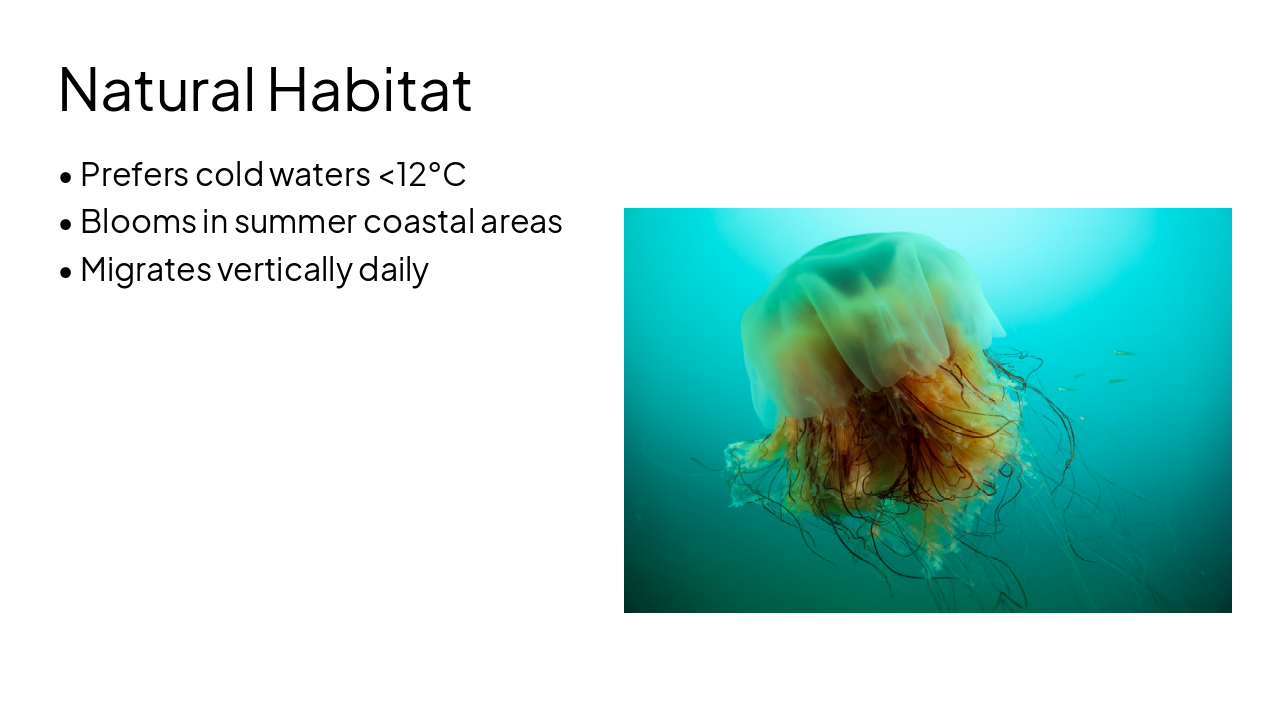
Global Habitat Northern Atlantic & Pacific Oceans Arctic to North Sea Epipelagic zone (surface to 200m) Cold temperate coastal & open waters
Source: Wikipedia
---
Photo by Ekaterina Zlotnikova on Unsplash

1: Planula Larva Ciliated larva from fertilized egg; swims to substrate 2: Polyp Attaches, grows; asexual budding/reproduction 3: Strobila Polyp segments into stack of ephyrae via strobilation 4: Ephyra Young medusa; grows tentacles and bell 5: Adult Medusa Mature jellyfish; sexual reproduction, up to 2m bell
Source: Wikipedia
Cyanea capillata exemplifies marine biodiversity Through complex life cycles, adaptations, and ecological roles
Questions? Thank you!
---
Photo by Kiara Sztankovics on Unsplash
Explore thousands of AI-generated presentations for inspiration
Generate professional presentations in seconds with Karaf's AI. Customize this presentation or start from scratch.