ToU Tariff Adoption in Malaysia: Consumer Behavior Insights

Generated from prompt:

Create a professional presentation titled "Adoption of Time-of-Use (ToU) Tariff in Malaysia: A Study on Consumer Behavior". Include the following slides: 1. Title Slide 2. Company Profile: Tenaga Nasional Berhad (TNB) 3. Energy Product: Time-of-Use (ToU) Tariff 4. Research Problem 5. Research Objectives 6. Research Plan 7. Methodology 8. Questionnaire Design 9. Data Collection 10. Data Analysis 11. Findings 12. Key Barriers 13. Insights 14. Implications 15. Recommendations Each slide should have a clear title, concise bullet points, and professional layout suitable for academic/business presentation.

This presentation details a study on consumer adoption of Time-of-Use (ToU) electricity tariffs by Tenaga Nasional Berhad (TNB) in Peninsular Malaysia. It covers company profile, ToU mechanics, research objectives and methodology, survey findings,key

April 13, 202615 slides
Slide 1 of 15

Slide 1 - Adoption of Time-of-Use (ToU) Tariff in Malaysia: A Study on Consumer Behavior

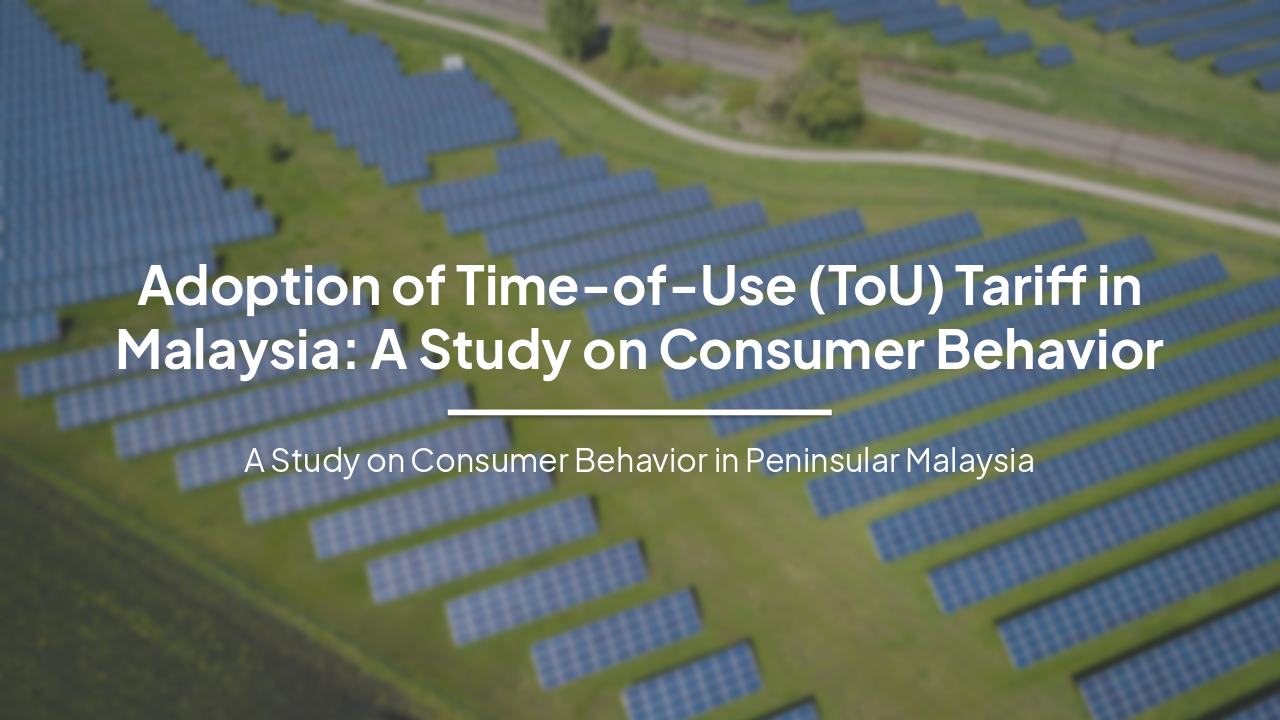
Adoption of Time-of-Use (ToU) Tariff in Malaysia

A Study on Consumer Behavior in Peninsular Malaysia

---

Photo by Andreas Gücklhorn on Unsplash
Slide 1 - Adoption of Time-of-Use (ToU) Tariff in Malaysia: A Study on Consumer Behavior
Slide 2 of 15

Slide 2 - Company Profile: Tenaga Nasional Berhad (TNB)

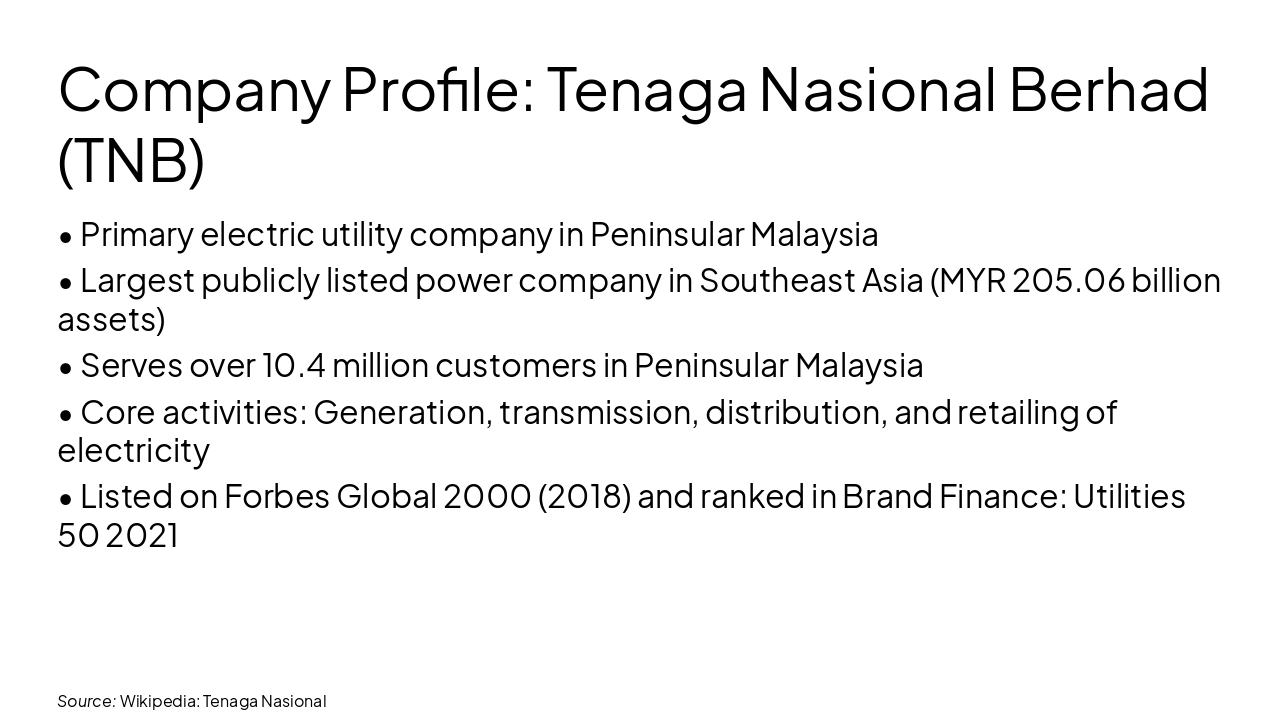
  • Primary electric utility company in Peninsular Malaysia
  • Largest publicly listed power company in Southeast Asia (MYR 205.06 billion assets)
  • Serves over 10.4 million customers in Peninsular Malaysia
  • Core activities: Generation, transmission, distribution, and retailing of electricity
  • Listed on Forbes Global 2000 (2018) and ranked in Brand Finance: Utilities 50 2021

Source: Wikipedia: Tenaga Nasional

Slide 2 - Company Profile: Tenaga Nasional Berhad (TNB)
Slide 3 of 15

Slide 3 - Energy Product: Time-of-Use (ToU) Tariff

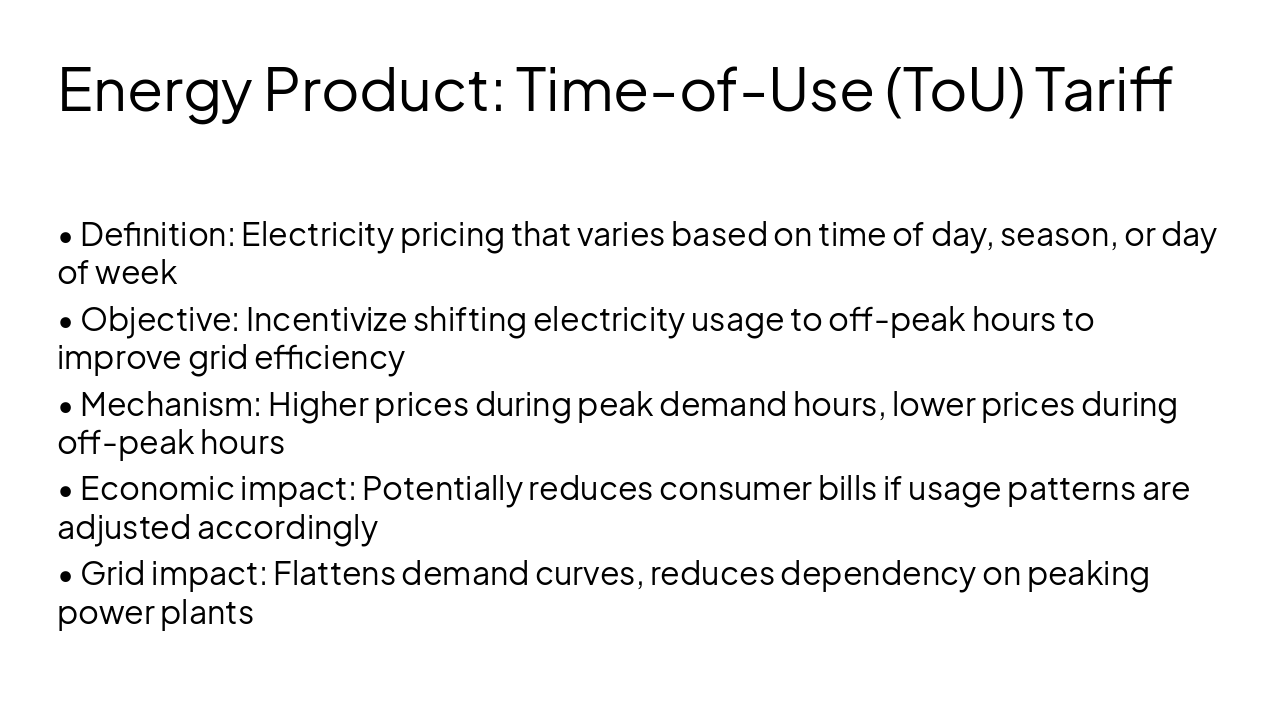
  • Definition: Electricity pricing that varies based on time of day, season, or day of week
  • Objective: Incentivize shifting electricity usage to off-peak hours to improve grid efficiency
  • Mechanism: Higher prices during peak demand hours, lower prices during off-peak hours
  • Economic impact: Potentially reduces consumer bills if usage patterns are adjusted accordingly
  • Grid impact: Flattens demand curves, reduces dependency on peaking power plants
Slide 3 - Energy Product: Time-of-Use (ToU) Tariff
Slide 4 of 15

Slide 4 - Research Problem

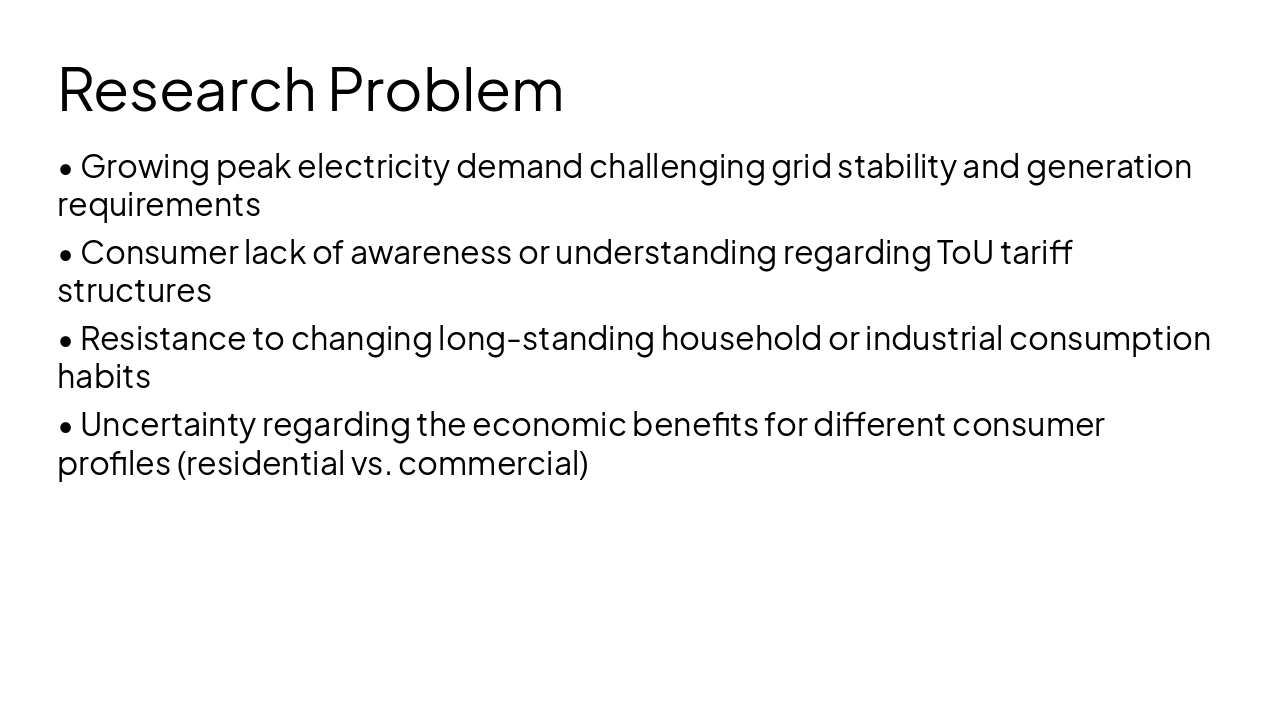
  • Growing peak electricity demand challenging grid stability and generation requirements
  • Consumer lack of awareness or understanding regarding ToU tariff structures
  • Resistance to changing long-standing household or industrial consumption habits
  • Uncertainty regarding the economic benefits for different consumer profiles (residential vs. commercial)
Slide 4 - Research Problem
Slide 5 of 15

Slide 5 - Research Objectives

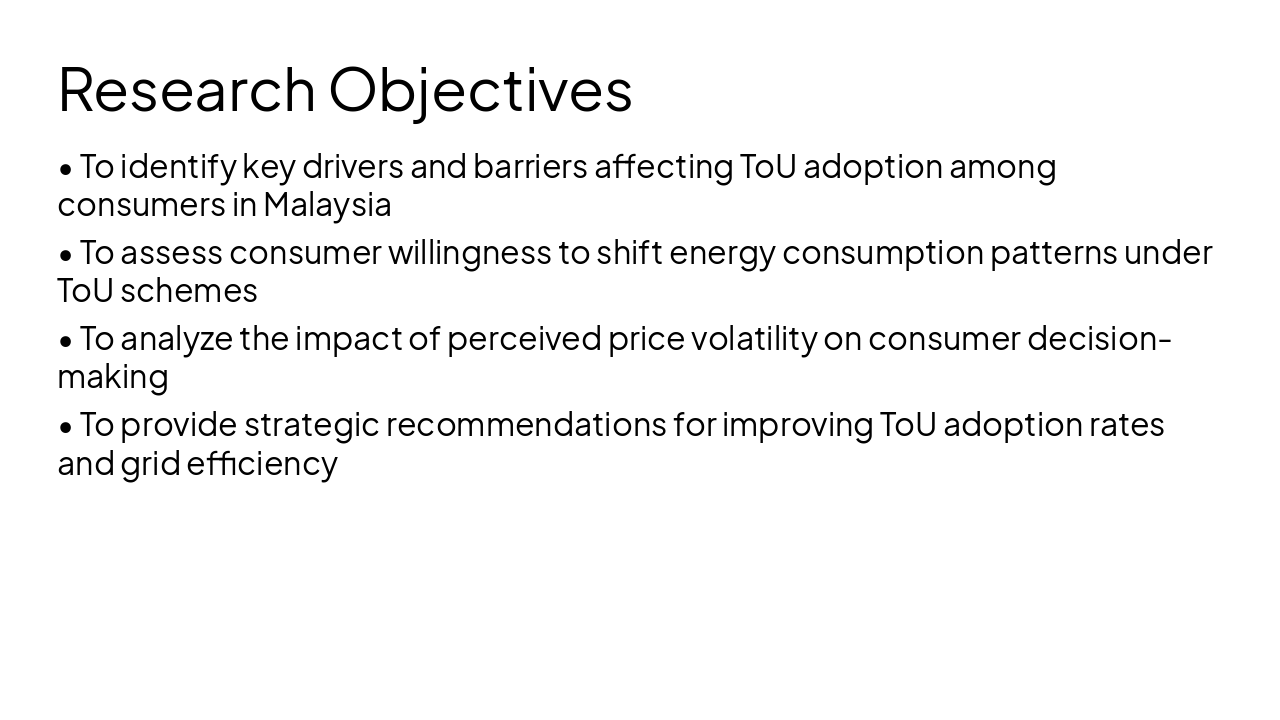
  • To identify key drivers and barriers affecting ToU adoption among consumers in Malaysia
  • To assess consumer willingness to shift energy consumption patterns under ToU schemes
  • To analyze the impact of perceived price volatility on consumer decision-making
  • To provide strategic recommendations for improving ToU adoption rates and grid efficiency
Slide 5 - Research Objectives
Slide 6 of 15

Slide 6 - Research Plan

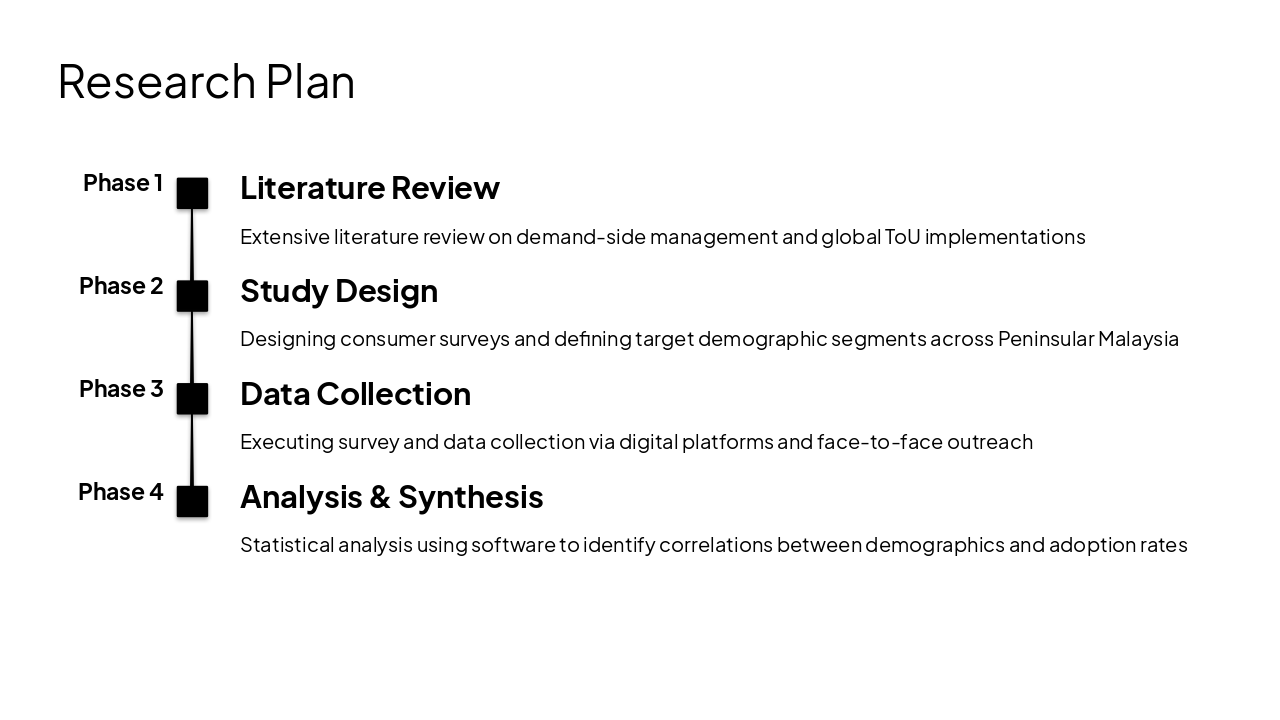
Phase 1: Literature Review Extensive literature review on demand-side management and global ToU implementations Phase 2: Study Design Designing consumer surveys and defining target demographic segments across Peninsular Malaysia Phase 3: Data Collection Executing survey and data collection via digital platforms and face-to-face outreach Phase 4: Analysis & Synthesis Statistical analysis using software to identify correlations between demographics and adoption rates
Slide 6 - Research Plan
Slide 7 of 15

Slide 7 - Methodology

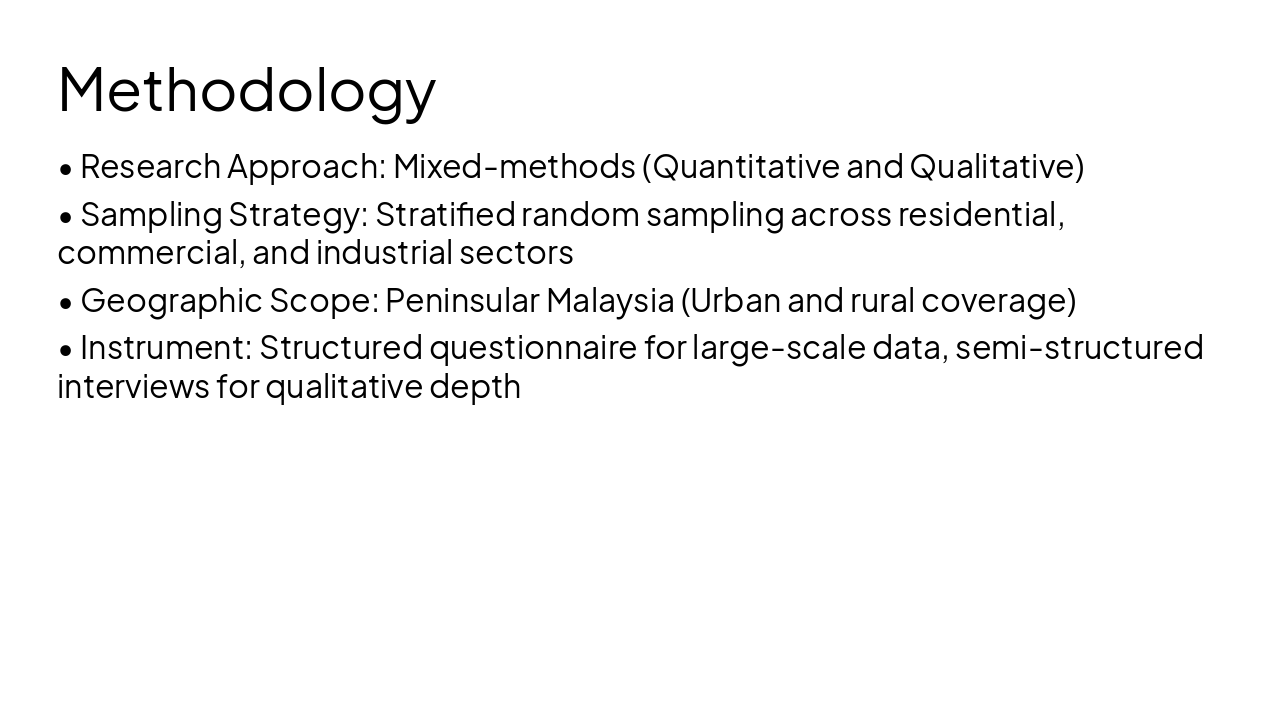
  • Research Approach: Mixed-methods (Quantitative and Qualitative)
  • Sampling Strategy: Stratified random sampling across residential, commercial, and industrial sectors
  • Geographic Scope: Peninsular Malaysia (Urban and rural coverage)
  • Instrument: Structured questionnaire for large-scale data, semi-structured interviews for qualitative depth
Slide 7 - Methodology
Slide 8 of 15

Slide 8 - Questionnaire Design

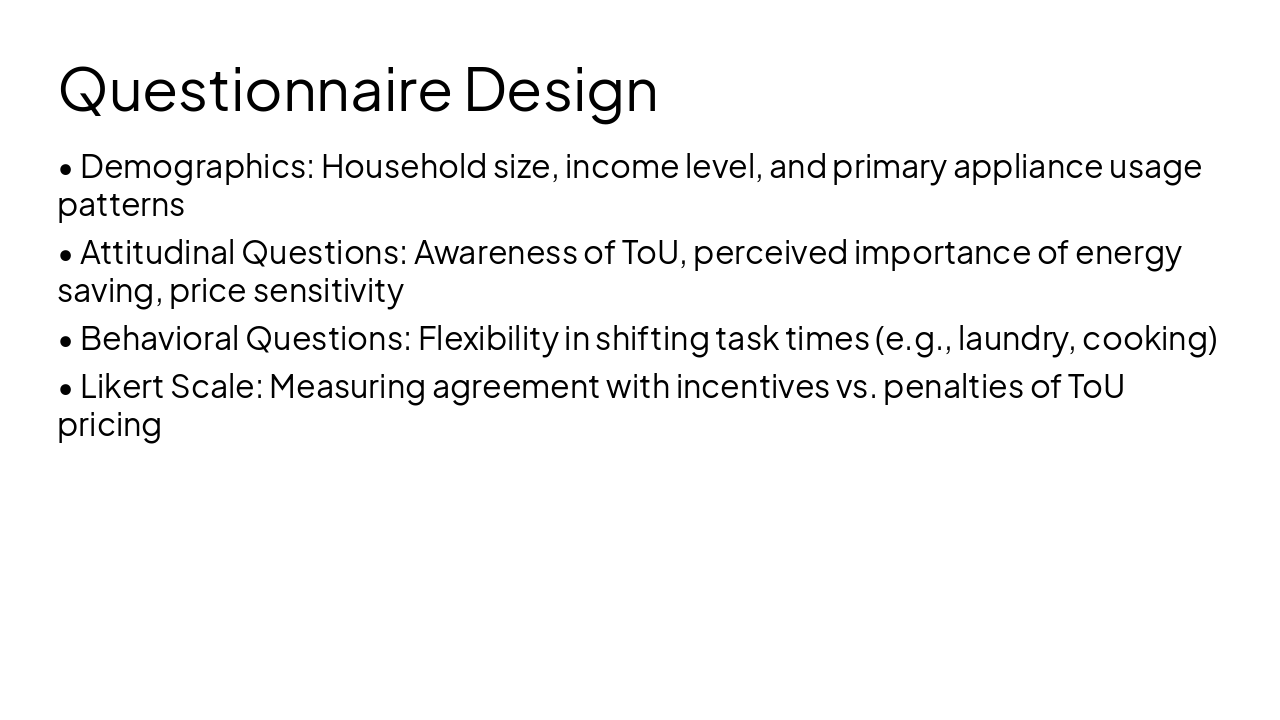
  • Demographics: Household size, income level, and primary appliance usage patterns
  • Attitudinal Questions: Awareness of ToU, perceived importance of energy saving, price sensitivity
  • Behavioral Questions: Flexibility in shifting task times (e.g., laundry, cooking)
  • Likert Scale: Measuring agreement with incentives vs. penalties of ToU pricing
Slide 8 - Questionnaire Design
Slide 9 of 15

Slide 9 - Data Collection

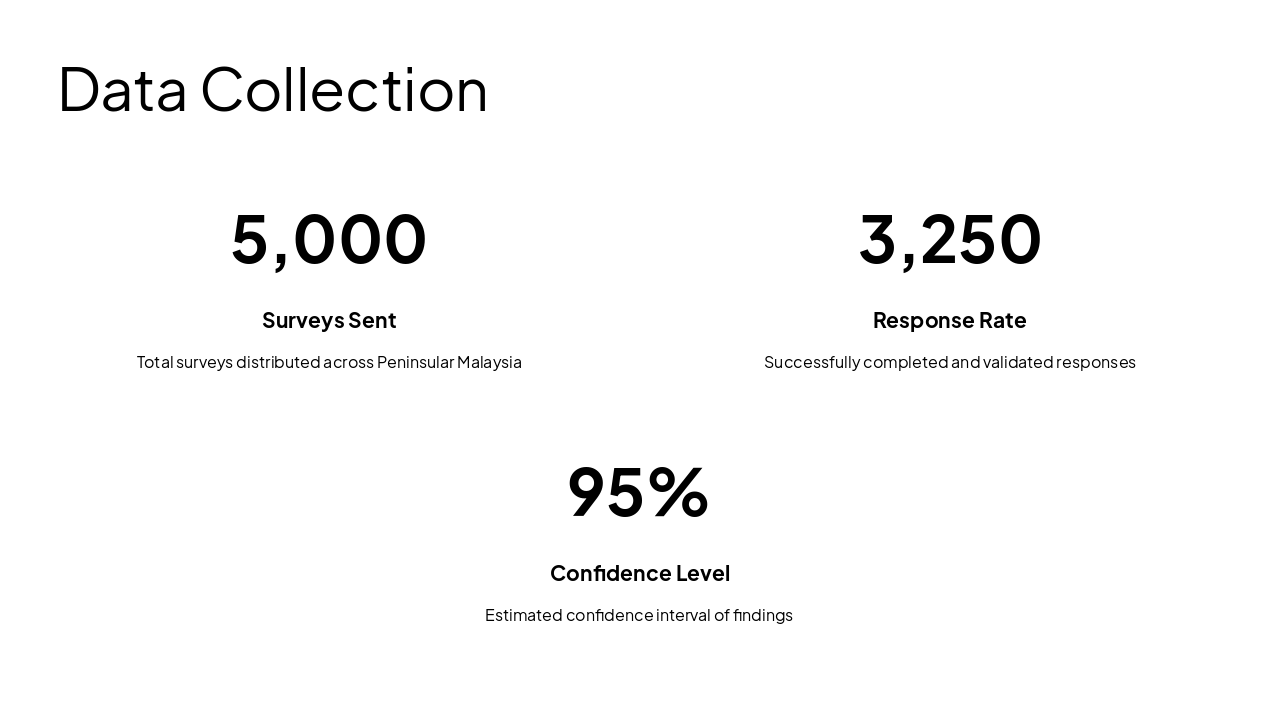
  • 5,000: Surveys Sent
  • 3,250: Response Rate
  • 95%: Confidence Level
Slide 9 - Data Collection
Slide 10 of 15

Slide 10 - Data Analysis

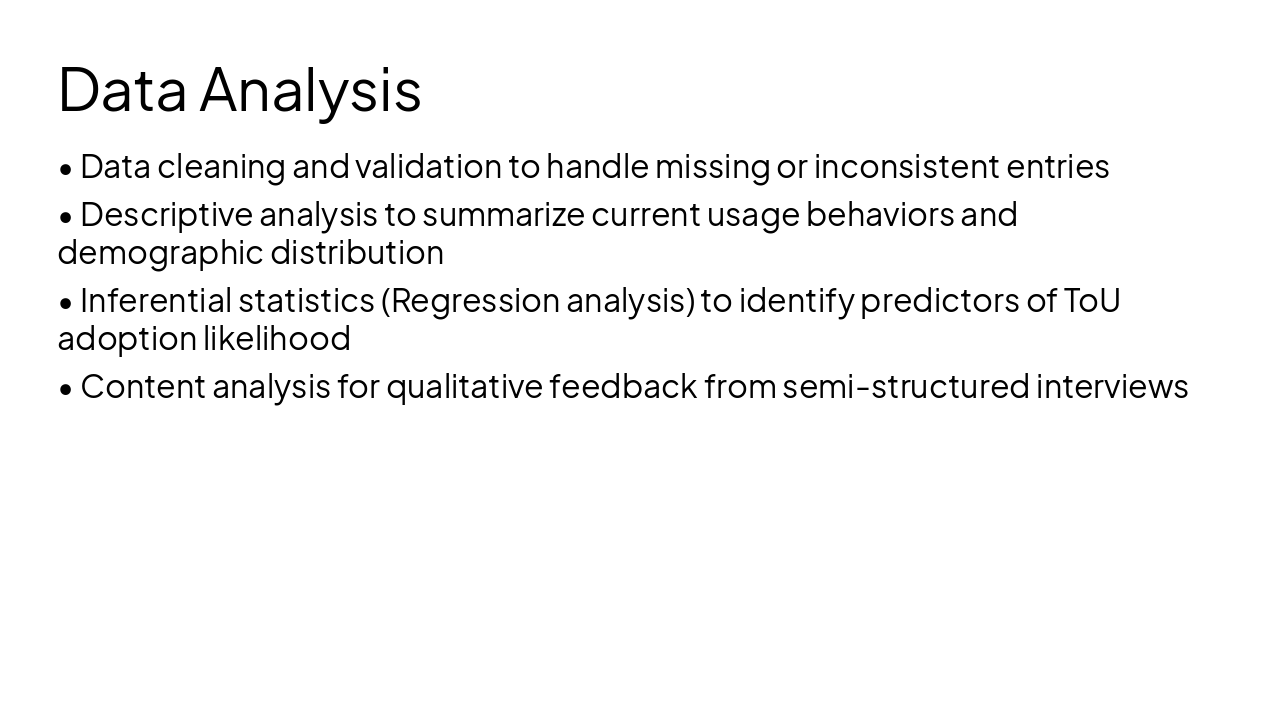
  • Data cleaning and validation to handle missing or inconsistent entries
  • Descriptive analysis to summarize current usage behaviors and demographic distribution
  • Inferential statistics (Regression analysis) to identify predictors of ToU adoption likelihood
  • Content analysis for qualitative feedback from semi-structured interviews
Slide 10 - Data Analysis
Slide 11 of 15

Slide 11 - Findings

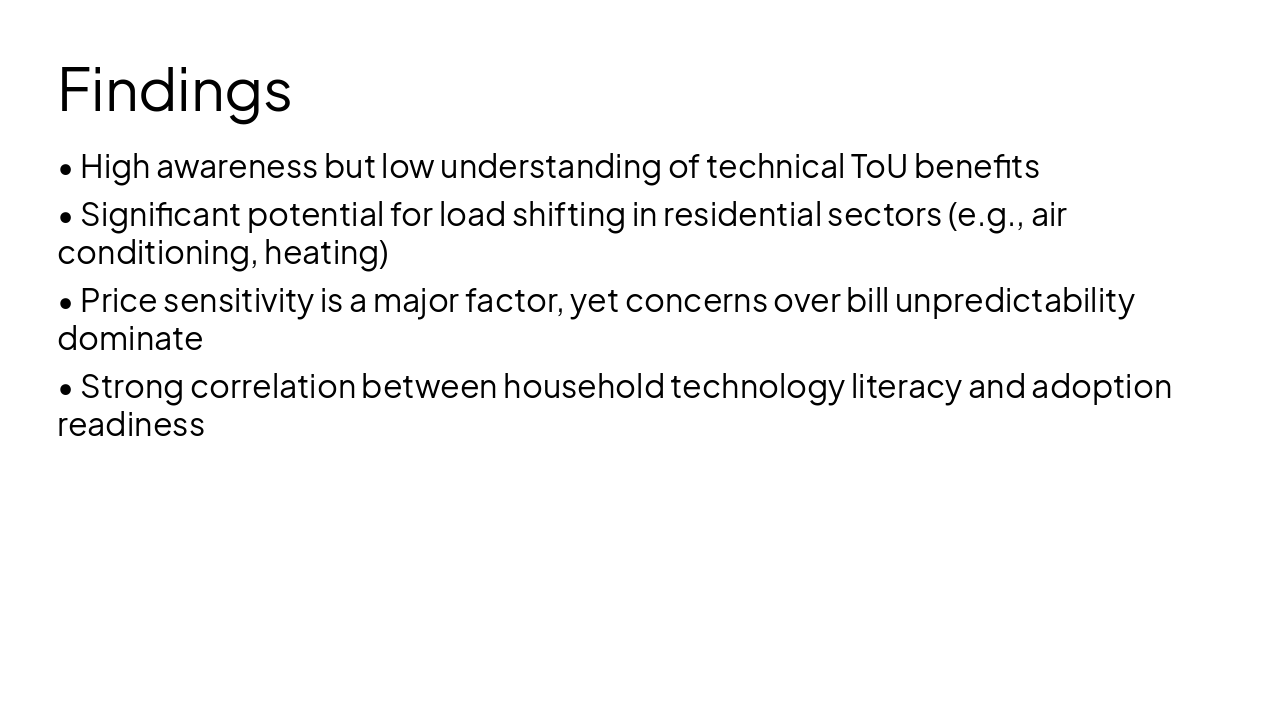
  • High awareness but low understanding of technical ToU benefits
  • Significant potential for load shifting in residential sectors (e.g., air conditioning, heating)
  • Price sensitivity is a major factor, yet concerns over bill unpredictability dominate
  • Strong correlation between household technology literacy and adoption readiness
Slide 11 - Findings
Slide 12 of 15

Slide 12 - Key Barriers

  • Perceived risk: Fear of higher electricity bills due to lack of behavioral control
  • Lack of automated tools (e.g., smart home energy management systems) to facilitate load shifting
  • Limited flexibility: Inability to shift usage due to work or lifestyle constraints
  • Communication gap: Difficulty in translating complex tariff structures into simple savings potential
Slide 12 - Key Barriers
Slide 13 of 15

Slide 13 - Insights

  • Consumers are pragmatic: Tangible, short-term savings are more persuasive than long-term grid efficiency goals
  • Automation is key: Removing manual effort in load shifting significantly increases adoption likelihood
  • Trust matters: TNB's reputation is vital, but transparency in billing is the primary friction point
Slide 13 - Insights
Slide 14 of 15

Slide 14 - Implications

  • Policy impact: Need for targeted incentives beyond simple price-based mechanisms
  • Operational requirements: Necessity for advanced metering infrastructure (AMI) to support real-time data feedback to consumers
  • Educational mandate: TNB must shift from 'information delivery' to 'empowerment-focused' campaigns
Slide 14 - Implications
Slide 15 of 15

Slide 15 - Recommendations

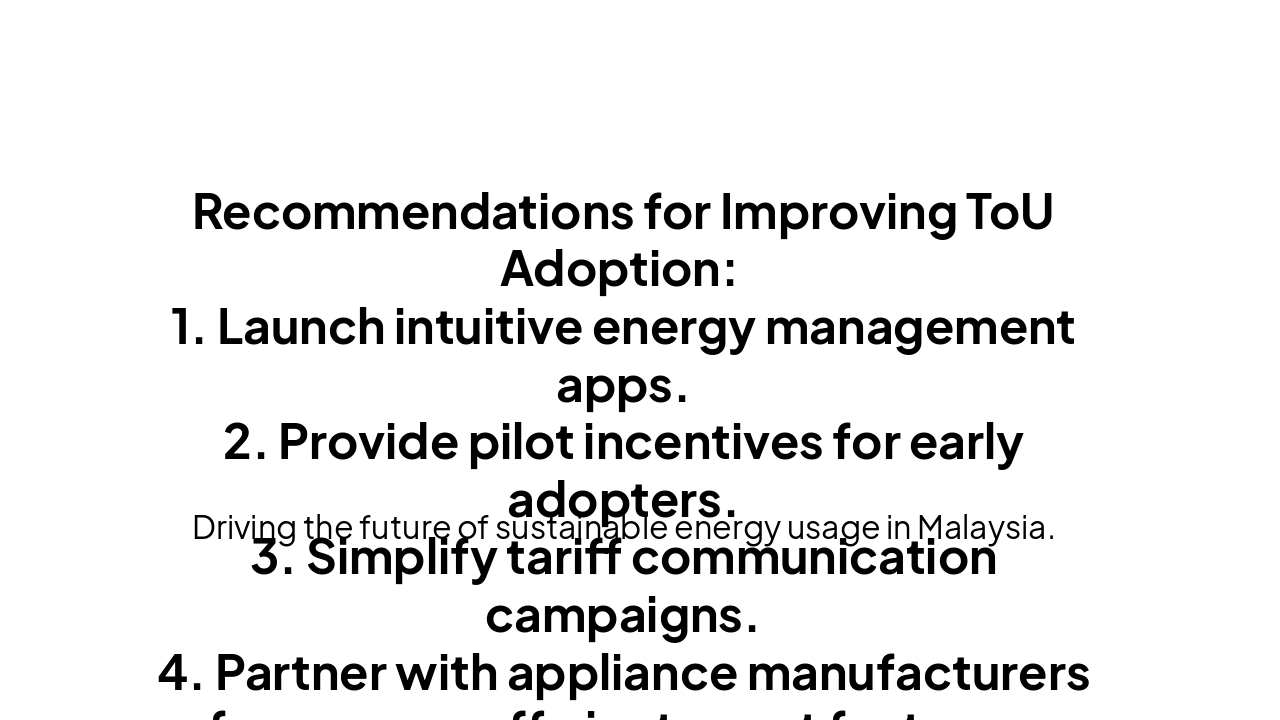
Recommendations for Improving ToU Adoption:

  1. Launch intuitive energy management apps.
  2. Provide pilot incentives for early adopters.
  3. Simplify tariff communication campaigns.
  4. Partner with appliance manufacturers for energy-efficient smart features.

Driving the future of sustainable energy usage in Malaysia.
Slide 15 - Recommendations

Discover More Presentations

Explore thousands of AI-generated presentations for inspiration

Browse Presentations
Powered by AI

Create Your Own Presentation

Generate professional presentations in seconds with Karaf's AI. Customize this presentation or start from scratch.

Create New Presentation

Powered by Karaf.ai — AI-Powered Presentation Generator