Slide 1 of 7
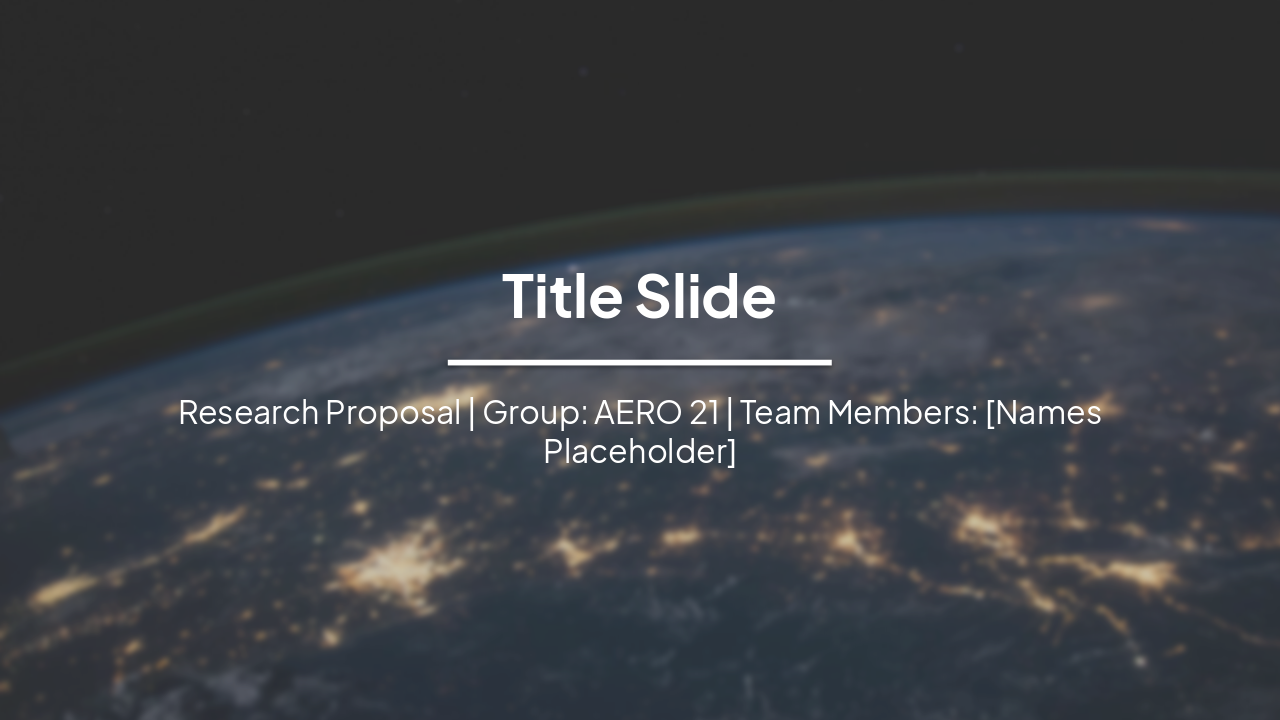
Slide 1 - Title Slide
Comparative Aerothermal Analysis of Atmospheric Re-entry Conditions for Chamfered-Edge CubeSat Configurations
Research Proposal | Group: AERO 21 | Team Members: [Names Placeholder]
Generated from prompt:
Create a professional academic presentation for a research proposal with the following structure and content: Title Slide: Comparative Aerothermal Analysis of Atmospheric Re-entry Conditions for Chamfered-Edge CubeSat Configurations Include group name (AERO 21) and members. Problem Slide: - CubeSats have sharp-edged cubic geometry causing high localized heating during re-entry - Limited mass/volume prevents use of traditional thermal protection systems - High risk to structural integrity and onboard electronics Proposed Solution Slide: - Introduce chamfered-edge CubeSat design - Passive geometric modification to reduce heat flux concentration - Maintain internal volume while improving aerothermal performance Objectives Slide: - Develop baseline CubeSat models (1U, 3U, 6U) - Apply iterative chamfered-edge designs - Compare heat flux, surface temperature, and aerodynamic behavior - Identify optimal configuration Methodology Slides: Slide 1: Baseline Modeling - CAD modeling using SolidWorks - Define material properties and geometry - Perform CFD simulations in ANSYS Slide 2: Chamfered Design Iterations - Apply parametric chamfer modifications - Generate multiple configurations - Run simulations under same re-entry conditions Slide 3: Comparative Analysis - Analyze heat flux distribution and peak temperature - Compare aerodynamic behavior - Determine optimal chamfer size Use clean academic design, minimal text, and include visuals/icons where appropriate.
This research proposal addresses CubeSat re-entry heating challenges via chamfered-edge designs. It covers problem statement, proposed solution, objectives, methodology with CAD/SolidWorks and ANSYS CFD simulations, workflow, aiming to enhance surviv
Comparative Aerothermal Analysis of Atmospheric Re-entry Conditions for Chamfered-Edge CubeSat Configurations
Research Proposal | Group: AERO 21 | Team Members: [Names Placeholder]
1
Modeling and Simulation Approach
---
Photo by Tom Parkes on Unsplash
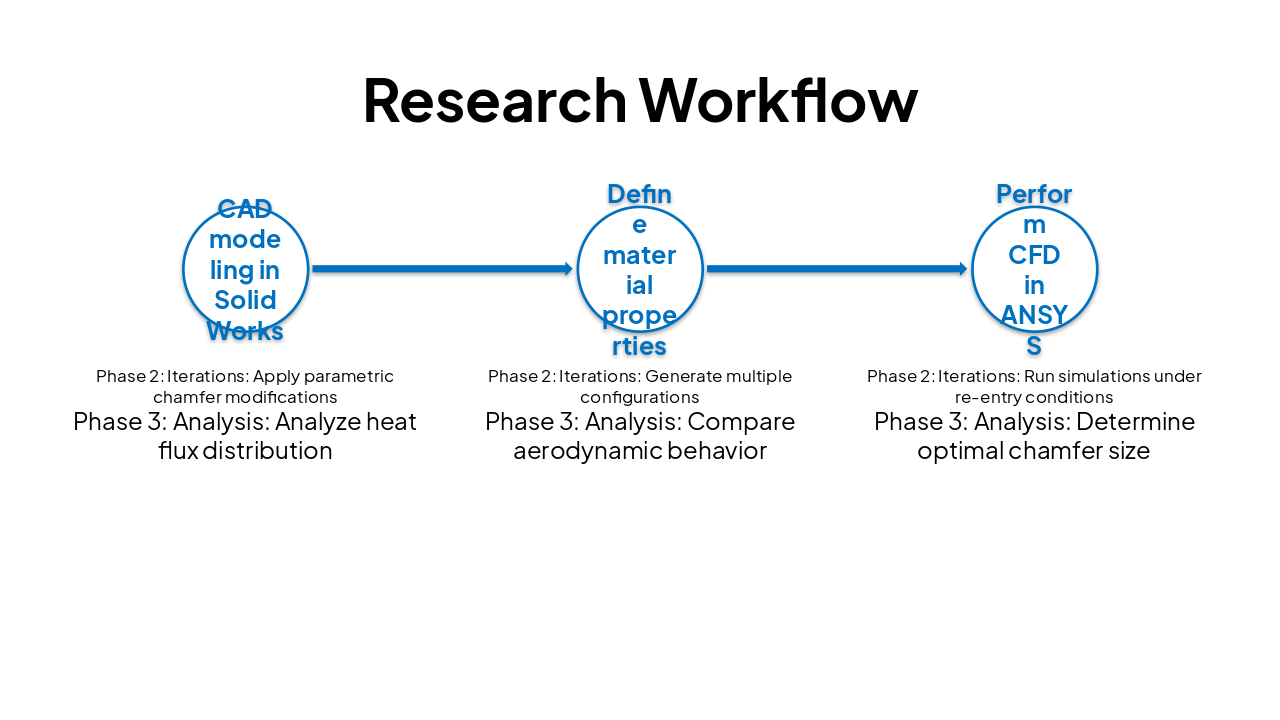
| Phase 1: Baseline | Phase 2: Iterations | Phase 3: Analysis |
|---|---|---|
| CAD modeling in SolidWorks | Apply parametric chamfer modifications | Analyze heat flux distribution |
| Define material properties | Generate multiple configurations | Compare aerodynamic behavior |
| Perform CFD in ANSYS | Run simulations under re-entry conditions | Determine optimal chamfer size |
Questions & Discussion
Advancing CubeSat survivability through geometric design optimization
Explore thousands of AI-generated presentations for inspiration
Generate professional presentations in seconds with Karaf's AI. Customize this presentation or start from scratch.