Slide 1 of 8
Slide 1 - What If Mosquitoes Went Extinct?
What If Mosquitoes Went Extinct?
Exploring the impact of a world without mosquitoes
Generated from prompt:
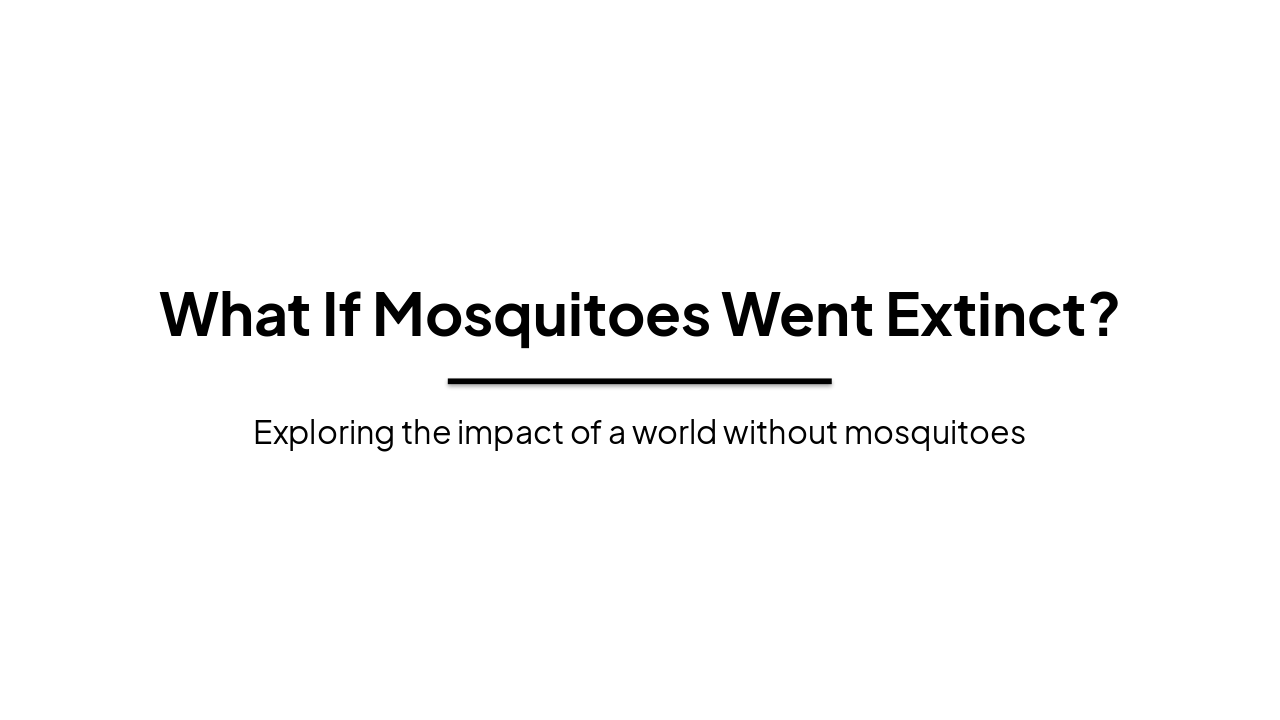
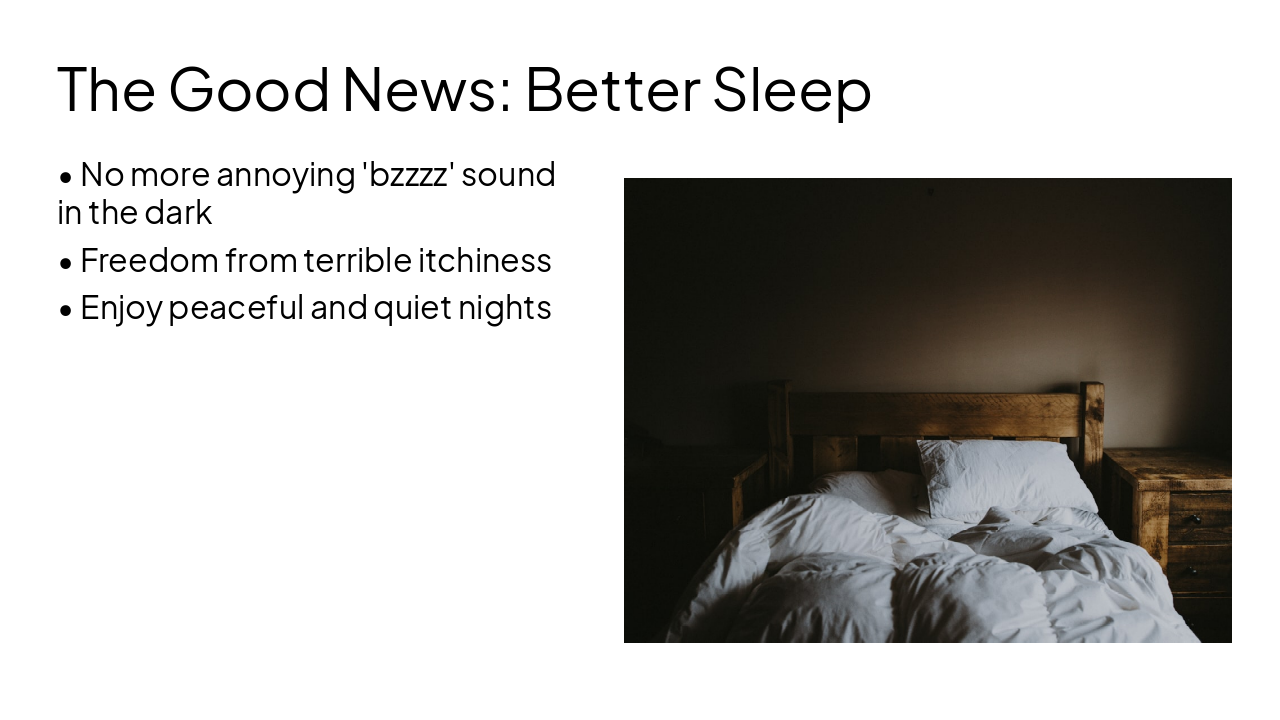
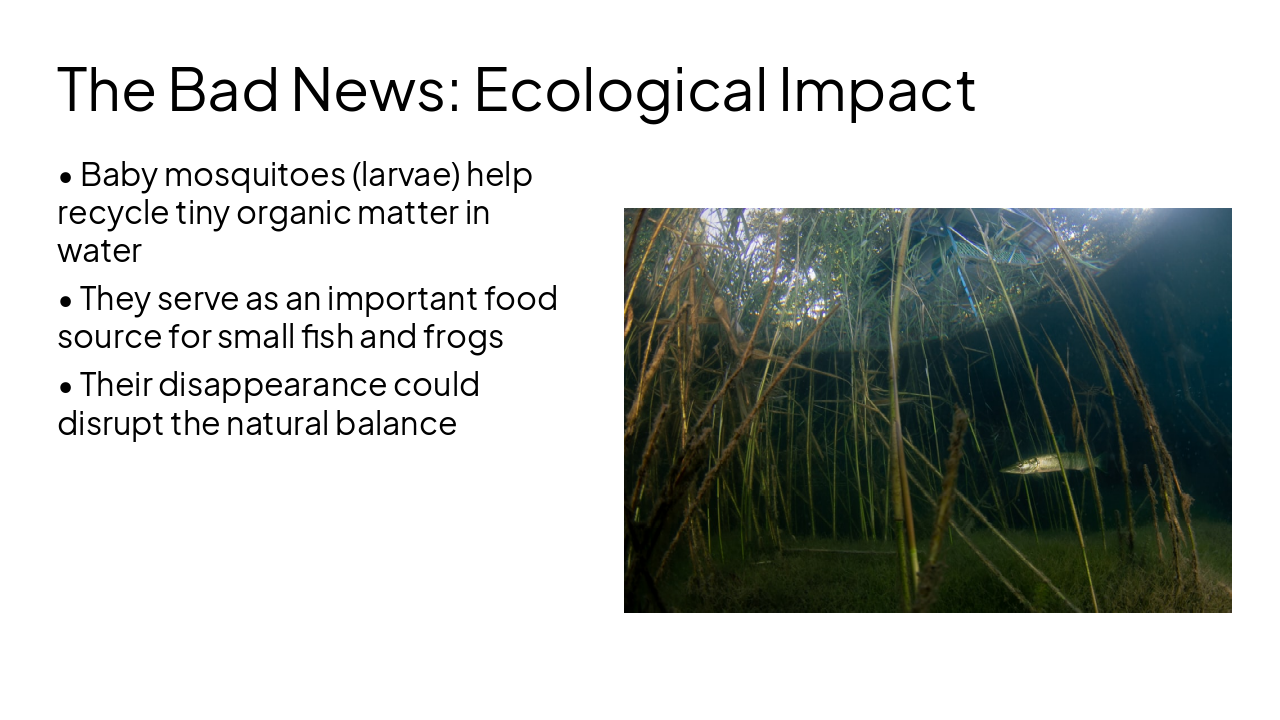
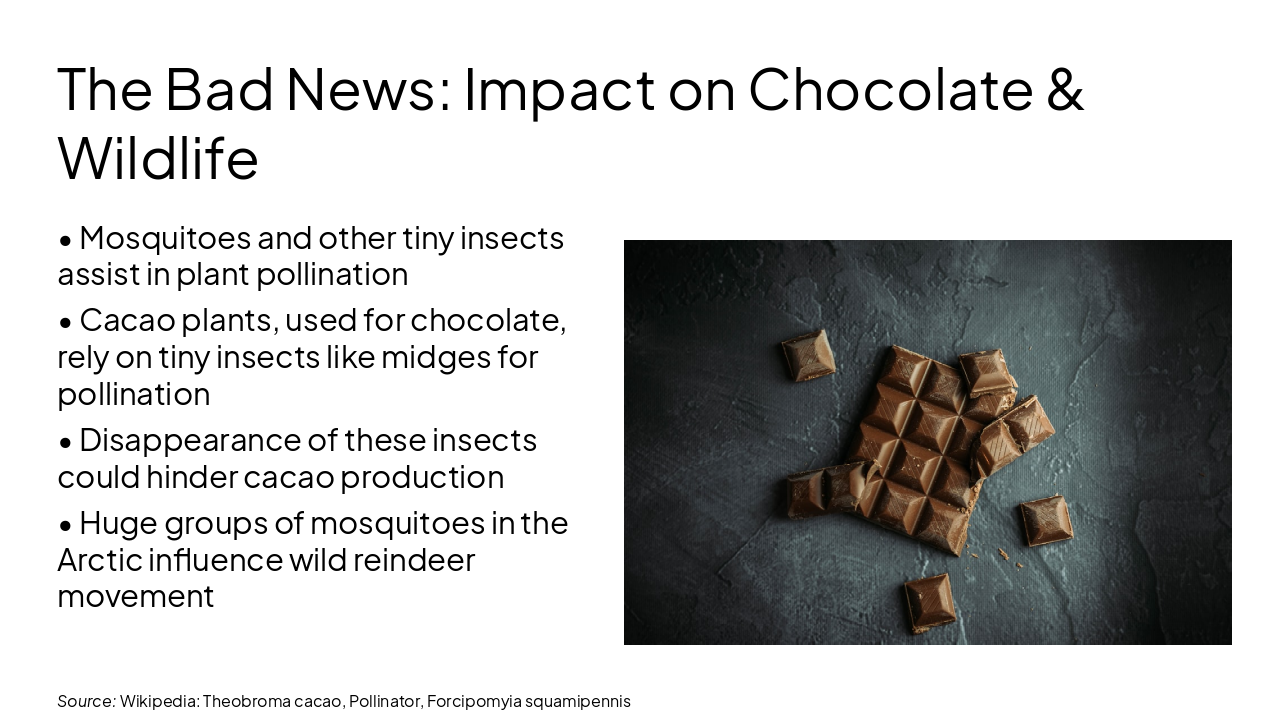
[Final Script] “What If Mosquitoes Went Extinct?” 1. Introduction (1 Min) [Slide 1] (Pictures of a lion, a shark, and a mosquito) [Action: Smile and look at the audience] Everyone, what do you think is the scariest animal on Earth? Is it a lion? Or a shark? [Slide 2] (A mosquito picture with “700,000+”) Surprisingly, the answer is the mosquito. Mosquitoes spread dangerous diseases and kill more than 700,000 people every year. Today, scientists are developing technology that could greatly reduce dangerous mosquito populations. But what would happen if mosquitoes really disappeared from Earth? Let’s find out. 2. Body 1 — The Good News (1 Min 30 Sec) [Slide 3] (A person scratching in bed / “Good Sleep”) [Action: Pretend to chase a mosquito near your ear] First, we could finally sleep well in the summer. We all know that annoying “bzzzz” sound in the dark. You turn on the light, and it’s gone. You turn off the light, and it’s back! If mosquitoes disappear, we will be free from that annoying sound and terrible itchiness. No more fighting in bed! We could just enjoy peaceful and quiet nights. [Slide 4] (Healthy people and a happy dog / “Health & Safety”) Second, it could save millions of lives. In many countries, people become very sick because of mosquito diseases. If dangerous mosquitoes disappear, many of these diseases could become much less common. Also, we would not need sticky mosquito sprays anymore. Even our dogs would become safer because mosquitoes can spread dangerous worms to them. 3. Body 2 — The Bad News (1 Min 30 Sec) [Slide 5] (Fish eating bugs in water / “Broken Nature”) However, nature could face big problems. In the water, baby mosquitoes help recycle tiny organic matter. They are also important food for many small fish and frogs. If baby mosquitoes disappear, some small animals may lose an important food source. This could affect the balance of nature. [Slide 6] (Crying face with chocolate / “No More Chocolate?!”) [Action: Look sad and pretend to eat chocolate] Second, chocolate production could also be affected. Mosquitoes and other tiny insects help some plants grow by carrying pollen. Especially, cacao plants — the plants used to make chocolate — depend on tiny insects. If these insects disappear, growing cacao could become more difficult. Imagine a world with much less chocolate. That would be a nightmare for chocolate lovers! Also, in cold places like the Arctic, huge groups of mosquitoes can change how wild reindeer move. Without mosquitoes, nature’s balance could change in unexpected ways. 4. Conclusion (1 Min) [Slide 7] (Controlling only dangerous mosquitoes) So, what should we do? There are more than 3,500 types of mosquitoes on Earth. But only a small number of species regularly bite humans or spread diseases. Therefore, completely destroying all mosquitoes may not be a good idea. Instead, scientists say we should carefully control the dangerous mosquitoes that spread diseases. [Slide 8] (Person holding a mosquito swatter / “Thank You!”) [Action: Small sigh and bittersweet smile] But honestly, that perfect technology is not here yet. So for now, we still cannot completely avoid mosquitoes. It is a little sad and frustrating, but we just have to be patient for now. When we hear that “bzzzz” sound tonight, we may still need to grab our mosquito swatters and fight one more battle. Mosquitoes are very annoying to us, but they are still an important part of nature’s puzzle. We need to find a smart way to protect humans without hurting our beautiful planet. Thank you for listening.
This presentation explores the multifaceted impacts of a world without mosquitoes, detailing the immediate benefits to human health and comfort, as well as the potential ecological disruptions, including effects on food chains, pollination, and wildlife. It concludes by discussing the importance of selective control over complete eradication.
What If Mosquitoes Went Extinct?
Exploring the impact of a world without mosquitoes
---
Photo by National Institute of Allergy and Infectious Diseases on Unsplash
Source: Wikipedia: Disease vector, Mosquito-borne disease
---
Photo by Annie Spratt on Unsplash
---
Photo by Samuell Morgenstern on Unsplash
Source: Wikipedia: Mosquito-borne disease
---
Photo by Milos Prelevic on Unsplash
---
Photo by Tamas Pap on Unsplash
Source: Wikipedia: Theobroma cacao, Pollinator, Forcipomyia squamipennis
Thank you for listening.
Mosquitoes are annoying, but also an important part of nature. We must find smart ways to protect humans without harming our planet.
---
Photo by Sasha Freemind on Unsplash
Explore thousands of AI-generated presentations for inspiration
Generate professional presentations in seconds with Karaf's AI. Customize this presentation or start from scratch.