Challenges in Computer Vision Software

Generated from prompt:

비전 소프트웨어에 문제를 지적하는 ppt 만들거야 사진과 설명을 추가할려고

This presentation outlines key issues in computer vision software, including accuracy limitations, bias and fairness problems, performance challenges, privacy concerns, and provides recommendations for robust, ethical development.

February 24, 202618 slides
Slide 1 of 18

Slide 1 - Problems in Vision Software

Key Issues and Challenges

Highlighting Limitations in Computer Vision Applications

---

Photo by Conny Schneider on Unsplash
Slide 1 - Problems in Vision Software
Slide 2 of 18

Slide 2 - Presentation Outline

  • Introduction to Vision Software
  • Accuracy Limitations
  • Bias and Fairness Issues
  • Performance Challenges
  • Privacy and Ethical Concerns
  • Recommendations and Conclusion

---

Photo by airfocus on Unsplash

Slide 2 - Presentation Outline
Slide 3 of 18

Slide 3 - Section 1

1

Introduction to Vision Software

What is Computer Vision and Its Common Applications

---

Photo by Luke Jones on Unsplash
Slide 3 - Section 1
Slide 4 of 18

Slide 4 - What is Vision Software?

  • Computer vision software uses AI to interpret and understand visual data from images/videos
  • Common applications: Autonomous vehicles, facial recognition, medical imaging, surveillance
  • Powers everyday tech like photo tagging, object detection in apps
Slide 4 - What is Vision Software?
Slide 5 of 18

Slide 5 - Section 2

2

Accuracy Limitations

Challenges in Reliable Detection and Recognition

---

Photo by Logan Voss on Unsplash
Slide 5 - Section 2
Slide 6 of 18

Slide 6 - Example: Misrecognition in Traffic

  • False positives/negatives common in varying conditions
  • Error rates up to 20-30% in adverse weather/lighting
  • Real-world example: Tesla Autopilot incidents due to misreads
Slide 6 - Example: Misrecognition in Traffic
Slide 7 of 18

Slide 7 - Reported Error Rates

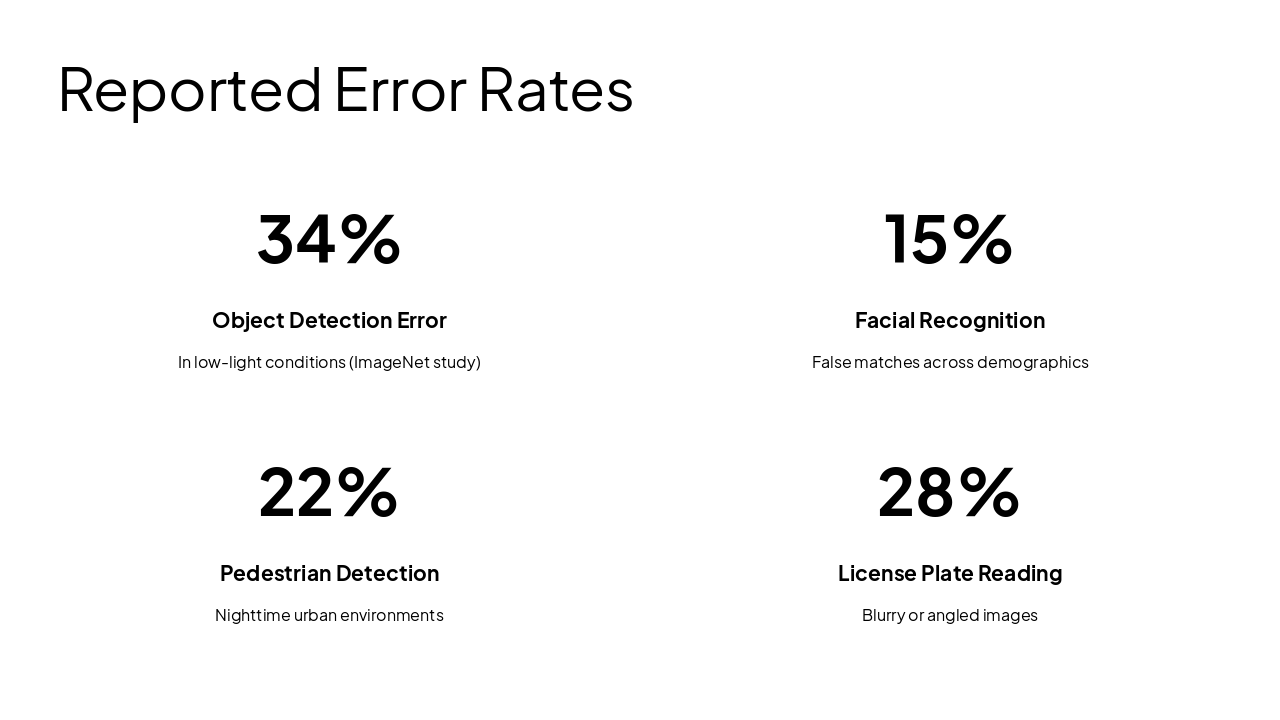
  • 34%: Object Detection Error
  • 15%: Facial Recognition
  • 22%: Pedestrian Detection
  • 28%: License Plate Reading
Slide 7 - Reported Error Rates
Slide 8 of 18

Slide 8 - Section 3

3

Bias and Fairness Issues

Disparities in Model Performance Across Groups

---

Photo by Hümâ H. Yardım on Unsplash
Slide 8 - Section 3
Slide 9 of 18

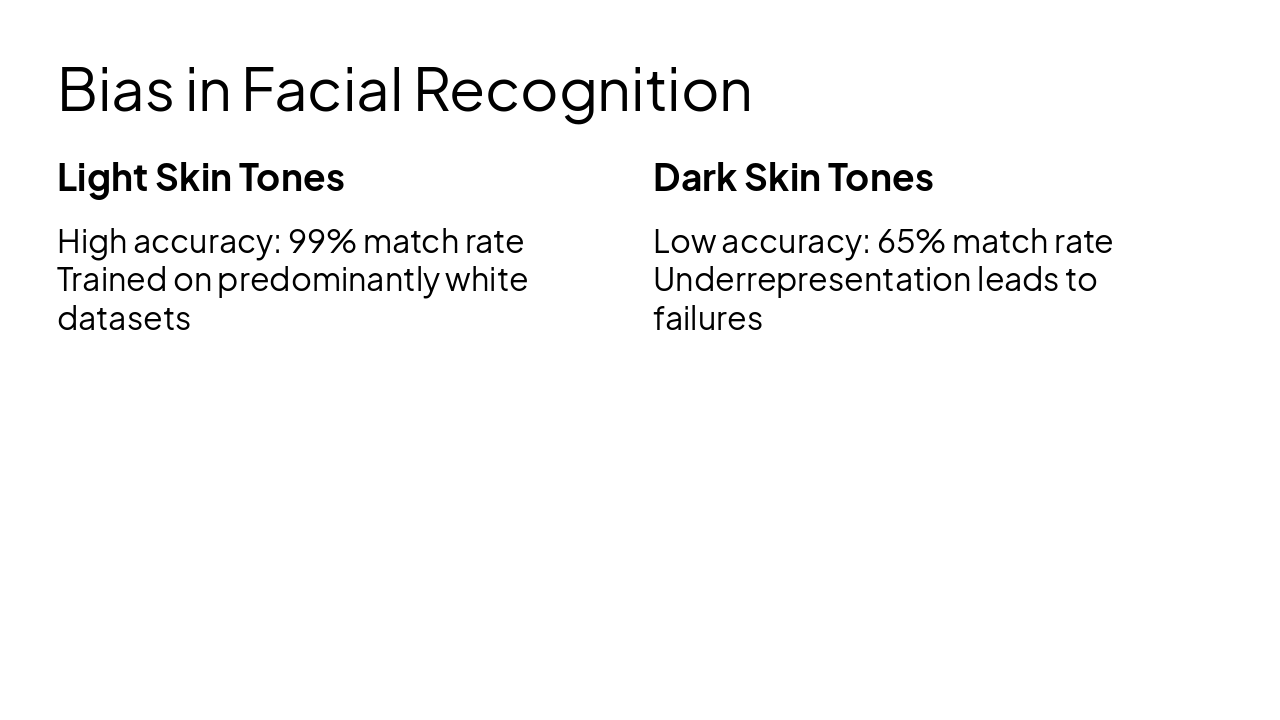
Slide 9 - Bias in Facial Recognition

Light Skin Tones High accuracy: 99% match rate Trained on predominantly white datasets

Dark Skin Tones Low accuracy: 65% match rate Underrepresentation leads to failures
Slide 9 - Bias in Facial Recognition
Slide 10 of 18

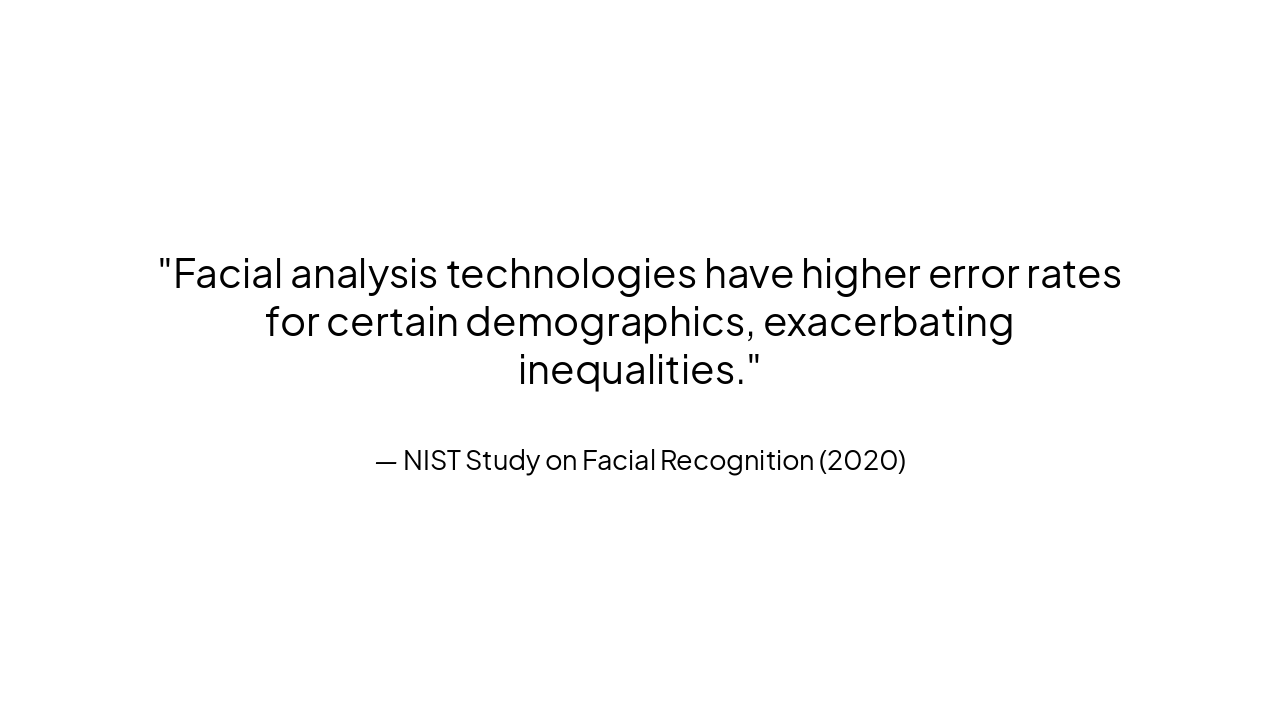
Slide 10 - Expert Insight

> Facial analysis technologies have higher error rates for certain demographics, exacerbating inequalities.

— NIST Study on Facial Recognition (2020)
Slide 10 - Expert Insight
Slide 11 of 18

Slide 11 - Section 4

4

Performance Challenges

Real-Time Processing and Resource Demands

---

Photo by Luke Chesser on Unsplash

Slide 11 - Section 4
Slide 12 of 18

Slide 12 - Key Performance Problems

  • High computational cost: Requires GPUs/TPUs for inference
  • Latency issues: Delays in real-time apps like drones/autonomous cars
  • Scalability limits: Struggles with high-resolution video streams
  • Edge deployment challenges: Limited power on mobile/IoT devices
Slide 12 - Key Performance Problems
Slide 13 of 18

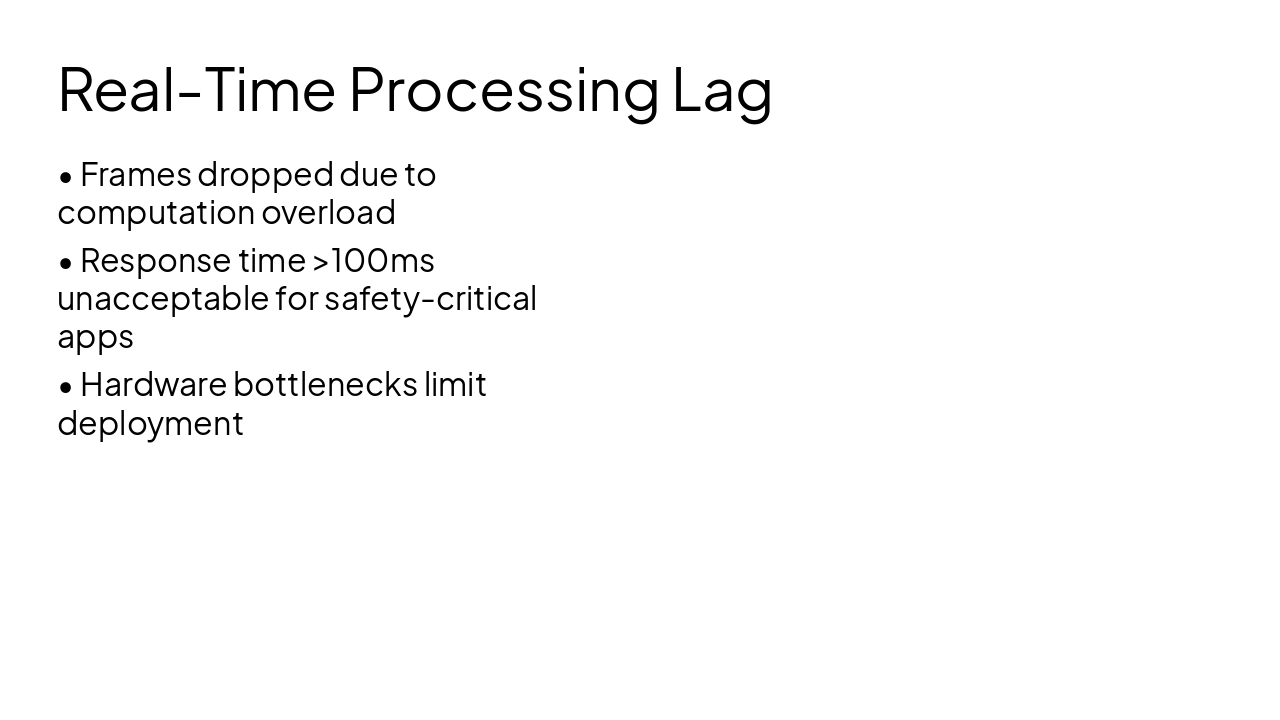
Slide 13 - Real-Time Processing Lag

  • Frames dropped due to computation overload
  • Response time >100ms unacceptable for safety-critical apps
  • Hardware bottlenecks limit deployment
Slide 13 - Real-Time Processing Lag
Slide 14 of 18

Slide 14 - Section 5

5

Privacy and Ethical Concerns

Data Handling and Surveillance Risks

Slide 14 - Section 5
Slide 15 of 18

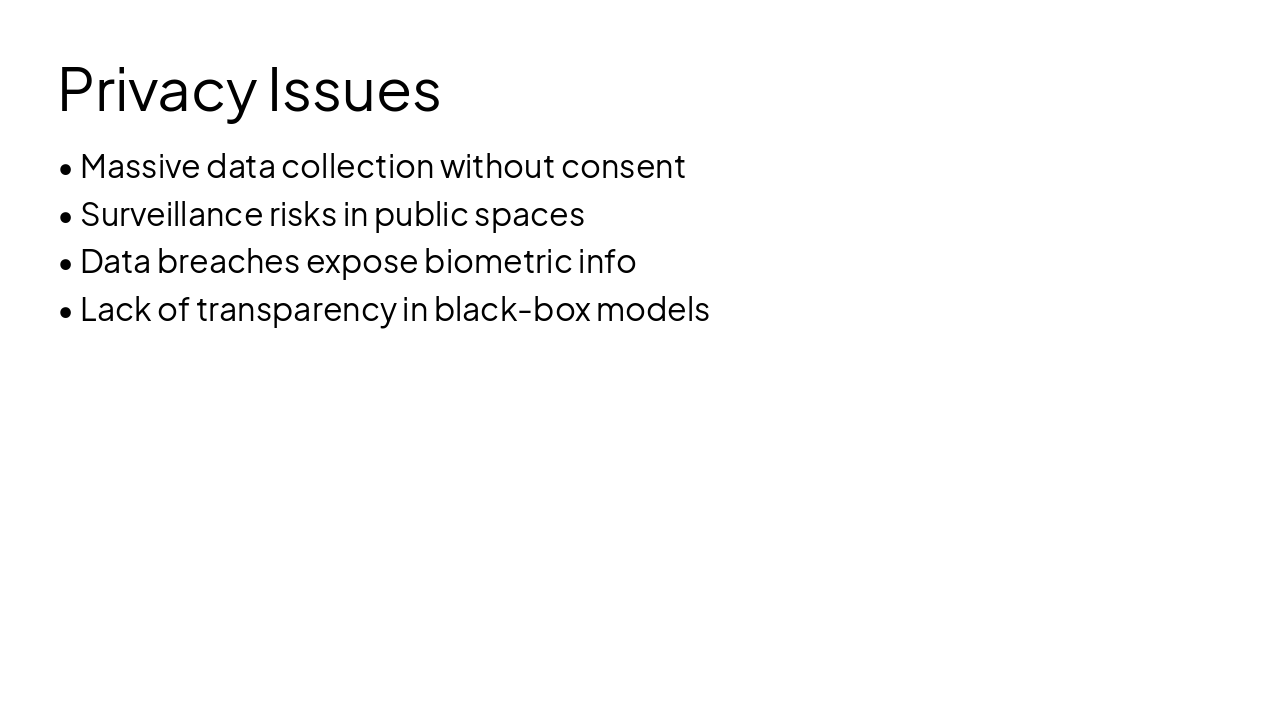
Slide 15 - Privacy Issues

  • Massive data collection without consent
  • Surveillance risks in public spaces
  • Data breaches expose biometric info
  • Lack of transparency in black-box models
Slide 15 - Privacy Issues
Slide 16 of 18

Slide 16 - Recommendations

6

Recommendations for Improvement

Strategies to Address Key Problems

---

Photo by Robynne O on Unsplash
Slide 16 - Recommendations
Slide 17 of 18

Slide 17 - Improvement Strategies

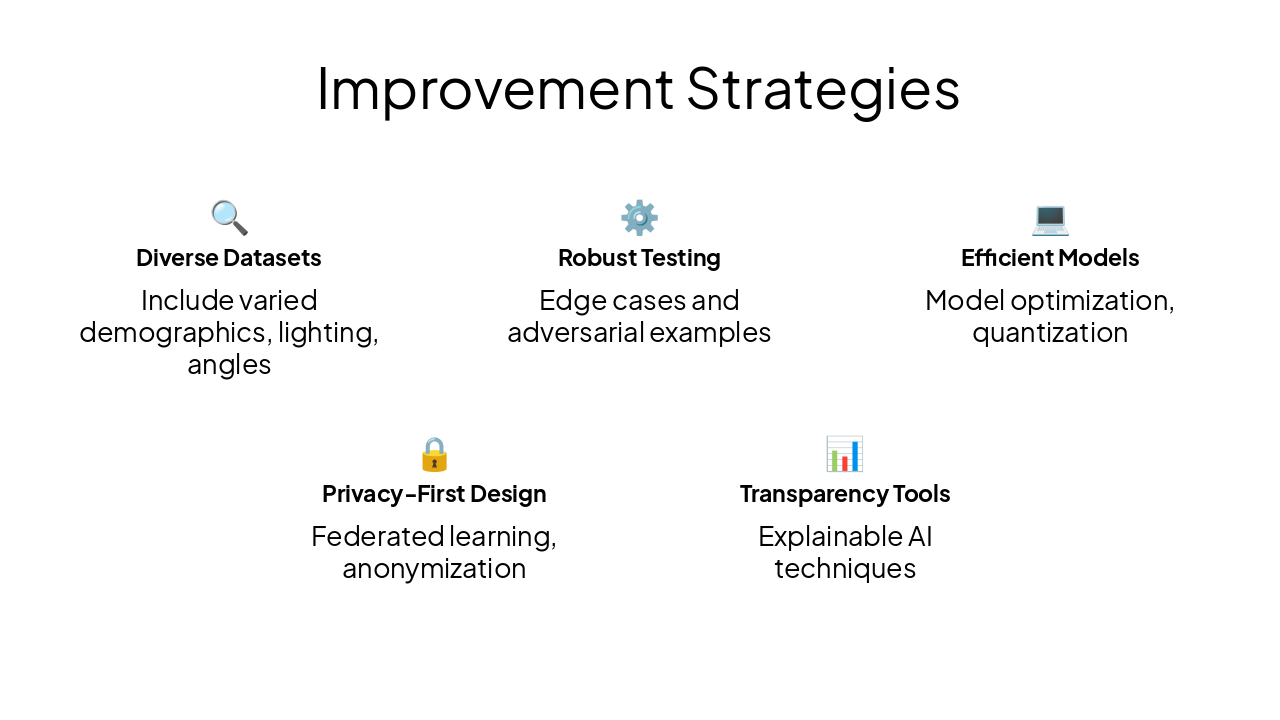
🔍 Diverse Datasets Include varied demographics, lighting, angles

⚙️ Robust Testing Edge cases and adversarial examples

💻 Efficient Models Model optimization, quantization

🔒 Privacy-First Design Federated learning, anonymization

📊 Transparency Tools Explainable AI techniques
Slide 17 - Improvement Strategies
Slide 18 of 18

Slide 18 - Key Takeaways

Vision software has transformative potential but faces significant hurdles in accuracy, bias, performance, and privacy. Prioritize robust development to unlock safe, ethical applications.

Thank you! Questions?

---

Photo by Vinh Nguyen on Unsplash
Slide 18 - Key Takeaways

Discover More Presentations

Explore thousands of AI-generated presentations for inspiration

Browse Presentations
Powered by AI

Create Your Own Presentation

Generate professional presentations in seconds with Karaf's AI. Customize this presentation or start from scratch.

Create New Presentation

Powered by Karaf.ai — AI-Powered Presentation Generator