Mental Health Legislation Essentials

Generated from prompt:

Create a 3-hour teaching PowerPoint presentation for Level 3 learners on mental health legislation, based on the CACHE Level 3 Mental Health Workbook. Include: 1) Legislative framework for mental health service provision, 2) Changes in legislation over time, 3) Current legislation relating to mental health problems. Include discussion points, short activities, visuals, and case studies (Hannah’s story, Harry’s story). Use a professional, clear teaching style suitable for classroom delivery.

This 3-hour PowerPoint for Level 3 learners covers the legislative framework for mental health services, historical changes, and current laws like the Mental Health Act 1983. Includes visuals, activit

December 3, 202522 slides
Slide 1 of 22

Slide 1 - Welcome to Mental Health Legislation

Welcome to Mental Health Legislation

CACHE Level 3 Introduction to Mental Health Laws

Slide 1 - Welcome to Mental Health Legislation
Slide 2 of 22

Slide 2 - Presentation Agenda

Slide 2 - Presentation Agenda
Slide 3 of 22

Slide 3 - 1. Legislative Framework for Mental Health Services

Slide 3 - 1. Legislative Framework for Mental Health Services
Slide 4 of 22

Slide 4 - Key Components of the Framework

  • Mental Health Act 1983: Regulates detention and compulsory treatment.
  • Care Programme Approach (CPA): Provides structured care planning and review.
  • Multi-agency working: Ensures collaborative support across health services.
Slide 4 - Key Components of the Framework
Slide 5 of 22

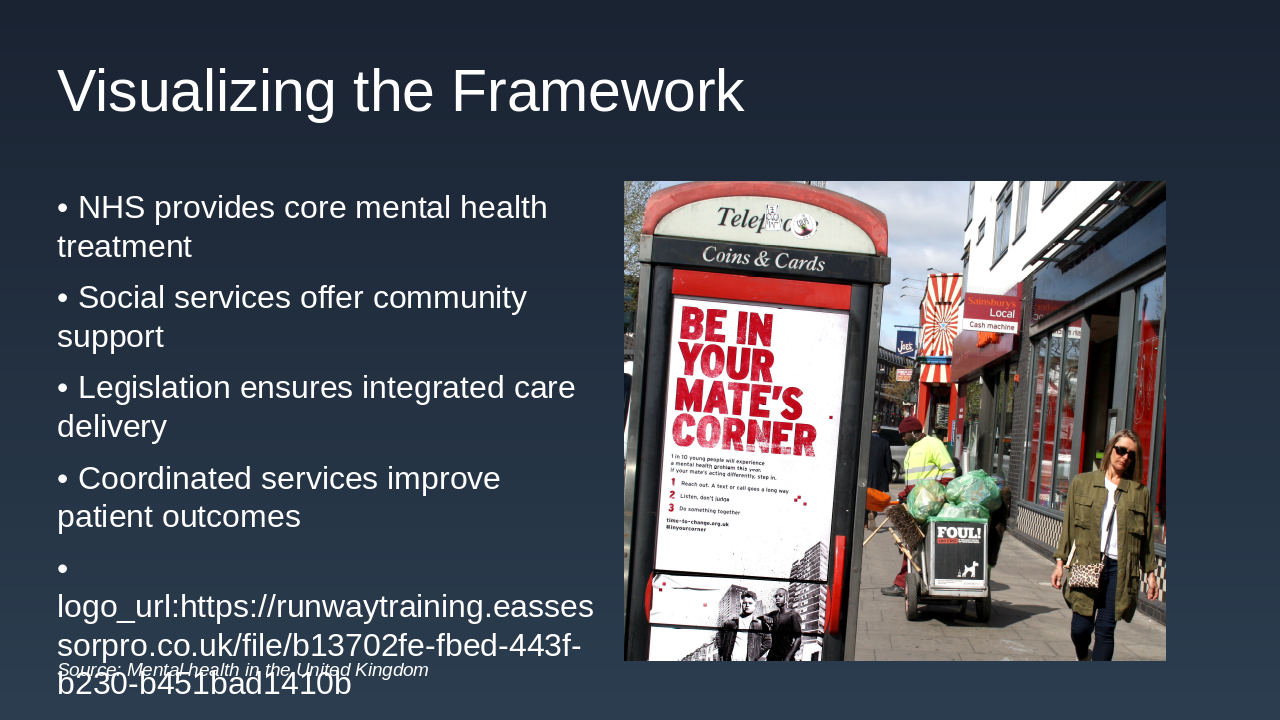
Slide 5 - Visualizing the Framework

  • NHS provides core mental health treatment
  • Social services offer community support
  • Legislation ensures integrated care delivery
  • Coordinated services improve patient outcomes
  • logo_url:https://runwaytraining.eassessorpro.co.uk/file/b13702fe-fbed-443f-b230-b451bad1410b
Slide 5 - Visualizing the Framework
Slide 6 of 22

Slide 6 - Roles Under the Framework

Approved Mental Health Professionals (AMHPs) Duties AMHPs assess for detention under Mental Health Act. Coordinate teams, ensure least restrictive care. Advocate for patients, interview applicants. Consult professionals, apply for admissions when criteria met.

Patient Rights Under Legislation Entitled to clear information and advocates. Right to appeal detentions via tribunals. Legislation protects dignity, promotes consent. Involves nearest relatives, prevents discrimination.

Slide 6 - Roles Under the Framework
Slide 7 of 22

Slide 7 - Safeguards in Legislation

  • Obtain informed consent from service users before interventions.
  • Prioritize the least restrictive option in care decisions.
  • Provide access to independent advocacy services for support.
Slide 7 - Safeguards in Legislation
Slide 8 of 22

Slide 8 - Changes in Legislation Over Time

Slide 8 - Changes in Legislation Over Time
Slide 9 of 22

Slide 9 - Historical Timeline of Changes

Slide 9 - Historical Timeline of Changes
Slide 10 of 22

Slide 10 - Major Reforms and Impacts

  • Shift from asylums to community-based care in 1980s
  • Integration of human rights into legislation during 2000s
  • Deinstitutionalization reduced institutional populations significantly
  • Community care improved access and patient autonomy
  • Human rights focus enhanced protections against discrimination
Slide 10 - Major Reforms and Impacts
Slide 11 of 22

Slide 11 - Influential Perspectives on Change

> Mental health law must evolve with society to address emerging challenges and protect vulnerable individuals effectively.

— World Health Organization (WHO)

Slide 11 - Influential Perspectives on Change
Slide 12 of 22

Slide 12 - Statistics on Legislative Impact

Slide 12 - Statistics on Legislative Impact
Slide 13 of 22

Slide 13 - Current Legislation Relating to Mental Health Problems

Slide 13 - Current Legislation Relating to Mental Health Problems
Slide 14 of 22

Slide 14 - Mental Health Act 1983 (Amended 2007)

  • Section 2 enables emergency assessments up to 28 days.
  • Section 3 allows compulsory treatment admission for 6 months.
  • Approved clinicians lead assessments and authorize detention.
  • Patients hold rights to appeal via Mental Health Tribunal.
Slide 14 - Mental Health Act 1983 (Amended 2007)
Slide 15 of 22

Slide 15 - Equality Act 2010 and Mental Health

Protections Against Discrimination The Equality Act 2010 protects individuals with mental health conditions from discrimination in employment, education, and services. It covers direct and indirect discrimination, harassment, and victimisation, ensuring equal treatment and opportunities.

Reasonable Adjustments in Services Employers and service providers must make reasonable adjustments to enable access for those with mental health issues, such as flexible working hours or quiet spaces, without causing undue hardship.

Slide 15 - Equality Act 2010 and Mental Health
Slide 16 of 22

Slide 16 - Other Current Frameworks

  • Care Act 2014 emphasizes wellbeing in care provision
  • Mental Capacity Act 2005 supports informed decision-making
  • Integration enhances holistic mental health support
  • Key principles guide practitioner responsibilities
  • Application ensures person-centered approaches
Slide 16 - Other Current Frameworks
Slide 17 of 22

Slide 17 - Visual Summary of Current Laws

  • Mental Health Act 1983 protects patient rights during detention.
  • Mental Capacity Act 2005 supports decision-making for vulnerable adults.
  • Equality Act 2010 prevents discrimination based on mental health status.
  • Care Act 2014 promotes prevention and wellbeing in services.
Slide 17 - Visual Summary of Current Laws
Slide 18 of 22

Slide 18 - Case Studies: Applying Legislation

Slide 18 - Case Studies: Applying Legislation
Slide 19 of 22

Slide 19 - Hannah’s Story: Framework in Action

Hannah’s Crisis and Intervention under MHA 1983 Hannah, 28, presented with acute paranoia, hallucinations, and self-neglect, posing risk to herself. Under Section 2 of the Mental Health Act 1983, she was detained for compulsory assessment and treatment in hospital to safeguard her welfare.

Discussion Points and Activity Was detention justified? Evaluate criteria like risk and capacity. Activity: Role-play multi-agency response to Hannah’s crisis (15 minutes) to apply legislative framework.

Slide 19 - Hannah’s Story: Framework in Action
Slide 20 of 22

Slide 20 - Harry’s Story: Changes and Current Laws

Harry’s Community Care Journey Post-Reforms Post-reforms, Harry transitioned from institution to community support. Care Act 2014 offers personalized plans: home therapy, social services for independence.

Application of Equality Act Adjustments Equality Act 2010 protects mental health as disability. Requires reasonable adjustments: accessible communication, flexible scheduling for fair healthcare and employment.

Slide 20 - Harry’s Story: Changes and Current Laws
Slide 21 of 22

Slide 21 - Learning from Case Studies

  • Apply legislation to real-life mental health scenarios effectively
  • Evaluate ethical dilemmas in patient care decisions
  • Recognize impacts of legislative changes on case outcomes
  • Discuss practitioner responsibilities and patient rights
Slide 21 - Learning from Case Studies
Slide 22 of 22

Slide 22 - Conclusion and Key Takeaways

**Key Takeaways:

  • Legislative framework enables effective mental health services.
  • Changes in legislation reflect progress in care and support.
  • Current laws protect rights of those with mental health problems.

Closing Message: Empowering change through knowledge.

Call to Action: Apply these principles in your practice to support vulnerable individuals.

Q&A: Open floor for questions.**

Reflect and Act

Slide 22 - Conclusion and Key Takeaways

Discover More Presentations

Explore thousands of AI-generated presentations for inspiration

Browse Presentations
Powered by AI

Create Your Own Presentation

Generate professional presentations in seconds with Karaf's AI. Customize this presentation or start from scratch.

Create New Presentation

Powered by Karaf.ai — AI-Powered Presentation Generator