Social Engineering and Phishing: Cybersecurity Threats and Prevention

Generated from prompt:

It's on the topic of social engineering and phishing

This presentation provides an in-depth look at social engineering and phishing, key cybersecurity threats. It covers definitions, psychological manipulation tactics, various phishing types including email, vishing, smishing, spear phishing, and emerging trends like quishing and deepfakes. Backed by statistics showing phishing as the top cybercrime affecting most businesses, it includes real examples and concludes with essential prevention strategies such as user education, technical filters, multi-factor authentication, and verification practices.

May 13, 202614 slides
Slide 1 of 14

Slide 1 - Social Engineering and Phishing

Social Engineering and Phishing

Cybersecurity Threats and Prevention

---

Photo by Luis Quintero on Unsplash
Slide 1 - Social Engineering
and Phishing
Slide 2 of 14

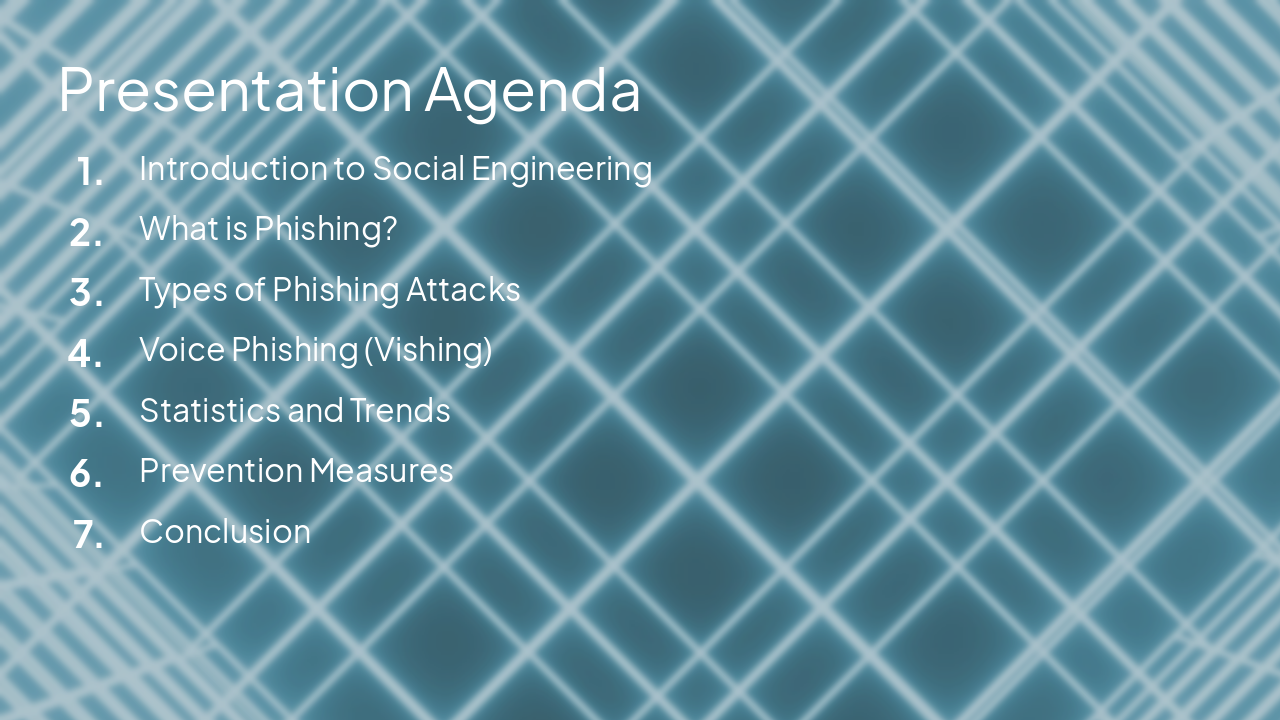
Slide 2 - Presentation Agenda

  • Introduction to Social Engineering
  • What is Phishing?
  • Types of Phishing Attacks
  • Voice Phishing (Vishing)
  • Statistics and Trends
  • Prevention Measures
  • Conclusion

---

Photo by Logan Voss on Unsplash

Slide 2 - Presentation Agenda
Slide 3 of 14

Slide 3 - Social Engineering

1

Social Engineering

Manipulating Human Psychology for Information Access

---

Photo by Musemind UX Agency on Unsplash

Slide 3 - Social Engineering
Slide 4 of 14

Slide 4 - What is Social Engineering?

  • Psychological manipulation to divulge confidential information
  • Influences people to perform actions not in their best interests
  • Confidence trick for info gathering, fraud, or system access
  • Often part of complex fraud schemes
  • Phishing is a primary example

Source: Wikipedia: Social engineering (security)
Slide 4 - What is Social Engineering?
Slide 5 of 14

Slide 5 - Phishing

2

Phishing

Deceptive Scam to Steal Sensitive Information

---

Photo by Matthew Fournier on Unsplash

Slide 5 - Phishing
Slide 6 of 14

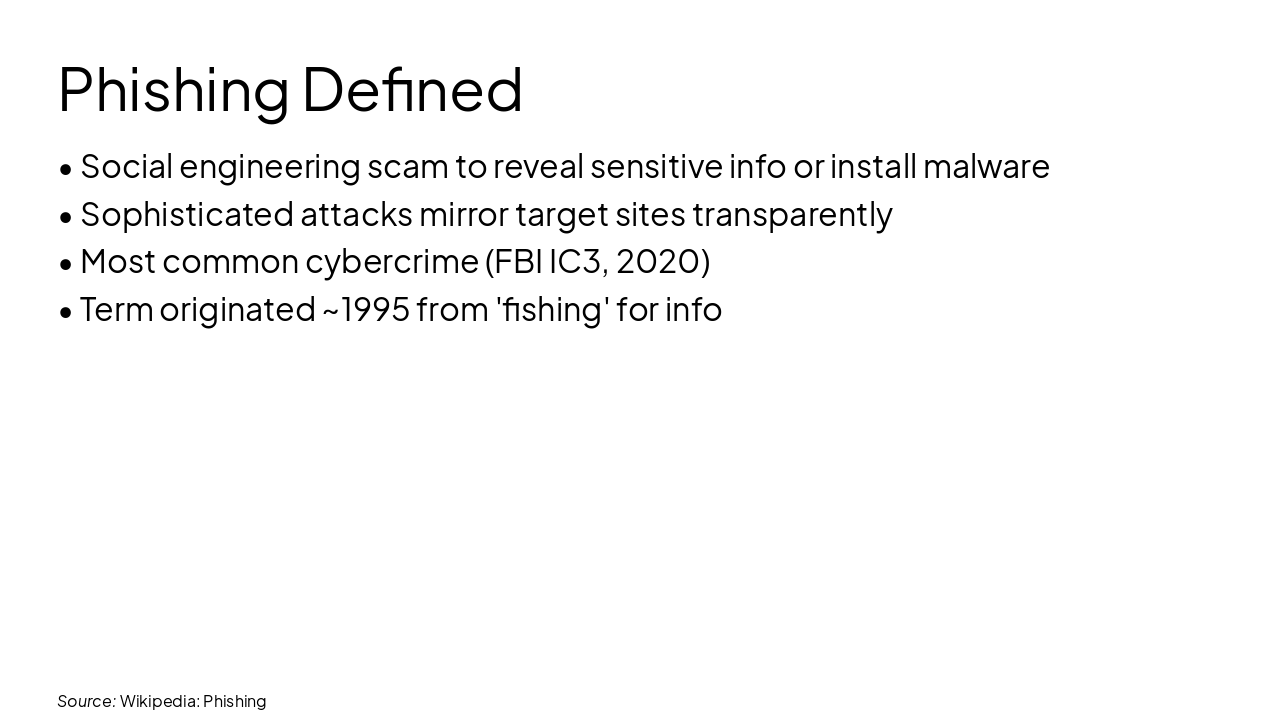
Slide 6 - Phishing Defined

  • Social engineering scam to reveal sensitive info or install malware
  • Sophisticated attacks mirror target sites transparently
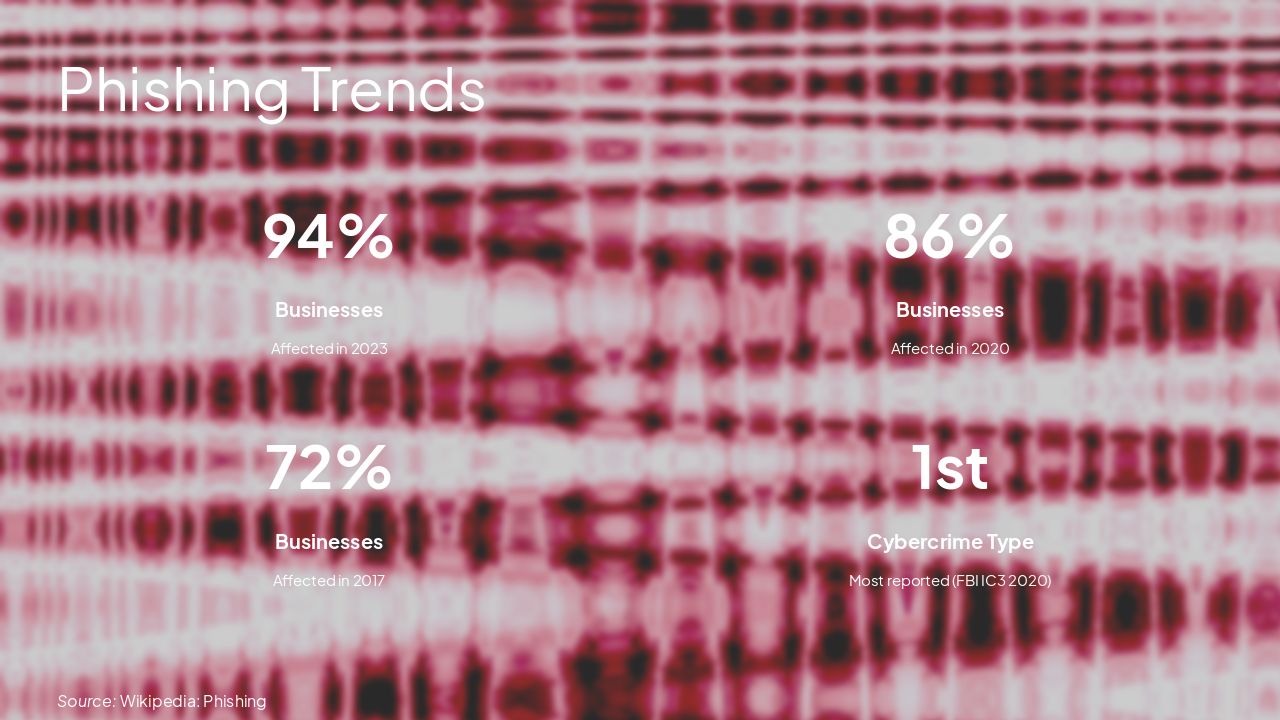
  • Most common cybercrime (FBI IC3, 2020)
  • Term originated ~1995 from 'fishing' for info

Source: Wikipedia: Phishing

Slide 6 - Phishing Defined
Slide 7 of 14

Slide 7 - Phishing Trends

  • 94%: Businesses
  • 86%: Businesses
  • 72%: Businesses
  • 1st: Cybercrime Type

---

Photo by Logan Voss on Unsplash

Source: Wikipedia: Phishing
Slide 7 - Phishing Trends
Slide 8 of 14

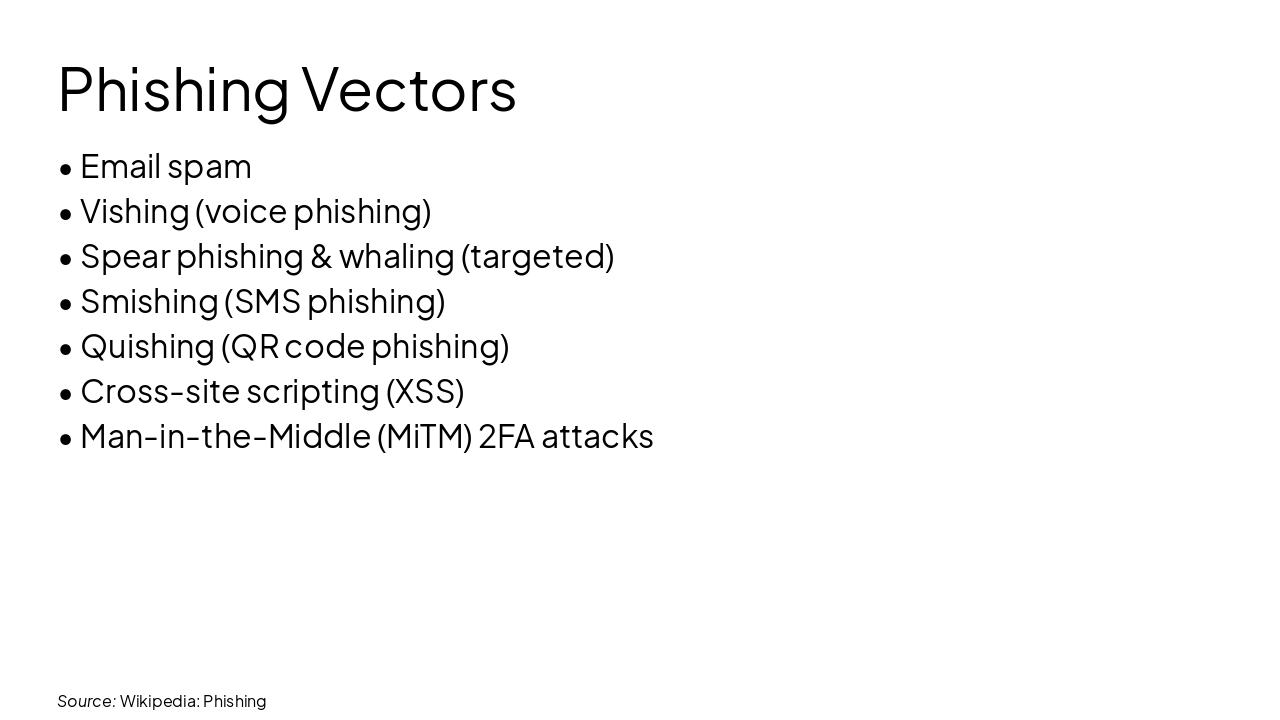
Slide 8 - Phishing Vectors

  • Email spam
  • Vishing (voice phishing)
  • Spear phishing & whaling (targeted)
  • Smishing (SMS phishing)
  • Quishing (QR code phishing)
  • Cross-site scripting (XSS)
  • Man-in-the-Middle (MiTM) 2FA attacks

Source: Wikipedia: Phishing

Slide 8 - Phishing Vectors
Slide 9 of 14

Slide 9 - Phishing Email Example

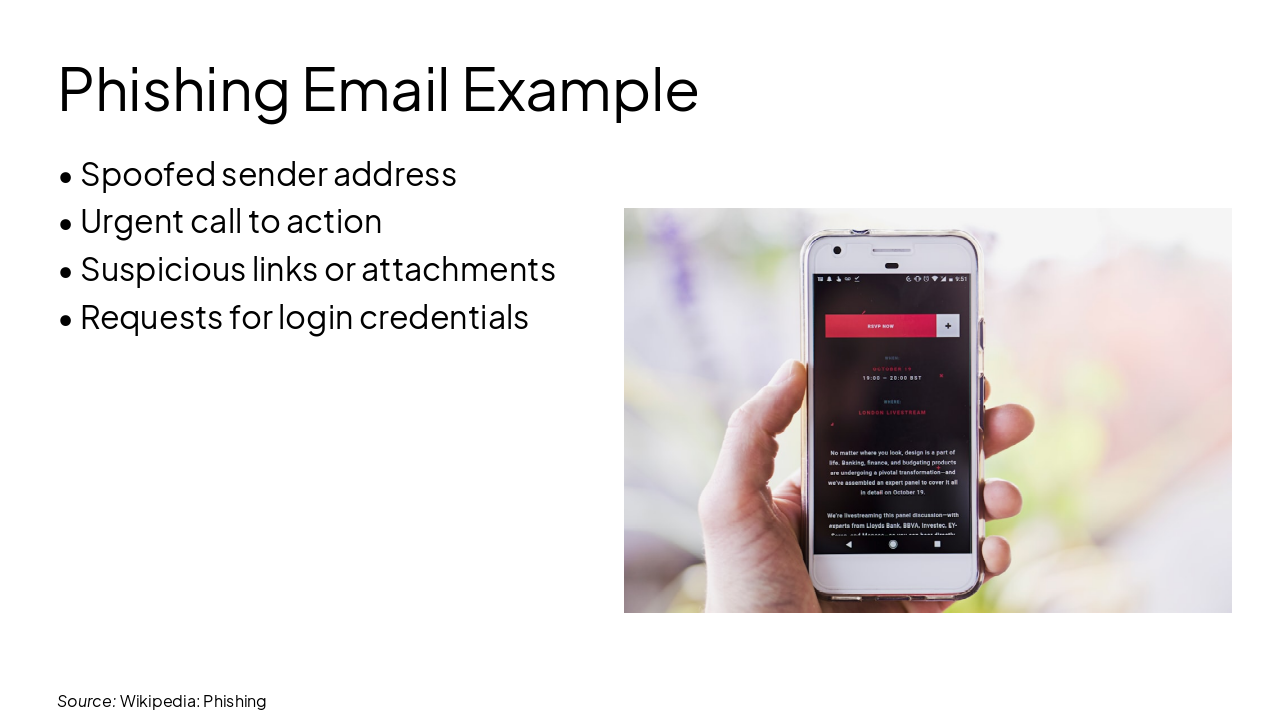
  • Spoofed sender address
  • Urgent call to action
  • Suspicious links or attachments
  • Requests for login credentials

---

Photo by Matthew Fournier on Unsplash

Source: Wikipedia: Phishing
Slide 9 - Phishing Email Example
Slide 10 of 14

Slide 10 - Voice Phishing

3

Voice Phishing (Vishing)

Using Telephony to Steal Information

---

Photo by Kaptured by Kasia on Unsplash
Slide 10 - Voice Phishing
Slide 11 of 14

Slide 11 - Vishing Tactics

  • VoIP caller ID spoofing and IVR systems
  • Automated TTS or live callers impersonating authorities
  • Target credit cards, PINs, identity info
  • Often preys on immigrants and elderly
  • Emerging: Audio deepfakes for trusted voices

Source: Wikipedia: Voice phishing

Slide 11 - Vishing Tactics
Slide 12 of 14

Slide 12 - Preventing Attacks

  • User education and public awareness campaigns
  • Legislation to penalize phishing
  • Technical security: email filters, site verification
  • Multi-factor authentication (MiTM-resistant)
  • Verify unsolicited requests independently

Source: Wikipedia: Phishing

Slide 12 - Preventing Attacks
Slide 13 of 14

Slide 13 - Scale of the Threat

> As of 2020, it is the most common type of cybercrime, with the FBI's IC3 reporting more phishing incidents than any other cybercrime.

— Wikipedia: Phishing

---

Photo by Danish Prakash on Unsplash

Source: Wikipedia: Phishing
Slide 13 - Scale of the Threat
Slide 14 of 14

Slide 14 - Conclusion

Social engineering and phishing exploit human trust.

Prioritize awareness, verification, and robust security measures.

Questions? Thank you!

---

Photo by ui-martin on Unsplash

Slide 14 - Conclusion

Discover More Presentations

Explore thousands of AI-generated presentations for inspiration

Browse Presentations
Powered by AI

Create Your Own Presentation

Generate professional presentations in seconds with Karaf's AI. Customize this presentation or start from scratch.

Create New Presentation

Powered by Karaf.ai — AI-Powered Presentation Generator