Slide 1 of 6
Slide 1 - KU Code of Ethics: An Engineering Perspective
KU Code of Ethics: An Engineering Perspective
Bridging KU Ethics with Future Engineering Practice
---
Photo by Tim Broadbent on Unsplash
Generated from prompt:
make me a presentation use the pdf for your sourse of info and it should be 5 min long maximum 6 slides powerpoint about two kuwait university code of ethics : 1. Being courageous when expressing ones opinion and observing objectivity and discussion manners, as well as maintaing the value of the academic freedom and respecting others opinion. 2. Using the right to complain without maliciousness or abusiveness and refraining from submitting false complaint. As future engineers, you are bound not only by international technical standards but also by the specific ethical framework of your home institution. This assignment requires you to analyze the KU Code of Ethics and demonstrate how its sections—specifically those concerning academic staff, students, and community relations—interact with you as a student of engineering and with your professional responsibilities as a future engineer. Part 1: Structural Analysis & Core Values Students must identify the foundational pillars of the code and explain their relevance to the engineering profession. • Identify the Pillars: Briefly summarize the outline of the code by identifying the main relationships defined in the code content. • Engineering Alignment: Choose two specific principles from any section and explain why these are particularly critical for a student or an engineer working on public infrastructure projects in Kuwait: 1. Being courageous when expressing ones opinion and observing objectivity and discussion manners, as well as maintaing the value of the academic freedom and respecting others opinion. 2. Using the right to complain without maliciousness or abusiveness and refraining from submitting false complaint. • Cultural Context: Explain how the code integrates Islamic and Arab values into professional conduct. Part 2: The "Academic-Professional" Bridge The KU Code places a strong emphasis on the relationship between academic staff and students. In this section, you must bridge the gap between "Student Ethics" and "Professional Engineering Ethics." • The Mentor-Student Dynamic: Analyze the code's requirement for faculty to set a good example. How does this shape the conscience of an engineering student before they enter the workforce? • Intellectual Integrity: Reference the sections on scientific research. Discuss the ethical implications of data integrity and honesty in conveying administrative/scientific experience as it relates to engineering documentation and safety reports. Part 3: Community & Environmental Responsibility This part focuses on the engineer’s role in Kuwaiti society as defined by the KU Code’s (Relationship with Community). • Service to Society: Choose one specific principle from the KU code related to the community. Present a hypothetical engineering project (e.g., a new water desalination plant or a “Smart City” initiative) and explain how the KU Code would guide an engineer’s ethical approach to that project. • Administrative Hierarchy vs. Public Interest: Discuss Article 14 of Section 1 regarding the administrative hierarchy. Debate a scenario where an engineer must balance following the hierarchy with the ethical duty to report a safety concern (whistleblowing).
This deck analyzes the KU Code of Ethics from an engineering viewpoint, covering core values alignment, academic-to-professional transition, and responsibilities in community and environmental projects like desalination plants.
KU Code of Ethics: An Engineering Perspective
Bridging KU Ethics with Future Engineering Practice
---
Photo by Tim Broadbent on Unsplash
---
Photo by Nastuh Abootalebi on Unsplash
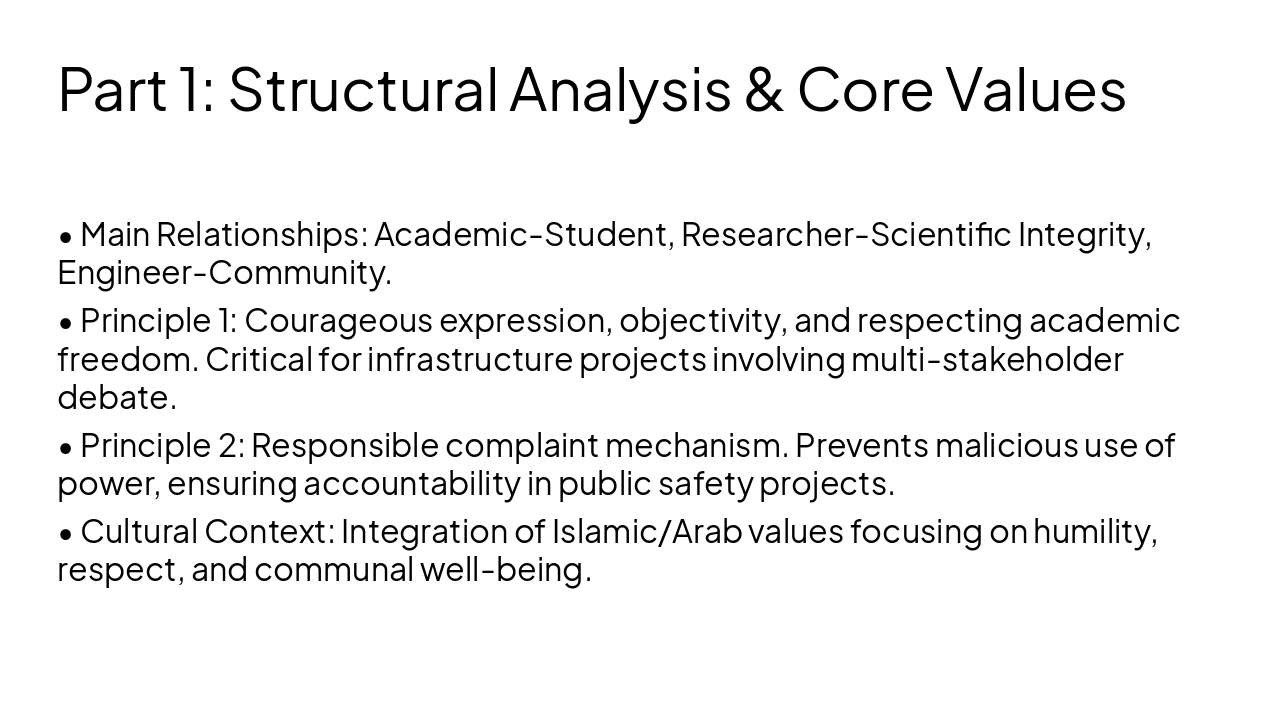
The Mentor-Student Dynamic Faculty act as ethical architects. By setting examples, they shape student conscience regarding technical precision and societal impact before entering the workforce.
Intellectual Integrity Data honesty is the bedrock of engineering. Misrepresenting administrative or scientific data in safety reports is a violation of ethical duty and a direct risk to public welfare.
---
Photo by Mike Hafin on Unsplash
The KU Code of Ethics guides us toward responsible, ethical, and courageous leadership in the global engineering community.
As future engineers of Kuwait, our integrity is our most valuable professional asset.
---
Photo by Nastuh Abootalebi on Unsplash
Explore thousands of AI-generated presentations for inspiration
Generate professional presentations in seconds with Karaf's AI. Customize this presentation or start from scratch.