Slide 1 of 14
Slide 1 - Equal Access
Equal Access
A Global Exhibition Celebrating Disability Rights, Culture, and Human Contribution
---
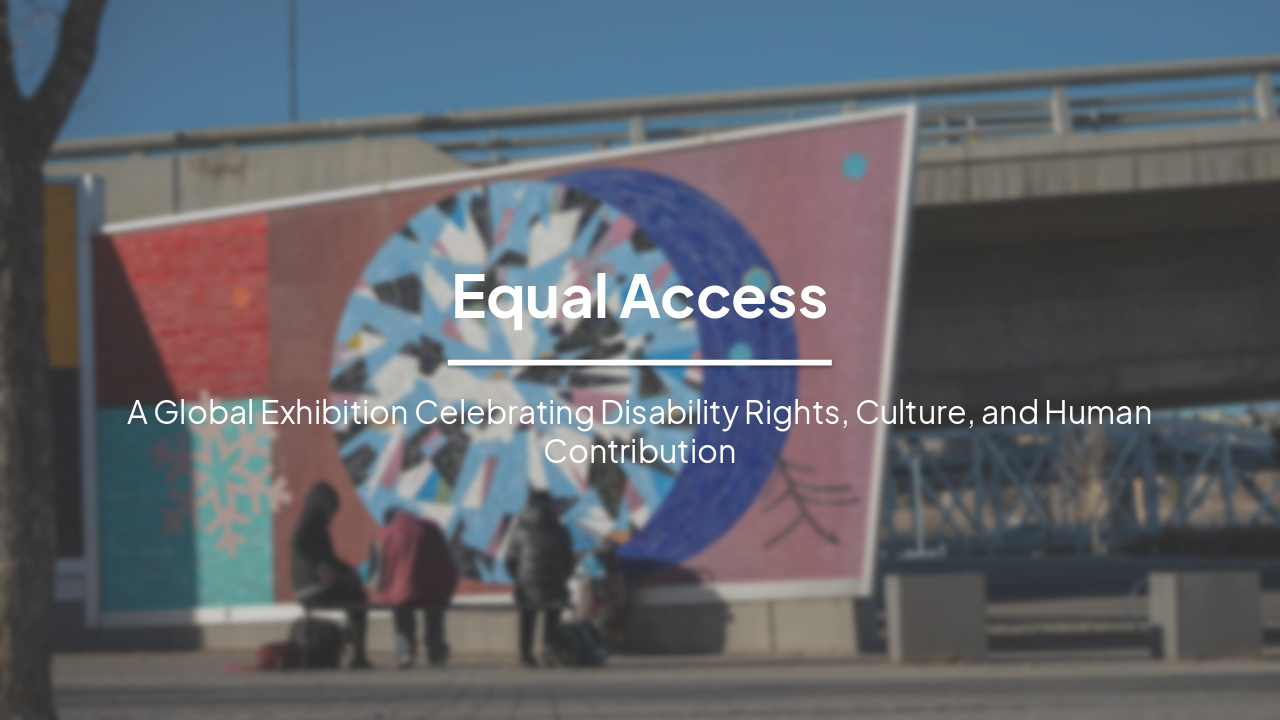
Photo by Josh Marty on Unsplash
Generated from prompt:
Create a professional, visually inspiring presentation titled 'Equal Access: A Global Exhibition on Disability Rights and Human Achievement'. The presentation should have a modern cultural-exhibition aesthetic with inclusive imagery, elegant typography, and themes of unity, accessibility, diversity, and sustainability. Slides Outline: 1. Cover Slide - Title: Equal Access - Subtitle: A Global Exhibition Celebrating Disability Rights, Culture, and Human Contribution - Visual theme: diverse global community, accessibility symbols, art and culture. 2. What is Equal Access? - Explain that Equal Access is an educational and cultural exhibition promoting bilateral relationships between countries that champion the rights of persons with disabilities. - Mention that it combines history, culture, and art to highlight disability rights development and promote inclusion, unity, and sustainability. 3. Vision & Mission - Vision: A world where disability inclusion is recognized as part of human progress. - Mission: To celebrate achievements of persons with disabilities and strengthen international collaboration for accessibility and equal opportunity. 4. Why This Exhibition Matters - Discuss historical underrepresentation of persons with disabilities. - Explain the importance of visibility, representation, and inclusive storytelling. - Include key global context such as disability rights movements and inclusion efforts. 5. Global History of Disability Rights - Timeline-style slide. - Include milestones such as: * UN Convention on the Rights of Persons with Disabilities (2006) * Growth of Paralympic movement * Accessibility and inclusion reforms worldwide - Mention how nations continue evolving disability policies. 6. Contributions Across Generations - Showcase how persons with disabilities have shaped society through resilience and innovation. - Highlight that contributions are often overlooked despite impact on global advancement. 7. Fields of Contribution - Split into categories: * Sports * Arts & Culture * Science & Innovation * Politics & Leadership * Education & Advocacy - Use strong visuals and examples. 8. Stories Beyond Boundaries - Explain that the exhibition presents disability as a shared human experience. - Emphasize unity across cultures and nations. - Focus on dignity, empowerment, and collaboration. 9. International Collaboration & Bilateral Relationships - Explain how countries can learn from one another through inclusive policy, cultural exchange, and accessibility innovation. - Mention sustainability and future partnerships. 10. Exhibition Experience - Describe exhibition zones: * Historical Timeline * Interactive Art Installations * Country Pavilions * Multimedia Storytelling * Accessibility Innovation Displays - Mention inclusive design and immersive learning. 11. Impact Goals - Raise awareness of disability rights. - Encourage accessibility and policy innovation. - Inspire future generations. - Build cultural understanding and inclusion. 12. Qatar & Regional Leadership - Highlight growing accessibility and inclusion efforts in Qatar and the region. - Mention commitment to inclusion and social development. 13. Future Vision - Equal Access as a traveling international exhibition series. - Potential collaborations with museums, governments, universities, NGOs, and cultural institutions. 14. Closing Slide - Message: 'Beyond Boundaries, Towards Equal Access.' - Inspirational and hopeful tone. Style Notes: - Premium conference/exhibition presentation design. - Use accessible colors and modern layouts. - Include icons, timelines, maps, and cultural imagery. - Keep text concise and presentation-ready. - Add speaker notes where helpful.
This presentation introduces 'Equal Access,' a global exhibition dedicated to promoting disability rights, celebrating diverse cultures, and highlighting the invaluable contributions of persons with disabilities throughout history. It outlines the exhibition's vision to foster inclusion, strengthen international collaboration, and drive policy changes towards a more accessible and equitable world.
Equal Access
A Global Exhibition Celebrating Disability Rights, Culture, and Human Contribution
---
Photo by Josh Marty on Unsplash
---
Photo by Akshar Dave🌻 on Unsplash
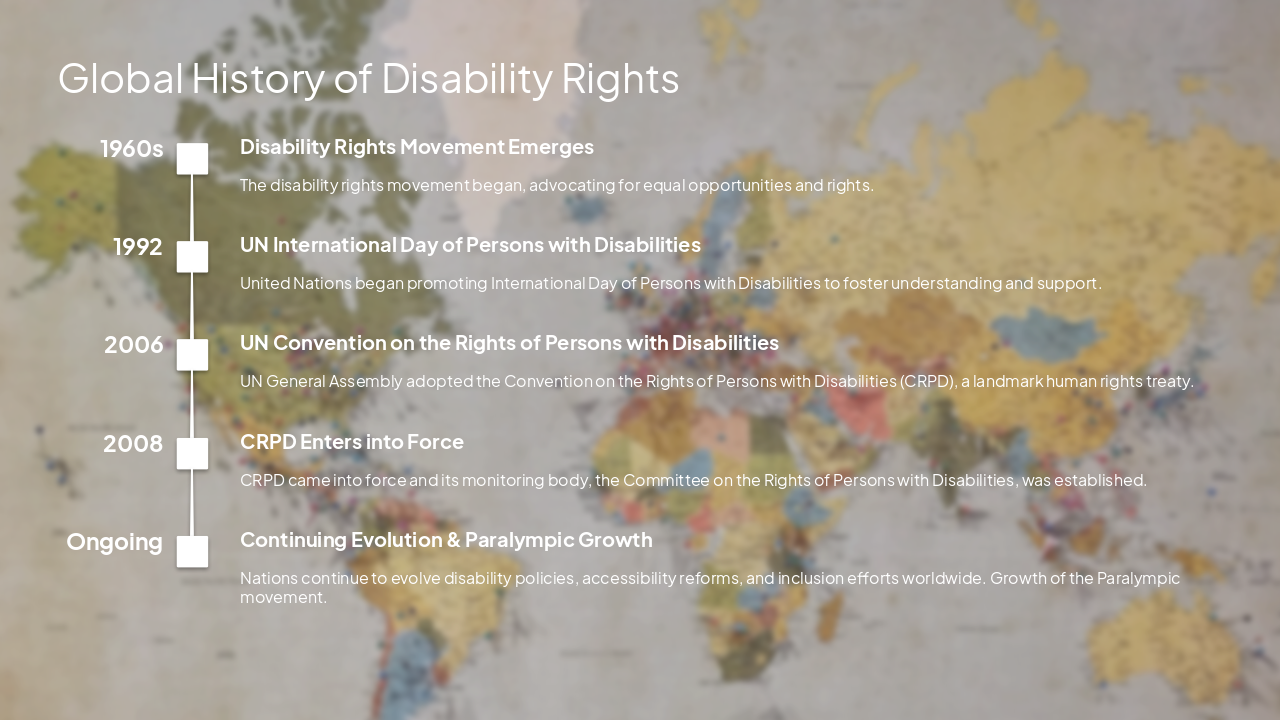
1960s: Disability Rights Movement Emerges The disability rights movement began, advocating for equal opportunities and rights. 1992: UN International Day of Persons with Disabilities United Nations began promoting International Day of Persons with Disabilities to foster understanding and support. 2006: UN Convention on the Rights of Persons with Disabilities UN General Assembly adopted the Convention on the Rights of Persons with Disabilities (CRPD), a landmark human rights treaty. 2008: CRPD Enters into Force CRPD came into force and its monitoring body, the Committee on the Rights of Persons with Disabilities, was established. Ongoing: Continuing Evolution & Paralympic Growth Nations continue to evolve disability policies, accessibility reforms, and inclusion efforts worldwide. Growth of the Paralympic movement.
---
Photo by Andrew Stutesman on Unsplash
🏅 Sports Athletes demonstrating peak performance and breaking barriers.
🎨 Arts & Culture Artists, performers, and creators enriching global culture.
🔬 Science & Innovation Innovators and scientists driving progress and discovery.
🏛️ Politics & Leadership Leaders advocating for change and shaping policy.
📚 Education & Advocacy Educators and advocates championing rights and inclusion.
---
Photo by Fons Heijnsbroek on Unsplash
---
Photo by Dannie Jing on Unsplash
---
Photo by Jimmy Woo on Unsplash
Beyond Boundaries, Towards Equal Access.
---
Photo by Dima Pechurin on Unsplash
Explore thousands of AI-generated presentations for inspiration
Generate professional presentations in seconds with Karaf's AI. Customize this presentation or start from scratch.