Slide 1 of 16
Slide 1 - ADHD Research
Attention Deficit Hyperactivity Disorder
Symptoms, Causes, Presentations & Management
---
Photo by Hal Gatewood on Unsplash
Generated from prompt:
ADHD research
Comprehensive overview of Attention Deficit Hyperactivity Disorder (ADHD), covering core symptoms like inattention and hyperactivity, genetic and environmental causes, various presentations (e.g., predominantly inattentive), and evidence-based managa
Attention Deficit Hyperactivity Disorder
Symptoms, Causes, Presentations & Management
---
Photo by Hal Gatewood on Unsplash
1
Neurodevelopmental Disorder Overview
---
Photo by Milad Fakurian on Unsplash
Source: https://en.wikipedia.org/wiki/Attention_deficit_hyperactivity_disorder
Source: https://en.wikipedia.org/wiki/Attention_deficit_hyperactivity_disorder
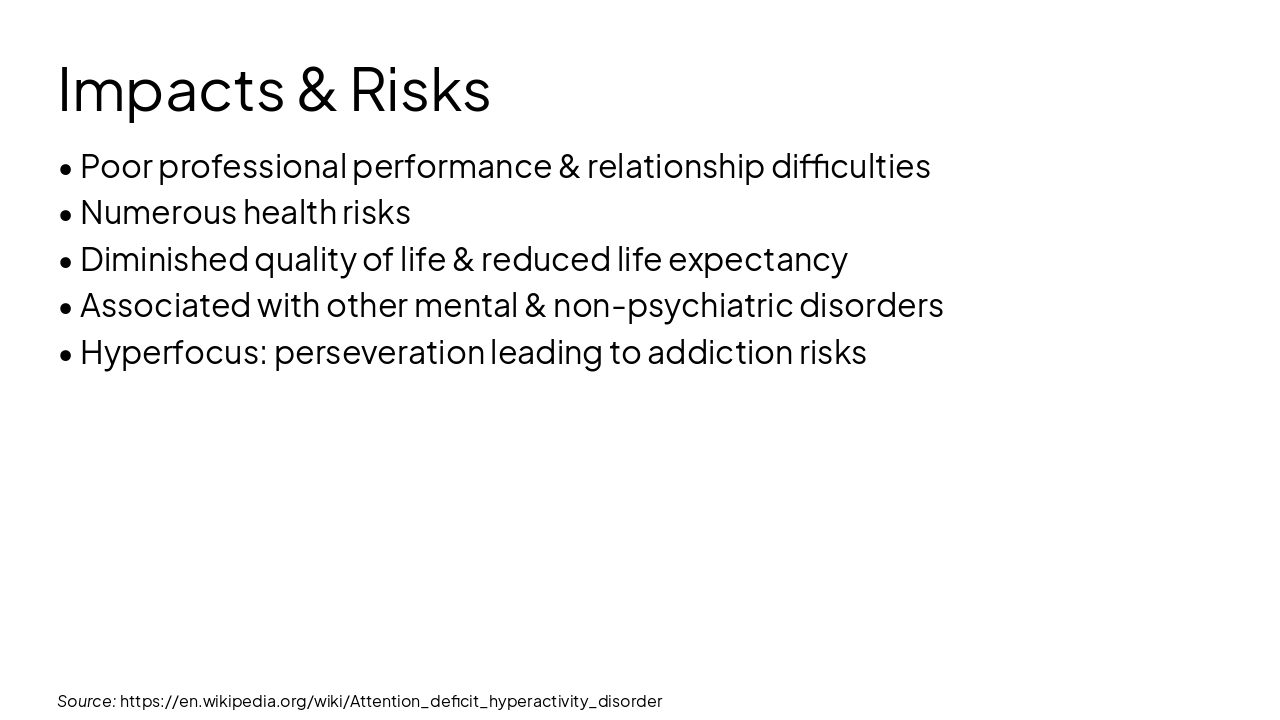
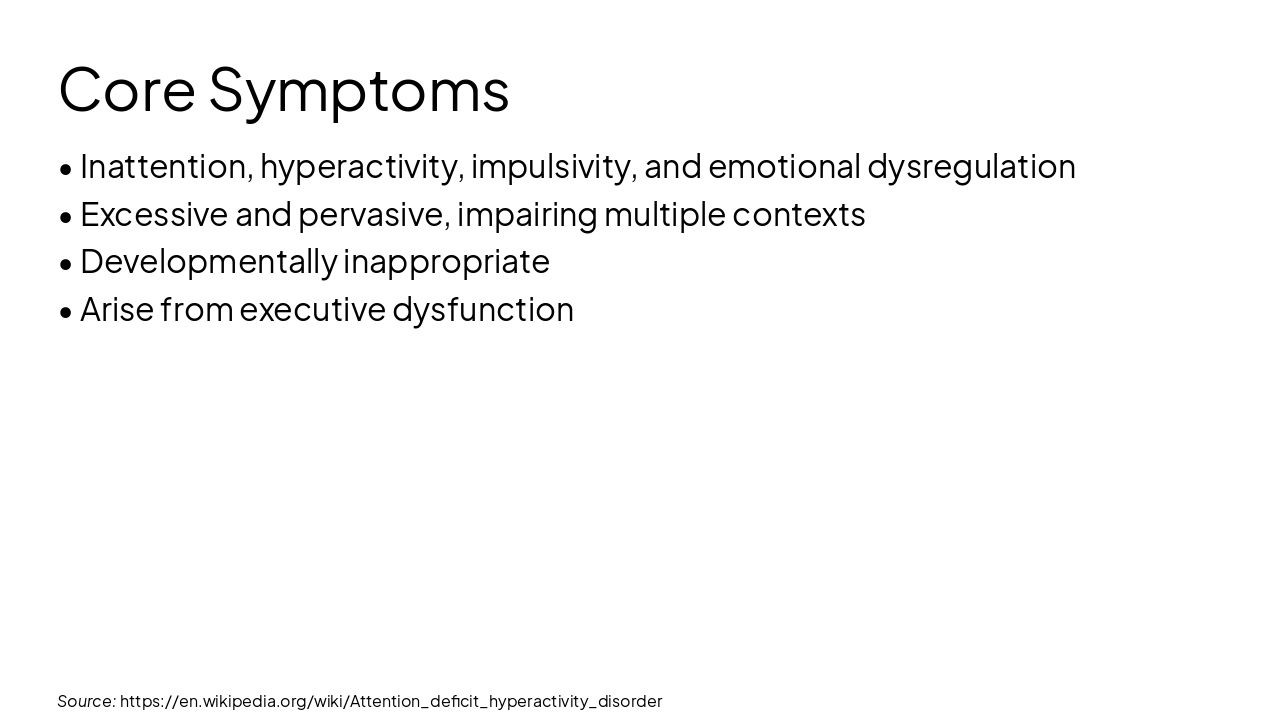
> ADHD is a neurodevelopmental disorder characterised by symptoms of inattention, hyperactivity, impulsivity, and emotional dysregulation that are excessive and pervasive, impairing in multiple contexts.
— Wikipedia Summary
Source: https://en.wikipedia.org/wiki/Attention_deficit_hyperactivity_disorder
---
Photo by Jeremy on Unsplash
Source: https://en.wikipedia.org/wiki/Attention_deficit_hyperactivity_disorder
2
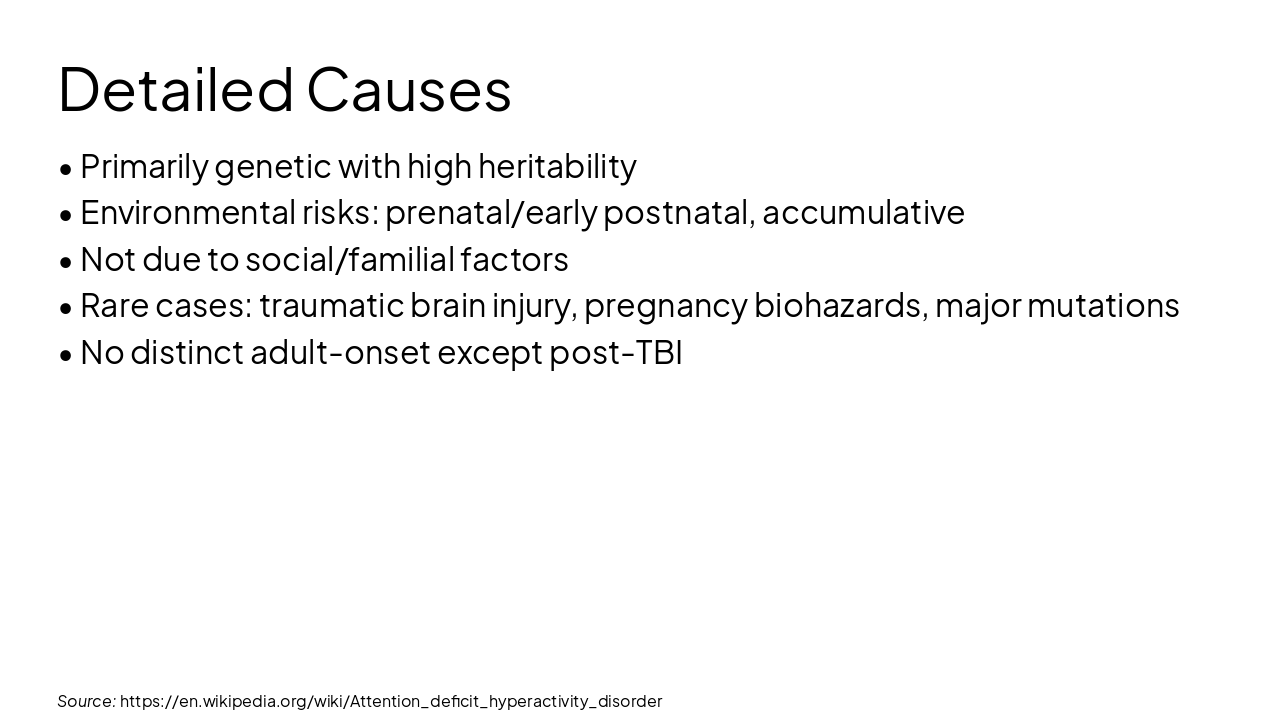
Genetic & Environmental Factors
---
Photo by Sangharsh Lohakare on Unsplash
Source: https://en.wikipedia.org/wiki/Attention_deficit_hyperactivity_disorder
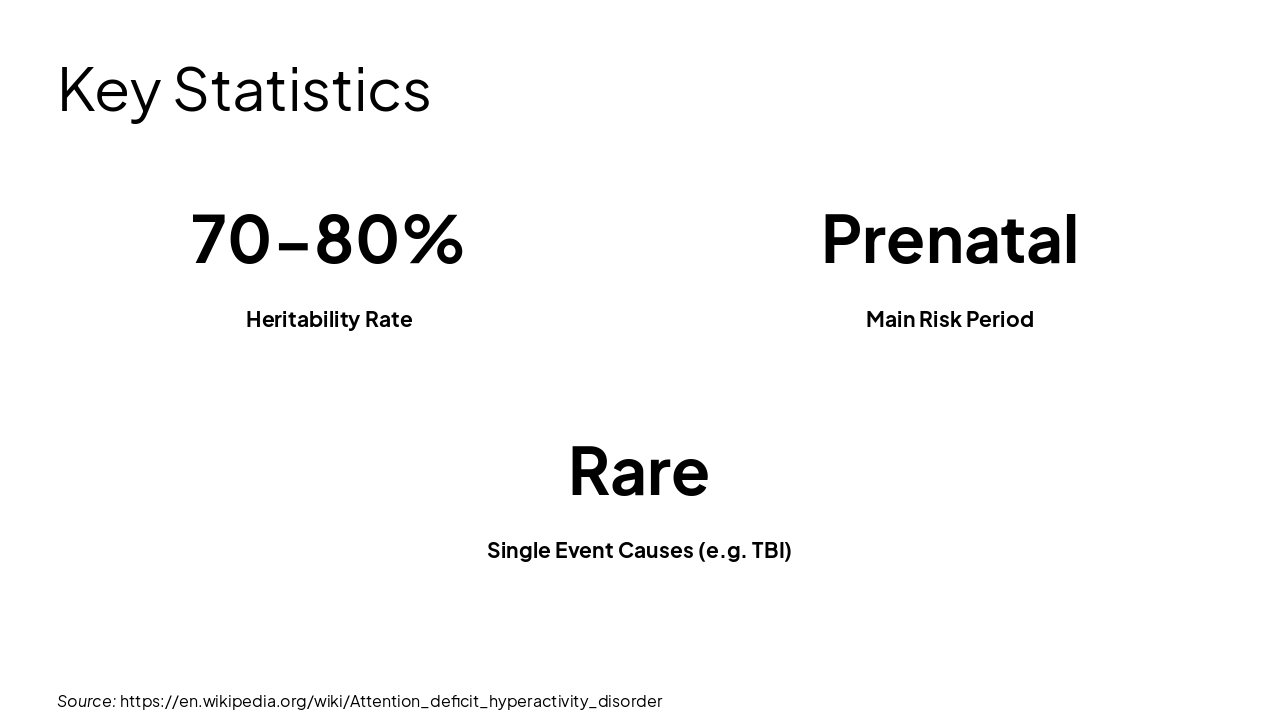
Source: https://en.wikipedia.org/wiki/Attention_deficit_hyperactivity_disorder
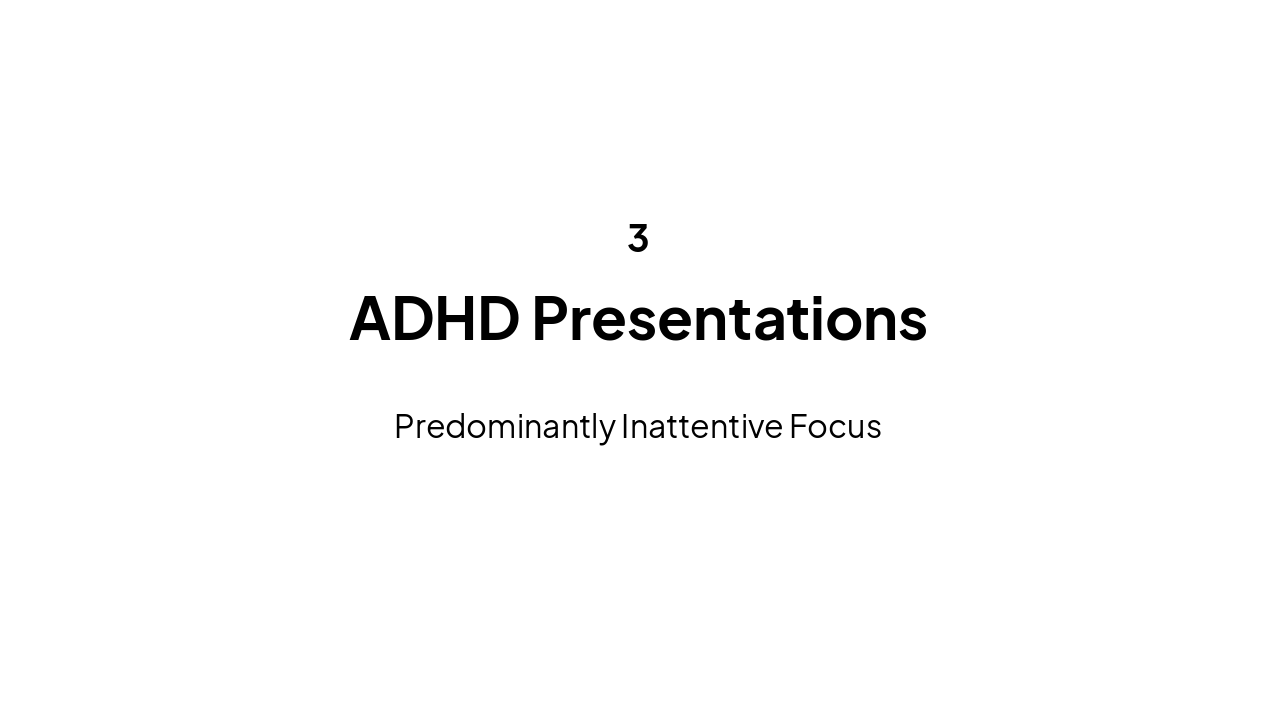
3
Predominantly Inattentive Focus
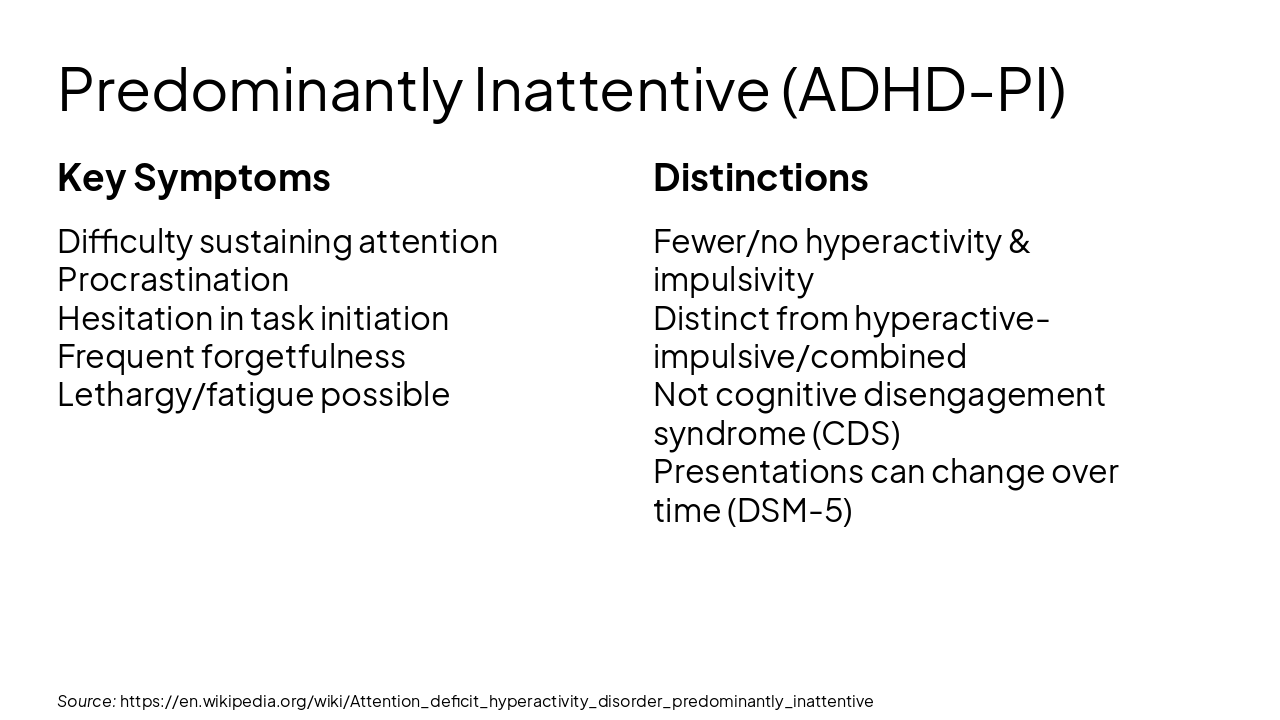
Key Symptoms Difficulty sustaining attention Procrastination Hesitation in task initiation Frequent forgetfulness Lethargy/fatigue possible
Distinctions Fewer/no hyperactivity & impulsivity Distinct from hyperactive-impulsive/combined Not cognitive disengagement syndrome (CDS) Presentations can change over time (DSM-5)
Source: https://en.wikipedia.org/wiki/Attention_deficit_hyperactivity_disorder_predominantly_inattentive
4
Evidence-Based Strategies
---
Photo by National Cancer Institute on Unsplash

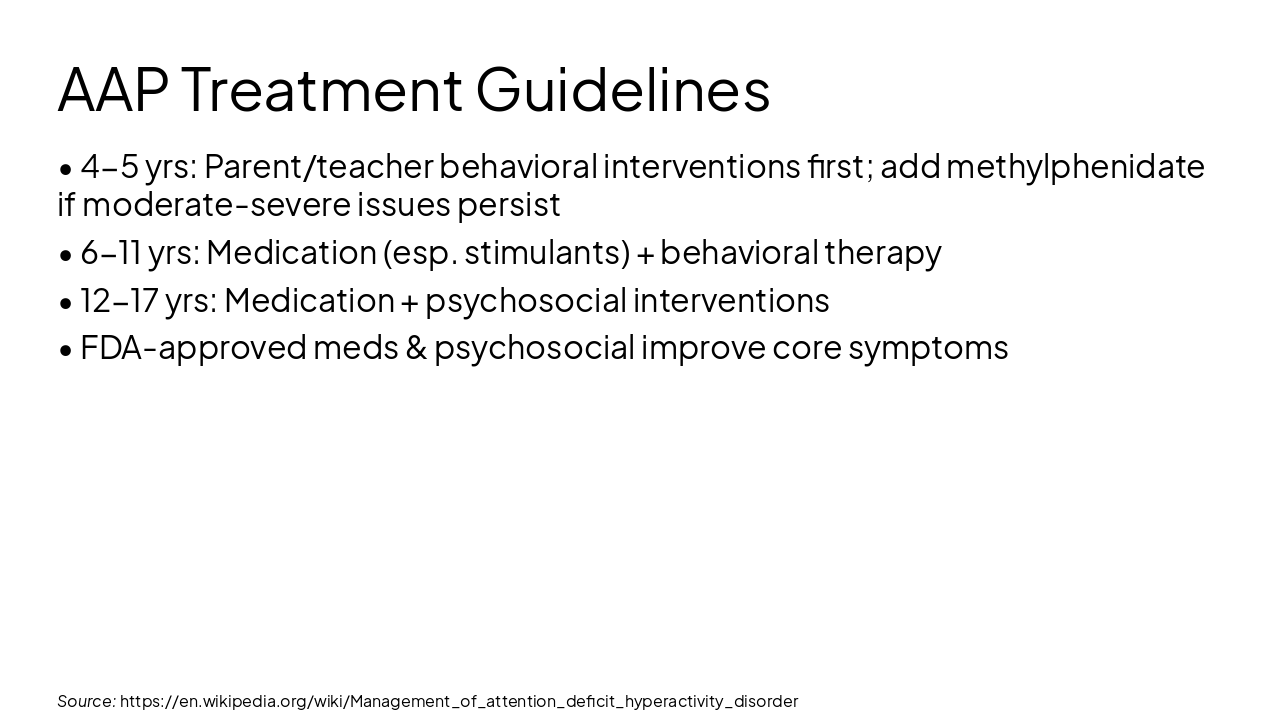
Source: https://en.wikipedia.org/wiki/Management_of_attention_deficit_hyperactivity_disorder
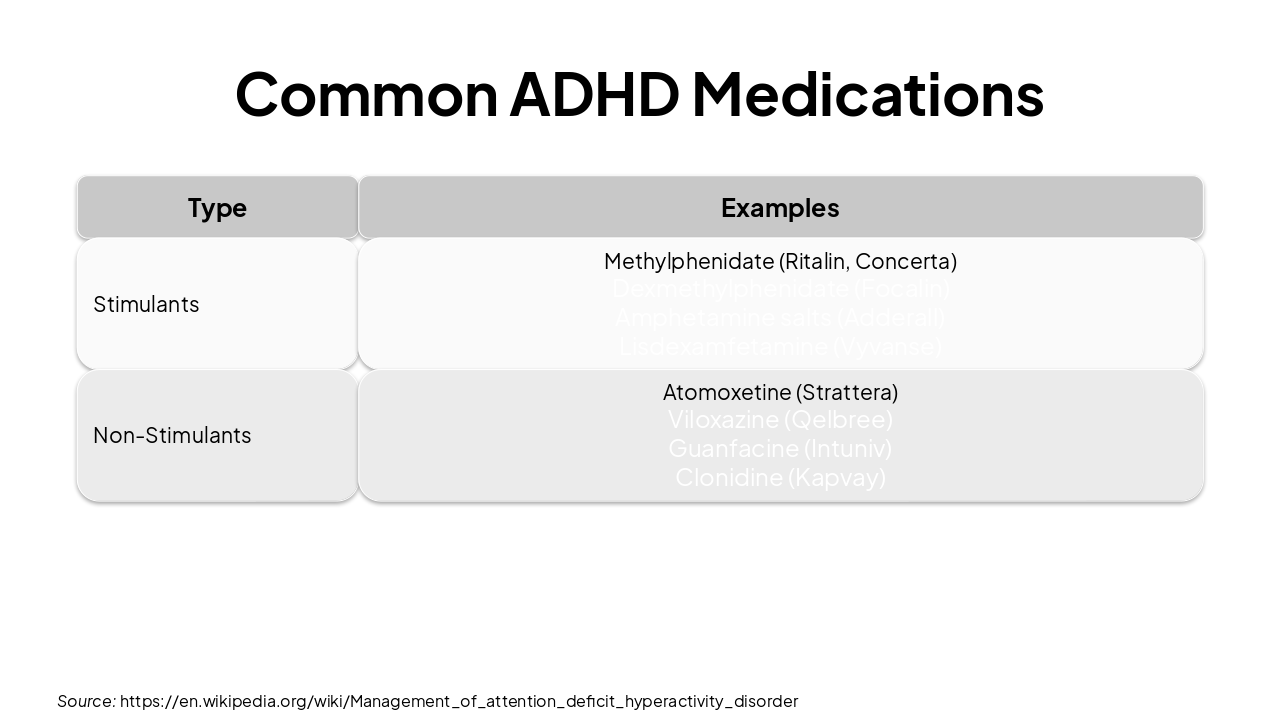
| Type | Examples |
|---|
| Stimulants | Methylphenidate (Ritalin, Concerta) Dexmethylphenidate (Focalin) Amphetamine salts (Adderall) Lisdexamfetamine (Vyvanse) | | Non-Stimulants | Atomoxetine (Strattera) Viloxazine (Qelbree) Guanfacine (Intuniv) Clonidine (Kapvay) |
Source: https://en.wikipedia.org/wiki/Management_of_attention_deficit_hyperactivity_disorder
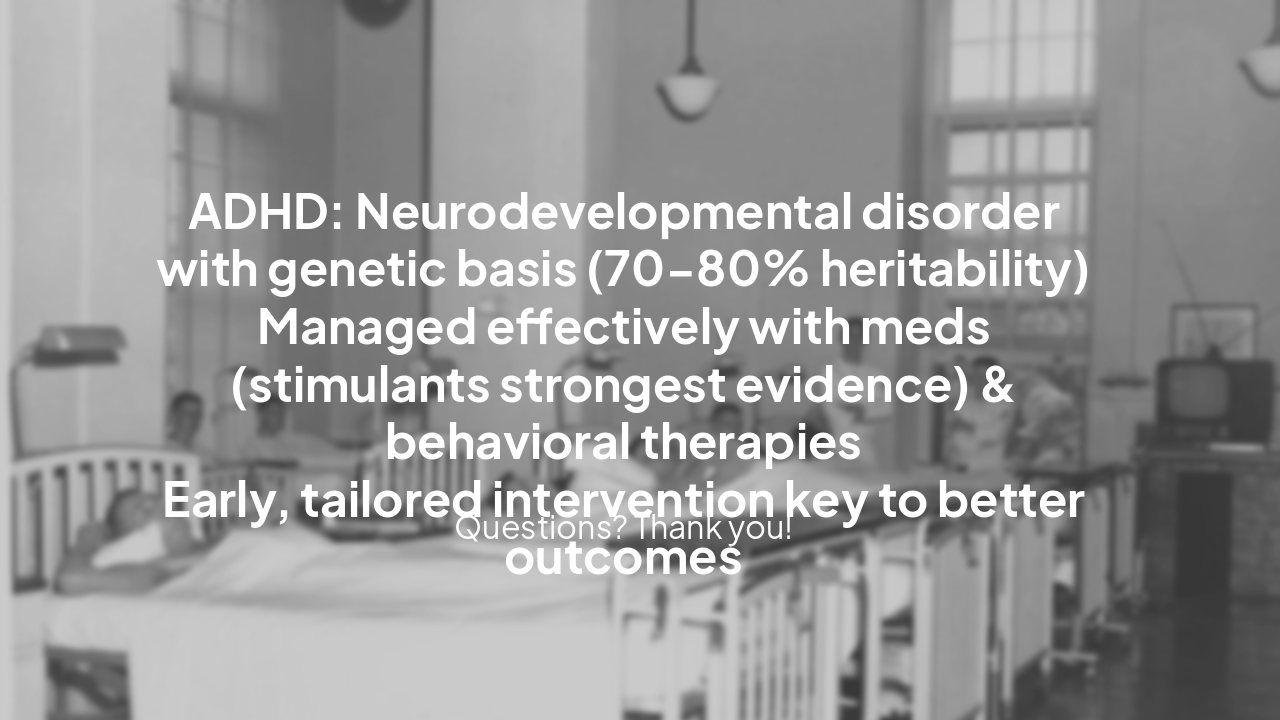
ADHD: Neurodevelopmental disorder with genetic basis (70-80% heritability) Managed effectively with meds (stimulants strongest evidence) & behavioral therapies Early, tailored intervention key to better outcomes
Questions? Thank you!
---
Photo by Navy Medicine on Unsplash
Explore thousands of AI-generated presentations for inspiration
Generate professional presentations in seconds with Karaf's AI. Customize this presentation or start from scratch.