Teacher Goals & Expectations: Academic Year Plan

Generated from prompt:

Create a professional presentation titled 'Teacher Goals & Expectations – Academic Year Plan' covering: handwriting development age-wise goals, milestone-based learning outcomes, parent communication, child communication and behavior observation, homework monitoring, diary maintenance, classroom management standards, helper coordination, child profile documentation, anecdotal records, activity-based learning, individual attention, display and celebration, time management, emotional safety, and final expectation summary.

This presentation details a teacher's instructional goals, motor skill development milestones, communication and management standards, documentation systems, student well-being strategies, and overall expectations for a successful academic year.

April 15, 202611 slides
Slide 1 of 11

Slide 1 - Teacher Goals & Expectations

Teacher Goals & Expectations

Academic Year Plan & Professional Standards

---

Photo by Ivan Aleksic on Unsplash

Slide 1 - Teacher Goals & Expectations
Slide 2 of 11

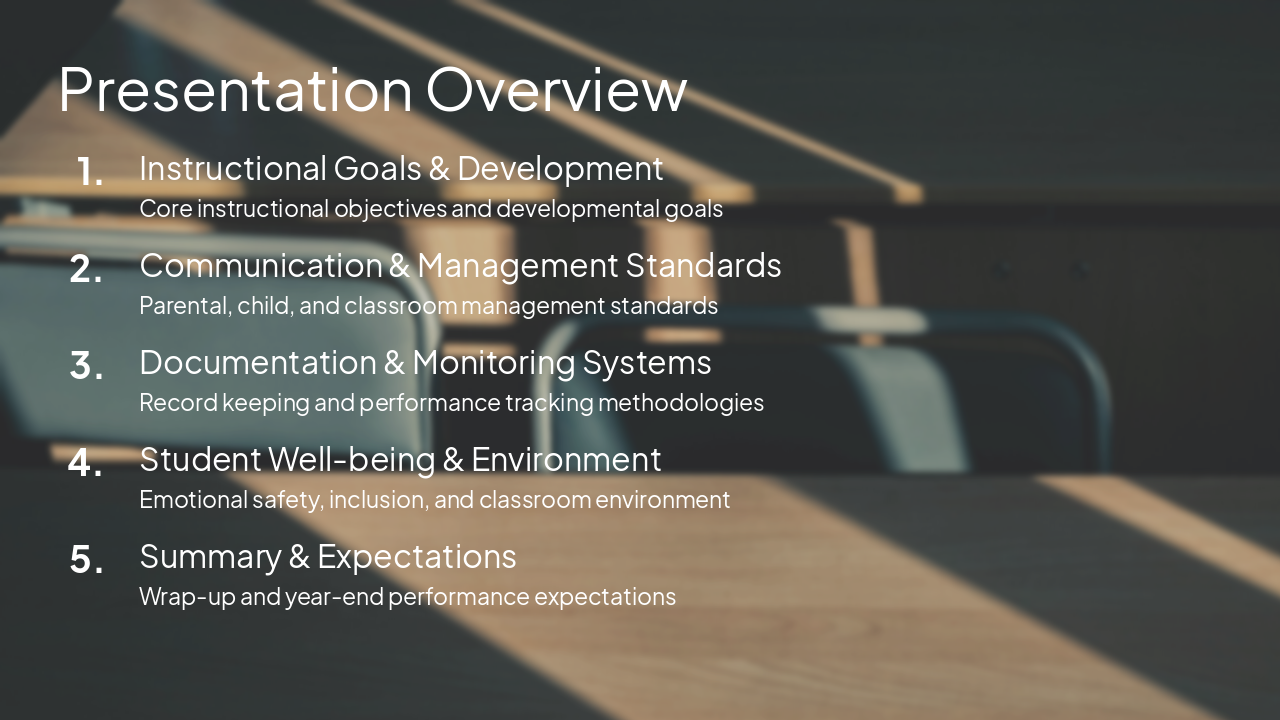
Slide 2 - Presentation Overview

  • Instructional Goals & Development: Core instructional objectives and developmental goals
  • Communication & Management Standards: Parental, child, and classroom management standards
  • Documentation & Monitoring Systems: Record keeping and performance tracking methodologies
  • Student Well-being & Environment: Emotional safety, inclusion, and classroom environment
  • Summary & Expectations: Wrap-up and year-end performance expectations

---

Photo by Andrew Bright on Unsplash
Slide 2 - Presentation Overview
Slide 3 of 11

Slide 3 - Part 1: Instructional Goals

1

Instructional Goals & Development

Foundational academic and motor skills milestones

---

Photo by Susan Q Yin on Unsplash
Slide 3 - Part 1: Instructional Goals
Slide 4 of 11

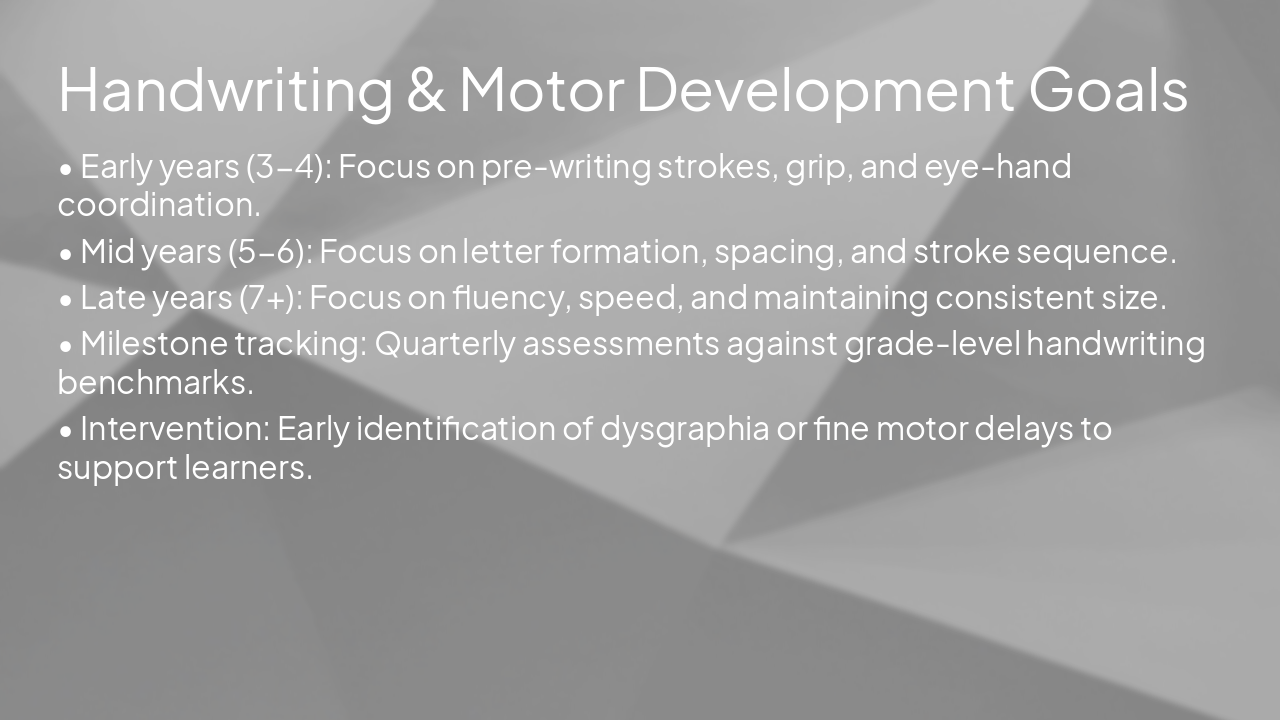
Slide 4 - Handwriting & Motor Development Goals

  • Early years (3-4): Focus on pre-writing strokes, grip, and eye-hand coordination.
  • Mid years (5-6): Focus on letter formation, spacing, and stroke sequence.
  • Late years (7+): Focus on fluency, speed, and maintaining consistent size.
  • Milestone tracking: Quarterly assessments against grade-level handwriting benchmarks.
  • Intervention: Early identification of dysgraphia or fine motor delays to support learners.

---

Photo by Shapelined on Unsplash

Slide 4 - Handwriting & Motor Development Goals
Slide 5 of 11

Slide 5 - Part 2: Management & Communication

2

Management & Communication Standards

Ensuring a supportive and organized learning ecosystem

---

Photo by Ivan Aleksic on Unsplash
Slide 5 - Part 2: Management & Communication
Slide 6 of 11

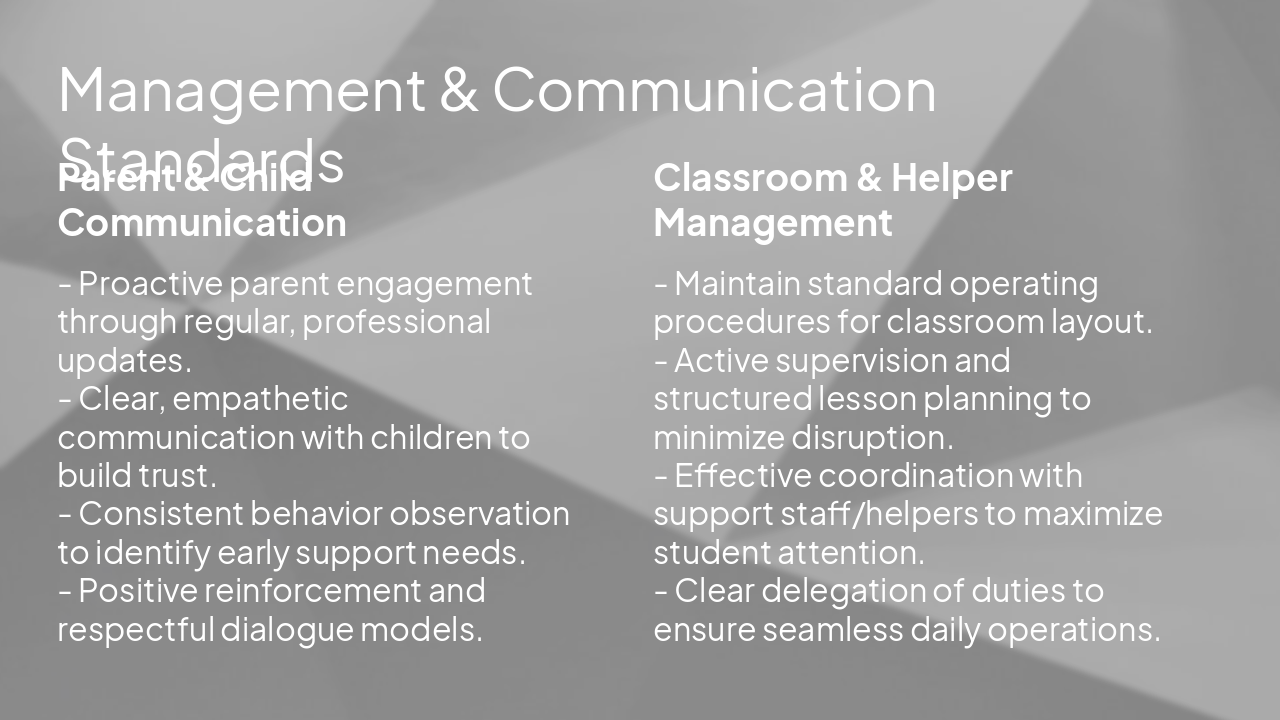
Slide 6 - Management & Communication Standards

Parent & Child Communication

  • Proactive parent engagement through regular, professional updates.
  • Clear, empathetic communication with children to build trust.
  • Consistent behavior observation to identify early support needs.
  • Positive reinforcement and respectful dialogue models.

Classroom & Helper Management

  • Maintain standard operating procedures for classroom layout.
  • Active supervision and structured lesson planning to minimize disruption.
  • Effective coordination with support staff/helpers to maximize student attention.
  • Clear delegation of duties to ensure seamless daily operations.

---

Photo by Shapelined on Unsplash

Slide 6 - Management & Communication Standards
Slide 7 of 11

Slide 7 - Part 3: Documentation & Monitoring

3

Monitoring & Documentation Systems

Methods for tracking and measuring progress

---

Photo by Nastuh Abootalebi on Unsplash
Slide 7 - Part 3: Documentation & Monitoring
Slide 8 of 11

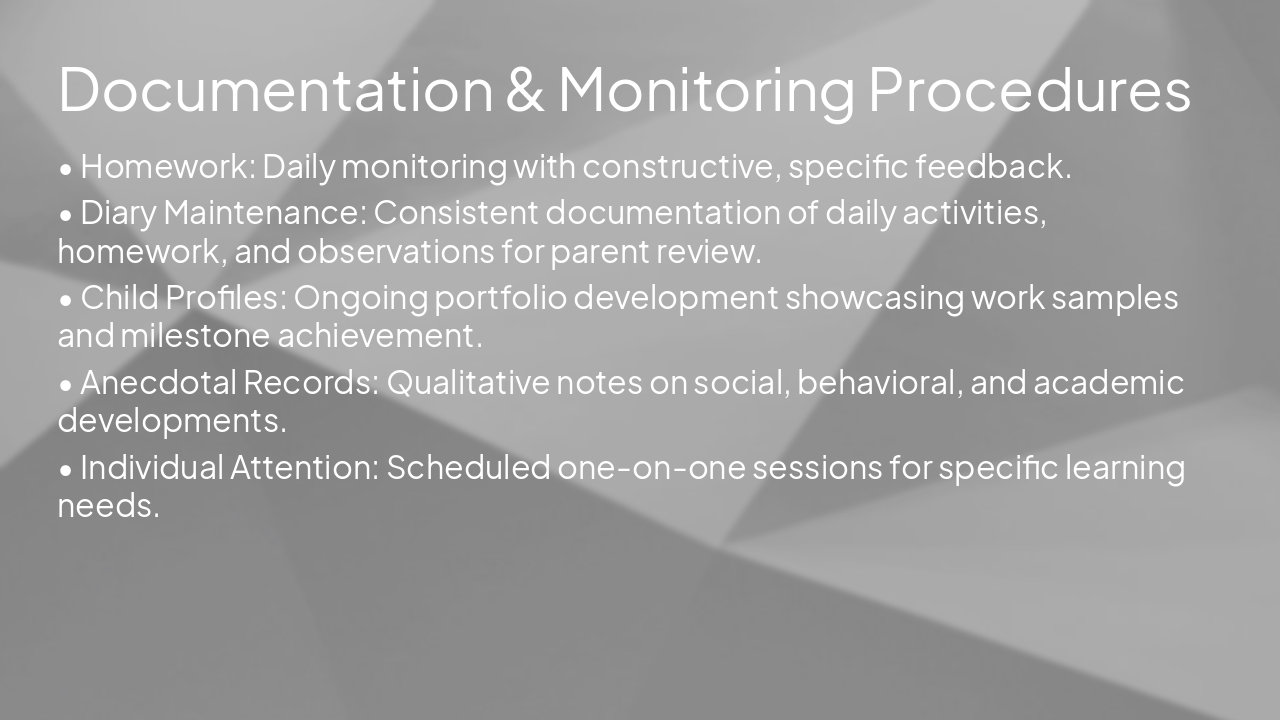
Slide 8 - Documentation & Monitoring Procedures

  • Homework: Daily monitoring with constructive, specific feedback.
  • Diary Maintenance: Consistent documentation of daily activities, homework, and observations for parent review.
  • Child Profiles: Ongoing portfolio development showcasing work samples and milestone achievement.
  • Anecdotal Records: Qualitative notes on social, behavioral, and academic developments.
  • Individual Attention: Scheduled one-on-one sessions for specific learning needs.

---

Photo by Shapelined on Unsplash

Slide 8 - Documentation & Monitoring Procedures
Slide 9 of 11

Slide 9 - Part 4: Environment & Well-being

4

Learning Environment & Well-being

Creating an inclusive, safe, and celebratory classroom

---

Photo by Priscilla Du Preez 🇨🇦 on Unsplash
Slide 9 - Part 4: Environment & Well-being
Slide 10 of 11

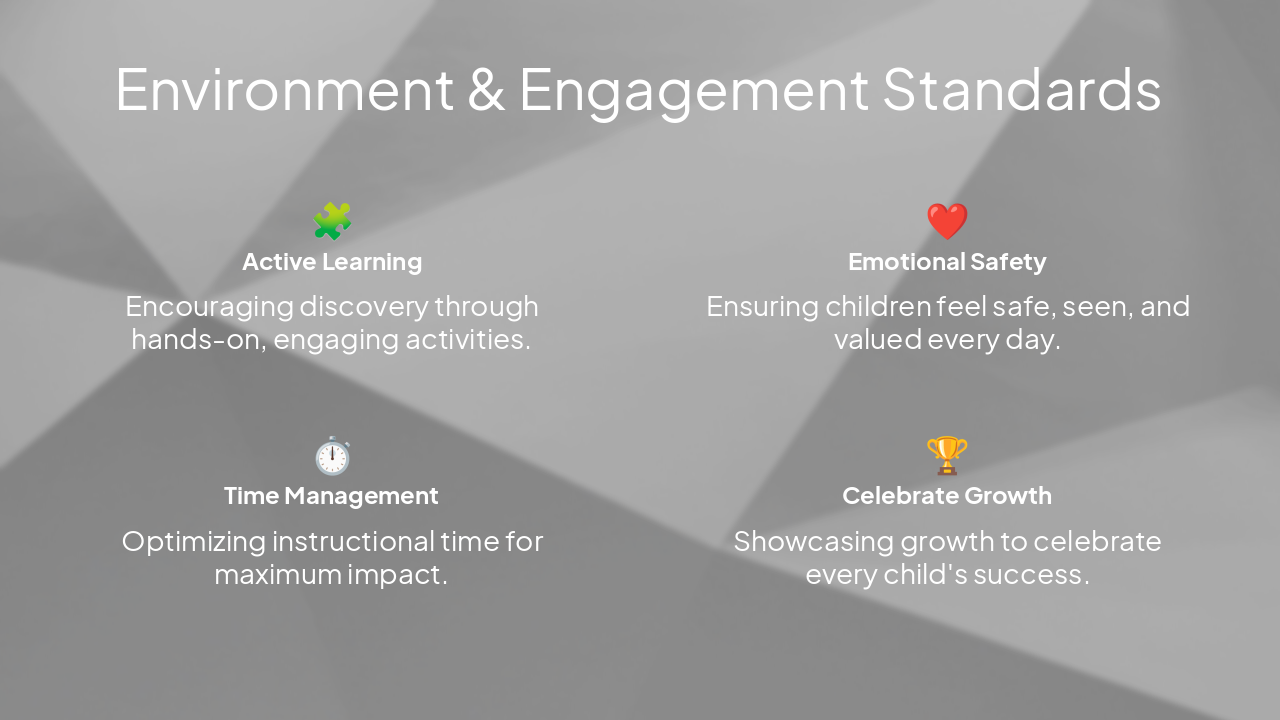
Slide 10 - Environment & Engagement Standards

🧩 Active Learning Encouraging discovery through hands-on, engaging activities.

❤️ Emotional Safety Ensuring children feel safe, seen, and valued every day.

⏱️ Time Management Optimizing instructional time for maximum impact.

🏆 Celebrate Growth Showcasing growth to celebrate every child's success.

---

Photo by Shapelined on Unsplash
Slide 10 - Environment & Engagement Standards
Slide 11 of 11

Slide 11 - Conclusion & Expectations

Summary: Delivering excellence through consistency, documentation, and care.

Let's partner for a successful academic year.

---

Photo by Intricate Explorer on Unsplash
Slide 11 - Conclusion & Expectations

Discover More Presentations

Explore thousands of AI-generated presentations for inspiration

Browse Presentations
Powered by AI

Create Your Own Presentation

Generate professional presentations in seconds with Karaf's AI. Customize this presentation or start from scratch.

Create New Presentation

Powered by Karaf.ai — AI-Powered Presentation Generator