Slide 1 of 9
Slide 1 - Clothes Then and Now
This is a title slide named "Clothes Then and Now." It features the subtitle "Science Group for Elsian Day."
Clothes Then and Now
Science Group for Elsian Day
Source: Science Group for Elsian Day

Generated from prompt:
Science Group for Elsian Day Presentation: Clothes Then and Now (Professional Modern Science Theme) Style: Gradient blue background with clean professional layout and modern typography. Slide 1: Clothes in the Past Science Focus: Natural Materials - People used clothes made from natural fibers like cotton, wool, silk, and linen. - These materials came from plants and animals and were biodegradable. - No chemical processing; natural dyes from plants and minerals. Slide 2: Clothes Today Science Focus: Synthetic Materials & Chemical Industry - Many clothes are made from synthetic fibers such as polyester, nylon, and acrylic. - Made in factories from petroleum using chemical reactions. - Strong, waterproof, and cheap but not environmentally friendly.
Science presentation contrasting past natural fibers (cotton, wool, silk; biodegradable, plant/animal-sourced) with modern synthetics (polyester, nylon; petroleum-based, chemical processes). Highlight
This is a title slide named "Clothes Then and Now." It features the subtitle "Science Group for Elsian Day."
Science Group for Elsian Day
Source: Science Group for Elsian Day
The agenda slide outlines past natural clothing materials like cotton, wool, silk, and linen (biodegradable with natural dyes) versus today's synthetics like polyester, nylon, and acrylic (strong, cheap, but polluting). It then covers a comparison of their properties, pros, and cons, followed by a conclusion with summary and future science insights.
Clothes from cotton, wool, silk, linen; biodegradable, natural dyes.
Polyester, nylon, acrylic from petroleum; strong, cheap, polluting.
Natural vs. synthetic: properties, pros, cons.
Summary and future science insights. Source: Science Group for Elsian Day Presentation: Clothes Then and Now

This section header slide, titled "Clothes in the Past" and numbered 01, introduces the topic. Its subtitle emphasizes the science focus on natural materials from plants and animals.
01
Science Focus: Natural Materials from Plants and Animals
Source: Science Group for Elsian Day Presentation
Natural fibers like cotton, wool, silk, and linen, sourced from plants and animals, are biodegradable. They are dyed with natural plants and minerals, involving no chemical processing.
Source: Science Group for Elsian Day Presentation: Clothes Then and Now
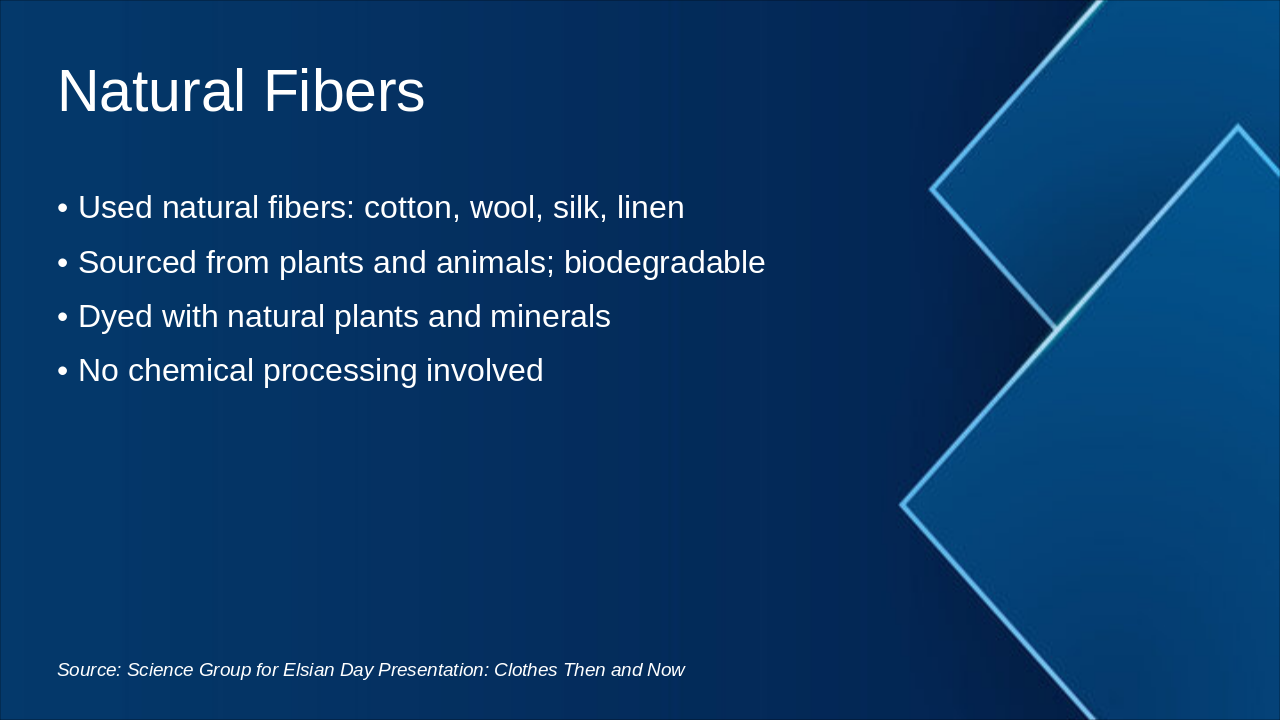
The slide "Clothes in the Past" features natural fibers like cotton, wool, silk, and linen. These were sourced from plants and animals, fully biodegradable, and dyed with natural plant or mineral substances without chemicals.
Source: Wikipedia

This section header slide, titled "Clothes Today" and numbered 02, introduces a new topic. Its subtitle emphasizes a science focus on synthetic materials and the chemical industry.
02
Science Focus: Synthetic Materials and Chemical Industry
Source: Elsian Day Presentation: Clothes Then and Now
Synthetic materials feature fibers like polyester, nylon, and acrylic, derived from petroleum via chemical reactions. They are strong, waterproof, and inexpensive, though factories are not eco-friendly.

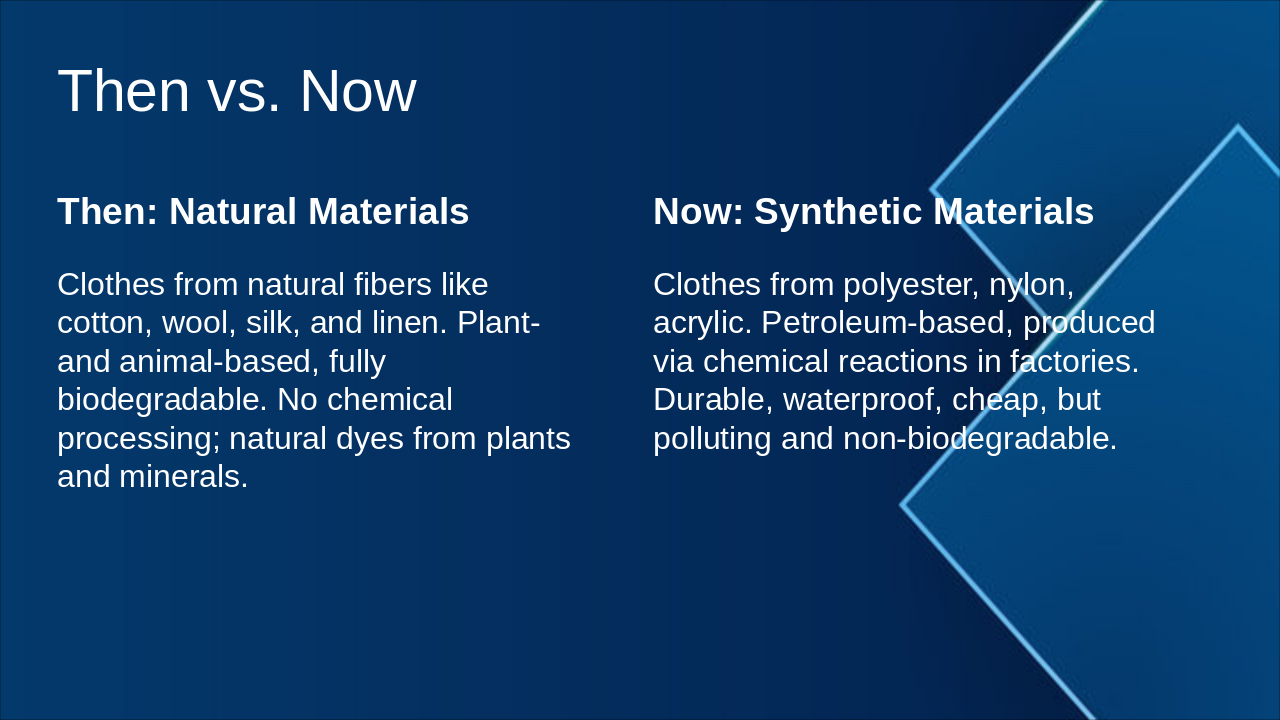
The "Then vs. Now" slide contrasts clothing materials. Then, natural fibers like cotton, wool, silk, and linen were biodegradable, plant- or animal-based, and used natural dyes without chemicals; now, synthetic ones like polyester, nylon, and acrylic are petroleum-derived, durable, cheap, and waterproof but polluting and non-biodegradable.
| Then: Natural Materials | Now: Synthetic Materials |
|---|---|
| Clothes from natural fibers like cotton, wool, silk, and linen. Plant- and animal-based, fully biodegradable. No chemical processing; natural dyes from plants and minerals. | Clothes from polyester, nylon, acrylic. Petroleum-based, produced via chemical reactions in factories. Durable, waterproof, cheap, but polluting and non-biodegradable. |
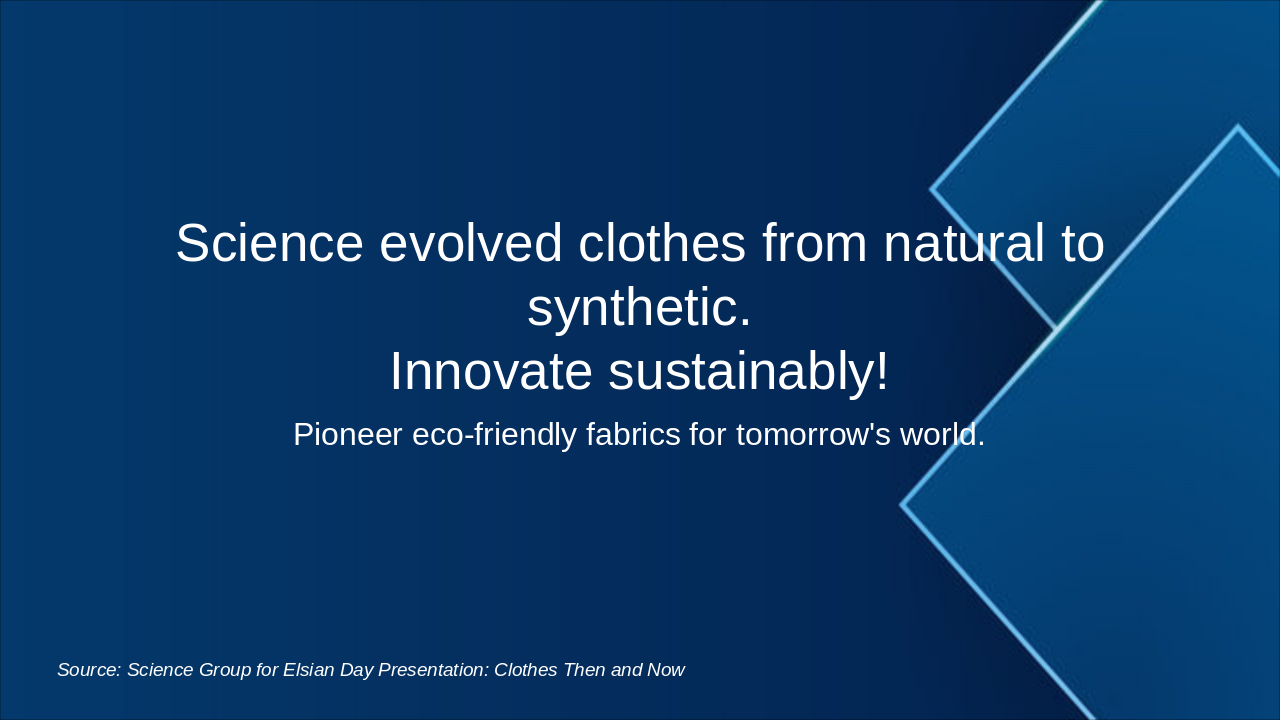
The conclusion slide states that science has evolved clothing from natural to synthetic materials. It urges sustainable innovation by pioneering eco-friendly fabrics for tomorrow's world.
Science evolved clothes from natural to synthetic. Innovate sustainably!
Pioneer eco-friendly fabrics for tomorrow's world.
Source: Science Group for Elsian Day Presentation: Clothes Then and Now
Explore thousands of AI-generated presentations for inspiration
Generate professional presentations in seconds with Karaf's AI. Customize this presentation or start from scratch.