Slide 1 of 22
Slide 1 - Marion Meats Health & Safety Induction Training
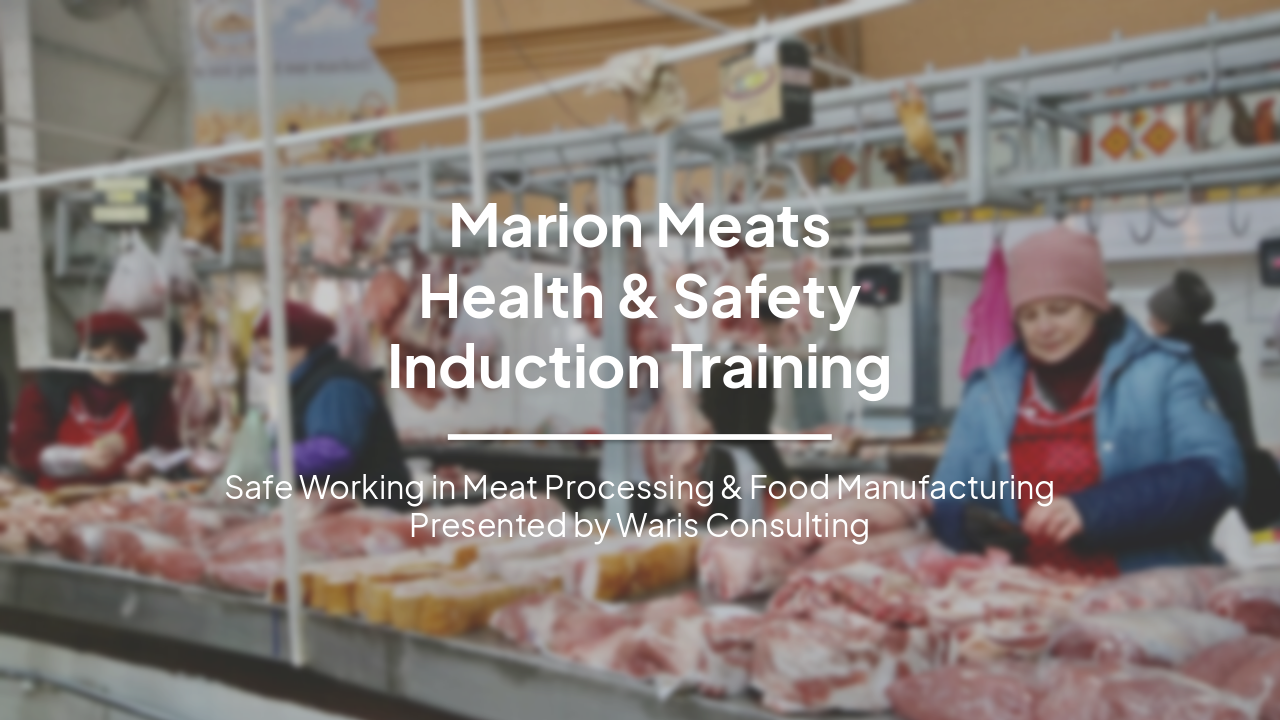
Marion Meats Health & Safety Induction Training
Safe Working in Meat Processing & Food Manufacturing Presented by Waris Consulting
---
Photo by Jorge Fernández Salas on Unsplash
Generated from prompt:
Create a professional corporate training PowerPoint presentation titled 'Marion Meats – Health & Safety Induction Training'. This is for a UK meat processing and food manufacturing environment. Use a modern red, charcoal, white and steel-grey industrial theme with professional typography, icons, infographics, timelines, safety diagrams and high-quality royalty-free visuals throughout. Include speaker notes and visually engaging layouts. Add relevant factory safety imagery, PPE photography, machinery safety visuals, warning icons, fire evacuation diagrams, lockout/tagout illustrations, cold storage visuals, COSHH chemical safety graphics, and manual handling diagrams. Include transitions and polished formatting. Expand and enhance the existing content into a complete professional training deck suitable for 60–90 minutes. Add practical examples, key takeaways, visual callouts, risk icons, best-practice checklists, and short scenario-based learning prompts. Structure: 1. Cover Slide 2. Welcome to Marion Meats 3. Why Health & Safety Matters 4. Employee Legal Responsibilities (Health and Safety at Work etc. Act 1974) 5. Safety Culture & Reporting 6. Factory Hazards Overview 7. Knife & Blade Safety 8. Machinery Safety 9. High-Risk Equipment 10. Lock Off / Isolation Procedure (visual process flow) 11. PPE Requirements 12. Slips, Trips & Falls 13. Manual Handling 14. Working in Cold Environments 15. COSHH & Chemical Safety 16. Fire Safety & Evacuation 17. First Aid & Accident Reporting 18. Hygiene & Welfare Standards 19. Visitor & Contractor Rules 20. Emergency Procedures 21. Real-World Safety Scenarios 22. Knowledge Check Quiz 23. Questions & Discussion 24. Training Sign-Off Include icons, diagrams, and photo-heavy slides where appropriate. Use concise but impactful text. Add professional footer branding for Marion Meats and Waris Consulting.
Comprehensive health and safety induction training for new and existing employees at Marion Meats, a leading UK meat processing and food manufacturing company. Covers legal responsibilities under HSWA 1974, safety culture and reporting, key factory hazards like knife cuts, machinery, slips, cold stress and chemicals, PPE requirements, lock-off procedures, manual handling, fire safety, first aid, hygiene standards, and emergency protocols. Includes stats on workplace risks, real-world scenarios, knowledge check quiz, and training sign-off.
Marion Meats Health & Safety Induction Training
Safe Working in Meat Processing & Food Manufacturing Presented by Waris Consulting
---
Photo by Jorge Fernández Salas on Unsplash
---
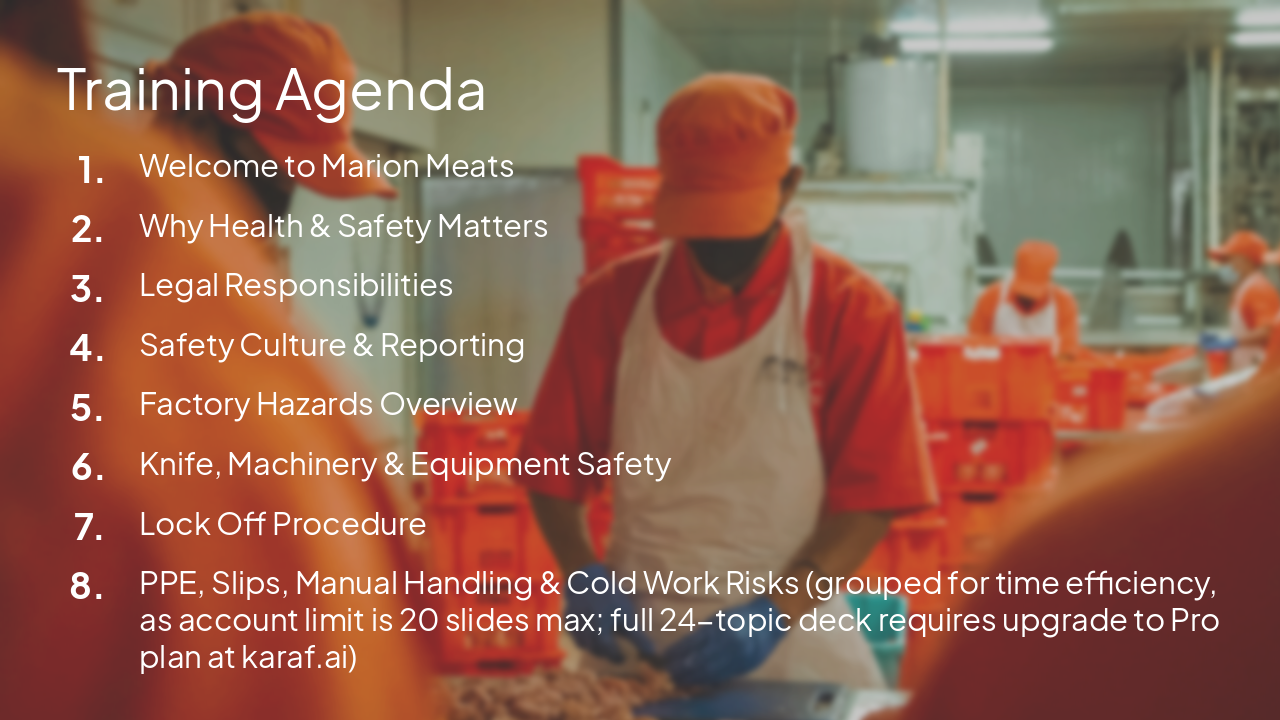
Photo by Arion Reyvonputra on Unsplash
---
Photo by Arno Senoner on Unsplash
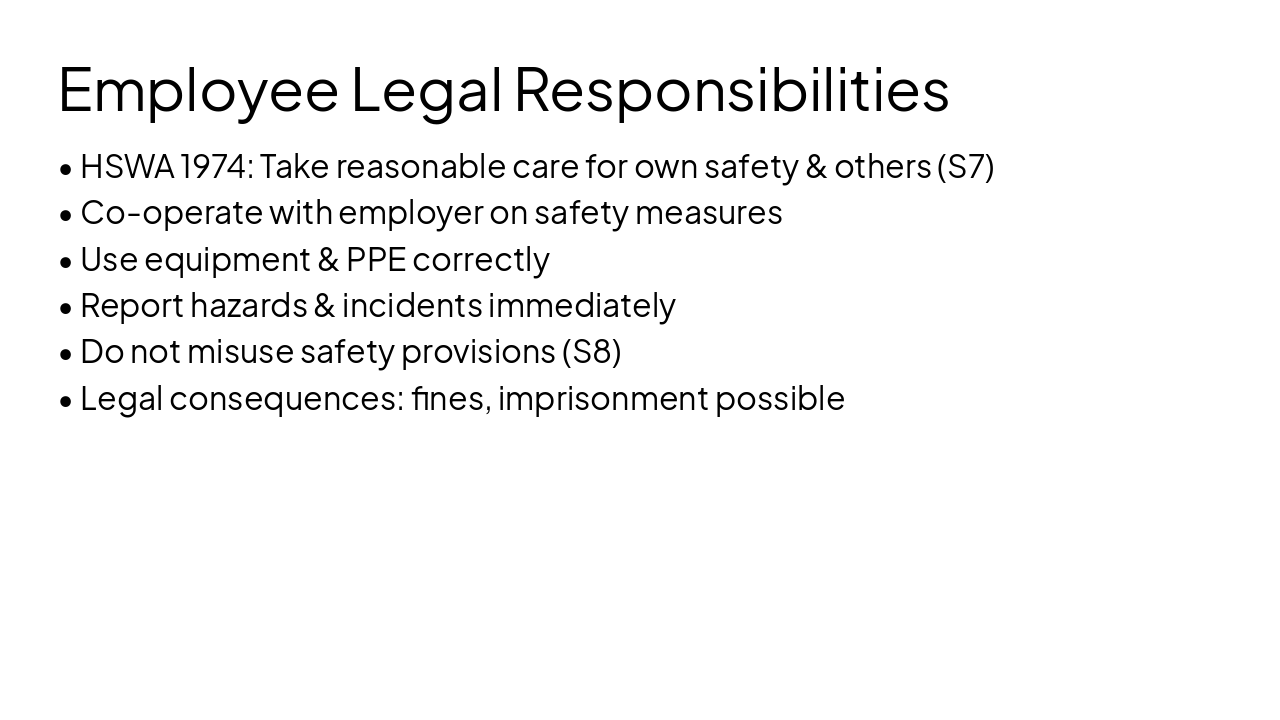
---
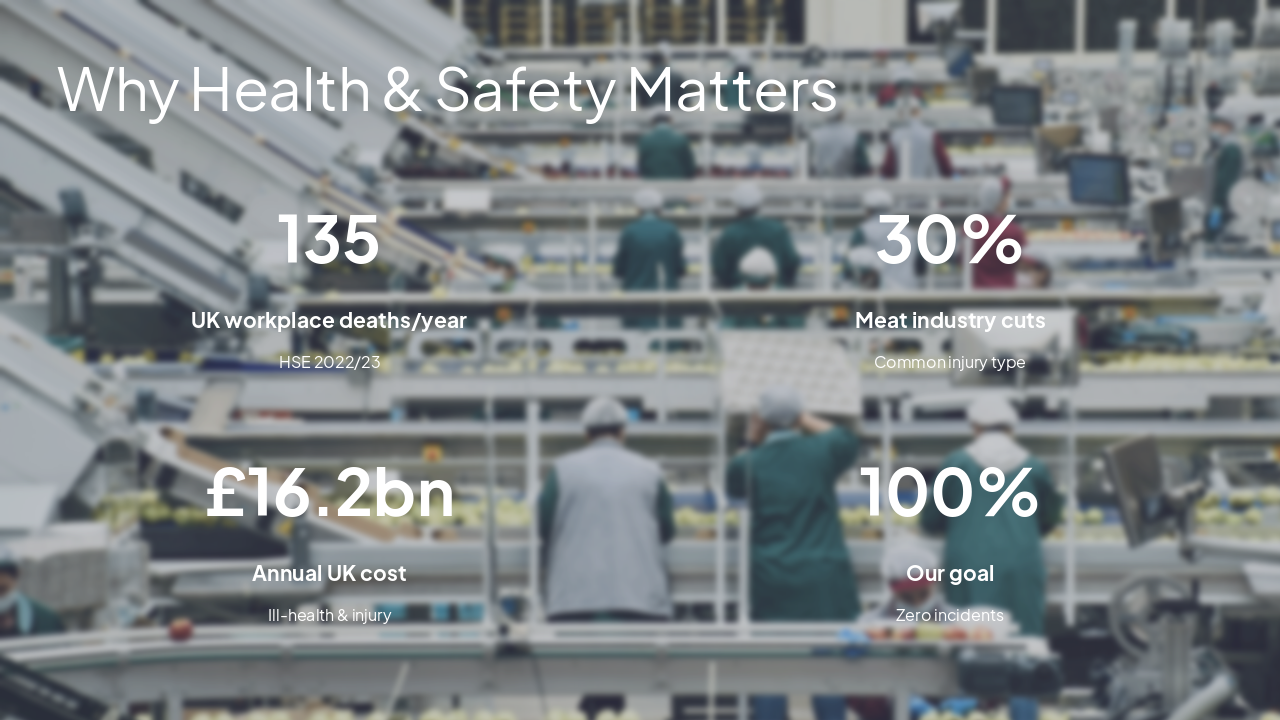
Photo by Ana Lucia Videira on Unsplash
🔪 Knife Cuts Sharp blades, poor handling
⚙️ Machinery Entanglement, crush points
💧 Slips/Trips Wet floors, cables
🧊 Cold Stress Chillers -4°C
🧪 Chemicals COSHH cleaners
---
Photo by mohamamd noori on Unsplash
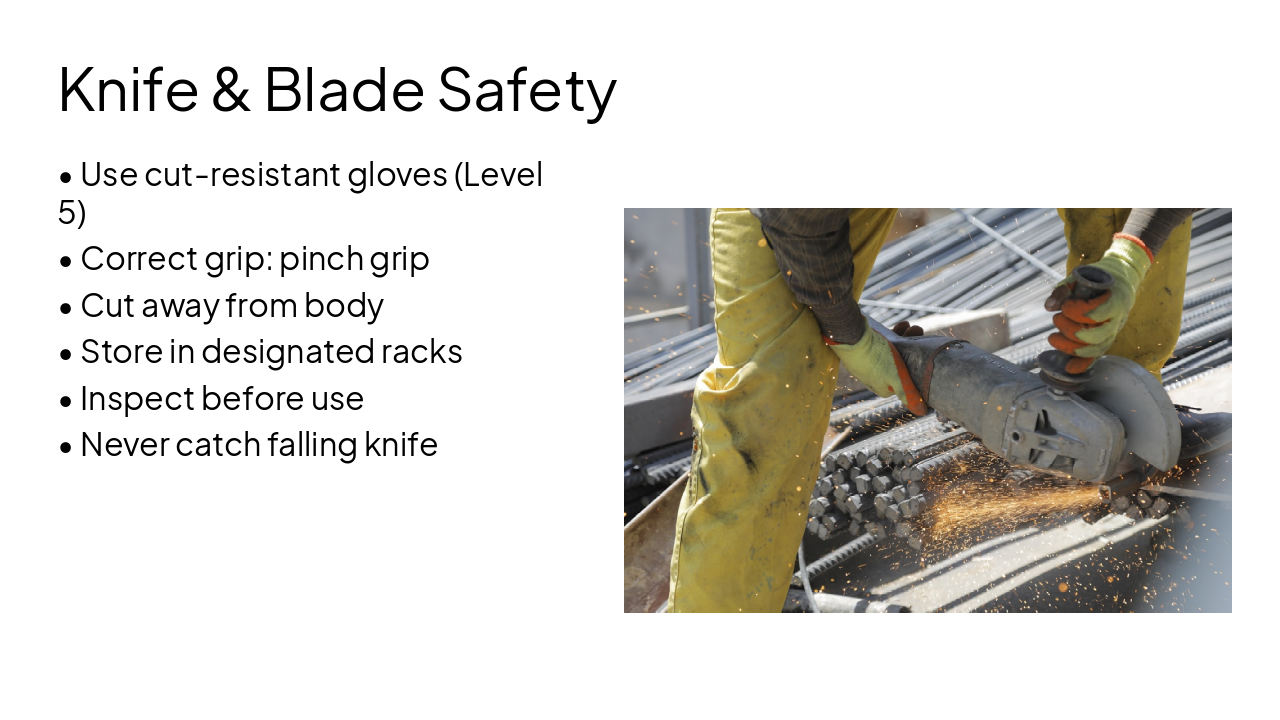
---
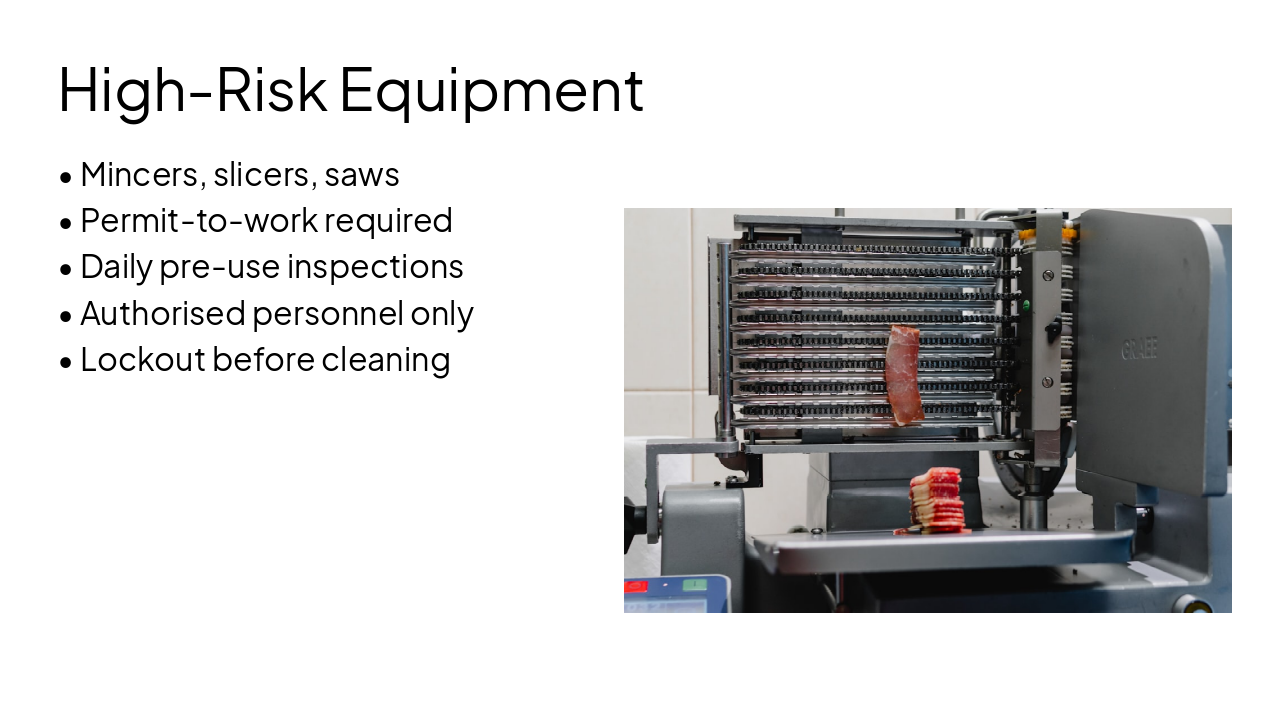
Photo by Marshalok Brend on Unsplash
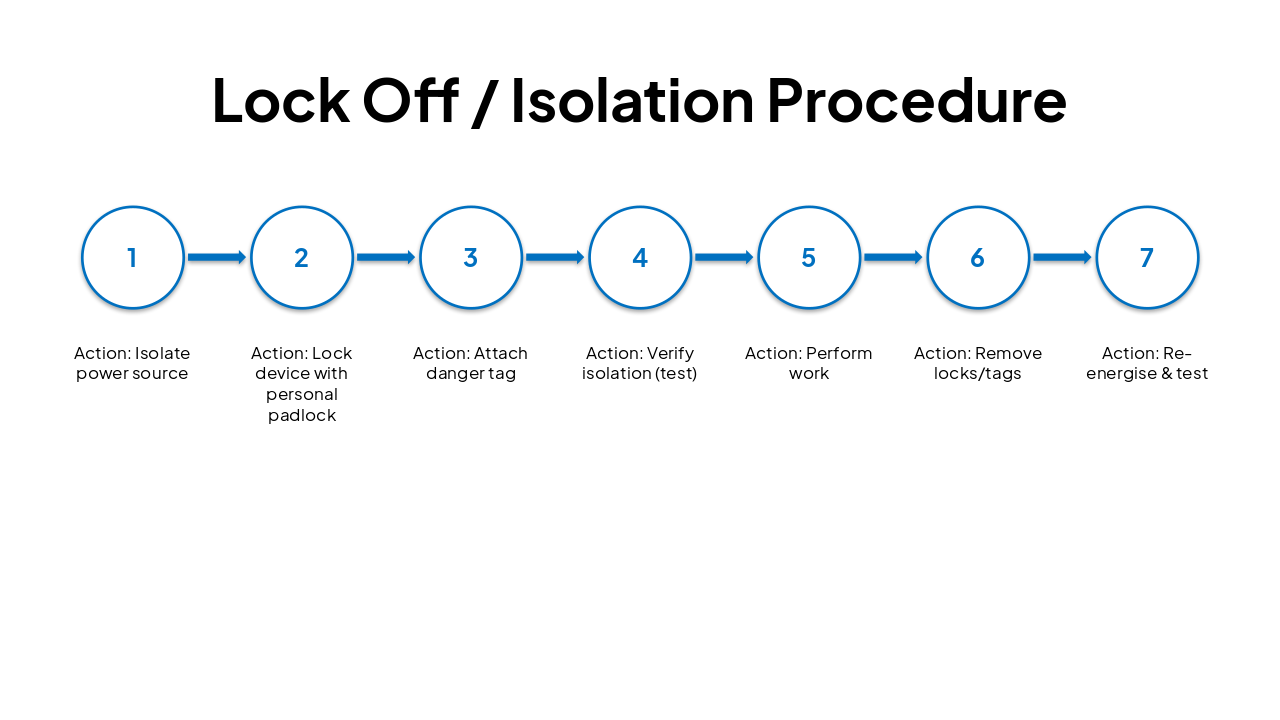
| Step | Action |
|---|---|
| 1 | Isolate power source |
| 2 | Lock device with personal padlock |
| 3 | Attach danger tag |
| 4 | Verify isolation (test) |
| 5 | Perform work |
| 6 | Remove locks/tags |
| 7 | Re-energise & test |
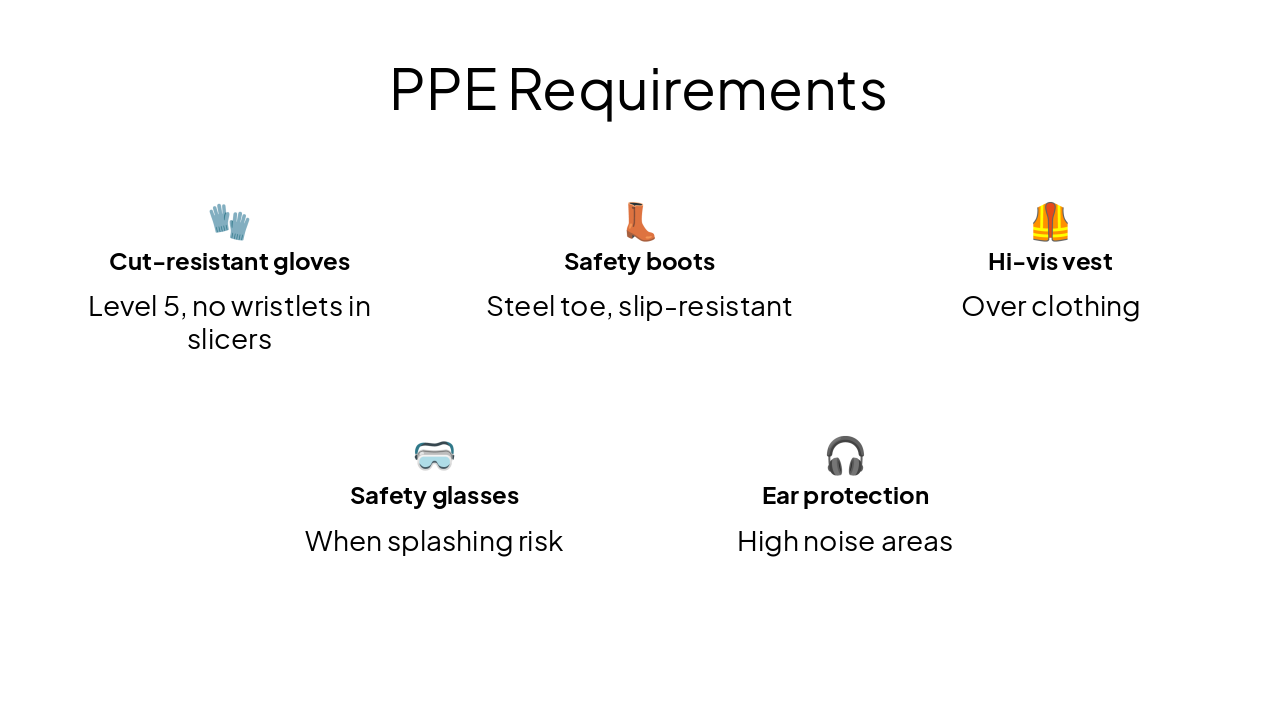
🧤 Cut-resistant gloves Level 5, no wristlets in slicers
👢 Safety boots Steel toe, slip-resistant
🦺 Hi-vis vest Over clothing
🥽 Safety glasses When splashing risk
🎧 Ear protection High noise areas
---
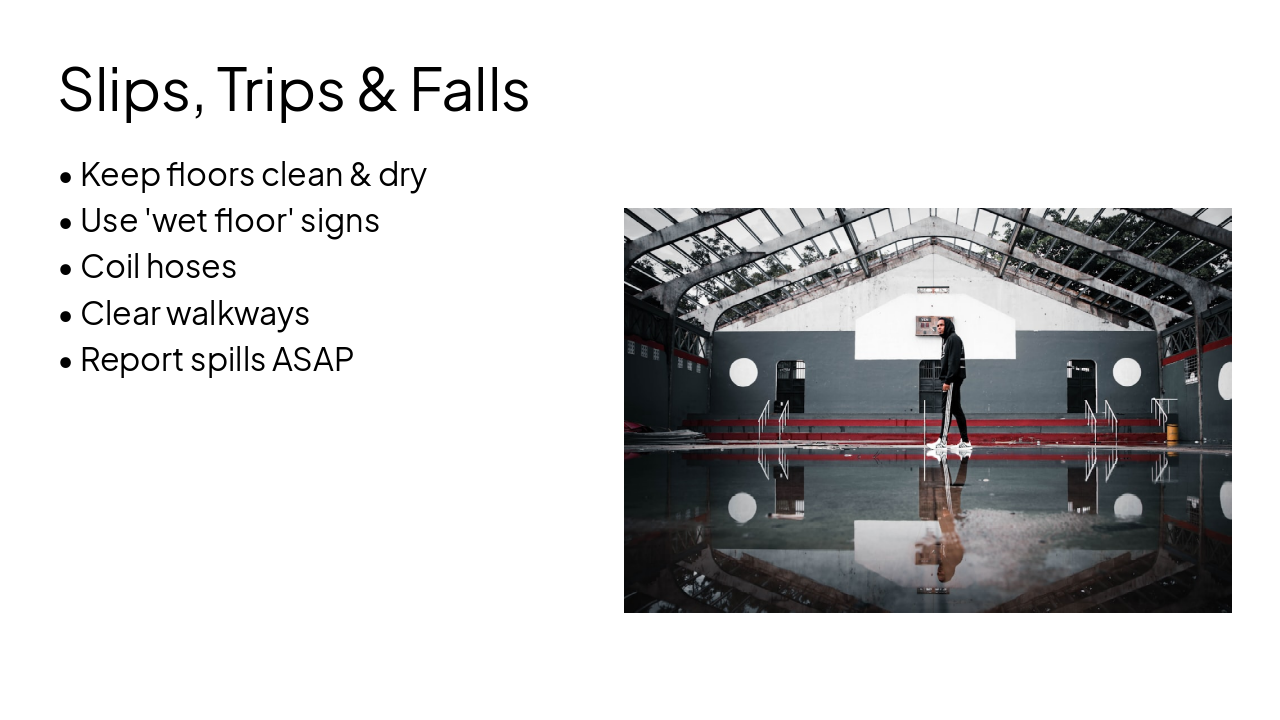
Photo by argelis disla on Unsplash
---
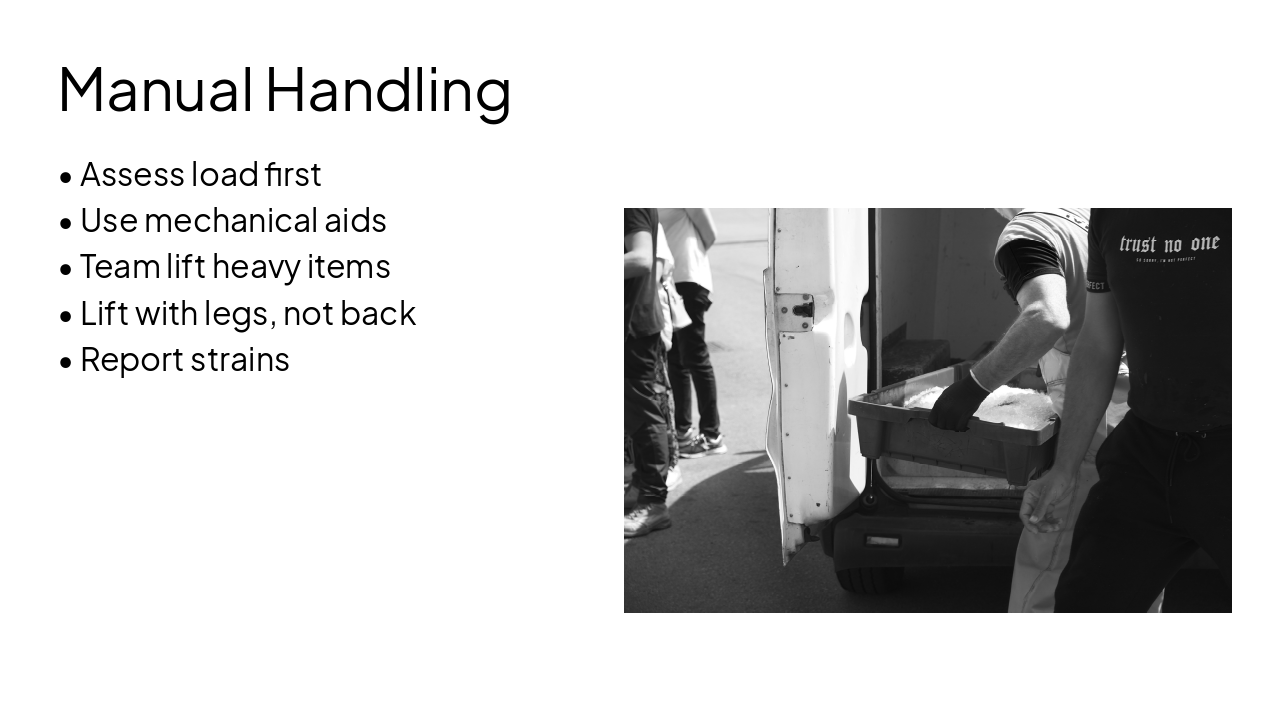
Photo by Miguel A Amutio on Unsplash
---
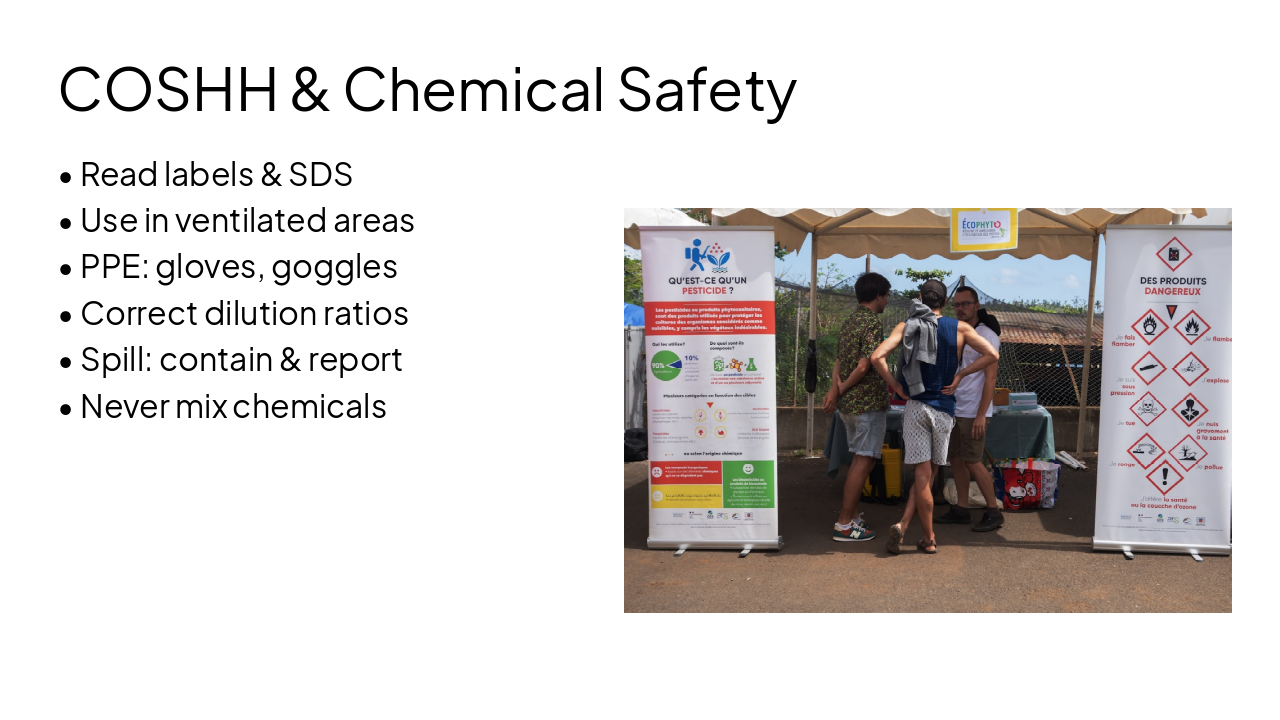
Photo by Snap Wander on Unsplash
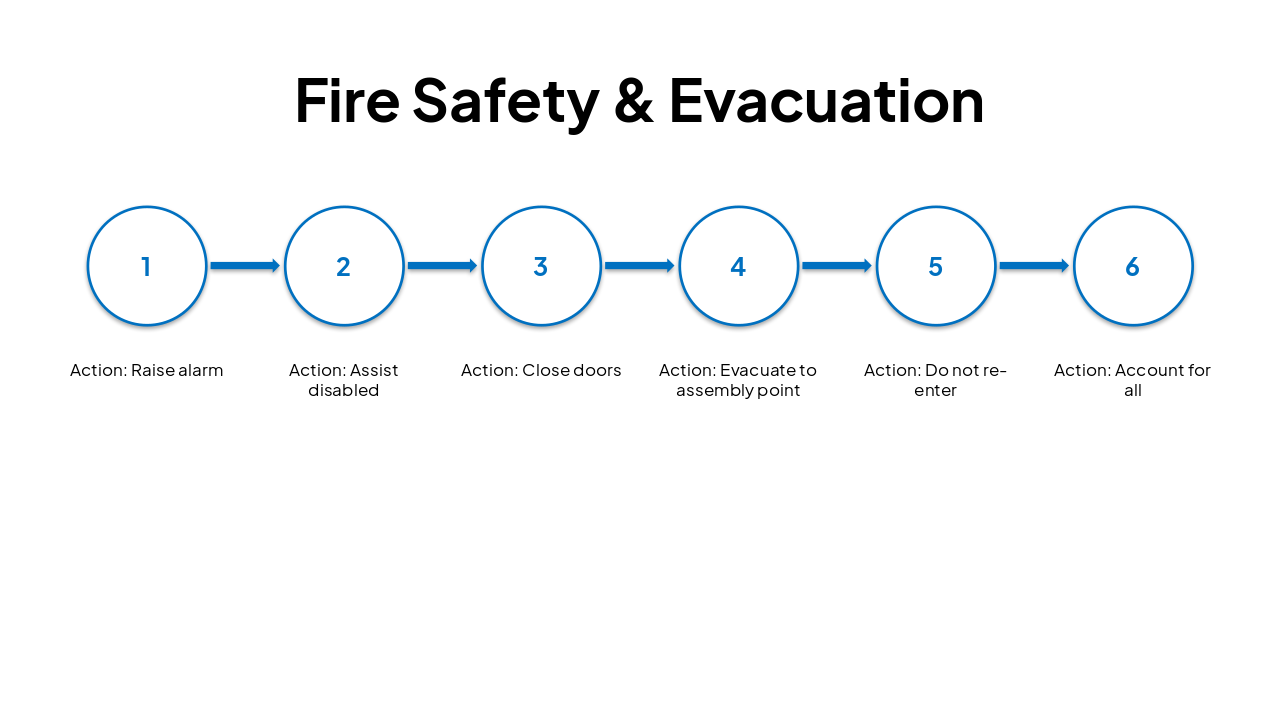
| Step | Action |
|---|---|
| 1 | Raise alarm |
| 2 | Assist disabled |
| 3 | Close doors |
| 4 | Evacuate to assembly point |
| 5 | Do not re-enter |
| 6 | Account for all |
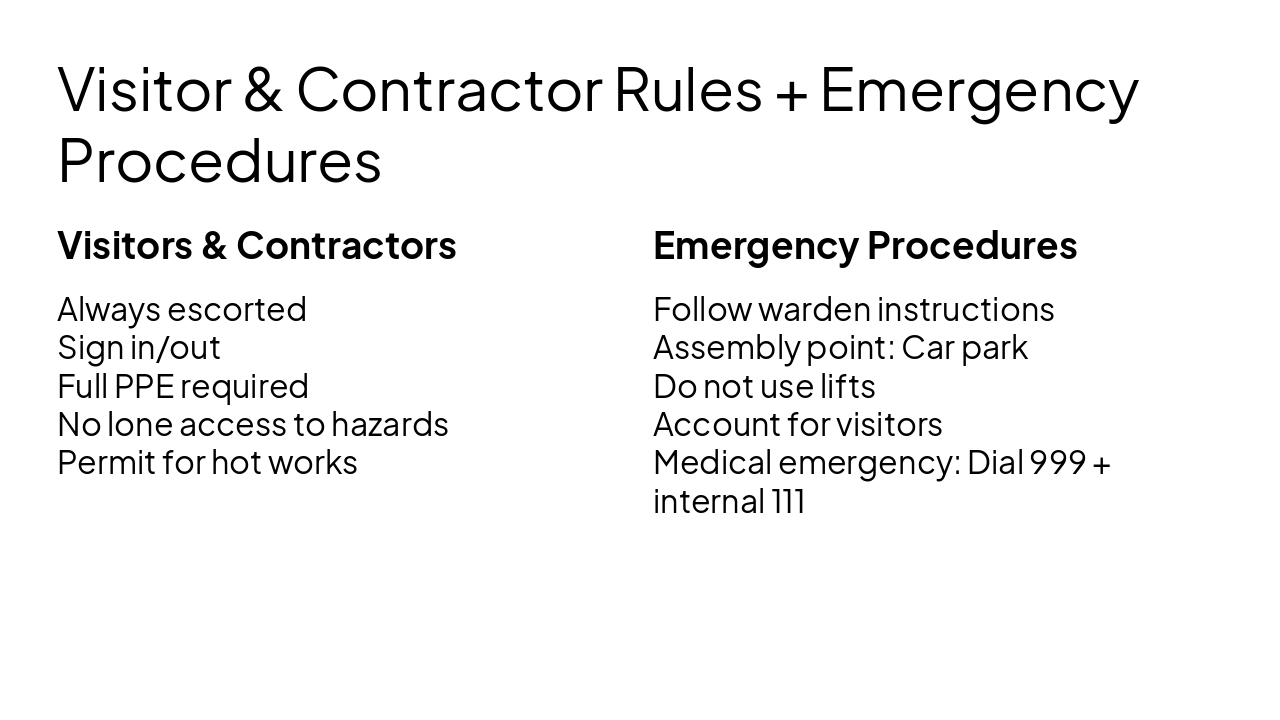
Visitors & Contractors Always escorted Sign in/out Full PPE required No lone access to hazards Permit for hot works
Emergency Procedures Follow warden instructions Assembly point: Car park Do not use lifts Account for visitors Medical emergency: Dial 999 + internal 111
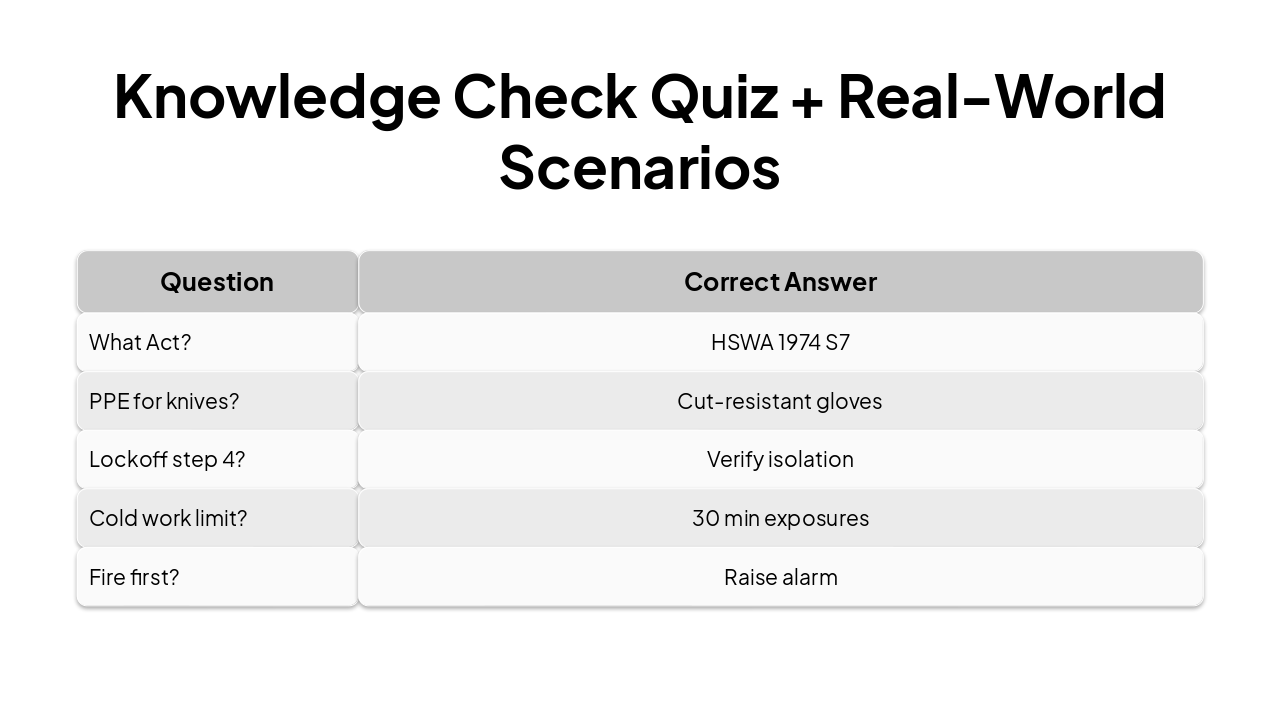
| Question | Correct Answer |
|---|---|
| What Act? | HSWA 1974 S7 |
| PPE for knives? | Cut-resistant gloves |
| Lockoff step 4? | Verify isolation |
| Cold work limit? | 30 min exposures |
| Fire first? | Raise alarm |
Thank You! Stay Safe Every Day
Sign off sheet | Q&A | Resources available Marion Meats & Waris Consulting
---
Photo by Colin Lloyd on Unsplash
Explore thousands of AI-generated presentations for inspiration
Generate professional presentations in seconds with Karaf's AI. Customize this presentation or start from scratch.