India's EoDB: Trade Efficiency Boost

Generated from prompt:

Ease of Doing Business: Enhancing Trade Efficiency, Transparency & Growth (15 Slides) Slide 1: Title Slide - Ease of Doing Business (EoDB) - Enhancing Efficiency, Transparency & Growth - For Professionals, Learners, and Trade Participants Slide 2: Global Perspective - Ease of Doing Business: A global competitiveness measure. - Highlights ease of starting, operating, and expanding businesses. - India's reforms focus on digitization and simplification. Slide 3: Why Ease of Doing Business Matters - Encourages investment and innovation. - Reduces transaction and compliance costs. - Builds trust between government and businesses. Slide 4: Core Areas of EoDB in Customs - Simplified procedures - End-to-end automation - Transparent communication - Risk-based inspections - Efficient trade facilitation Slide 5: The Evolution of Customs in India - Transition from manual to digital processes. - Integration of technology (EDI, RMS, SWIFT). - Improved coordination among stakeholders. Slide 6: Key Reforms Driving EoDB - National Single Window System - Risk Management System (RMS) - Direct Port Delivery (DPD) & Entry (DPE) - Faceless Assessment - E-seals and paperless documentation Slide 7: Technology as a Game Changer - Automation and AI in customs clearance. - Data analytics for predictive risk management. - Real-time tracking and transparency tools. Slide 8: Impact of Customs Reforms - 60% reduction in clearance time. - Lower compliance costs. - Increased global trade competitiveness. - Enhanced investor confidence. Slide 9: GST and Ease of Doing Business - Unified tax structure – One Nation, One Tax. - Eliminated cascading taxes. - Streamlined logistics and ITC benefits. - Reduced compliance burden. Slide 10: GST – Digital Transformation - Fully online registration and return filing. - E-invoicing and e-way bills. - Faster refunds and reconciliation. - Improved tax transparency. Slide 11: Case Study Highlights - Logistics: Reduced turnaround time by 20%. - Manufacturing: Streamlined input credits. - Startups: Easier interstate expansion. - SMEs: Simplified compliance. Slide 12: Collaboration & Private Sector Role - Public-private partnerships for innovation. - Authorized Economic Operator (AEO) scheme. - Industry participation in policy design. Slide 13: Challenges & Opportunities Ahead - Need for better digital literacy. - Cybersecurity in trade systems. - Continued modernization of border management. Slide 14: Global Benchmarking - India ranked among top reforming nations. - World Bank indicators on trade facilitation. - Target: top 25 by next global EoDB report. Slide 15: Conclusion - EoDB = Simplification + Transparency + Technology. - Continuous improvement ensures competitiveness. - India’s EoDB journey inspires a smarter trade future.

This presentation explores India's Ease of Doing Business reforms, focusing on customs evolution, key initiatives like GST and digital tools, their impacts on trade efficiency and growth, case studies

November 27, 202515 slides
Slide 1 of 15

Slide 1 - Ease of Doing Business (EoDB)

The title slide, titled "Ease of Doing Business (EoDB)" and marked as a title type, highlights the core theme of "Enhancing Efficiency, Transparency & Growth." Its subtitle specifies that these improvements target professionals, learners, and trade participants.

Enhancing Efficiency, Transparency & Growth

For Professionals, Learners, and Trade Participants},

Slide 1 - Ease of Doing Business (EoDB)
Slide 2 of 15

Slide 2 - Global Perspective

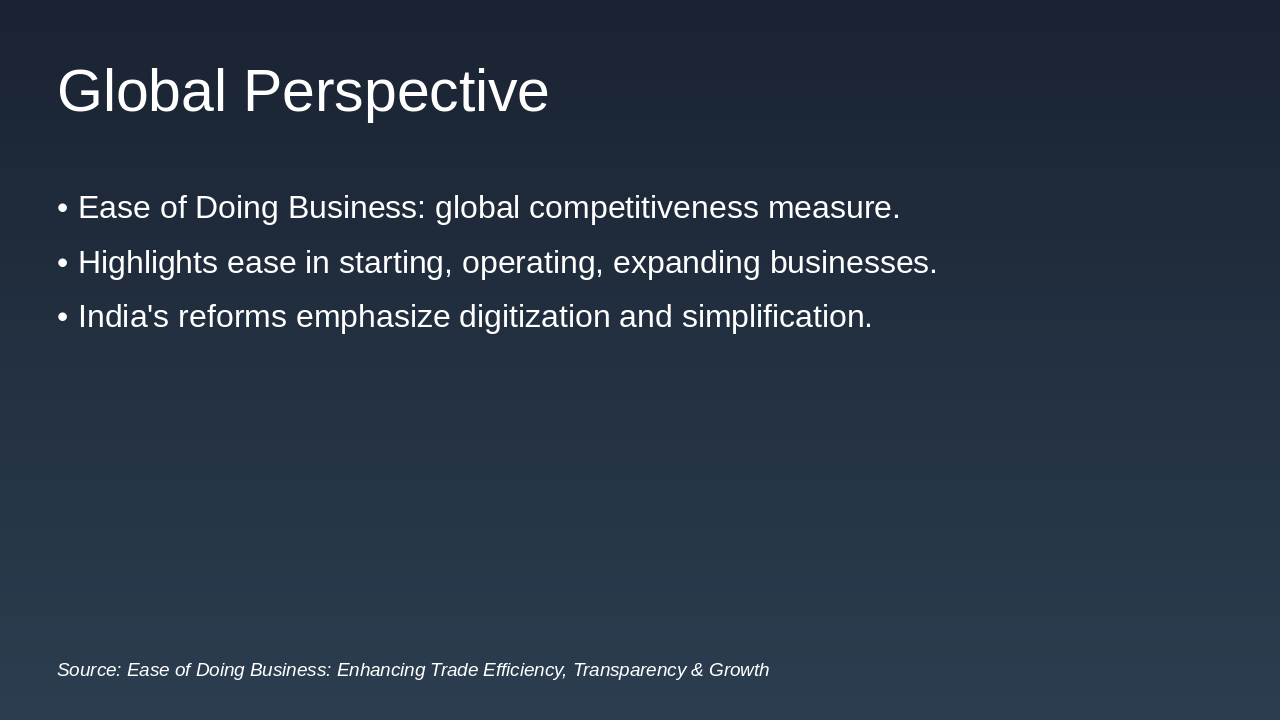
The "Global Perspective" slide introduces the Ease of Doing Business index as a key measure of global competitiveness, focusing on how easily businesses can start, operate, and expand. It highlights India's ongoing reforms, which prioritize digitization and simplification to improve its standing.

Global Perspective

  • Ease of Doing Business: global competitiveness measure.
  • Highlights ease in starting, operating, expanding businesses.
  • India's reforms emphasize digitization and simplification.

Source: Ease of Doing Business: Enhancing Trade Efficiency, Transparency & Growth

Slide 2 - Global Perspective
Slide 3 of 15

Slide 3 - Why Ease of Doing Business Matters

Ease of doing business is crucial because it encourages investment, fosters economic innovation, and reduces transaction costs while simplifying compliance. It also builds trust and strengthens partnerships between governments and businesses.

Why Ease of Doing Business Matters

  • Encourages investment and fosters innovation in the economy.
  • Reduces transaction costs and simplifies compliance requirements.
  • Builds trust and strengthens partnerships between government and businesses.
Slide 3 - Why Ease of Doing Business Matters
Slide 4 of 15

Slide 4 - Core Areas of EoDB in Customs

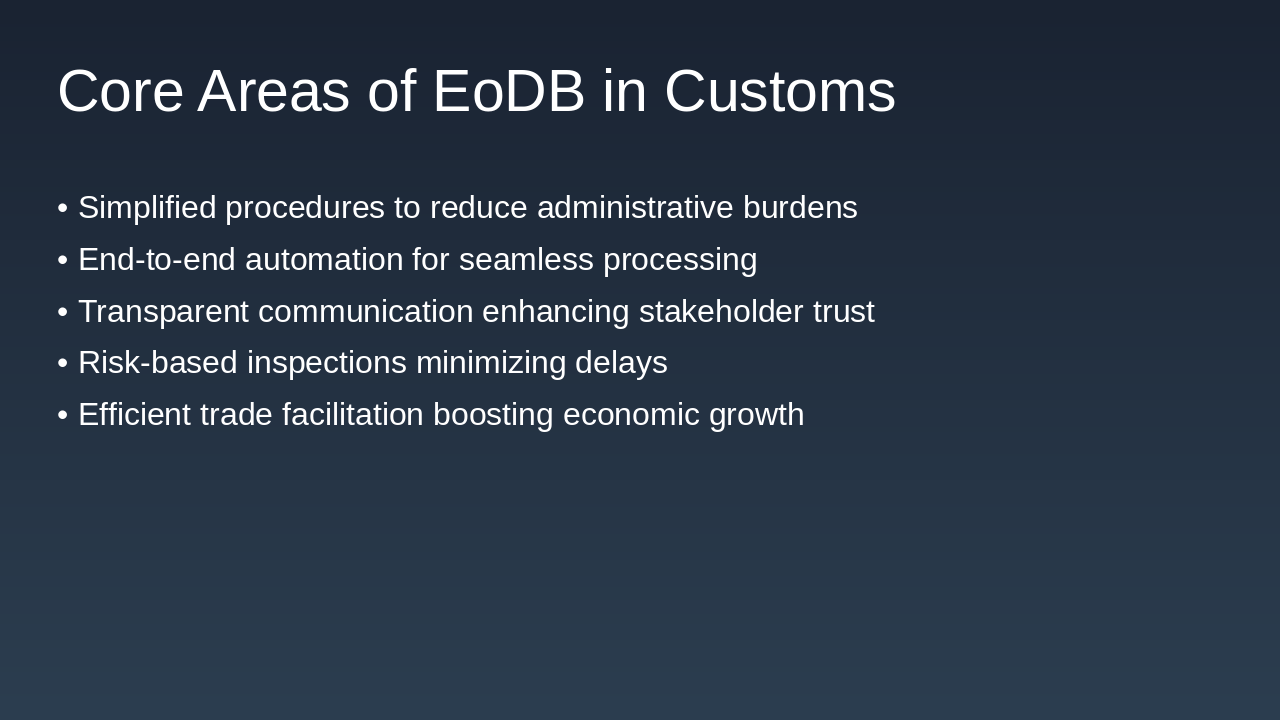
The slide on Core Areas of Ease of Doing Business (EoDB) in Customs outlines key strategies to streamline operations, including simplified procedures that reduce administrative burdens and end-to-end automation for seamless processing. It also emphasizes transparent communication to build stakeholder trust, risk-based inspections to minimize delays, and efficient trade facilitation to drive economic growth.

Core Areas of EoDB in Customs

  • Simplified procedures to reduce administrative burdens
  • End-to-end automation for seamless processing
  • Transparent communication enhancing stakeholder trust
  • Risk-based inspections minimizing delays
  • Efficient trade facilitation boosting economic growth
Slide 4 - Core Areas of EoDB in Customs
Slide 5 of 15

Slide 5 - The Evolution of Customs in India

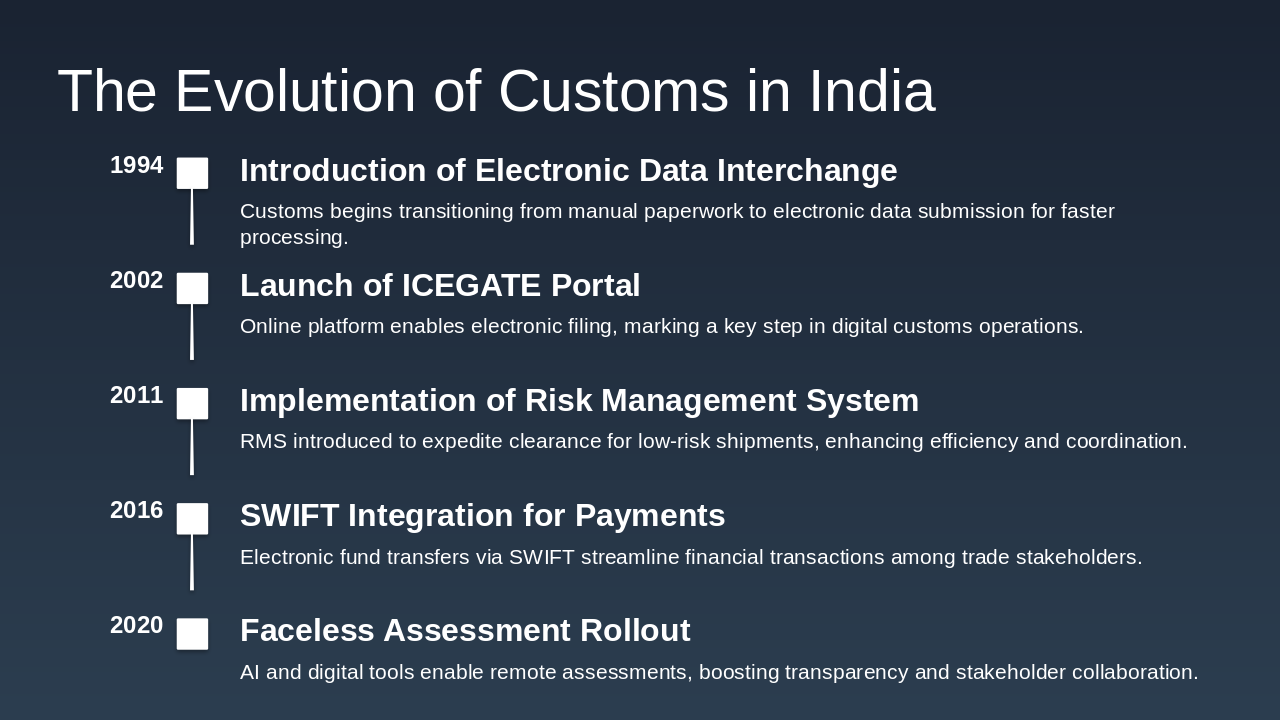
The timeline slide outlines the evolution of India's customs processes from manual to digital systems, starting with the 1994 introduction of Electronic Data Interchange for faster electronic submissions. Key milestones include the 2002 launch of the ICEGATE portal, 2011 Risk Management System for efficient clearances, 2016 SWIFT payment integration, and the 2020 rollout of faceless assessments using AI for enhanced transparency.

The Evolution of Customs in India

1994: Introduction of Electronic Data Interchange Customs begins transitioning from manual paperwork to electronic data submission for faster processing. 2002: Launch of ICEGATE Portal Online platform enables electronic filing, marking a key step in digital customs operations. 2011: Implementation of Risk Management System RMS introduced to expedite clearance for low-risk shipments, enhancing efficiency and coordination. 2016: SWIFT Integration for Payments Electronic fund transfers via SWIFT streamline financial transactions among trade stakeholders. 2020: Faceless Assessment Rollout AI and digital tools enable remote assessments, boosting transparency and stakeholder collaboration.

Speaker Notes
Transition from manual to digital processes. Integration of technology (EDI, RMS, SWIFT). Improved coordination among stakeholders.
Slide 5 - The Evolution of Customs in India
Slide 6 of 15

Slide 6 - Key Reforms Driving EoDB

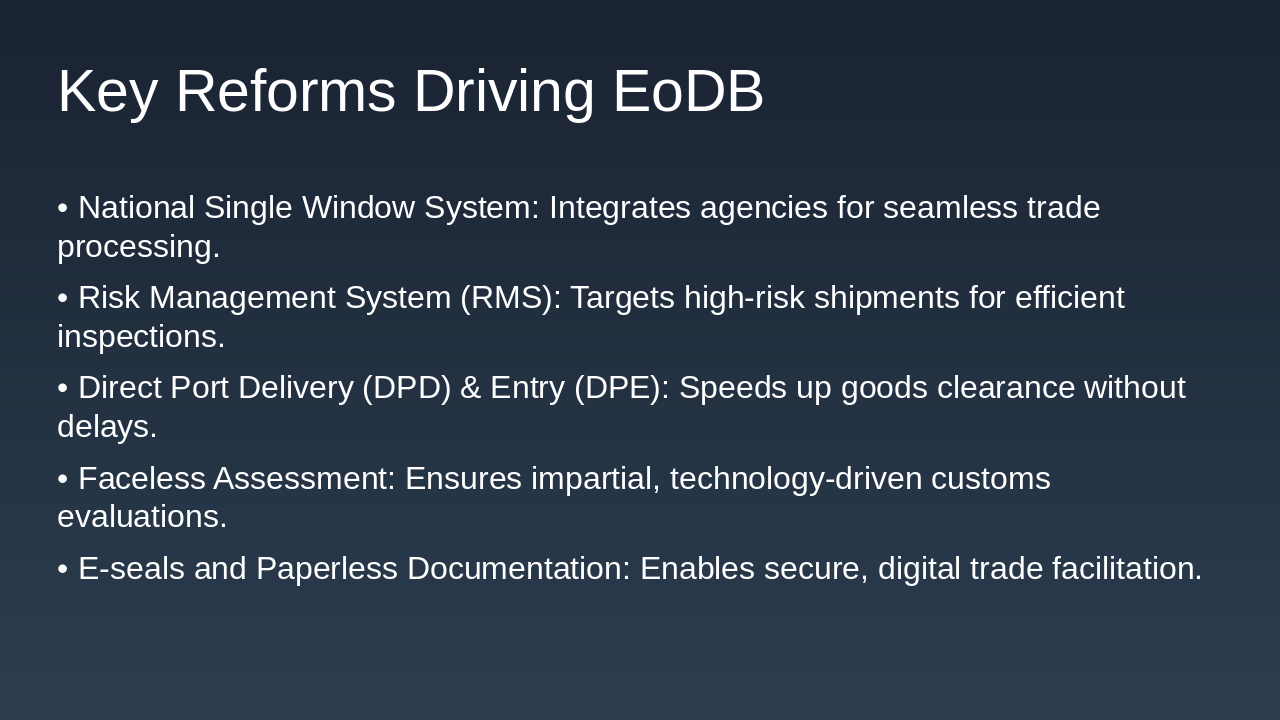
The slide outlines key reforms aimed at enhancing Ease of Doing Business (EoDB) in trade and customs processes. These include the National Single Window System for seamless agency integration, Risk Management System for targeted inspections, Direct Port Delivery and Entry for faster clearance, faceless technology-driven assessments, and e-seals with paperless documentation for secure digital facilitation.

Key Reforms Driving EoDB

  • National Single Window System: Integrates agencies for seamless trade processing.
  • Risk Management System (RMS): Targets high-risk shipments for efficient inspections.
  • Direct Port Delivery (DPD) & Entry (DPE): Speeds up goods clearance without delays.
  • Faceless Assessment: Ensures impartial, technology-driven customs evaluations.
  • E-seals and Paperless Documentation: Enables secure, digital trade facilitation.
Slide 6 - Key Reforms Driving EoDB
Slide 7 of 15

Slide 7 - Technology as a Game Changer

Technology serves as a game changer in customs by leveraging automation and AI to streamline clearance processes. Additionally, data analytics support predictive risk management, while real-time tracking tools boost transparency and efficiency.

Technology as a Game Changer

  • Automation and AI streamline customs clearance processes.
  • Data analytics enable predictive risk management.
  • Real-time tracking tools enhance transparency and efficiency.
Slide 7 - Technology as a Game Changer
Slide 8 of 15

Slide 8 - Impact of Customs Reforms

Customs reforms have led to a 60% reduction in clearance times through streamlined import/export processes and a 35% decrease in compliance costs, easing the burden on businesses. Additionally, these changes have boosted trade competitiveness by 25% for better global positioning and increased investor confidence by 70% via improved trust in the reforms.

Impact of Customs Reforms

  • 60%: Reduction in Clearance Time
  • Streamlined import/export processes

  • 35%: Decrease in Compliance Costs
  • Lower burden on businesses

  • 25%: Boost in Trade Competitiveness
  • Enhanced global positioning

  • 70%: Rise in Investor Confidence
  • Improved trust in reforms

Slide 8 - Impact of Customs Reforms
Slide 9 of 15

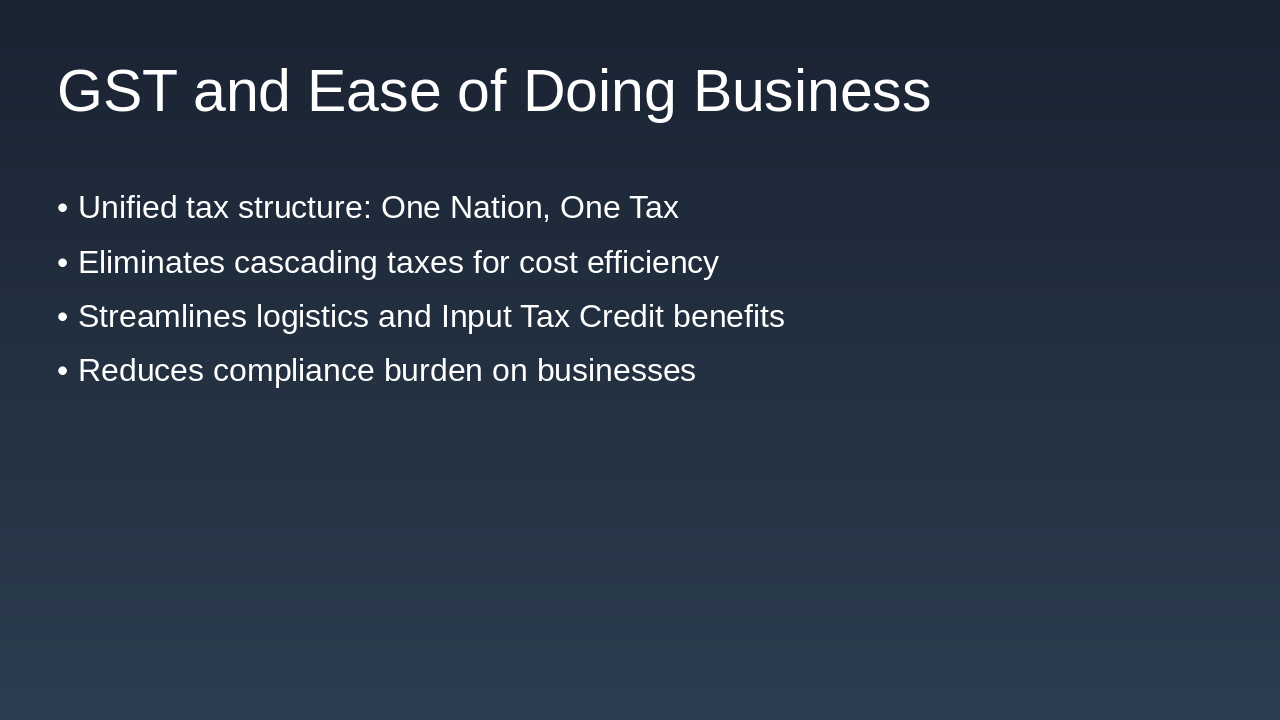
Slide 9 - GST and Ease of Doing Business

The slide on GST and Ease of Doing Business highlights a unified tax structure under the "One Nation, One Tax" principle, which eliminates cascading taxes to enhance cost efficiency. It also streamlines logistics, provides Input Tax Credit benefits, and reduces the overall compliance burden on businesses.

GST and Ease of Doing Business

  • Unified tax structure: One Nation, One Tax
  • Eliminates cascading taxes for cost efficiency
  • Streamlines logistics and Input Tax Credit benefits
  • Reduces compliance burden on businesses
Slide 9 - GST and Ease of Doing Business
Slide 10 of 15

Slide 10 - GST – Digital Transformation

The GST Digital Transformation slide highlights a shift to fully online processes for registration and return filing, alongside mandatory e-invoicing and electronic waybills to streamline operations. It also emphasizes accelerated refunds through seamless reconciliation and improved tax transparency for all stakeholders.

GST – Digital Transformation

  • Fully online registration and return filing processes.
  • Mandatory e-invoicing and electronic way bills.
  • Accelerated refunds with seamless reconciliation.
  • Enhanced tax transparency for all stakeholders.
Slide 10 - GST – Digital Transformation
Slide 11 of 15

Slide 11 - Case Study Highlights

Before reforms, logistics in the case study suffered from long turnaround times that caused delays and higher costs, while manufacturing faced complex input credit processes leading to cash flow issues and inefficiencies. After reforms, logistics achieved a 20% reduction in turnaround time for greater efficiency, and manufacturing benefited from streamlined input credits that enabled faster reconciliations and better financial health.

Case Study Highlights

Logistics & Manufacturing Before ReformsLogistics & Manufacturing After Reforms
Logistics faced long turnaround times, causing delays and higher costs. Manufacturing dealt with complex input credit processes, leading to cash flow issues and inefficiencies.Logistics: Reduced turnaround time by 20%, boosting efficiency. Manufacturing: Streamlined input credits, enabling faster reconciliations and improved financial health.
Slide 11 - Case Study Highlights
Slide 12 of 15

Slide 12 - Collaboration & Private Sector Role

Public-private partnerships are essential for driving innovation in trade processes, as highlighted on the slide. The Authorized Economic Operator (AEO) scheme fosters trusted trader networks, while industry participation plays a key role in shaping effective policy design and implementation.

Collaboration & Private Sector Role

  • Public-private partnerships drive innovation in trade processes.
  • Authorized Economic Operator (AEO) scheme builds trusted trader networks.
  • Industry participation shapes effective policy design and implementation.
Slide 12 - Collaboration & Private Sector Role
Slide 13 of 15

Slide 13 - Challenges & Opportunities Ahead

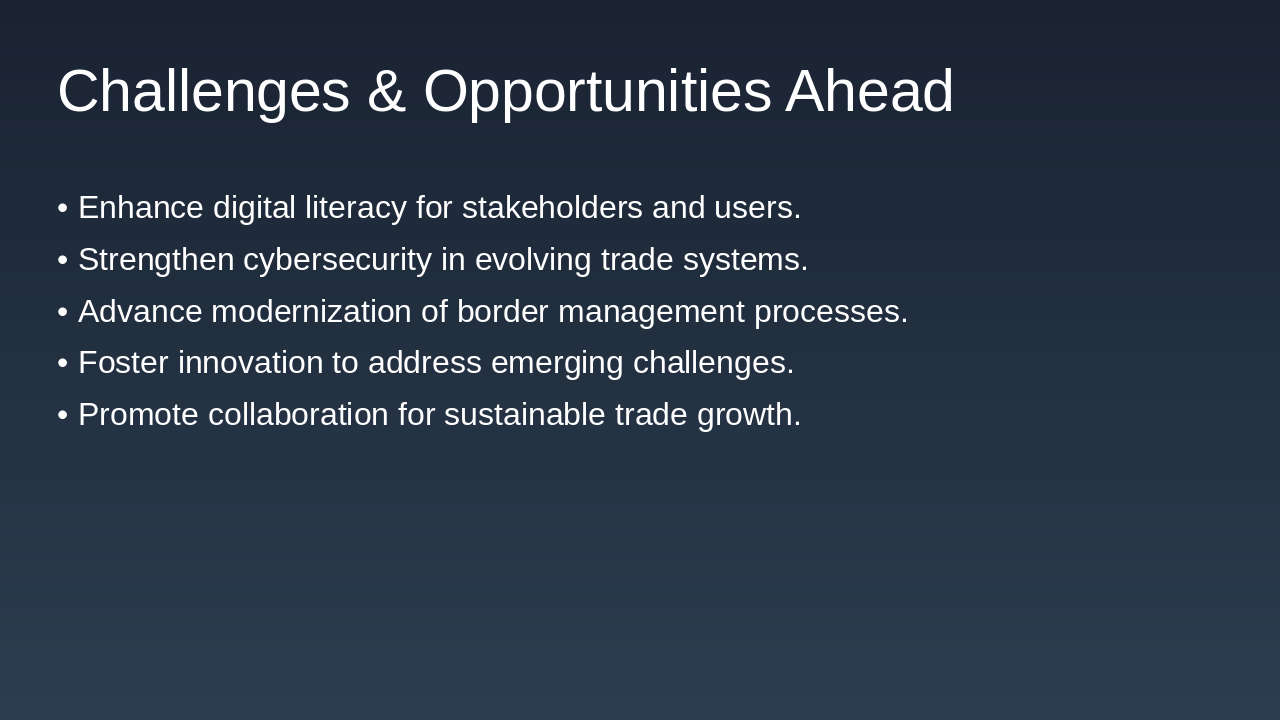
The slide outlines key challenges and opportunities in trade systems, emphasizing the need to enhance digital literacy for stakeholders and users while strengthening cybersecurity. It also highlights advancing border management modernization, fostering innovation for emerging issues, and promoting collaboration to drive sustainable trade growth.

Challenges & Opportunities Ahead

  • Enhance digital literacy for stakeholders and users.
  • Strengthen cybersecurity in evolving trade systems.
  • Advance modernization of border management processes.
  • Foster innovation to address emerging challenges.
  • Promote collaboration for sustainable trade growth.
Slide 13 - Challenges & Opportunities Ahead
Slide 14 of 15

Slide 14 - Global Benchmarking

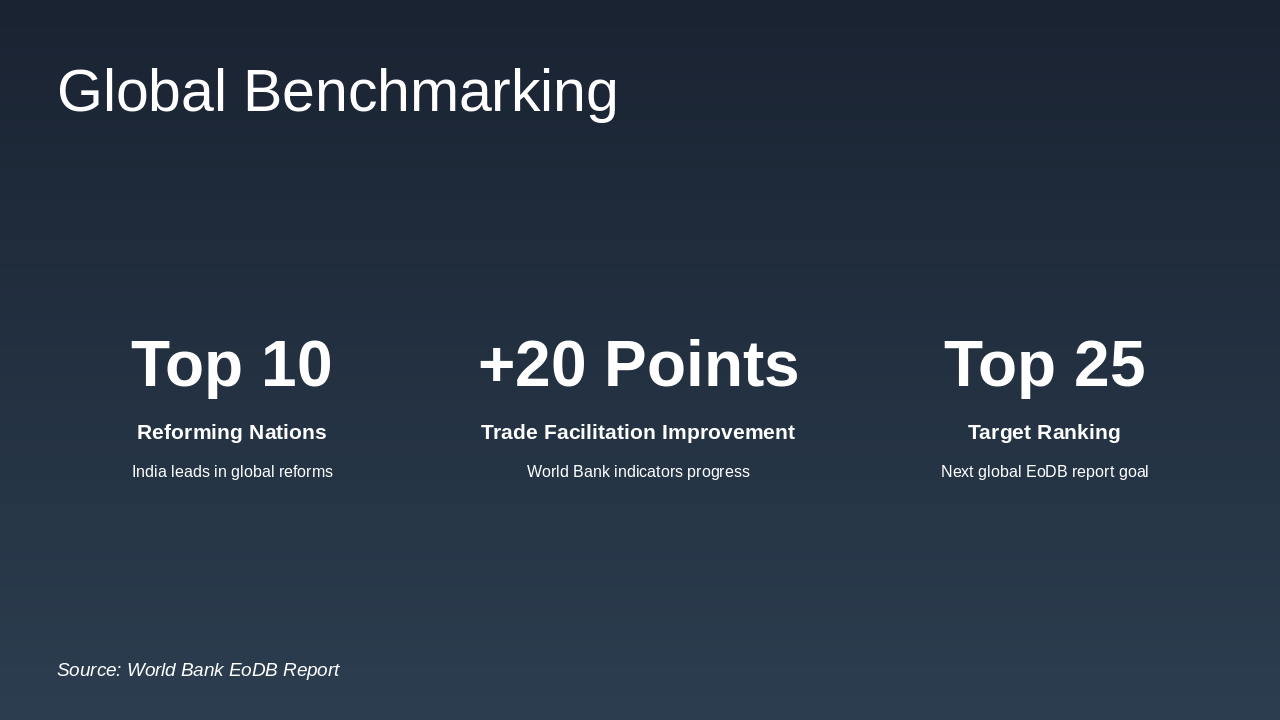
India ranks in the top 10 for global reforms, leading the way among reforming nations. The country has achieved a +20 point improvement in trade facilitation per World Bank indicators, aiming for a top 25 target ranking in the next Ease of Doing Business report.

Global Benchmarking

  • Top 10: Reforming Nations
  • India leads in global reforms

  • +20 Points: Trade Facilitation Improvement
  • World Bank indicators progress

  • Top 25: Target Ranking

Next global EoDB report goal Source: World Bank EoDB Report

Slide 14 - Global Benchmarking
Slide 15 of 15

Slide 15 - Conclusion

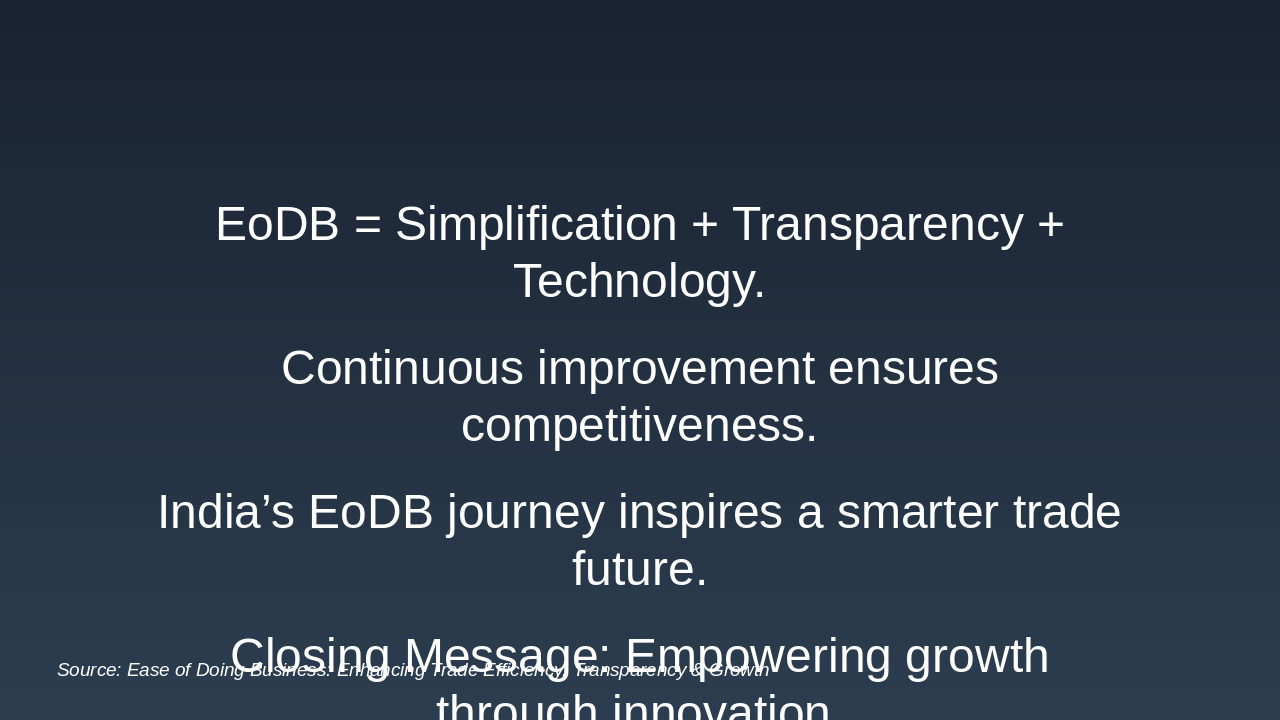
Ease of Doing Business (EoDB) is defined as the integration of simplification, transparency, and technology, with continuous improvement driving competitiveness. India's EoDB progress inspires a smarter trade future, emphasizing empowerment through innovation and a call to adopt best practices for thriving in global trade.

Conclusion

EoDB = Simplification + Transparency + Technology.

Continuous improvement ensures competitiveness.

India’s EoDB journey inspires a smarter trade future.

Closing Message: Empowering growth through innovation.

Call-to-Action: Adopt EoDB best practices to thrive in global trade.

Source: Ease of Doing Business: Enhancing Trade Efficiency, Transparency & Growth

Speaker Notes
Summarize key takeaways and inspire action on India's EoDB reforms.
Slide 15 - Conclusion

Discover More Presentations

Explore thousands of AI-generated presentations for inspiration

Browse Presentations
Powered by AI

Create Your Own Presentation

Generate professional presentations in seconds with Karaf's AI. Customize this presentation or start from scratch.

Create New Presentation

Powered by Karaf.ai — AI-Powered Presentation Generator