Ventilator Settings Based on Pathophysiology

Generated from prompt:

convert to proffesional powerpoint

This presentation provides a comprehensive overview of ventilator settings tailored to specific respiratory pathophysiologies. It covers restrictive lung diseases like ARDS, obstructive airways diseases such as COPD and asthma, detailing management strategies including BIPAP and invasive ventilation, and addressing critical considerations like dynamic hyperinflation and airway pressures.

May 16, 202618 slides
Slide 1 of 18

Slide 1 - Ventilator Settings Based on Pathophysiology

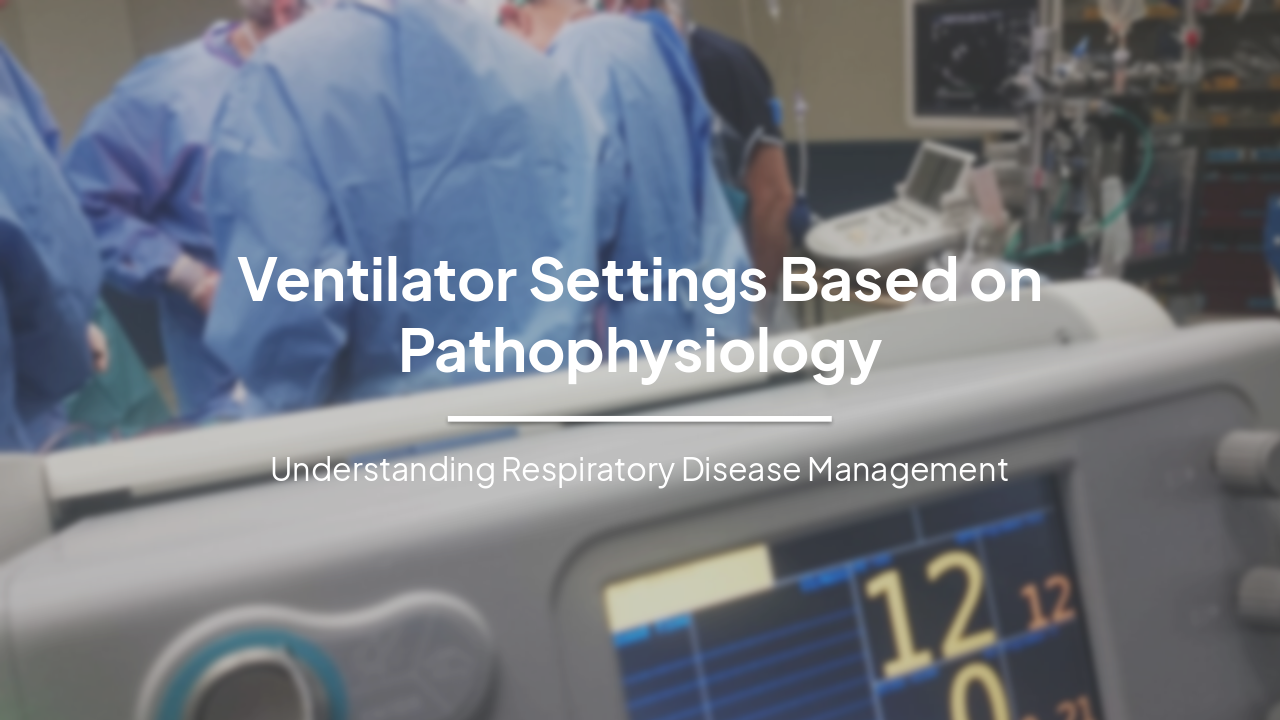
Ventilator Settings Based on Pathophysiology

Understanding Respiratory Disease Management

---

Photo by Natanael Melchor on Unsplash
Slide 1 - Ventilator Settings Based on Pathophysiology
Slide 2 of 18

Slide 2 - Presentation Agenda

  • Introduction to Ventilator Settings
  • Restrictive Lung Disease
  • Obstructive Airways Disease
  • Management of COPD Exacerbations
  • BIPAP and Invasive Ventilation
  • Special Considerations & Airway Pressures
  • Conclusion

---

Photo by Luke Jones on Unsplash

Slide 2 - Presentation Agenda
Slide 3 of 18

Slide 3

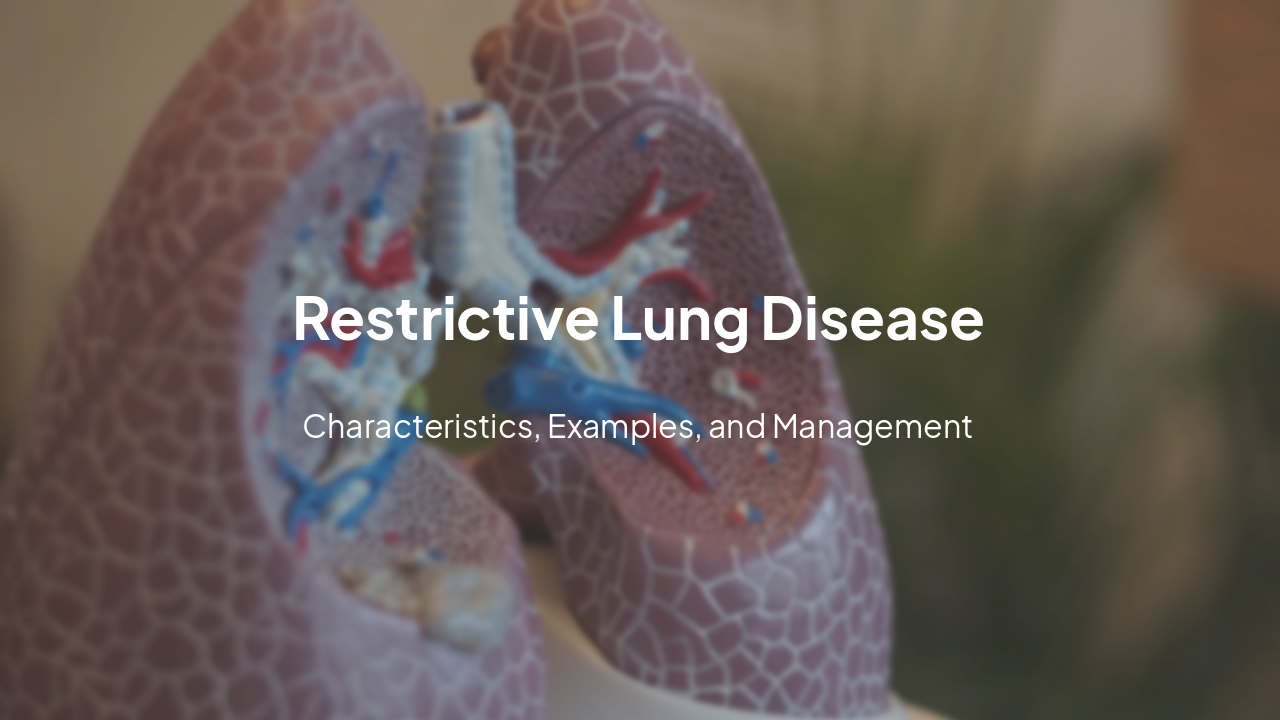
Restrictive Lung Disease

Characteristics, Examples, and Management

---

Photo by Robina Weermeijer on Unsplash
Slide 3
Slide 4 of 18

Slide 4 - Restrictive Lung Disease: Overview

  • Characterized by reduced lung volumes
  • Increased work of breathing
  • Inadequate ventilation and/or oxygenation
  • Caused by alteration in lung parenchyma or disease of pleura/chest wall
  • Examples: ARDS, aspiration pneumonitis, pneumonia, pulmonary fibrosis, pulmonary edema, alveolar hemorrhage, chest trauma
Slide 4 - Restrictive Lung Disease: Overview
Slide 5 of 18

Slide 5 - ARDS: Etiology

  • Characterized by damage to alveolar epithelium
  • Etiology (mnemonic PAST):
  • Pneumonia
  • Aspiration
  • Shock, Sepsis
  • Trauma
Slide 5 - ARDS: Etiology
Slide 6 of 18

Slide 6 - Ventilator Settings for Restrictive Lung Disease

  • After adjusting PEEP, check plateau pressure (PPLAT)
  • If PPLAT > 30 cm H2O, decrease tidal volume until PPLAT < 30 (minimum 4 mL/kg PBW)
  • Inspiratory time adjusted to keep I:E ratio 1:1.5 or 1:2
  • If exhaled tidal volume > 6 mL/kg, lower inspiratory pressure to 4-6 mL/kg range
  • After initiating ventilation, check arterial blood gas (15-20 min for gas exchange)
  • Adjust respiratory rate to change PaCO2 (higher rate lowers PaCO2)
  • Maintain tidal volume in 4-6 mL/kg range, PPLAT ≤ 30 cm H2O
  • Lung protection is more important than normal ventilation
Slide 6 - Ventilator Settings for Restrictive Lung Disease
Slide 7 of 18

Slide 7

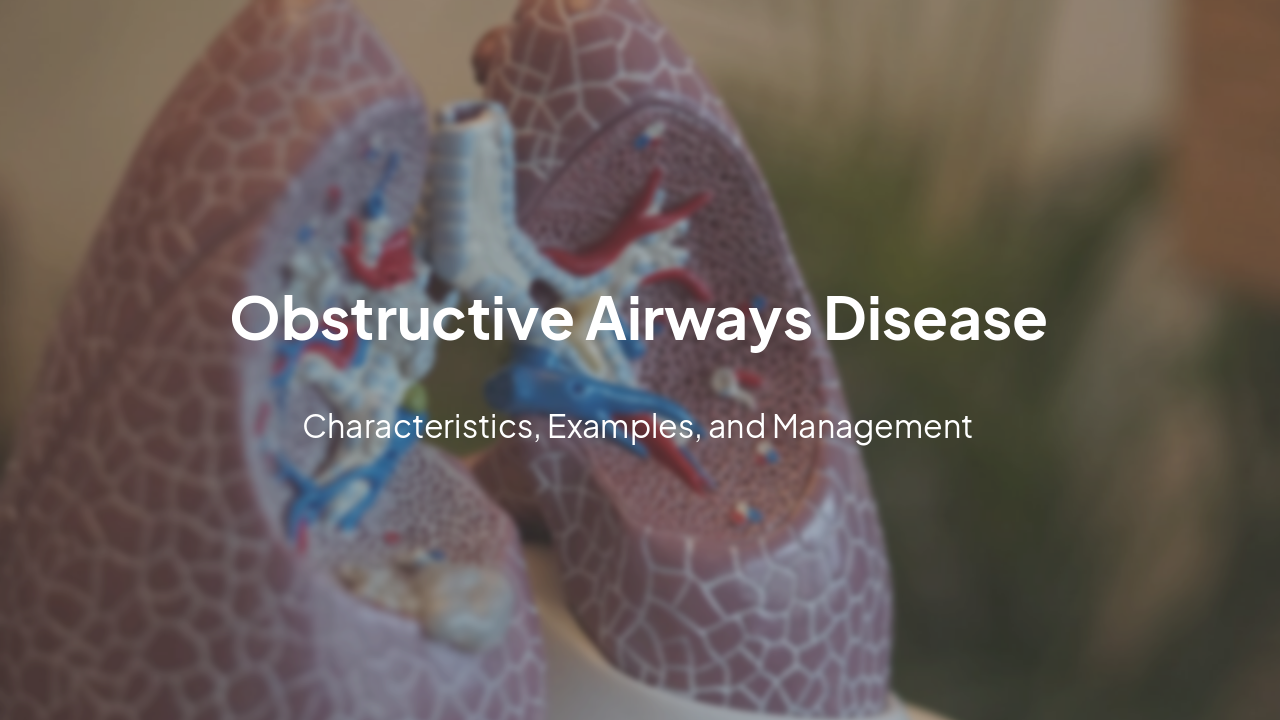
Obstructive Airways Disease

Characteristics, Examples, and Management

---

Photo by Robina Weermeijer on Unsplash
Slide 7
Slide 8 of 18

Slide 8 - Obstructive Lung Disease: Overview

  • Associated with increased respiratory system compliance
  • Obstruction to expiratory airflow (easy to get air in, hard to get it out)
  • Difficulty exhaling all air from lungs leading to shortness of breath
  • Exhaled air comes out more slowly than normal due to lung damage or airway narrowing
  • Abnormally high amount of air may remain in lungs after full exhalation
  • Examples: COPD, Emphysema, Asthma, Chronic Bronchitis
Slide 8 - Obstructive Lung Disease: Overview
Slide 9 of 18

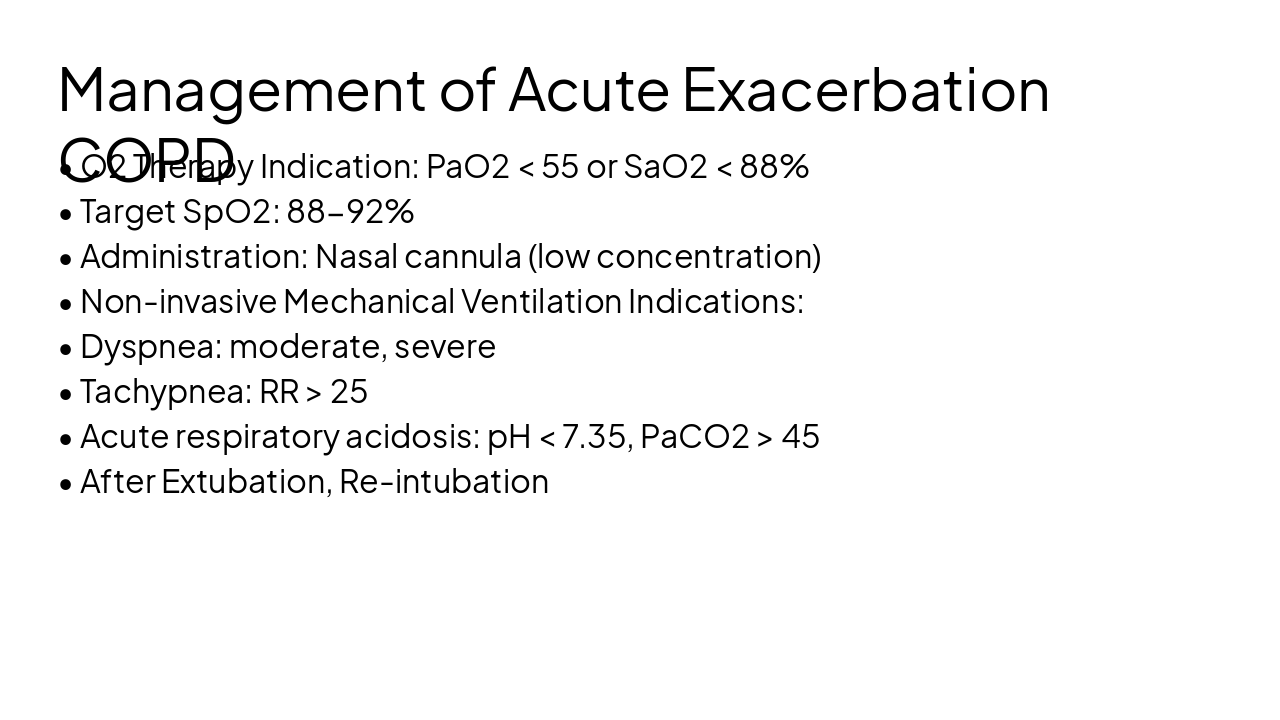
Slide 9 - Management of Acute Exacerbation COPD

  • O2 Therapy Indication: PaO2 < 55 or SaO2 < 88%
  • Target SpO2: 88-92%
  • Administration: Nasal cannula (low concentration)
  • Non-invasive Mechanical Ventilation Indications:
  • Dyspnea: moderate, severe
  • Tachypnea: RR > 25
  • Acute respiratory acidosis: pH < 7.35, PaCO2 > 45
  • After Extubation, Re-intubation
Slide 9 - Management of Acute Exacerbation COPD
Slide 10 of 18

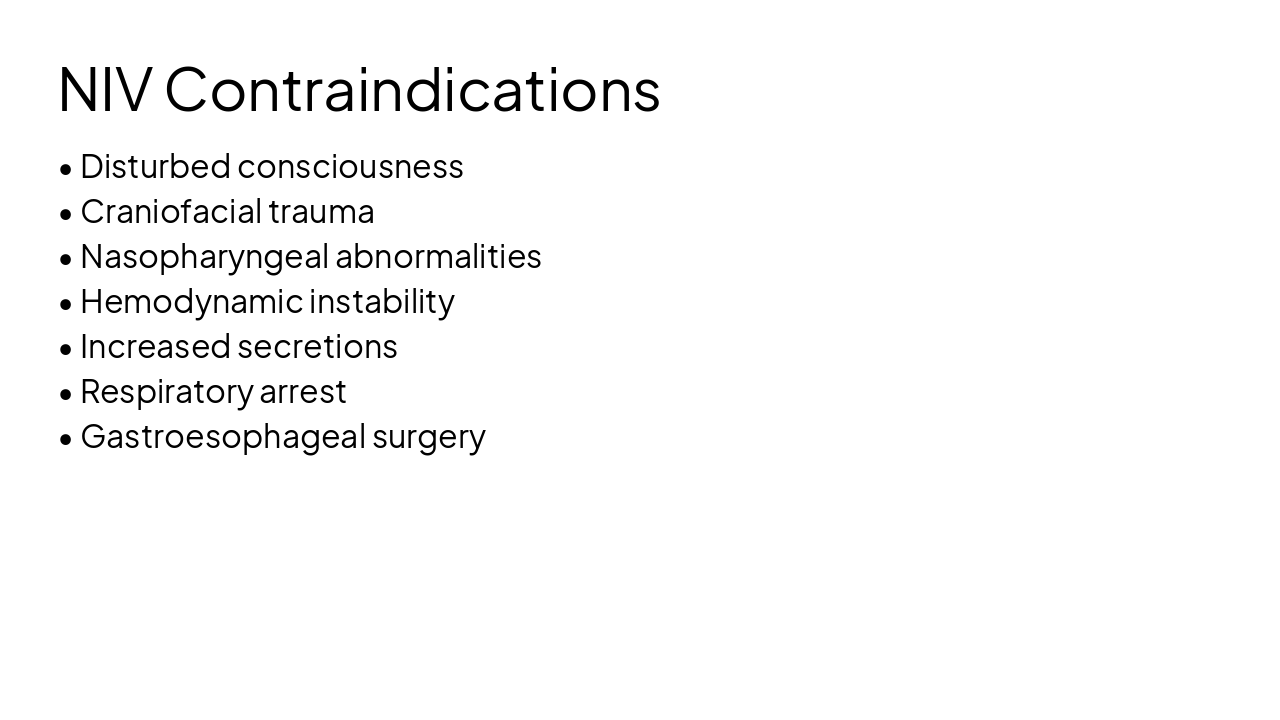
Slide 10 - NIV Contraindications

  • Disturbed consciousness
  • Craniofacial trauma
  • Nasopharyngeal abnormalities
  • Hemodynamic instability
  • Increased secretions
  • Respiratory arrest
  • Gastroesophageal surgery
Slide 10 - NIV Contraindications
Slide 11 of 18

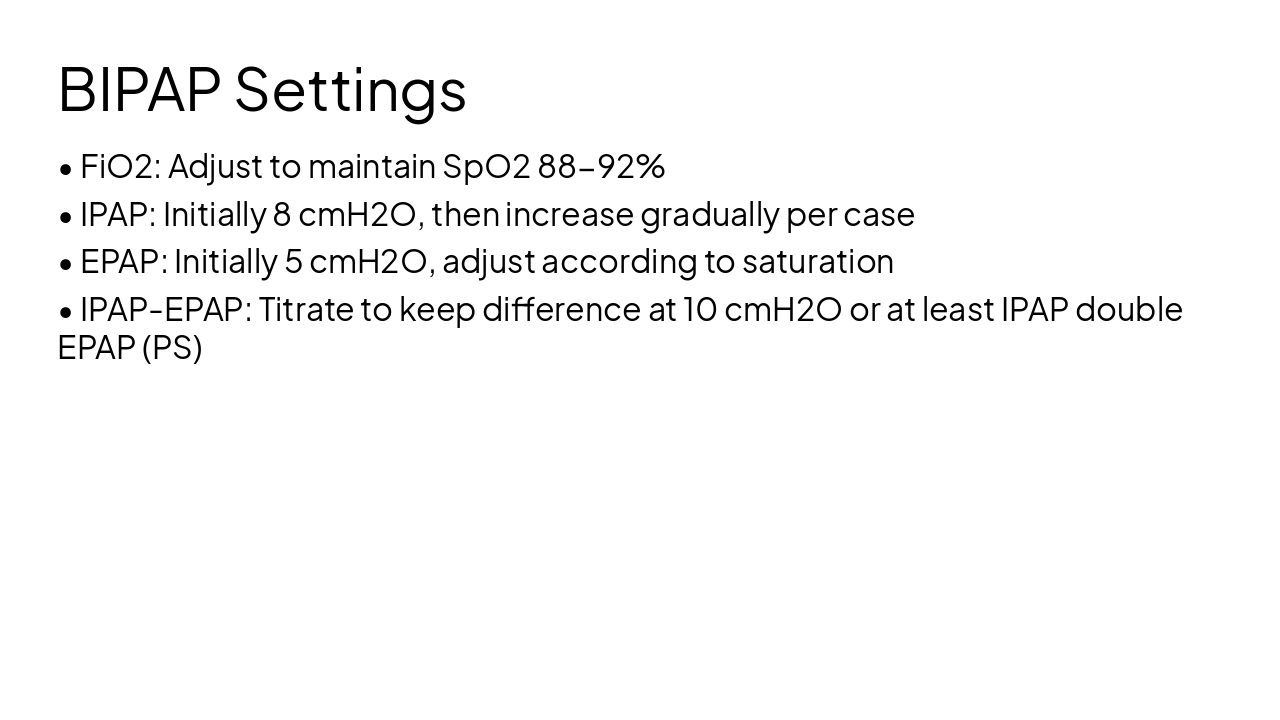
Slide 11 - BIPAP Settings

  • FiO2: Adjust to maintain SpO2 88-92%
  • IPAP: Initially 8 cmH2O, then increase gradually per case
  • EPAP: Initially 5 cmH2O, adjust according to saturation
  • IPAP-EPAP: Titrate to keep difference at 10 cmH2O or at least IPAP double EPAP (PS)
Slide 11 - BIPAP Settings
Slide 12 of 18

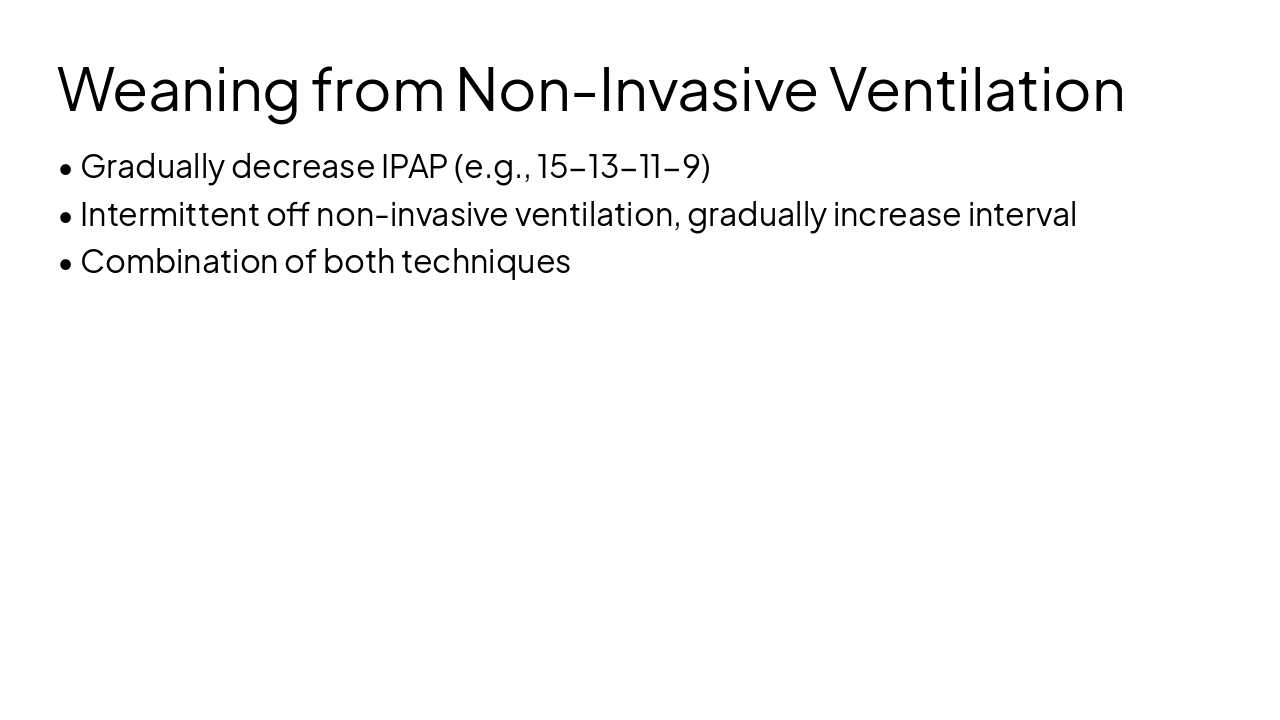
Slide 12 - Weaning from Non-Invasive Ventilation

  • Gradually decrease IPAP (e.g., 15-13-11-9)
  • Intermittent off non-invasive ventilation, gradually increase interval
  • Combination of both techniques
Slide 12 - Weaning from Non-Invasive Ventilation
Slide 13 of 18

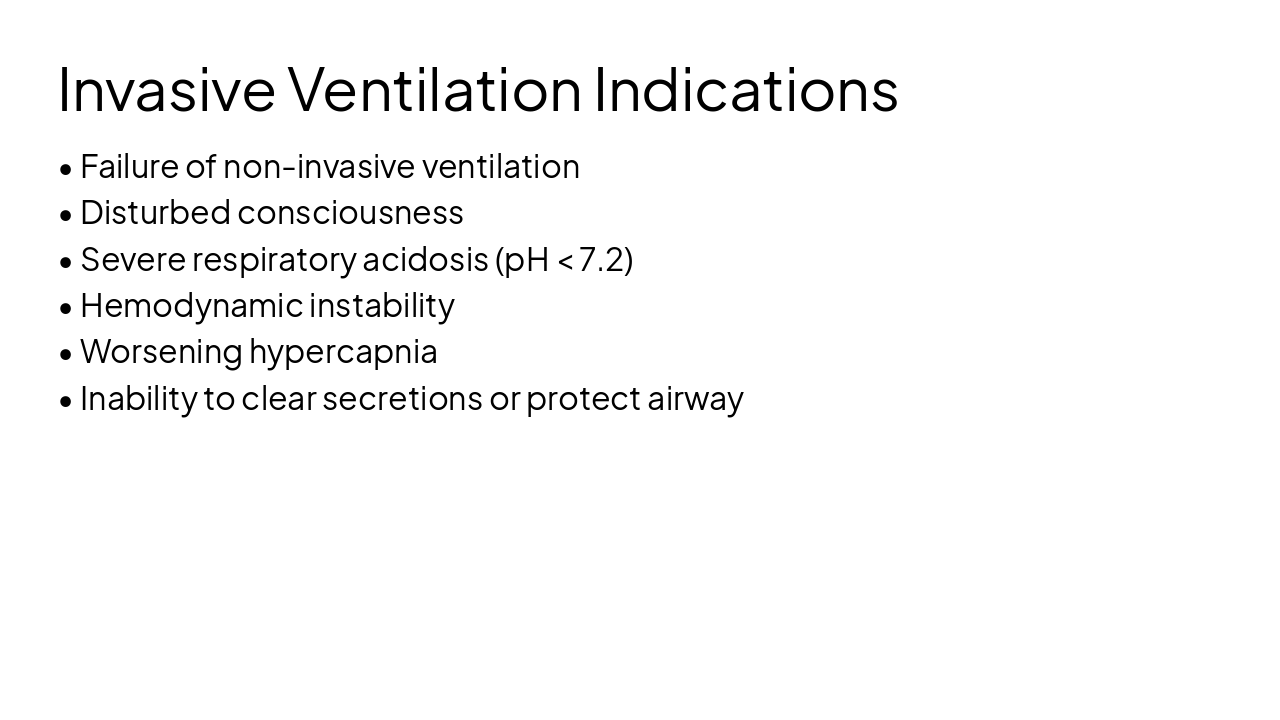
Slide 13 - Invasive Ventilation Indications

  • Failure of non-invasive ventilation
  • Disturbed consciousness
  • Severe respiratory acidosis (pH < 7.2)
  • Hemodynamic instability
  • Worsening hypercapnia
  • Inability to clear secretions or protect airway
Slide 13 - Invasive Ventilation Indications
Slide 14 of 18

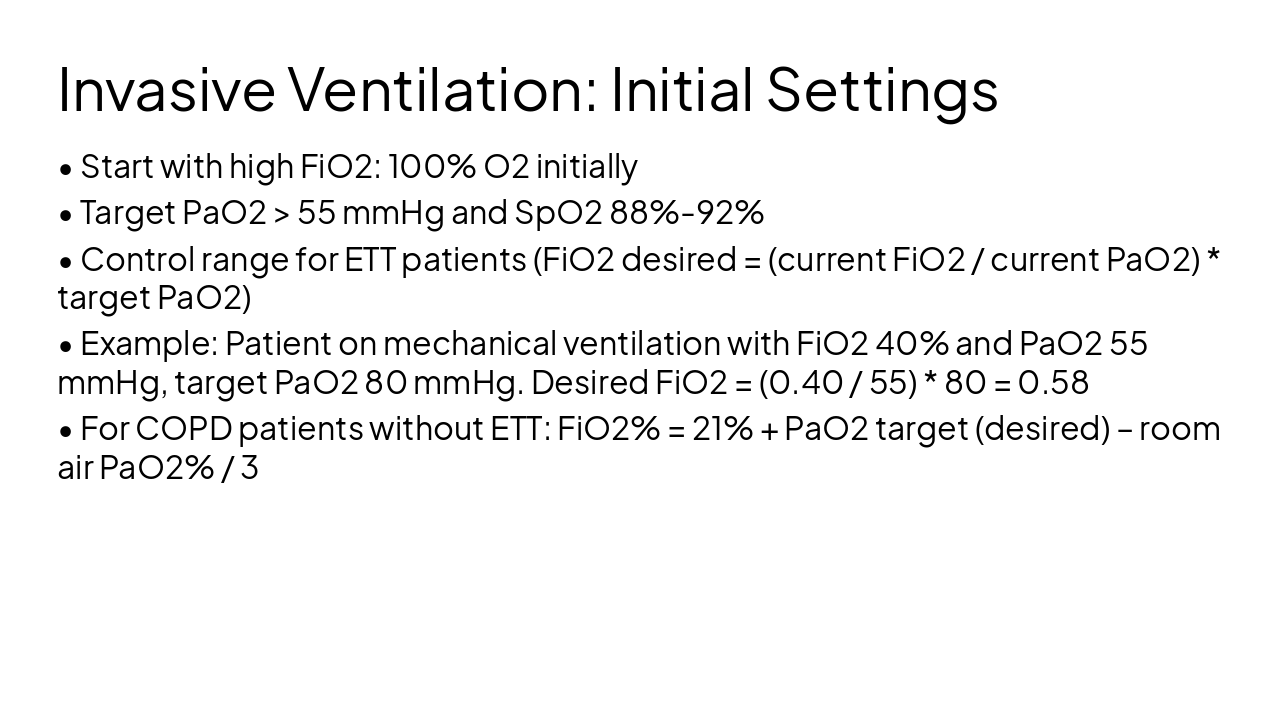
Slide 14 - Invasive Ventilation: Initial Settings

  • Start with high FiO2: 100% O2 initially
  • Target PaO2 > 55 mmHg and SpO2 88%-92%
  • Control range for ETT patients (FiO2 desired = (current FiO2 / current PaO2) target PaO2)
  • Example: Patient on mechanical ventilation with FiO2 40% and PaO2 55 mmHg, target PaO2 80 mmHg. Desired FiO2 = (0.40 / 55) 80 = 0.58
  • For COPD patients without ETT: FiO2% = 21% + PaO2 target (desired) – room air PaO2% / 3
Slide 14 - Invasive Ventilation: Initial Settings
Slide 15 of 18

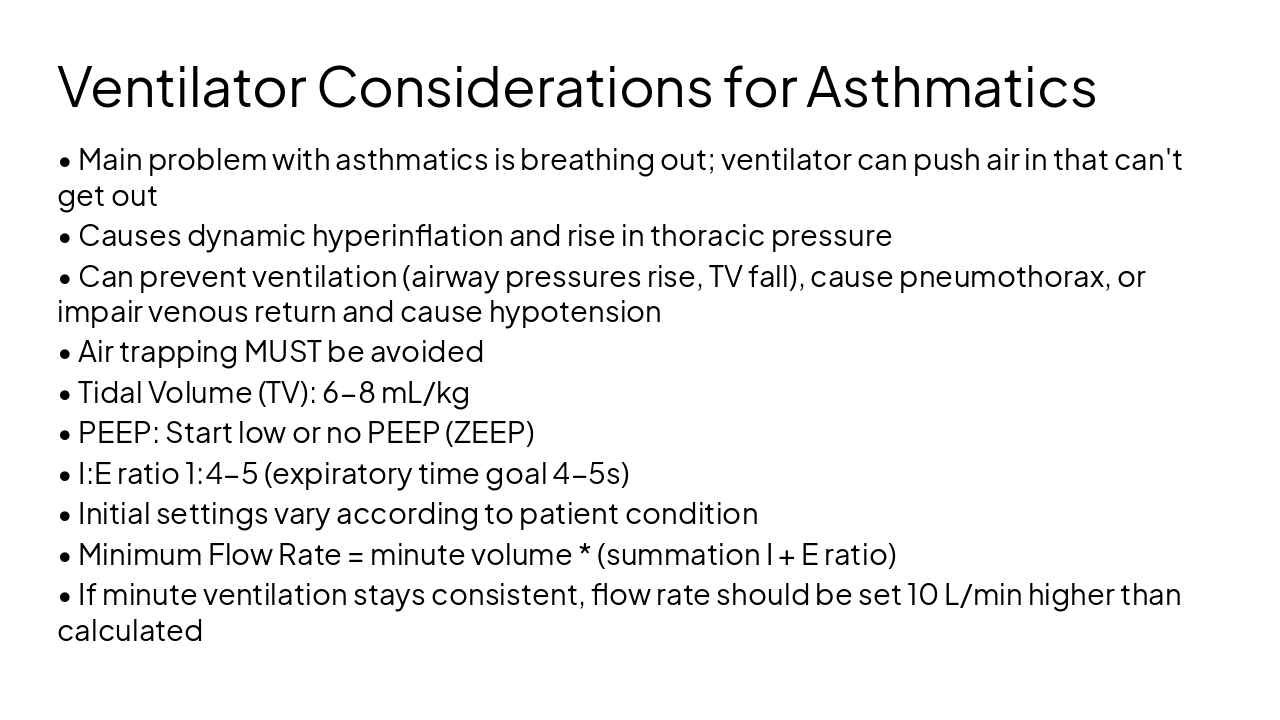
Slide 15 - Ventilator Considerations for Asthmatics

  • Main problem with asthmatics is breathing out; ventilator can push air in that can't get out
  • Causes dynamic hyperinflation and rise in thoracic pressure
  • Can prevent ventilation (airway pressures rise, TV fall), cause pneumothorax, or impair venous return and cause hypotension
  • Air trapping MUST be avoided
  • Tidal Volume (TV): 6-8 mL/kg
  • PEEP: Start low or no PEEP (ZEEP)
  • I:E ratio 1:4-5 (expiratory time goal 4-5s)
  • Initial settings vary according to patient condition
  • Minimum Flow Rate = minute volume * (summation I + E ratio)
  • If minute ventilation stays consistent, flow rate should be set 10 L/min higher than calculated
Slide 15 - Ventilator Considerations for Asthmatics
Slide 16 of 18

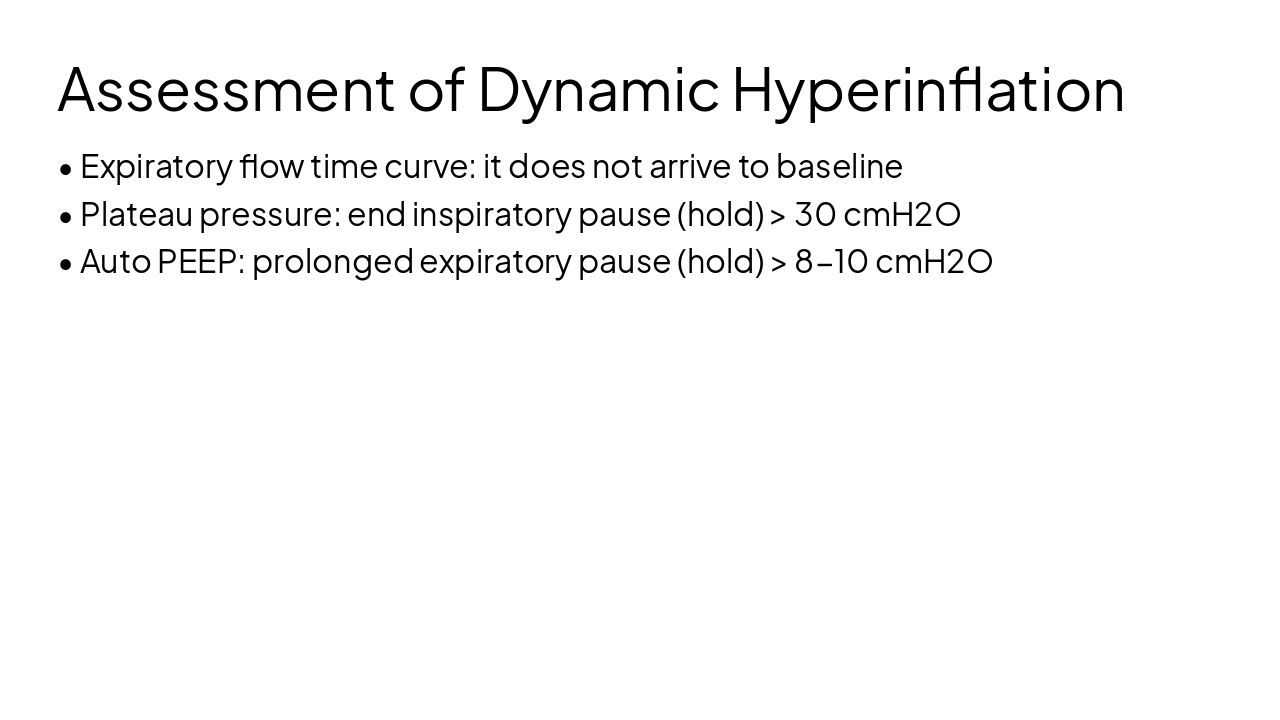
Slide 16 - Assessment of Dynamic Hyperinflation

  • Expiratory flow time curve: it does not arrive to baseline
  • Plateau pressure: end inspiratory pause (hold) > 30 cmH2O
  • Auto PEEP: prolonged expiratory pause (hold) > 8-10 cmH2O
Slide 16 - Assessment of Dynamic Hyperinflation
Slide 17 of 18

Slide 17 - Fixing Dynamic Hyperinflation (Auto-PEEP)

  • Increase expiratory time
  • Increase inspiratory flow rate (decreases inspiratory time, increases expiratory time)
  • Decrease minute ventilation (spontaneous ventilation reduced by sedation)
Slide 17 - Fixing Dynamic Hyperinflation (Auto-PEEP)
Slide 18 of 18

Slide 18 - Understanding Airway Pressures

  • Perform an inspiratory pause to measure plateau pressure (PPLAT)
  • Plateau pressure represents alveolar pressure
  • Peak pressure is a combination of alveolar pressure and airway resistance
  • Causes of Raised Peak Airway Pressure:
  • Obstruction or kinking or narrowing of the endotracheal tube
  • Excessive airway secretions
  • Bronchospasm
  • Clogged heat-moisture exchangers (HME)
  • Causes of Raised Plateau Pressure (Low Static Compliance/Stiff Lung):
  • Pneumonic consolidation
  • Pulmonary edema
  • Pleural effusions
  • Abdominal distension
  • Atelectasis
  • ARDS
Slide 18 - Understanding Airway Pressures

Discover More Presentations

Explore thousands of AI-generated presentations for inspiration

Browse Presentations
Powered by AI

Create Your Own Presentation

Generate professional presentations in seconds with Karaf's AI. Customize this presentation or start from scratch.

Create New Presentation

Powered by Karaf.ai — AI-Powered Presentation Generator