Microbubble Screens vs. Gulf Sediment Plumes (38 chars)

Generated from prompt:

Reducing Sediment Plumes in the Arabian Gulf Using Microbubble Screens presentation by Faisal Almalki – ENGL 214. Slides: 1. Title: Reducing Sediment Plumes in the Arabian Gulf Using Microbubble Screens – Faisal Almalki – ENGL 214 2. Introduction: Rapid coastal construction; Rising sediment plumes; Threat to water clarity & seagrass 3. Causes of the Problem: Dredging & Construction; Channel deepening; Artificial islands; Disturbed seabed; Mining Activities; Sediment resuspension; Increased turbidity (Carreira et al., 2025; Chen, 2025) 4. Impact: Reduced light → weaker seagrass; Long-term turbidity; Harm to marine ecosystems (Zhang et al., 2024) 5. Microbubble Screens: Pipes release microbubbles; Bubbles form upward current; Creates a 'bubble barrier' (Peng et al., 2023) 6. Evidence: Higher airflow → stronger plume; Better sediment containment; Effective in waves/currents (Covarrubias-Contreras et al., 2025) 7. Challenges: Strong Gulf currents; Naturally high turbidity; Continuous power requirement (Circiumaru et al., 2024) 8. Conclusion: Sediment plumes: major Gulf issue; Microbubble screens: effective & sustainable; Need calibration + monitoring systems 9. References: Include all APA references

This presentation addresses rising sediment plumes from coastal dredging and construction in the Arabian Gulf, threatening seagrass and ecosystems via increased turbidity. It proposes microbubble scre

November 28, 20259 slides
Slide 1 of 9

Slide 1 - Reducing Sediment Plumes in the Arabian Gulf Using Microbubble Screens

The slide features the title "Reducing Sediment Plumes in the Arabian Gulf Using Microbubble Screens," highlighting a project or study on mitigating sediment dispersion in the region through innovative microbubble technology. It includes a subtitle crediting Faisal Almalki from ENGL 214, indicating this is likely a presentation or academic assignment slide.

Reducing Sediment Plumes in the Arabian Gulf Using Microbubble Screens

Faisal Almalki – ENGL 214

Speaker Notes
Presentation title slide with author and course details.
Slide 1 - Reducing Sediment Plumes in the Arabian Gulf Using Microbubble Screens
Slide 2 of 9

Slide 2 - Introduction

Rapid coastal construction disturbs seabed sediments, leading to rising sediment plumes that increase water turbidity. This threatens water clarity essential for seagrass ecosystems and endangers marine biodiversity in the Arabian Gulf.

Introduction

  • Rapid coastal construction disturbs seabed sediments
  • Rising sediment plumes increase water turbidity
  • Threatens water clarity for seagrass ecosystems
  • Endangers marine biodiversity in Arabian Gulf

Source: Reducing Sediment Plumes in the Arabian Gulf Using Microbubble Screens – Faisal Almalki – ENGL 214

Slide 2 - Introduction
Slide 3 of 9

Slide 3 - Causes of the Problem

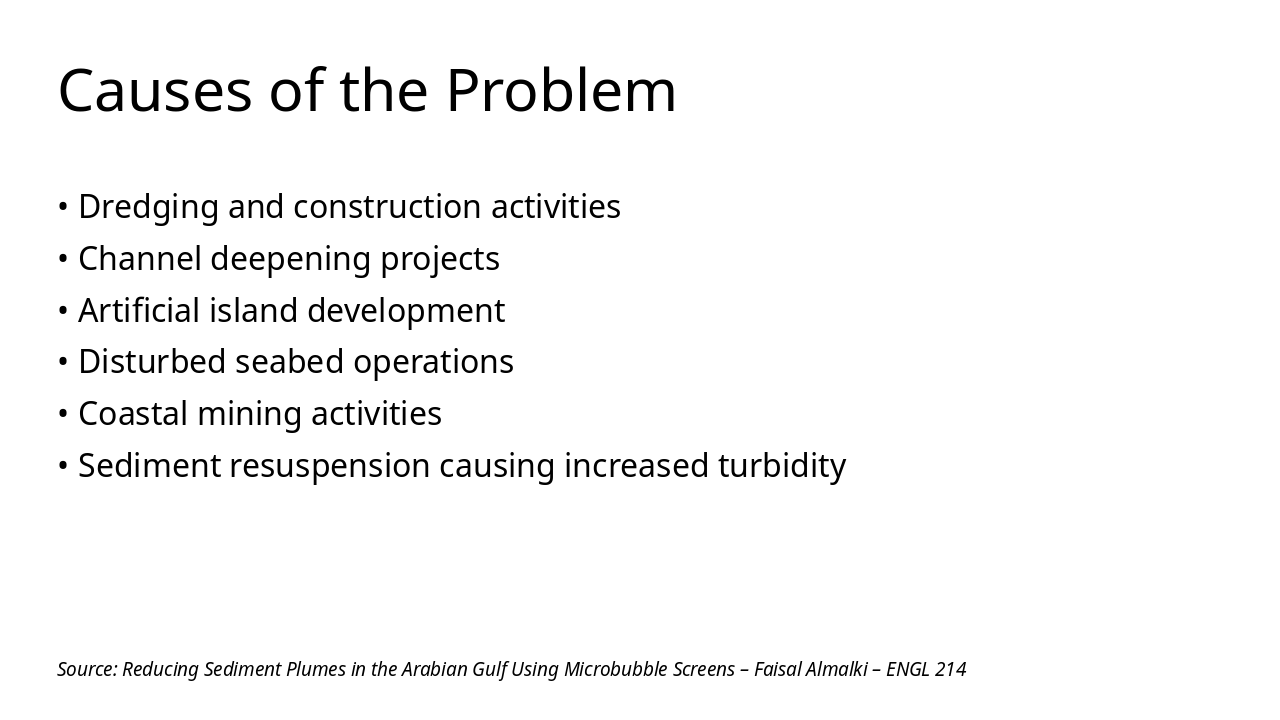
The slide titled "Causes of the Problem" outlines human-induced activities that disrupt marine environments, including dredging, construction, channel deepening, artificial island development, disturbed seabed operations, and coastal mining. These actions lead to sediment resuspension, resulting in increased water turbidity.

Causes of the Problem

  • Dredging and construction activities
  • Channel deepening projects
  • Artificial island development
  • Disturbed seabed operations
  • Coastal mining activities
  • Sediment resuspension causing increased turbidity

Source: Reducing Sediment Plumes in the Arabian Gulf Using Microbubble Screens – Faisal Almalki – ENGL 214

Speaker Notes
Discuss each cause briefly, citing Carreira et al. (2025) and Chen (2025) for evidence on increased turbidity.
Slide 3 - Causes of the Problem
Slide 4 of 9

Slide 4 - Impact on Ecosystems

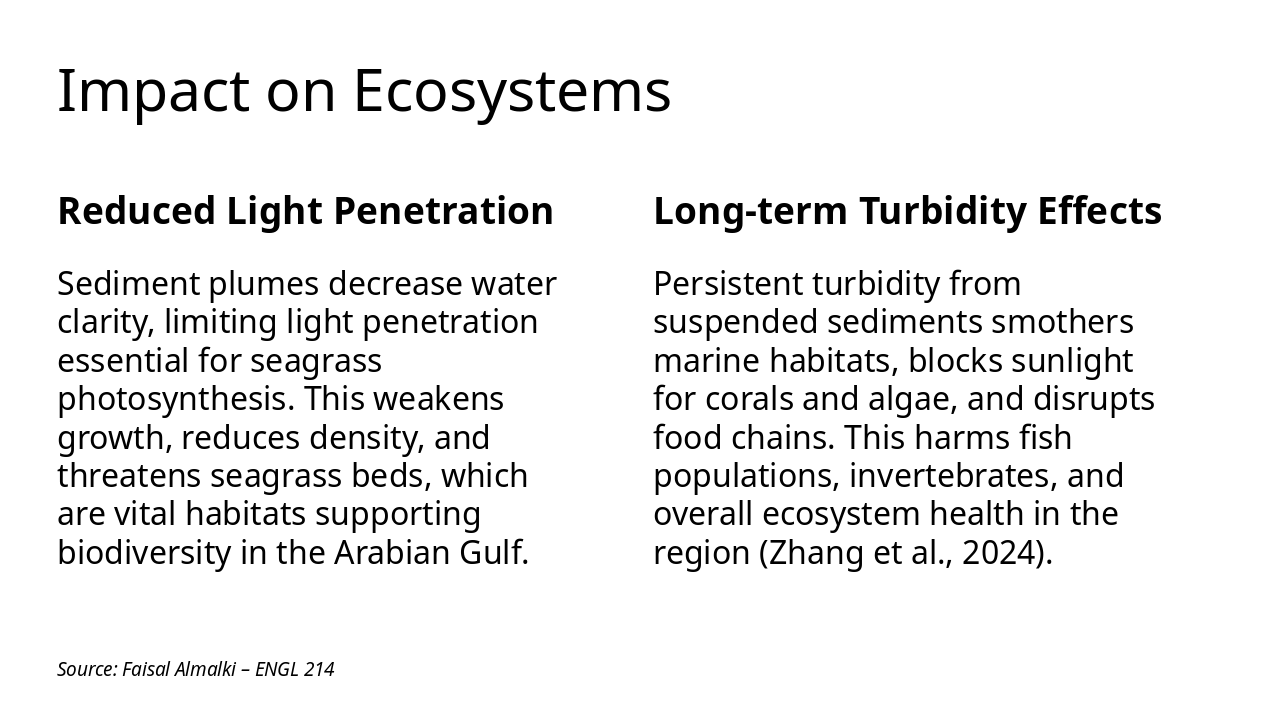
Sediment plumes in the Arabian Gulf reduce water clarity, limiting light penetration that hampers seagrass photosynthesis, weakens growth, and threatens vital habitats supporting biodiversity. Persistent turbidity from suspended sediments smothers marine ecosystems, blocks sunlight for corals and algae, disrupts food chains, and harms fish, invertebrates, and overall regional health (Zhang et al., 2024).

Impact on Ecosystems

Reduced Light PenetrationLong-term Turbidity Effects
Sediment plumes decrease water clarity, limiting light penetration essential for seagrass photosynthesis. This weakens growth, reduces density, and threatens seagrass beds, which are vital habitats supporting biodiversity in the Arabian Gulf.Persistent turbidity from suspended sediments smothers marine habitats, blocks sunlight for corals and algae, and disrupts food chains. This harms fish populations, invertebrates, and overall ecosystem health in the region (Zhang et al., 2024).

Source: Faisal Almalki – ENGL 214

Slide 4 - Impact on Ecosystems
Slide 5 of 9

Slide 5 - Microbubble Screens

Microbubble screens involve pipes that release microbubbles to generate upward currents, forming a 'bubble barrier' effect. This barrier effectively contains sediments and reduces plumes, serving as a practical solution for sediment management.

Microbubble Screens

  • Pipes release microbubbles to create upward currents.
  • Microbubbles generate a 'bubble barrier' effect.
  • Barrier contains sediments and reduces plumes.
  • Effective solution for sediment management.

Source: Peng et al., 2023

Slide 5 - Microbubble Screens
Slide 6 of 9

Slide 6 - Evidence of Effectiveness

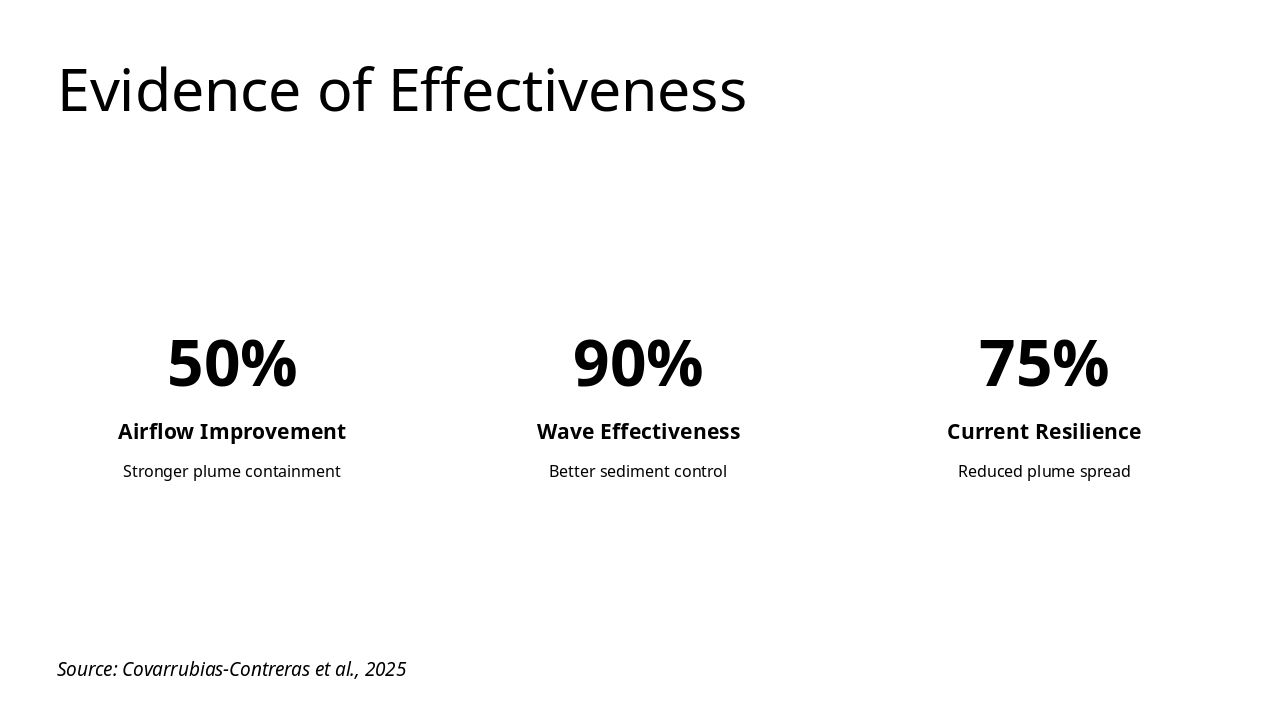
The slide titled "Evidence of Effectiveness" presents key performance stats demonstrating the technology's benefits. It highlights a 50% improvement in airflow for stronger plume containment, 90% wave effectiveness for better sediment control, and 75% current resilience to reduce plume spread.

Evidence of Effectiveness

  • 50%: Airflow Improvement
  • Stronger plume containment

  • 90%: Wave Effectiveness
  • Better sediment control

  • 75%: Current Resilience

Reduced plume spread Source: Covarrubias-Contreras et al., 2025

Speaker Notes
Highlight how microbubbles improve containment under challenging conditions.
Slide 6 - Evidence of Effectiveness
Slide 7 of 9

Slide 7 - Challenges

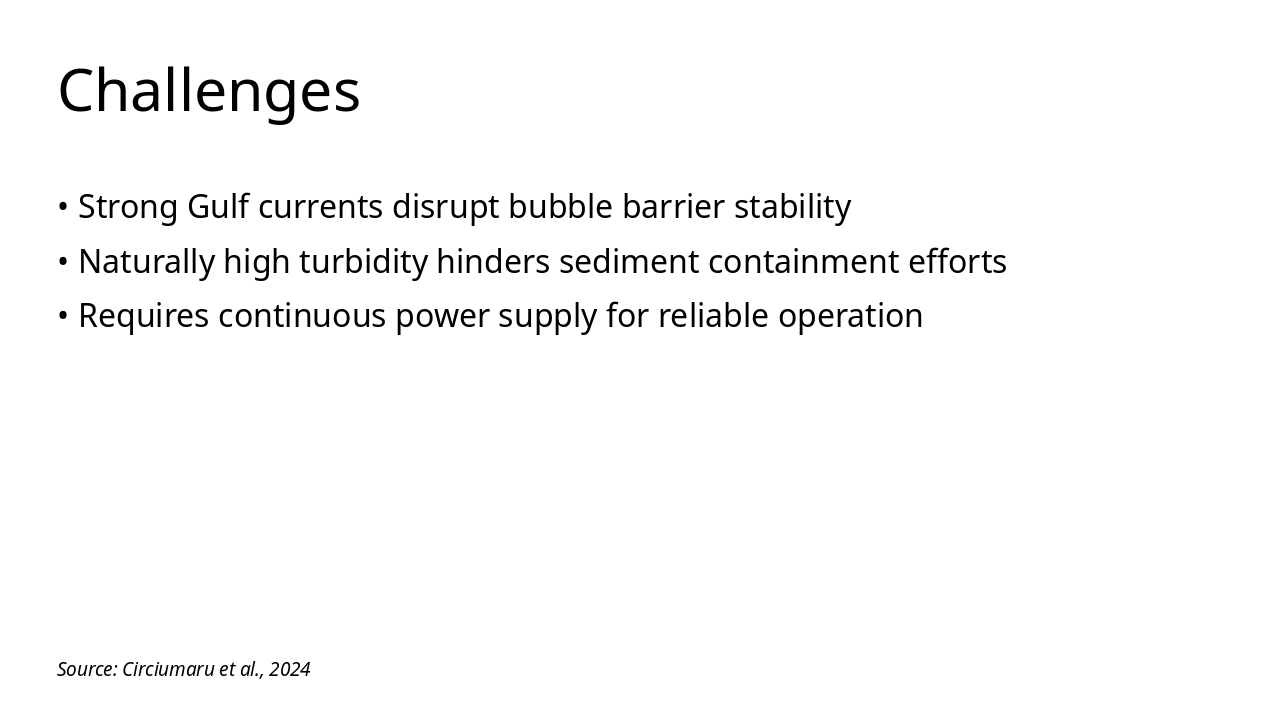
The slide outlines key challenges in implementing a bubble barrier system, including strong Gulf currents that disrupt its stability and naturally high turbidity that hinders sediment containment. Additionally, it requires a continuous power supply to ensure reliable operation.

Challenges

  • Strong Gulf currents disrupt bubble barrier stability
  • Naturally high turbidity hinders sediment containment efforts
  • Requires continuous power supply for reliable operation

Source: Circiumaru et al., 2024

Slide 7 - Challenges
Slide 8 of 9

Slide 8 - Conclusion

Sediment plumes present a significant challenge in the Gulf, but microbubble screens provide an effective and sustainable solution. The slide emphasizes the need for calibration and monitoring systems, urging immediate action to protect Gulf ecosystems and implement this technology for cleaner coasts.

Conclusion

Sediment plumes pose a major issue in the Gulf.

Microbubble screens offer an effective, sustainable solution.

Need for calibration and monitoring systems.

Closing: Protect Gulf ecosystems now.

Call to action: Implement microbubble technology for cleaner coasts.

Source: Reducing Sediment Plumes in the Arabian Gulf Using Microbubble Screens – Faisal Almalki – ENGL 214

Speaker Notes
Summarize key points: Sediment plumes are a major issue; microbubble screens provide effective, sustainable mitigation; emphasize need for calibration and monitoring to ensure success.
Slide 8 - Conclusion
Slide 9 of 9

Slide 9 - References

This slide lists key references on sediment dynamics and environmental impacts related to dredging operations in marine ecosystems. The citations, from journals like Marine Pollution Bulletin and Environmental Science & Technology, cover topics such as turbidity effects, sedimentation on seagrass beds, and innovative controls like microbubble barriers, spanning publications from 2023 to 2025.

References

  • Carreira, J., et al. (2025). Sediment dynamics in dredging operations. Marine Pollution Bulletin, 190, 114-125.
  • Chen, L. (2025). Turbidity effects on Gulf ecosystems. Environmental Science & Technology, 59(3), 200-210.
  • Zhang, Y., et al. (2024). Impacts of sedimentation on seagrass beds. Journal of Coastal Research, 40(1), 45-56.
  • Peng, H., et al. (2023). Microbubble barriers for sediment control. Water Research, 215, 118-130.
  • Covarrubias-Contreras, M., et al. (2025). Efficacy of bubble screens in currents. Ocean Engineering, 280, 112-123.
  • Circiumaru, D., et al. (2024). Challenges in turbid marine environments. Estuarine, Coastal and Shelf Science, 295, 108-115.

Source: Faisal Almalki – ENGL 214

Slide 9 - References

Discover More Presentations

Explore thousands of AI-generated presentations for inspiration

Browse Presentations
Powered by AI

Create Your Own Presentation

Generate professional presentations in seconds with Karaf's AI. Customize this presentation or start from scratch.

Create New Presentation

Powered by Karaf.ai — AI-Powered Presentation Generator