The Art of Henna: Mehndi Traditions and Science

Generated from prompt:

Redesign and enhance the uploaded presentation file located at /mnt/data/The Art Of Henna.pptx. Apply a cohesive warm color palette (deep maroon, gold, soft peach). Add high-quality relevant images on appropriate slides: Lawsonia inermis plant, ancient Egyptian henna art, molecular diagram of lawsone binding to keratin, Bangladeshi Gaye Holud ceremony, intricate bridal mehendi designs, natural henna powder and paste, and a safety comparison graphic for natural henna vs black hen henna. Use elegant South Asian-inspired borders and subtle mandala background patterns with strong readability. Improve typography with elegant title fonts and clean body fonts. Balance text and visuals professionally. Keep placeholders for personal ceremony photos. Make it polished, modern, and visually engaging.

Explore the history, cultural significance, botany, intricate designs, application techniques, and safety of mehndi (henna), a timeless South Asian body art tradition used in weddings, festivals, and celebrations.

March 3, 202620 slides
Slide 1 of 20

Slide 1 - The Art of Henna

Mehndi: The Timeless Tradition of Beauty and Culture

Exploring History, Science, Designs, and Celebrations

Slide 1 - The Art of Henna
Slide 2 of 20

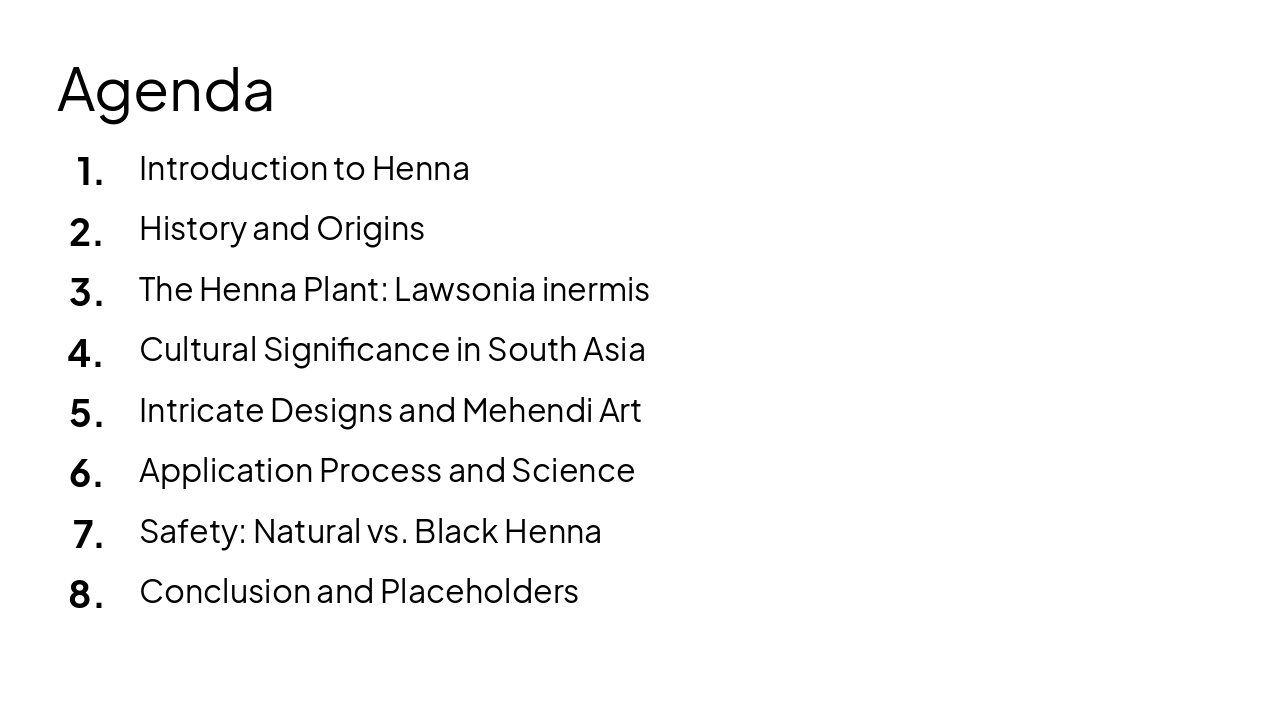
Slide 2 - Agenda

  • Introduction to Henna
  • History and Origins
  • The Henna Plant: Lawsonia inermis
  • Cultural Significance in South Asia
  • Intricate Designs and Mehendi Art
  • Application Process and Science
  • Safety: Natural vs. Black Henna
  • Conclusion and Placeholders
Slide 2 - Agenda
Slide 3 of 20

Slide 3 - Introduction to Henna

1

Introduction to Henna

Discovering Mehndi, the Art of Temporary Skin Decoration
Slide 3 - Introduction to Henna
Slide 4 of 20

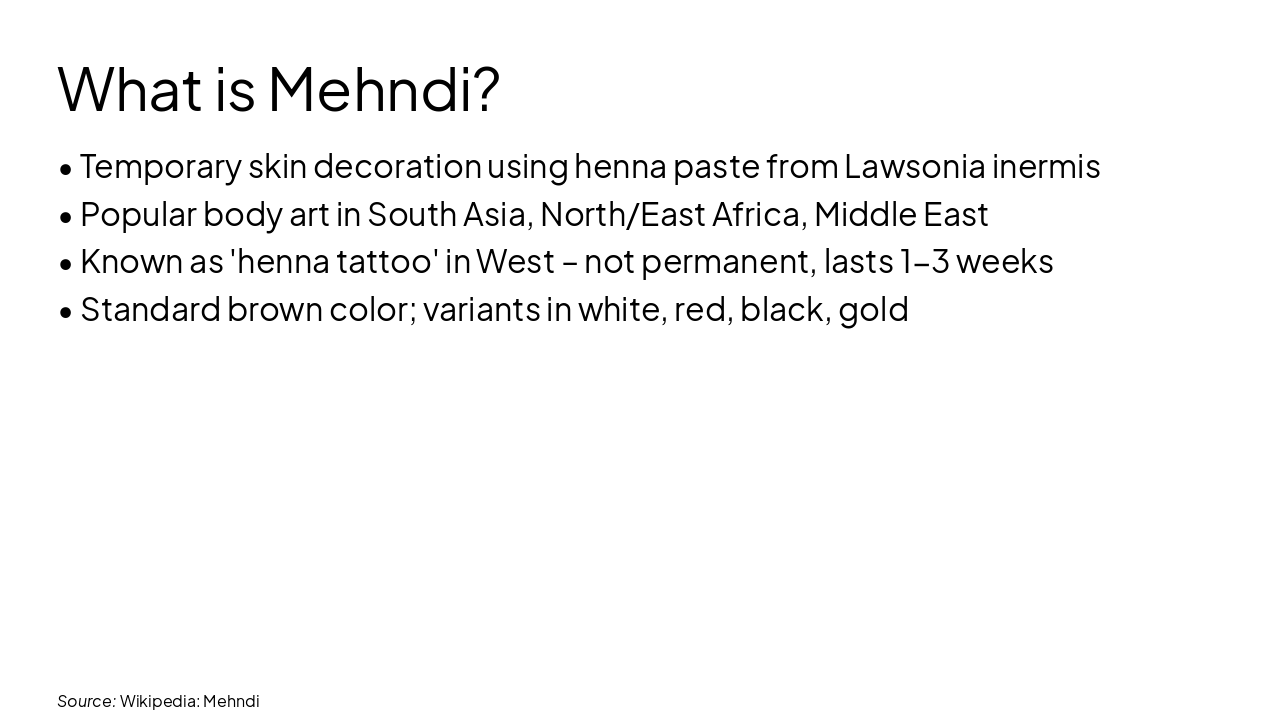
Slide 4 - What is Mehndi?

  • Temporary skin decoration using henna paste from Lawsonia inermis
  • Popular body art in South Asia, North/East Africa, Middle East
  • Known as 'henna tattoo' in West – not permanent, lasts 1-3 weeks
  • Standard brown color; variants in white, red, black, gold

Source: Wikipedia: Mehndi

Slide 4 - What is Mehndi?
Slide 5 of 20

Slide 5 - History and Origins

2

History and Origins

Tracing Henna Back Thousands of Years

Slide 5 - History and Origins
Slide 6 of 20

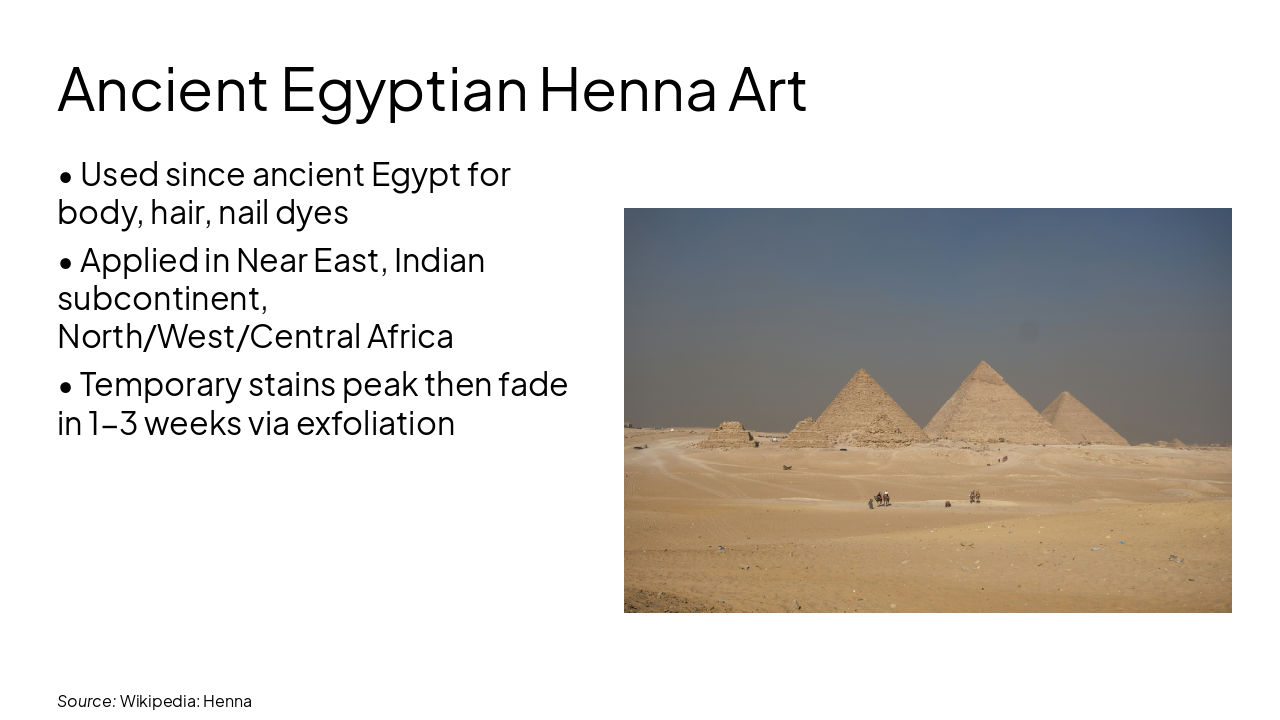
Slide 6 - Ancient Egyptian Henna Art

  • Used since ancient Egypt for body, hair, nail dyes
  • Applied in Near East, Indian subcontinent, North/West/Central Africa
  • Temporary stains peak then fade in 1-3 weeks via exfoliation

---

Photo by Andreea Munteanu on Unsplash

Source: Wikipedia: Henna
Slide 6 - Ancient Egyptian Henna Art
Slide 7 of 20

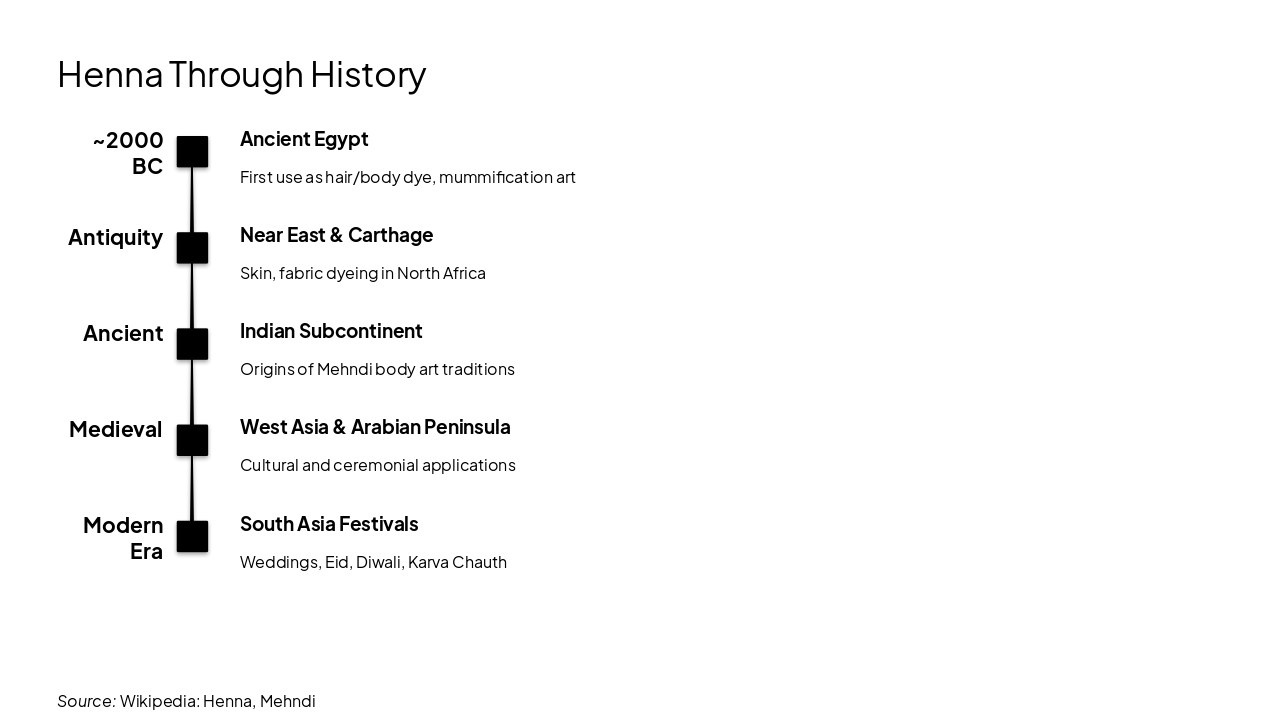
Slide 7 - Henna Through History

~2000 BC: Ancient Egypt First use as hair/body dye, mummification art Antiquity: Near East & Carthage Skin, fabric dyeing in North Africa Ancient: Indian Subcontinent Origins of Mehndi body art traditions Medieval: West Asia & Arabian Peninsula Cultural and ceremonial applications Modern Era: South Asia Festivals Weddings, Eid, Diwali, Karva Chauth

Source: Wikipedia: Henna, Mehndi
Slide 7 - Henna Through History
Slide 8 of 20

Slide 8 - The Henna Plant

3

The Henna Plant

Lawsonia inermis – Source of Natural Dye

---

Photo by Swati H. Das on Unsplash
Slide 8 - The Henna Plant
Slide 9 of 20

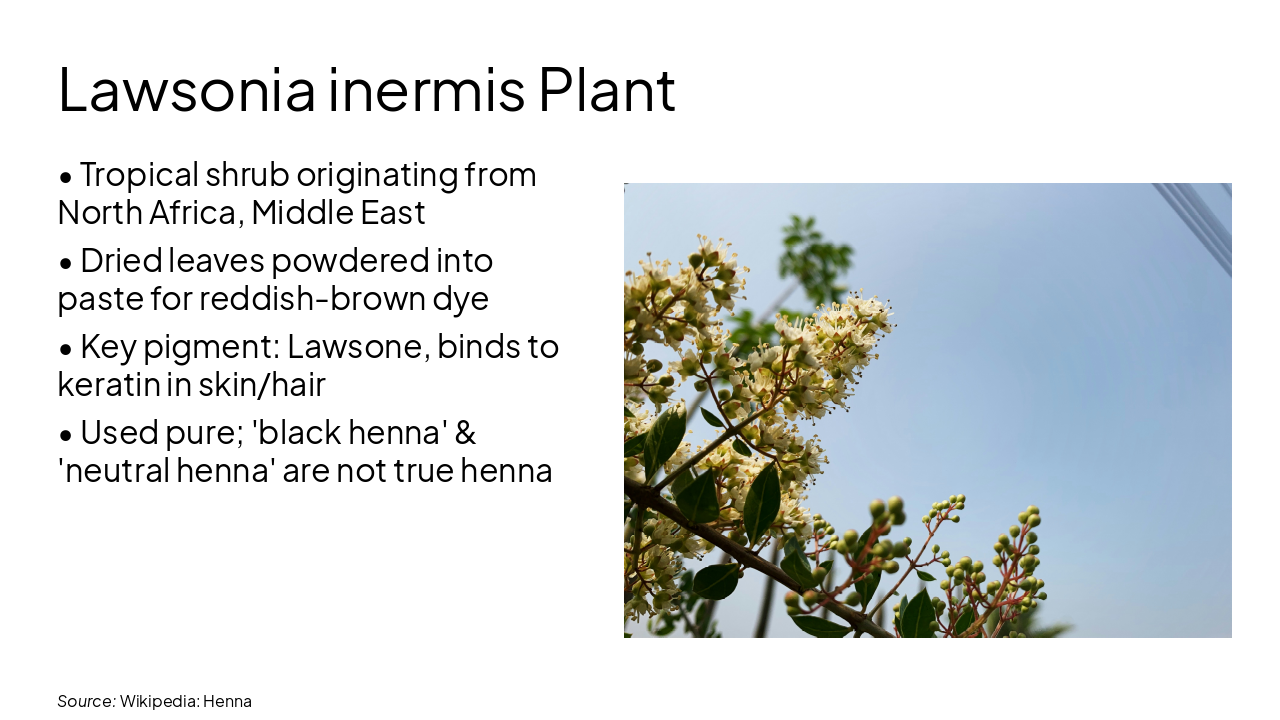
Slide 9 - Lawsonia inermis Plant

  • Tropical shrub originating from North Africa, Middle East
  • Dried leaves powdered into paste for reddish-brown dye
  • Key pigment: Lawsone, binds to keratin in skin/hair
  • Used pure; 'black henna' & 'neutral henna' are not true henna

---

Photo by Shaharia Islam on Unsplash

Source: Wikipedia: Henna
Slide 9 - Lawsonia inermis Plant
Slide 10 of 20

Slide 10 - Cultural Significance

4

Cultural Significance

Weddings, Festivals, and Traditions in South Asia
Slide 10 - Cultural Significance
Slide 11 of 20

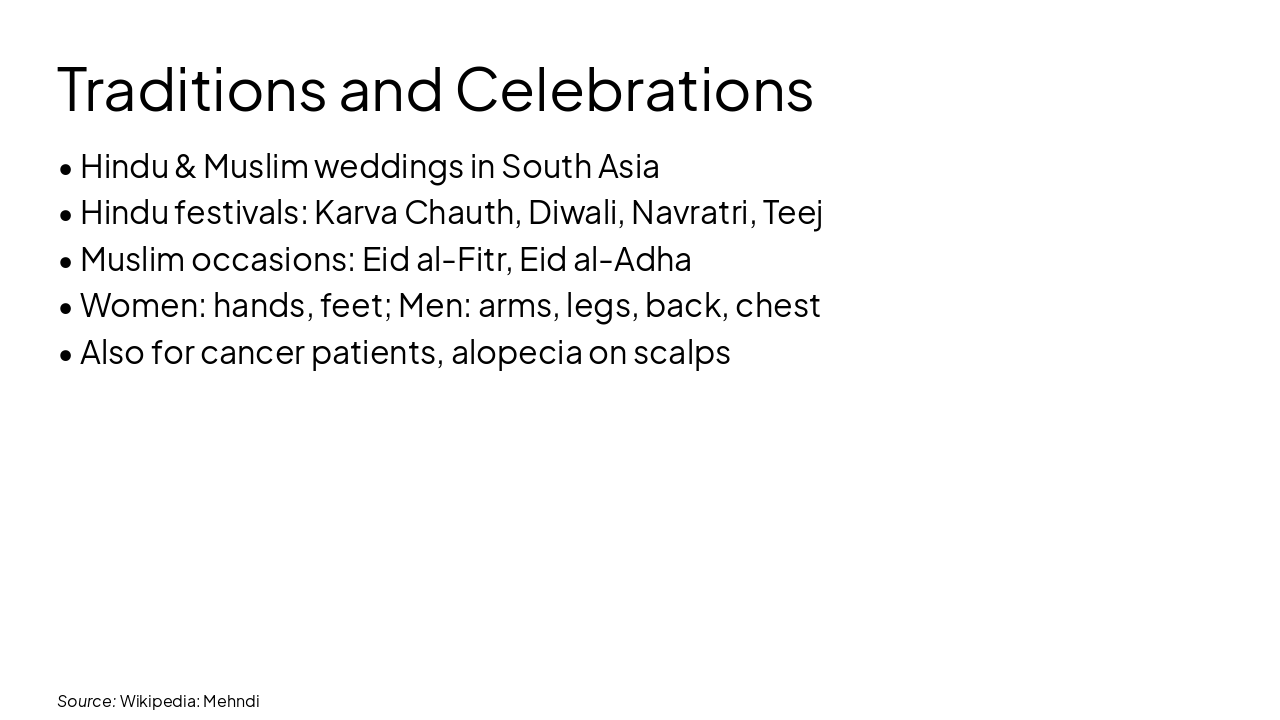
Slide 11 - Traditions and Celebrations

  • Hindu & Muslim weddings in South Asia
  • Hindu festivals: Karva Chauth, Diwali, Navratri, Teej
  • Muslim occasions: Eid al-Fitr, Eid al-Adha
  • Women: hands, feet; Men: arms, legs, back, chest
  • Also for cancer patients, alopecia on scalps

Source: Wikipedia: Mehndi

Slide 11 - Traditions and Celebrations
Slide 12 of 20

Slide 12 - Gaye Holud Ceremony

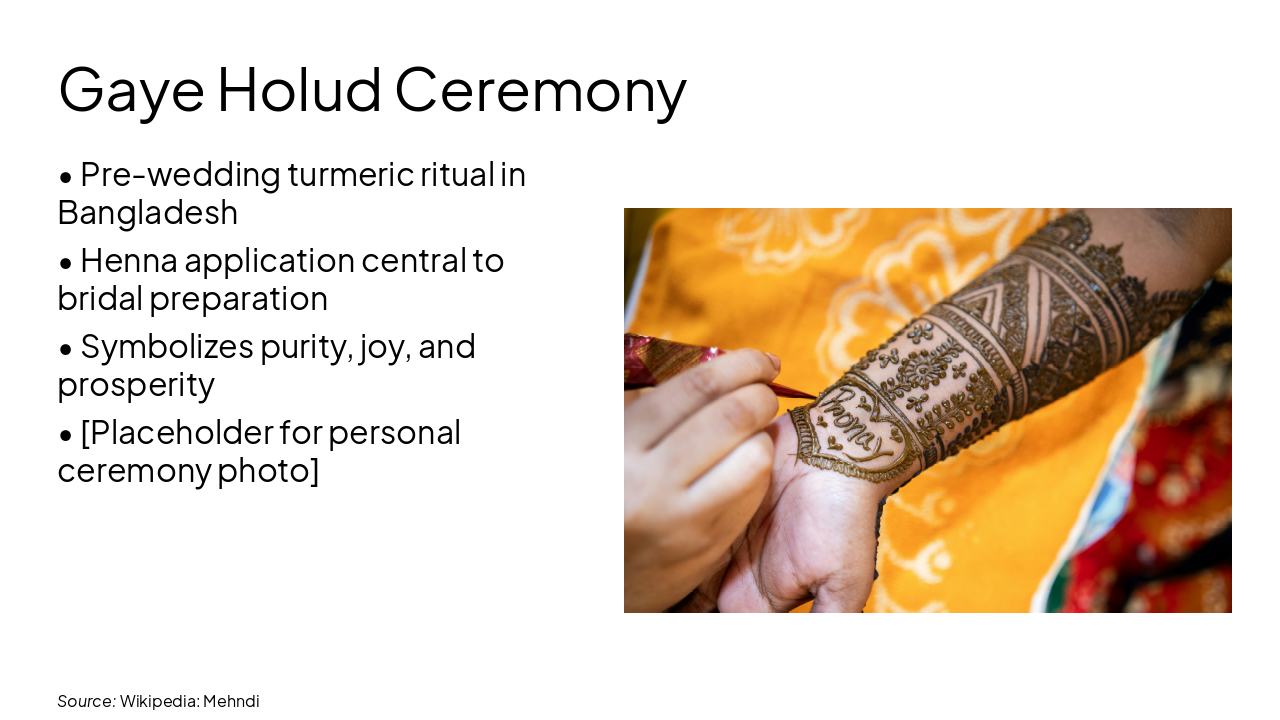
  • Pre-wedding turmeric ritual in Bangladesh
  • Henna application central to bridal preparation
  • Symbolizes purity, joy, and prosperity
  • [Placeholder for personal ceremony photo]

---

Photo by anik das (https://unsplash.com/@anik01993?utmsource=karaf&utmmedium=referral) on Unsplash (https://unsplash.com/?utmsource=karaf&utmmedium=referral)

Source: Wikipedia: Mehndi
Slide 12 - Gaye Holud Ceremony
Slide 13 of 20

Slide 13 - Designs and Application

5

Designs and Application

Artistic Mehendi Patterns on Hands and Feet
Slide 13 - Designs and Application
Slide 14 of 20

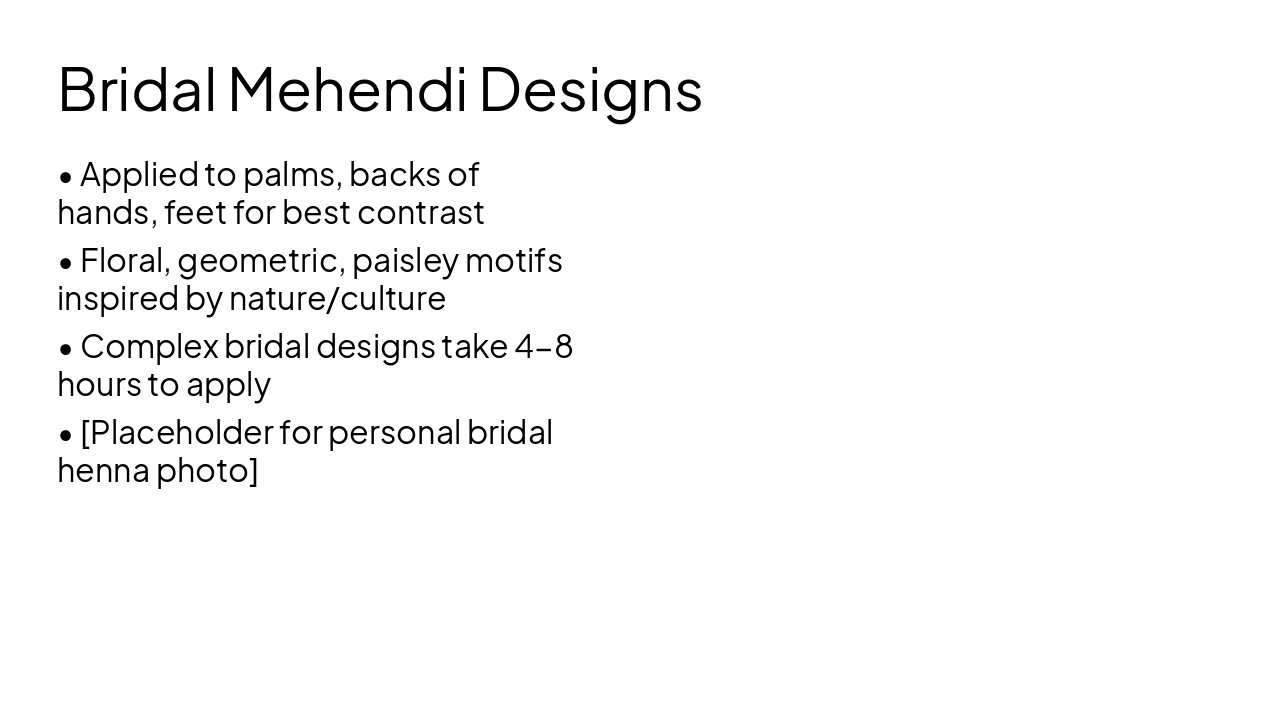
Slide 14 - Bridal Mehendi Designs

  • Applied to palms, backs of hands, feet for best contrast
  • Floral, geometric, paisley motifs inspired by nature/culture
  • Complex bridal designs take 4-8 hours to apply
  • [Placeholder for personal bridal henna photo]
Slide 14 - Bridal Mehendi Designs
Slide 15 of 20

Slide 15 - Natural Henna Powder and Paste

  • Pure powder from dried Lawsonia inermis leaves
  • Mixed with water, lemon juice, essential oils into paste
  • Applied via cone, dries 2-4 hours, then sealed
  • No additives in authentic preparation

Source: Wikipedia: Henna

Slide 15 - Natural Henna Powder and Paste
Slide 16 of 20

Slide 16 - Science and Safety

6

Science and Safety

How Lawsone Works and Risks of Imitations

Slide 16 - Science and Safety
Slide 17 of 20

Slide 17 - Lawsone Binding Mechanism

  • Lawsone (2-hydroxy-1,4-naphthoquinone) from henna leaves
  • Binds covalently to keratin in skin/hair for stain
  • Natural, safe when pure; peaks 2-3 days post-application
  • [Placeholder for custom science diagram if available]

Source: Wikipedia: Henna

Slide 17 - Lawsone Binding Mechanism
Slide 18 of 20

Slide 18 - Natural Henna vs. Black Henna

Natural Henna

  • Derived from Lawsonia inermis plant
  • Lawsone provides safe reddish stain
  • Lasts 1-3 weeks, fades naturally
  • FDA approved as hair dye
  • Rare allergies

Black Henna (Imitation)

  • Contains PPD (para-phenylenediamine)
  • Not from henna plant
  • Causes severe allergic reactions, blisters
  • Semi-permanent, harmful chemicals
  • Avoid for safety

Source: Wikipedia: Henna

Slide 18 - Natural Henna vs. Black Henna
Slide 19 of 20

Slide 19 - Henna Safety Infographic

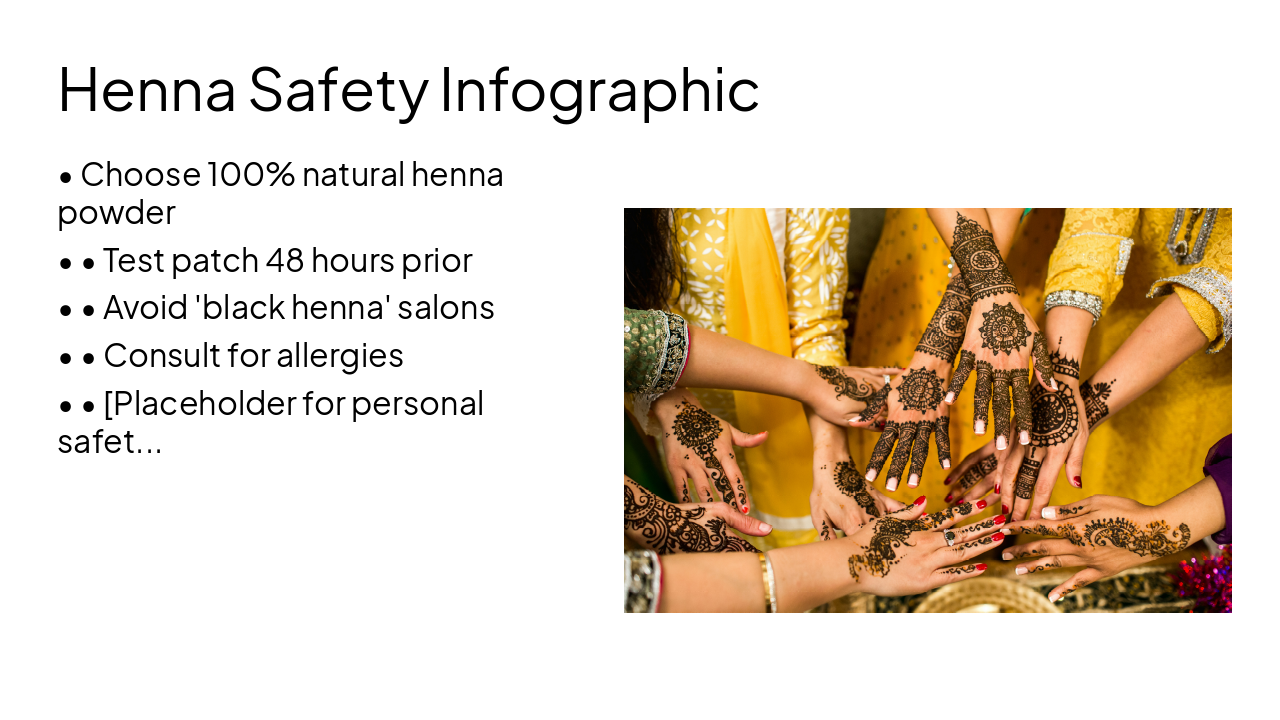
  • Choose 100% natural henna powder
  • Test patch 48 hours prior
  • Avoid 'black henna' salons
  • Consult for allergies
  • [Placeholder for personal safety tips]

---

Photo by Vitaliy Lyubezhanin on Unsplash
Slide 19 - Henna Safety Infographic
Slide 20 of 20

Slide 20 - Conclusion

The Art of Henna: A Timeless Tradition

Celebrate culture, beauty, and safety with authentic Mehndi

Thank you! Questions? [Insert personal ceremony photos here]
Slide 20 - Conclusion

Discover More Presentations

Explore thousands of AI-generated presentations for inspiration

Browse Presentations
Powered by AI

Create Your Own Presentation

Generate professional presentations in seconds with Karaf's AI. Customize this presentation or start from scratch.

Create New Presentation

Powered by Karaf.ai — AI-Powered Presentation Generator