Slide 1 of 10
Slide 1 - Title Slide
Construction Materials
Properties, Uses and Environmental Impact
---
Photo by Daniel Mironov on Unsplash

Generated from prompt:
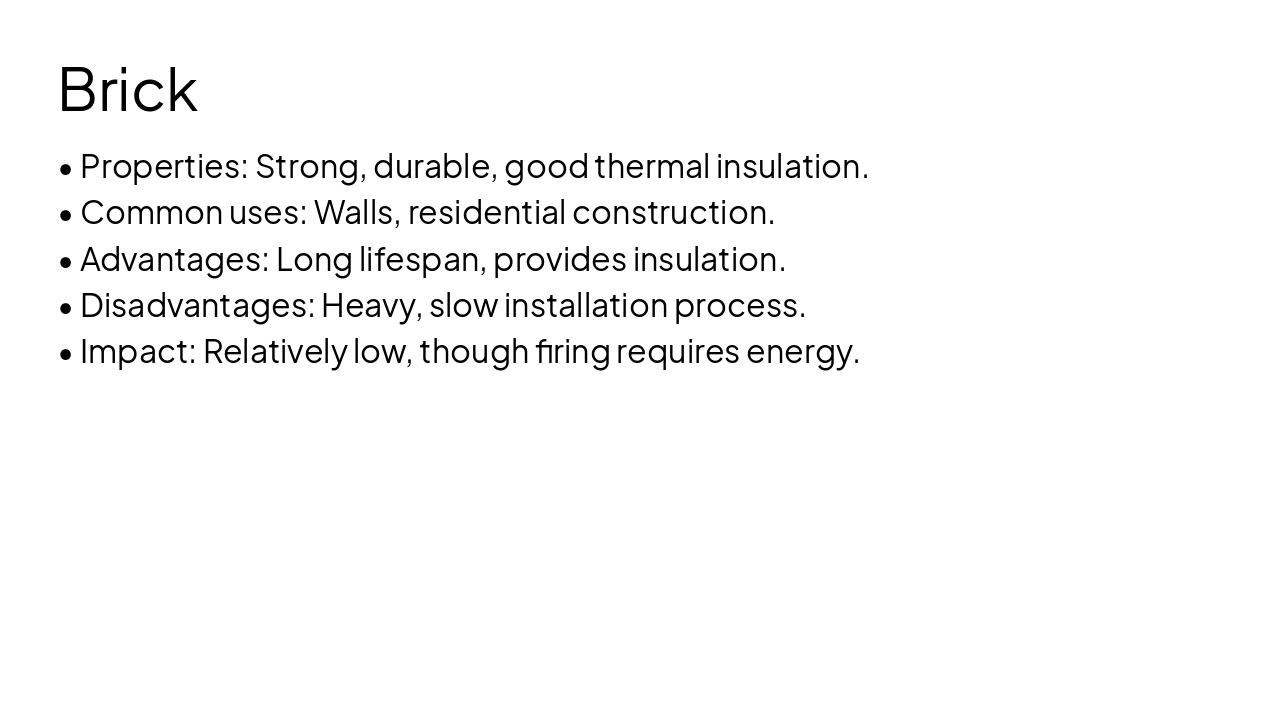
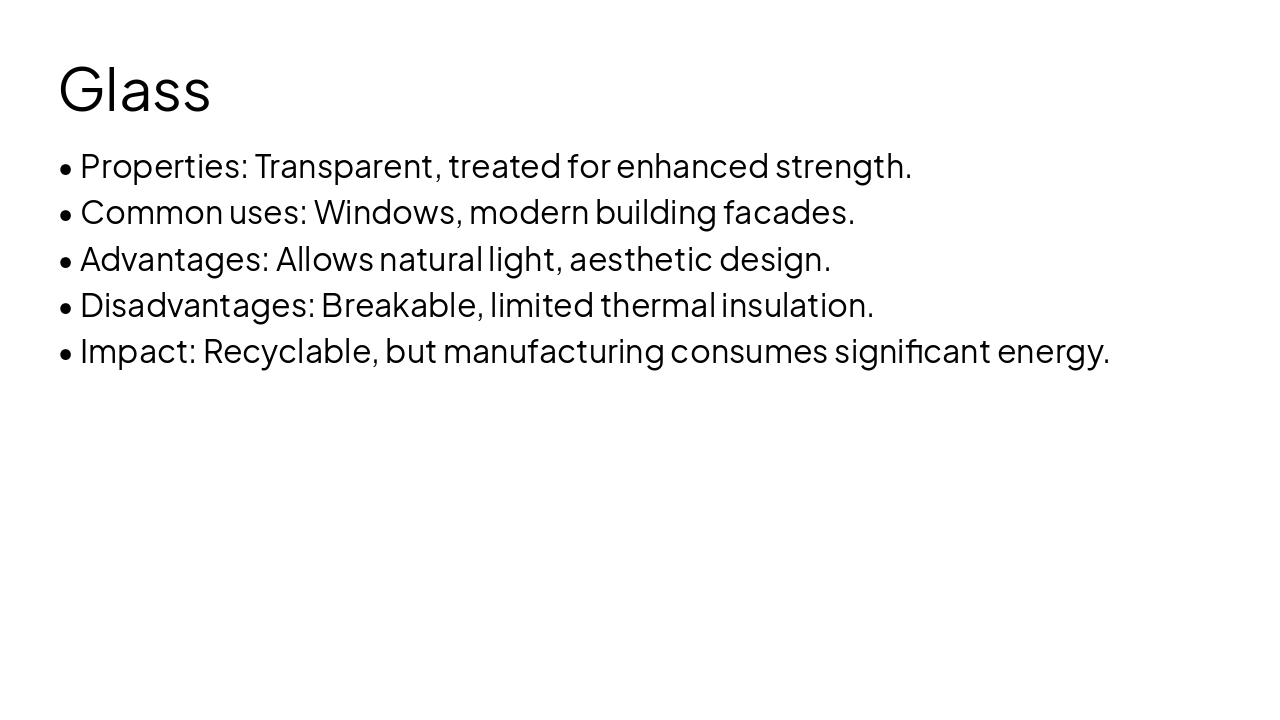
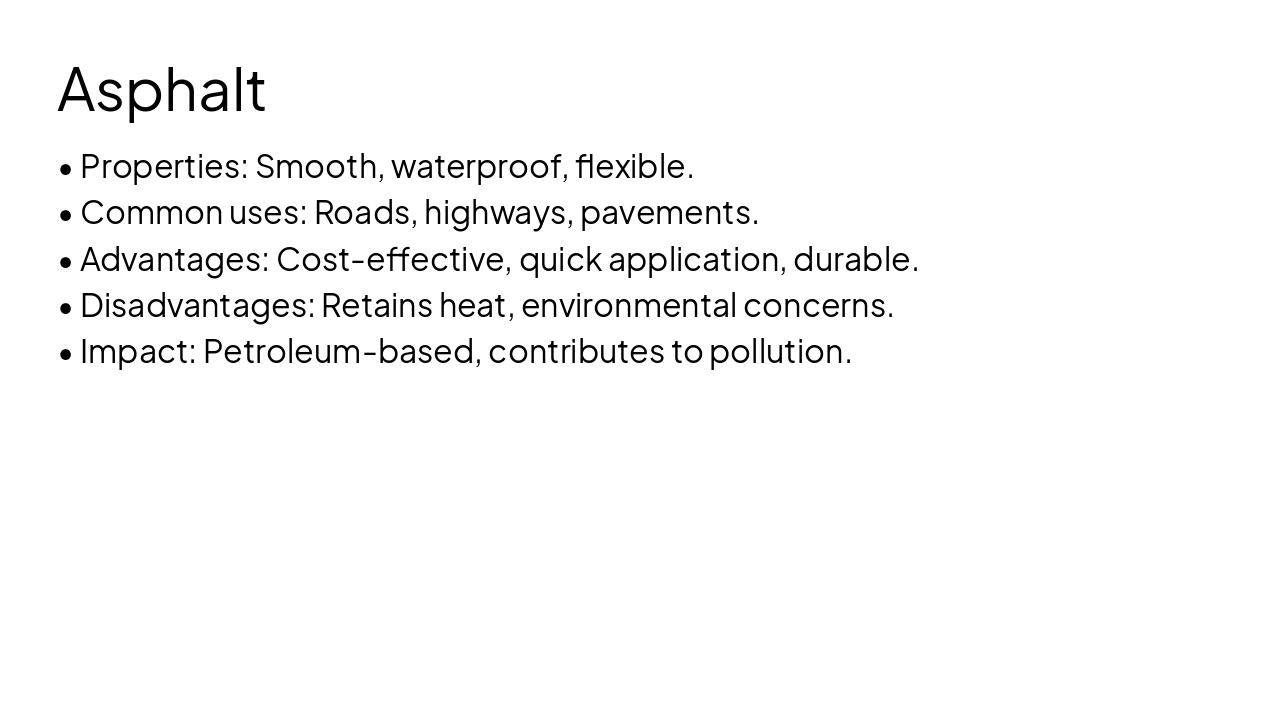
Slide 1 – Title Construction Materials Properties, Uses and Environmental Impact ⸻ Slide 2 – Introduction Construction materials are essential in civil engineering and architecture. Different materials are used depending on the type of building, its purpose, strength requirements, and environmental conditions. ⸻ Slide 3 – Concrete Properties: strong, durable, heavy, fire-resistant Common uses: foundations, bridges, roads, buildings Advantages: very strong, long-lasting, affordable Disadvantages: high CO₂ emissions during production, heavy weight Environmental impact: production causes pollution, but it is widely used due to durability ⸻ Slide 4 – Steel Properties: strong, flexible, recyclable Common uses: skyscrapers, bridges, frameworks Advantages: high strength, flexible, reusable Disadvantages: expensive, can rust without protection Environmental impact: recyclable but energy-intensive to produce ⸻ Slide 5 – Wood Properties: natural, lightweight, easy to work with Common uses: houses, furniture, interior structures Advantages: eco-friendly, renewable, warm appearance Disadvantages: not very strong, can burn or rot Environmental impact: sustainable if sourced responsibly ⸻ Slide 6 – Brick Properties: strong, durable, good insulation Common uses: walls, residential buildings Advantages: long lifespan, good thermal insulation Disadvantages: heavy, slow construction process Environmental impact: relatively low, but firing bricks uses energy ⸻ Slide 7 – Glass Properties: transparent, fragile but strong when treated Common uses: windows, facades, modern buildings Advantages: allows natural light, aesthetic design Disadvantages: breakable, low insulation Environmental impact: recyclable but energy needed for production ⸻ Slide 8 – Asphalt Properties: smooth, waterproof, flexible Common uses: roads, highways, pavements Advantages: cheap, fast to apply, durable for roads Disadvantages: heats up, not eco-friendly Environmental impact: petroleum-based, contributes to pollution ⸻ Slide 9 – Comparison All materials have different roles in construction. Engineers choose materials based on strength, cost, durability, and environmental impact. ⸻ Slide 10 – Conclusion Modern construction depends on a combination of materials. The best choice depends on balancing strength, cost, and sustainability.
Explore essential construction materials like concrete, steel, wood, brick, glass, and asphalt. This deck details their properties, common applications, advantages, disadvantages, and environmental impacts, highlighting the balance of strength, cost,
Construction Materials
Properties, Uses and Environmental Impact
---
Photo by Daniel Mironov on Unsplash
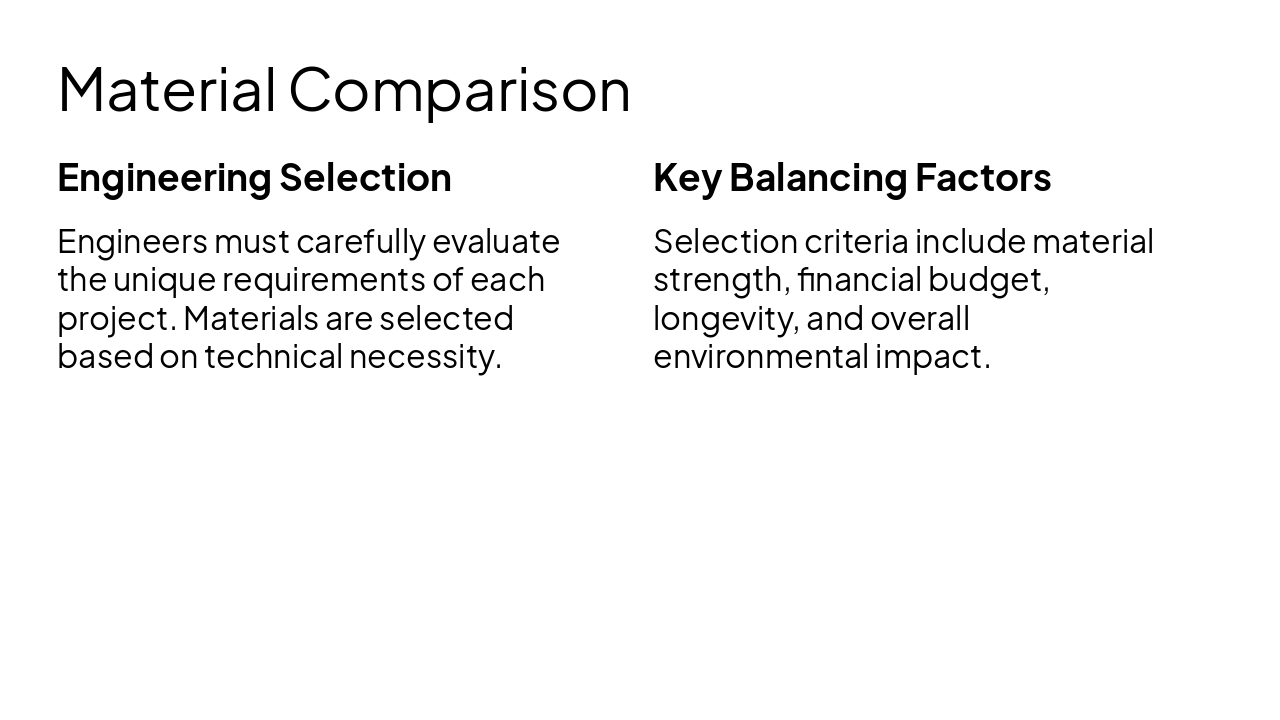
Engineering Selection Engineers must carefully evaluate the unique requirements of each project. Materials are selected based on technical necessity.
Key Balancing Factors Selection criteria include material strength, financial budget, longevity, and overall environmental impact.
Modern construction relies on a strategic combination of diverse materials.
Balancing strength, cost, and sustainability is the key to modern construction.
---
Photo by ran liwen on Unsplash
Explore thousands of AI-generated presentations for inspiration
Generate professional presentations in seconds with Karaf's AI. Customize this presentation or start from scratch.