Slide 1 of 13
Slide 1 - Foundations of EIPIC Social Work Training
Foundations of EIPIC Social Work Training
Empowering families and children through evidence-based social work practice
---
Photo by Pawel Czerwinski on Unsplash
Generated from prompt:
Redesign and beautify the uploaded PowerPoint titled 'Foundations of EIPIC Social Work Training'. Transform it into a modern, visually engaging training deck. Use clean layouts, icons, and minimal text per slide. Structure: 1. Title Slide (modern, professional) 2. Learning Objectives (3 bullets max per slide) 3. EI Philosophy (visual + keywords) 4. 3 Core Frameworks (each on separate slides: Developmental Lens, Family-Centred Practice, Strength-Based) 5. Crisis vs Developmental (comparison table, visual) 6. Case Example (before vs after intervention) 7. 8-Step Intervention Model (1 step per slide, simplified) 8. Role of EIPIC Social Worker (clear categories, icons) 9. FSC vs EIPIC Mindset (side-by-side) 10. EIC Workflow (flow diagram: Intake → FSNA → TDA → FSP → Review → Transition) 11. Theoretical Lenses (4-quadrant visual) 12. Key Takeaways (3–5 strong points) Style: teal/blue theme, lots of whitespace, bold headings, consistent icons, diagrams instead of text blocks. Add speaker notes with detailed explanations from original content. Make it highly professional for training delivery.
This presentation delivers core training for EIPIC social workers, covering philosophies like child-centric growth, family-centred practice, and strength-based approaches. It contrasts crisis vs. developmental models, details the 8-step intervention,
Foundations of EIPIC Social Work Training
Empowering families and children through evidence-based social work practice
---
Photo by Pawel Czerwinski on Unsplash
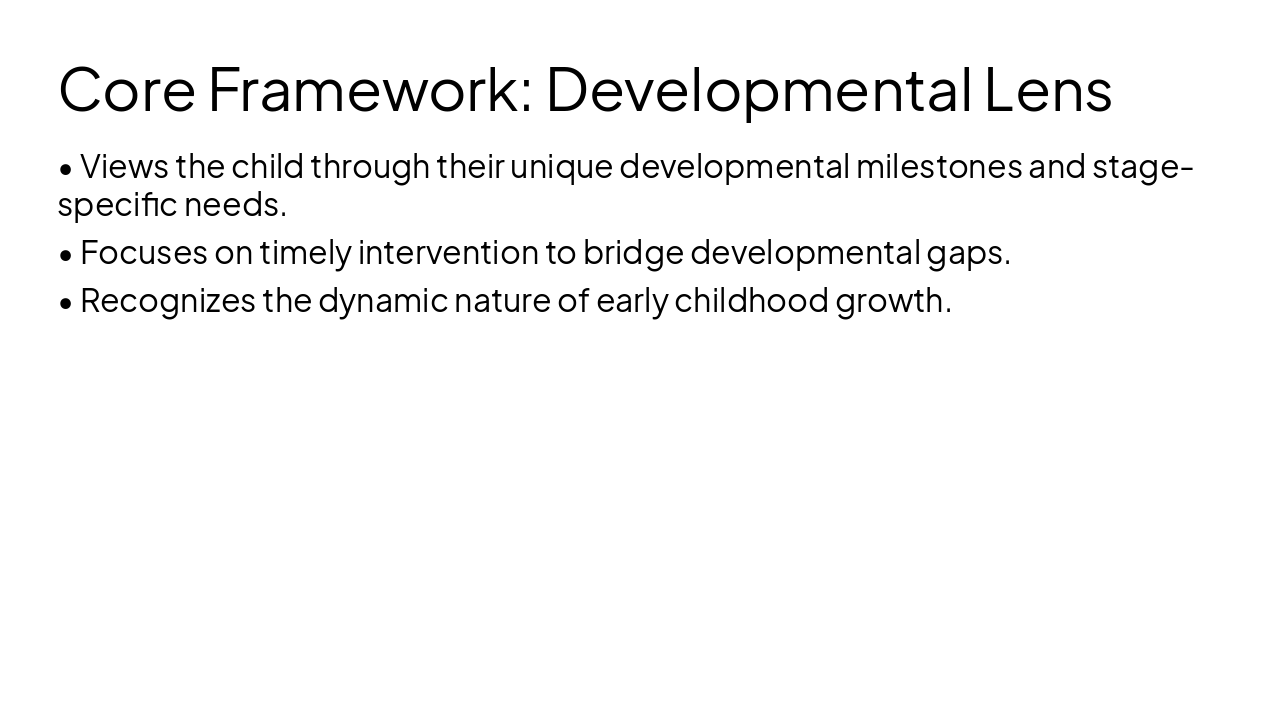
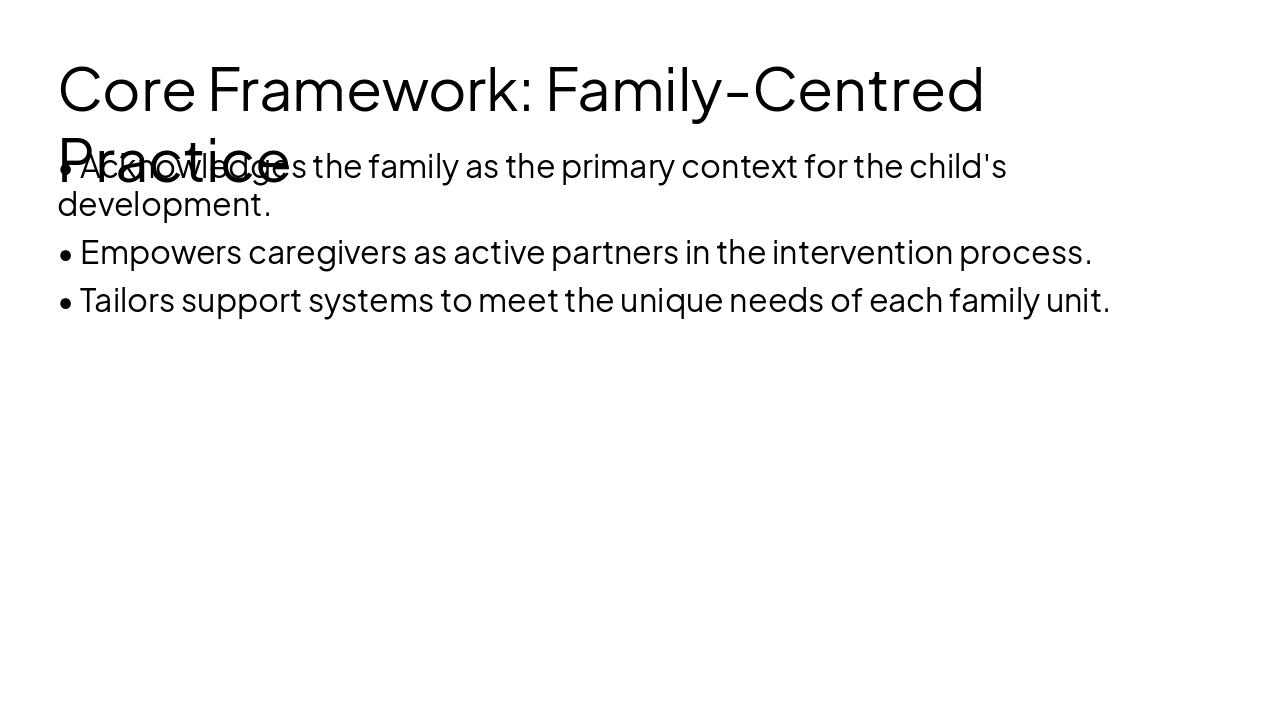
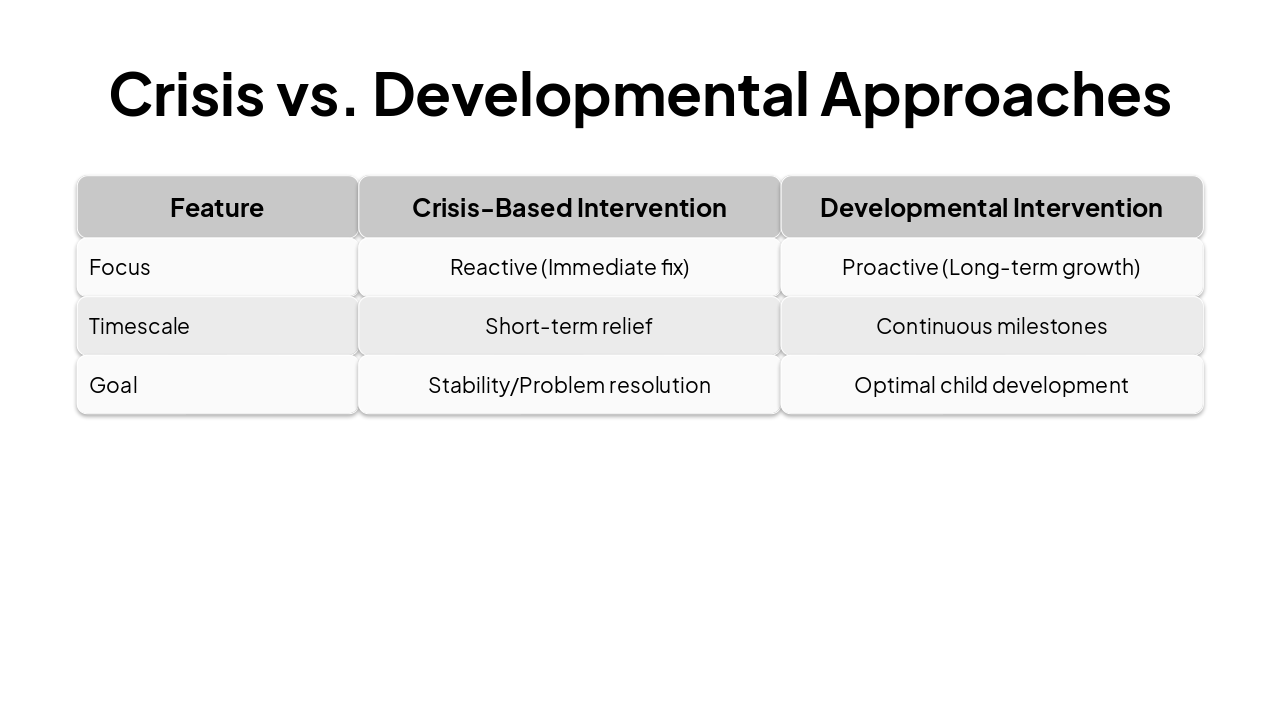
| Feature | Crisis-Based Intervention | Developmental Intervention |
|---|---|---|
| Focus | Reactive (Immediate fix) | Proactive (Long-term growth) |
| Timescale | Short-term relief | Continuous milestones |
| Goal | Stability/Problem resolution | Optimal child development |
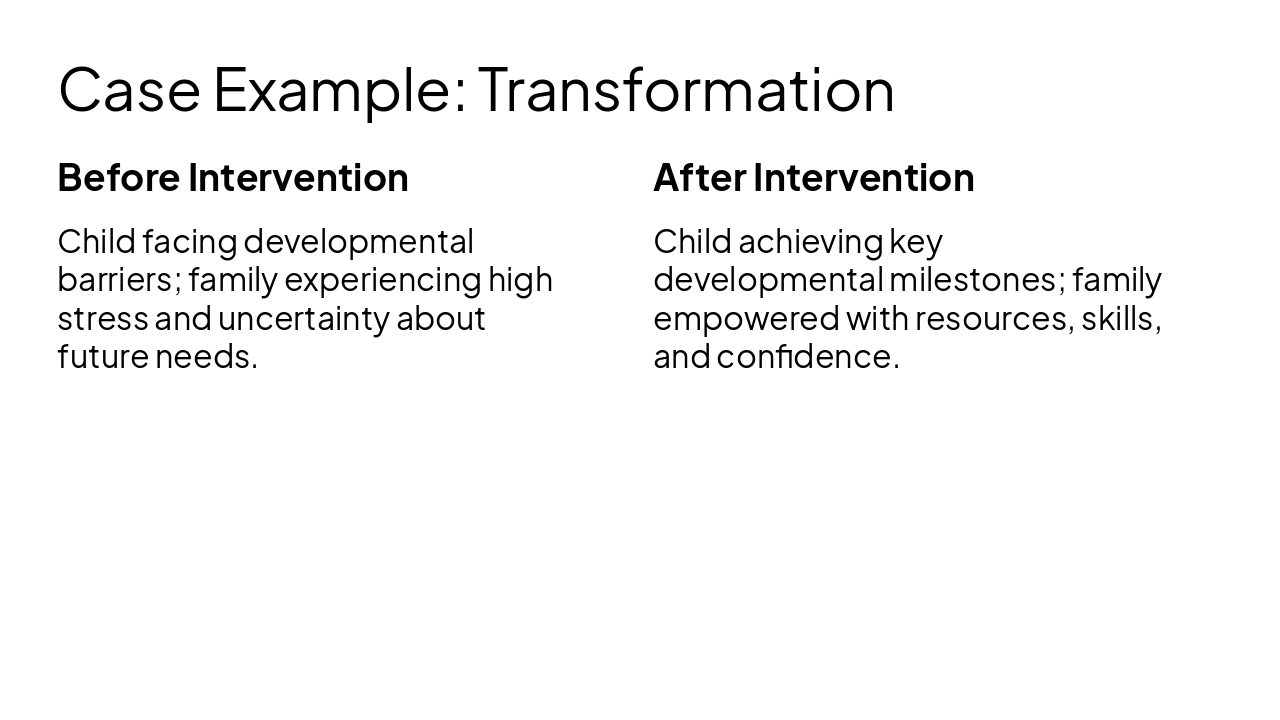
Before Intervention Child facing developmental barriers; family experiencing high stress and uncertainty about future needs.
After Intervention Child achieving key developmental milestones; family empowered with resources, skills, and confidence.
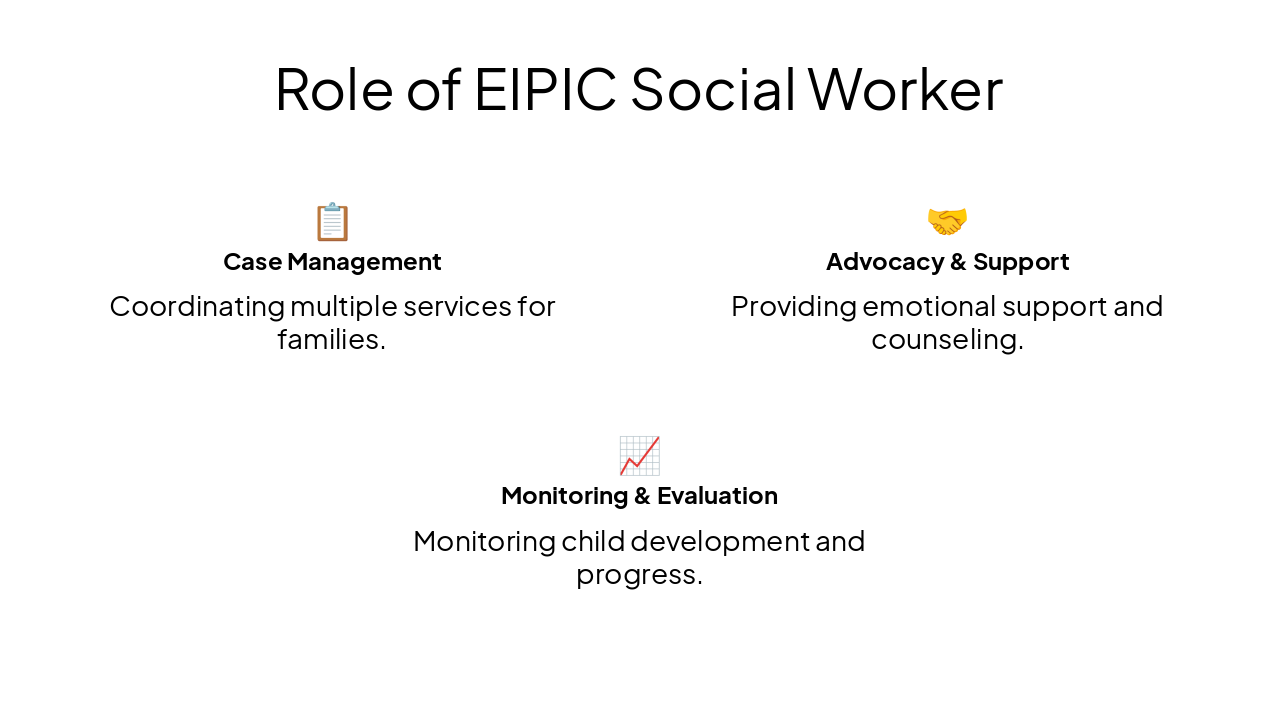
📋 Case Management Coordinating multiple services for families.
🤝 Advocacy & Support Providing emotional support and counseling.
📈 Monitoring & Evaluation Monitoring child development and progress.
FSC Mindset Focuses on general community services, broader welfare reach, and diverse population needs.
EIPIC Mindset Specialised early intervention focus, intensive family support, child-centric developmental outcomes.
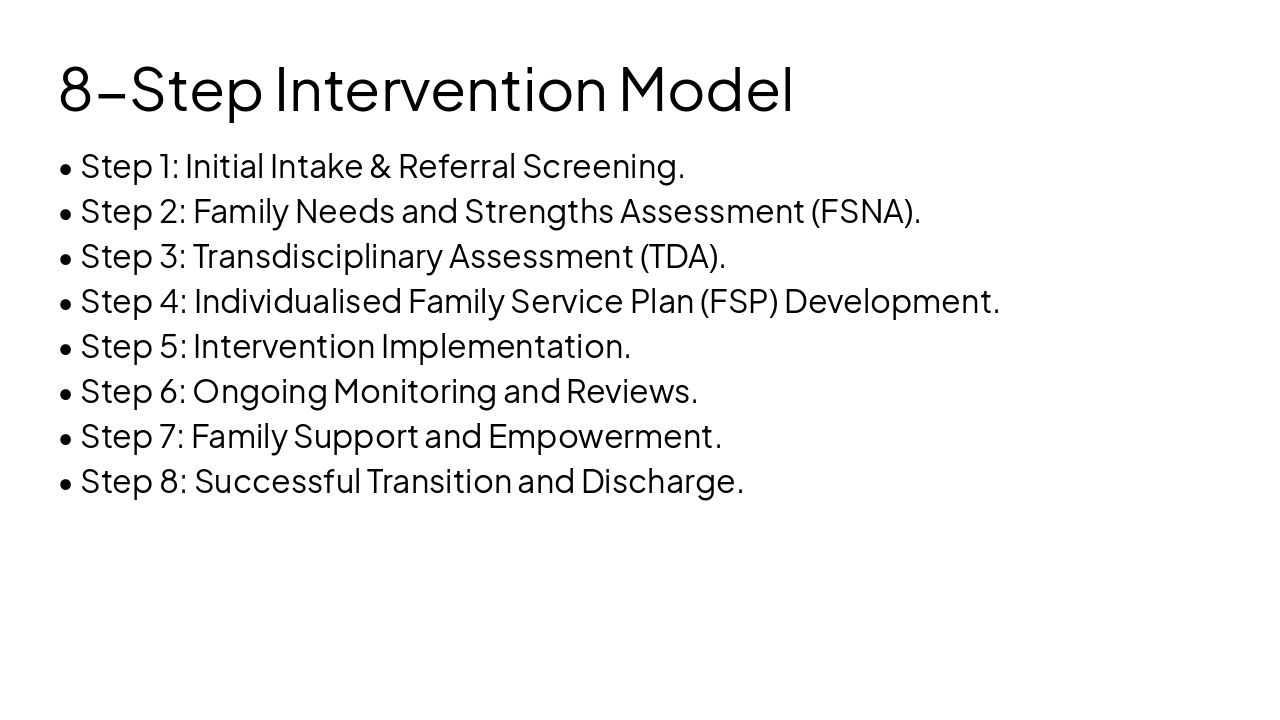
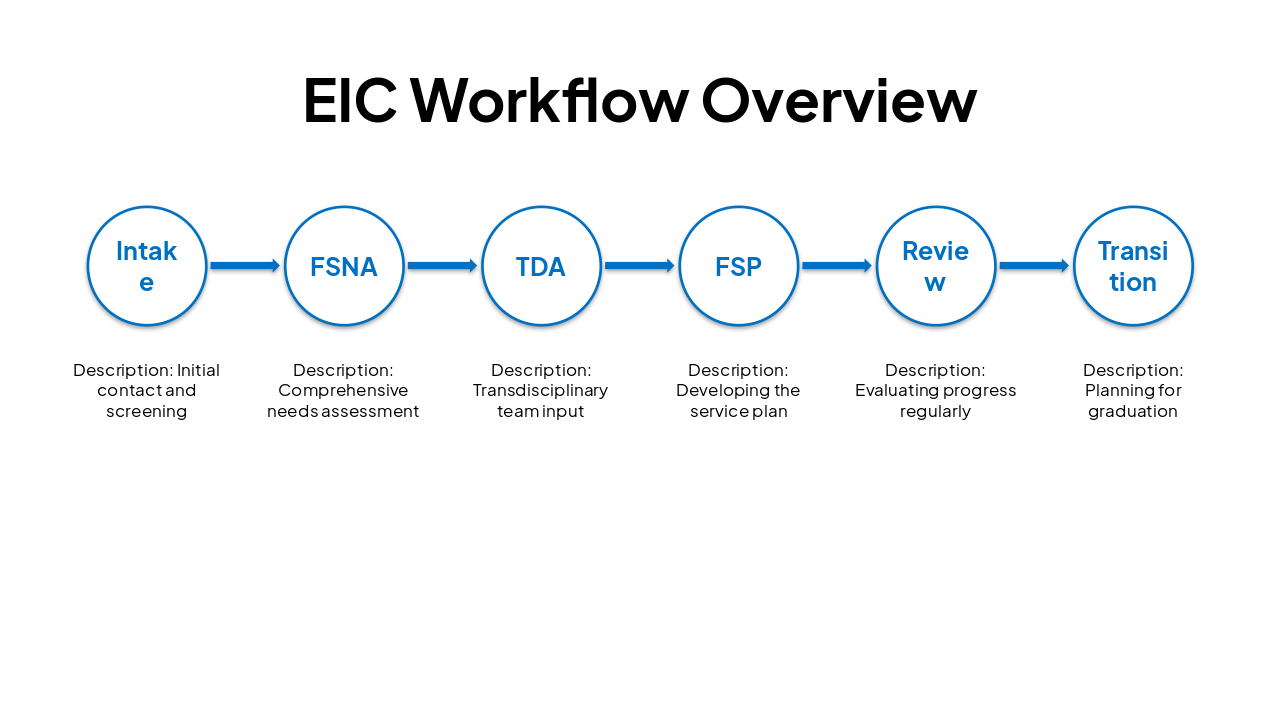
| Step | Description |
|---|---|
| Intake | Initial contact and screening |
| FSNA | Comprehensive needs assessment |
| TDA | Transdisciplinary team input |
| FSP | Developing the service plan |
| Review | Evaluating progress regularly |
| Transition | Planning for graduation |
Empower families, foster developmental growth, and deliver evidence-based excellence.
Key takeaways for effective practice.
Explore thousands of AI-generated presentations for inspiration
Generate professional presentations in seconds with Karaf's AI. Customize this presentation or start from scratch.
