Chemical Space Coverage in LC Techniques: MSc Thesis

Generated from prompt:

Create a presenation about my file

Jens Heemskerk's MSc Chemistry thesis defense explores chemical space coverage by liquid chromatographic (LC) methods using the RepoRT repository. It analyzes 236 LC setups, reveals RPLC dominance limiting polar/hydrophobic coverage, and advocates多多多

April 18, 202610 slides
Slide 1 of 10

Slide 1 - Thesis Defense: Jens Heemskerk

MSc Chemistry Thesis Presentation

Investigating Chemical Space Coverage of Liquid Chromatographic Techniques

---

Photo by Ryan Zazueta on Unsplash
Slide 1 - Thesis Defense: Jens Heemskerk
Slide 2 of 10

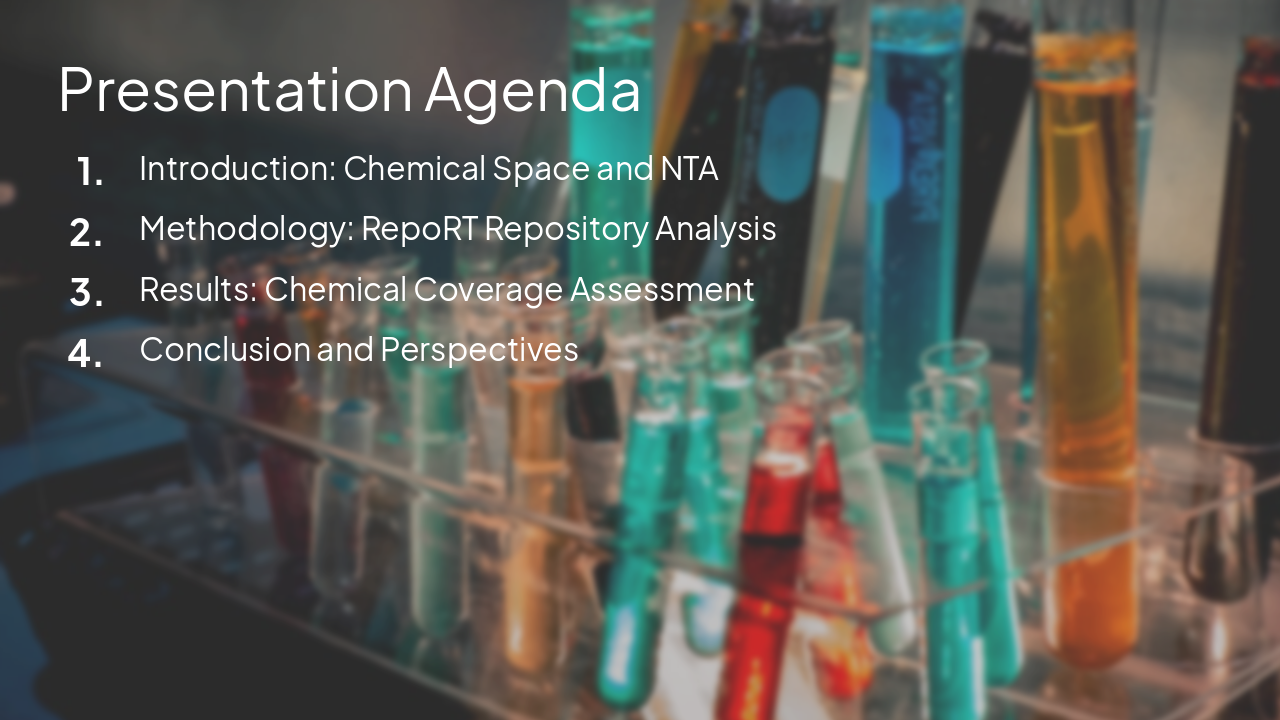
Slide 2 - Presentation Agenda

  • Introduction: Chemical Space and NTA
  • Methodology: RepoRT Repository Analysis
  • Results: Chemical Coverage Assessment
  • Conclusion and Perspectives

---

Photo by Ryan Zazueta on Unsplash
Slide 2 - Presentation Agenda
Slide 3 of 10

Slide 3 - Introduction: Understanding the Exposome

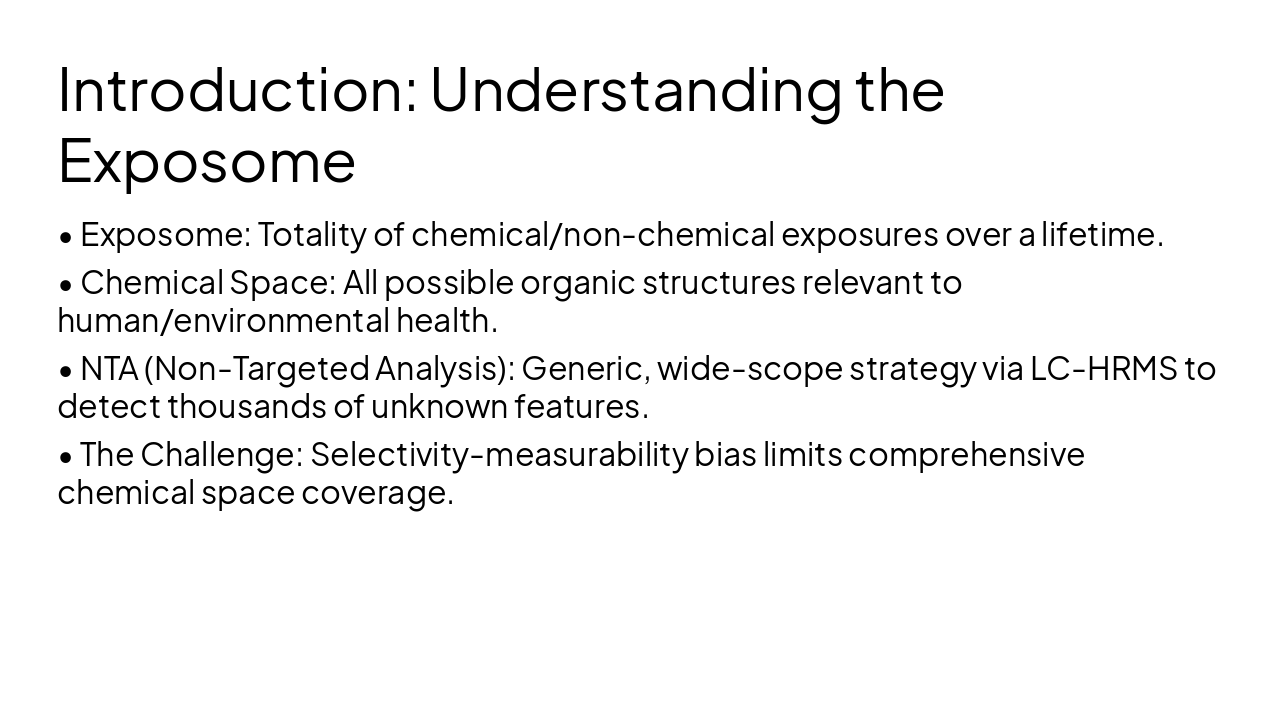
  • Exposome: Totality of chemical/non-chemical exposures over a lifetime.
  • Chemical Space: All possible organic structures relevant to human/environmental health.
  • NTA (Non-Targeted Analysis): Generic, wide-scope strategy via LC-HRMS to detect thousands of unknown features.
  • The Challenge: Selectivity-measurability bias limits comprehensive chemical space coverage.
Slide 3 - Introduction: Understanding the Exposome
Slide 5 of 10

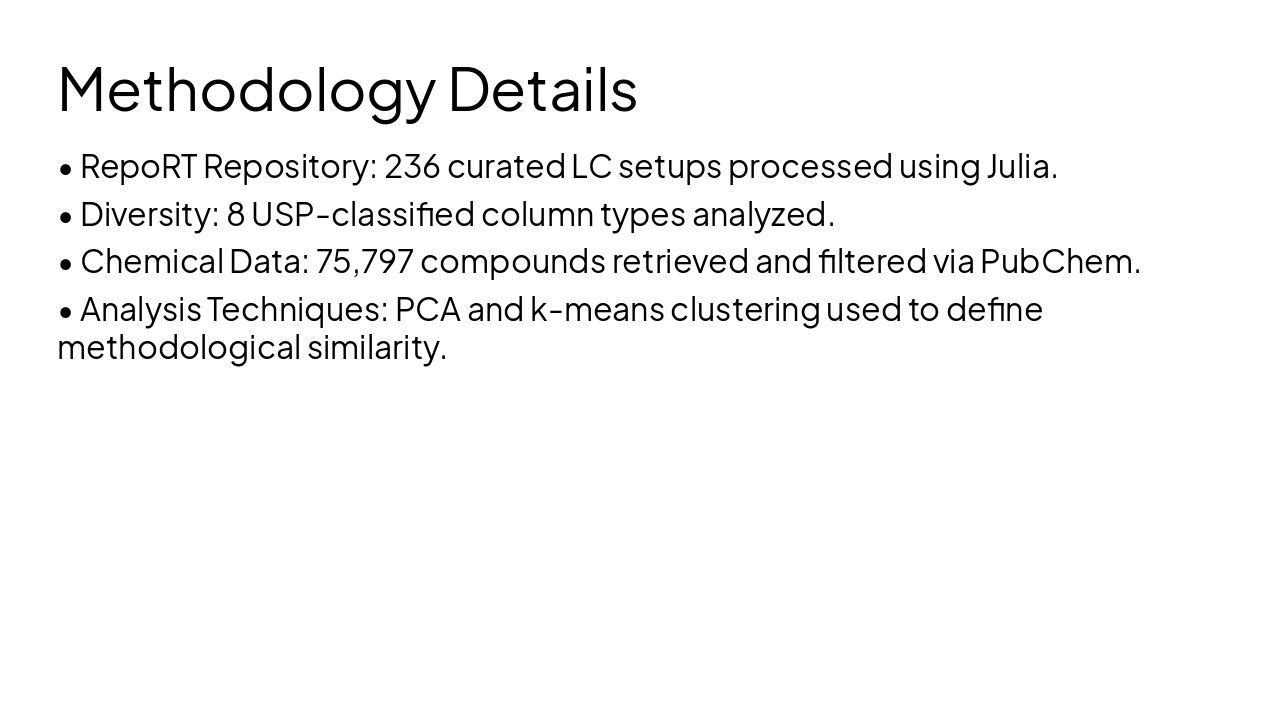
Slide 5 - Methodology Details

  • RepoRT Repository: 236 curated LC setups processed using Julia.
  • Diversity: 8 USP-classified column types analyzed.
  • Chemical Data: 75,797 compounds retrieved and filtered via PubChem.
  • Analysis Techniques: PCA and k-means clustering used to define methodological similarity.
Slide 5 - Methodology Details
Slide 6 of 10

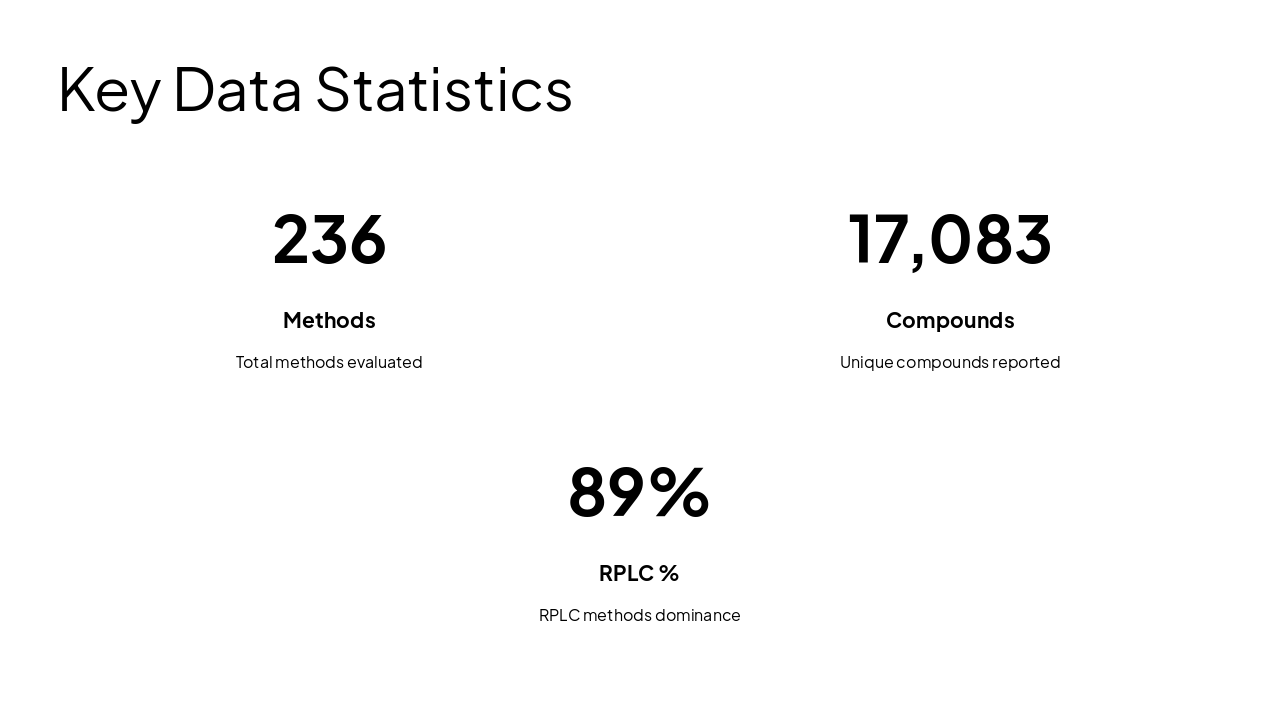
Slide 6 - Key Data Statistics

  • 236: Methods
  • 17,083: Compounds
  • 89%: RPLC %
Slide 6 - Key Data Statistics
Slide 7 of 10

Slide 7 - Coverage Analysis

3

Analysis of Chemical Coverage

Visualizing Limitations and Trends

---

Photo by Deng Xiang on Unsplash

Slide 7 - Coverage Analysis
Slide 8 of 10

Slide 8 - Theoretical vs. Actual Coverage

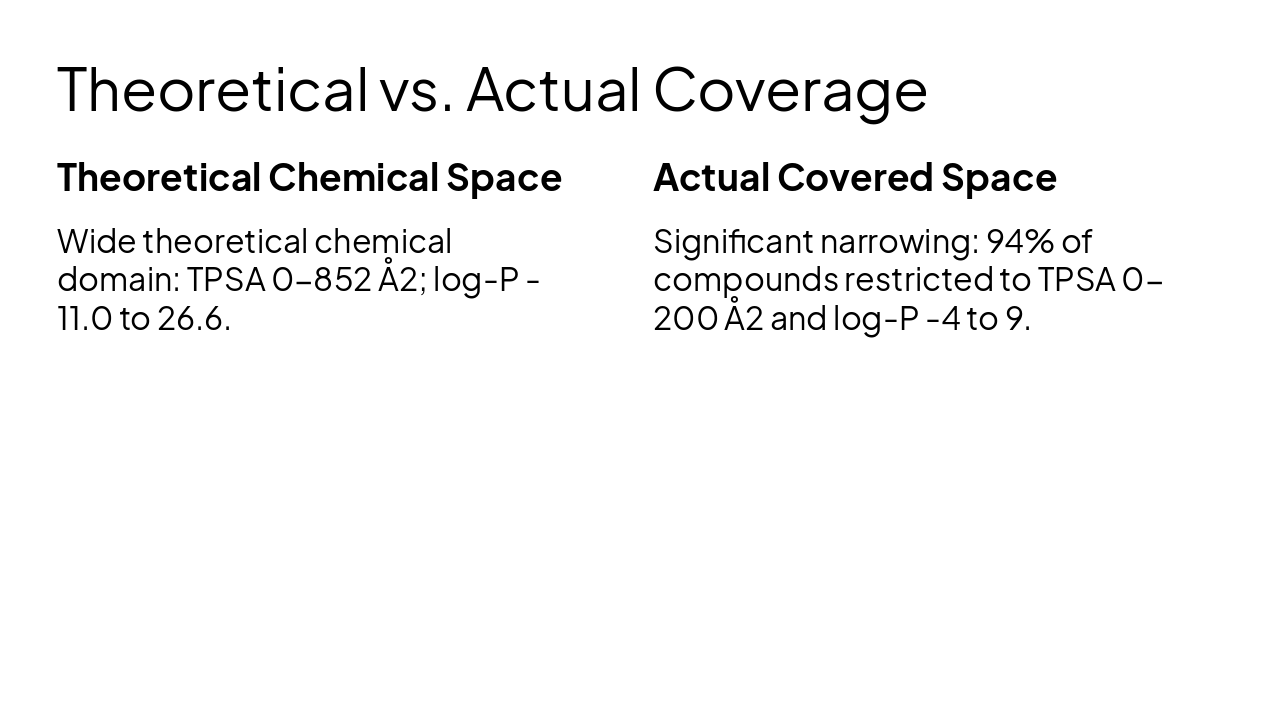
Theoretical Chemical Space Wide theoretical chemical domain: TPSA 0-852 Å2; log-P -11.0 to 26.6.

Actual Covered Space Significant narrowing: 94% of compounds restricted to TPSA 0-200 Å2 and log-P -4 to 9.
Slide 8 - Theoretical vs. Actual Coverage
Slide 9 of 10

Slide 9 - Key Findings

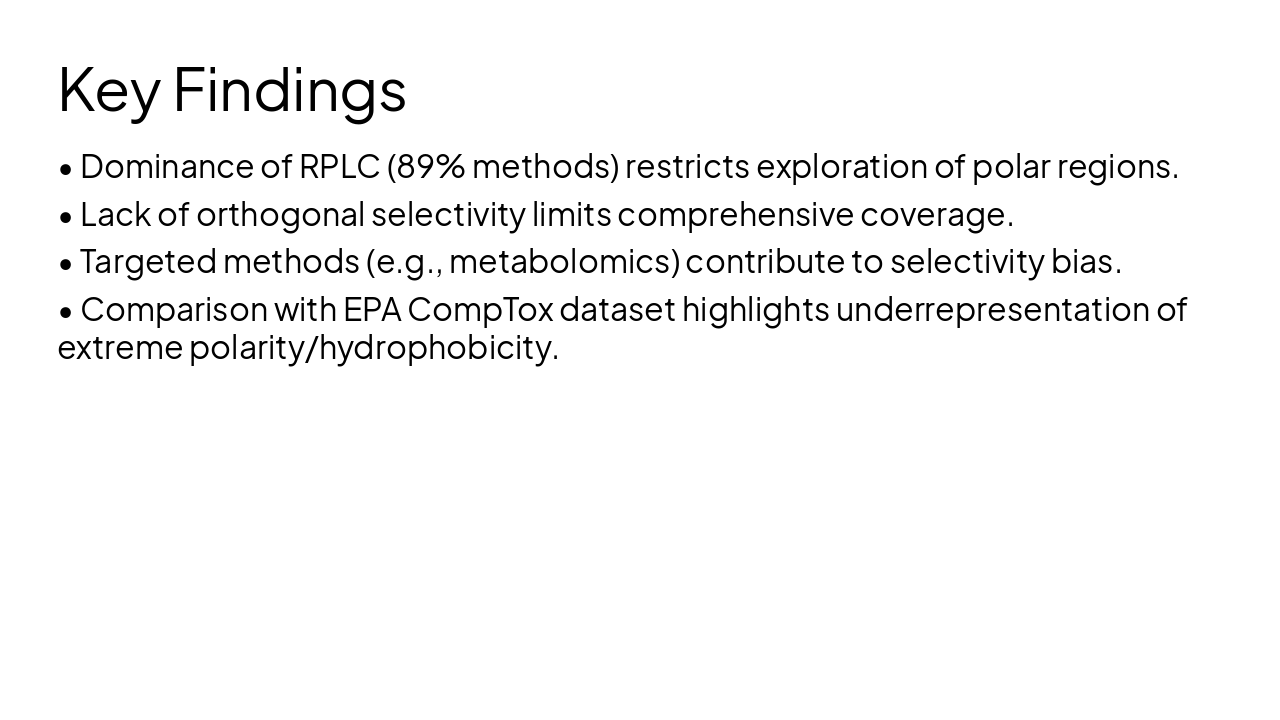
  • Dominance of RPLC (89% methods) restricts exploration of polar regions.
  • Lack of orthogonal selectivity limits comprehensive coverage.
  • Targeted methods (e.g., metabolomics) contribute to selectivity bias.
  • Comparison with EPA CompTox dataset highlights underrepresentation of extreme polarity/hydrophobicity.
Slide 9 - Key Findings
Slide 10 of 10

Slide 10 - Conclusions and Future Perspectives

Complete coverage of the chemical space remains far from realistic under current LC conditions; multi-modal analytical strategies are essential.

Final takeaways and future outlook

---

Photo by Michael Bauser on Unsplash
Slide 10 - Conclusions and Future Perspectives

Discover More Presentations

Explore thousands of AI-generated presentations for inspiration

Browse Presentations
Powered by AI

Create Your Own Presentation

Generate professional presentations in seconds with Karaf's AI. Customize this presentation or start from scratch.

Create New Presentation

Powered by Karaf.ai — AI-Powered Presentation Generator