Understanding Crohn's Disease

Generated from prompt:

crohn disease

Explore Crohn's Disease, a type of IBD causing chronic intestinal inflammation. Covers signs/symptoms (pain, diarrhea, fatigue), causes/risk factors, and treatments like medications & surgery. Key: Ea

January 2, 20268 slides
Slide 1 of 8

Slide 1 - Crohn's Disease

This title slide is titled "Crohn's Disease" and features a subtitle describing it as a chronic inflammatory bowel disease of the GI tract. It serves as an introductory slide for the topic.

Crohn's Disease

Chronic Inflammatory Bowel Disease of the GI Tract

Source: Overview of chronic inflammatory bowel disease affecting the GI tract.
Slide 1 - Crohn's Disease
Slide 2 of 8

Slide 2 - Presentation Agenda

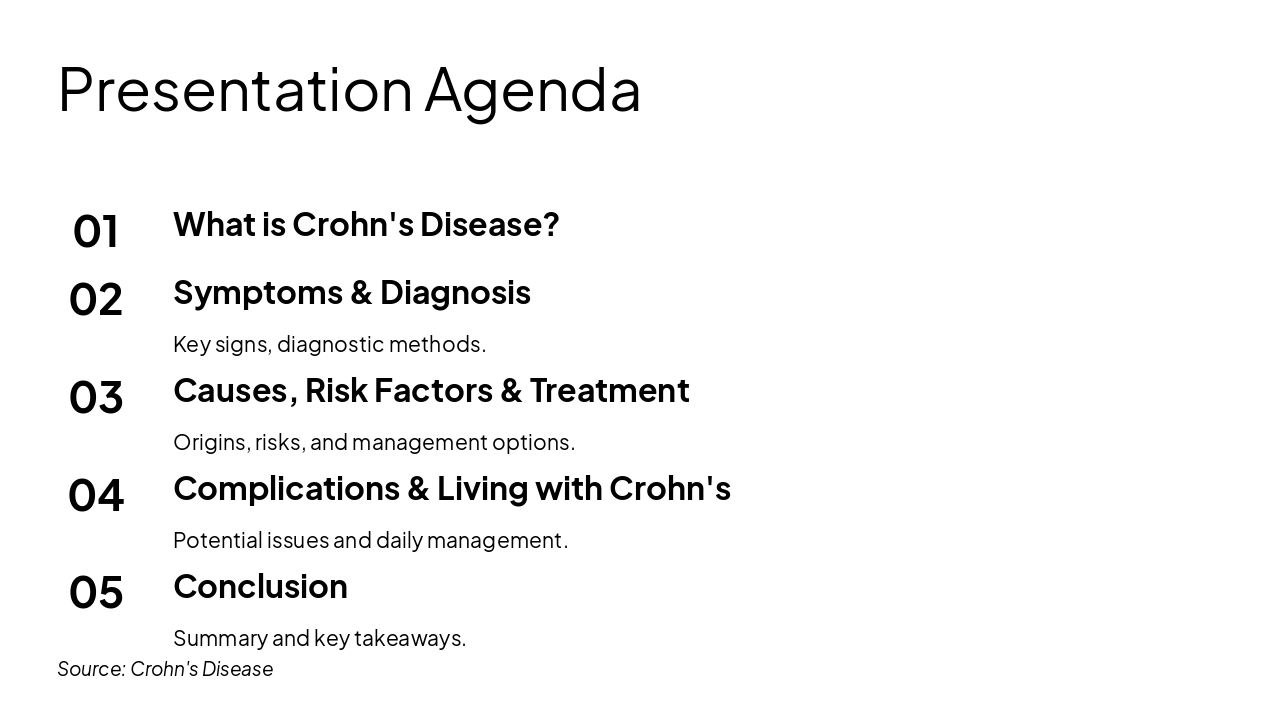
This agenda slide outlines a presentation on Crohn's Disease, starting with an overview of what it is, followed by symptoms and diagnosis methods. It then covers causes, risk factors, treatments, complications, living with the condition, and concludes with key takeaways.

Presentation Agenda

  1. What is Crohn's Disease?
  2. Symptoms & Diagnosis
  3. Key signs, diagnostic methods.

  4. Causes, Risk Factors & Treatment
  5. Origins, risks, and management options.

  6. Complications & Living with Crohn's
  7. Potential issues and daily management.

  8. Conclusion

Summary and key takeaways. Source: Crohn's Disease

Slide 2 - Presentation Agenda
Slide 3 of 8

Slide 3 - What is Crohn's Disease?

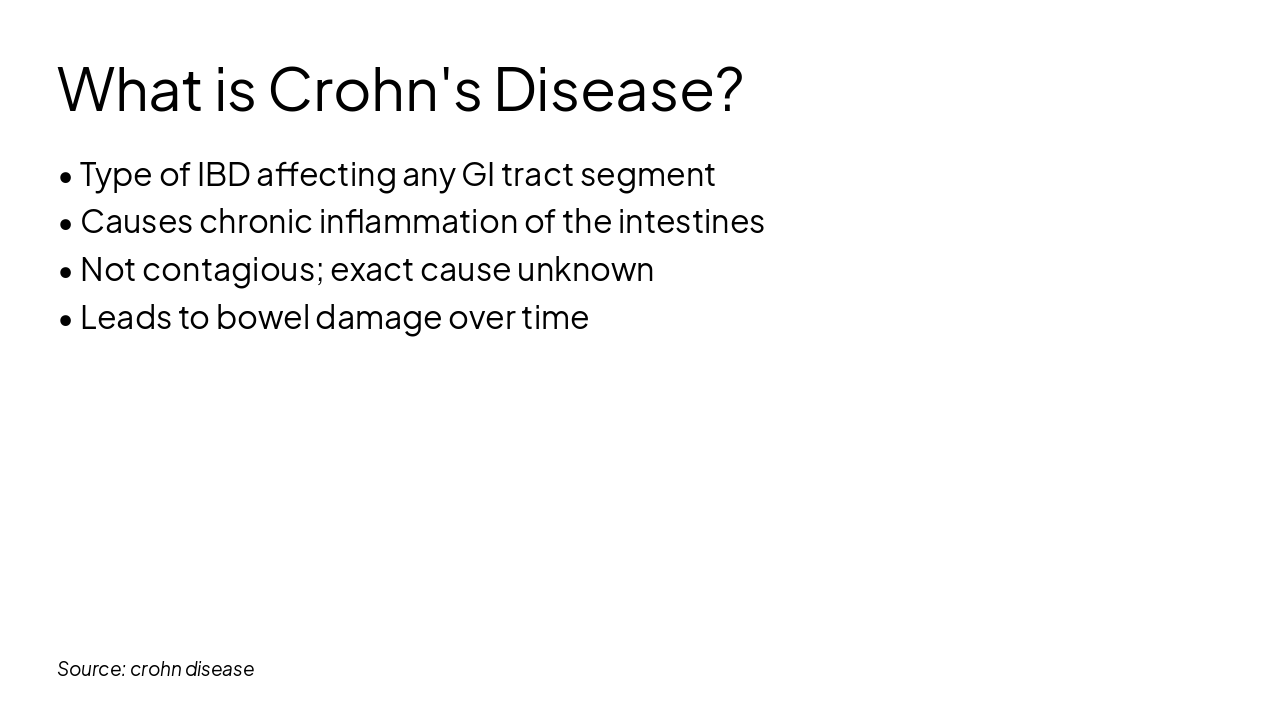
Crohn's Disease is a type of Inflammatory Bowel Disease (IBD) that can affect any segment of the gastrointestinal tract, causing chronic inflammation of the intestines. It is not contagious, has an unknown exact cause, and leads to bowel damage over time.

What is Crohn's Disease?

  • Type of IBD affecting any GI tract segment
  • Causes chronic inflammation of the intestines
  • Not contagious; exact cause unknown
  • Leads to bowel damage over time

Source: crohn disease

Slide 3 - What is Crohn's Disease?
Slide 4 of 8

Slide 4 - Signs and Symptoms of Crohn Disease

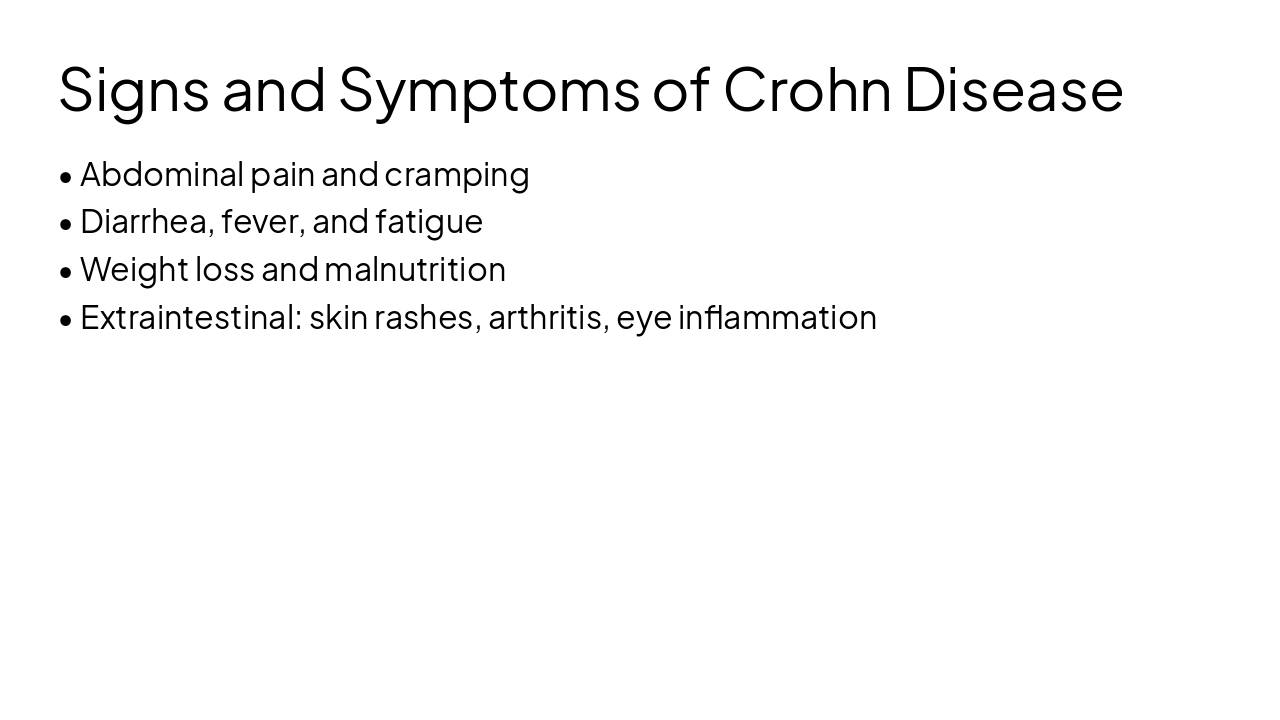
Crohn's disease presents with key symptoms including abdominal pain, cramping, diarrhea, fever, fatigue, weight loss, and malnutrition. It also involves extraintestinal manifestations such as skin rashes, arthritis, and eye inflammation.

Signs and Symptoms of Crohn Disease

  • Abdominal pain and cramping
  • Diarrhea, fever, and fatigue
  • Weight loss and malnutrition
  • Extraintestinal: skin rashes, arthritis, eye inflammation
Slide 4 - Signs and Symptoms of Crohn Disease
Slide 5 of 8

Slide 5 - Crohn's Disease

This section header slide on Crohn's Disease is titled "Causes and Diagnosis." It features a subtitle exploring risk factors, genetics, and diagnostic methods for the condition.

Crohn's Disease

Causes and Diagnosis

Exploring risk factors, genetics, and diagnostic methods for Crohn's disease.

Source: Crohn Disease Presentation

Speaker Notes
Introduce the exploration of risk factors, genetics, and diagnostic methods for Crohn's disease.
Slide 5 - Crohn's Disease
Slide 6 of 8

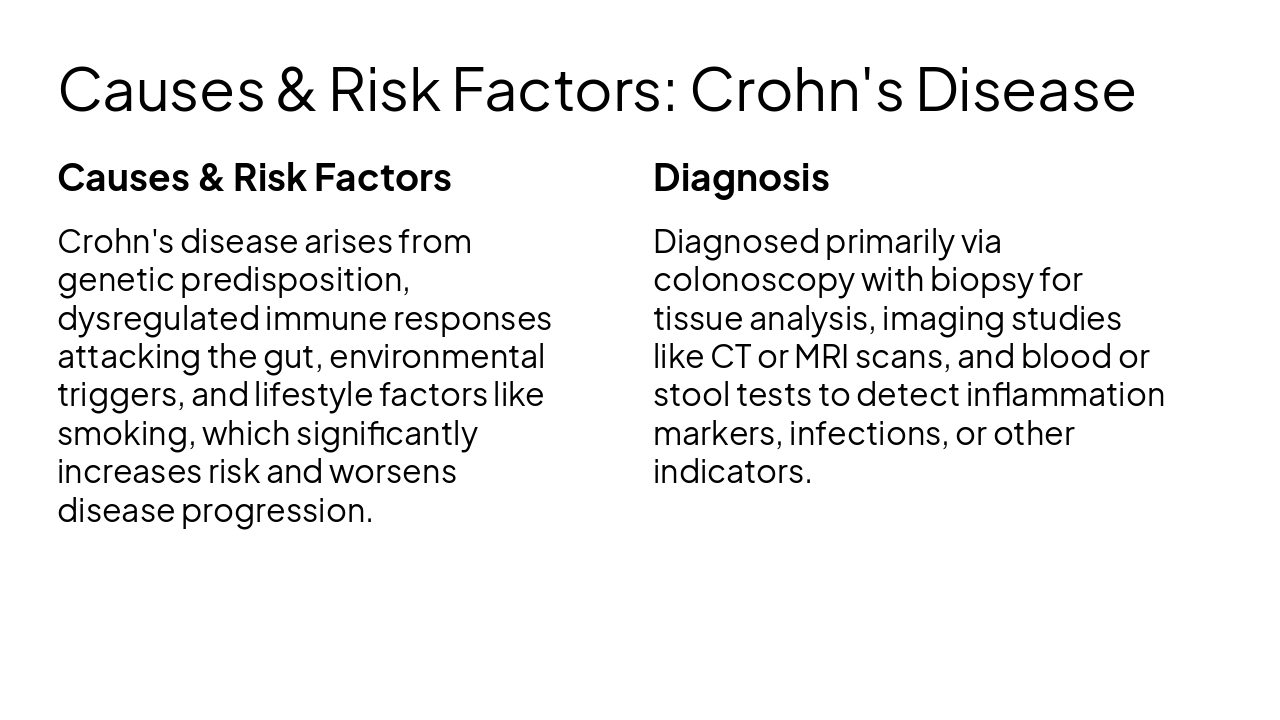
Slide 6 - Causes & Risk Factors: Crohn's Disease

Crohn's disease stems from genetic predisposition, dysregulated immune responses in the gut, environmental triggers, and lifestyle factors like smoking, which heightens risk and worsens progression. Diagnosis involves colonoscopy with biopsy, imaging like CT or MRI scans, and blood or stool tests to identify inflammation, infections, or other markers.

Causes & Risk Factors: Crohn's Disease

Causes & Risk FactorsDiagnosis
Crohn's disease arises from genetic predisposition, dysregulated immune responses attacking the gut, environmental triggers, and lifestyle factors like smoking, which significantly increases risk and worsens disease progression.Diagnosed primarily via colonoscopy with biopsy for tissue analysis, imaging studies like CT or MRI scans, and blood or stool tests to detect inflammation markers, infections, or other indicators.
Slide 6 - Causes & Risk Factors: Crohn's Disease
Slide 7 of 8

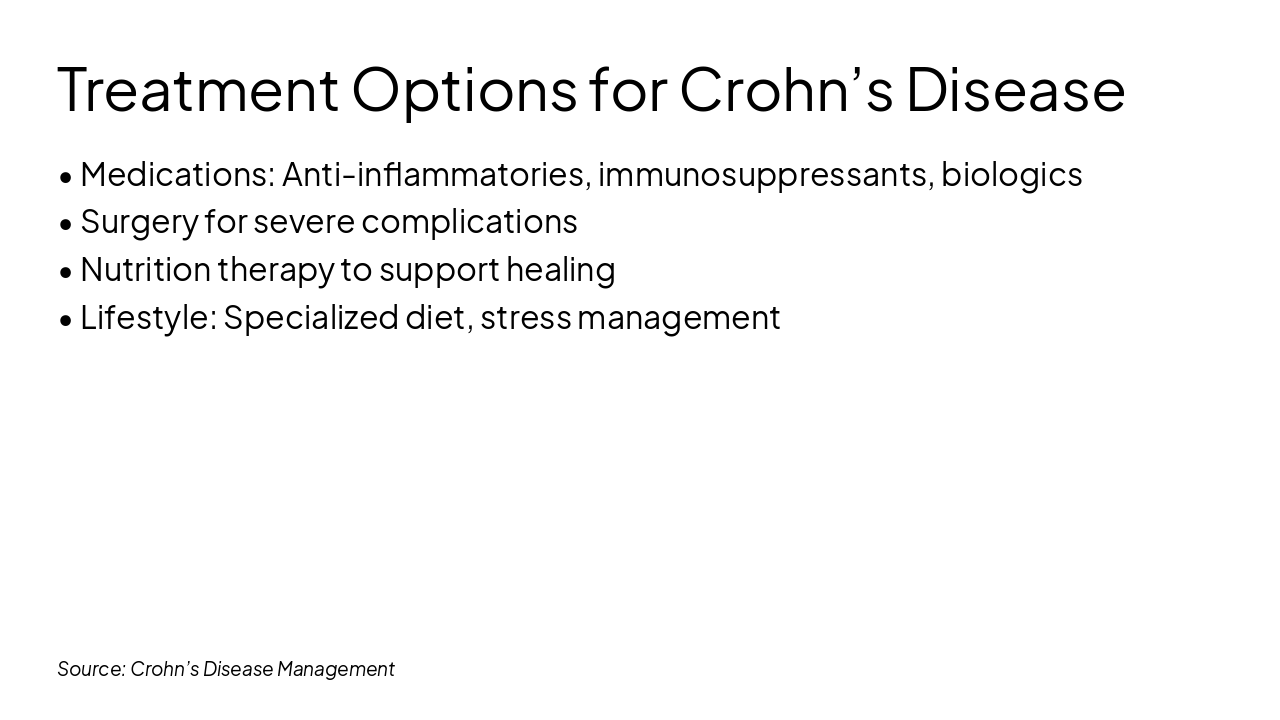
Slide 7 - Treatment Options for Crohn’s Disease

Treatment options for Crohn’s Disease include medications such as anti-inflammatories, immunosuppressants, and biologics. Additional approaches encompass surgery for severe complications, nutrition therapy for healing, and lifestyle changes like specialized diets and stress management.

Treatment Options for Crohn’s Disease

  • Medications: Anti-inflammatories, immunosuppressants, biologics
  • Surgery for severe complications
  • Nutrition therapy to support healing
  • Lifestyle: Specialized diet, stress management

Source: Crohn’s Disease Management

Slide 7 - Treatment Options for Crohn’s Disease
Slide 8 of 8

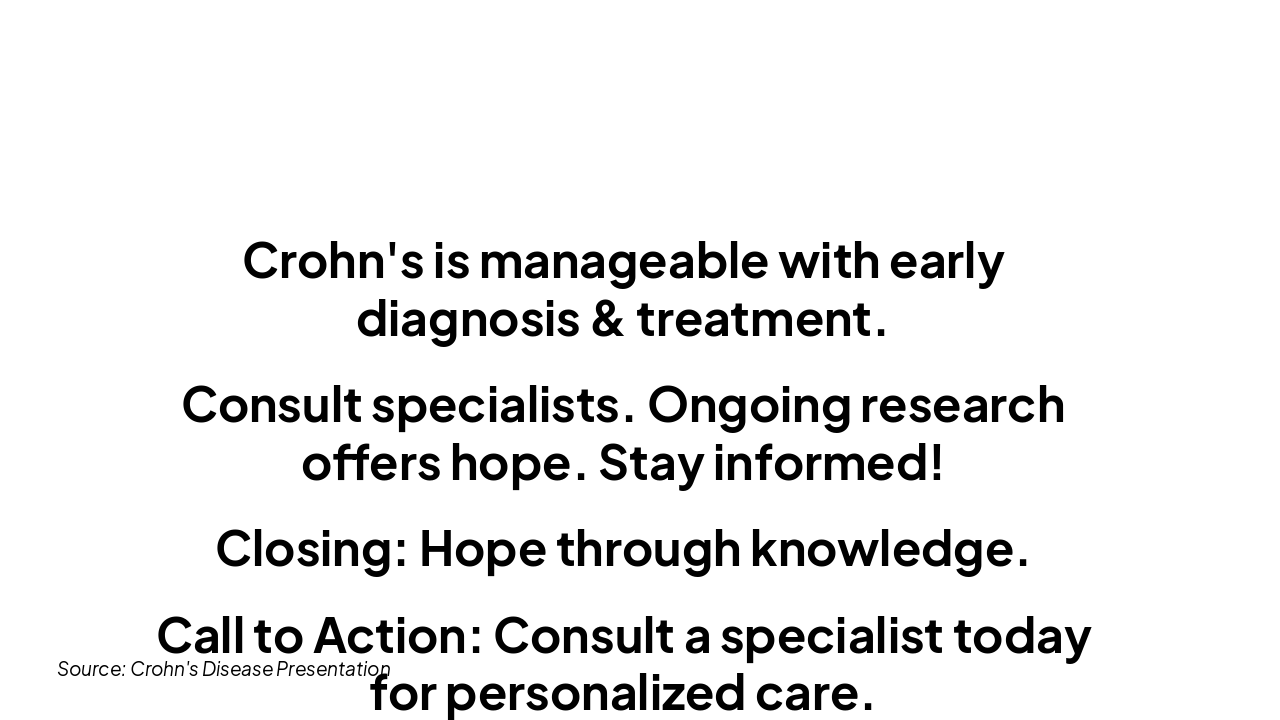
Slide 8 - Key Takeaways

Crohn's disease is manageable through early diagnosis and treatment, with a recommendation to consult specialists amid ongoing hopeful research. The slide closes with "Hope through knowledge" and urges viewers to seek personalized care from a specialist today.

Key Takeaways

**Crohn's is manageable with early diagnosis & treatment.

Consult specialists. Ongoing research offers hope. Stay informed!

Closing: Hope through knowledge.

Call to Action: Consult a specialist today for personalized care.**

Source: Crohn's Disease Presentation

Slide 8 - Key Takeaways
Powered by AI

Create Your Own Presentation

Generate professional presentations in seconds with Karaf's AI. Customize this presentation or start from scratch.

Create New Presentation

Powered by Karaf.ai — AI-Powered Presentation Generator