The Art of Henna: Tradition, Science, Celebration

Generated from prompt:

Redesign and enhance the uploaded presentation file located at /mnt/data/The Art Of Henna.pptx. Apply a cohesive warm color palette (deep maroon, gold, soft peach). Add high-quality relevant images on appropriate slides: Lawsonia inermis plant, ancient Egyptian henna art, molecular diagram of lawsone binding to keratin, Bangladeshi Gaye Holud ceremony, intricate bridal mehendi designs, natural henna powder and paste, and a safety comparison graphic for natural henna vs black henna. Use elegant South Asian-inspired borders and subtle mandala background patterns with strong readability. Improve typography with elegant title fonts and clean body fonts. Balance text and visuals professionally. Keep placeholders for personal ceremony photos. Make it polished, modern, and visually engaging.

Discover the world of henna body art: from the Lawsonia inermis plant and ancient history to the chemistry of lawsone staining, Bengali wedding traditions like mehendi and Gaye Holud, safe preparation, application techniques, and essential safety vs.

March 3, 202619 slides
Slide 1 of 19

Slide 1 - The Art of Henna

The Art of Henna

Tradition, Science, and Celebration
Slide 1 - The Art of Henna
Slide 2 of 19

Slide 2 - Presentation Agenda

  • What is Henna?
  • The Lawsonia Inermis Plant
  • Historical Journey
  • The Science Behind the Stain
  • Wedding Traditions
  • Preparation and Application
  • Safety Considerations
  • Conclusion
Slide 2 - Presentation Agenda
Slide 3 of 19

Slide 3 - Introduction

1

What is Henna?

A natural temporary body art tradition
Slide 3 - Introduction
Slide 4 of 19

Slide 4 - The Lawsonia Inermis Plant

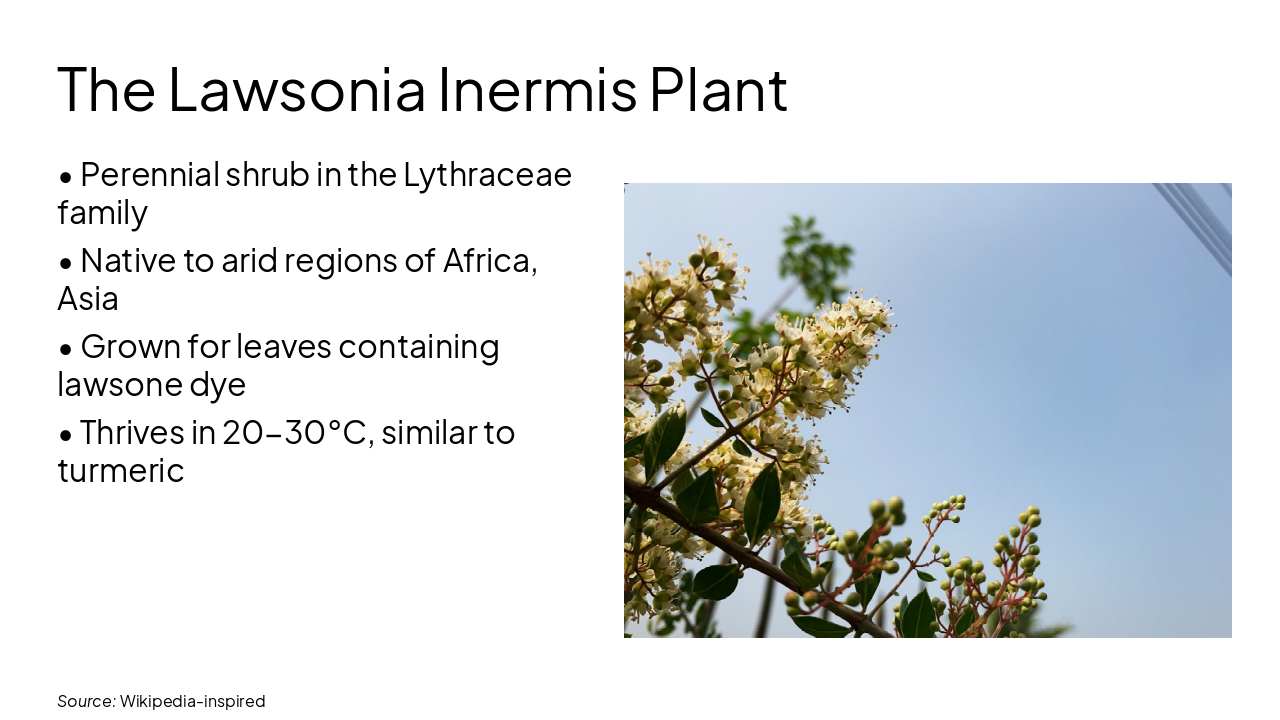
  • Perennial shrub in the Lythraceae family
  • Native to arid regions of Africa, Asia
  • Grown for leaves containing lawsone dye
  • Thrives in 20-30°C, similar to turmeric

---

Photo by Shaharia Islam on Unsplash

Source: Wikipedia-inspired
Slide 4 - The Lawsonia Inermis Plant
Slide 5 of 19

Slide 5

2

Historical Journey

Roots in ancient civilizations

Slide 5
Slide 6 of 19

Slide 6 - Ancient Egyptian Henna Art

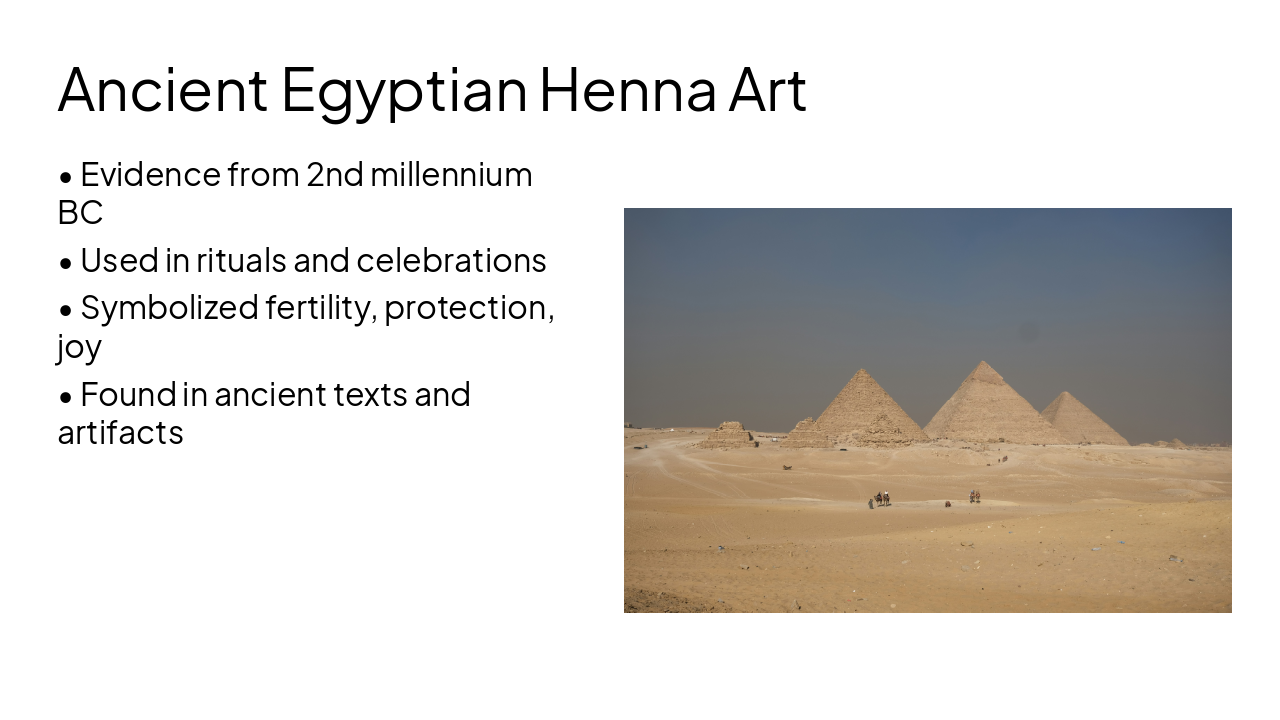
  • Evidence from 2nd millennium BC
  • Used in rituals and celebrations
  • Symbolized fertility, protection, joy
  • Found in ancient texts and artifacts

---

Photo by Andreea Munteanu on Unsplash
Slide 6 - Ancient Egyptian Henna Art
Slide 7 of 19

Slide 7

3

The Science Behind Henna

Chemistry of lawsone and skin binding

---

Photo by charlesdeluvio on Unsplash
Slide 7
Slide 8 of 19

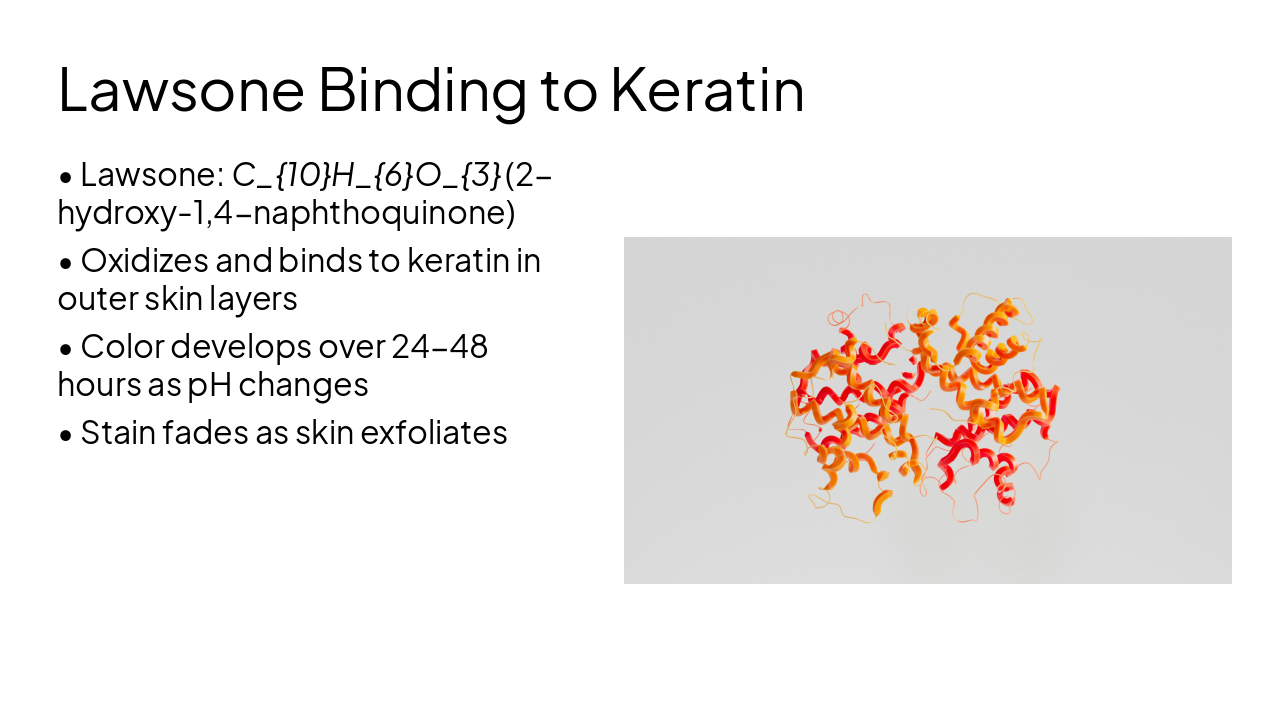
Slide 8 - Lawsone Binding to Keratin

  • Lawsone: $C{10}H{6}O_{3}$ (2-hydroxy-1,4-naphthoquinone)
  • Oxidizes and binds to keratin in outer skin layers
  • Color develops over 24-48 hours as pH changes
  • Stain fades as skin exfoliates

---

Photo by Anirudh on Unsplash

Slide 8 - Lawsone Binding to Keratin
Slide 9 of 19

Slide 9

4

Wedding Traditions

Mehendi and related rituals in Bengali culture
Slide 9
Slide 10 of 19

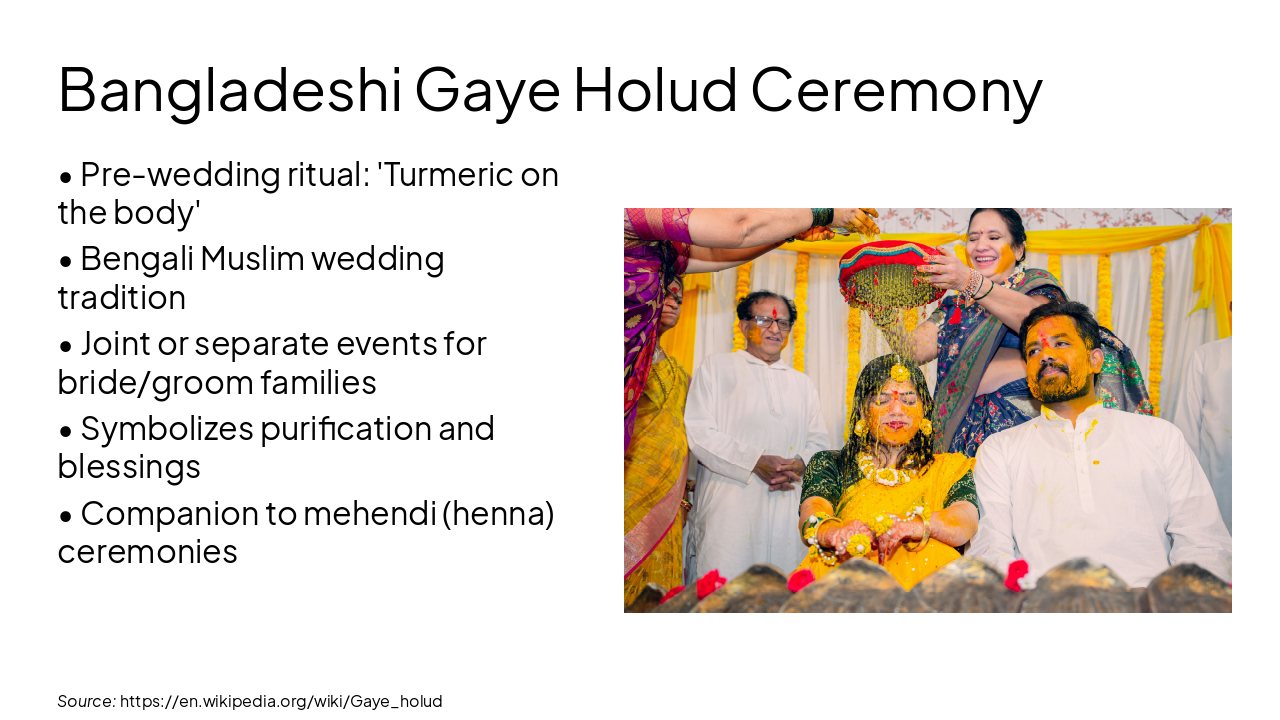
Slide 10 - Bangladeshi Gaye Holud Ceremony

  • Pre-wedding ritual: 'Turmeric on the body'
  • Bengali Muslim wedding tradition
  • Joint or separate events for bride/groom families
  • Symbolizes purification and blessings
  • Companion to mehendi (henna) ceremonies

---

Photo by Arun Prakash on Unsplash

Source: https://en.wikipedia.org/wiki/Gaye_holud
Slide 10 - Bangladeshi Gaye Holud Ceremony
Slide 11 of 19

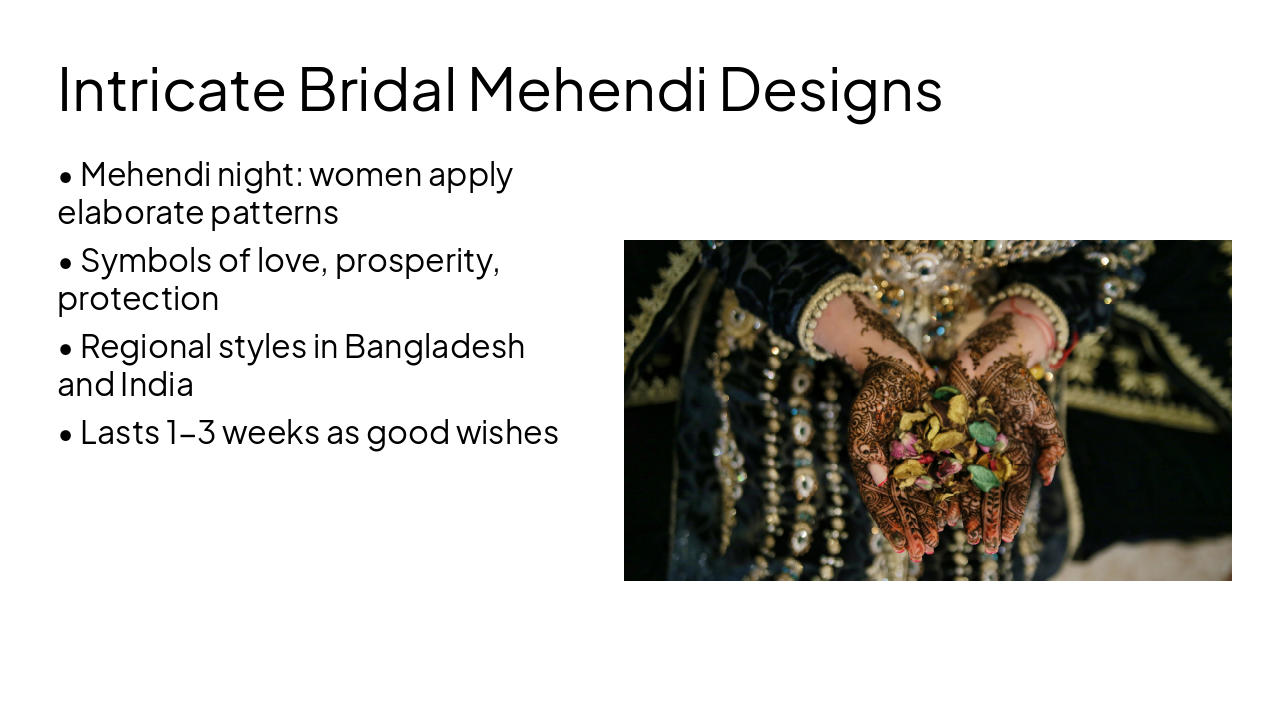
Slide 11 - Intricate Bridal Mehendi Designs

  • Mehendi night: women apply elaborate patterns
  • Symbols of love, prosperity, protection
  • Regional styles in Bangladesh and India
  • Lasts 1-3 weeks as good wishes

---

Photo by Graphe Tween on Unsplash
Slide 11 - Intricate Bridal Mehendi Designs
Slide 12 of 19

Slide 12

5

Preparation & Application

From powder to intricate designs

Slide 12
Slide 13 of 19

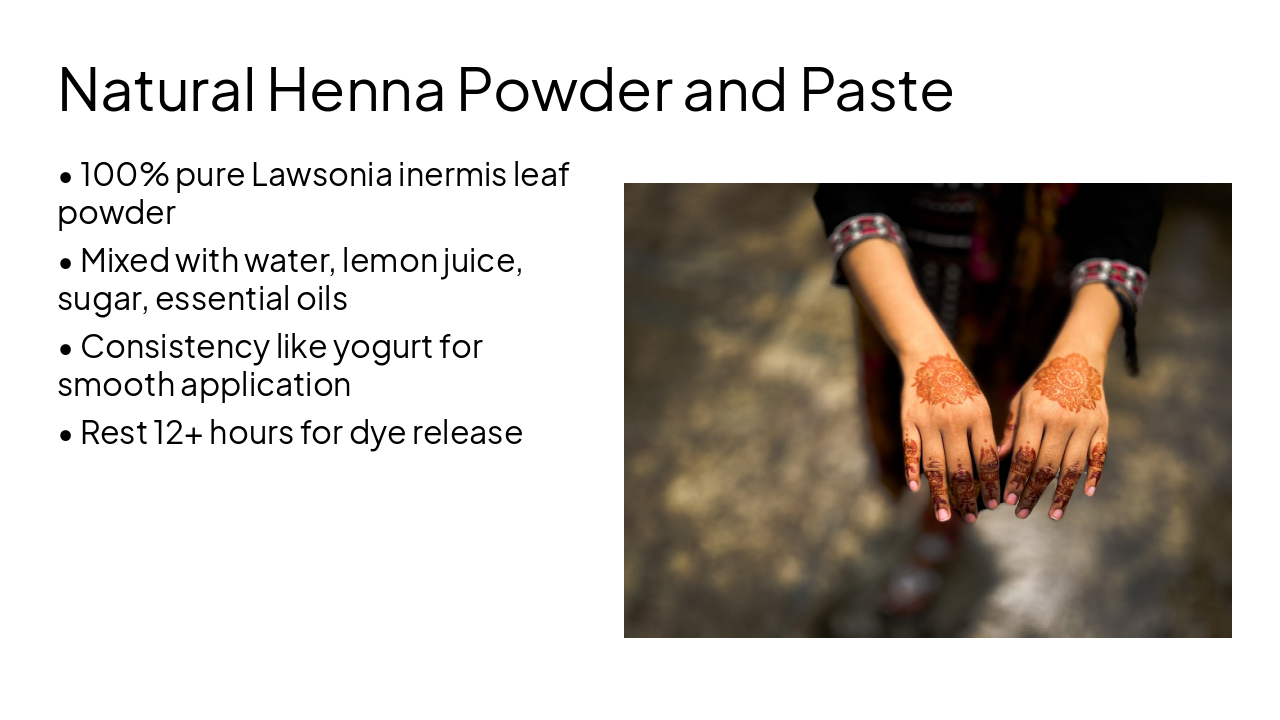
Slide 13 - Natural Henna Powder and Paste

  • 100% pure Lawsonia inermis leaf powder
  • Mixed with water, lemon juice, sugar, essential oils
  • Consistency like yogurt for smooth application
  • Rest 12+ hours for dye release

---

Photo by Masud Imran on Unsplash

Slide 13 - Natural Henna Powder and Paste
Slide 14 of 19

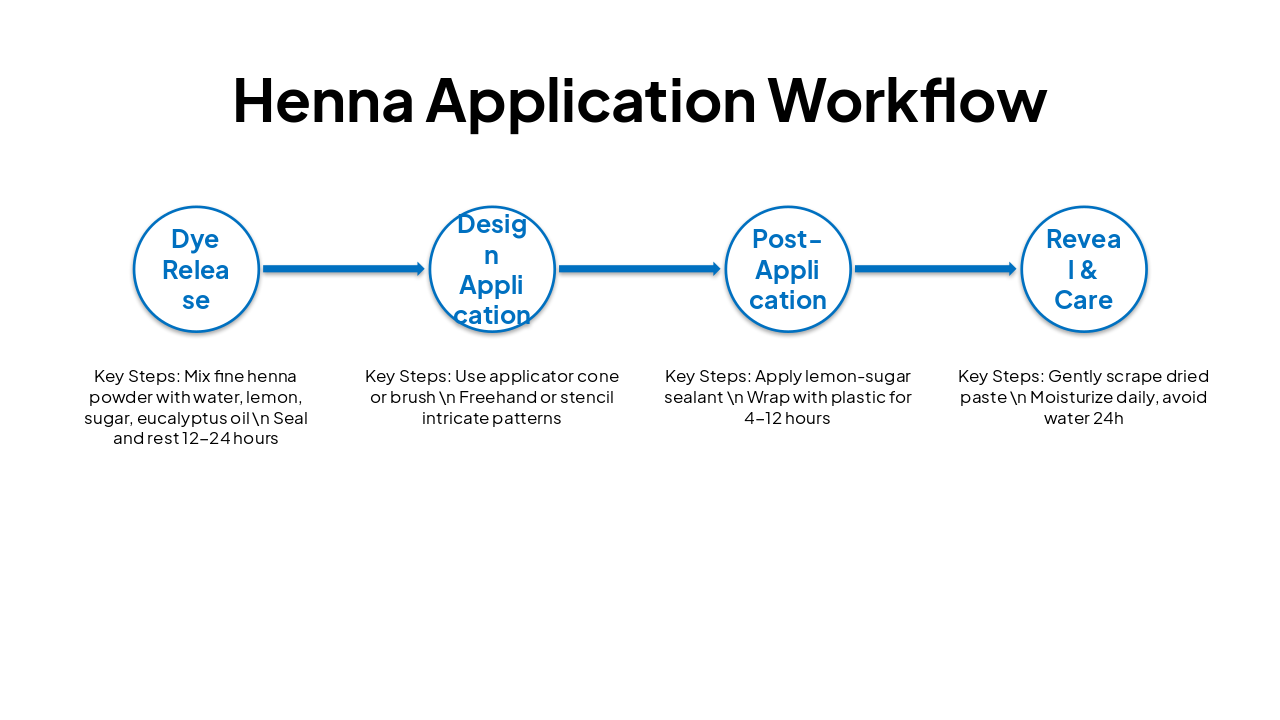
Slide 14 - Henna Application Workflow

StageKey Steps

| Dye Release | Mix fine henna powder with water, lemon, sugar, eucalyptus oil Seal and rest 12-24 hours | | Design Application | Use applicator cone or brush Freehand or stencil intricate patterns | | Post-Application | Apply lemon-sugar sealant Wrap with plastic for 4-12 hours | | Reveal & Care | Gently scrape dried paste Moisturize daily, avoid water 24h |

Slide 14 - Henna Application Workflow
Slide 16 of 19

Slide 16 - Natural Henna vs Black Henna

Natural Henna (Safe)

  • Plant-based lawsone dye
  • Orange-brown stain
  • Rare allergies
  • Fades naturally
  • FDA-approved as cosmetic

Black Henna (Dangerous)

  • Contains PPD chemical
  • Immediate black color
  • High risk of burns, blisters
  • Permanent scarring possible
  • Not true henna - avoid!
Slide 16 - Natural Henna vs Black Henna
Slide 17 of 19

Slide 17 - Safety Comparison Graphic

  • Always check for pure ingredients
  • Patch test 48 hours prior
  • Avoid 'black henna' salons
  • Consult for sensitive skin
  • Source from reputable suppliers
Slide 17 - Safety Comparison Graphic
Slide 18 of 19

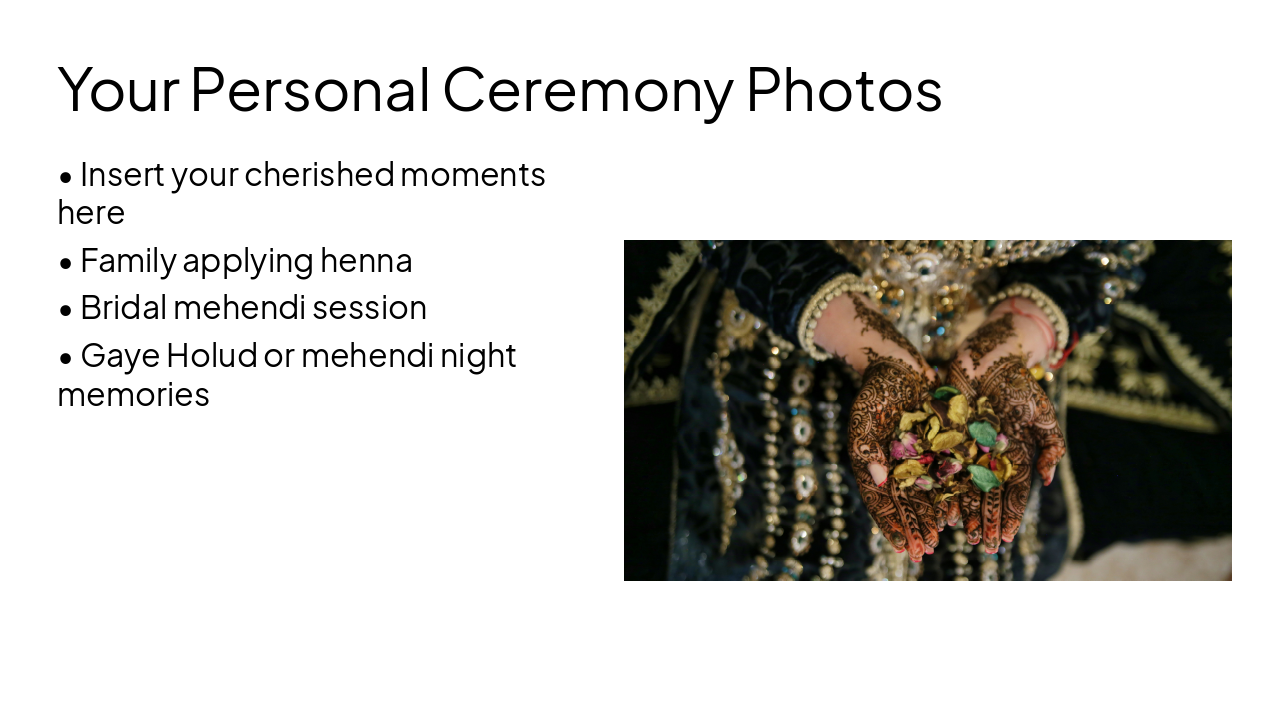
Slide 18 - Your Personal Ceremony Photos

  • Insert your cherished moments here
  • Family applying henna
  • Bridal mehendi session
  • Gaye Holud or mehendi night memories

---

Photo by Graphe Tween on Unsplash
Slide 18 - Your Personal Ceremony Photos
Slide 19 of 19

Slide 19 - Thank You

Embrace the Art of Henna Timeless beauty, safe and natural Celebrate traditions with elegance

Questions? Let's discuss your ceremony!
Slide 19 - Thank You

Discover More Presentations

Explore thousands of AI-generated presentations for inspiration

Browse Presentations
Powered by AI

Create Your Own Presentation

Generate professional presentations in seconds with Karaf's AI. Customize this presentation or start from scratch.

Create New Presentation

Powered by Karaf.ai — AI-Powered Presentation Generator