Main Functions of Cytokines in Immunity

Generated from prompt:

Create a detailed 10-slide PowerPoint presentation about the main functions of cytokines in immunity for biology/immunology students. Use the uploaded PDF as the content source. Slides should include: 1) Title slide, 2) Definition and overview of cytokines, 3) Cytokines in innate and adaptive immunity, 4) General properties of cytokines, 5) Interleukins (ILs) and their functions, 6) Interferons (IFNs) and antiviral defense, 7) TNF-alpha and inflammatory response, 8) Chemokines and leukocyte migration, 9) Colony-stimulating factors and hematopoiesis, 10) Summary and conclusion. Include concise bullet points, scientific diagrams/icons, and a clean academic theme suitable for class presentation.

This presentation provides a comprehensive overview of cytokines, essential protein messengers in the immune system. It covers their definition, general properties, and critical roles in both innate and adaptive immunity, detailing specific functions of interleukins, interferons, TNF-alpha, chemokines, and colony-stimulating factors in processes such as inflammation, antiviral defense, leukocyte migration, and hematopoiesis.

May 15, 202610 slides
Slide 1 of 10

Slide 1 - Main Functions of Cytokines in Immunity

Main Functions of Cytokines in Immunity

Understanding Immune System Messengers for Biology/Immunology Students

---

Photo by National Cancer Institute on Unsplash
Slide 1 - Main Functions of Cytokines in Immunity
Slide 2 of 10

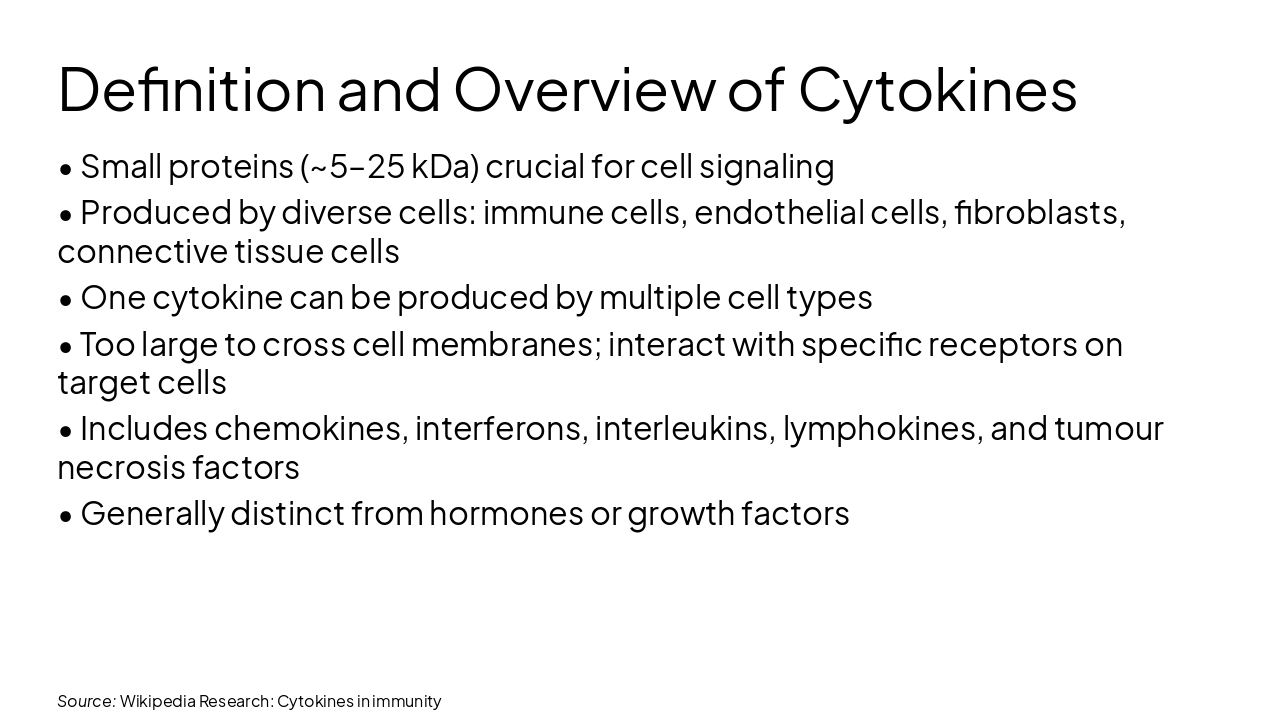
Slide 2 - Definition and Overview of Cytokines

  • Small proteins (~5–25 kDa) crucial for cell signaling
  • Produced by diverse cells: immune cells, endothelial cells, fibroblasts, connective tissue cells
  • One cytokine can be produced by multiple cell types
  • Too large to cross cell membranes; interact with specific receptors on target cells
  • Includes chemokines, interferons, interleukins, lymphokines, and tumour necrosis factors
  • Generally distinct from hormones or growth factors

Source: Wikipedia Research: Cytokines in immunity
Slide 2 - Definition and Overview of Cytokines
Slide 3 of 10

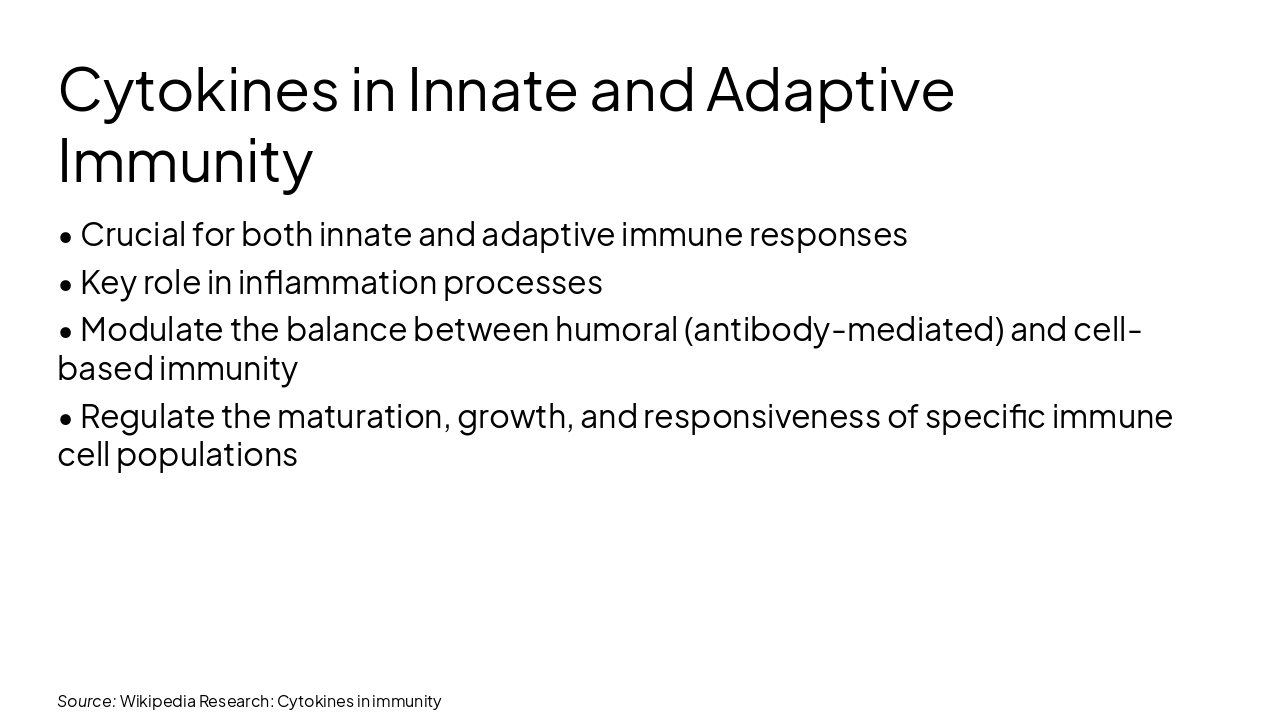
Slide 3 - Cytokines in Innate and Adaptive Immunity

  • Crucial for both innate and adaptive immune responses
  • Key role in inflammation processes
  • Modulate the balance between humoral (antibody-mediated) and cell-based immunity
  • Regulate the maturation, growth, and responsiveness of specific immune cell populations

Source: Wikipedia Research: Cytokines in immunity
Slide 3 - Cytokines in Innate and Adaptive Immunity
Slide 4 of 10

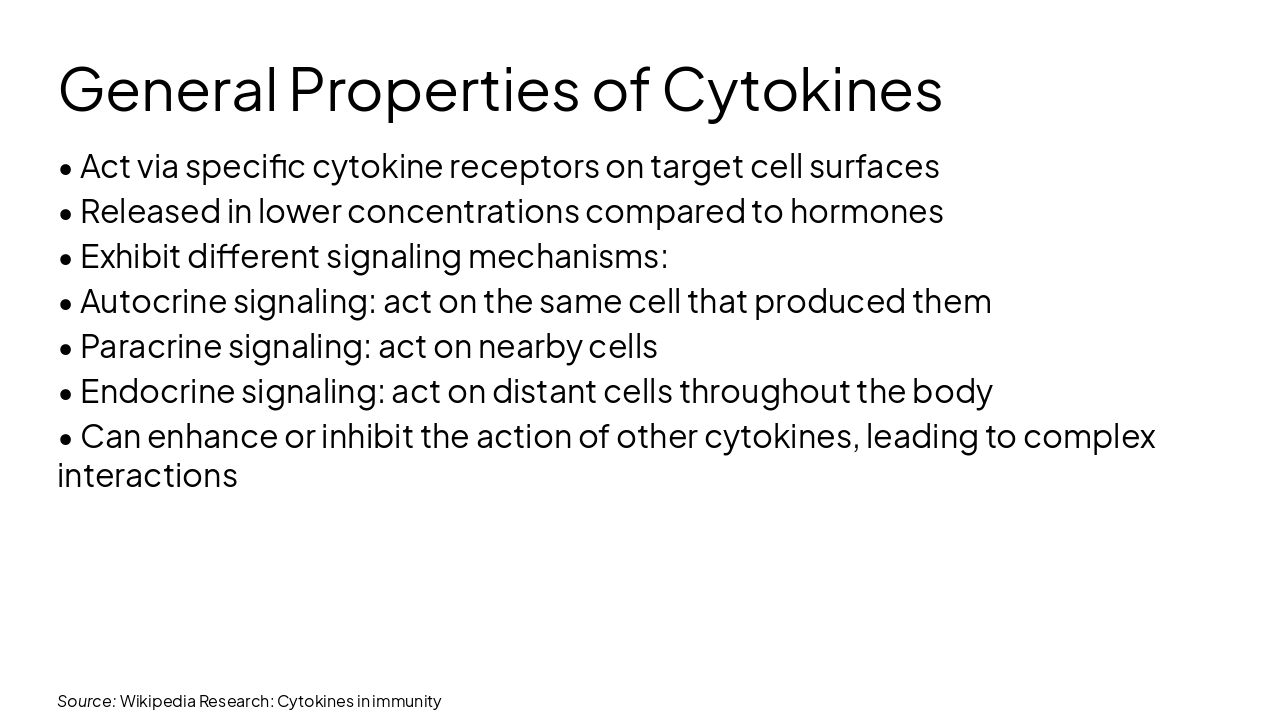
Slide 4 - General Properties of Cytokines

  • Act via specific cytokine receptors on target cell surfaces
  • Released in lower concentrations compared to hormones
  • Exhibit different signaling mechanisms:
  • Autocrine signaling: act on the same cell that produced them
  • Paracrine signaling: act on nearby cells
  • Endocrine signaling: act on distant cells throughout the body
  • Can enhance or inhibit the action of other cytokines, leading to complex interactions

Source: Wikipedia Research: Cytokines in immunity
Slide 4 - General Properties of Cytokines
Slide 5 of 10

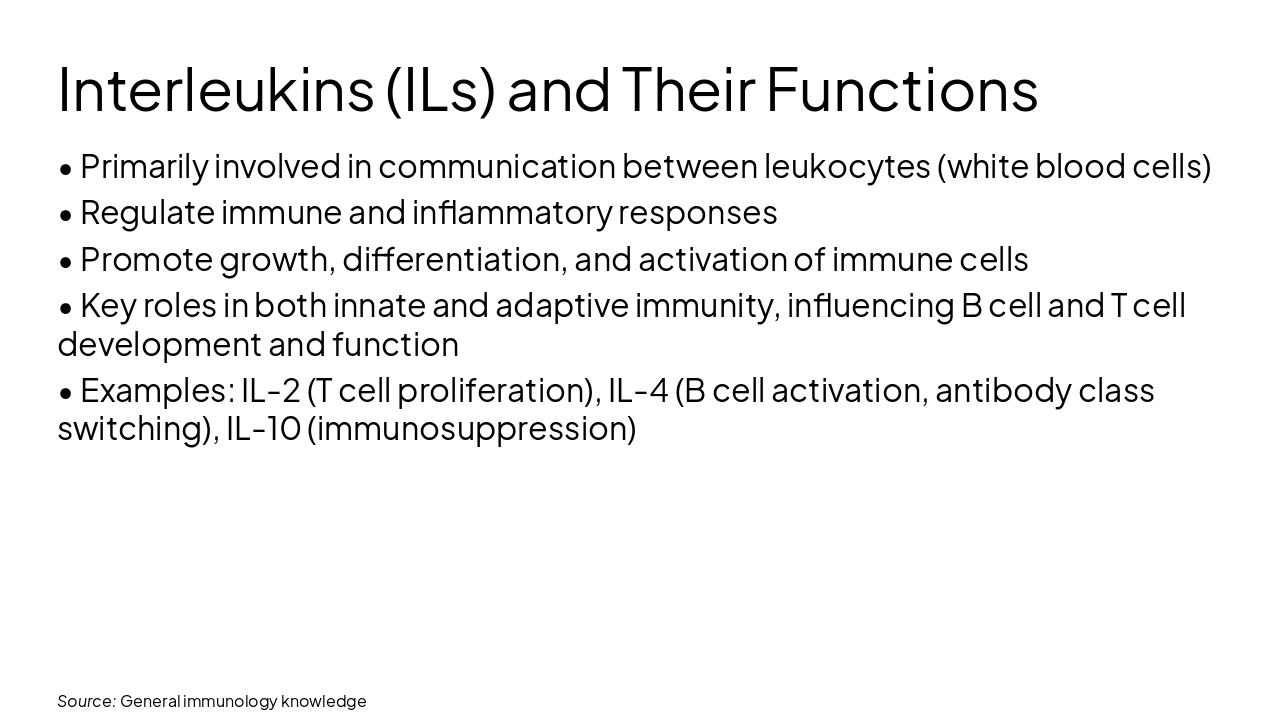
Slide 5 - Interleukins (ILs) and Their Functions

  • Primarily involved in communication between leukocytes (white blood cells)
  • Regulate immune and inflammatory responses
  • Promote growth, differentiation, and activation of immune cells
  • Key roles in both innate and adaptive immunity, influencing B cell and T cell development and function
  • Examples: IL-2 (T cell proliferation), IL-4 (B cell activation, antibody class switching), IL-10 (immunosuppression)

Source: General immunology knowledge

Slide 5 - Interleukins (ILs) and Their Functions
Slide 6 of 10

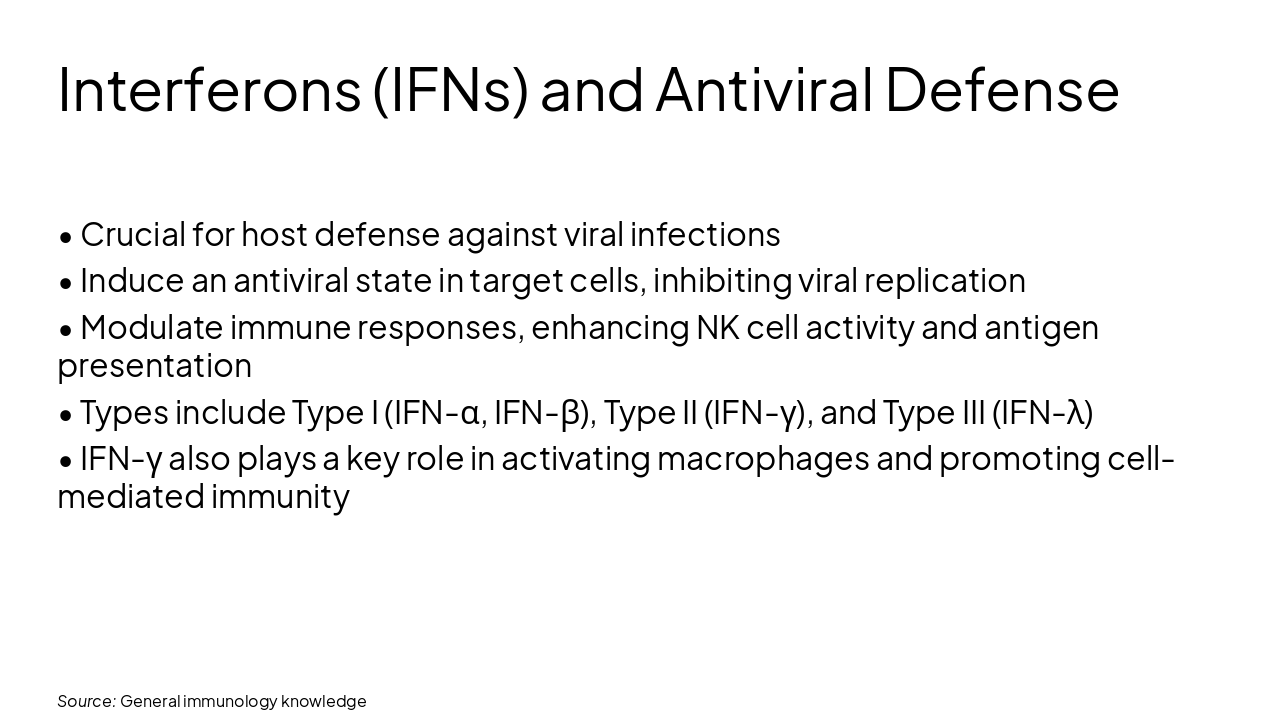
Slide 6 - Interferons (IFNs) and Antiviral Defense

  • Crucial for host defense against viral infections
  • Induce an antiviral state in target cells, inhibiting viral replication
  • Modulate immune responses, enhancing NK cell activity and antigen presentation
  • Types include Type I (IFN-α, IFN-β), Type II (IFN-γ), and Type III (IFN-λ)
  • IFN-γ also plays a key role in activating macrophages and promoting cell-mediated immunity

Source: General immunology knowledge
Slide 6 - Interferons (IFNs) and Antiviral Defense
Slide 7 of 10

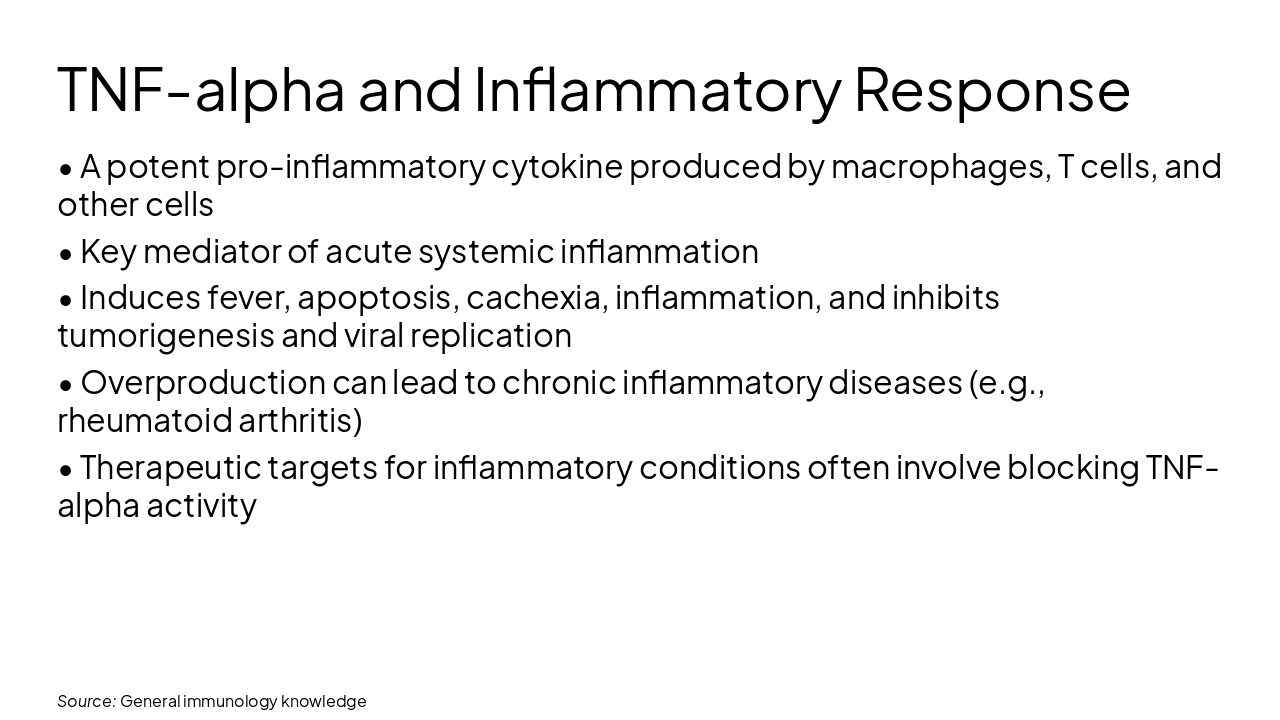
Slide 7 - TNF-alpha and Inflammatory Response

  • A potent pro-inflammatory cytokine produced by macrophages, T cells, and other cells
  • Key mediator of acute systemic inflammation
  • Induces fever, apoptosis, cachexia, inflammation, and inhibits tumorigenesis and viral replication
  • Overproduction can lead to chronic inflammatory diseases (e.g., rheumatoid arthritis)
  • Therapeutic targets for inflammatory conditions often involve blocking TNF-alpha activity

Source: General immunology knowledge

Slide 7 - TNF-alpha and Inflammatory Response
Slide 8 of 10

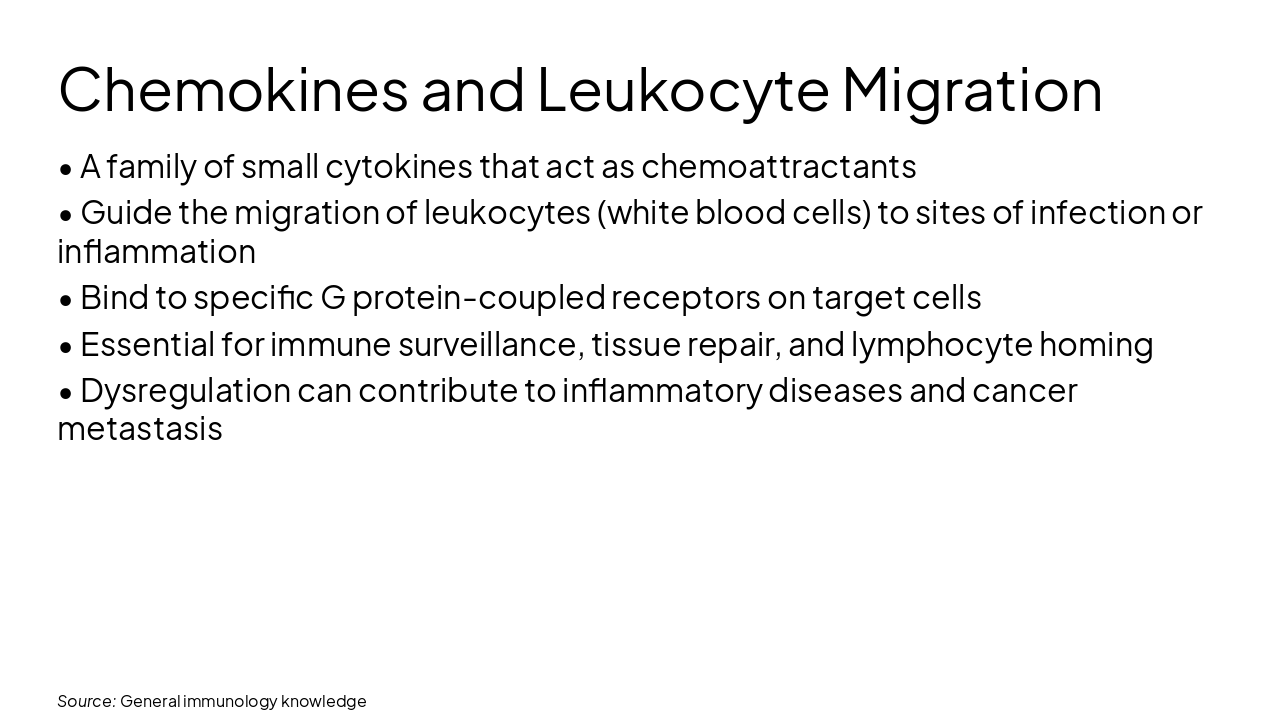
Slide 8 - Chemokines and Leukocyte Migration

  • A family of small cytokines that act as chemoattractants
  • Guide the migration of leukocytes (white blood cells) to sites of infection or inflammation
  • Bind to specific G protein-coupled receptors on target cells
  • Essential for immune surveillance, tissue repair, and lymphocyte homing
  • Dysregulation can contribute to inflammatory diseases and cancer metastasis

Source: General immunology knowledge

Slide 8 - Chemokines and Leukocyte Migration
Slide 9 of 10

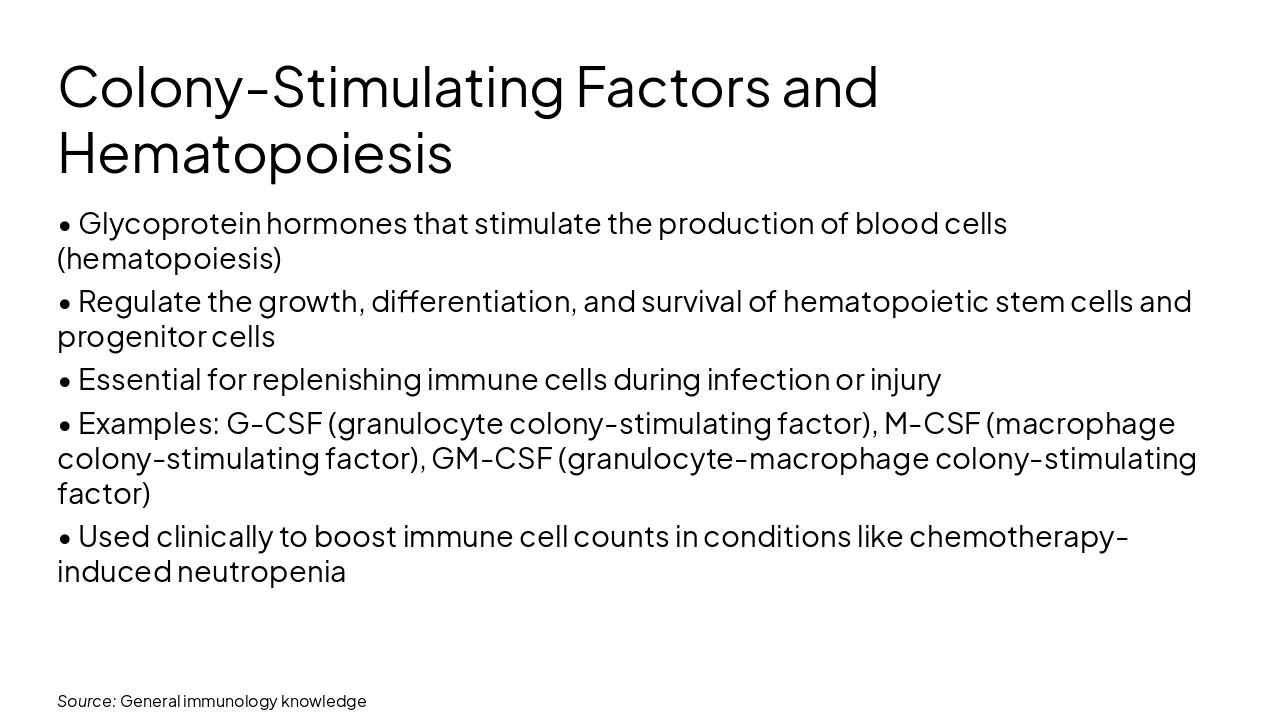
Slide 9 - Colony-Stimulating Factors and Hematopoiesis

  • Glycoprotein hormones that stimulate the production of blood cells (hematopoiesis)
  • Regulate the growth, differentiation, and survival of hematopoietic stem cells and progenitor cells
  • Essential for replenishing immune cells during infection or injury
  • Examples: G-CSF (granulocyte colony-stimulating factor), M-CSF (macrophage colony-stimulating factor), GM-CSF (granulocyte-macrophage colony-stimulating factor)
  • Used clinically to boost immune cell counts in conditions like chemotherapy-induced neutropenia

Source: General immunology knowledge

Slide 9 - Colony-Stimulating Factors and Hematopoiesis
Slide 10 of 10

Slide 10 - Summary and Conclusion

Cytokines are diverse and essential messengers orchestrating immune responses, inflammation, and cellular development.

Their intricate roles are vital for maintaining health and combating disease.

---

Photo by Conny Schneider on Unsplash
Slide 10 - Summary and Conclusion

Discover More Presentations

Explore thousands of AI-generated presentations for inspiration

Browse Presentations
Powered by AI

Create Your Own Presentation

Generate professional presentations in seconds with Karaf's AI. Customize this presentation or start from scratch.

Create New Presentation

Powered by Karaf.ai — AI-Powered Presentation Generator