Storm and Flood Safety Guide

Generated from prompt:

Storm and Flood Safety presentation for adults including: sections on understanding storms, flood risks, warning vs watch, preparation steps, emergency go-bags, evacuation, after-storm safety. Include a special section for seniors and people with disabilities (mobility, medical equipment, caregivers). Include a group discussion question before each major section and mini quiz slides between major sections. Use clear visuals and practical safety tips.

Practical guide covering storm and flood risks, watches vs. warnings, emergency kits, support for seniors and disabled individuals, evacuation procedures, and post-storm safety, with quizzes and discussion questions for better preparedness.

March 11, 202617 slides
Slide 1 of 17

Slide 1 - Storm and Flood Safety Guide

Storm and Flood Safety Guide

Practical Steps for Protection and Preparedness for Everyone

---

Photo by Chris Gallagher on Unsplash

Slide 1 - Storm and Flood Safety Guide
Slide 2 of 17

Slide 2 - Agenda

  • Understanding Storms and Flood Risks: Foundations of storm awareness
  • Watches vs. Warnings: Knowing the difference for action
  • Preparation and Emergency Kits: Essential gear and planning
  • Support for Seniors and People with Disabilities: Safety for those with extra needs
  • Evacuation and After-Storm Safety: How to leave and when to stay

---

Photo by Nastuh Abootalebi on Unsplash
Slide 2 - Agenda
Slide 3 of 17

Slide 3 - Section 1

1

Understanding Storms and Flood Risks

Discussion Question: What is the biggest weather risk in our local area?

---

Photo by Red Zeppelin (https://unsplash.com/@redzeppelin?utmsource=karaf&utmmedium=referral) on Unsplash (https://unsplash.com/?utmsource=karaf&utmmedium=referral)
Slide 3 - Section 1
Slide 4 of 17

Slide 4 - Storm and Flood Basics

  • Severe storms can happen rapidly, leading to flash floods.
  • Flood risks are highest in low-lying areas, near bodies of water, and where drainage is poor.
  • Know your flood zone status via local government maps.
  • Flash floods occur within hours, providing very little warning time.
Slide 4 - Storm and Flood Basics
Slide 5 of 17

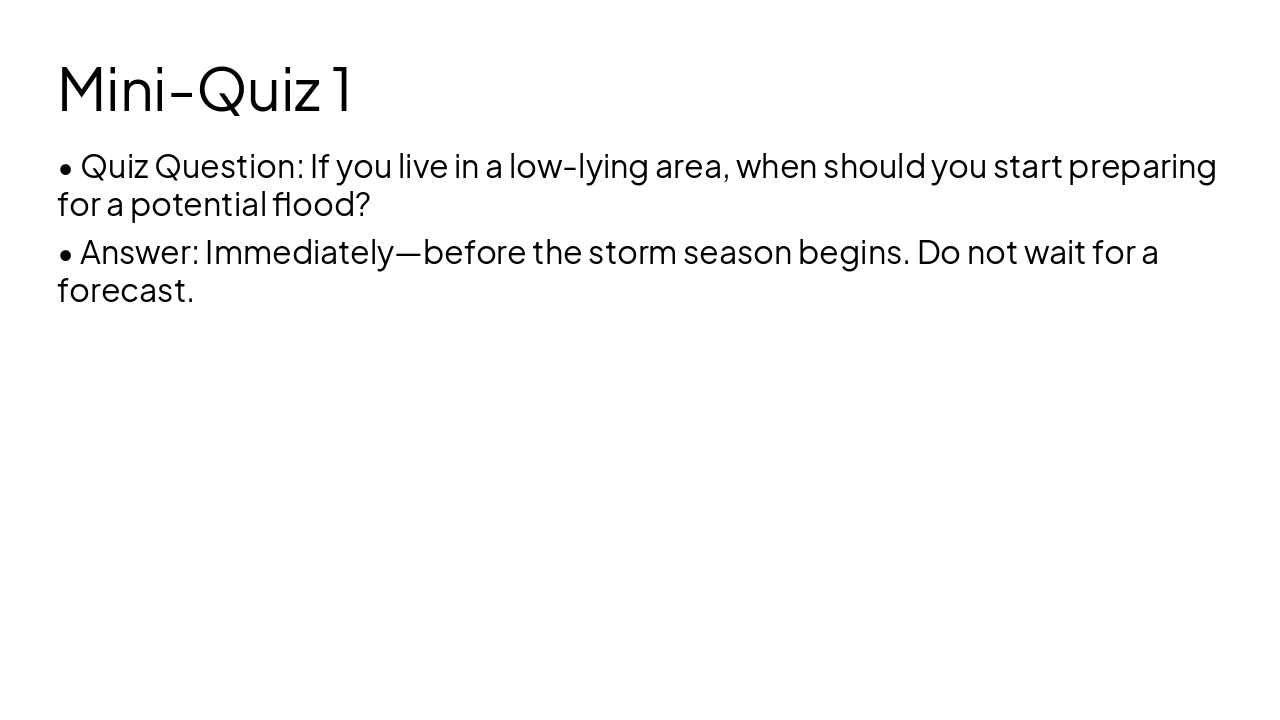
Slide 5 - Mini-Quiz 1

  • Quiz Question: If you live in a low-lying area, when should you start preparing for a potential flood?
  • Answer: Immediately—before the storm season begins. Do not wait for a forecast.
Slide 5 - Mini-Quiz 1
Slide 6 of 17

Slide 6 - Section 2

2

Watches vs. Warnings

Discussion Question: Why is it vital to know the difference between a 'Watch' and a 'Warning'?

---

Photo by Simon Hurry on Unsplash

Slide 6 - Section 2
Slide 7 of 17

Slide 7 - Watch vs. Warning

Watch Conditions are favorable for a storm. Stay alert and keep an eye on weather updates.

Warning A storm is occurring or imminent. Take action immediately to reach safety.

Slide 7 - Watch vs. Warning
Slide 8 of 17

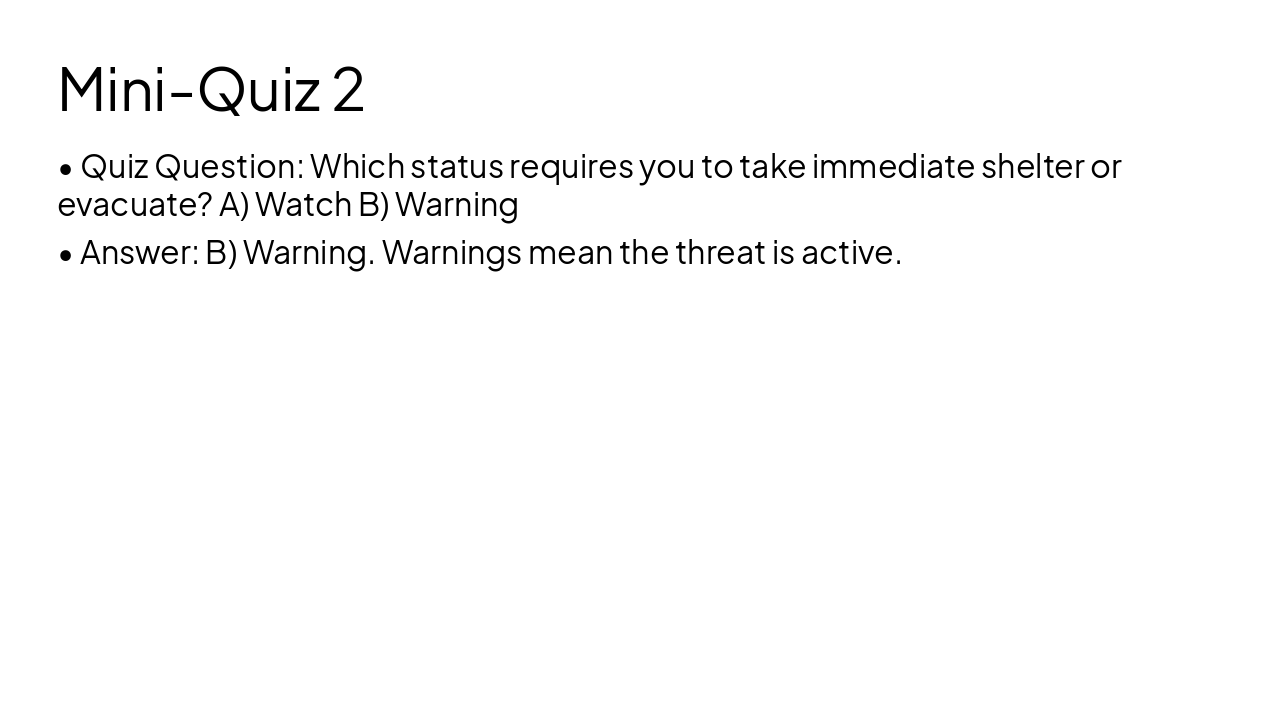
Slide 8 - Mini-Quiz 2

  • Quiz Question: Which status requires you to take immediate shelter or evacuate? A) Watch B) Warning
  • Answer: B) Warning. Warnings mean the threat is active.
Slide 8 - Mini-Quiz 2
Slide 9 of 17

Slide 9 - Section 3

3

Preparation and Emergency Kits

Discussion Question: Have you ever had to leave your home in a rush? What did you forget?

---

Photo by Mathurin NAPOLY / matnapo on Unsplash
Slide 9 - Section 3
Slide 10 of 17

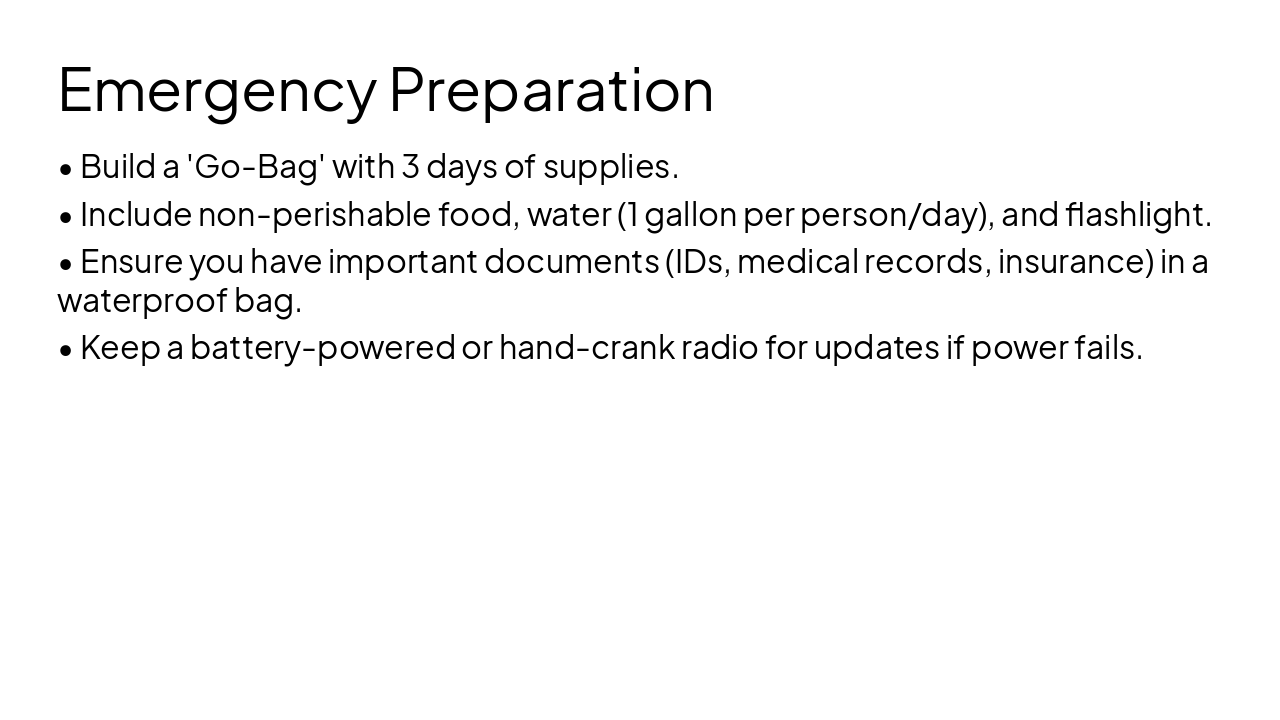
Slide 10 - Emergency Preparation

  • Build a 'Go-Bag' with 3 days of supplies.
  • Include non-perishable food, water (1 gallon per person/day), and flashlight.
  • Ensure you have important documents (IDs, medical records, insurance) in a waterproof bag.
  • Keep a battery-powered or hand-crank radio for updates if power fails.
Slide 10 - Emergency Preparation
Slide 11 of 17

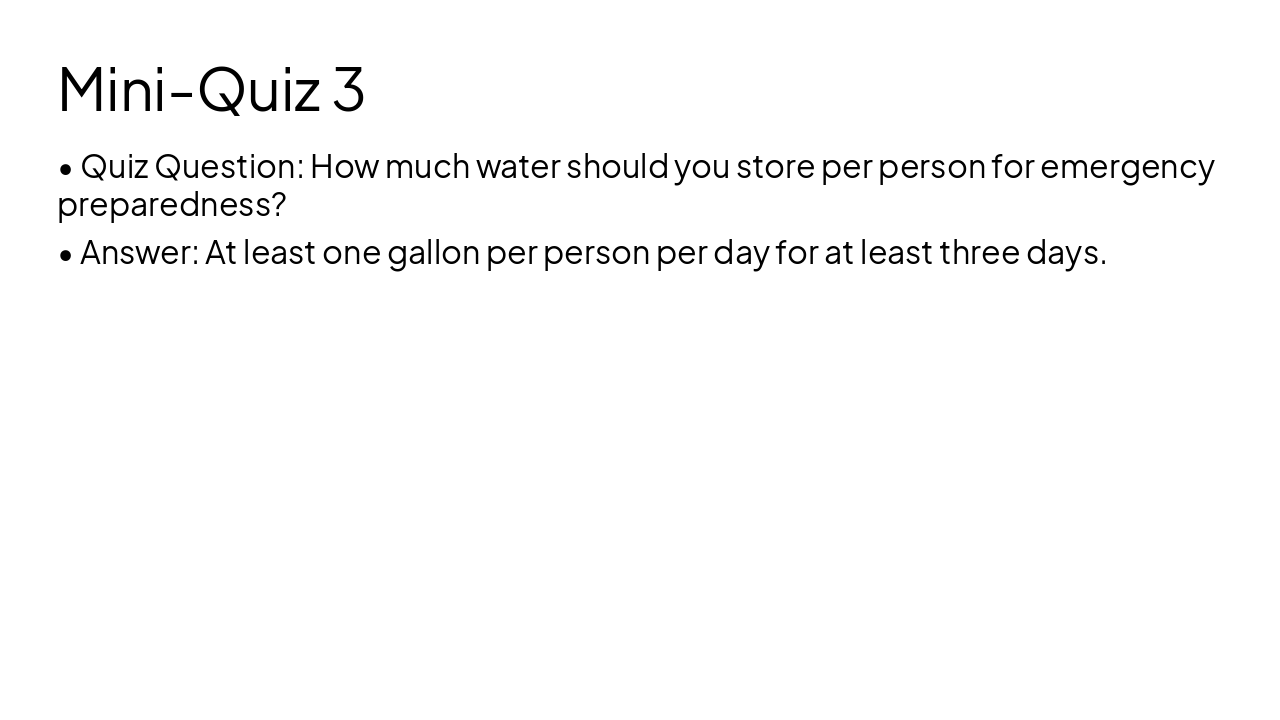
Slide 11 - Mini-Quiz 3

  • Quiz Question: How much water should you store per person for emergency preparedness?
  • Answer: At least one gallon per person per day for at least three days.
Slide 11 - Mini-Quiz 3
Slide 12 of 17

Slide 12 - Section 4

4

Safety for Seniors and People with Disabilities

Discussion Question: What special considerations should we offer neighbors who have mobility or medical needs?

---

Photo by Jakub Pabis on Unsplash
Slide 12 - Section 4
Slide 13 of 17

Slide 13 - Inclusive Safety Planning

  • Pre-register with local emergency management for assistance if you need help evacuating.
  • Keep a clear list of all medical equipment, prescriptions, and backup power sources.
  • Identify a support network of friends, neighbors, or caregivers who can assist during a crisis.
  • Ensure medical devices like oxygen tanks or wheelchairs are part of your emergency transport plan.

Source: Wikipedia Research: Emergency preparedness for people with disabilities; Disability and disasters
Slide 13 - Inclusive Safety Planning
Slide 14 of 17

Slide 14 - Mini-Quiz 4

  • Quiz Question: True or False: If you have a disability, you should rely only on public emergency services for evacuation.
  • Answer: False. It is essential to have a personal support network that knows your specific needs.
Slide 14 - Mini-Quiz 4
Slide 15 of 17

Slide 15 - Section 5

5

Evacuation and After-Storm Safety

Discussion Question: If told to evacuate, what is your biggest barrier to doing so safely?

---

Photo by Fahim Junaid on Unsplash
Slide 15 - Section 5
Slide 16 of 17

Slide 16 - Staying Safe During and After

  • Follow official evacuation routes—do not take shortcuts.
  • Never drive through flooded roads: 'Turn Around, Don't Drown'.
  • After the storm, wait for official 'all-clear' signals before returning home.
  • Be aware of downed power lines and structural damage upon return.

Source: Wikipedia Research: Emergency evacuation

Slide 16 - Staying Safe During and After
Slide 17 of 17

Slide 17 - Conclusion

Stay Informed and Stay Prepared

Your preparation saves lives. Take action today.

---

Photo by Rizky Motion on Unsplash
Slide 17 - Conclusion

Discover More Presentations

Explore thousands of AI-generated presentations for inspiration

Browse Presentations
Powered by AI

Create Your Own Presentation

Generate professional presentations in seconds with Karaf's AI. Customize this presentation or start from scratch.

Create New Presentation

Powered by Karaf.ai — AI-Powered Presentation Generator