Slide 1 of 9
Slide 1 - Mirrors of the Soul: How People Shape Who We Become
Mirrors of the Soul How People Shape Who We Become
Exploring the Profound Impact of Social Influences on Human Development
---
Photo by Michael Schofield on Unsplash
Generated from prompt:
Create a 9 page slide show that explains how the people around us shape who we become. You will use visuals, examples, and two pieces of research to support your ideas. 1. Title page with your title A creative title that connects to the theme. 2. Visuals Include images that represent different types of influence. 3. Research Element (Required) Find two credible sources (article, book, website, or study) that explains how people influence human development. Your research must include: ✔ The name of the source (e.g., American Psychological Association, Harvard Child Development Center, Psychology Today, etc.) ✔ A 5 or more sentence summary of what the source says– MUST use quotes in writing —————————— ✔ A simple citation— MUST be included (Source name + Author + organization + year) 4. Explanation Section Write 5 or more sentences explaining how other people influence our development. You can discuss: How family teaches values How friends shape identity How mentors or teachers guide growth How communities influence beliefs and behavior 5. Real- world Examples—–– Which source inspired this example? Include two short examples (fictional) of how someone influenced a person’s development. 6. Conclusion Wrap it up. Pull together all thoughts and information.– BOTH. 7. Higher level questions— What are 3 thought provoking questions that someone may ask to further their understanding, after reading your essay? 8. Quote at the end Add a meaningful quote about influence, growth, or relationships. Graphic Essay Checklist Before turning it in, make sure your 9 page slide show has: ✔ Creative title ✔ Related visuals ✔ 5 or more sentence explanation ✔ Two examples- 5 or more sentences ✔ Two research sources + summary- 5 or more sentences for EACH source ✔ 3 deeper thinking questions that a reader may ask after reading your 9 page slide show ✔ Conclusion paragraph- 5 or more sentences ✔ Strong and relative quote ✔ Neat, organized layout ✔ Color or design effort ALL SENTENCES MUST BE COMPLETE.
Explore how family, friends, mentors, and communities shape our identity, behaviors, and resilience. Drawing on Bandura's Social Learning Theory, Harvard's serve-and-return research, real-world examples, and thought-provoking insights, this deck揭示s•s
Mirrors of the Soul How People Shape Who We Become
Exploring the Profound Impact of Social Influences on Human Development
---
Photo by Michael Schofield on Unsplash
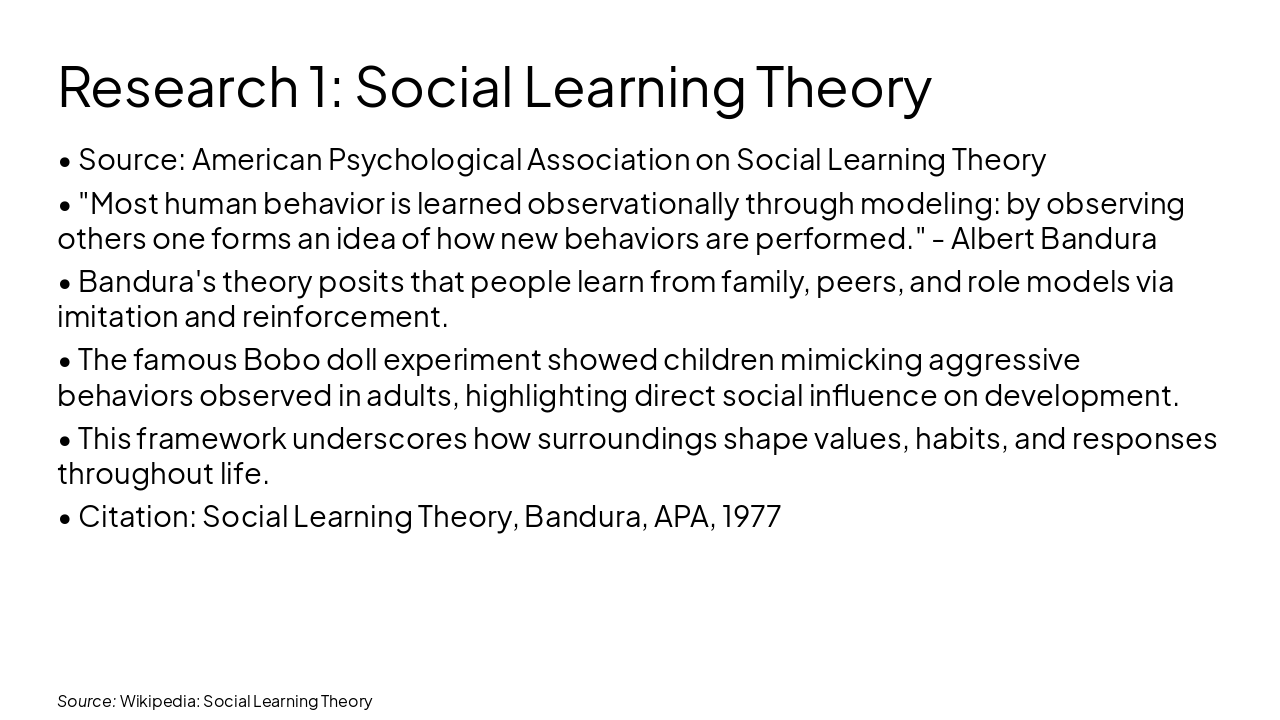
Source: Wikipedia: Social Learning Theory
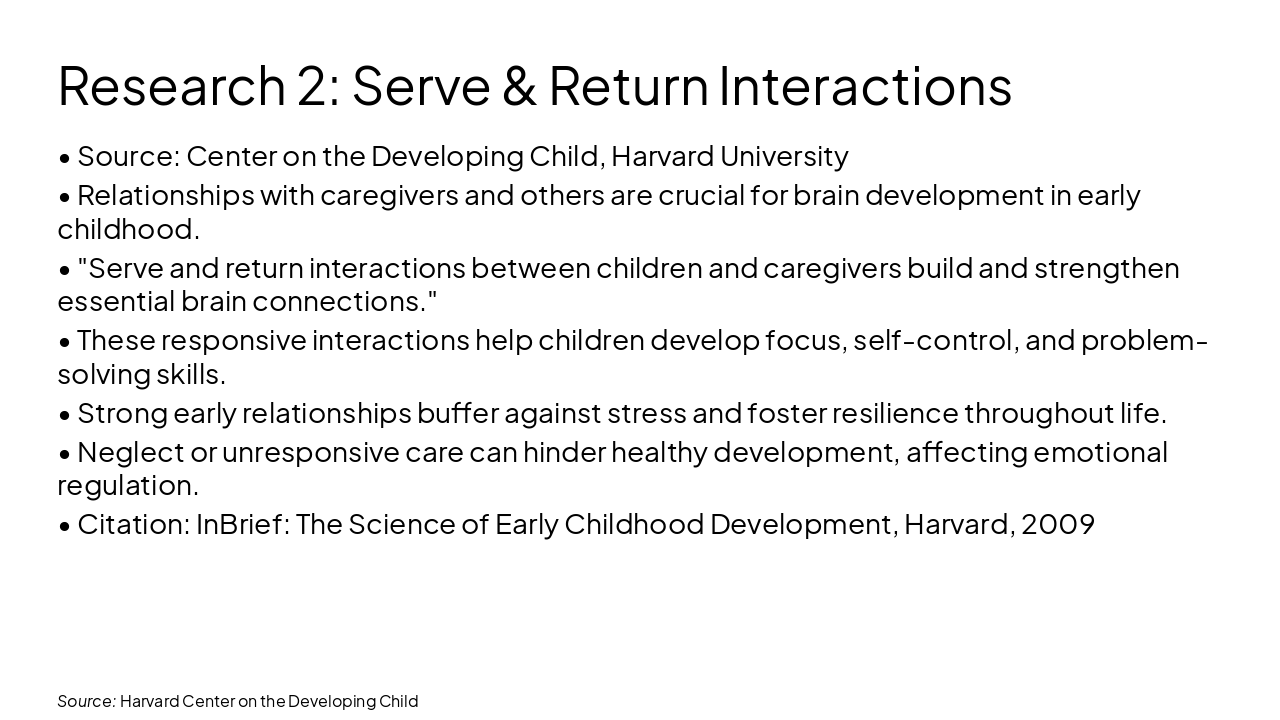
Source: Harvard Center on the Developing Child
Example 1: Inspired by Social Learning Theory (Bandura) Young Alex watched his father volunteer weekly at a local shelter. Through observation and imitation, Alex joined at age 10. This modeling instilled empathy and commitment. By high school, Alex led youth initiatives, shaping his career in social work.
Example 2: Inspired by Serve & Return (Harvard) Shy Maria received responsive feedback from teacher Ms. Lopez during lessons. These serve-and-return exchanges built her self-assurance over time. Maria began participating actively and later excelled in debate club. This relationship fostered her leadership potential.
The people around us act as mirrors, reflecting and molding our identity through daily interactions and profound relationships. Social Learning Theory and Harvard's research validate how observation and responsive bonds shape behaviors, resilience, and growth. Fictional examples of Alex and Maria demonstrate tangible impacts from family, mentors, and peers. Communities further reinforce these influences on beliefs and actions. By curating positive influences, we can intentionally craft our development journey.
Embrace the power of those who surround you.
---
Photo by Maksim Shutov on Unsplash
> You are the average of the five people you spend the most time with.
— Jim Rohn
---
Photo by Johannes Plenio on Unsplash
Explore thousands of AI-generated presentations for inspiration
Generate professional presentations in seconds with Karaf's AI. Customize this presentation or start from scratch.