Slide 1 of 6
Slide 1 - Leadership Transformation
Leadership Transformation: From Autocratic to Transformational
Strategic Shift for Vuka-Volt Turnaround
Generated from prompt:
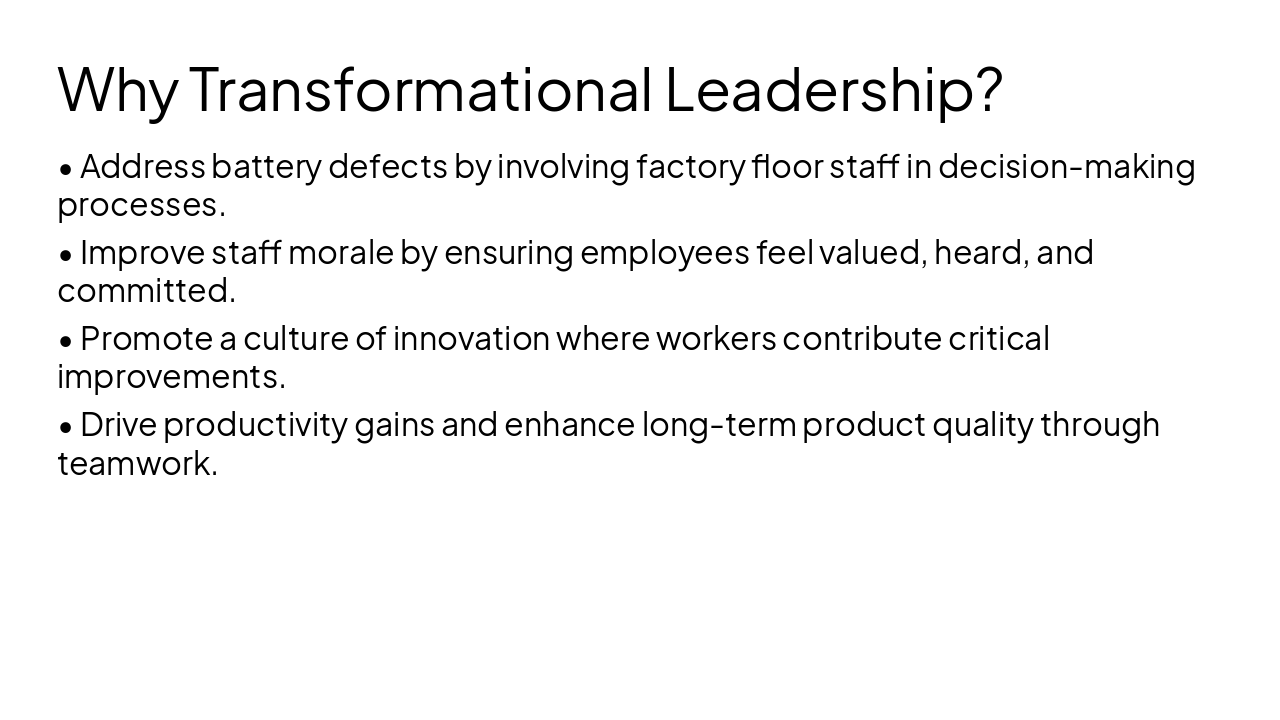
Vuka-Volt is currently facing two major challenges: battery defects and low staff morale. These problems are not just technical—they are deeply linked to leadership. To successfully navigate this period of drastic change, I recommend shifting from an autocratic leadership style to a transformational leadership style. An autocratic leader typically makes decisions alone, with little input from employees. While this can be efficient in the short term, it often leads to low morale, lack of innovation, and disengaged workers—exactly what Vuka-Volt is experiencing. In contrast, a transformational leader inspires and motivates employees to actively contribute to the company’s success. This leadership style focuses on communication, teamwork, and shared vision, which is essential during times of change. Firstly, moving to transformational leadership will help Vuka-Volt adapt during this period of drastic change. Employees on the factory floor are the ones directly dealing with the battery defects. By involving them in decision-making and encouraging their input, the company can identify problems faster and develop practical solutions. This creates a sense of ownership and responsibility among workers, improving both productivity and product quality. Secondly, transformational leadership will significantly improve staff morale. When employees feel valued and heard, they are more motivated and committed to their work. This can reduce errors, increase efficiency, and create a more positive workplace culture. Additionally, this leadership style promotes innovation. Instead of simply following instructions, workers are encouraged to think critically and suggest improvements. In a competitive market like electric scooters, innovation is key to long-term success. However, the success of this transformation depends heavily on the leader’s personal attitude. A successful leader must be open-minded, supportive, and willing to listen. They must lead by example, showing commitment to quality and continuous improvement. If the leader maintains a positive attitude and genuinely values employee contributions, trust will develop within the organization. This trust is essential for collaboration and long-term success. On the other hand, if the leader resists change or fails to engage with employees, the transformation will likely fail. In conclusion, shifting from an autocratic to a transformational leadership style will allow Vuka-Volt to better manage change, improve morale, and solve its quality issues more effectively. With the right attitude and approach, leadership can become the driving force behind the company’s turnaround. Thank you.
This deck outlines Vuka-Volt's strategic shift from autocratic to transformational leadership to overcome challenges like battery defects, boost morale, foster innovation, and drive productivity through employee involvement and shared vision.
Leadership Transformation: From Autocratic to Transformational
Strategic Shift for Vuka-Volt Turnaround

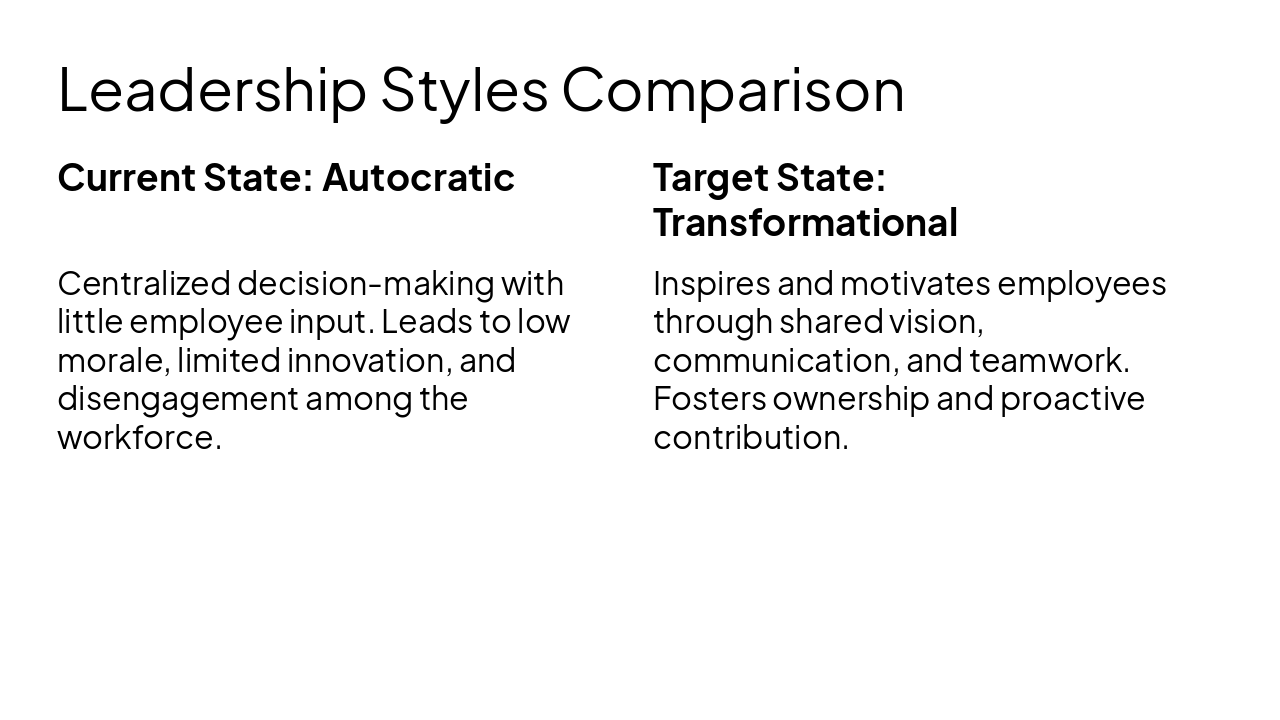
Current State: Autocratic Centralized decision-making with little employee input. Leads to low morale, limited innovation, and disengagement among the workforce.
Target State: Transformational Inspires and motivates employees through shared vision, communication, and teamwork. Fosters ownership and proactive contribution.
> Leadership must be open-minded, supportive, and willing to listen. Leading by example is the foundation of change.
— Leadership Strategic Insight

Transformational leadership is the catalyst for managing change and achieving operational excellence.
Vuka-Volt's Path to Success

Explore thousands of AI-generated presentations for inspiration
Generate professional presentations in seconds with Karaf's AI. Customize this presentation or start from scratch.