Life in the Sea and Ocean: Ecosystems, Biodiversity & Global

Generated from prompt:

presentation should be about life in the sea and the ocean. it should be so long and so complex it should be on college level

A comprehensive college-level exploration of marine environments, abiotic factors, plankton, nekton, benthic life, specialized ecosystems like corals and deep sea, higher trophic levels, food webs, human impacts, and conservation strategies for ocean

February 28, 202622 slides
Slide 1 of 22

Slide 1 - Life in the Sea and Ocean

A Comprehensive College-Level Exploration

Marine Ecosystems, Biodiversity, Interactions, and Global Challenges

---

Photo by Yousef Espanioly on Unsplash
Slide 1 - Life in the Sea and Ocean
Slide 2 of 22

Slide 2 - Presentation Agenda

  • Marine Environments and Abiotic Factors
  • Plankton and Primary Production
  • Nekton and Benthic Life
  • Specialized Ecosystems (Corals, Deep Sea)
  • Higher Trophic Levels (Mammals, Reptiles)
  • Food Webs and Interactions
  • Human Impacts
  • Conservation and Future Outlook

---

Photo by Md. Hasanuzzaman Himel on Unsplash
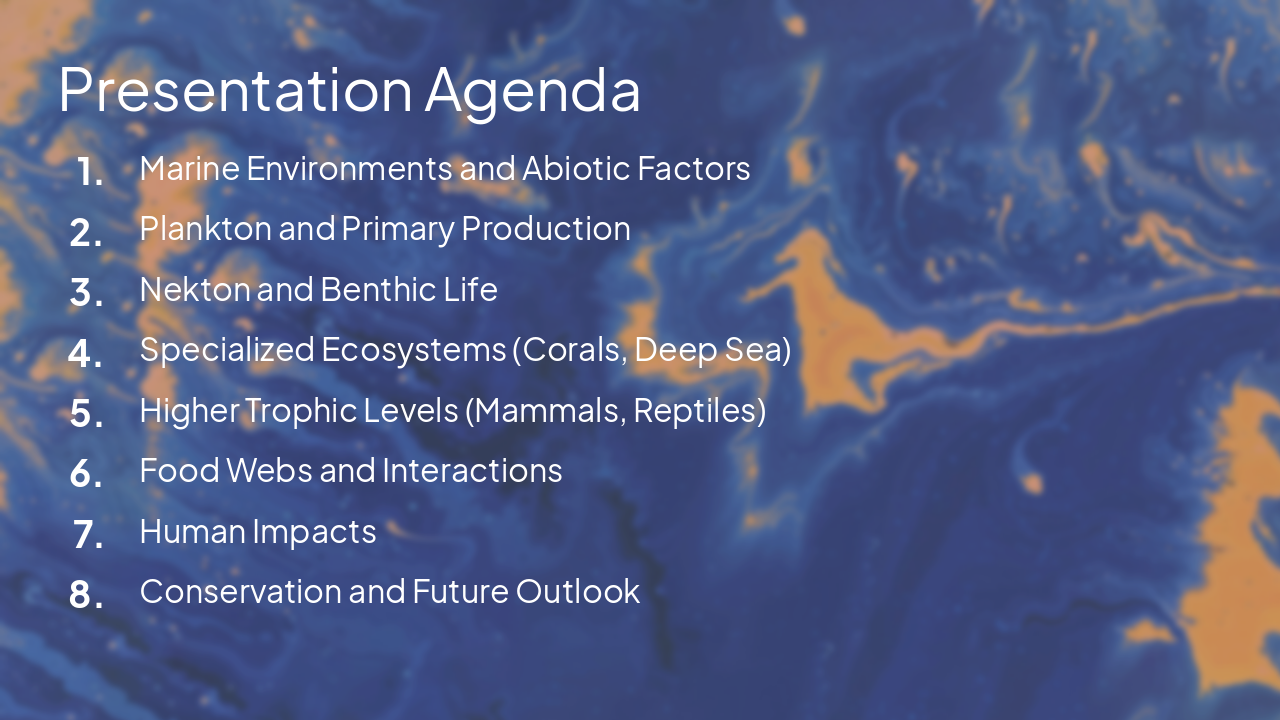
Slide 2 - Presentation Agenda
Slide 3 of 22

Slide 3 - Section 1

1

Marine Environments and Abiotic Factors

Understanding the physical setting for ocean life
Slide 3 - Section 1
Slide 4 of 22

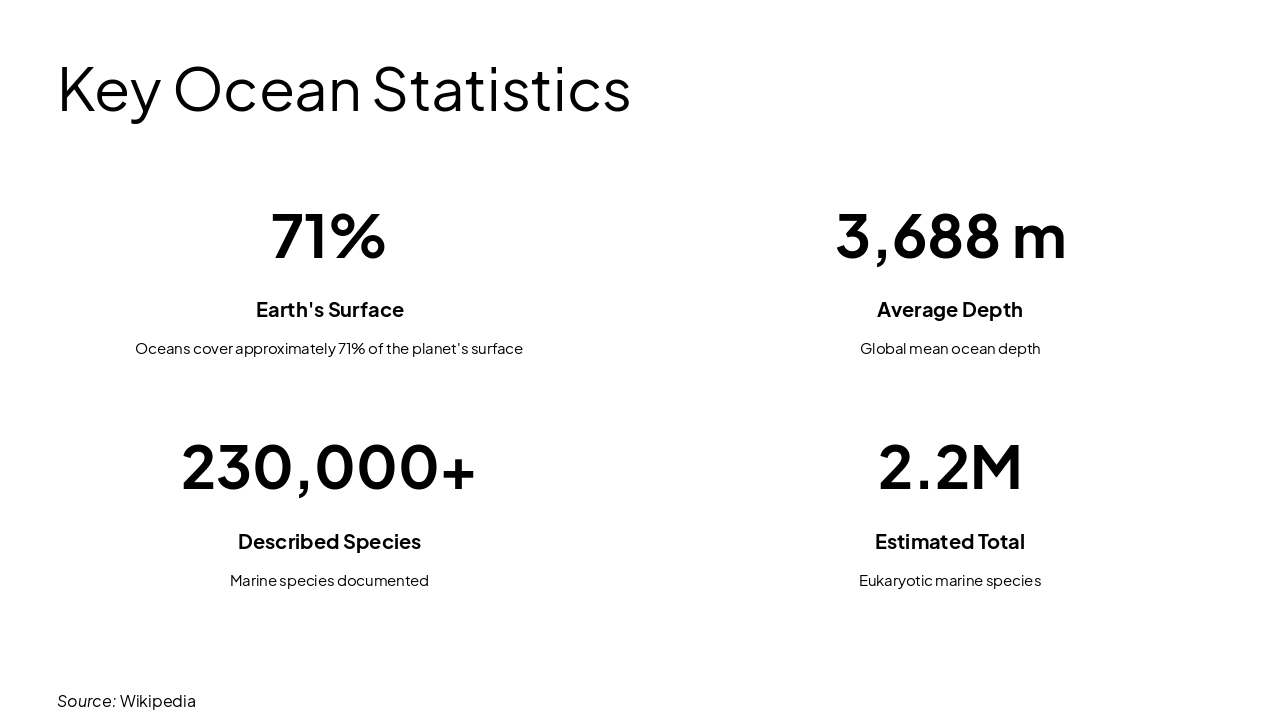
Slide 4 - Key Ocean Statistics

  • 71%: Earth's Surface
  • 3,688 m: Average Depth
  • 230,000+: Described Species
  • 2.2M: Estimated Total

Source: Wikipedia

Slide 4 - Key Ocean Statistics
Slide 5 of 22

Slide 5 - Ocean Zonal Structure

  • Epipelagic (0-200m): Sunlit photic zone with highest primary production
  • Mesopelagic (200-1000m): Twilight zone, bioluminescence common
  • Bathypelagic (1000-4000m): Constant darkness, low temperatures
  • Abyssopelagic (4000-6000m): Extreme pressure, chemosynthesis
  • Hadopelagic: Deep trenches like Mariana (11km)

---

Photo by Emily Wang on Unsplash

Source: Wikipedia
Slide 5 - Ocean Zonal Structure
Slide 6 of 22

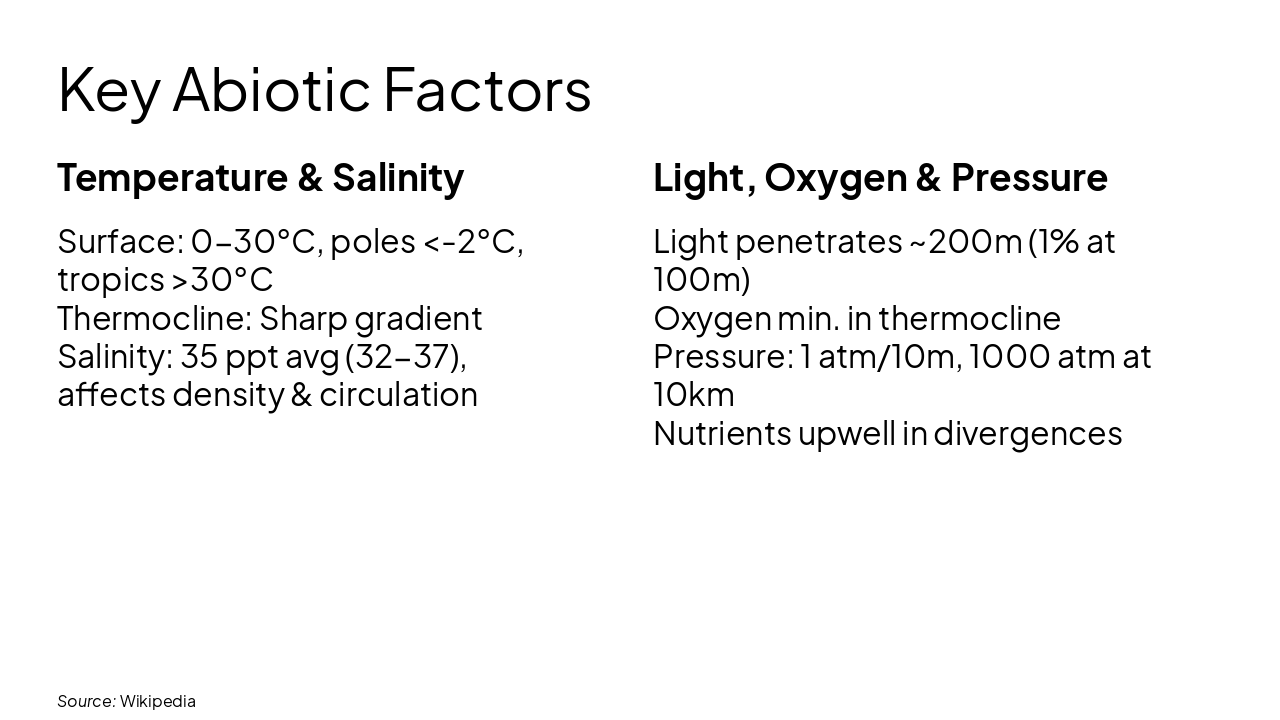
Slide 6 - Key Abiotic Factors

Temperature & Salinity Surface: 0-30°C, poles <-2°C, tropics >30°C Thermocline: Sharp gradient Salinity: 35 ppt avg (32-37), affects density & circulation

Light, Oxygen & Pressure Light penetrates ~200m (1% at 100m) Oxygen min. in thermocline Pressure: 1 atm/10m, 1000 atm at 10km Nutrients upwell in divergences

Source: Wikipedia
Slide 6 - Key Abiotic Factors
Slide 7 of 22

Slide 7 - Section 2

2

Plankton and Primary Production

Foundational producers and consumers in the ocean

---

Photo by NOAA on Unsplash
Slide 7 - Section 2
Slide 8 of 22

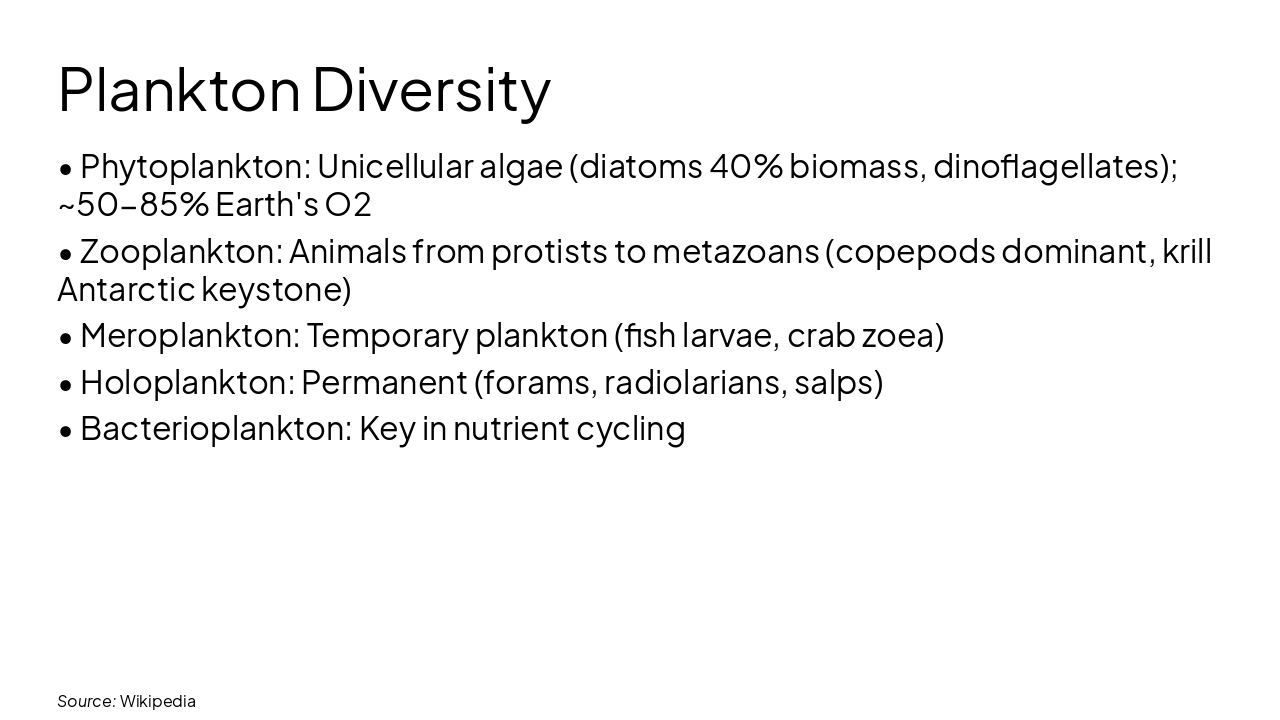
Slide 8 - Plankton Diversity

  • Phytoplankton: Unicellular algae (diatoms 40% biomass, dinoflagellates); ~50-85% Earth's O2
  • Zooplankton: Animals from protists to metazoans (copepods dominant, krill Antarctic keystone)
  • Meroplankton: Temporary plankton (fish larvae, crab zoea)
  • Holoplankton: Permanent (forams, radiolarians, salps)
  • Bacterioplankton: Key in nutrient cycling

Source: Wikipedia

Slide 8 - Plankton Diversity
Slide 9 of 22

Slide 9 - Phytoplankton Examples

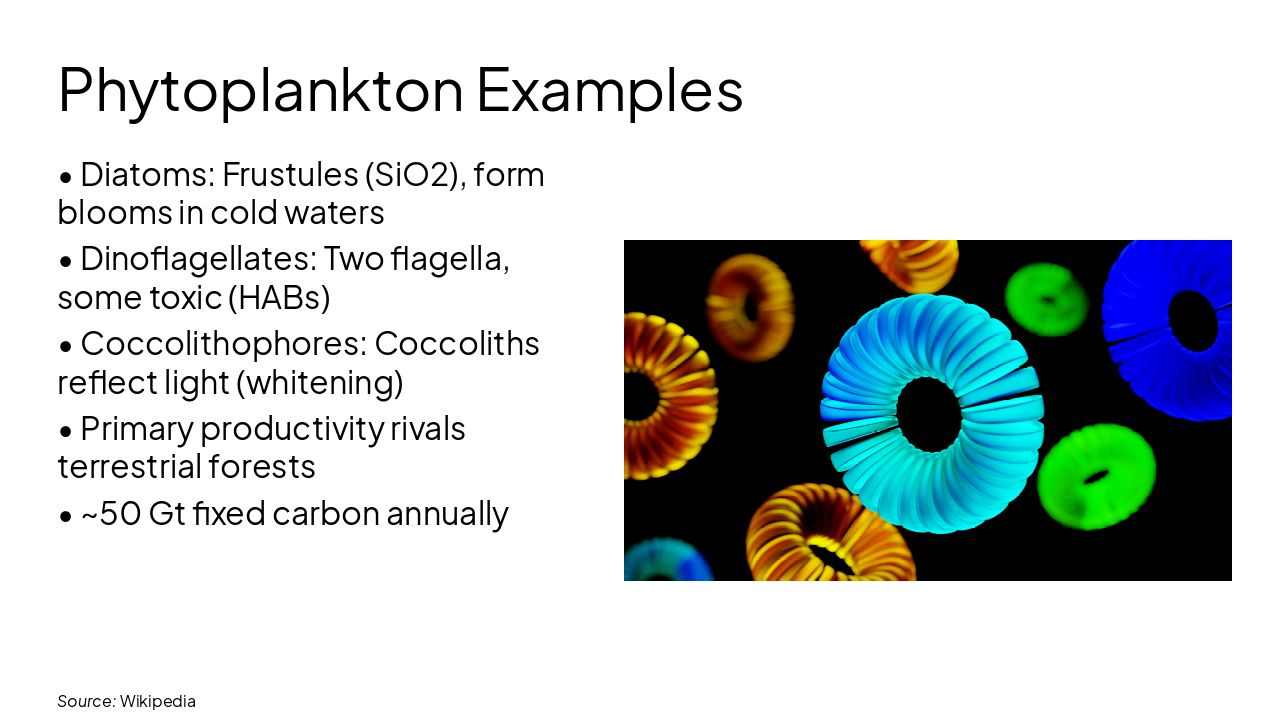
  • Diatoms: Frustules (SiO2), form blooms in cold waters
  • Dinoflagellates: Two flagella, some toxic (HABs)
  • Coccolithophores: Coccoliths reflect light (whitening)
  • Primary productivity rivals terrestrial forests
  • ~50 Gt fixed carbon annually

---

Photo by Niloy T on Unsplash

Source: Wikipedia
Slide 9 - Phytoplankton Examples
Slide 10 of 22

Slide 10 - Section 3

3

Nekton and Benthic Life

Mobile predators and sessile communities
Slide 10 - Section 3
Slide 11 of 22

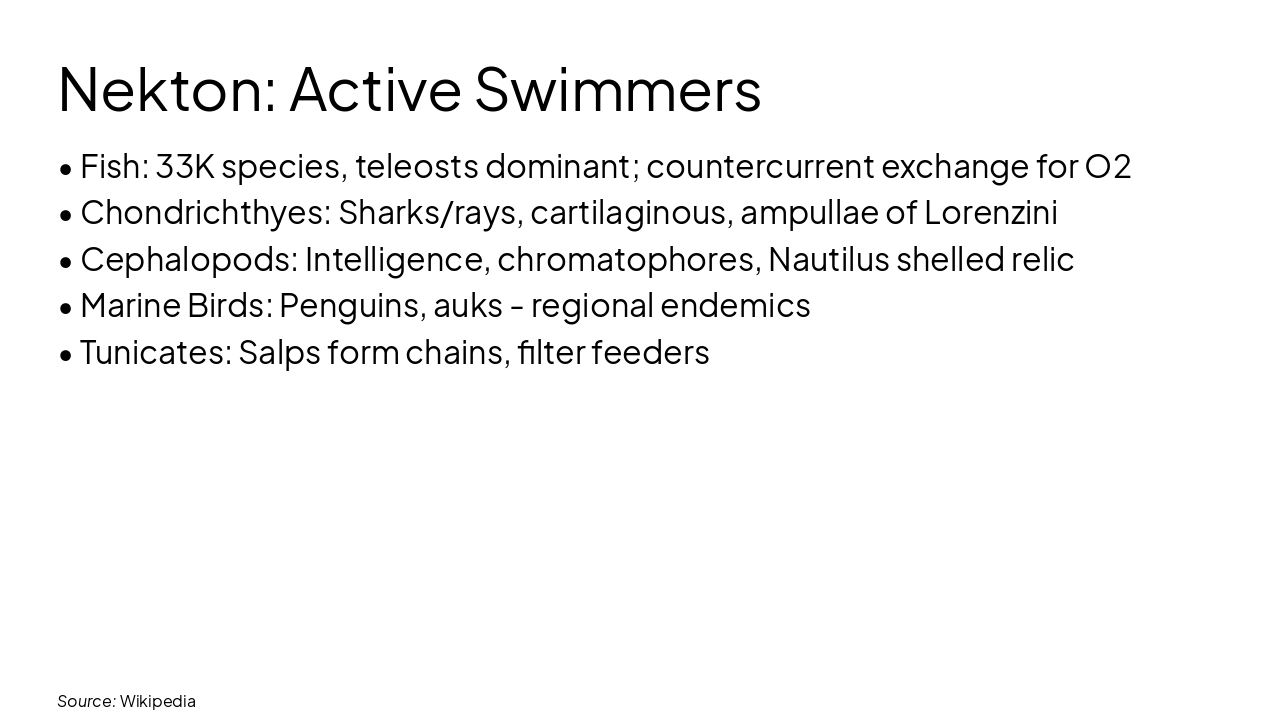
Slide 11 - Nekton: Active Swimmers

  • Fish: 33K species, teleosts dominant; countercurrent exchange for O2
  • Chondrichthyes: Sharks/rays, cartilaginous, ampullae of Lorenzini
  • Cephalopods: Intelligence, chromatophores, Nautilus shelled relic
  • Marine Birds: Penguins, auks - regional endemics
  • Tunicates: Salps form chains, filter feeders

Source: Wikipedia

Slide 11 - Nekton: Active Swimmers
Slide 12 of 22

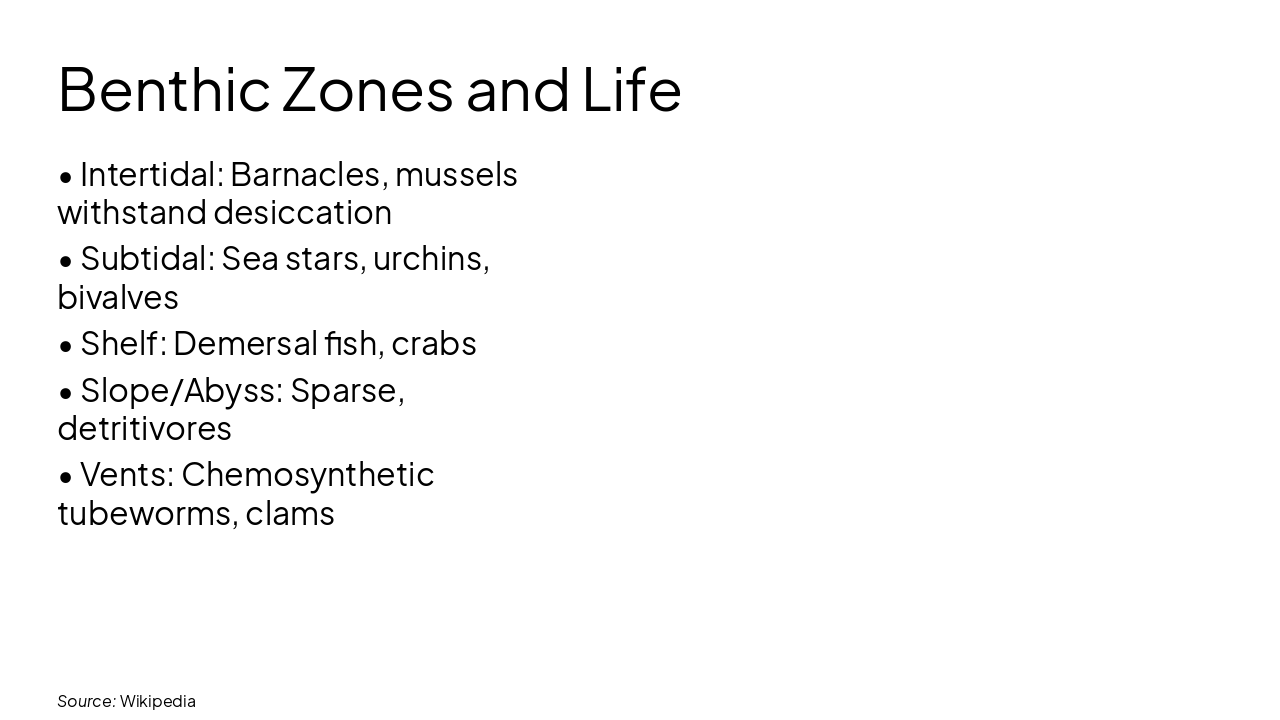
Slide 12 - Benthic Zones and Life

  • Intertidal: Barnacles, mussels withstand desiccation
  • Subtidal: Sea stars, urchins, bivalves
  • Shelf: Demersal fish, crabs
  • Slope/Abyss: Sparse, detritivores
  • Vents: Chemosynthetic tubeworms, clams

Source: Wikipedia

Slide 12 - Benthic Zones and Life
Slide 13 of 22

Slide 13 - Section 4

4

Specialized Ecosystems

Coral reefs, vents, and polar regions

---

Photo by q u i n g u y e n on Unsplash
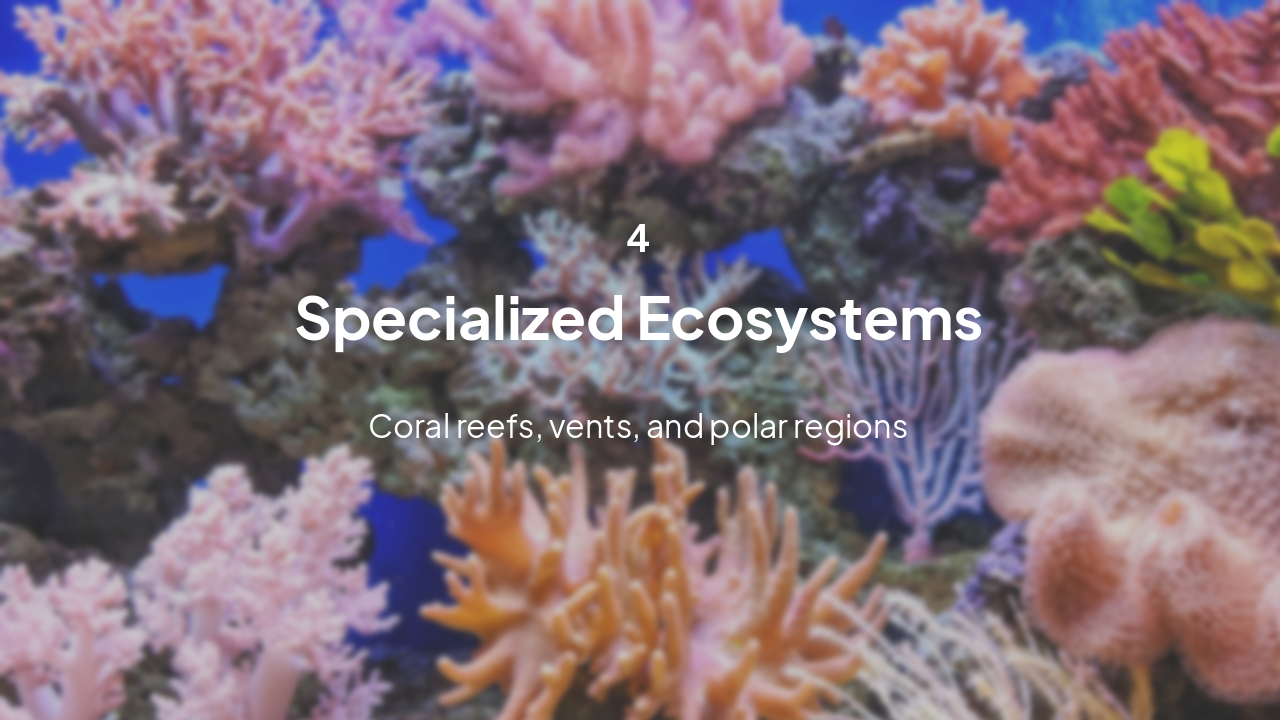
Slide 13 - Section 4
Slide 14 of 22

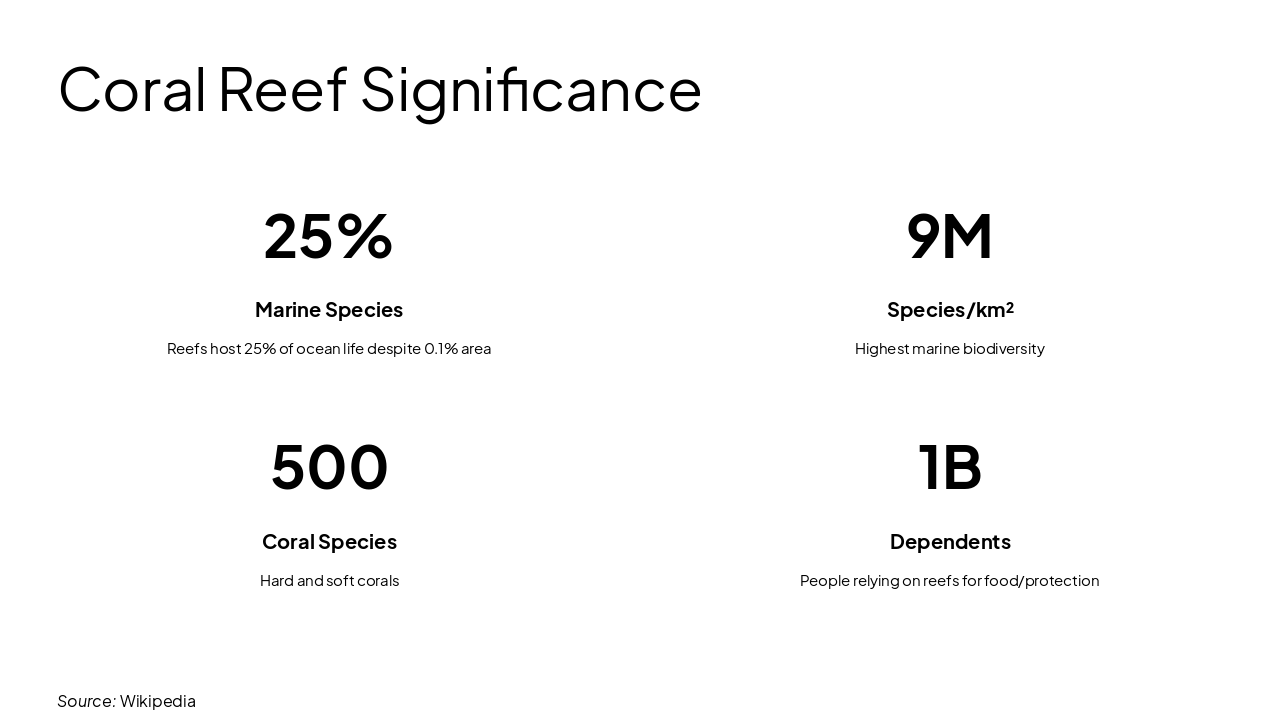
Slide 14 - Coral Reef Significance

  • 25%: Marine Species
  • 9M: Species/km²
  • 500: Coral Species
  • 1B: Dependents

Source: Wikipedia

Slide 14 - Coral Reef Significance
Slide 15 of 22

Slide 15 - Deep Sea Mysteries

> With every drop of water you drink, thousands of water molecules that dinosaurs drank pass through your gut.

— Sylvia Earle (adapted for ocean context)

Source: Wikipedia, Sylvia Earle
Slide 15 - Deep Sea Mysteries
Slide 16 of 22

Slide 16 - Section 5

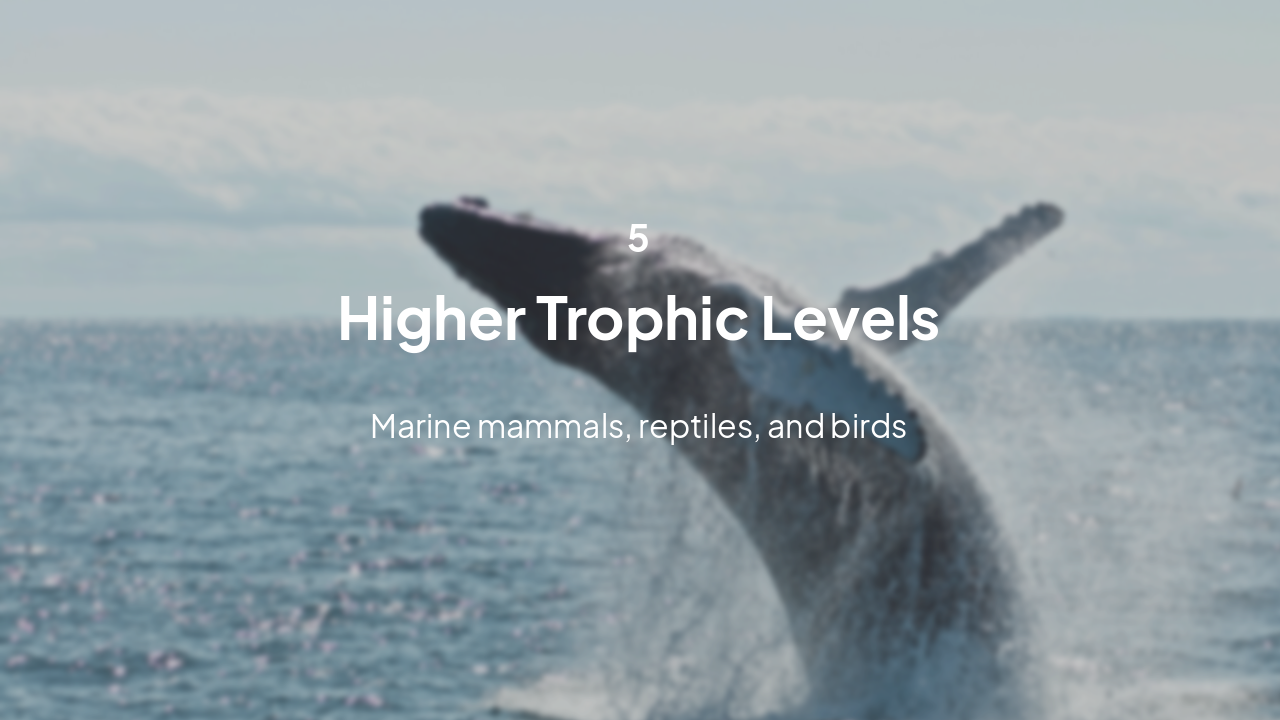
5

Higher Trophic Levels

Marine mammals, reptiles, and birds

---

Photo by Todd Cravens on Unsplash

Slide 16 - Section 5
Slide 17 of 22

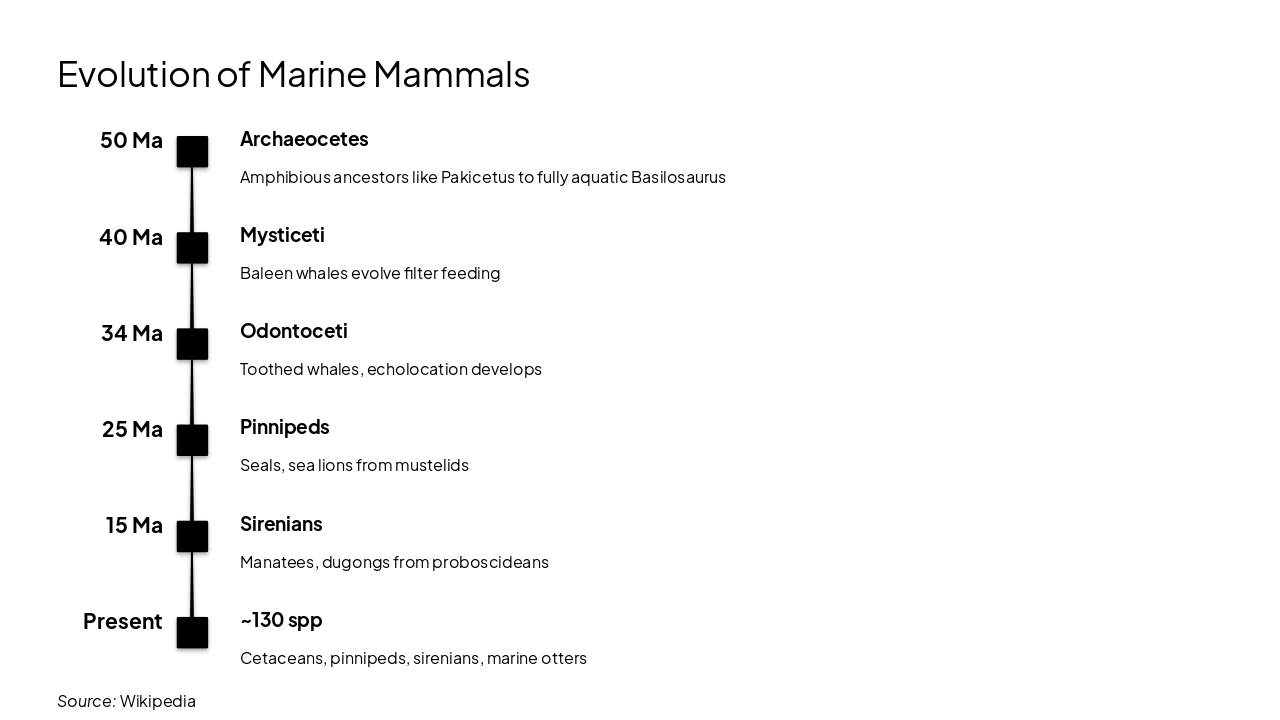
Slide 17 - Evolution of Marine Mammals

50 Ma: Archaeocetes Amphibious ancestors like Pakicetus to fully aquatic Basilosaurus 40 Ma: Mysticeti Baleen whales evolve filter feeding 34 Ma: Odontoceti Toothed whales, echolocation develops 25 Ma: Pinnipeds Seals, sea lions from mustelids 15 Ma: Sirenians Manatees, dugongs from proboscideans Present: ~130 spp Cetaceans, pinnipeds, sirenians, marine otters

Source: Wikipedia
Slide 17 - Evolution of Marine Mammals
Slide 18 of 22

Slide 18 - Section 6

6

Food Webs and Interactions

From producers to apex predators

Slide 18 - Section 6
Slide 19 of 22

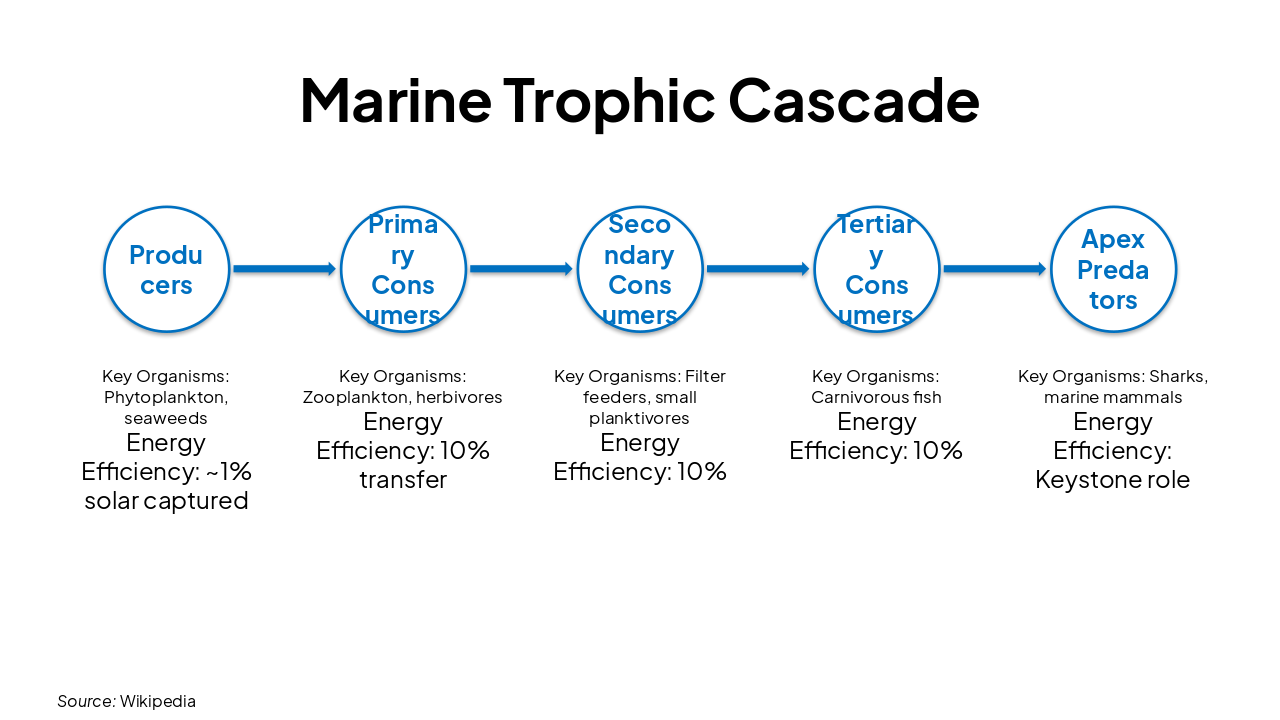
Slide 19 - Marine Trophic Cascade

Trophic LevelKey OrganismsEnergy Efficiency
ProducersPhytoplankton, seaweeds~1% solar captured
Primary ConsumersZooplankton, herbivores10% transfer
Secondary ConsumersFilter feeders, small planktivores10%
Tertiary ConsumersCarnivorous fish10%
Apex PredatorsSharks, marine mammalsKeystone role

Source: Wikipedia

Slide 19 - Marine Trophic Cascade
Slide 21 of 22

Slide 21 - Major Human Threats

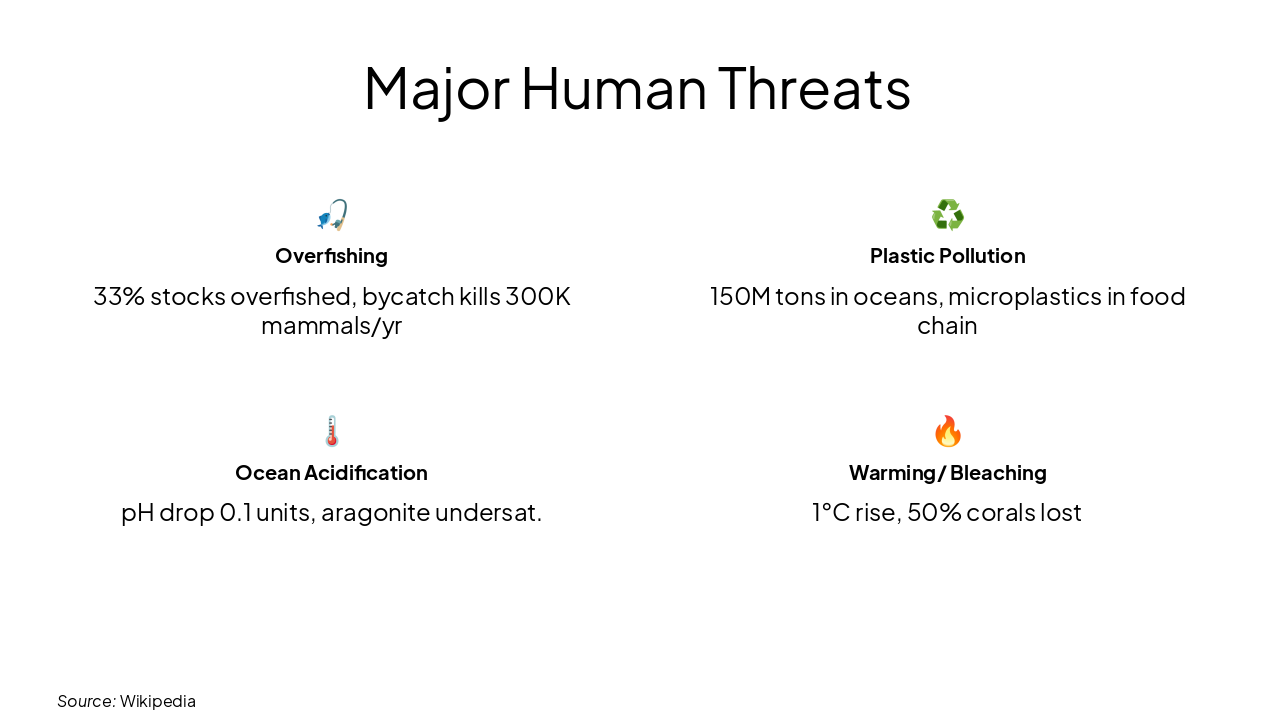
🎣 Overfishing 33% stocks overfished, bycatch kills 300K mammals/yr

♻️ Plastic Pollution 150M tons in oceans, microplastics in food chain

🌡️ Ocean Acidification pH drop 0.1 units, aragonite undersat.

🔥 Warming/ Bleaching 1°C rise, 50% corals lost

Source: Wikipedia
Slide 21 - Major Human Threats
Slide 22 of 22

Slide 22 - Conclusion

Oceans sustain life but face existential threats. Protect biodiversity for future generations.

Call to Action: Support marine conservation initiatives

---

Photo by Helmuts Rudzitis on Unsplash
Slide 22 - Conclusion

Discover More Presentations

Explore thousands of AI-generated presentations for inspiration

Browse Presentations
Powered by AI

Create Your Own Presentation

Generate professional presentations in seconds with Karaf's AI. Customize this presentation or start from scratch.

Create New Presentation

Powered by Karaf.ai — AI-Powered Presentation Generator