Slide 1 of 13
Slide 1 - The Invisible Burden
The Invisible Burden
Prudence Okrah and Isaiah Nti Anatomy and Physiology Instructor: Ms. Martinez Date: 10 May 2026
---
Photo by Sandip Kalal on Unsplash

Generated from prompt:
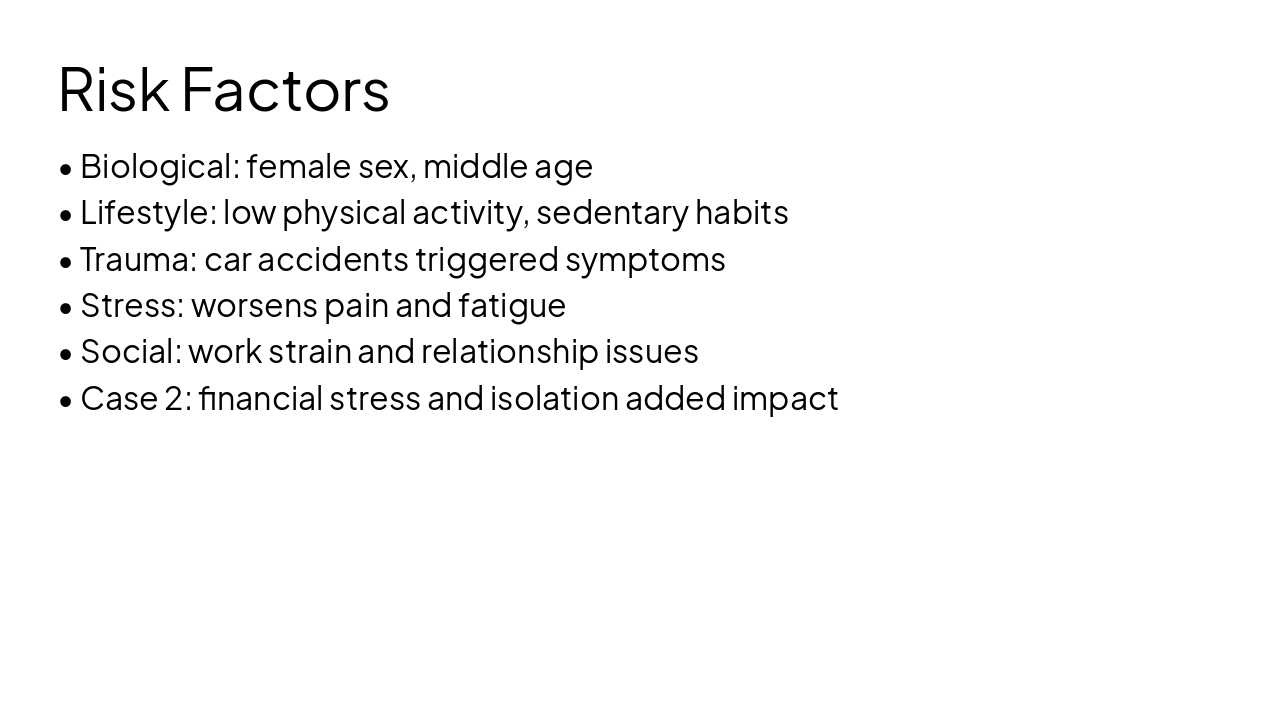
Slide 1: Title Slide Title: The Invisible Burden Your Name: Prudence Okrah and Isaiah Nti Course Name Anatomy and Physiology Instructor: Ms. Martinez Date: 10 may 2026 Slide 2: Introduction Title: Introduction Bullet Points: Fibromyalgia = chronic disorder causing widespread pain and fatigue Caused by abnormal pain processing in the central nervous system No cure, requires long-term management Affects daily life physically, mentally, and socially This presentation compares two female patient case studies --- Slide 3: Case Study Comparison (Similarities) Title: Similarities Between Both Cases Bullet Points: Both patients are middle-aged women (42–43 years old) Both developed fibromyalgia after a car accident Experienced widespread pain, fatigue, and sleep issues Symptoms worsened over time Both had normal test results despite severe pain Both conditions affected work, relationships, and quality of life --- Slide 4: Case Study Comparison (Differences) Title: Key Differences Bullet Points: Case 1: sedentary job contributed to symptoms Case 2: started with neck injury (whiplash) Case 2 had additional symptoms (tingling, headaches, “fibro fog”) Case 2 experienced weight gain and depression Case 1 focused more on exercise-based recovery Case 2 required more psychological support --- Slide 5: Patient Case Summary (Case 1) Title: Case 1 Overview (Mrs. P) Bullet Points: 43-year-old receptionist with sedentary lifestyle BMI 25.7 and high blood pressure Long-term muscle pain in upper body and thighs Symptoms worsened after car accident Diagnosed after failed physical therapy Began exercise and medication treatment --- Slide 6: Patient Case Summary (Case 2) Title: Case 2 Overview Bullet Points: 42-year-old woman with whiplash injury Pain spread from neck to entire body over time Symptoms: fatigue, headaches, tingling, poor sleep Gained weight due to inactivity Developed depression and financial stress Diagnosed after ruling out other conditions --- Slide 7: Symptom Analysis Title: Symptom Analysis Bullet Points: Chronic widespread pain in both patients Fatigue caused by poor sleep and muscle strain Sleep disturbances worsen pain cycle Central sensitization increases pain sensitivity Case 2 also had cognitive issues (“fibro fog”) Symptoms worsen with inactivity and stress --- Slide 8: Risk Factors Title: Risk Factors Bullet Points: Biological: female sex, middle age Lifestyle: low physical activity, sedentary habits Trauma: car accidents triggered symptoms Stress: worsens pain and fatigue Social: work strain and relationship issues Case 2: financial stress and isolation added impact --- Slide 9: Diagnosis Process Title: Diagnosis Bullet Points: No single test for fibromyalgia Diagnosed based on symptoms and history Widespread pain lasting over 3 months Tender point testing (Case 2: 16/18 points) Tests used to rule out other diseases Normal lab results common in both cases --- Slide 10: Treatment Options Title: Treatment Approaches Bullet Points: Medications: NSAIDs, antidepressants, sleep aids Improve neurotransmitters and pain control Exercise: strength training and aerobic activity Stretching reduces stiffness and improves mobility Therapy (Case 2): helps manage stress and depression Diet and lifestyle changes support overall health --- Slide 11: Long-Term Management Title: Long-Term Management Bullet Points: Gradual and consistent exercise routine Monitor symptoms and avoid flare-ups Stress management is essential Regular medical follow-ups Patient education improves adherence No cure, focus is on symptom control --- Slide 12: Impact on Quality of Life Title: Quality of Life Impact Bullet Points: Physical: pain limits daily activities Emotional: stress, frustration, depression Social: strained relationships and reduced work ability Case 2 had greater financial and emotional impact Both experienced reduced independence Treatment improved overall functioning --- Slide 13: Conclusion Title: Conclusion Bullet Points: Fibromyalgia is influenced by biological and lifestyle factors Trauma and stress play major roles in onset Central sensitization explains chronic pain Treatment requires a combination of approaches Exercise and lifestyle changes are highly effective Understanding fibromyalgia improves patient outcomes.
This Anatomy and Physiology presentation examines fibromyalgia, a chronic disorder causing widespread pain, fatigue, and sleep disturbances due to abnormal central nervous system pain processing. It compares two middle-aged female patient cases triggered by car accidents, detailing similarities (e.g., symptom progression, normal tests), key differences (e.g., additional symptoms like fibro fog and depression in Case 2), risk factors, diagnosis methods, multidisciplinary treatments (medications, exercise, therapy), long-term management strategies, and impacts on physical, emotional, social, and
The Invisible Burden
Prudence Okrah and Isaiah Nti Anatomy and Physiology Instructor: Ms. Martinez Date: 10 May 2026
---
Photo by Sandip Kalal on Unsplash
Case 1 sedentary job contributed to symptoms focused more on exercise-based recovery
Case 2 started with neck injury (whiplash) had additional symptoms (tingling, headaches, “fibro fog”) experienced weight gain and depression required more psychological support
---
Photo by julien Tromeur on Unsplash
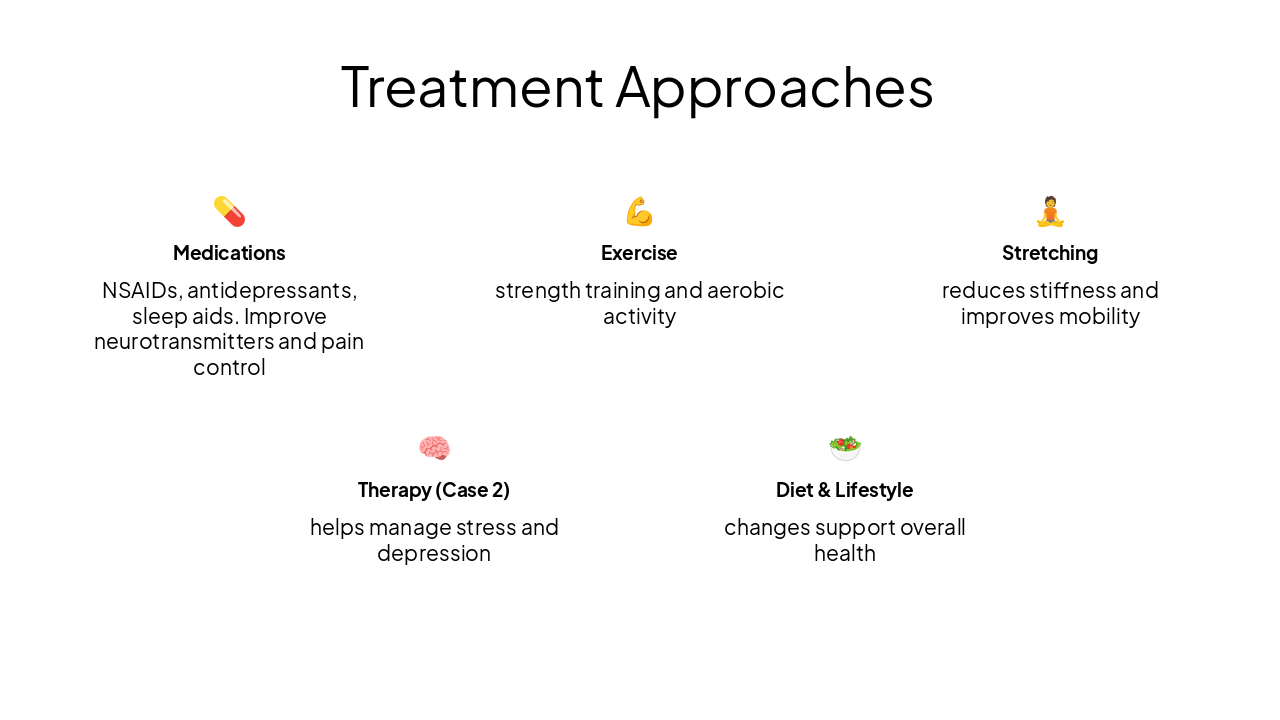
💊 Medications NSAIDs, antidepressants, sleep aids. Improve neurotransmitters and pain control
💪 Exercise strength training and aerobic activity
🧘 Stretching reduces stiffness and improves mobility
🧠 Therapy (Case 2) helps manage stress and depression
🥗 Diet & Lifestyle changes support overall health
---
Photo by Marius Muresan on Unsplash
Explore thousands of AI-generated presentations for inspiration
Generate professional presentations in seconds with Karaf's AI. Customize this presentation or start from scratch.