Slide 1 of 13
Slide 1 - Engineering the Digital Backbone
Engineering the Digital Backbone
Building a scalable, unified IT infrastructure for global operations
---
Photo by Adil Edin on Unsplash
Generated from prompt:
Redesign and enhance the uploaded presentation 'Unified_Digital_Backbone.pptx' with modern, high‑quality graphics and clearer visual storytelling. Improve slide structure, add visual diagrams for the IT operating model, architecture layers, and federated vs shared platform comparison. Use icons, clean infographics, comparison tables, and a modern consulting-style layout similar to McKinsey/Bain. Slides should cover: 1) Title – Engineering the Digital Backbone, 2) Situation & structural pressures, 3) Financial contraction / fragmented operating models / rising accountability (visual triad), 4) From fragmented affiliates to coordinated confederation (before/after diagram), 5) Strategic choice: Federated Marketplace vs Shared Platforms (comparison graphic), 6) Evaluation scorecard showing why shared platforms win, 7) Target IT operating model with four tiers (global, regional, affiliate, country) visualized, 8) Unified technology architecture with six capability layers diagram, 9) Cybersecurity SOC model graphic, 10) Data & financial transparency platform diagram, 11) Country presence digital toolkit icons, 12) Seven strategic investment priorities infographic, 13) Risks and mitigations matrix, 14) Evidence gaps / weaknesses slide, 15) Three‑year roadmap timeline, 16) Next 30‑day CIO actions. Emphasize clean icons, layered architecture diagrams, timelines, and minimal text.
This deck presents a strategic plan to build a scalable, unified IT infrastructure for global operations. It addresses fragmented legacy systems, financial pressures, and compliance needs through shared platforms, a four-tier operating model, unified
Engineering the Digital Backbone
Building a scalable, unified IT infrastructure for global operations
---
Photo by Adil Edin on Unsplash
---
Photo by Rodeo Project Management Software on Unsplash
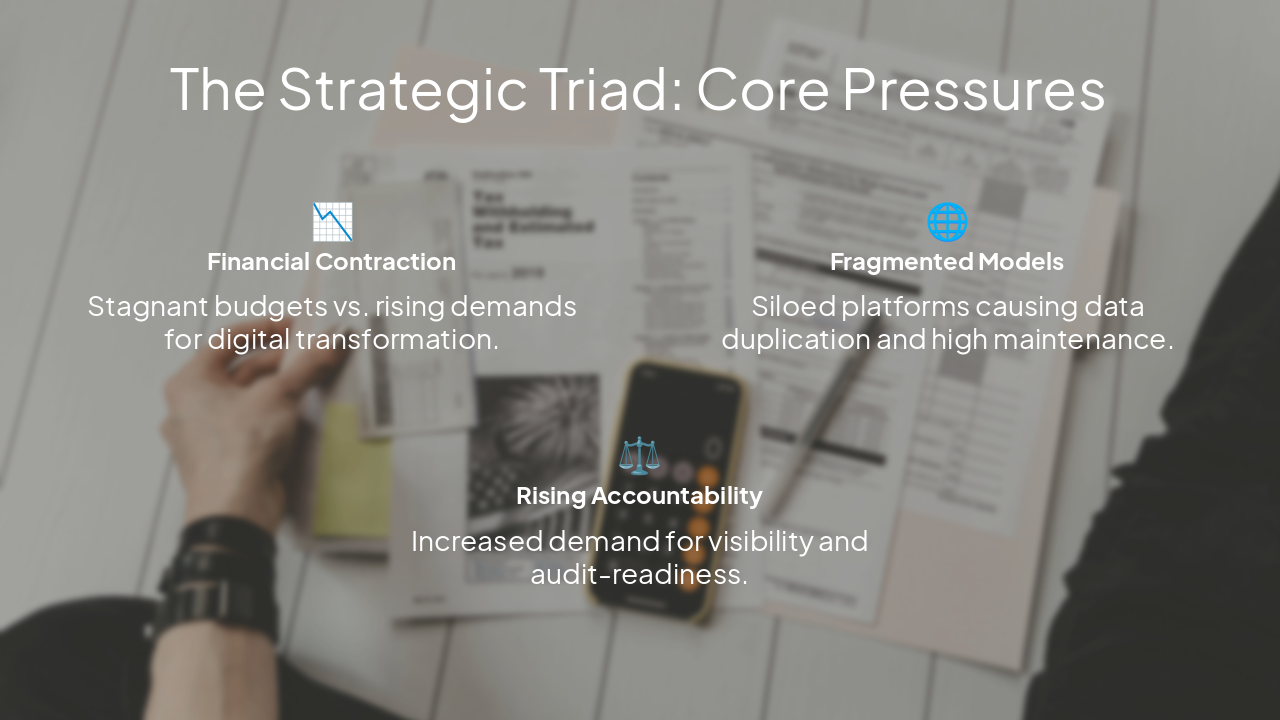
📉 Financial Contraction Stagnant budgets vs. rising demands for digital transformation.
🌐 Fragmented Models Siloed platforms causing data duplication and high maintenance.
⚖️ Rising Accountability Increased demand for visibility and audit-readiness.
---
Photo by Kelly Sikkema on Unsplash
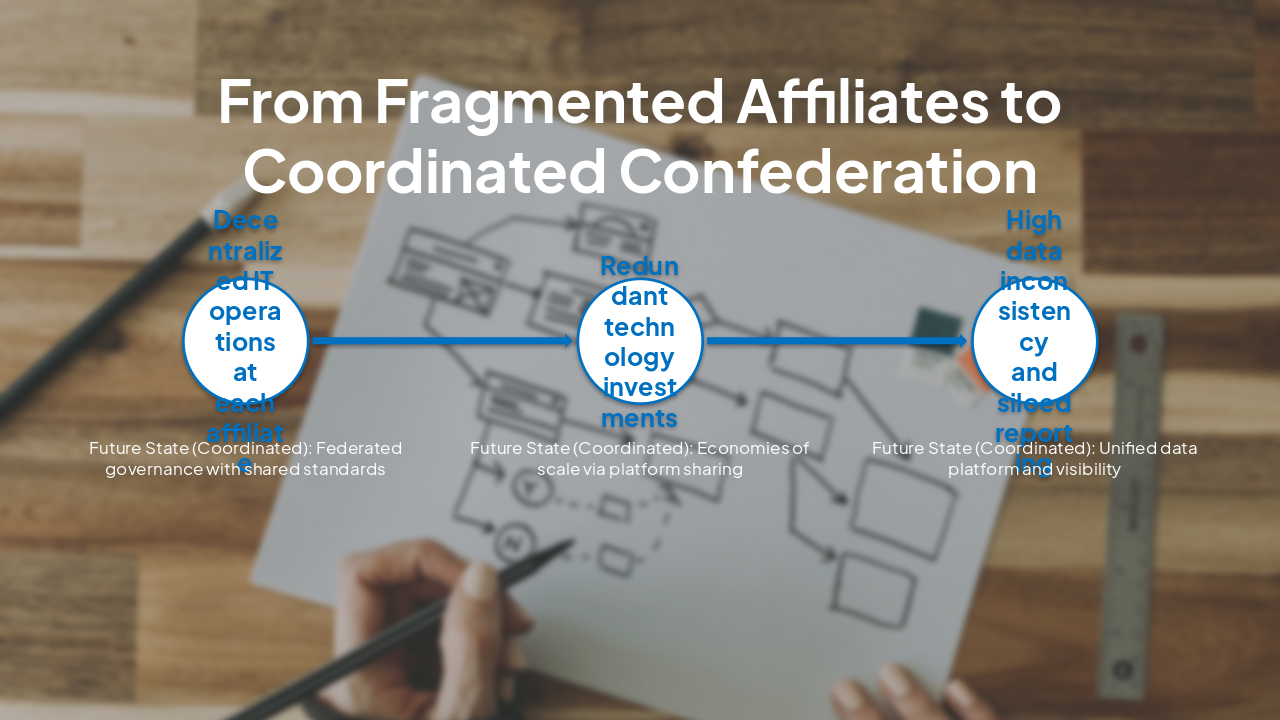
| Current State (Fragmented) | Future State (Coordinated) |
|---|---|
| Decentralized IT operations at each affiliate | Federated governance with shared standards |
| Redundant technology investments | Economies of scale via platform sharing |
| High data inconsistency and siloed reporting | Unified data platform and visibility |
---
Photo by Kelly Sikkema on Unsplash
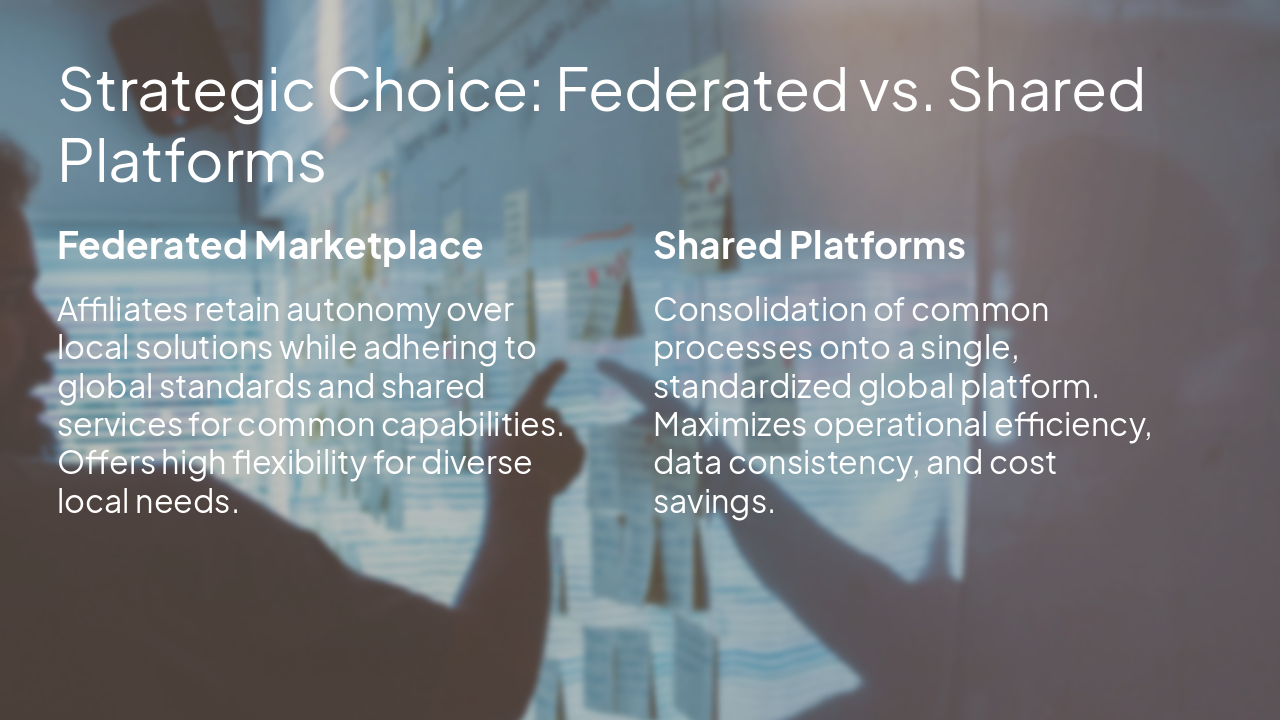
Federated Marketplace Affiliates retain autonomy over local solutions while adhering to global standards and shared services for common capabilities. Offers high flexibility for diverse local needs.
Shared Platforms Consolidation of common processes onto a single, standardized global platform. Maximizes operational efficiency, data consistency, and cost savings.
---
Photo by Startaê Team on Unsplash
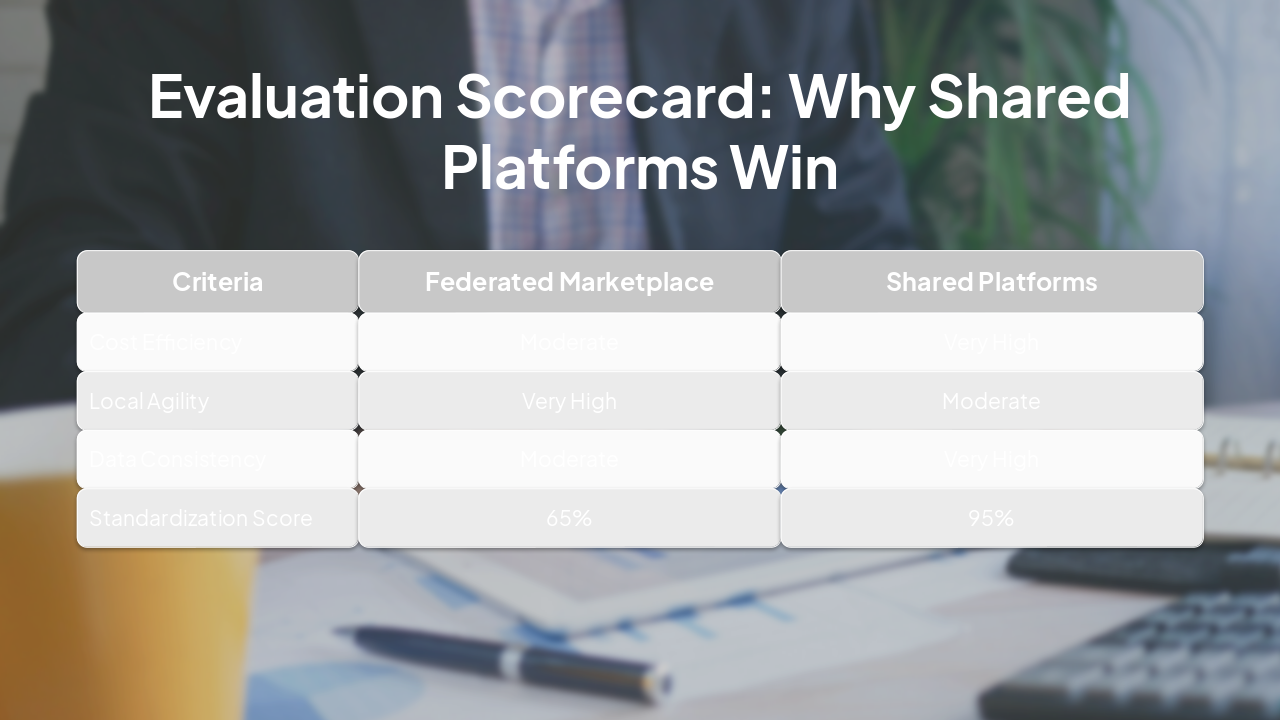
| Criteria | Federated Marketplace | Shared Platforms |
|---|---|---|
| Cost Efficiency | Moderate | Very High |
| Local Agility | Very High | Moderate |
| Data Consistency | Moderate | Very High |
| Standardization Score | 65% | 95% |
---
Photo by Towfiqu barbhuiya on Unsplash
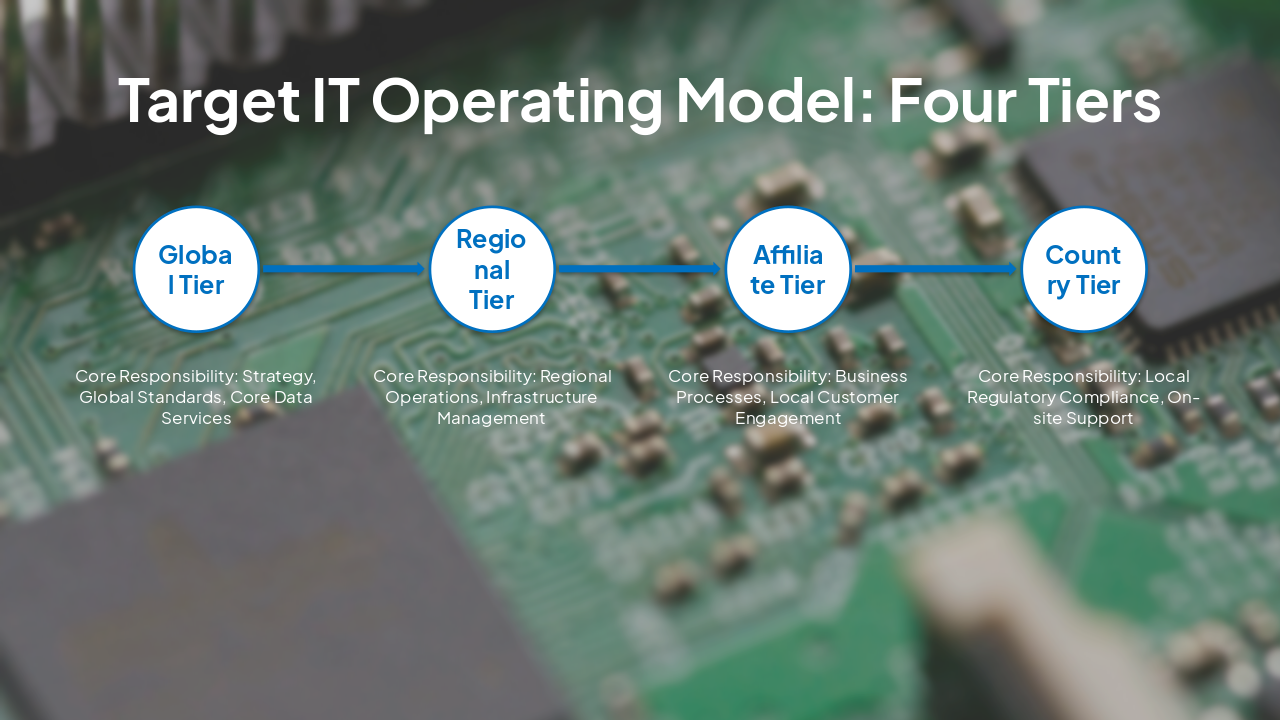
| Tier Level | Core Responsibility |
|---|---|
| Global Tier | Strategy, Global Standards, Core Data Services |
| Regional Tier | Regional Operations, Infrastructure Management |
| Affiliate Tier | Business Processes, Local Customer Engagement |
| Country Tier | Local Regulatory Compliance, On-site Support |
---
Photo by Chris Ried on Unsplash
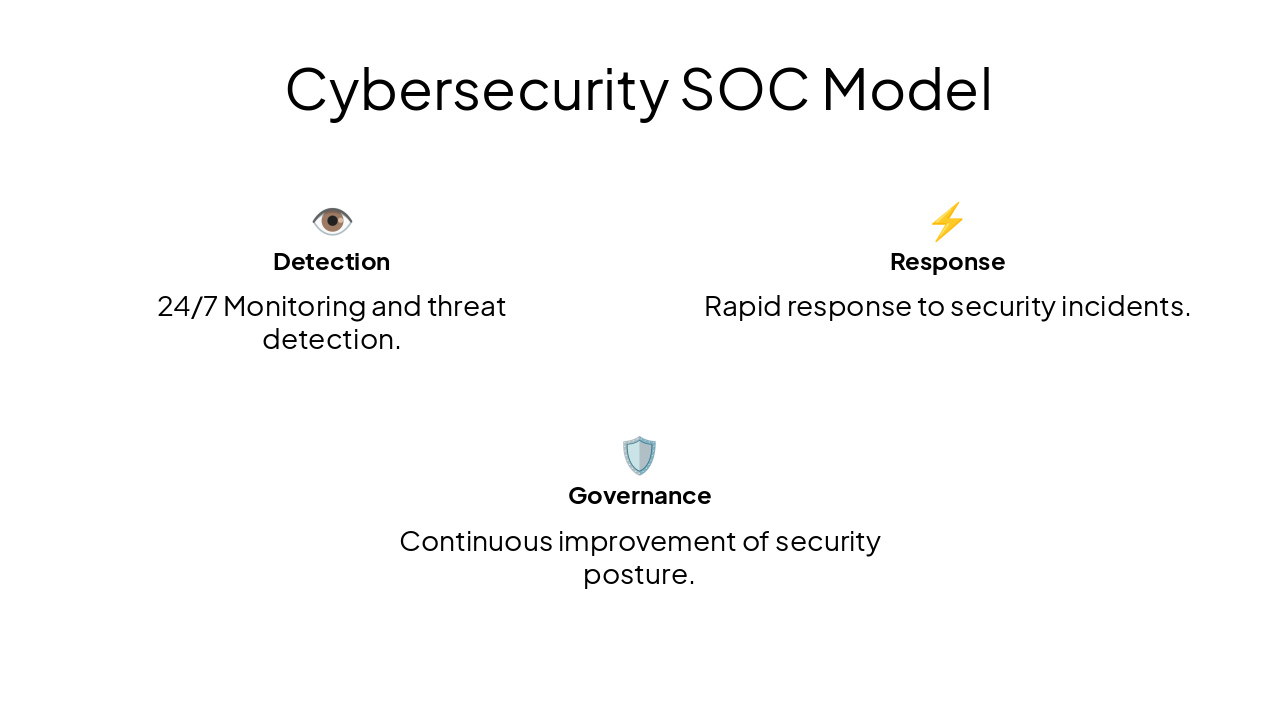
👁️ Detection 24/7 Monitoring and threat detection.
⚡ Response Rapid response to security incidents.
🛡️ Governance Continuous improvement of security posture.
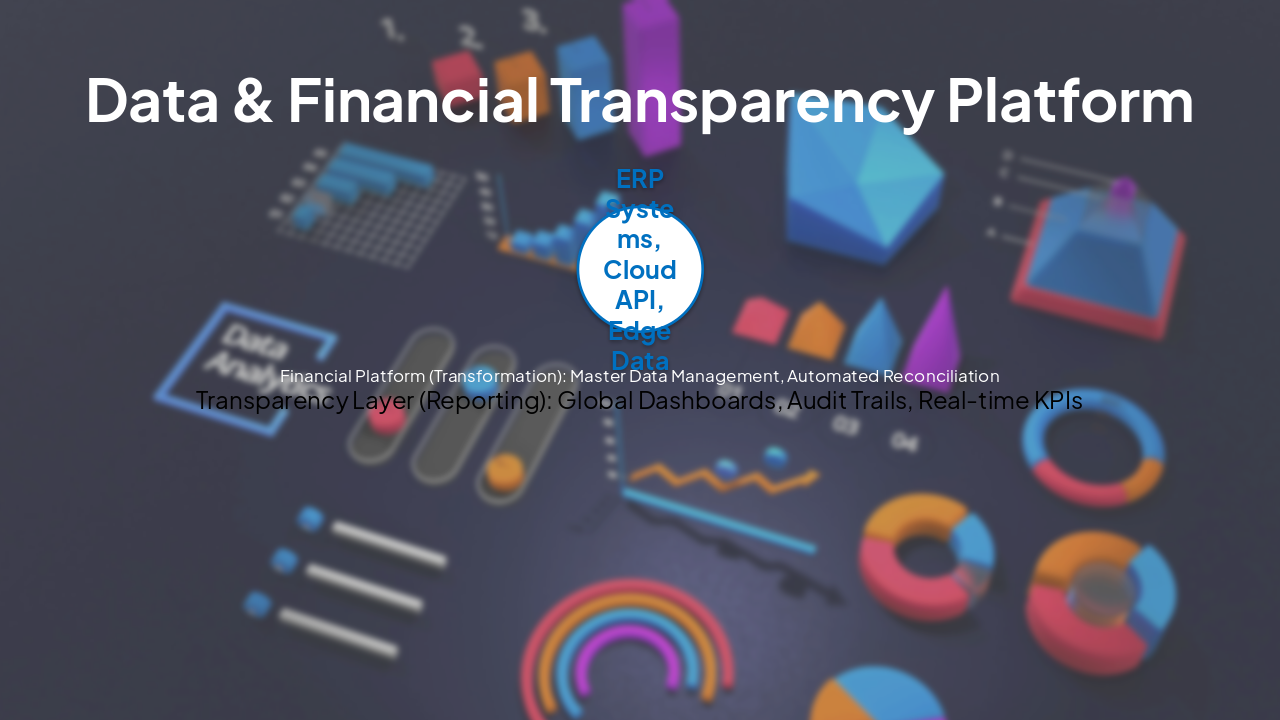
| Data Layer (Ingestion) | Financial Platform (Transformation) | Transparency Layer (Reporting) |
|---|---|---|
| ERP Systems, Cloud API, Edge Data | Master Data Management, Automated Reconciliation | Global Dashboards, Audit Trails, Real-time KPIs |
---
Photo by Deng Xiang on Unsplash
---
Photo by Startaê Team on Unsplash
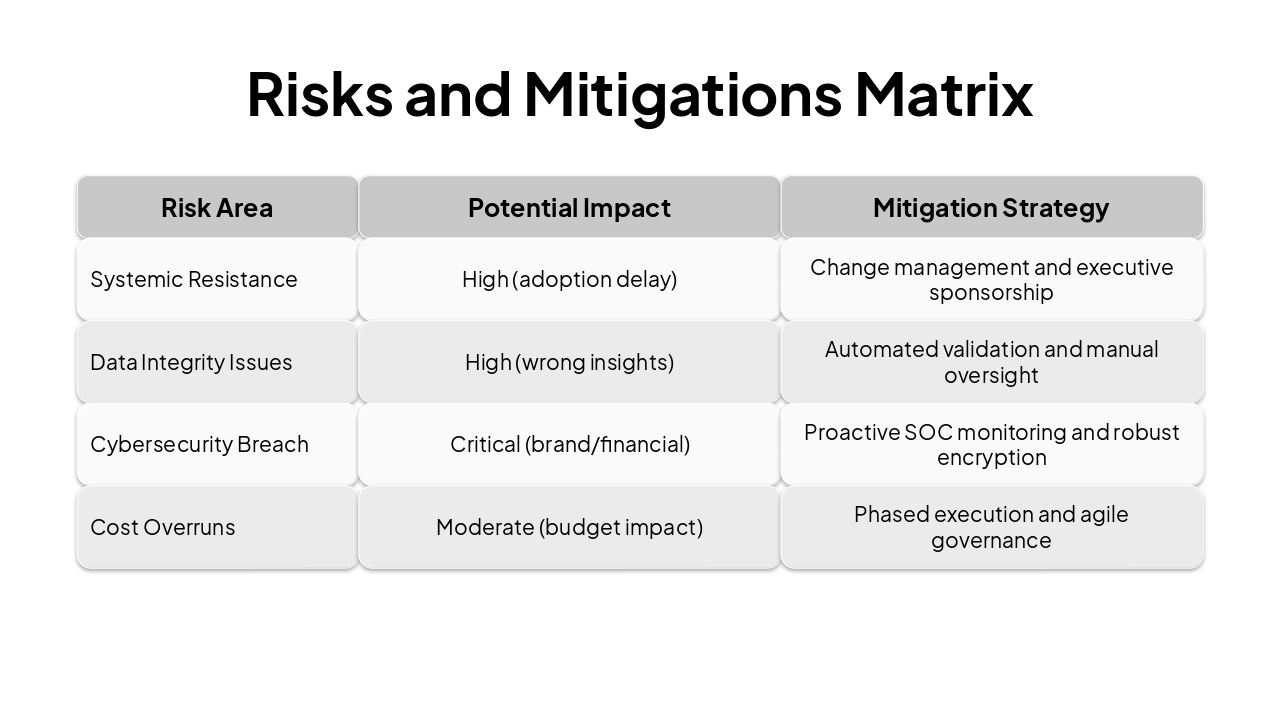
| Risk Area | Potential Impact | Mitigation Strategy |
|---|---|---|
| Systemic Resistance | High (adoption delay) | Change management and executive sponsorship |
| Data Integrity Issues | High (wrong insights) | Automated validation and manual oversight |
| Cybersecurity Breach | Critical (brand/financial) | Proactive SOC monitoring and robust encryption |
| Cost Overruns | Moderate (budget impact) | Phased execution and agile governance |
Explore thousands of AI-generated presentations for inspiration
Generate professional presentations in seconds with Karaf's AI. Customize this presentation or start from scratch.
