Slide 1 of 10
Slide 1 - Mastering LINQ
Mastering LINQ: Language Integrated Query
Simplifying Data Queries in Modern C# Development
---
Photo by Tom Parkes on Unsplash

Generated from prompt:
Create a highly professional and engaging presentation about LINQ in C#. Structure the presentation as follows: 1. Start with a strong and جذاب introduction about LINQ that captures attention. Make it storytelling style and explain why LINQ is important in modern development. 2. Explain clearly: - What is LINQ - Why developers use LINQ - The main benefits of LINQ (readability, maintainability, powerful querying) 3. Add a section for the most important 10 LINQ extension methods. For each method: - Provide the method name - Simple explanation - Clean C# code example - Real-world use case - Visual illustration or icon suggestion The methods should include: Where, Select, OrderBy, ThenBy, GroupBy, Join, FirstOrDefault, Any, All, Count 4. Use clean and modern slide design: - Minimal text per slide - Clear headings - Code blocks styled properly - Add visuals or illustrations where appropriate 5. End with a strong and professional conclusion: - Summarize the importance of LINQ - When to use it - Why it makes developers more productive Tone: Professional but easy to understand Language: English Number of slides: 12–18 slides
This presentation covers the evolution of data querying in C#, introduces LINQ fundamentals, its key benefits like readability and type safety, and dives into essential methods for filtering, projection, sorting, grouping, joining, and aggregation.結論
Mastering LINQ: Language Integrated Query
Simplifying Data Queries in Modern C# Development
---
Photo by Tom Parkes on Unsplash
---
Photo by Nastuh Abootalebi on Unsplash

---
Photo by Drew Beamer on Unsplash

---
Photo by Drew Beamer on Unsplash

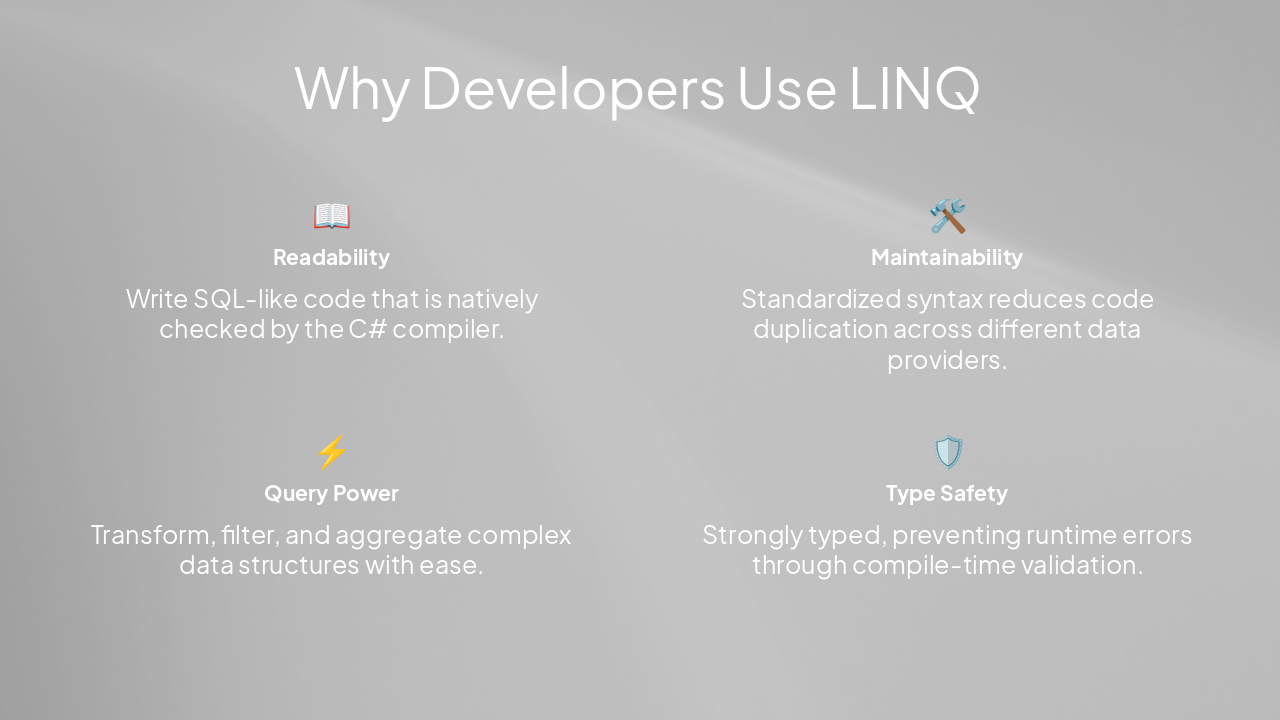
📖 Readability Write SQL-like code that is natively checked by the C# compiler.
🛠️ Maintainability Standardized syntax reduces code duplication across different data providers.
⚡ Query Power Transform, filter, and aggregate complex data structures with ease.
🛡️ Type Safety Strongly typed, preventing runtime errors through compile-time validation.
---
Photo by Drew Beamer on Unsplash
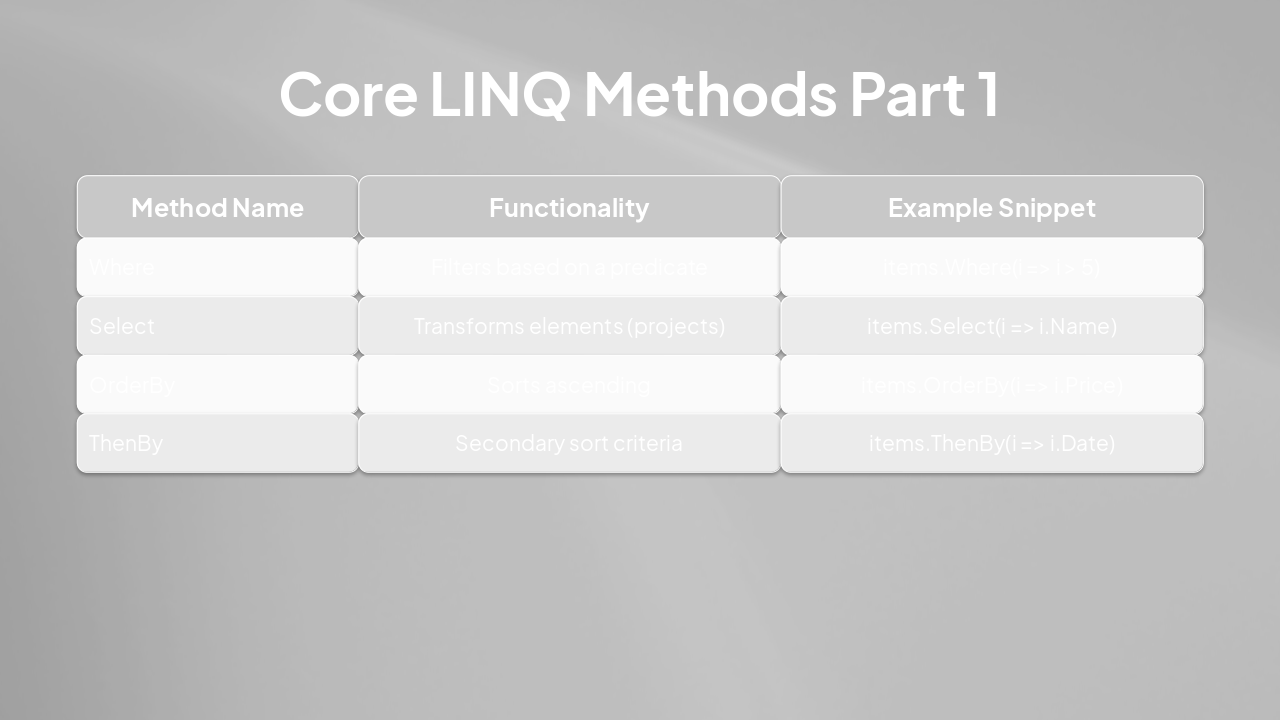
| Method Name | Functionality | Example Snippet |
|---|---|---|
| Where | Filters based on a predicate | items.Where(i => i > 5) |
| Select | Transforms elements (projects) | items.Select(i => i.Name) |
| OrderBy | Sorts ascending | items.OrderBy(i => i.Price) |
| ThenBy | Secondary sort criteria | items.ThenBy(i => i.Date) |
---
Photo by Drew Beamer on Unsplash
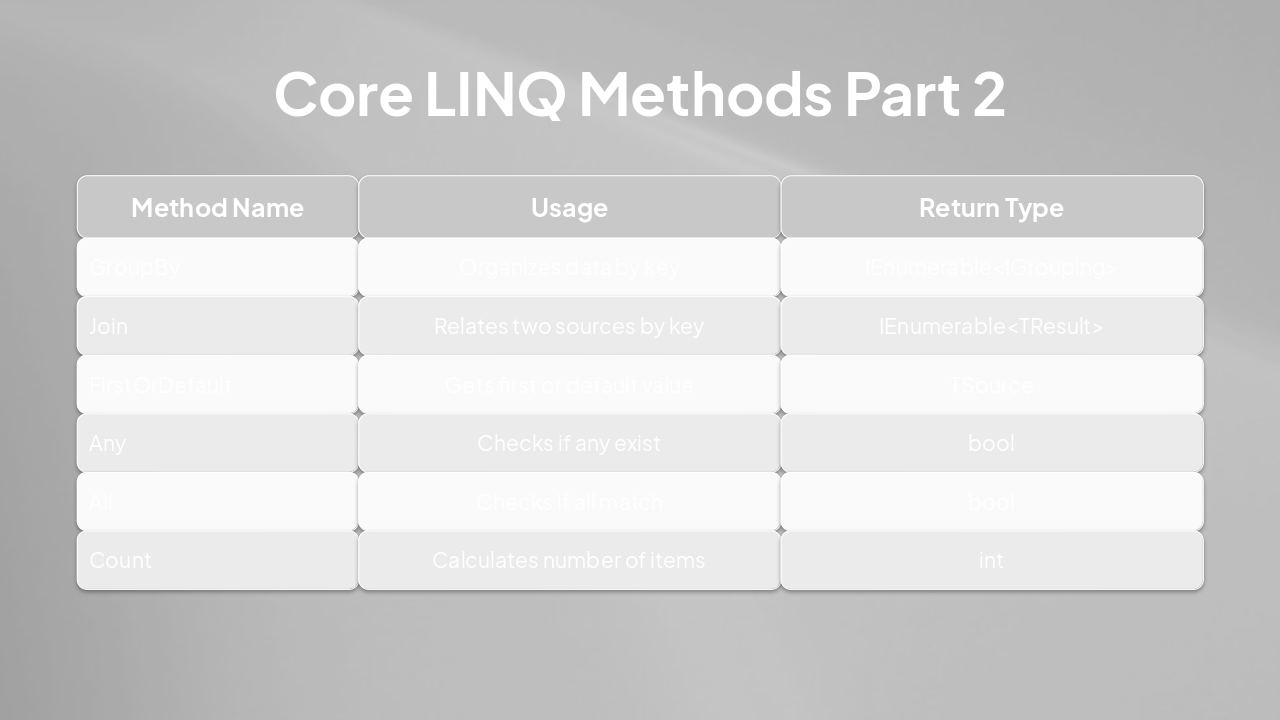
| Method Name | Usage | Return Type |
|---|---|---|
| GroupBy | Organizes data by key | IEnumerable<IGrouping> |
| Join | Relates two sources by key | IEnumerable<TResult> |
| FirstOrDefault | Gets first or default value | TSource |
| Any | Checks if any exist | bool |
| All | Checks if all match | bool |
| Count | Calculates number of items | int |
---
Photo by Drew Beamer on Unsplash
Mastering LINQ significantly boosts developer productivity and code maintainability. Start refactoring your loops today!
Embrace LINQ for Cleaner, Smarter Data Handling in .NET
---
Photo by Drew Beamer on Unsplash

Explore thousands of AI-generated presentations for inspiration
Generate professional presentations in seconds with Karaf's AI. Customize this presentation or start from scratch.

