The Art of Henna: Mehndi Traditions Unveiled

Generated from prompt:

Redesign and enhance the uploaded presentation titled "The Art of Henna". Improve visual design with a cohesive warm color palette (deep maroon, gold, soft peach backgrounds). Add high-quality relevant images on appropriate slides such as: Lawsonia inermis plant, ancient Egyptian art, molecular diagram of lawsone binding to keratin, Bangladeshi Gaye Holud ceremony, intricate bridal mehendi designs, natural henna powder and paste, and a safety comparison graphic for natural henna vs black henna. Use elegant decorative borders inspired by South Asian patterns. Apply consistent typography with stylish title fonts and clean body fonts. Add subtle background patterns (mandala or floral motifs) with good contrast for readability. Keep content concise and visually balanced. Include image placeholders where personal photos are mentioned. Make slides visually engaging and modern while keeping educational tone.

Explore the ancient art of henna (mehndi): its history from Egypt to South Asia, scientific staining process with lawsone, cultural role in weddings and festivals, intricate designs, safe application methods, and warnings against black henna.

March 3, 202618 slides
Slide 1 of 18

Slide 1 - The Art of Henna

The Art of Henna

Exploring Mehndi: Temporary Body Art from Ancient Traditions
Slide 1 - The Art of Henna
Slide 2 of 18

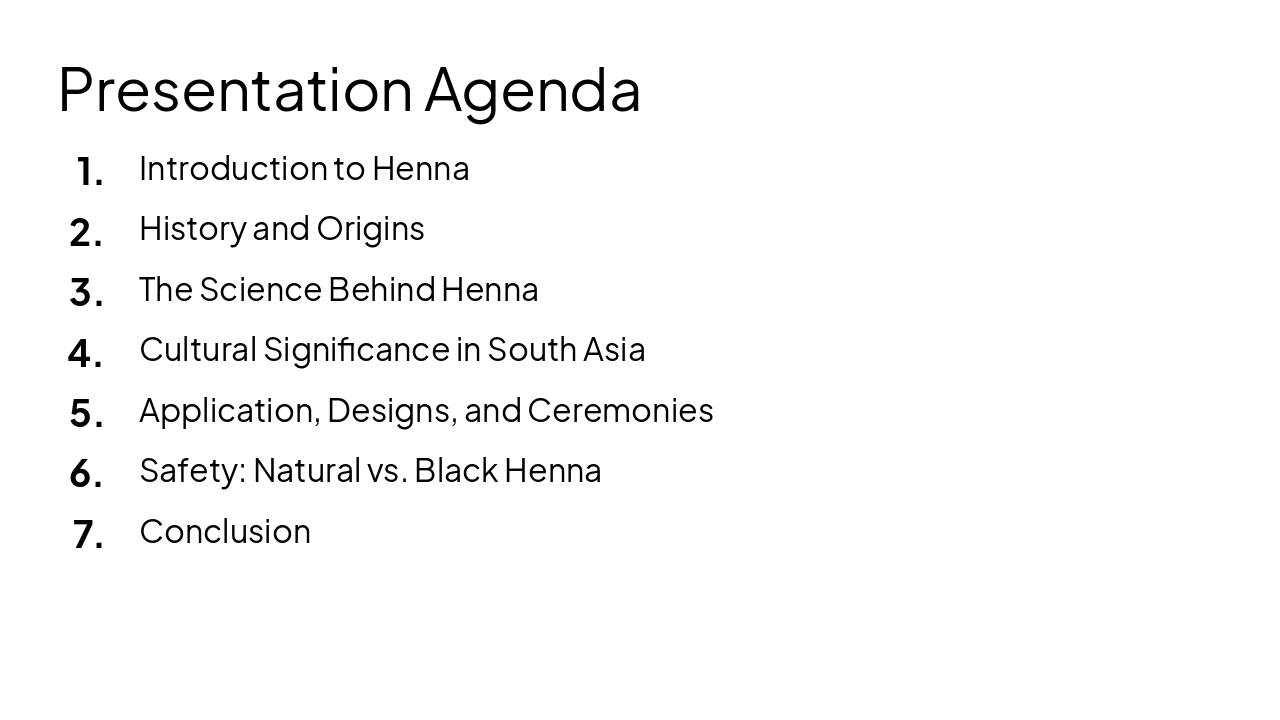
Slide 2 - Presentation Agenda

  • Introduction to Henna
  • History and Origins
  • The Science Behind Henna
  • Cultural Significance in South Asia
  • Application, Designs, and Ceremonies
  • Safety: Natural vs. Black Henna
  • Conclusion
Slide 2 - Presentation Agenda
Slide 3 of 18

Slide 3 - Introduction

1

Introduction to Henna

Mehndi: A Popular Form of Temporary Skin Decoration
Slide 3 - Introduction
Slide 4 of 18

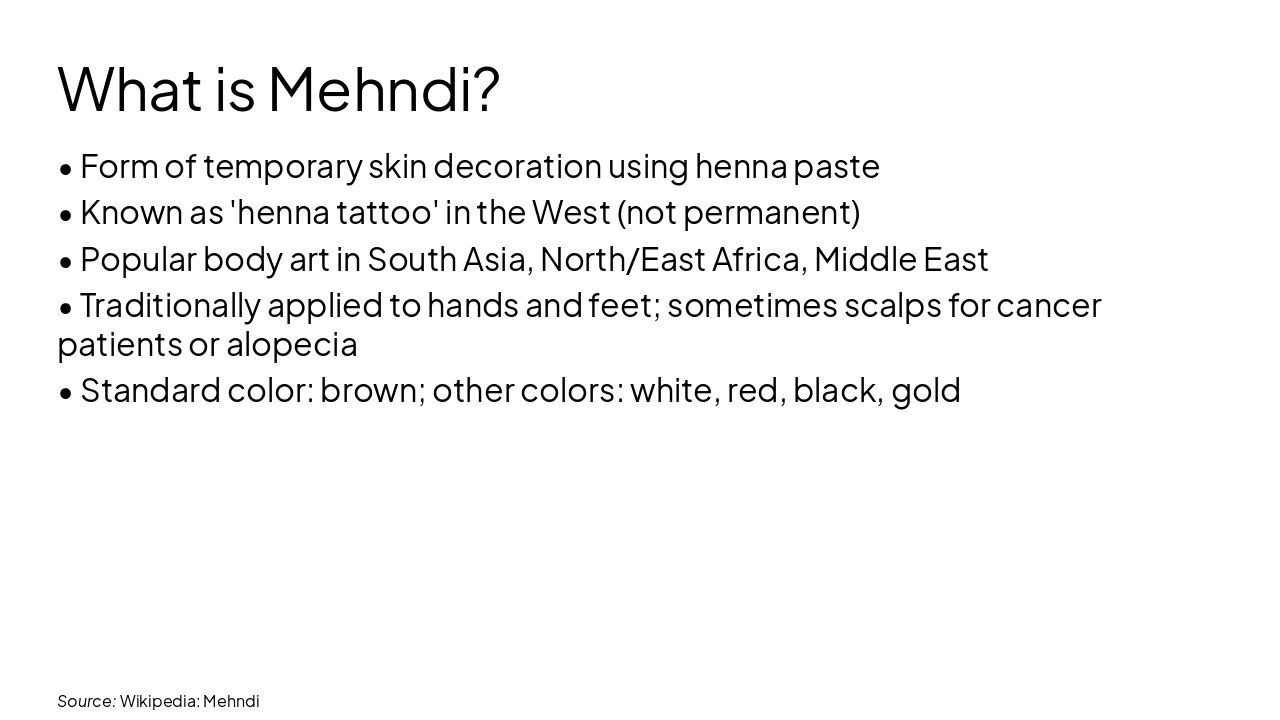
Slide 4 - What is Mehndi?

  • Form of temporary skin decoration using henna paste
  • Known as 'henna tattoo' in the West (not permanent)
  • Popular body art in South Asia, North/East Africa, Middle East
  • Traditionally applied to hands and feet; sometimes scalps for cancer patients or alopecia
  • Standard color: brown; other colors: white, red, black, gold

Source: Wikipedia: Mehndi

Slide 4 - What is Mehndi?
Slide 5 of 18

Slide 5 - The Henna Plant

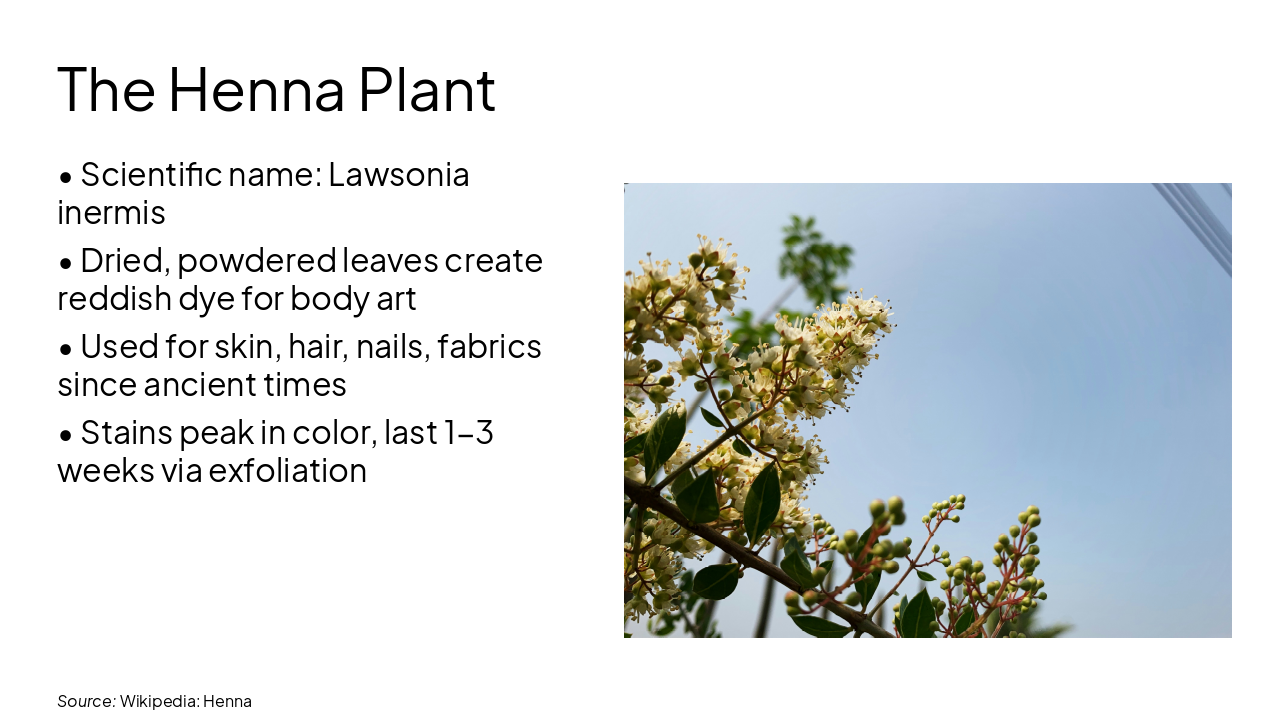
  • Scientific name: Lawsonia inermis
  • Dried, powdered leaves create reddish dye for body art
  • Used for skin, hair, nails, fabrics since ancient times
  • Stains peak in color, last 1-3 weeks via exfoliation

---

Photo by Shaharia Islam on Unsplash

Source: Wikipedia: Henna
Slide 5 - The Henna Plant
Slide 6 of 18

Slide 6 - History

2

History and Origins

Used Since Ancient Times Across Cultures
Slide 6 - History
Slide 7 of 18

Slide 7 - Historical Timeline of Henna

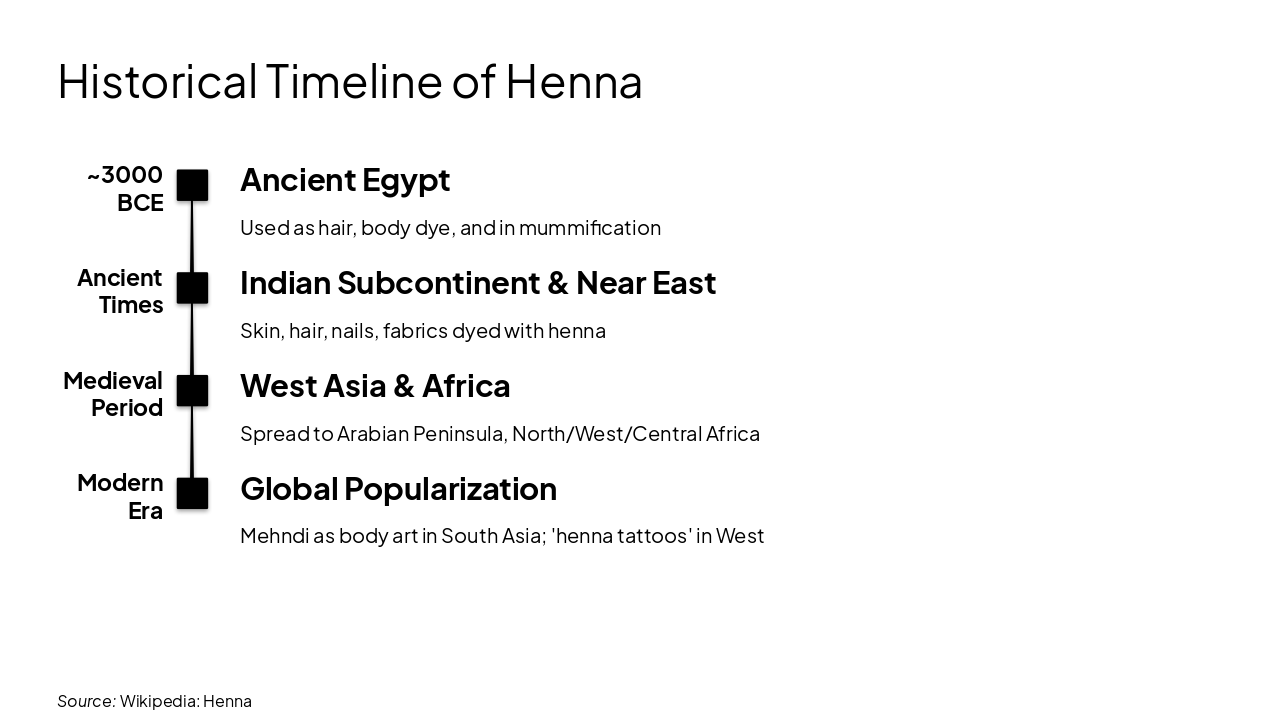
~3000 BCE: Ancient Egypt Used as hair, body dye, and in mummification Ancient Times: Indian Subcontinent & Near East Skin, hair, nails, fabrics dyed with henna Medieval Period: West Asia & Africa Spread to Arabian Peninsula, North/West/Central Africa Modern Era: Global Popularization Mehndi as body art in South Asia; 'henna tattoos' in West

Source: Wikipedia: Henna
Slide 7 - Historical Timeline of Henna
Slide 8 of 18

Slide 8 - Henna in Ancient Cultures

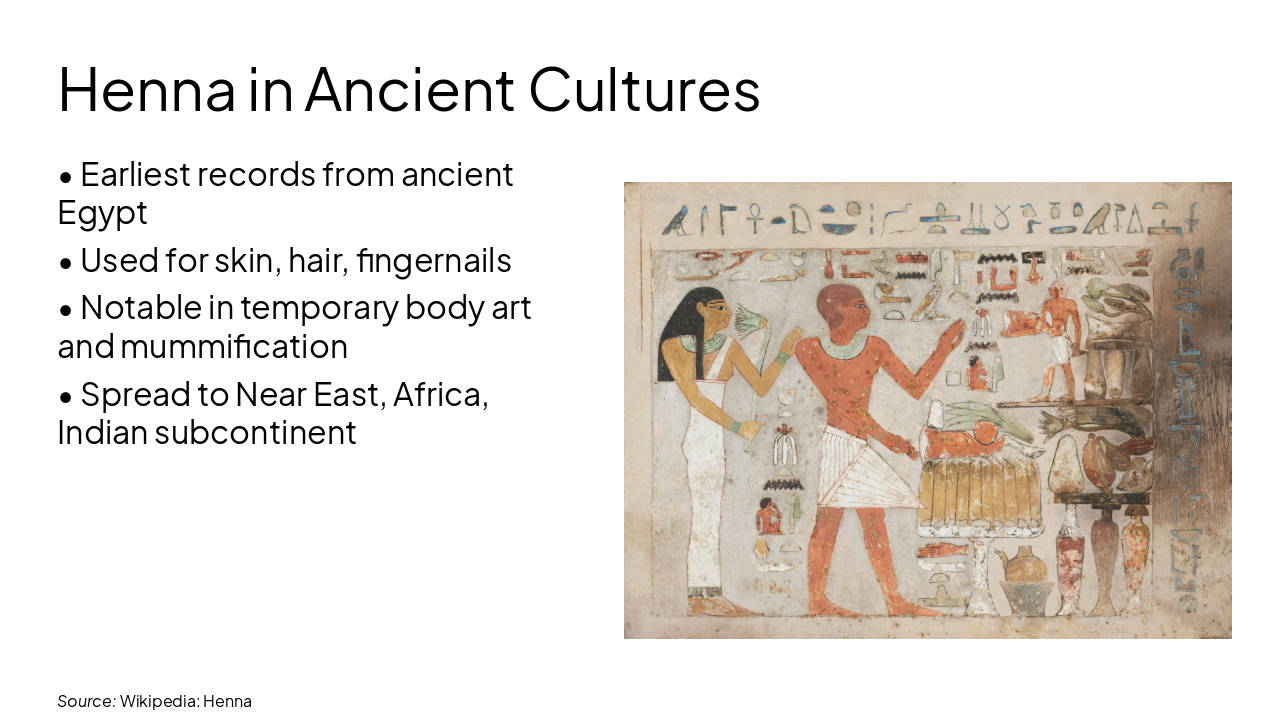
  • Earliest records from ancient Egypt
  • Used for skin, hair, fingernails
  • Notable in temporary body art and mummification
  • Spread to Near East, Africa, Indian subcontinent

---

Photo by Art Institute of Chicago on Unsplash

Source: Wikipedia: Henna
Slide 8 - Henna in Ancient Cultures
Slide 9 of 18

Slide 9 - Science

3

The Science Behind Henna

How Lawsone Binds to Keratin

Slide 9 - Science
Slide 10 of 18

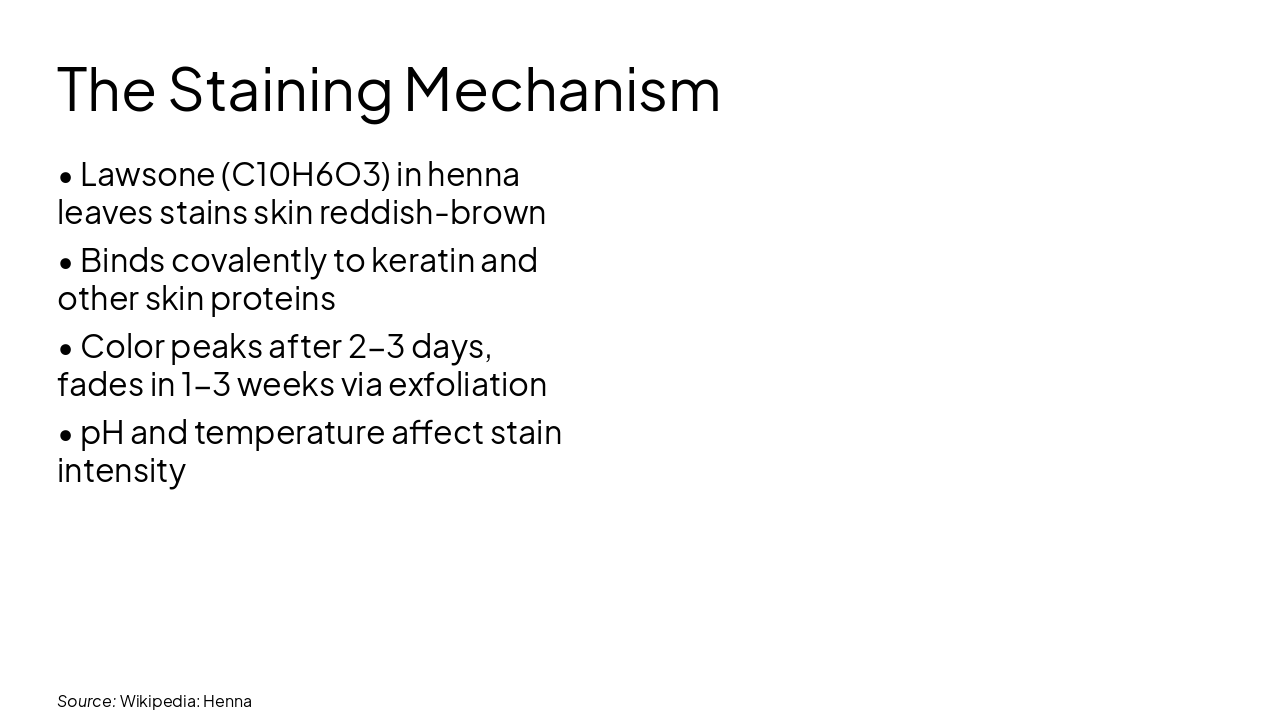
Slide 10 - The Staining Mechanism

  • Lawsone (C10H6O3) in henna leaves stains skin reddish-brown
  • Binds covalently to keratin and other skin proteins
  • Color peaks after 2-3 days, fades in 1-3 weeks via exfoliation
  • pH and temperature affect stain intensity

Source: Wikipedia: Henna

Slide 10 - The Staining Mechanism
Slide 11 of 18

Slide 11 - Cultural Significance

4

Cultural Significance

Central to Weddings and Festivals in South Asia
Slide 11 - Cultural Significance
Slide 12 of 18

Slide 12 - Mehndi in Celebrations

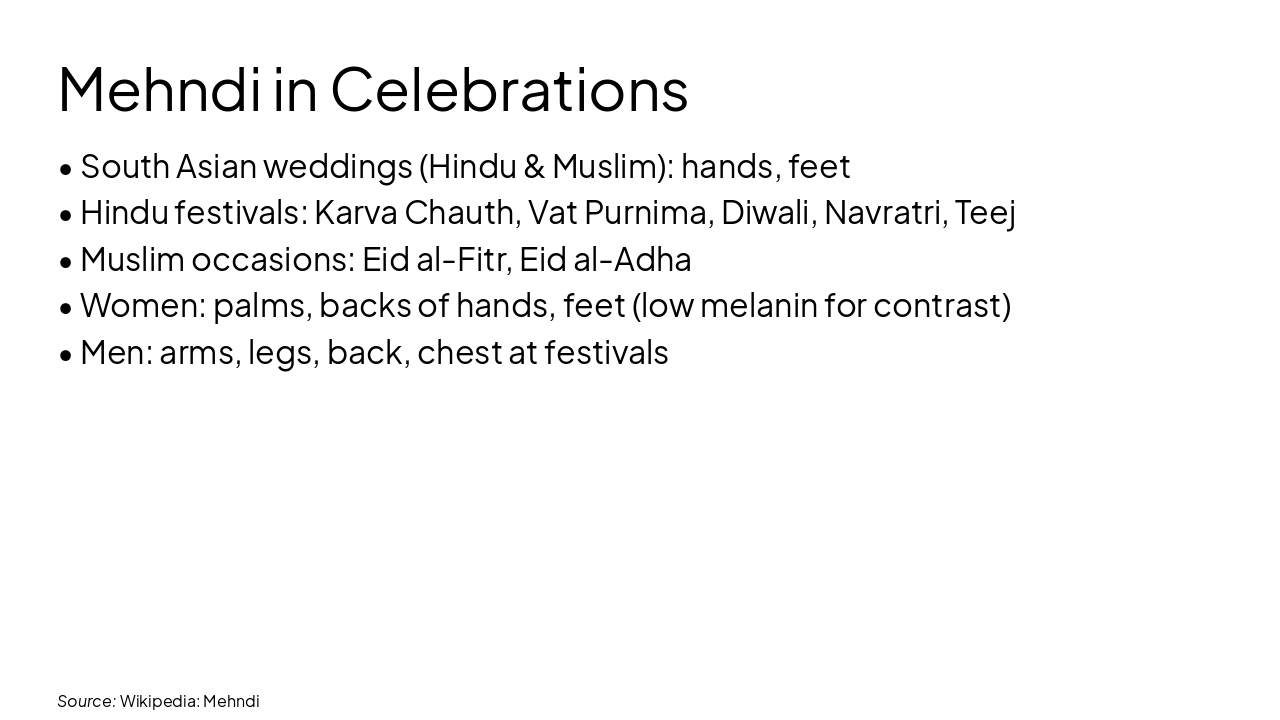
  • South Asian weddings (Hindu & Muslim): hands, feet
  • Hindu festivals: Karva Chauth, Vat Purnima, Diwali, Navratri, Teej
  • Muslim occasions: Eid al-Fitr, Eid al-Adha
  • Women: palms, backs of hands, feet (low melanin for contrast)
  • Men: arms, legs, back, chest at festivals

Source: Wikipedia: Mehndi

Slide 12 - Mehndi in Celebrations
Slide 13 of 18

Slide 13 - Gaye Holud Ceremony

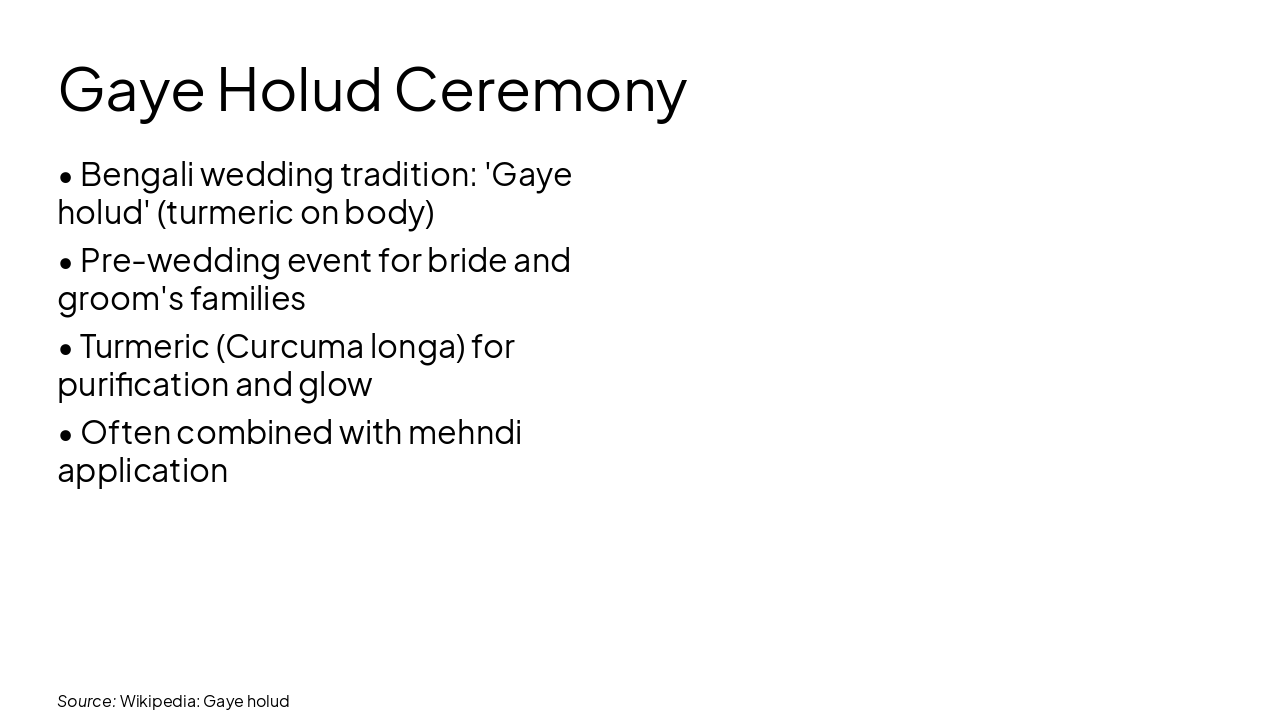
  • Bengali wedding tradition: 'Gaye holud' (turmeric on body)
  • Pre-wedding event for bride and groom's families
  • Turmeric (Curcuma longa) for purification and glow
  • Often combined with mehndi application

Source: Wikipedia: Gaye holud

Slide 13 - Gaye Holud Ceremony
Slide 14 of 18

Slide 14 - Bridal Mehendi Designs

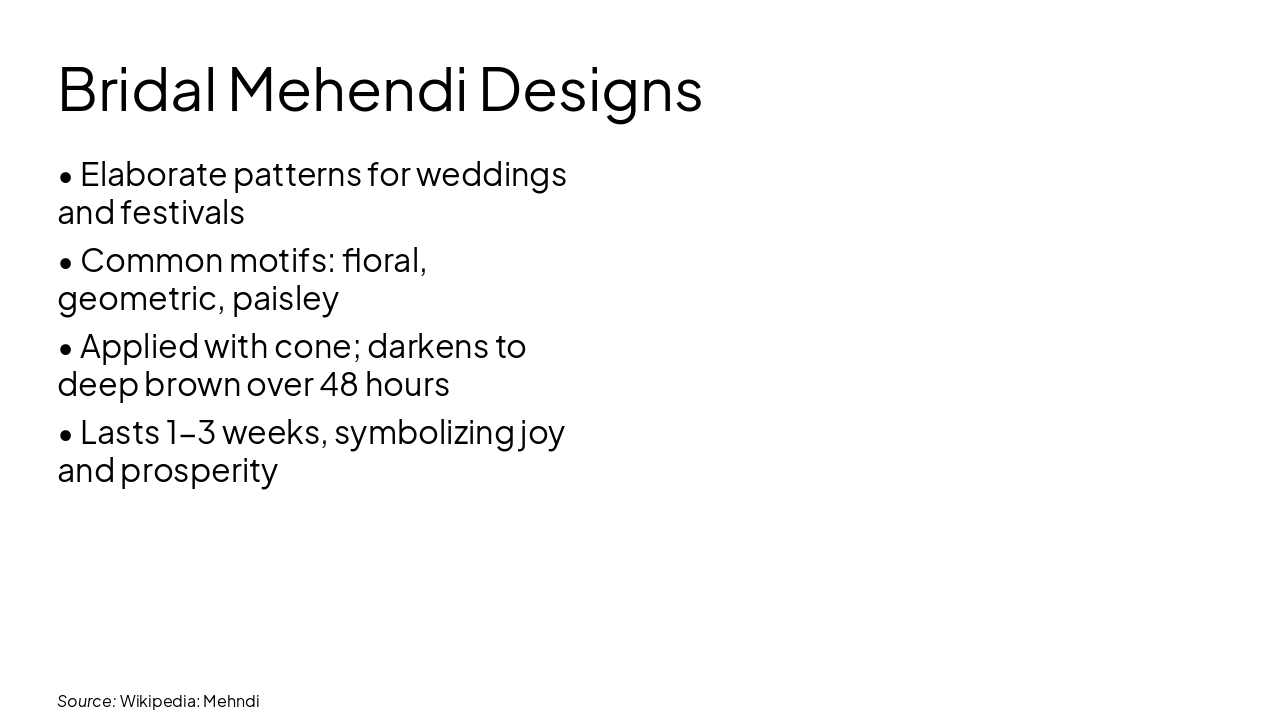
  • Elaborate patterns for weddings and festivals
  • Common motifs: floral, geometric, paisley
  • Applied with cone; darkens to deep brown over 48 hours
  • Lasts 1-3 weeks, symbolizing joy and prosperity

Source: Wikipedia: Mehndi

Slide 14 - Bridal Mehendi Designs
Slide 15 of 18

Slide 15 - Application & Safety

5

Application and Safety

Pure Henna Powder, Paste, and Risks

Slide 15 - Application & Safety
Slide 16 of 18

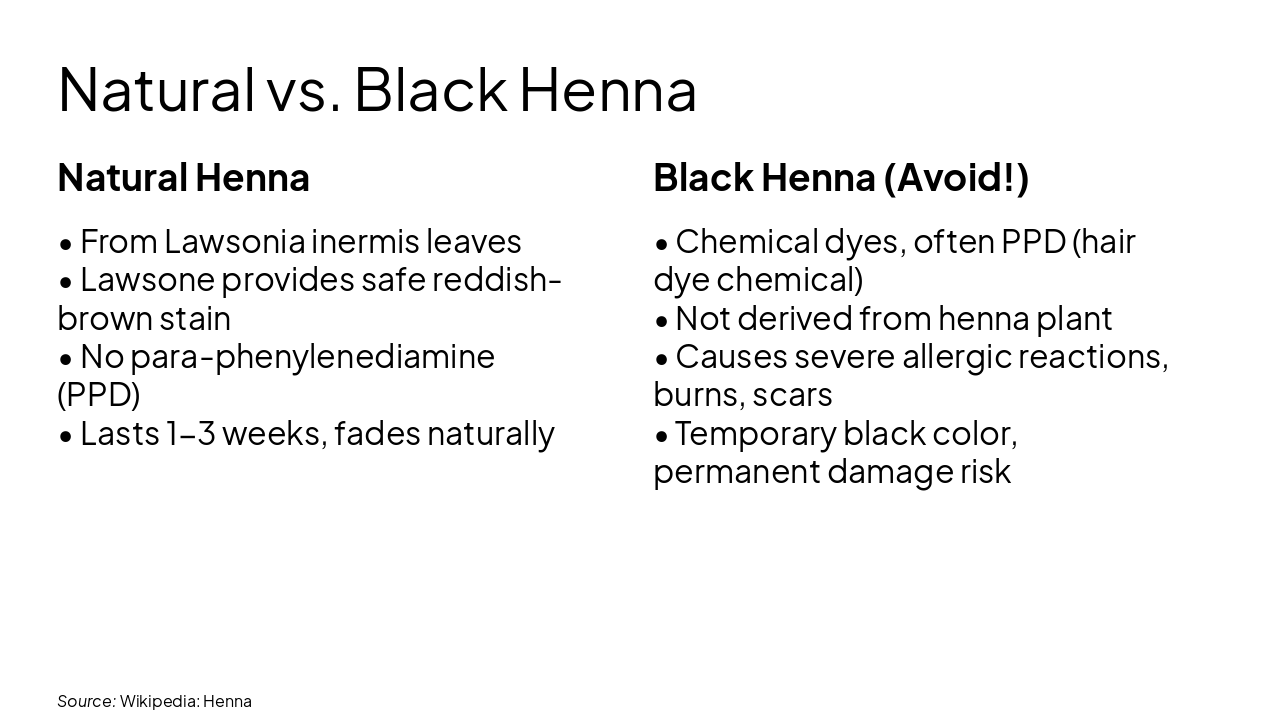
Slide 16 - Natural vs. Black Henna

Natural Henna

  • From Lawsonia inermis leaves
  • Lawsone provides safe reddish-brown stain
  • No para-phenylenediamine (PPD)
  • Lasts 1-3 weeks, fades naturally

Black Henna (Avoid!)

  • Chemical dyes, often PPD (hair dye chemical)
  • Not derived from henna plant
  • Causes severe allergic reactions, burns, scars
  • Temporary black color, permanent damage risk

Source: Wikipedia: Henna

Slide 16 - Natural vs. Black Henna
Slide 17 of 18

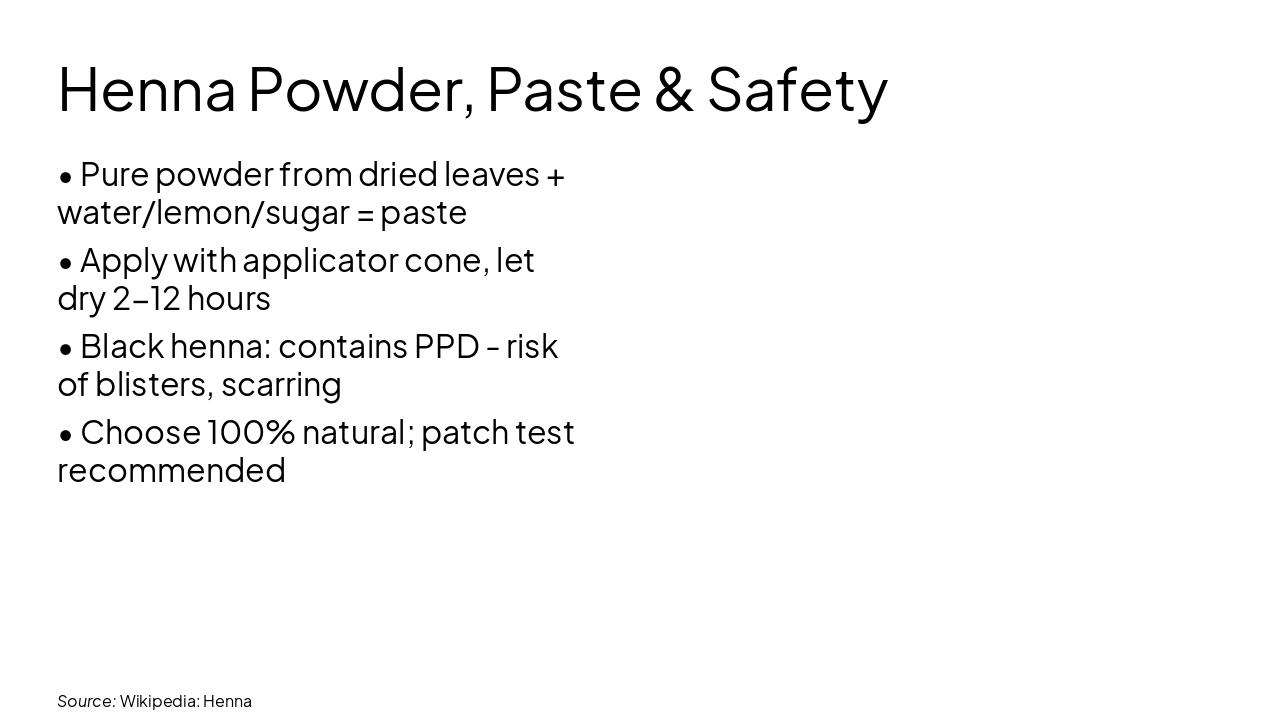
Slide 17 - Henna Powder, Paste & Safety

  • Pure powder from dried leaves + water/lemon/sugar = paste
  • Apply with applicator cone, let dry 2-12 hours
  • Black henna: contains PPD - risk of blisters, scarring
  • Choose 100% natural; patch test recommended

Source: Wikipedia: Henna

Slide 17 - Henna Powder, Paste & Safety
Slide 18 of 18

Slide 18 - Conclusion

Henna: A Timeless Art Blending Science, History, and Culture

Celebrate traditions safely with pure natural henna – avoid 'black henna'
Slide 18 - Conclusion

Discover More Presentations

Explore thousands of AI-generated presentations for inspiration

Browse Presentations
Powered by AI

Create Your Own Presentation

Generate professional presentations in seconds with Karaf's AI. Customize this presentation or start from scratch.

Create New Presentation

Powered by Karaf.ai — AI-Powered Presentation Generator