Slide 1 of 15
Slide 1 - Debt Mutual Funds
Debt Mutual Funds: An Overview
Understanding Debt Instruments for Informed Investing
Generated from prompt:
Create a professional PowerPoint presentation on Debt Mutual Funds including: - Title slide - Introduction to mutual funds - What are debt mutual funds - How debt funds work - Key features - Types of debt mutual funds (overnight, liquid, ultra short, low duration, money market, short duration, medium duration, long duration, dynamic bond, corporate bond, credit risk, gilt funds) - Benchmarking in debt funds (what is benchmark, why it matters) - Examples of benchmarks (NIFTY Liquid Index, CRISIL Short Term Bond Index, NIFTY Composite Debt Index, etc.) - Risk factors (interest rate risk, credit risk, liquidity risk) - Taxation in India (latest regime overview) - Advantages and disadvantages - Who should invest - Comparison with fixed deposits - Conclusion Make it visually clean, with bullet points and icons where possible.
This presentation offers a comprehensive overview of debt mutual funds, from basics and operations to types, benchmarking, risks, taxation, and strategies compared to fixed deposits. Ideal for informed investing with balanced risk-return profiles.
Debt Mutual Funds: An Overview
Understanding Debt Instruments for Informed Investing
---
Photo by Benjamin Salvatore on Unsplash
2
How Debt Funds Work and Their Key Features
---
Photo by Igor Omilaev on Unsplash
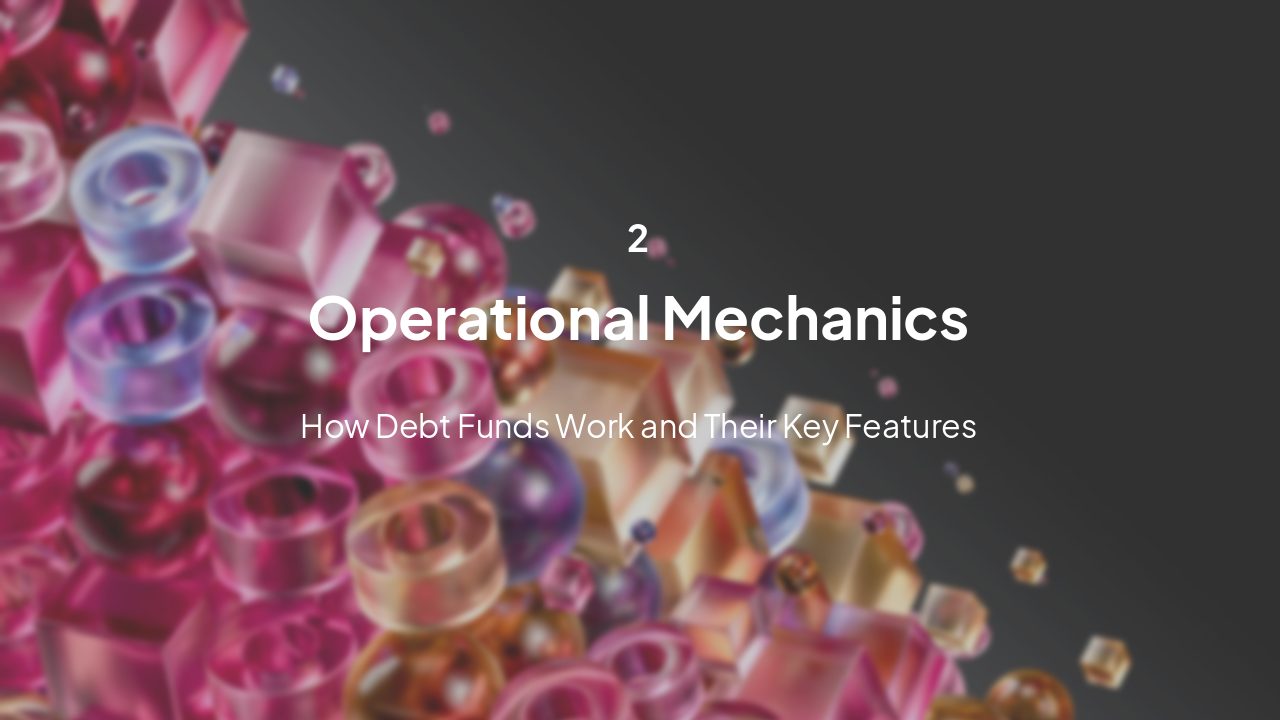
| Step 1: Collection | Step 2: Selection | Step 3: Management | Step 4: Returns |
|---|---|---|---|
| Asset Management Company (AMC) collects funds from investors. | Fund Manager selects debt instruments based on maturity and risk. | Manager monitors interest rates and credit quality daily. | Interest/accrual income is distributed or reflected in NAV. |
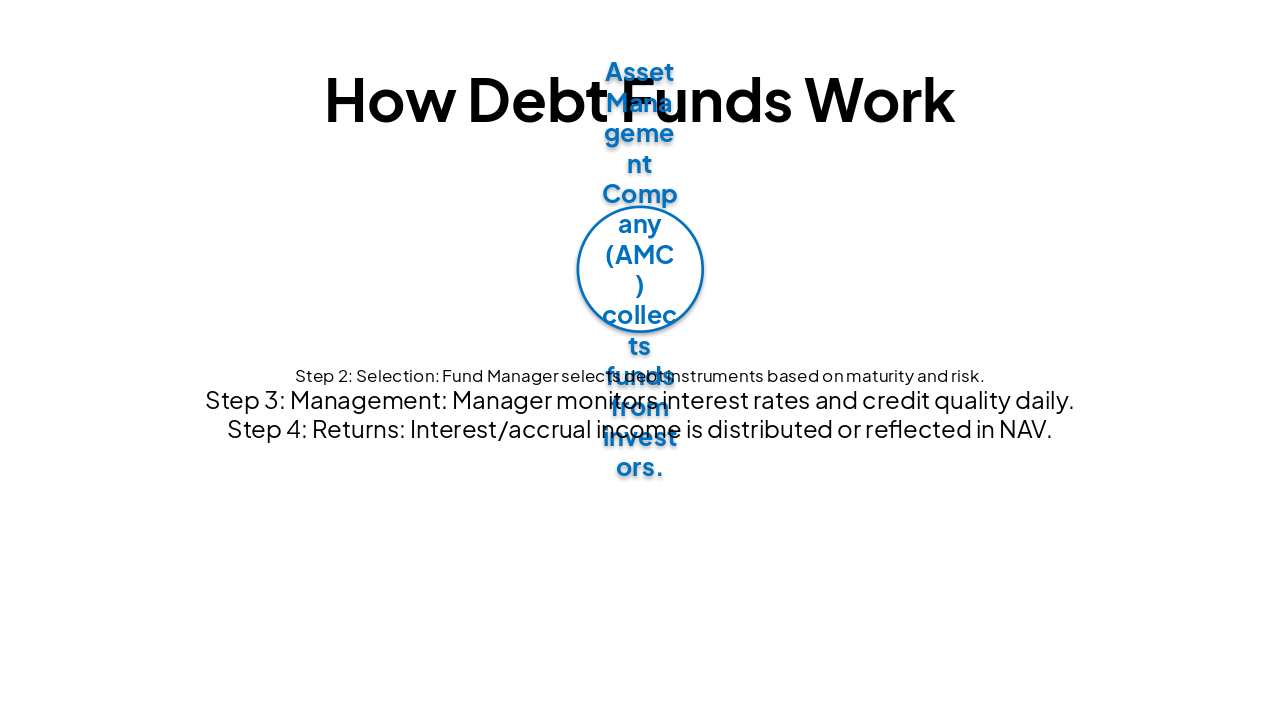
diversify Diversification Access to diversified debt securities across various maturities and issuers.
manager Expert Management Professional oversight with real-time portfolio management.
liquid Liquidity Higher liquidity compared to direct debt instruments or FDs.
growth Better Yields Returns are typically better than traditional bank savings accounts.
3
Classification and Performance Measurement
---
Photo by Igor Omilaev on Unsplash
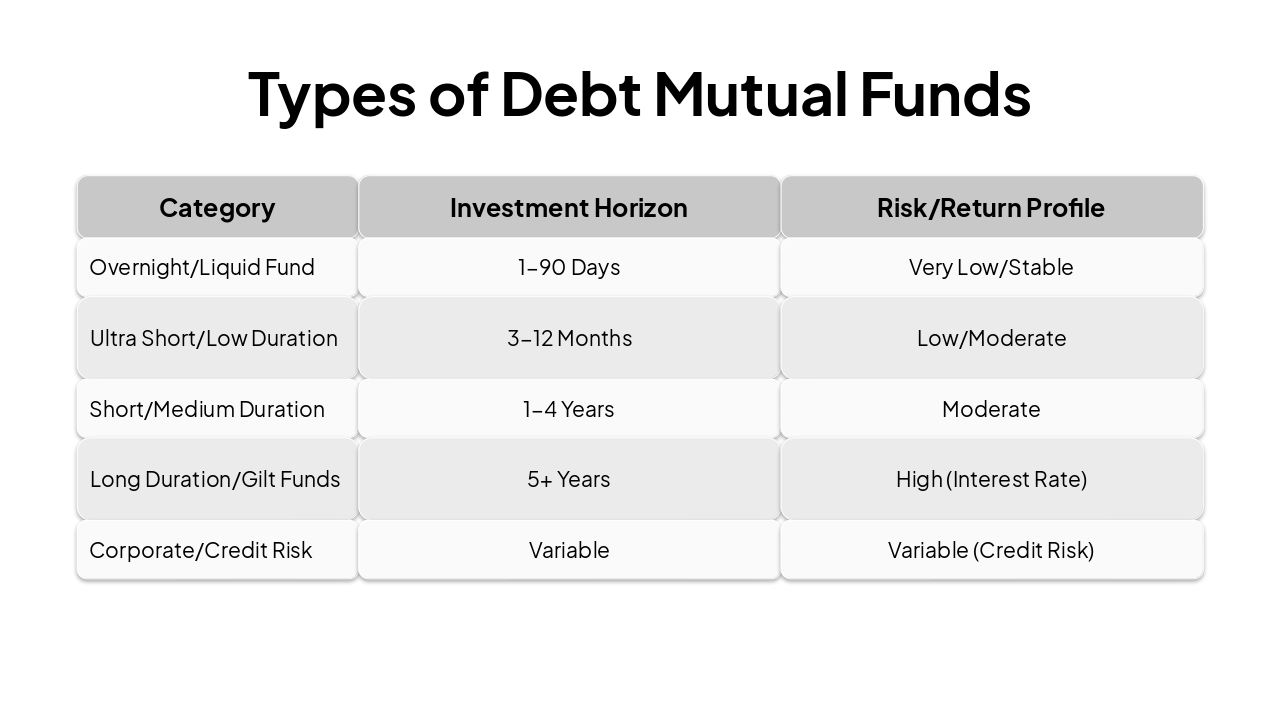
| Category | Investment Horizon | Risk/Return Profile |
|---|---|---|
| Overnight/Liquid Fund | 1-90 Days | Very Low/Stable |
| Ultra Short/Low Duration | 3-12 Months | Low/Moderate |
| Short/Medium Duration | 1-4 Years | Moderate |
| Long Duration/Gilt Funds | 5+ Years | High (Interest Rate) |
| Corporate/Credit Risk | Variable | Variable (Credit Risk) |
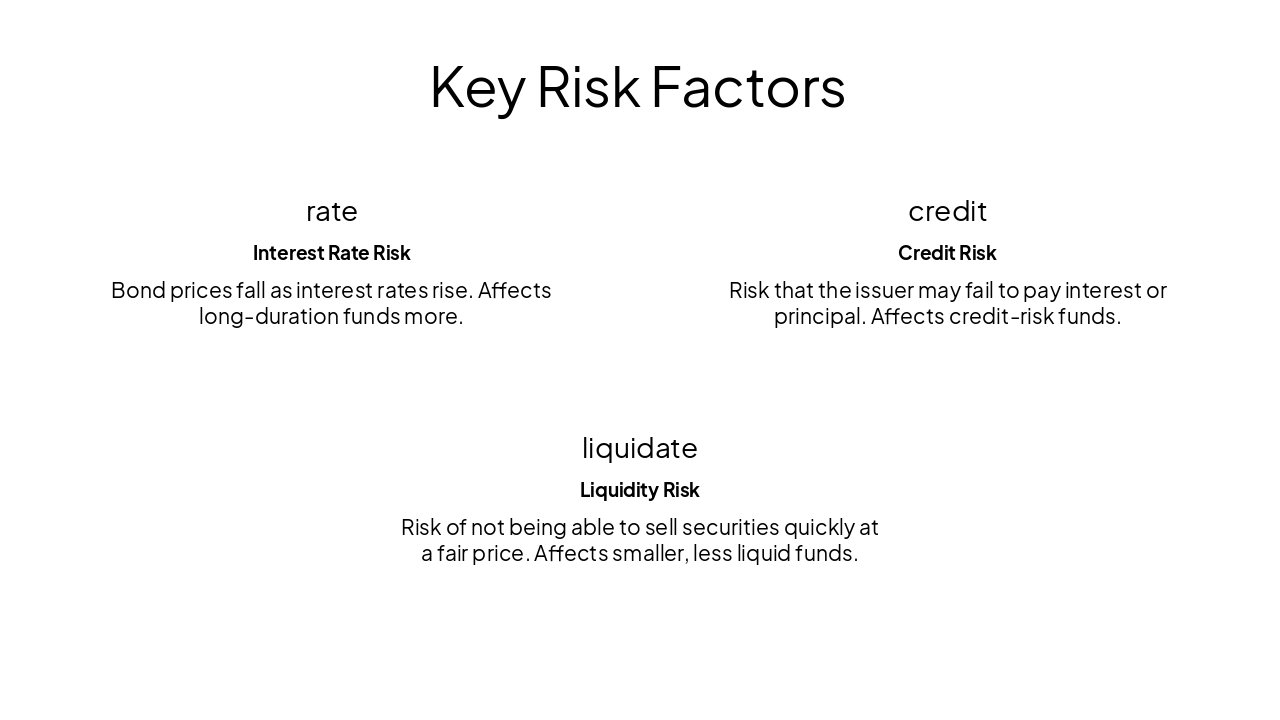
rate Interest Rate Risk Bond prices fall as interest rates rise. Affects long-duration funds more.
credit Credit Risk Risk that the issuer may fail to pay interest or principal. Affects credit-risk funds.
liquidate Liquidity Risk Risk of not being able to sell securities quickly at a fair price. Affects smaller, less liquid funds.
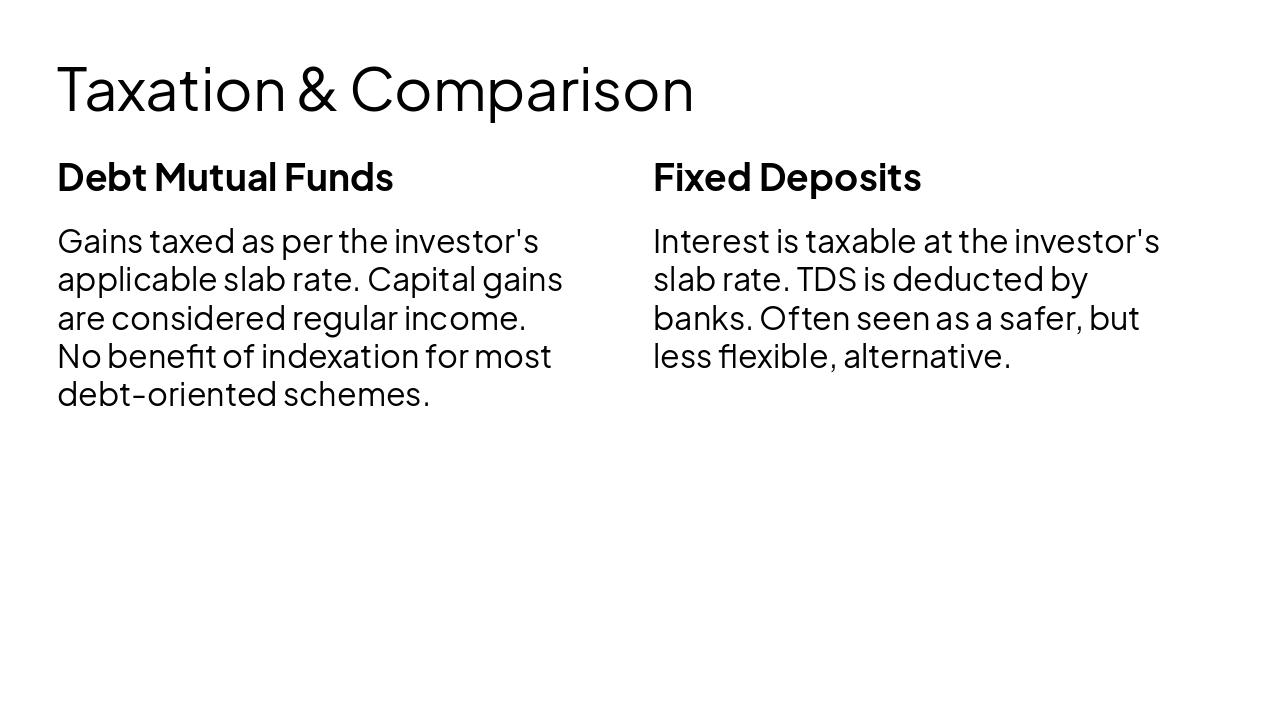
Debt Mutual Funds Gains taxed as per the investor's applicable slab rate. Capital gains are considered regular income. No benefit of indexation for most debt-oriented schemes.
Fixed Deposits Interest is taxable at the investor's slab rate. TDS is deducted by banks. Often seen as a safer, but less flexible, alternative.
In Summary: Balancing Stability and Growth
Debt funds offer a flexible, professional way to manage fixed-income exposure with varied risk-return profiles. Always align your choice with your investment horizon and liquidity needs.
---
Photo by Oleg Laptev on Unsplash
Explore thousands of AI-generated presentations for inspiration
Generate professional presentations in seconds with Karaf's AI. Customize this presentation or start from scratch.