Slide 1 of 11
Slide 1 - Chemical Equilibrium and Le Chatelier’s Principle
Chemical Equilibrium and Le Chatelier’s Principle
Carbonation in Soft Drinks
---
Photo by alex geerts on Unsplash
Generated from prompt:
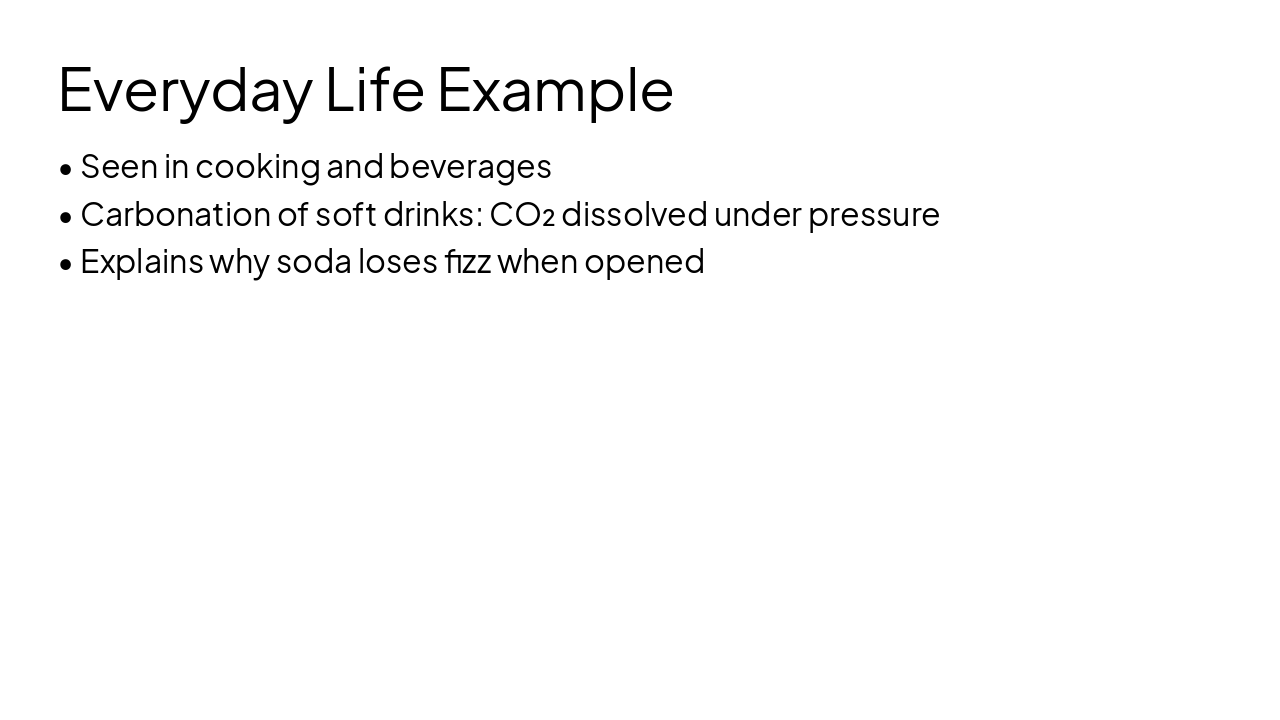
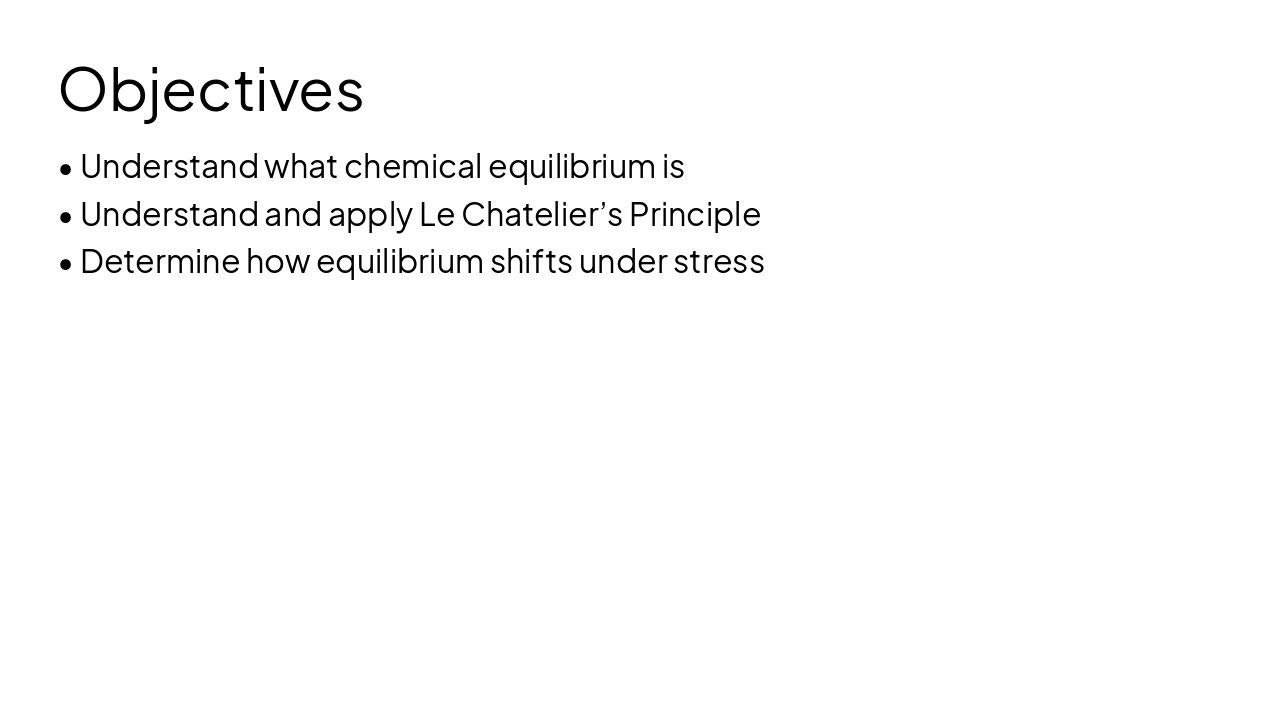
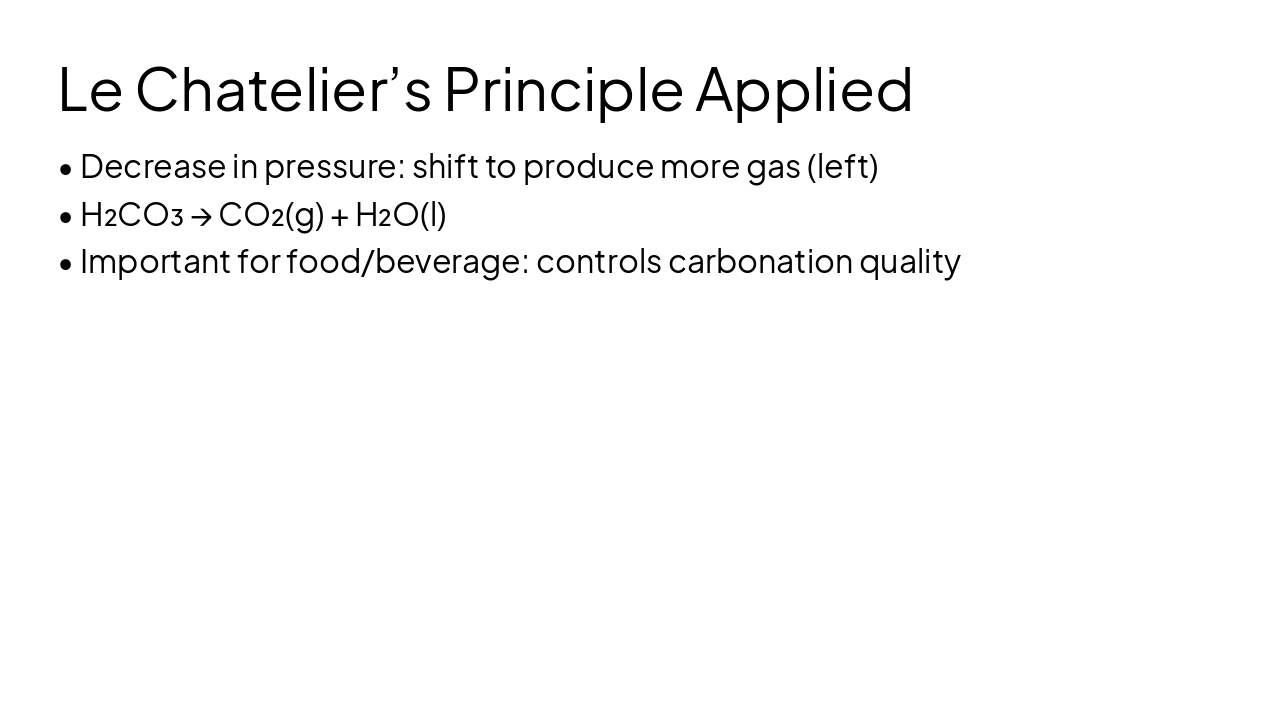
Make a presentation about Introduction Chemical equilibrium happens when the forward and reverse reactions occur at the same rate, so the system appears stable even though reactions are still happening. This balance can change when external factors such as temperature, pressure, or concentration are altered. Le Chatelier’s Principle explains that when a system at equilibrium is disturbed, it will adjust to reduce the effect of that disturbance. In everyday life, chemical equilibrium can be seen in cooking processes. One common example is the carbonation of soft drinks, where carbon dioxide gas is dissolved in liquid under pressure. Understanding how equilibrium shifts in this system helps explain why soda loses its fizz when opened. Objectives The objectives of this report are: 1. To help students understand and learn what chemical equilibrium is. 2. To help students understand and apply Le Chatelier’s Principle. 3. To determine how an equilibrium system shifts when it is subjected to stress. Discussion Culinary Chemistry: Carbonation of Soda The equilibrium involved in the carbonation of soda can be described by the reversible reaction: CO₂(g) + H₂O(l) ⇌ H₂CO₃(aq) In this system, carbon dioxide gas dissolves in water to form carbonic acid (H₂CO₃), which is responsible for the slightly acidic and fizzy taste of carbonated beverages. This reaction is a dynamic equilibrium, meaning that carbon dioxide is constantly dissolving into the liquid while carbonic acid is also breaking back down into carbon dioxide and water at the same time. A stress that can be applied to this system is opening a sealed soda bottle or can, which causes a sudden decrease in pressure above the liquid. While the soda is sealed, it is stored under high pressure, which forces more CO₂ to stay dissolved in the liquid. Once the container is opened, the external pressure drops significantly, disrupting the equilibrium. According to Le Chatelier’s Principle, the system responds to this decrease in pressure by shifting in the direction that produces more gas molecules to restore balance. In this case, the equilibrium shifts to the left, favoring the breakdown of carbonic acid into carbon dioxide gas and water. As a result, CO₂ rapidly escapes from the liquid in the form of visible bubbles, which is the fizz observed when soda is opened or poured. This shift is important to humans because it explains the loss of carbonation in soda over time. Once CO₂ escapes into the air, the drink becomes “flat,” losing both its signature fizzy sensation and part of its flavor profile. In a broader sense, this system demonstrates how gas solubility and pressure changes affect chemical equilibria in everyday life, especially in food and beverage production where controlling carbonation is essential for product quality and consumer experience. Conclusion In summary, this activity helped us understand how chemical equilibrium works and how it can be applied to real-life situations. By using Le Chatelier’s Principle, we were able to explain how changes in pressure affect the carbonation of soda. This analysis made it easier to connect chemistry concepts to everyday experiences, such as drinking carbonated beverages. It also showed the importance of controlling conditions to maintain equilibrium in practical applications. Overall, the activity improved our understanding of how equilibrium systems respond to stress.
This presentation introduces the basics of chemical equilibrium, where forward and reverse reactions occur at equal rates, and explains Le Chatelier’s Principle, which describes how systems adjust to disturbances like changes in pressure or concentration. Using the everyday example of carbonation in soft drinks, it demonstrates the reversible reaction between carbon dioxide, water, and carbonic acid. Viewers learn why soda fizzes upon opening due to a pressure drop shifting the equilibrium, releasing gas bubbles, and how controlling conditions maintains carbonation. Key objectives include理解equ
Chemical Equilibrium and Le Chatelier’s Principle
Carbonation in Soft Drinks
---
Photo by alex geerts on Unsplash
---
Photo by Ryan Zazueta on Unsplash
2
Dynamic equilibrium in action
---
Photo by Leighann Blackwood on Unsplash

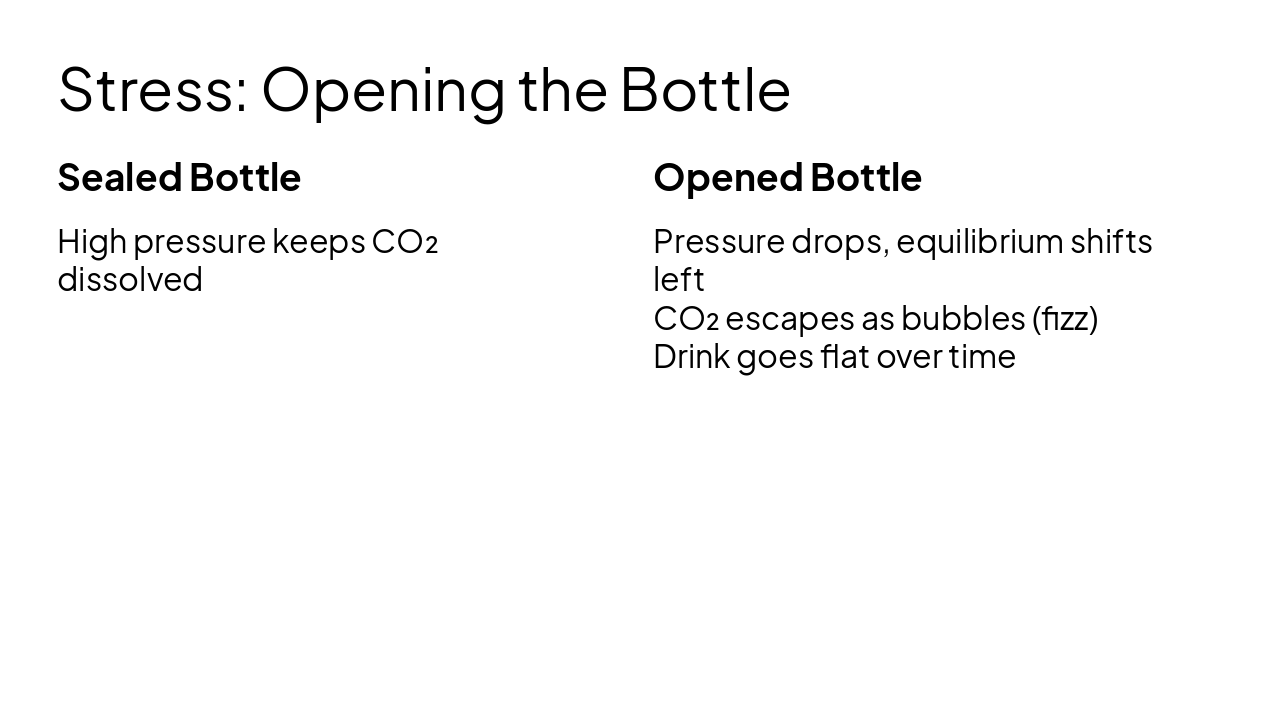
Sealed Bottle High pressure keeps CO₂ dissolved
Opened Bottle Pressure drops, equilibrium shifts left CO₂ escapes as bubbles (fizz) Drink goes flat over time
Chemical equilibrium and Le Chatelier’s Principle explain soda fizz Connects chemistry to daily life like carbonated drinks
Control conditions to maintain equilibrium
---
Photo by Erik Mclean on Unsplash
Explore thousands of AI-generated presentations for inspiration
Generate professional presentations in seconds with Karaf's AI. Customize this presentation or start from scratch.
