Slide 1 of 12
Slide 1 - Penicillins
Antibiotics in the Penicillin Group
β-lactam Antibiotics: Discovery, History, and Clinical Use
---
Photo by Mads Leif Hansen on Unsplash
Generated from prompt:
Пенициллин қатарындағы антибиотиктер
This presentation explores β-lactam antibiotics from Penicillium moulds, covering their definition, key facts, discovery by Alexander Fleming, historical milestones including WWII production, allergies statistics, semisynthetic advancements, and the筆
Antibiotics in the Penicillin Group
β-lactam Antibiotics: Discovery, History, and Clinical Use
---
Photo by Mads Leif Hansen on Unsplash
---
Photo by Aleksandrs Karevs on Unsplash
1
β-lactam antibiotics from Penicillium moulds
---
Photo by Keith Mapeki on Unsplash
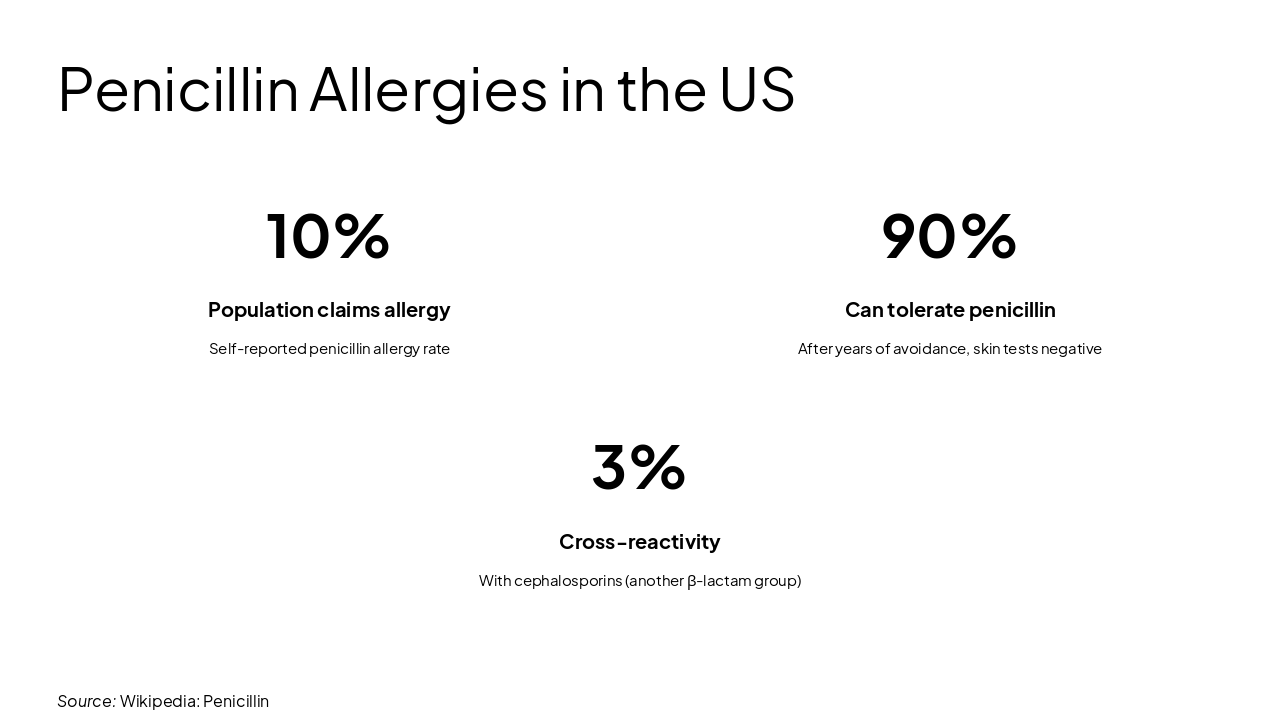
Source: Wikipedia: Penicillin
Source: Wikipedia: Penicillin
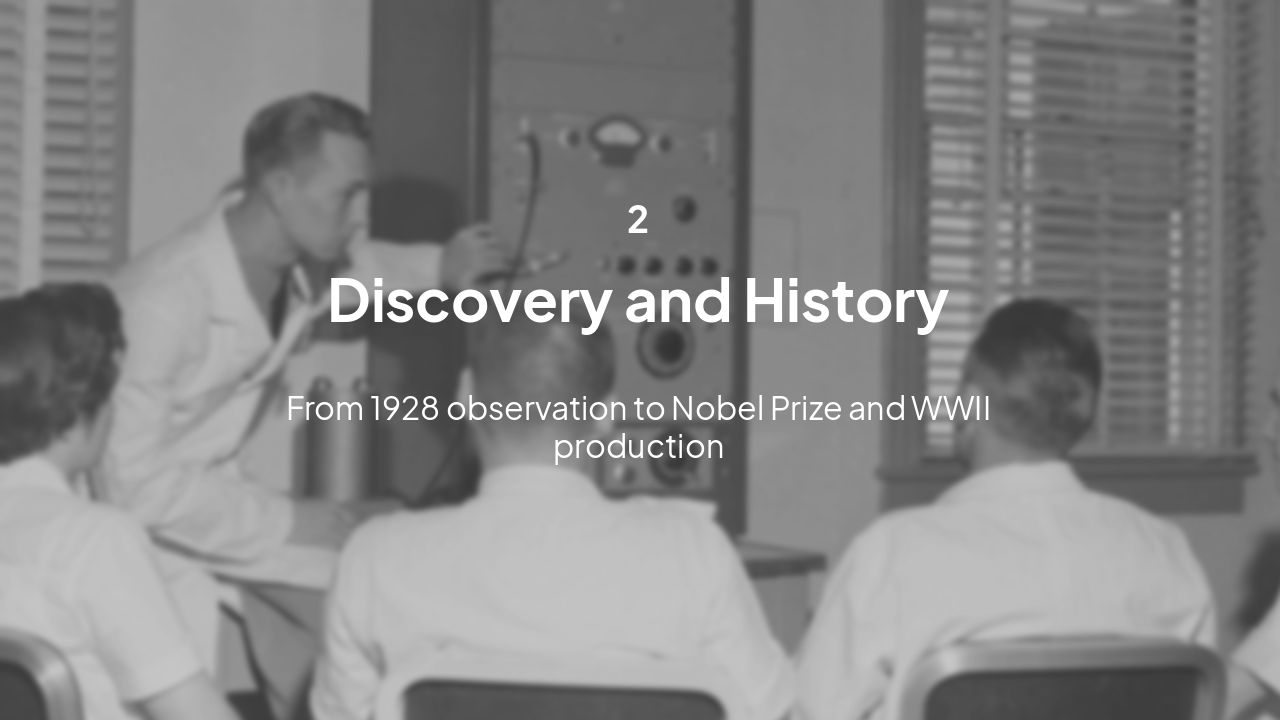
2
From 1928 observation to Nobel Prize and WWII production
---
Photo by Navy Medicine on Unsplash
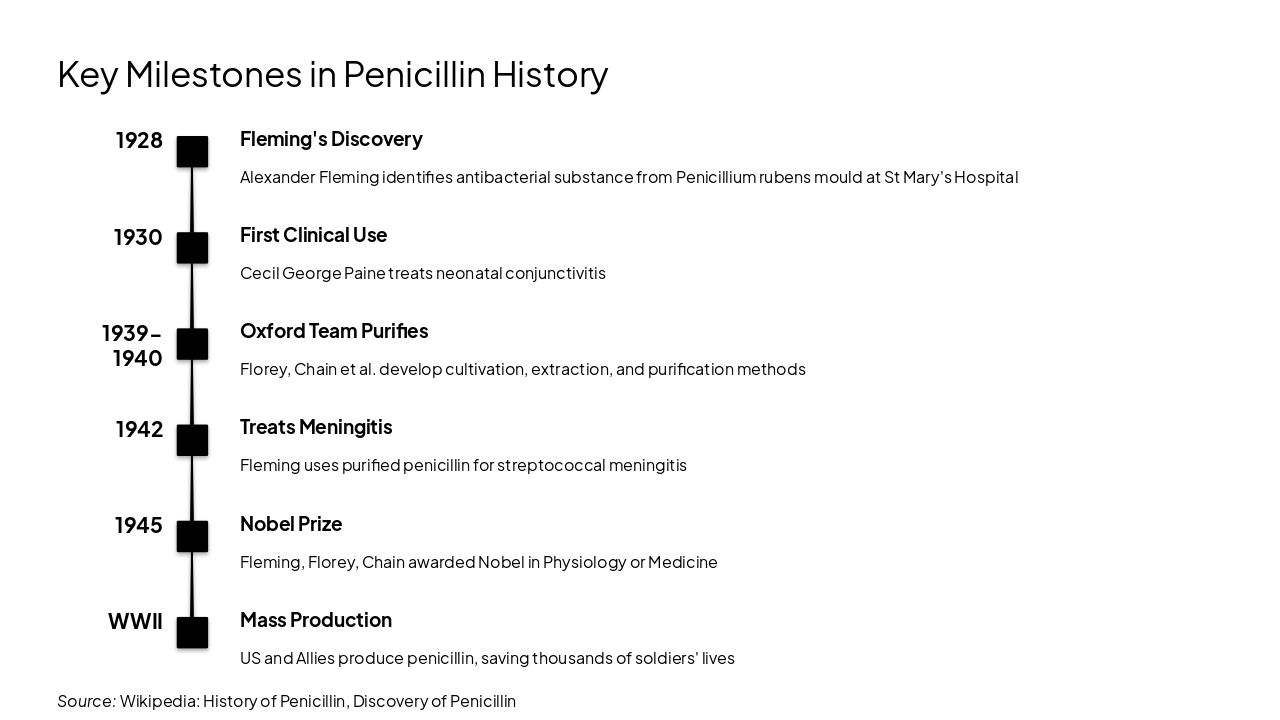
1928: Fleming's Discovery Alexander Fleming identifies antibacterial substance from Penicillium rubens mould at St Mary's Hospital 1930: First Clinical Use Cecil George Paine treats neonatal conjunctivitis 1939-1940: Oxford Team Purifies Florey, Chain et al. develop cultivation, extraction, and purification methods 1942: Treats Meningitis Fleming uses purified penicillin for streptococcal meningitis 1945: Nobel Prize Fleming, Florey, Chain awarded Nobel in Physiology or Medicine WWII: Mass Production US and Allies produce penicillin, saving thousands of soldiers' lives
Source: Wikipedia: History of Penicillin, Discovery of Penicillin
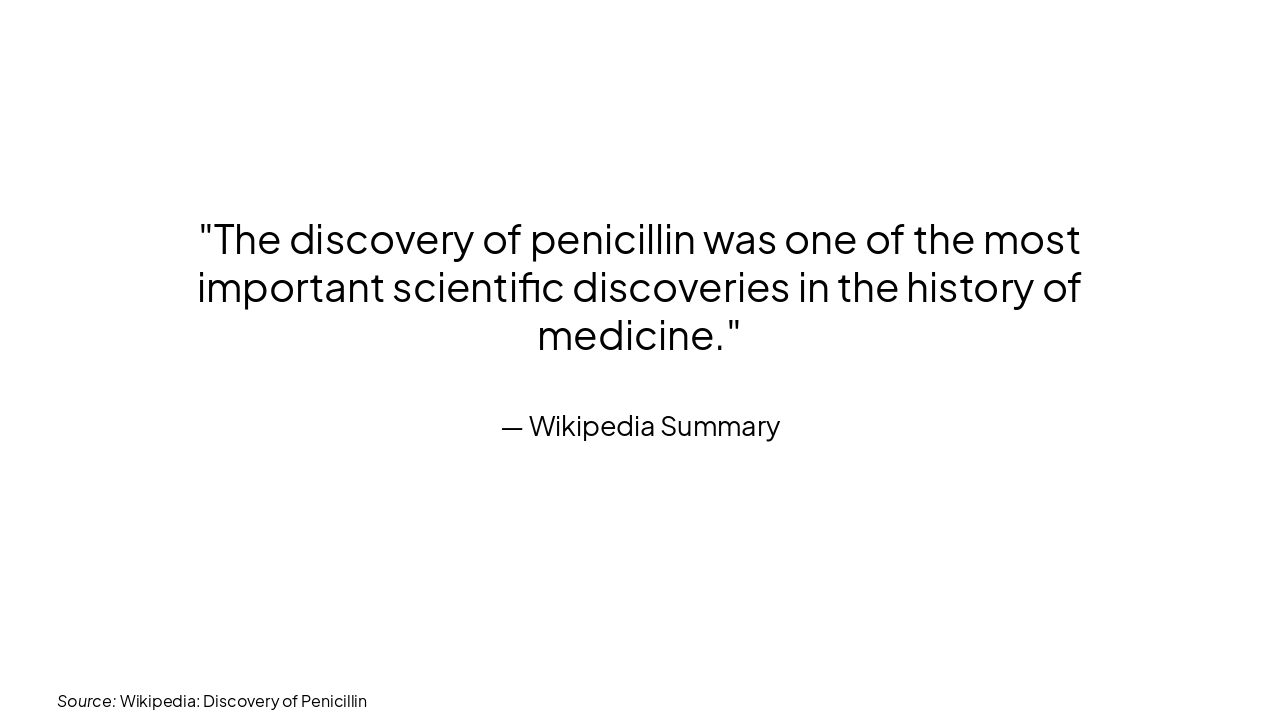
> The discovery of penicillin was one of the most important scientific discoveries in the history of medicine.
— Wikipedia Summary
Source: Wikipedia: Discovery of Penicillin
---
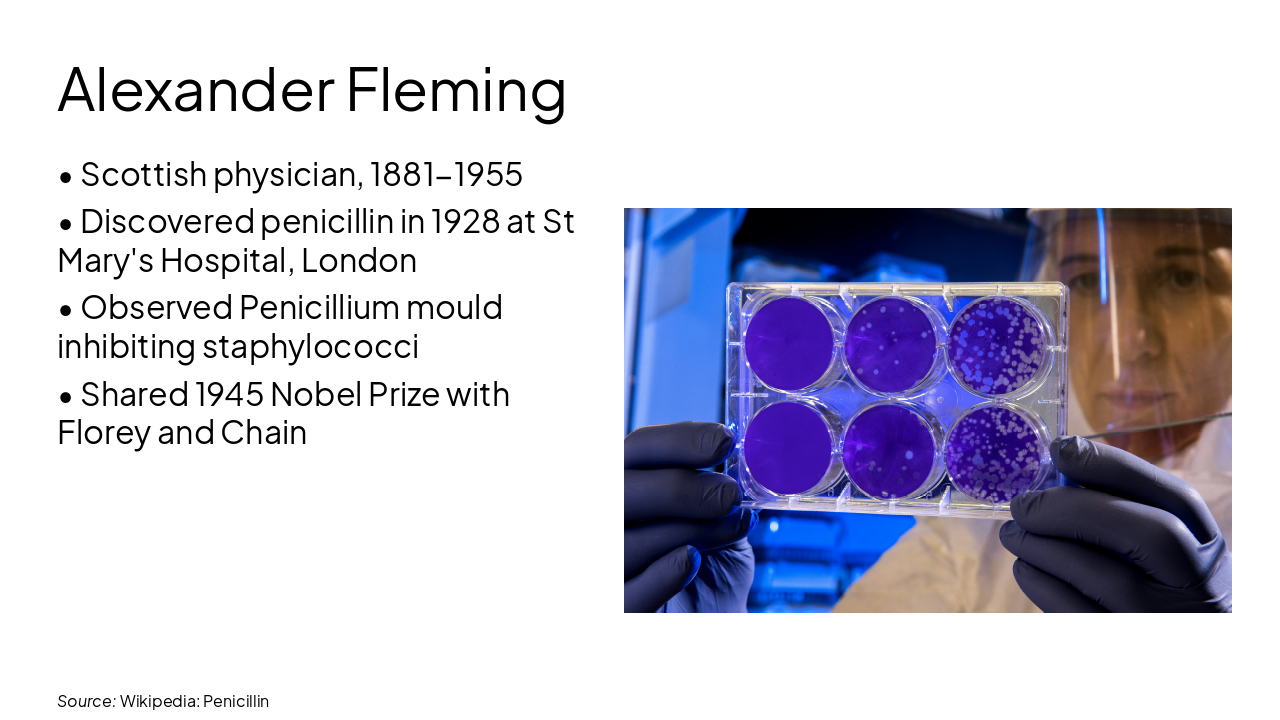
Photo by CDC on Unsplash
Source: Wikipedia: Penicillin
3
Broader spectrum against resistant bacteria
---
Photo by Ryan Zazueta on Unsplash
Source: Wikipedia: Penicillin
Penicillins: Revolutionized antibiotic treatment since 1928 From natural mould extracts to semisynthetic powerhouses Overcoming allergies and resistance challenges
Thank you for your attention! Questions?
---
Photo by Trnava University on Unsplash
Explore thousands of AI-generated presentations for inspiration
Generate professional presentations in seconds with Karaf's AI. Customize this presentation or start from scratch.