Southern Europe's Path: Dictatorship to Democracy Post-WWII

Generated from prompt:

Оңтүстік және Солтүстік Еуропа мемлекеттері: диктатура және демократия Кіріспе: Испания, Португалия және Грецияда соғыстан кейінгі диктатура және демократиялық саяси жағдайы Испанияда Франциско Франконың диктатурасы Португалияда капитандар ұйымының дүзілуі Константин Салдаристің монархияны дүзіуге кірісуі 1975-жыл Франциско Франконың өлімінен соң Хуан Карлос I тақтқа келуі және демократияны бастап беруі Диктатура мен демократияның әлеуметтік-экономикалық салдары Португалияда 1974-жылы Қалампыр революциясы Грецияның соғыстан кейінгі мемлекет жағадайы Қорытынды және негізгі ойлар

This presentation analyzes post-WWII dictatorships in Spain (Francoist regime), Portugal (Estado Novo), and Greece (military junta), key events like the Carnation Revolution, transitions led by figures such as Juan Carlos I and Karamanlis, socio-эkоn

February 25, 202616 slides
Slide 1 of 16

Slide 1 - Southern and Northern European Countries: Dictatorship and Democracy

Оңтүстік және Солтүстік Еуропа мемлекеттері: диктатура және демократия

Post-WWII Dictatorships and Democratic Transitions in Spain, Portugal, and Greece

---

Photo by LSE Library on Unsplash
Slide 1 - Southern and Northern European Countries: Dictatorship and Democracy
Slide 2 of 16

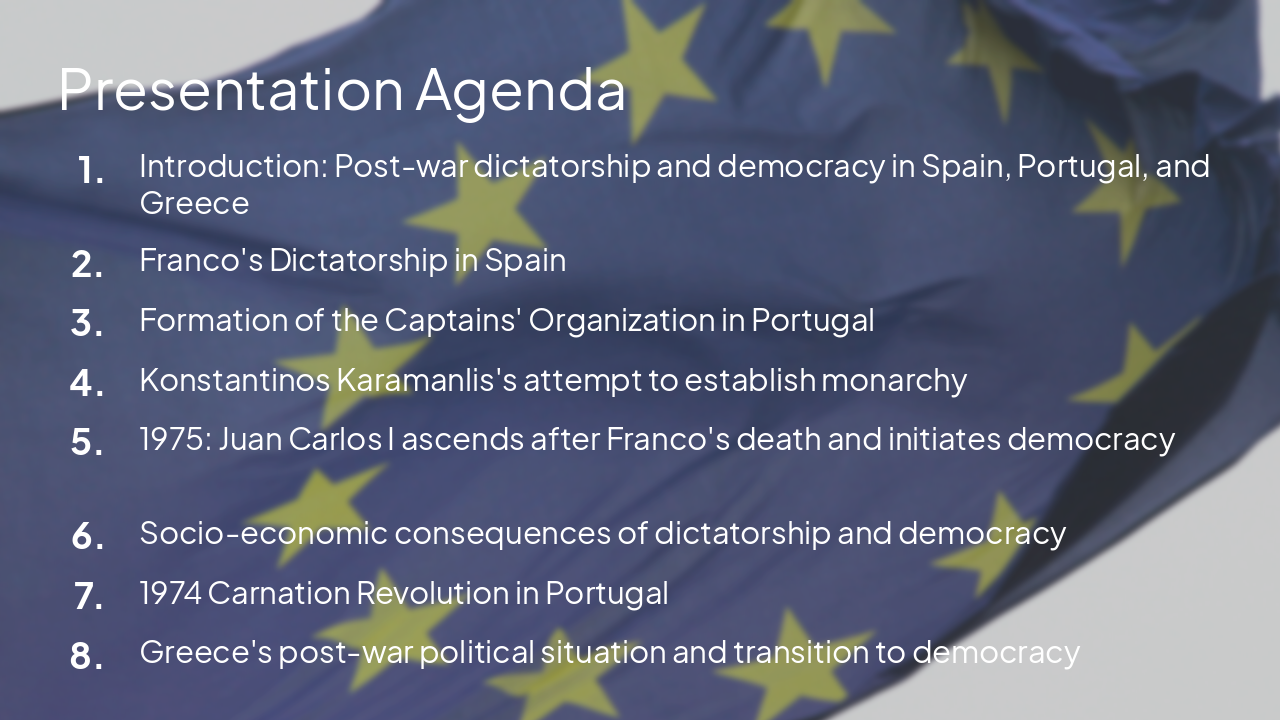
Slide 2 - Presentation Agenda

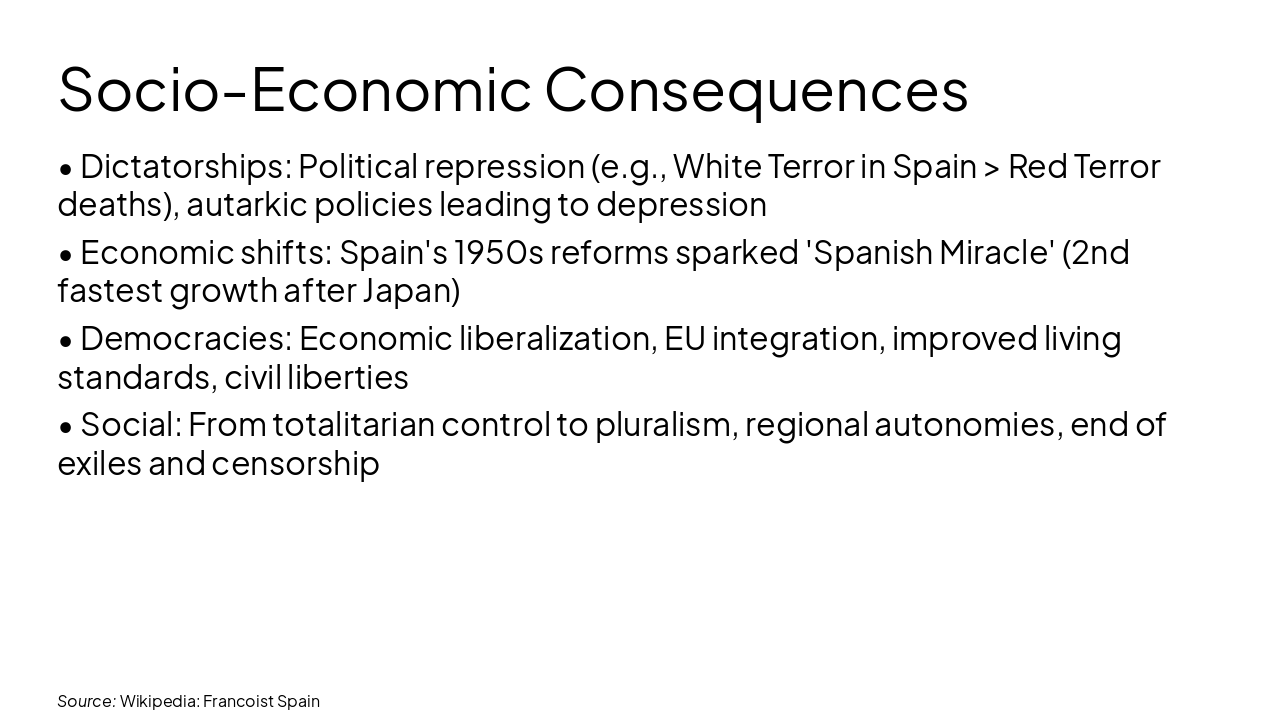
  • Introduction: Post-war dictatorship and democracy in Spain, Portugal, and Greece
  • Franco's Dictatorship in Spain
  • Formation of the Captains' Organization in Portugal
  • Konstantinos Karamanlis's attempt to establish monarchy
  • 1975: Juan Carlos I ascends after Franco's death and initiates democracy
  • Socio-economic consequences of dictatorship and democracy
  • 1974 Carnation Revolution in Portugal
  • Greece's post-war political situation and transition to democracy

---

Photo by Olivier Darbonville on Unsplash

Slide 2 - Presentation Agenda
Slide 3 of 16

Slide 3 - Section 1: Introduction

1

Introduction

Dictatorship and Democracy in Spain, Portugal, and Greece after WWII

---

Photo by Christian Lue on Unsplash

Slide 3 - Section 1: Introduction
Slide 4 of 16

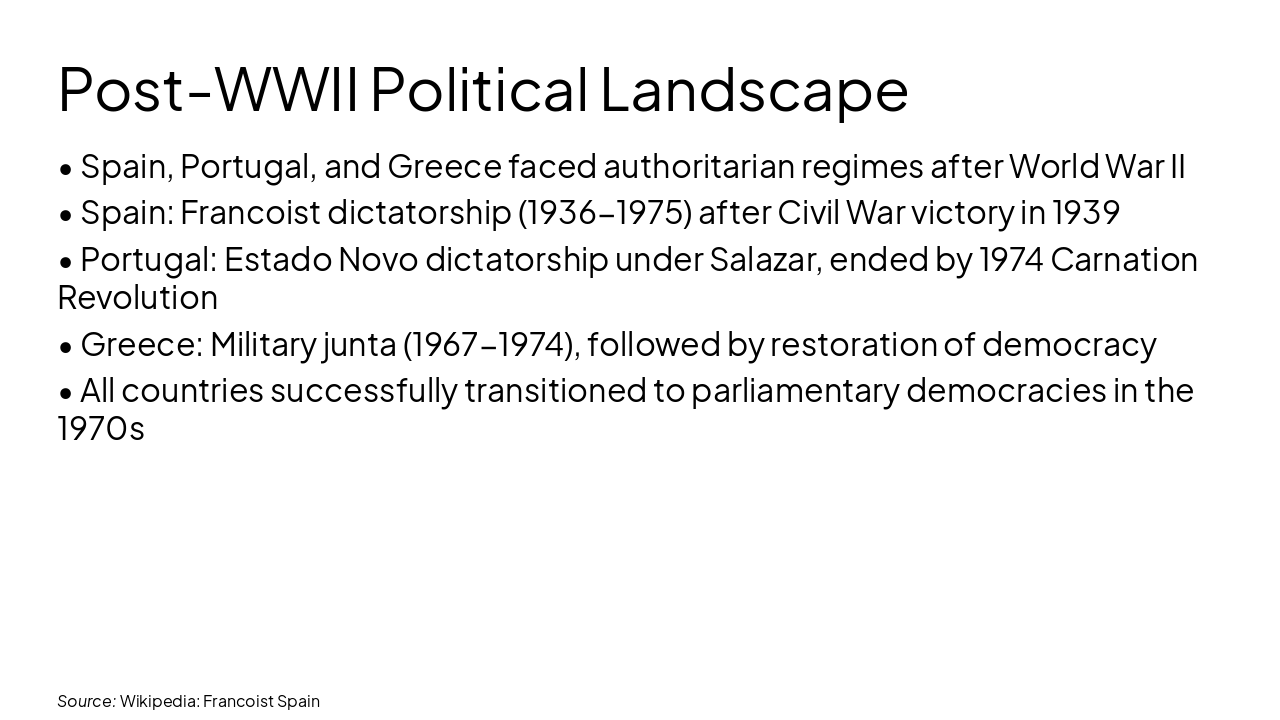
Slide 4 - Post-WWII Political Landscape

  • Spain, Portugal, and Greece faced authoritarian regimes after World War II
  • Spain: Francoist dictatorship (1936-1975) after Civil War victory in 1939
  • Portugal: Estado Novo dictatorship under Salazar, ended by 1974 Carnation Revolution
  • Greece: Military junta (1967-1974), followed by restoration of democracy
  • All countries successfully transitioned to parliamentary democracies in the 1970s

Source: Wikipedia: Francoist Spain

Slide 4 - Post-WWII Political Landscape
Slide 5 of 16

Slide 5 - Francoist Spain

2

Franco's Dictatorship in Spain

From Civil War Victory to Economic Miracle and Repression (1936-1975)

---

Photo by Carlos Zurita on Unsplash

Slide 5 - Francoist Spain
Slide 6 of 16

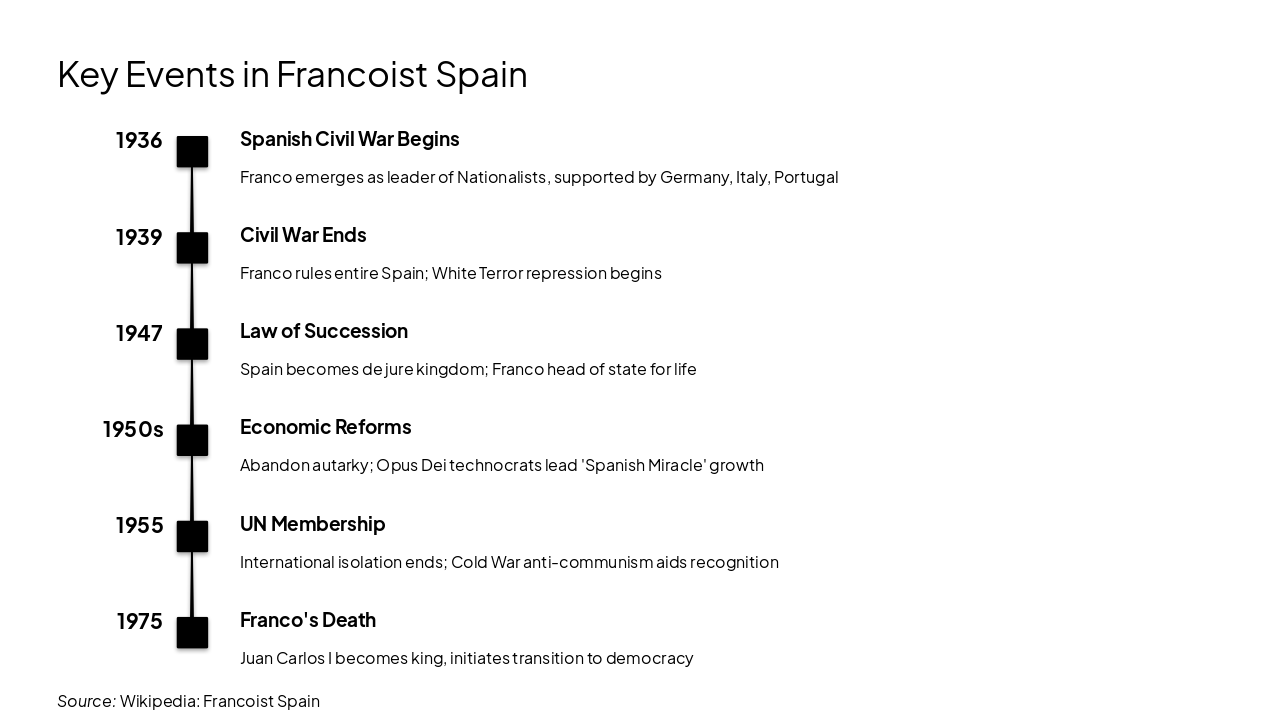
Slide 6 - Key Events in Francoist Spain

1936: Spanish Civil War Begins Franco emerges as leader of Nationalists, supported by Germany, Italy, Portugal 1939: Civil War Ends Franco rules entire Spain; White Terror repression begins 1947: Law of Succession Spain becomes de jure kingdom; Franco head of state for life 1950s: Economic Reforms Abandon autarky; Opus Dei technocrats lead 'Spanish Miracle' growth 1955: UN Membership International isolation ends; Cold War anti-communism aids recognition 1975: Franco's Death Juan Carlos I becomes king, initiates transition to democracy

Source: Wikipedia: Francoist Spain

Slide 6 - Key Events in Francoist Spain
Slide 7 of 16

Slide 7 - Nature of the Regime

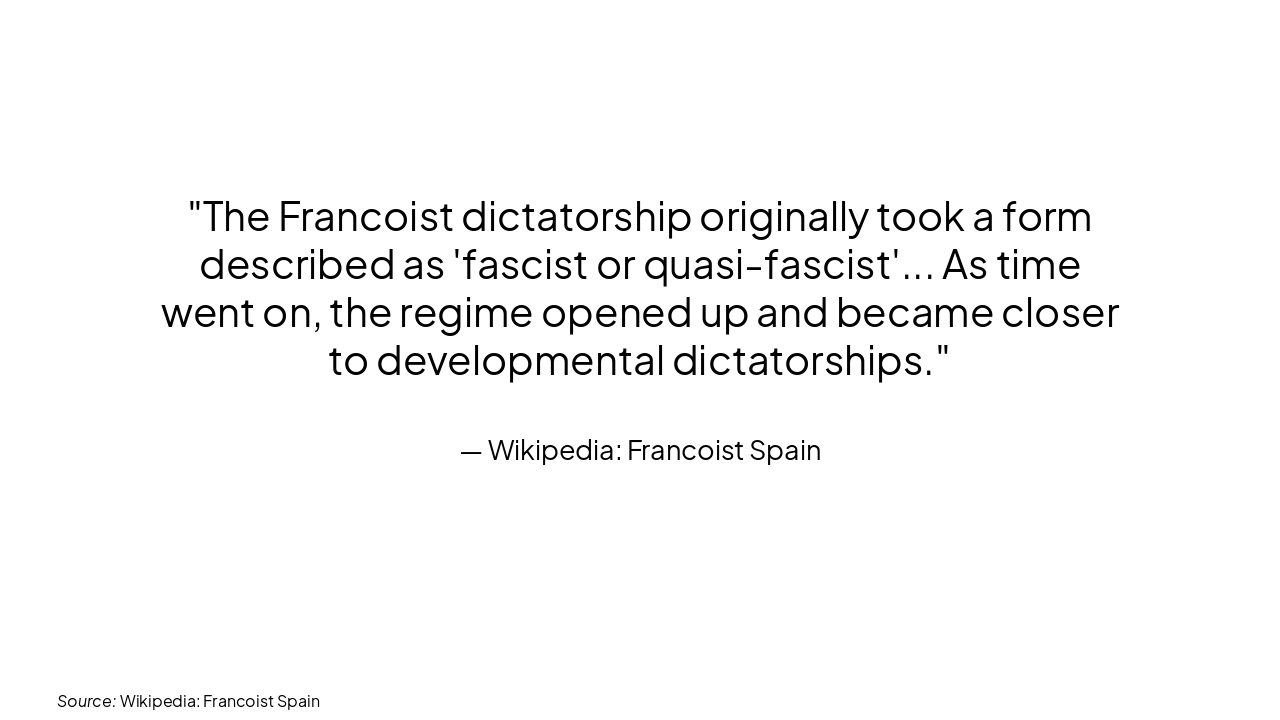
> The Francoist dictatorship originally took a form described as 'fascist or quasi-fascist'... As time went on, the regime opened up and became closer to developmental dictatorships.

— Wikipedia: Francoist Spain

Source: Wikipedia: Francoist Spain

Slide 7 - Nature of the Regime
Slide 8 of 16

Slide 8 - Portugal: Path to Democracy

3

Portugal: Captains' Movement and Revolution

Estado Novo Dictatorship Ends with 1974 Carnation Revolution

---

Photo by Natalie Kinnear on Unsplash

Slide 8 - Portugal: Path to Democracy
Slide 9 of 16

Slide 9 - Carnation Revolution (1974)

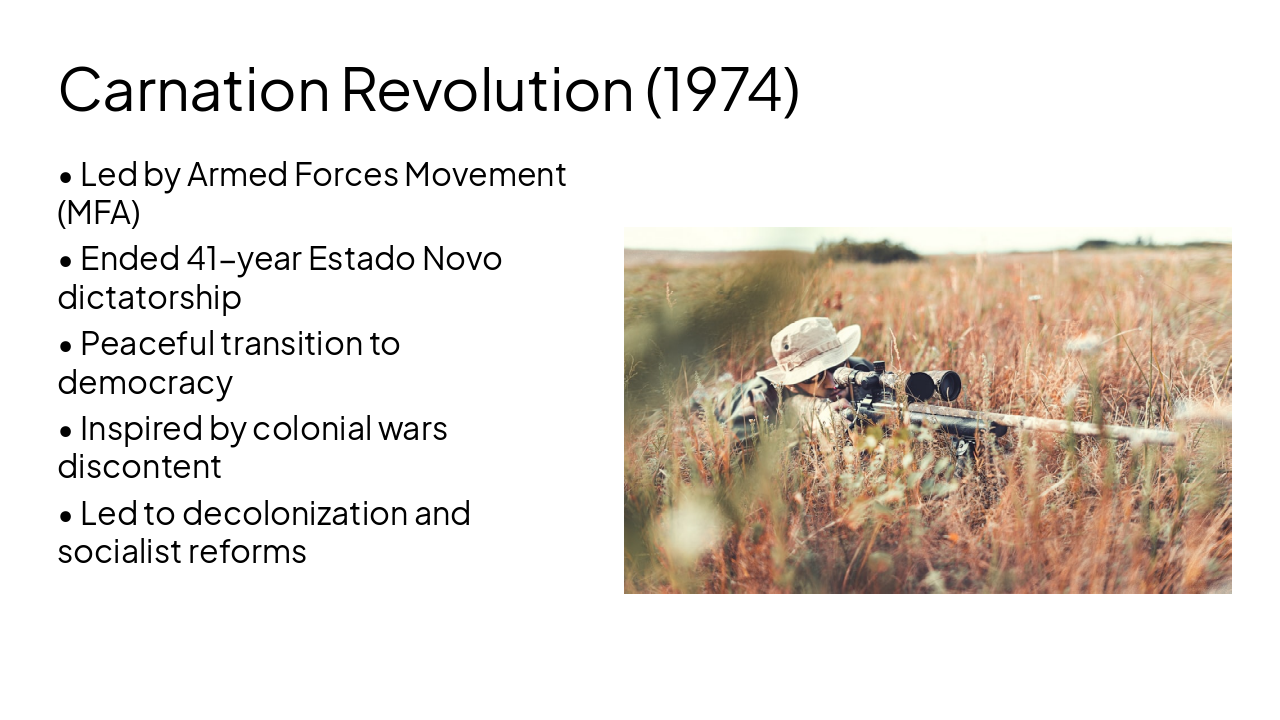
  • Led by Armed Forces Movement (MFA)
  • Ended 41-year Estado Novo dictatorship
  • Peaceful transition to democracy
  • Inspired by colonial wars discontent
  • Led to decolonization and socialist reforms

---

Photo by Maxim Potkin ❄ on Unsplash

Slide 9 - Carnation Revolution (1974)
Slide 10 of 16

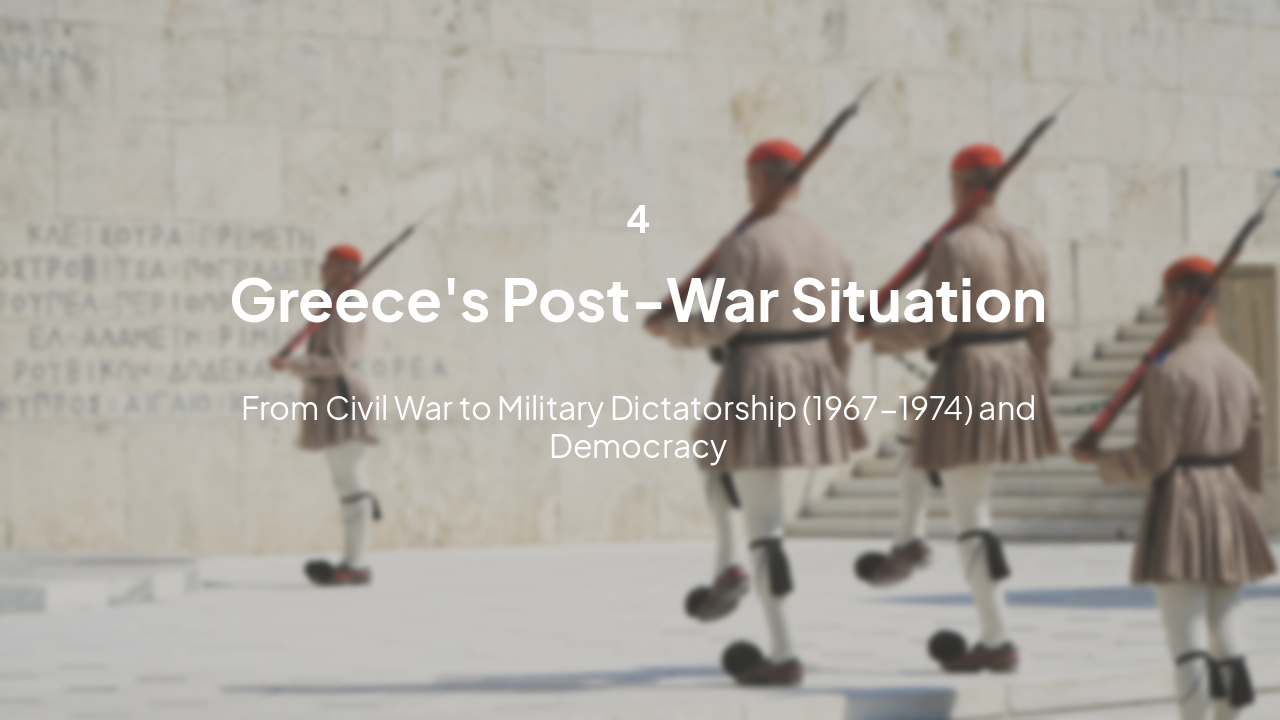
Slide 10 - Greece: Military Junta and Transition

4

Greece's Post-War Situation

From Civil War to Military Dictatorship (1967-1974) and Democracy

---

Photo by Ola Ivashenko on Unsplash

Slide 10 - Greece: Military Junta and Transition
Slide 11 of 16

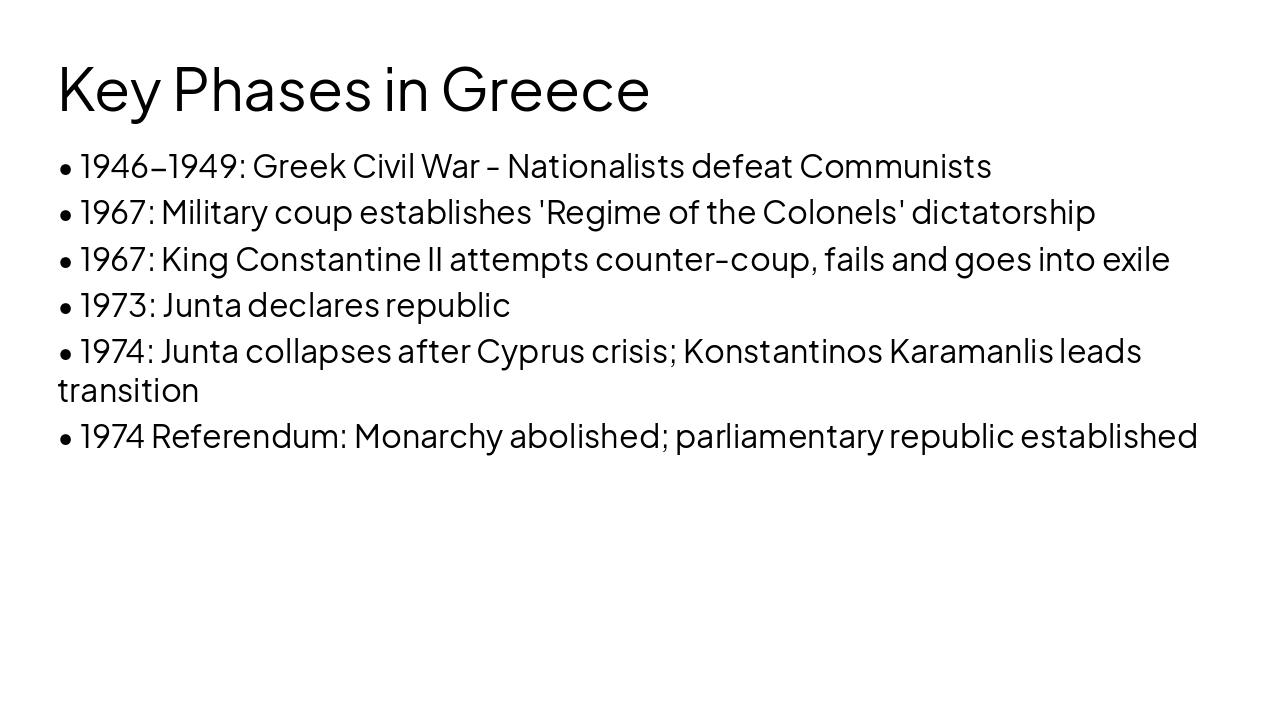
Slide 11 - Key Phases in Greece

  • 1946-1949: Greek Civil War - Nationalists defeat Communists
  • 1967: Military coup establishes 'Regime of the Colonels' dictatorship
  • 1967: King Constantine II attempts counter-coup, fails and goes into exile
  • 1973: Junta declares republic
  • 1974: Junta collapses after Cyprus crisis; Konstantinos Karamanlis leads transition
  • 1974 Referendum: Monarchy abolished; parliamentary republic established
Slide 11 - Key Phases in Greece
Slide 12 of 16

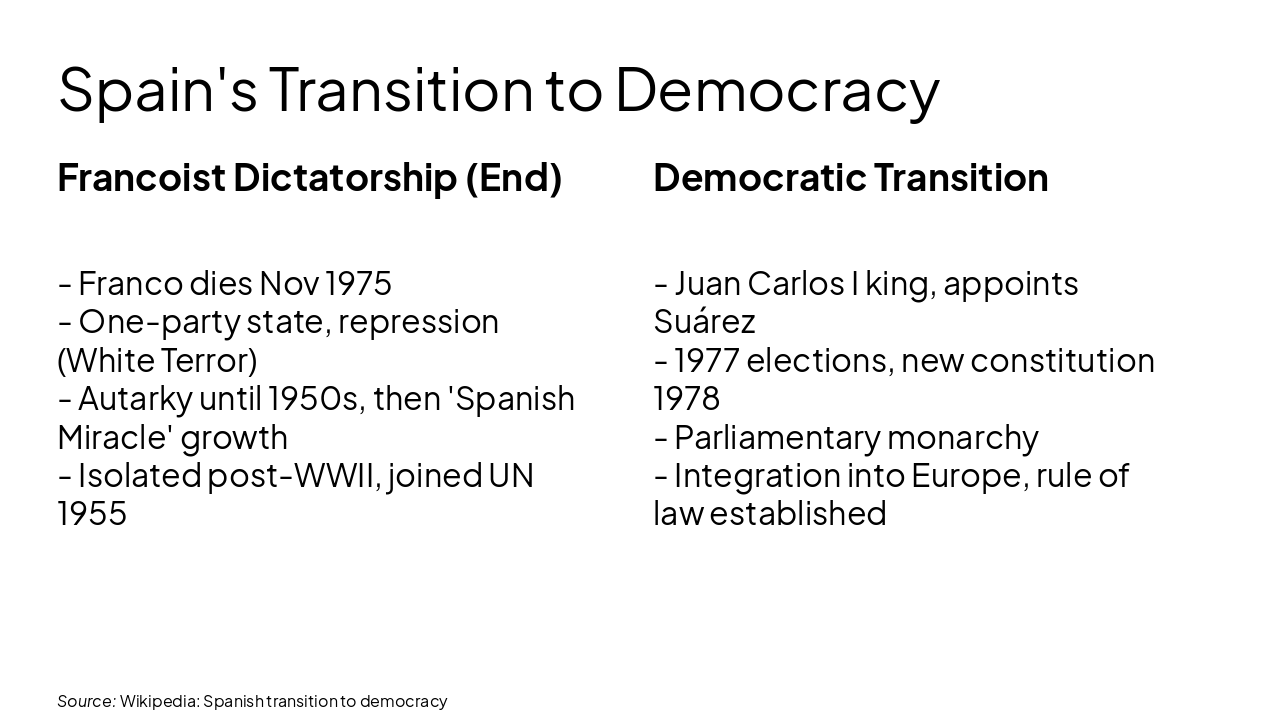
Slide 12 - Spain's Transition to Democracy

Francoist Dictatorship (End)

  • Franco dies Nov 1975
  • One-party state, repression (White Terror)
  • Autarky until 1950s, then 'Spanish Miracle' growth
  • Isolated post-WWII, joined UN 1955

Democratic Transition

  • Juan Carlos I king, appoints Suárez
  • 1977 elections, new constitution 1978
  • Parliamentary monarchy
  • Integration into Europe, rule of law established

Source: Wikipedia: Spanish transition to democracy

Slide 12 - Spain's Transition to Democracy
Slide 13 of 16

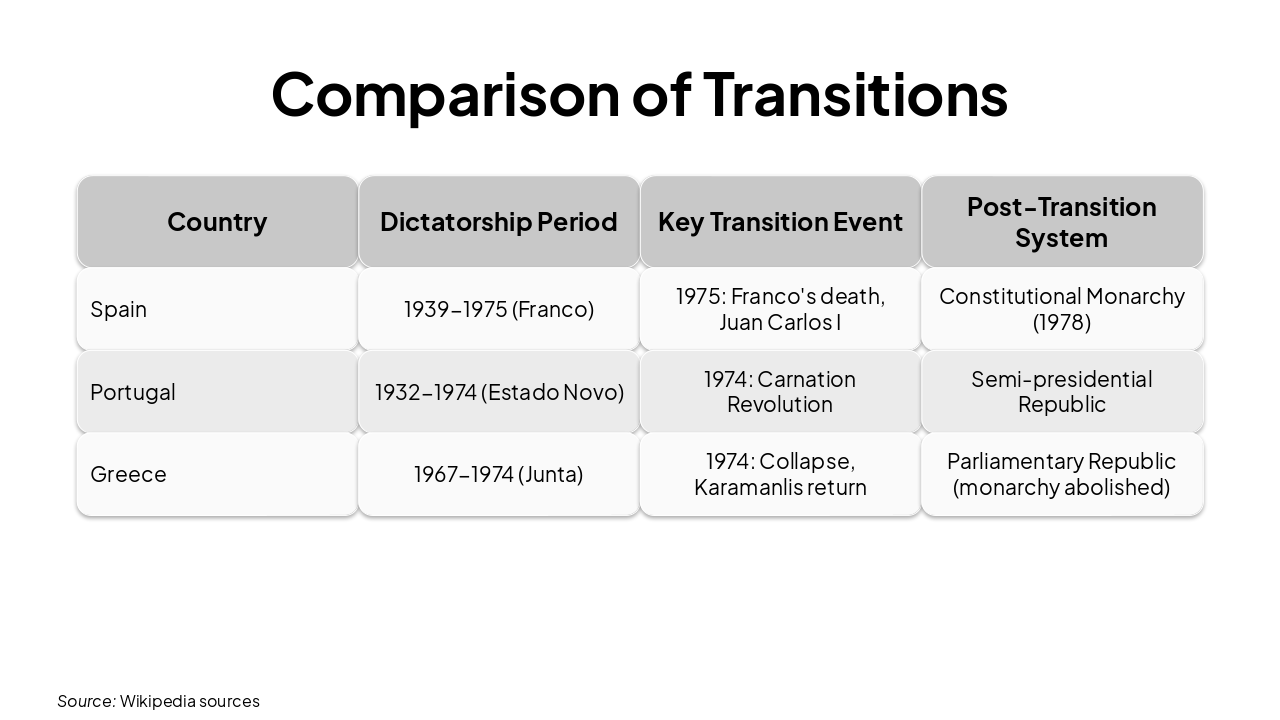
Slide 13 - Comparison of Transitions

CountryDictatorship PeriodKey Transition EventPost-Transition System
Spain1939-1975 (Franco)1975: Franco's death, Juan Carlos IConstitutional Monarchy (1978)
Portugal1932-1974 (Estado Novo)1974: Carnation RevolutionSemi-presidential Republic
Greece1967-1974 (Junta)1974: Collapse, Karamanlis returnParliamentary Republic (monarchy abolished)

Source: Wikipedia sources

Slide 13 - Comparison of Transitions
Slide 14 of 16

Slide 14 - Socio-Economic Consequences

  • Dictatorships: Political repression (e.g., White Terror in Spain > Red Terror deaths), autarkic policies leading to depression
  • Economic shifts: Spain's 1950s reforms sparked 'Spanish Miracle' (2nd fastest growth after Japan)
  • Democracies: Economic liberalization, EU integration, improved living standards, civil liberties
  • Social: From totalitarian control to pluralism, regional autonomies, end of exiles and censorship

Source: Wikipedia: Francoist Spain

Slide 14 - Socio-Economic Consequences
Slide 15 of 16

Slide 15 - Conclusion

5

Conclusion and Key Takeaways

From Dictatorship to Democracy in Southern Europe

---

Photo by Frederic Köberl on Unsplash

Slide 15 - Conclusion
Slide 16 of 16

Slide 16 - Key Lessons

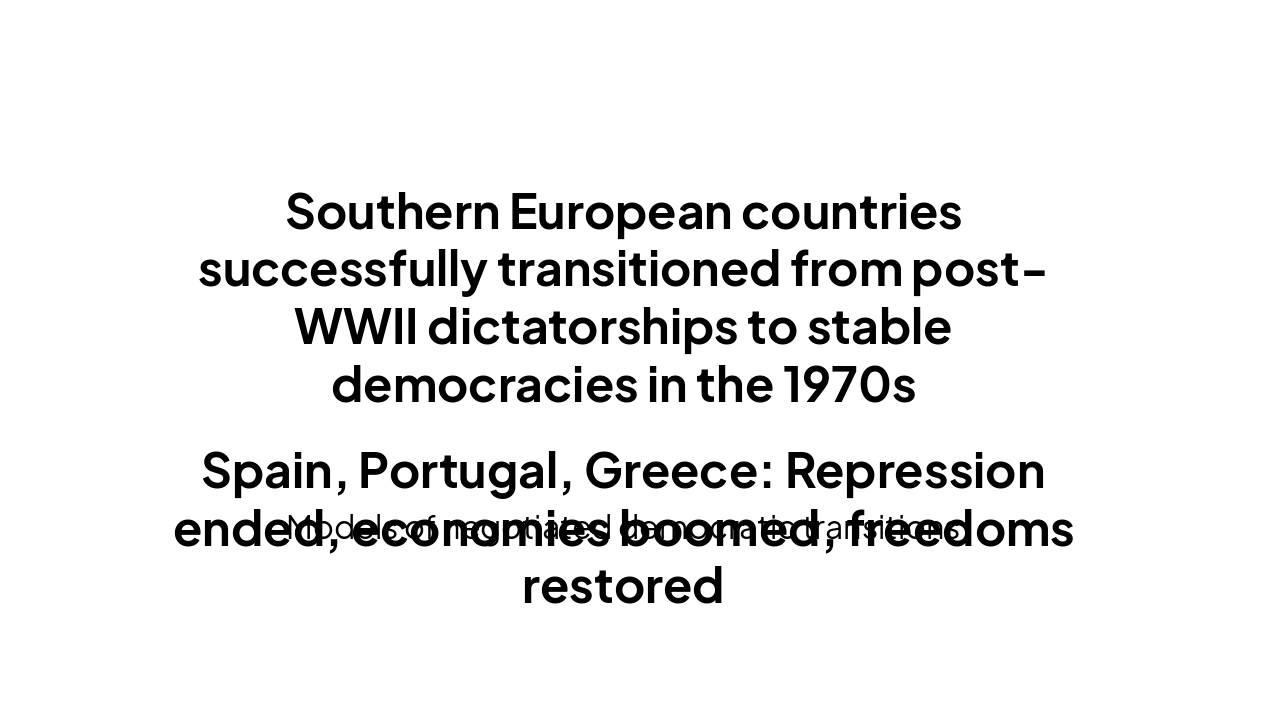
Southern European countries successfully transitioned from post-WWII dictatorships to stable democracies in the 1970s

Spain, Portugal, Greece: Repression ended, economies boomed, freedoms restored

Models of negotiated democratic transitions

Slide 16 - Key Lessons

Discover More Presentations

Explore thousands of AI-generated presentations for inspiration

Browse Presentations
Powered by AI

Create Your Own Presentation

Generate professional presentations in seconds with Karaf's AI. Customize this presentation or start from scratch.

Create New Presentation

Powered by Karaf.ai — AI-Powered Presentation Generator